


Кратко резюме
Мрамор Тигрово Нефритово is a natural decorative onyx stone distinguished by its alternating golden-brown, amber, coffee-colored and cream mineral formations. Its layered pattern creates a strong architectural rhythm, while selected crystalline regions may reveal additional depth under transmitted light. The material is suitable for decorative wall cladding, hotel reception features, bar fronts, furniture surfaces and custom interior stonework. For architectural procurement, the principal considerations are the distribution of dark and light mineral bands, their orientation within finished elevations, the condition of natural boundaries and the suitability of each stone section for its intended fabrication and installation.
Dark Bown Onyx Tiger Jade Marble Slabs for Tiles, Countertops and Tables in Villas & Hotels
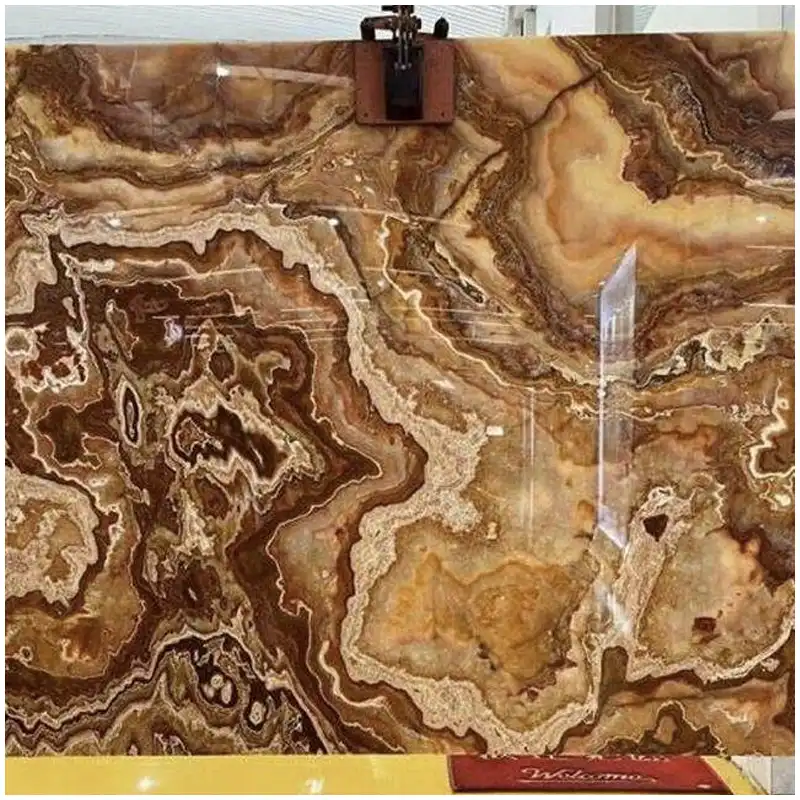
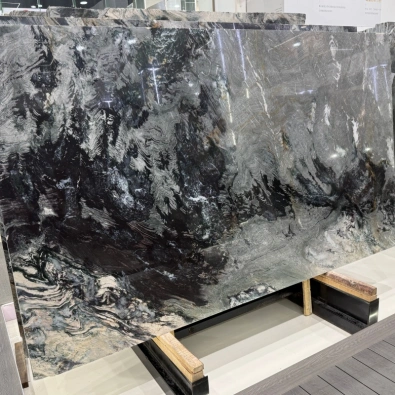
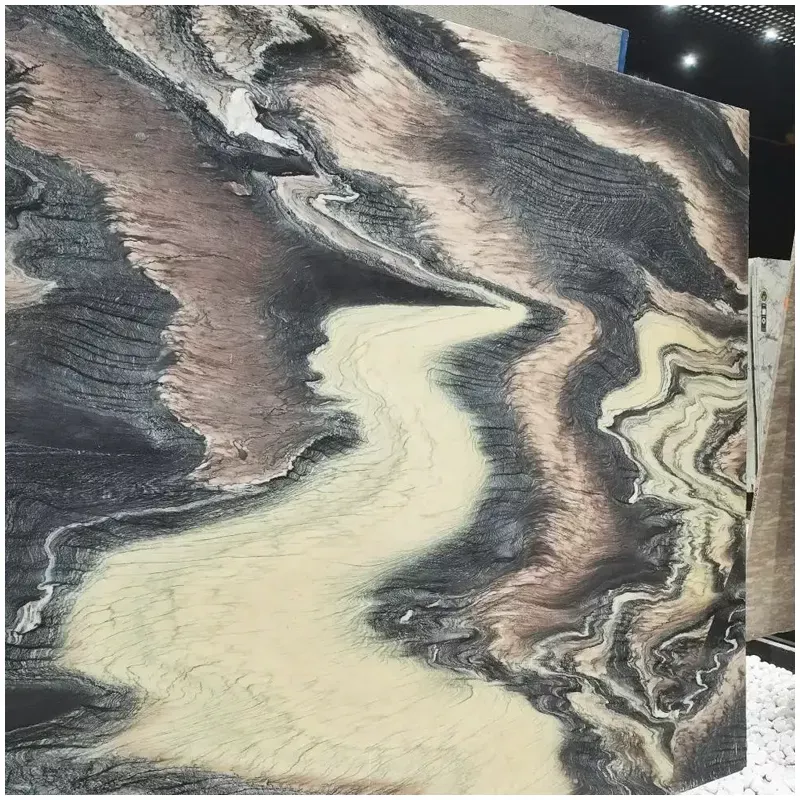
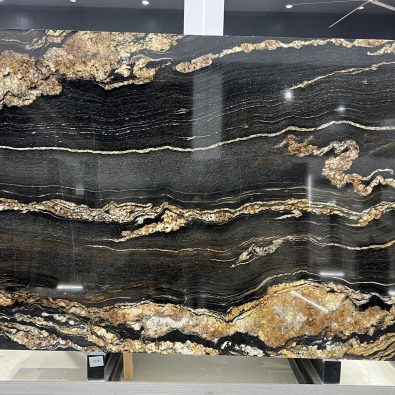
Tiger Jade Marble has a visual character that is immediately different from ordinary brown marble. Its surface contains successive layers of warm and dark mineral coloration, with pale crystalline formations separating broader areas of golden amber and deep coffee brown.
These natural layers create the impression of movement across the stone. Some regions resemble elongated stripes, while others curve into irregular formations that interrupt the prevailing mineral direction.
The material occupies a distinctive position within the commercial category of Златен кафяв мрамор. Rather than depending on a uniform brown background, its decorative identity comes from the repeated contrast between darker and lighter mineral deposits.
This characteristic becomes especially valuable on broad architectural surfaces. A reception wall composed of Tiger Jade Marble can introduce a recognizable visual rhythm across an otherwise restrained interior, reducing the need for additional decorative wall treatments.
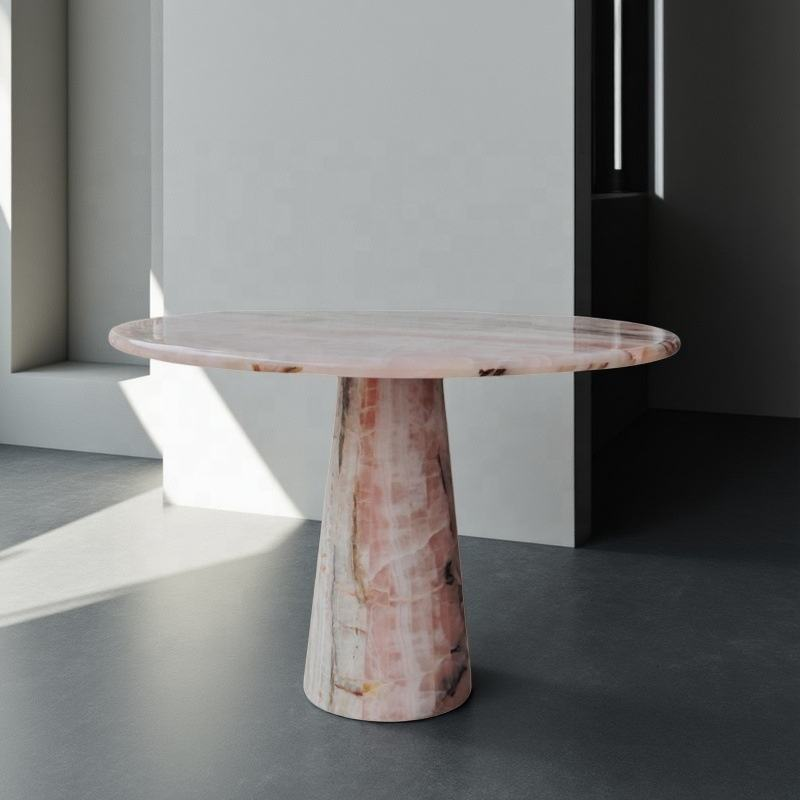
In smaller furniture components, the same material takes on a different character. Individual mineral formations become more pronounced, and the relationship between the selected cutting area and the finished object becomes increasingly important.
Tiger Jade is therefore best understood as an expressive decorative stone whose value depends on the composition of each selected face, rather than a conventional brown material purchased solely according to background color.
Tiger Jade Onyx Marble Product Specifications
| Име на продукта | Мрамор Тигрово Нефритово |
| Търговски материал | Natural Tiger Jade Onyx Marble |
| Свързани търговски марки | Tiger Onyx Marble / Tiger Brown Onyx / Golden Brown Marble |
| Класификация на камъните | Natural Decorative Carbonate Onyx; Exact Mineral Identity by Verification |
| Произход | According to Selected Material Lot and Origin Documentation |
| Primary Colors | Golden Brown / Amber / Honey Brown |
| Вторични цветове | Dark Coffee / Cream White / Rust Brown |
| Размери на плочите | 221×185cm / 222×169cm / 221×195cm |
| Дебелина | According to Current Slab Selection and Approved Specification |
| Повърхностно покритие | Polished Featured; Honed or Other Finishes by Sample Approval |
| Pattern Character | Alternating Mineral Layers, Irregular Bands and Curved Natural Formations |
| Translucency | Variable Natural Light Transmission; Slab-Specific Evaluation Required |
| Bookmatch Availability | Subject to Suitable Consecutive Slab Availability |
| Fabricated Forms | Full Slabs / Wall Panels / Decorative Tiles / Counter Fronts / Vanity Tops / Furniture Components |
| Приложения | Hotels / Villas / Private Clubs / Luxury Apartments / Designer Retail Interiors |
The featured slab formats can accommodate decorative wall panels, counter facings and related architectural components. The usable stone face and actual thickness should be confirmed against the required fabrication before production.
The Layered Mineral Character of Tiger Onyx Marble
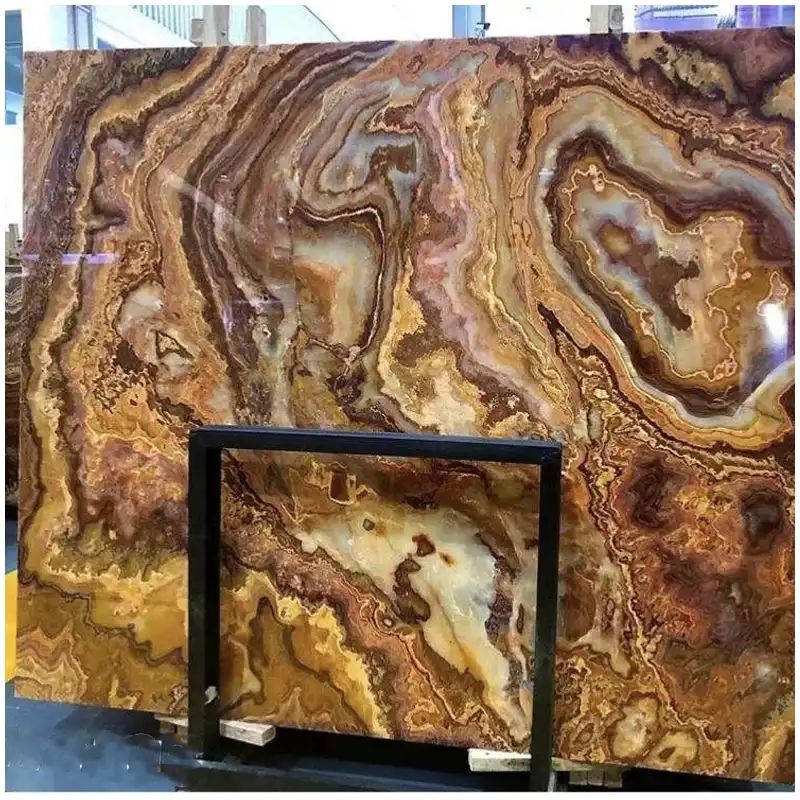
Architectural onyx commonly develops through the deposition of carbonate minerals from mineral-bearing water. Successive stages of deposition can produce layers that differ in color, crystalline structure and optical density.
В Tiger Onyx Marble, this layered formation is expressed through repeated changes between brown, amber and pale mineral regions. Warm coloration may be associated with iron-bearing compounds and other natural impurities incorporated during mineral deposition.
Differences in deposition conditions can also contribute to the irregular thickness and direction of the mineral bands. The layers are not mechanically printed lines, and their appearance may change substantially across related stone faces.
Cutting orientation influences the pattern revealed during slab production. Sections cut across layered formations can display elongated bands, whereas differently oriented cuts may expose more curved, cloud-like or irregular mineral arrangements.
The name Tiger Jade is a decorative stone trade designation. It should not be interpreted as confirmation that the material consists of gemological jade. Similarly, carbonate architectural onyx is distinct from silica-based gemstone onyx.
These distinctions matter when assessing material performance. Hardness, chemical resistance and fabrication behavior cannot be established from the commercial name alone.
For architectural orders, actual slab appearance and material documentation provide a more reliable basis for selection than alternative trade names used in different markets.
Golden Brown Marble Selection: Balancing Amber and Dark Coffee Mineral Bands
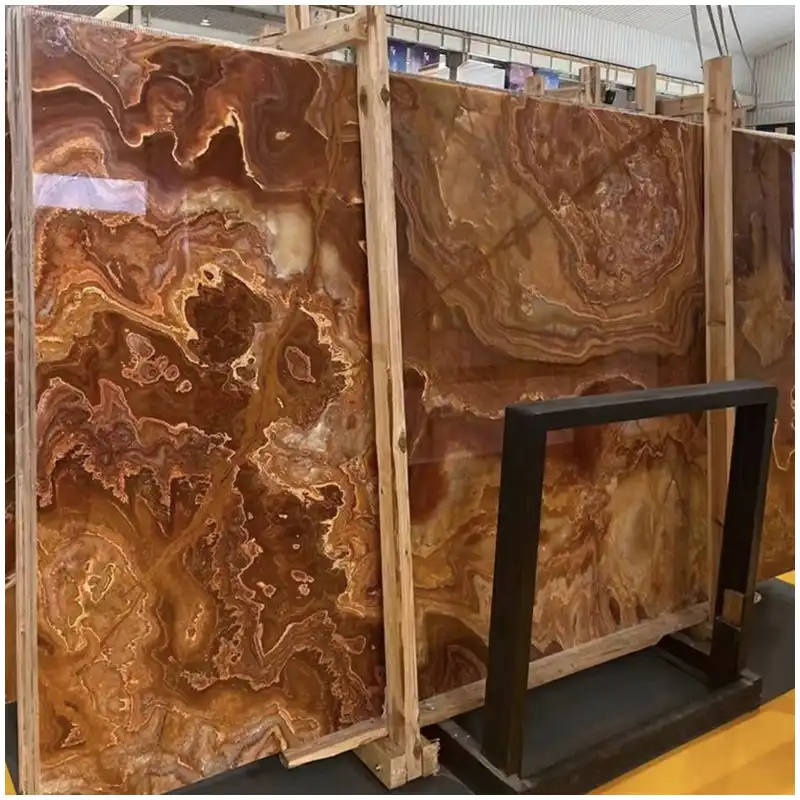
The perceived warmth of Tiger Jade depends largely on the relationship between its amber-colored layers and darker brown mineral concentrations. A slab with broad honey-colored formations may create a relatively luminous surface, while a selection dominated by deep coffee tones produces a more dramatic architectural presence.
The lighter mineral bands perform an important visual function. They separate the darker regions, allowing the individual layers to remain distinguishable even when the stone is installed across an extensive wall.
For designers working with dark timber, leather upholstery and bronze fixtures, golden-brown stone can introduce additional warmth without departing from an established earth-toned palette.
In brighter contemporary interiors, stronger cream-colored formations may provide a more effective transition between the stone and surrounding white or beige architectural surfaces.
A small sample is useful for establishing surface finish and general coloration, but it may exaggerate the importance of one mineral band. A full slab photograph reveals whether that band is an isolated feature or part of a repeated pattern.
Commercial approval should therefore consider the relative color proportions of the entire stone face and their effect after fabrication.
Choosing Between Golden, Amber and Dark Brown Onyx Slabs
The following selection directions help architects and stone buyers communicate the desired balance of color and mineral movement. They represent practical visual classifications rather than standardized quarry grades.
| Selection Direction | Visual Characteristics | Architectural Positioning |
|---|---|---|
| Golden Brown Selection | Warm golden and honey-colored mineral regions with moderate dark contrast | Bright reception areas, decorative walls and warm residential interiors |
| Amber-Dominant Selection | Rich amber and caramel-colored crystalline formations | Private lounges, decorative counters and selected illuminated panels |
| Dark Brown Selection | Pronounced coffee and chocolate mineral layers | Executive interiors, private clubs and dramatic decorative elevations |
| High-Contrast Tiger Selection | Clearly separated dark brown, amber and cream-colored bands | Statement walls, sculptural furniture and individually selected stone features |
| Soft Layered Selection | More gradual transitions between adjacent brown and pale mineral areas | Coordinated architectural packages requiring restrained pattern contrast |
Buyers specifically seeking Dark Brown Onyx Slabs should consider whether the darker formations are evenly distributed or concentrated in a particular region. The latter may require more selective placement within the finished design.
For extensive orders, establish representative visual groups before purchasing. A stronger contrast is a design preference, not an independent indicator of material strength or workmanship.
Tiger Brown Onyx Slabs and the Architectural Direction of Natural Banding
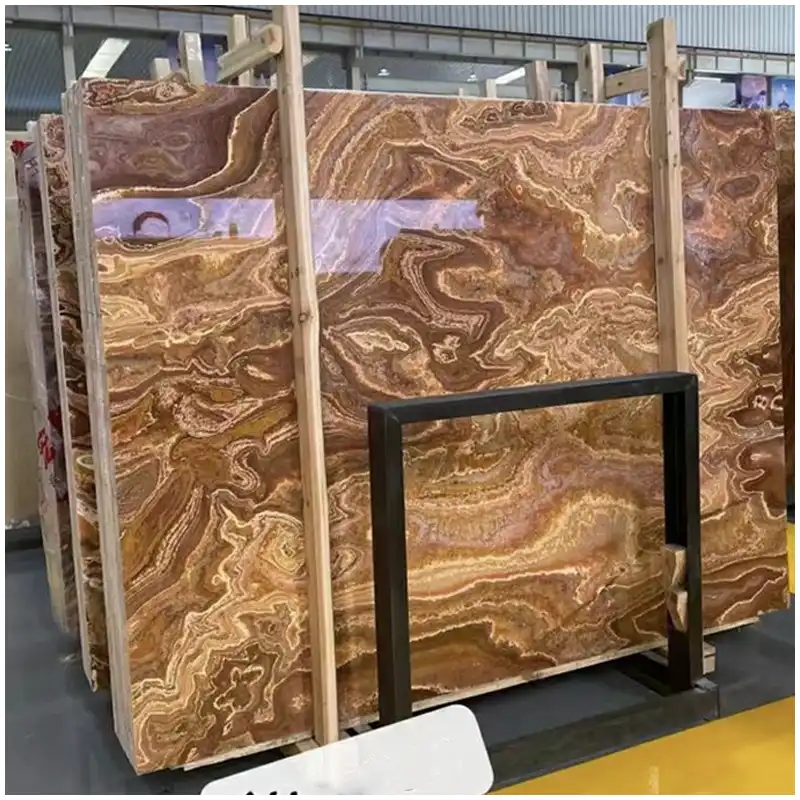
Directional stone can change the perceived proportions of an architectural space. Horizontal mineral layers can reinforce the width of a reception wall, while a predominantly vertical arrangement may emphasize the height of a decorative column or tall interior elevation.
Tiger Brown Onyx Slabs offer a particularly expressive opportunity to work with these visual effects because their color bands can vary considerably in density, width and curvature.
On a long counter front, maintaining a related horizontal movement can give the furniture a continuous architectural appearance. An abrupt change in layer direction may be conspicuous even where the adjoining components share similar brown coloration.
At vertical architectural junctions, the direction of the mineral layers should relate to nearby door frames, metal trims and wall panel divisions. Natural stone patterns need not align perfectly with every architectural line, but accidental conflicts can weaken the finished composition.
A mirrored arrangement may be appropriate for a formal reception backdrop. Alternatively, sequential placement can retain a more natural geological progression across the elevation.
The availability of genuinely consecutive slabs remains important for either approach. Independently selected pieces with similar tiger-like banding cannot automatically be assembled into a continuous mineral composition.
The preferred layout should be established from the approved stone faces and architectural elevations before the panels are divided into finished components.
Preserving Natural Contrast in Illuminated Brown Onyx Marble Slabs
Backlighting Tiger Jade Marble is not simply a matter of making the entire surface as bright as possible. Its strongest decorative quality may come from the contrast between luminous amber regions and darker mineral formations that transmit comparatively little light.
Attempting to eliminate every dark region can diminish the visual distinction that makes tiger-patterned onyx attractive. The lighting assembly should support the natural mineral composition rather than disguise it.
Natural Dark Bands Versus Unwanted Installation Shadows
A dark band visible within the original slab may be an acceptable part of its natural optical character. A straight shadow corresponding to a concealed support member is a different issue.
Review the stone with a representative lighting assembly to distinguish geological coloration from unwanted shadows, concentrated light sources and visible backing materials.
Retaining Amber Color Without Excessive Saturation
Strongly warm illumination can intensify the orange and golden character of brown onyx. In some interiors, excessive warmth may reduce the distinction between individual mineral layers or conflict with surrounding timber and metal finishes.
The appropriate lighting spectrum and brightness should be established using the selected stone rather than a generic onyx color chart. Where dimming is specified, evaluate the appearance across the intended operating range.
Coordinating Decorative Lighting with Stone Construction
Illuminated assemblies may require optically suitable backing, diffusion materials and an independently designed support arrangement. The selected components must be compatible with the stone, existing treatments and expected operating conditions.
Electrical servicing should remain possible without unnecessary disturbance of the finished onyx panels. Structural reinforcement must not be removed solely to increase light transmission.
Tiger Jade Marble Technical Performance and Material Verification
The physical behavior of layered carbonate onyx differs from that of quartz-rich stone. Its decorative mineral structure, natural discontinuities and existing stabilization treatments can influence the fabrication and service performance of individual slabs.
The following assessment methods are relevant when establishing a technical specification for the selected material. Numerical acceptance criteria should be based on representative test results and the requirements of the finished application.
| Физично свойство | Assessment Method | Specification Relevance |
|---|---|---|
| Обемна плътност | EN 1936 / ASTM C97/C97M | Material characterization, panel support and transport planning |
| Абсорбция на вода | EN 13755 / ASTM C97/C97M | Liquid exposure and moisture-related specification decisions |
| Сила на натиск | EN 1926 / ASTM C170/C170M | Material resistance under specified compressive loading conditions |
| Якост на огъване | EN 12372 / ASTM C880/C880M | Bending behavior relevant to panels and supported fabricated components |
| Petrographic Identity | EN 12407 | Mineral composition and evaluation of natural material characteristics |
| Устойчивост на абразия | EN 14157 / ASTM C1353 | Evaluation of potential walking-surface applications |
| Пропускане на светлина | Project-Specific Optical Assessment | Selection of suitable stone areas for illuminated architectural assemblies |
Carbonate Mineral Hardness and Everyday Wear
Calcite, a common mineral in architectural onyx, has a Mohs hardness of approximately 3. This mineral-scale value helps explain why carbonate onyx is more susceptible to scratching from abrasive grit than many quartz-rich natural stones.
The finished stone may contain additional minerals and surface treatments, so an individual mineral hardness value does not establish the uniform scratch resistance of an entire slab.
Mechanical Performance Across Mineral Layers
Where natural layering introduces directional differences, representative testing may need to consider specimen orientation. A strength result from one mineral region does not necessarily describe every section of a heterogeneous stone face.
Large wall panels, projecting furniture surfaces and fabricated components require an approved supporting assembly. Stone strength values alone cannot establish safe unsupported spans or attachment capacity.
Tiger Jade Marble Hotel Lobby Projects and Reception Architecture
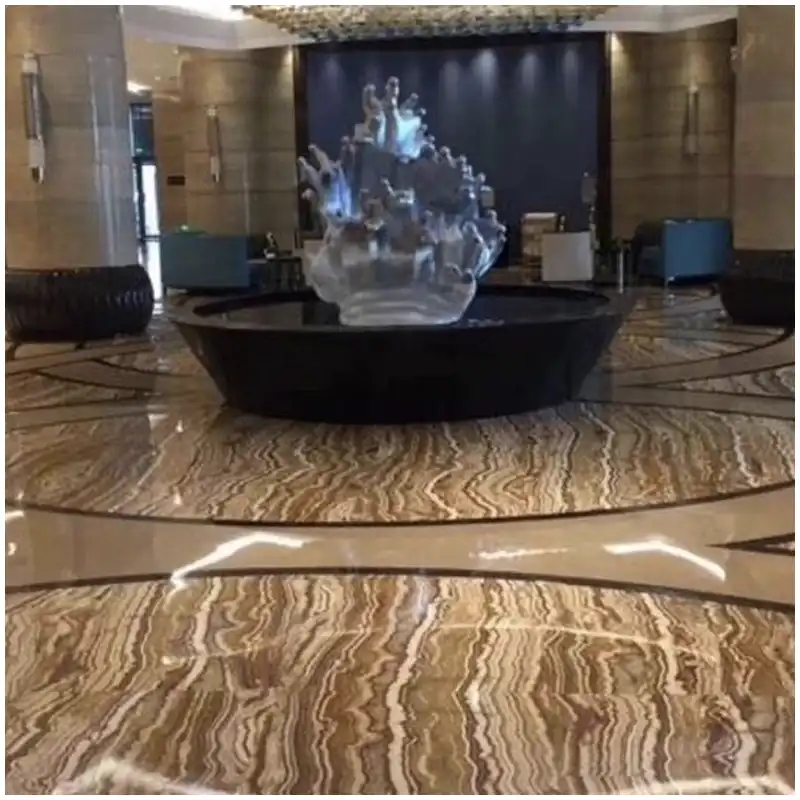
The following hotel lobby application reference illustrates how golden-brown mineral layering can become a principal architectural element within a hospitality interior.
Creating an Architectural Identity at the Arrival Area
The arrival area of a hotel often establishes the material identity of the entire property. A strongly banded onyx backdrop can create a recognizable visual feature that remains associated with the interior beyond the reception desk itself.
Tiger Jade works particularly well within material palettes that include dark timber, bronze detailing, champagne-colored metals and warm neutral upholstery. These accompanying finishes can draw on individual colors already present within the stone.
Reception Counter Fronts and Guest Interaction
Decorative counter fronts allow the layered mineral structure to remain visible without being interrupted by computers, documents or other operational equipment on the working surface.
A hotel reception counter can combine a Tiger Jade decorative facing with a separately specified working surface better suited to frequent contact, cleaning and equipment use. This preserves the visual value of the onyx without unnecessarily exposing it to demanding service conditions.
Columns, Wall Returns and Architectural Junctions
The direction of tiger-like mineral layers becomes especially important when decorative stone continues around a column or changes from one architectural plane to another.
An elevation that appears continuous from the front may reveal unrelated mineral arrangements when viewed from the side. The complete three-dimensional composition should be reviewed before the facing components are fabricated.
Protecting Decorative Stone in Public Circulation Areas
Hotel lobbies are exposed to luggage movement, housekeeping equipment and occasional impacts. Fragile decorative edges near circulation routes deserve a different construction approach from panels positioned above normal contact height.
Recessed lower details, separately specified plinth materials or appropriately protected corners may help reduce unnecessary exposure of the onyx to concentrated impacts.
The application image represents a design direction. Actual installation details, stone support, lighting construction and public-area performance require independent project approval.
Where Tiger Jade Onyx Marble Delivers the Greatest Architectural Value
Tiger Jade Onyx Marble can be considered for a range of decorative stone applications. Its strongest positioning is generally in visually prominent, appropriately supported interior components rather than surfaces selected principally for heavy-duty wear resistance.
| Приложение | Architectural Contribution | Specification Priority |
|---|---|---|
| Hotel Lobby Walls | Recognizable golden-brown architectural identity | Panel composition, attachment and public-area protection |
| Reception Counter Fronts | Continuous layered stone facing | Corner workmanship, impact protection and support |
| Private Club Bar Fronts | Rich amber and coffee-colored decorative surfaces | Liquid exposure, lighting access and foot-level protection |
| Villa Feature Walls | Expressive earth-toned mineral compositions | Pattern scale, viewing direction and fixing arrangement |
| Decorative Vanity Tops | Warm natural stone character in luxury bathrooms | Water exposure, basin openings and chemical sensitivity |
| Custom Furniture | Individual tiger-patterned tabletops and cabinet inserts | Furniture stability, edge condition and suitable support |
| Decorative Floor Inserts | Selected ornamental stone compositions | Verified wear resistance, slip performance and installation suitability |
For high-traffic public flooring, continuously wet areas and intensive food-preparation surfaces, alternative stone materials may offer a more appropriate balance of durability and maintenance. Exterior applications require separate material and environmental assessment.
Fabrication of Tiger Onyx at Corners, Seams and Mineral Transitions
The layered appearance of Tiger Jade introduces fabrication considerations that are less visually significant in relatively uniform brown stones. A joint may cross several strongly contrasting mineral bands within the same architectural component.
Managing Joint Appearance Across Multiple Colors
A dark brown joint material can appear acceptable beside coffee-colored mineral regions but become immediately visible when the same seam crosses a cream-colored crystalline band.
The expected seam appearance should be established from the actual adjoining edges. Representative joint samples are especially useful for decorative counter fronts and closely viewed furniture components.
Evaluating Natural Layer Boundaries Before Machining
Some visible mineral lines form stable parts of the stone’s original structure. Others may contain natural discontinuities, resin-filled regions or previously repaired sections.
Where a cutting line passes through these areas, the fabricator must assess whether the remaining stone is suitable for the required edge profile, opening or connection. Particularly narrow components should not be assigned to questionable material solely to maximize utilization.
Mitered Corners and Decorative Edge Construction
Mitered fabrication can create the appearance of a substantial stone volume while using separately fabricated face components. With strongly banded onyx, however, the visible mineral arrangement around the corner deserves early review.
Related sections of the original slab may help create a more convincing visual transition. Nevertheless, a convincing decorative joint does not independently establish the strength of the assembled component.
The complete construction must account for bonding compatibility, material soundness and the internal support required by the intended application.
Polished Tiger Jade Marble and the Effect of Surface Finishing
A polished finish emphasizes the contrast between golden amber layers and deeper brown mineral regions. Its reflected highlights also give crystalline areas greater apparent depth, making the stone particularly expressive on vertical decorative surfaces.
Honed finishes can reduce mirror-like reflections and create a softer earth-toned appearance. The relative visibility of individual mineral bands may change, particularly where differences in crystalline structure influence the finished texture.
For surfaces viewed from several directions, finish consistency should be evaluated under both broad ambient lighting and directional illumination. Local machining marks or differences in gloss may be more noticeable when light crosses the layered surface at a low angle.
Protective treatments also require sample approval. Color-enhancing or film-forming products can change the balance between brown, amber and cream regions, while some treatments may influence the optical performance of translucent components.
Polished slabs remain the featured product form. Alternative finishes should be confirmed on representative stone before establishing the production specification.
Purchasing Tiger Jade Marble for Multi-Zone Interior Projects
An architectural package containing reception walls, decorative counters and furniture does not necessarily require every Tiger Jade slab to share an identical pattern. Different project zones can benefit from different degrees of mineral contrast.
The principal reception backdrop may justify reserving a particularly expressive stone selection. A related counter facing can use a more directional composition, while smaller decorative furniture pieces may incorporate isolated mineral formations.
This purchasing method distinguishes visual suitability from technical acceptance. A slab may satisfy the agreed material condition while remaining inappropriate for the principal architectural elevation.
Establishing a Material Schedule by Architectural Zone
The purchase schedule can identify the required slab groups according to finished location, preferred mineral direction and intended lighting conditions. This provides a clearer allocation basis than ordering a single undifferentiated brown onyx selection.
Managing Irreplaceable Decorative Components
Natural tiger-patterned stone can be difficult to reproduce after the original material lot has been exhausted. A replacement panel purchased years later may share the same commercial name but differ substantially in band density and color.
For prominent architectural installations, the purchasing team can identify suitable spare material before the approved slab sequence is divided into finished pieces.
The reserve requirement should reflect the visibility of the stone, replacement complexity and expected maintenance responsibilities rather than an arbitrary percentage applied to every project.
Tiger Jade Marble Quality Inspection and Finished Stone Acceptance
Inspection should preserve the accepted geological character of Tiger Jade while identifying material and workmanship conditions that may affect its finished performance.
| Slab Identity | Verify approved stone references, commercial material identity and relevant source documentation. |
| Mineral Band Distribution | Confirm the accepted relationship between golden, dark brown and cream-colored regions. |
| Natural Material Condition | Identify open fractures, repaired discontinuities and areas requiring specific fabrication approval. |
| Surface Workmanship | Inspect polishing quality, scratches, visible filler condition and local surface irregularities. |
| Backing Compatibility | Review existing stabilization treatments against the selected bonding, support and lighting construction. |
| Finished Component Inspection | Verify dimensions, flatness, openings, machined edges and agreed tolerances. |
| Corner and Seam Review | Inspect the completed visual transition between adjoining mineral regions and exposed stone faces. |
| Architectural Layout Approval | Review representative assembled elevations or dry-lay arrangements where specified. |
| Illuminated Appearance | Where required, assess natural optical contrast separately from artificial shadows and backing marks. |
Acceptance criteria should distinguish normal mineral variation from actual material damage. A naturally dark band, for example, is not necessarily an optical defect, while an open fracture requires assessment regardless of its color.
Export Packing for Brown Onyx Slabs and Decorative Components
Transport protection for decorative onyx should reflect the condition and geometry of the supplied stone. Full slabs require suitable supporting frames and restraint, while fabricated panels and furniture components need protection appropriate to their finished edges and connection details.
Narrow counter-facing strips, mitered corners and components containing openings deserve particular attention because concentrated packing pressure can damage vulnerable stone sections.
Related panels intended to preserve a continuous tiger-like pattern should remain identifiable throughout transportation. The packing list should correspond to the approved architectural layout rather than recording only the total shipment area.
Protective separators should prevent uncontrolled stone-to-stone contact and abrasive contamination. Crate construction and transport restraints must account for actual component condition and measured package weights.
Final shipping arrangements should include suitable unloading provisions, handling instructions and compliance with applicable wooden packaging requirements in the destination market.
Maintaining Golden Brown Onyx in Hospitality and Residential Interiors
The rich coloration of Tiger Jade can make some minor surface marks less apparent, but darker stone regions may also reveal local changes in gloss when viewed under directional lighting.
Carbonate onyx remains sensitive to acidic substances. Wine, citrus drinks, vinegar and aggressive bathroom descalers can chemically alter its polished surface.
Routine maintenance should use soft cleaning materials and compatible pH-neutral natural stone cleaners. Abrasive pads and unsuitable polishing products can produce visible differences between treated and untreated mineral regions.
On decorative countertops and furniture, use coasters, trays and protective mats to reduce direct contact with liquids, abrasive objects and hot items. An impregnating sealer may reduce certain forms of liquid penetration but cannot prevent acid etching.
For hotel reception areas, regular inspection of exposed lower corners and decorative counter edges can help identify damage before it becomes more extensive.
Any restoration should take account of the original surface finish, mineral layering and previous resin treatments. Localized repairs should be evaluated under the lighting conditions in which the stone is normally displayed.
Frequently Asked Questions About Tiger Jade Marble
Is Tiger Jade Marble the same as Tiger Brown Onyx?
Tiger Jade Marble and Tiger Brown Onyx are related commercial descriptions used for decorative stones with layered golden-brown, amber and darker mineral formations. The names do not independently establish identical quarry origin or mineral composition. Actual slab selection and material documentation should confirm the stone identity.
Do all Tiger Brown Onyx Slabs transmit light evenly?
No. Natural mineral layers can differ substantially in optical density. Amber and pale crystalline regions may transmit more light than darker brown formations. The desired illuminated appearance should be evaluated on the actual selected stone using a representative lighting assembly.
Is Tiger Jade Onyx Marble suitable for hotel reception counters?
Suitable Tiger Jade Onyx Marble selections can be used for decorative reception counter fronts, side panels and selected supported countertop applications. Public-facing construction should account for accidental impacts, surface maintenance and the suitability of the stone for its intended operational use.
Can Dark Brown Onyx Slabs be matched across an entire feature wall?
Related stone selections can be arranged to establish coordinated color and mineral direction. Continuous or mirrored patterns depend on actual slab sequence and geological continuity. The proposed elevation should be reviewed using full-face slab photographs before fabrication.
Can Tiger Onyx Marble be used for high-traffic commercial flooring?
Tiger Onyx Marble is generally better suited to decorative surfaces than demanding public walking areas. Floor applications require separate assessment of abrasion resistance, slip performance, material soundness and installation conditions. A polished decorative onyx surface should not automatically be approved for high-traffic flooring.
What information is needed for a Tiger Jade Marble wholesale quotation?
Provide the required quantity, slab or finished component specifications, thickness, surface finish, preferred brown-tone selection and delivery destination. Custom architectural orders should also include elevations, fabrication drawings, mineral direction preferences and any specified lighting, inspection or material testing requirements.
Final Note: Specify Tiger Jade Marble for Its Natural Architectural Rhythm
The identity of Tiger Jade Marble lies in its successive mineral layers, contrasting earth tones and individual crystalline formations. Its greatest architectural value emerges when these characteristics are deliberately incorporated into wall elevations, decorative counters and custom stone components. Rather than treating the material as a uniform brown surface, buyers can establish a more effective specification by considering color proportions, mineral direction, finished construction and the actual exposure conditions of each interior location.
Tiger Jade Marble Compared with Four Decorative Onyx and Jade Stone Selections
Decorative onyx and jade-type stones offer different relationships between background color, natural pattern and transmitted light. The following comparison helps buyers select an appropriate architectural material according to the desired finished appearance.
| Продукт | Mineral Appearance | Дизайн направление | Selection Priority |
|---|---|---|---|
| Мрамор Тигрово Нефритово | Golden-brown, amber, coffee and cream mineral bands | Warm architectural interiors with pronounced natural layering | Band orientation, color proportions and natural optical contrast |
| Orange Onyx Slabs | Orange, honey-yellow and amber crystalline coloration | Brighter warm-toned decorative walls and illuminated features | Orange intensity and appearance under the intended lighting |
| Snow White Onyx | Milky white background with subtle crystalline formations | Minimalist interiors and pale decorative light surfaces | Background whiteness, optical consistency and backing visibility |
| Blue Onyx Slabs | Distinctive blue mineral regions with contrasting natural formations | Cool-colored statement walls and bespoke decorative stonework | Blue-tone distribution and verified optical appearance |
| Zebra Jade Marble Slab | Contrasting light and dark linear mineral formations | Graphic wall compositions and directional decorative interiors | Stripe continuity, seam placement and actual material identity |
Recommended Natural Onyx and Decorative Jade Marble Slabs
Orange Onyx Slabs
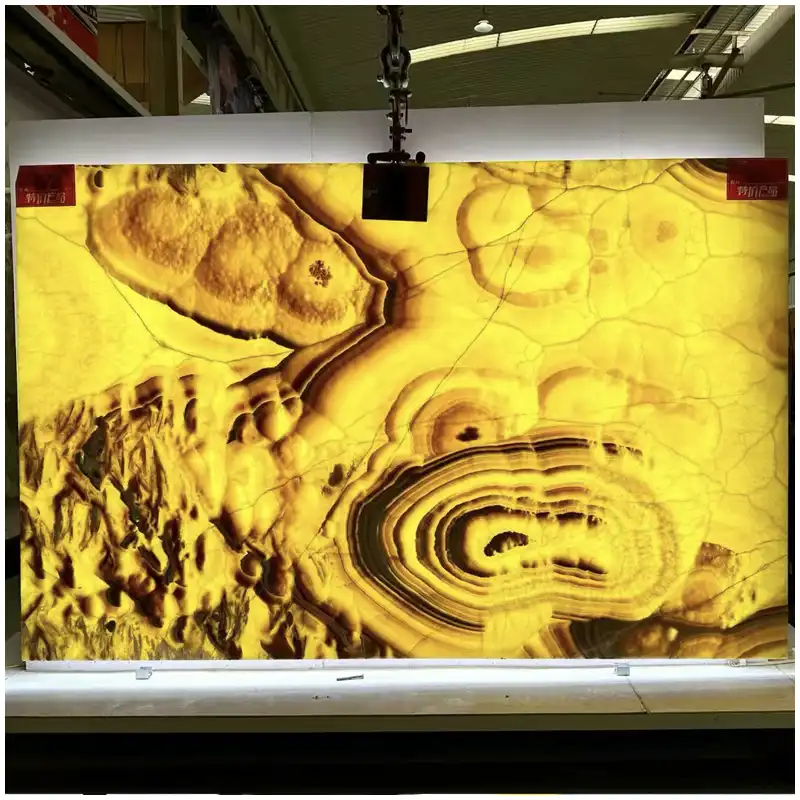
Vibrant amber and orange decorative onyx for warmer illuminated surfaces, reception features and interiors requiring a brighter natural mineral composition.
Snow White Onyx
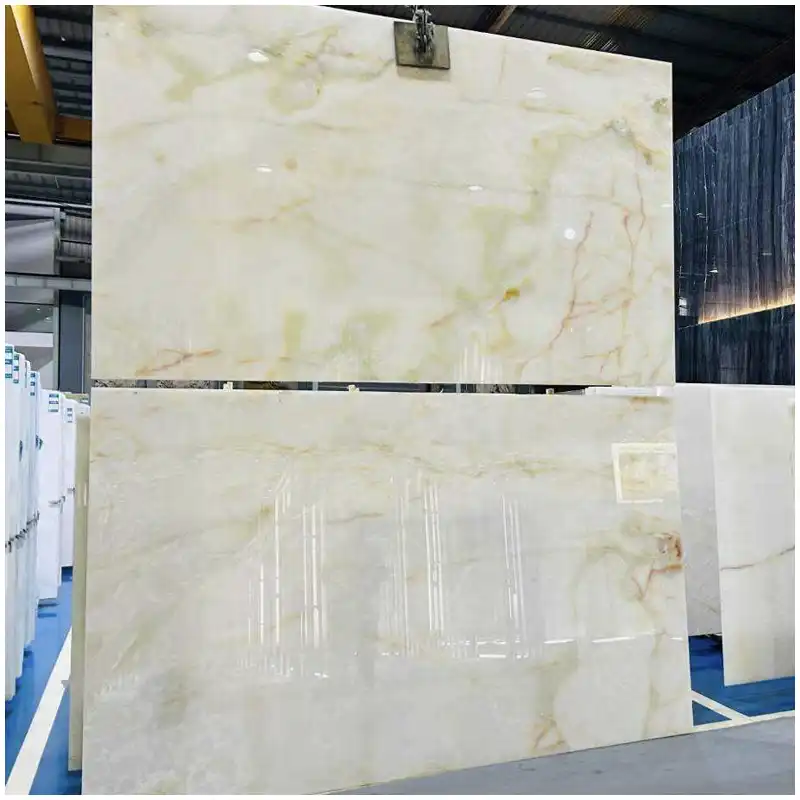
Milky white crystalline onyx for restrained architectural walls, pale illuminated panels and luxury interiors where subtle natural mineral variation is preferred.
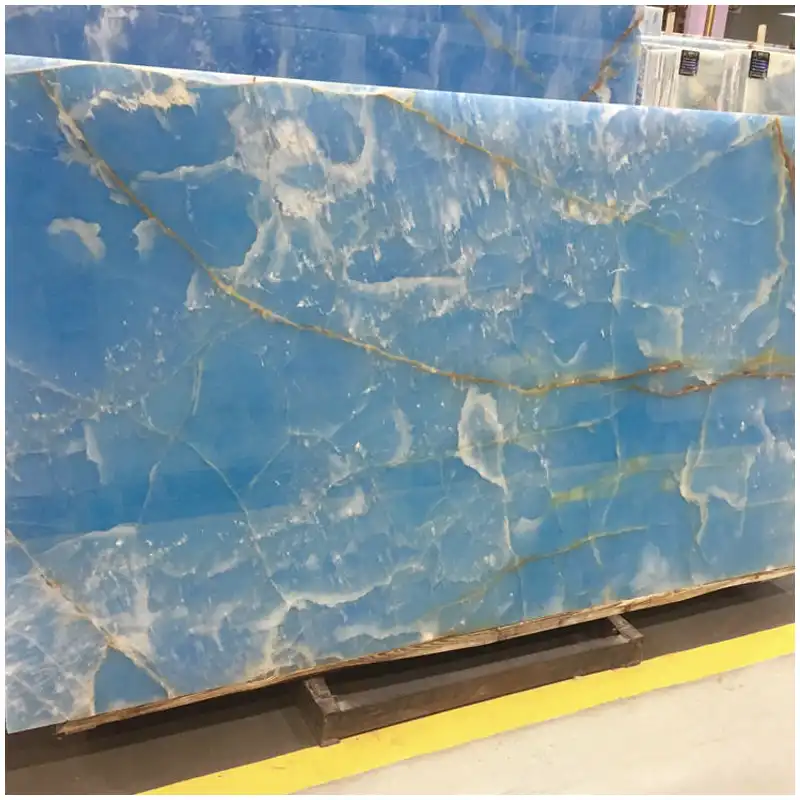
Blue Onyx Slabs
Cool blue decorative stone for individual feature walls, contemporary reception interiors and bespoke stone furniture with a distinctive mineral color palette.
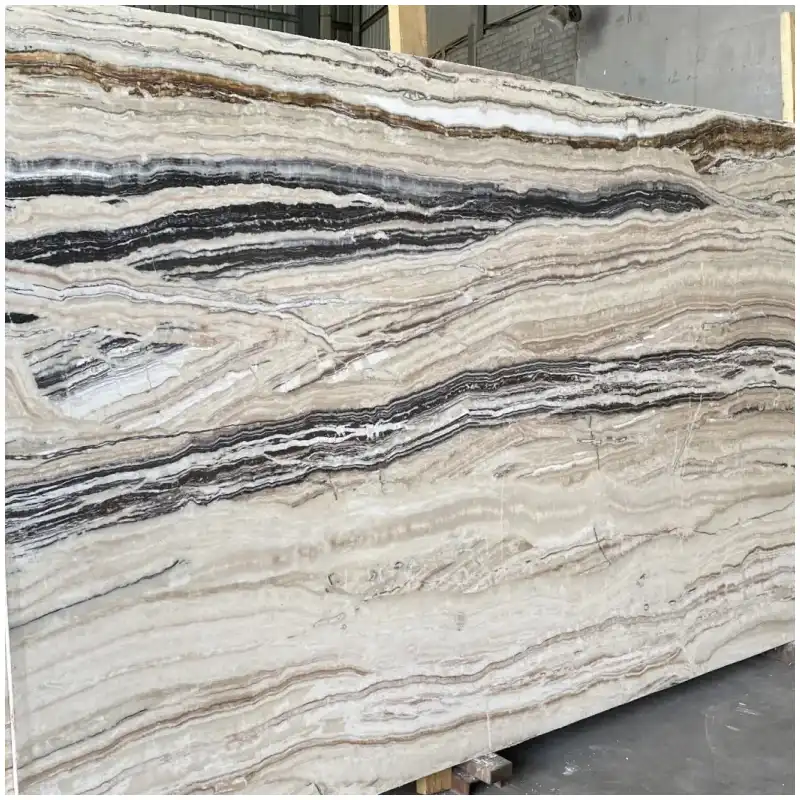
Zebra Jade Marble Slab
Contrasting dark and pale mineral stripes for graphic architectural elevations, directional wall compositions and custom interiors emphasizing the natural movement of stone.
Request Tiger Jade Marble for Your Architectural Stone Project
For a Tiger Jade Marble quotation, provide the required quantity, slab or finished component specifications, thickness, surface finish, preferred golden-brown or dark-brown mineral composition and delivery destination. Architectural wall and reception counter inquiries should include the proposed elevations, mineral direction preferences, joint arrangements and supporting construction details. For illuminated stone projects, specify the intended lighting conditions and backing requirements. Esta Stone can review the selected natural stone faces and fabrication requirements against your purchasing specification.