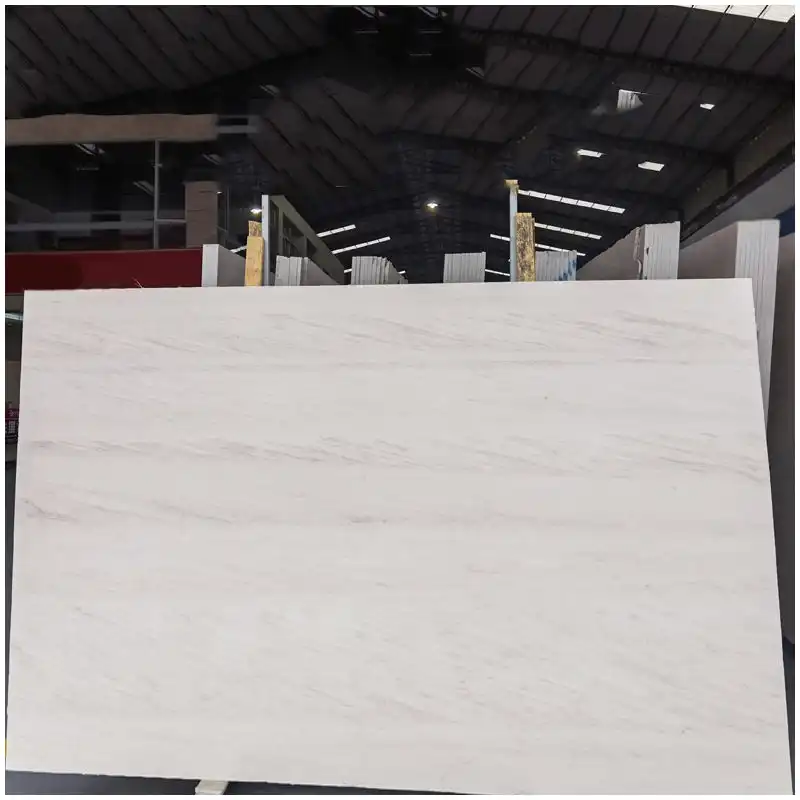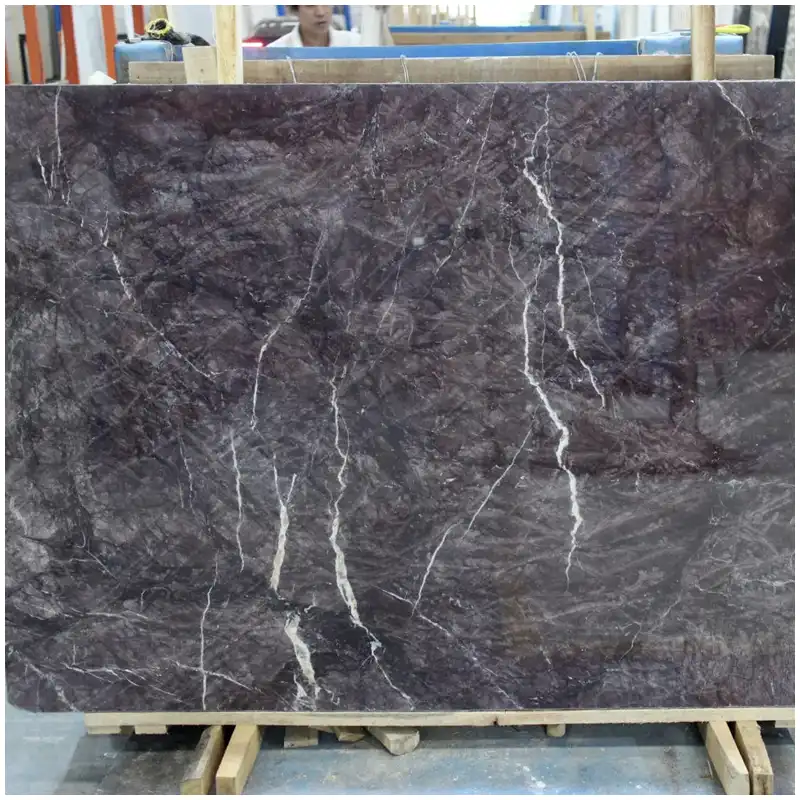
Global Policy Landscape Reshaping the Comptoirs en pierre Industry
EU Carbon Policies: CBAM and ESPR
From 1 January 2025 every shipment of natural stone entering the EU must be accompanied by quarterly Carbon Border Adjustment Mechanism (CBAM) reports that detail direct, indirect and embedded emissions; full carbon pricing will apply from 2026 onward. Running in parallel, the Ecodesign for Sustainable Products Regulation (ESPR) introduces a Digital Product Passport that will follow each slab from quarry to installation, recording durability data, recycled content and repair options.
For exporters and EU‑based fabricators alike, these twin rules make cradle‑to‑grave transparency non‑negotiable for Comptoirs en pierre.
United States: Buy American & Silica Safety
Across the Atlantic, federally funded projects must satisfy the new 65 % domestic‑content threshold set by the Build America, Buy America Act from 1 January 2025, rising to 75 % by 2029. Meanwhile, OSHA’s national emphasis program on engineered stone is now backed by a dedicated inspection blitz aimed at reducing silicosis among countertop workers. California is going further: Senate Bill 20 (STOP Act) would outlaw dry cutting and require a licensing regime for fabrication shops by 2027. Together these measures shape how Comptoirs en pierre may be fabricated, specified and installed in every U.S. kitchen or bath remodel.
China’s Dual‑Carbon Certification and Export Momentum
China, home to many quarries and fabrication hubs, plans to complete a national product‑level carbon‑footprint certification scheme by the end of 2025. Export‑oriented suppliers that document low‑carbon quarrying and renewable‑energy polishing lines will gain faster customs clearance and preferred treatment under free‑trade agreements—vital intelligence for importers selecting partners for high‑volume Comptoirs en pierre programs.
Material Focus: Granite Countertops, Marble Countertops and Beyond
Granite Countertops: Durability Meets Low‑Carbon Sourcing
Granite Countertops remain the benchmark for scratch resistance and thermal stability, yet quarry‑to‑gate emissions vary sharply. CBAM‑ready suppliers map blast energy, haulage distance and resin content to produce Environmental Product Declarations (EPDs) that lower the declared carbon intensities now scrutinized by architects. Innovators are also replacing diesel quarry equipment with electric excavators—an easy win under ESPR scoring.
Marble Countertops and ESPR Digital Product Passports
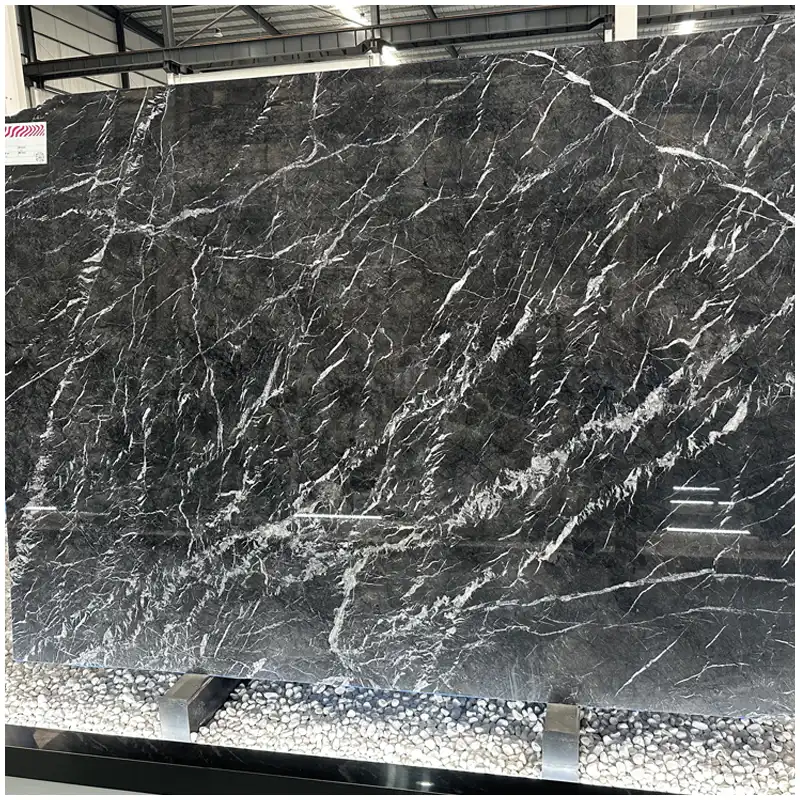
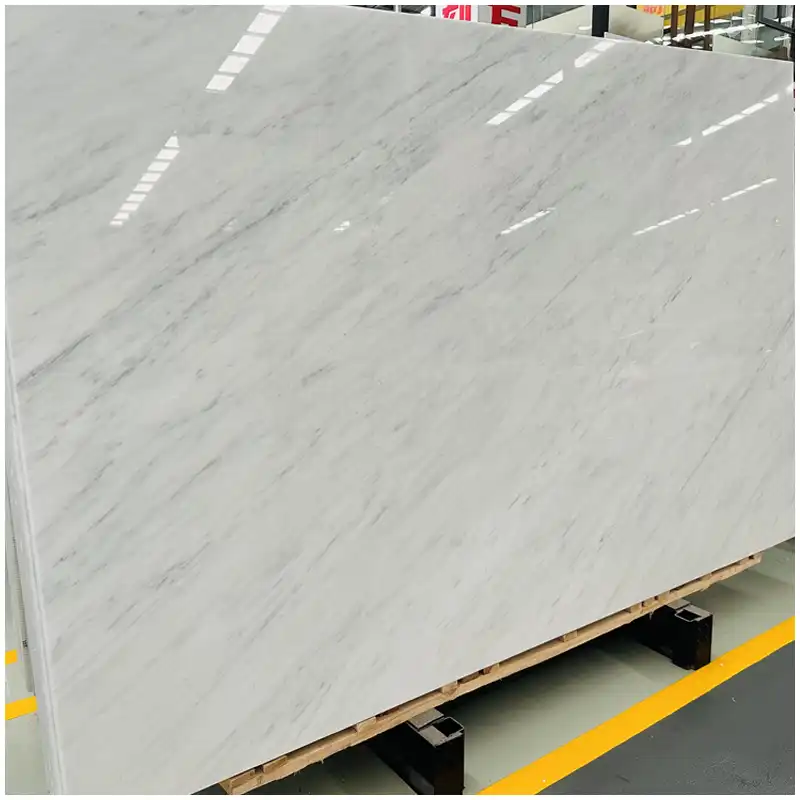
Marble Countertops occupy a premium niche where provenance storytelling matters. Under ESPR the Digital Product Passport can certify that Carrara or Vermont marbre carries biodiverse quarry‑restoration plans and worker‑safety audits. Designers benefit by scanning QR codes to retrieve maintenance tips or end‑of‑life recycling pathways—critical for LEED v5 material‑circularity points and for policy‑aligned Comptoirs en pierre branding.
Sustainable Innovations in Engineered Stone
Australia’s 2024 national prohibition on high‑silica engineered stone has triggered a pivot toward low‑silica composites, cement‑free terrazzo and sintered surfaces. Although the U.S. has not banned quartz, OSHA and California’s STOP Act effectively require wet fabrication, HEPA extraction and medical surveillance. Suppliers able to offer ≤40 % crystalline silica formulations provide insurers and developers a path to comply without abandoning the visual aesthetic that homeowners still associate with contemporary Comptoirs en pierre.

Application Insights: Kitchen Countertops and Bathroom Vanity Tops Under New Rules
Kitchen Countertops: Designing for Longevity and Carbon Transparency
Kitchen Countertops sit at the intersection of food‑safety, heat resistance and now carbon disclosure. EU food‑contact directives already limit resin migration; ESPR adds reparability and recyclability metrics. Specifiers are therefore favoring large‑format 20 mm slabs (fewer seams, less adhesive), reversible edge profiles, and under‑mount sink cut‑outs pre‑sealed at the factory to minimize on‑site dust in line with OSHA guidance.
Bathroom Vanity Tops: Water Stewardship and Circular Principles
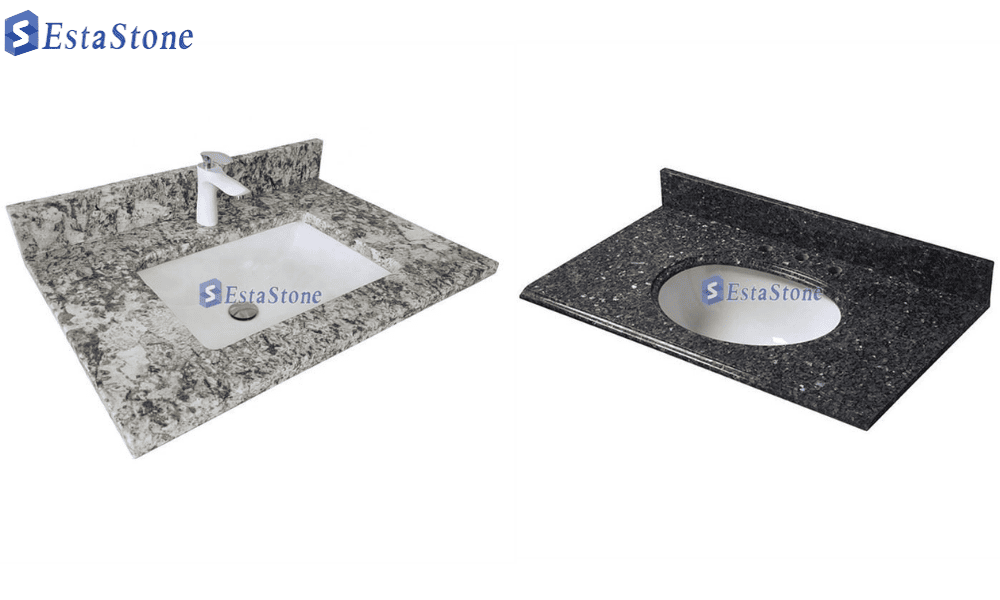
Bathroom Vanity Tops must cope with detergents and fluctuating humidity. To meet CBAM Scope‑3 expectations, forward‑looking quarries reclaim process water, while fabricators capture slurry fines for reuse as cementitious filler in shower‑tray molds. The result is a closed‑loop offering that not only wins points under WELL Building Standard v3 but also future‑proofs these Comptoirs en pierre against stricter resource‑efficiency targets.
Compliance Playbook for Exporters and Specifiers
Carbon Accounting and CBAM Readiness
-
Map emissions: pair quarry energy logs with transport distances.
-
Verify data: ISO 14067 or EN 15804 LCA datasets align with CBAM annexes.
-
Report: use the EU’s CBAM Transitional Registry for each quarter of 2025.
Meeting 65 % Domestic Content in U.S. Projects
Importers targeting federal contracts should:
-
Blend domestic finishing with imported blocks to lift U.S.‑cost share.
-
Use traceability software that attaches invoices to each pallet ID—auditors routinely sample three invoices per project under the new rule.
Safe Fabrication: Silica Mitigation Strategies
-
Adopt wet saws and negative‑pressure booths before OSHA inspectors arrive.
-
Enroll shop leads in California’s forthcoming 40‑hour silica‑safety curriculum to secure STOP Act certification early.
These measures reduce liability while keeping Comptoirs en pierre production lines running smoothly.
How whitemarblegranite Leads the Way
Chez whitemarblegranite we have already:
-
Achieved third‑party‑verified product‑carbon‑footprint labels for all Marble Countertops and Granite Countertops exported to the EU, aligning with CBAM methodology.
-
Implemented ESPR‑ready Digital Product Passports that record quarry GPS, water‑recycling ratios and recommended repair kits—ideal for modular Kitchen Countertops and Bathroom Vanity Tops.
-
Nous avons converti 80 % de nos lignes de sciage en découpe par voie humide avec recyclage en boucle fermée, dépassant ainsi les seuils de débit fixés par l’OSHA et positionnant nos distributeurs américains pour une conformité sans faille à la loi STOP.
-
Nous avons mis en place un pôle de finition en Amérique du Nord afin de respecter la règle de contenu Buy American de 65 %, tout en réduisant les délais de livraison de 30 %.
Ces initiatives font de notre Comptoirs en pierre portefeuille un choix à faible risque et prêt à être intégré dans les politiques, destiné aux architectes, aux détaillants et aux responsables des achats sur trois continents.
Le cycle politique de 2025 transforme l’approvisionnement en pierre naturelle d’une décision guidée par le design en une décision cruciale en matière de conformité. Le CBAM quantifie les émissions du berceau à la porte ; l’ESPR numérise la traçabilité ; la loi Buy American réécrit les équations de coût ; et la législation sur la sécurité liée à la silice impose des mises à niveau des procédés de fabrication. Aucune de ces mesures ne cible spécifiquement un pays pour critique, mais prises ensemble, elles élèvent la barre pour tous les acteurs de la Comptoirs en pierre chaîne de valeur.
Pour les maîtres d’ouvrage, la voie la plus sûre consiste à spécifier des fournisseurs dont les données carbone, les protocoles de sécurité et les stratégies de contenu national sont déjà documentés. Pour les fabricants, l’impératif est d’adopter des méthodes par voie humide, la filtration HEPA et des systèmes de surveillance en temps réel de la poussière avant l’intervention des autorités réglementaires. Et pour les exportateurs, la leçon est claire : investir dans des empreintes carbone vérifiables, des Passeports numériques de produit transparents et des finitions géographiquement diversifiées.
whitemarblegranite accueille ces mutations non pas comme des obstacles, mais comme des catalyseurs d’innovation. En intégrant des énergies renouvelables à la carrière, en automatisant les rapports sur l’ACV et en créant un pôle de finition conforme aux politiques en Amérique du Nord, nous proposons des plans de travail en granit, en marbre, des plans de travail de cuisine et des plans de toilette qui répondent aux attentes les plus élevées en matière de beauté, de durabilité et de garantie réglementaire.
Ce faisant, nous aidons les concepteurs à obtenir des crédits dans les certifications LEED, BREEAM et WELL, tout en offrant aux propriétaires des surfaces qui restent intemporellement élégantes — preuve que les nouvelles règles régissant Comptoirs en pierre peuvent servir à la fois la planète et les personnes qui se rassemblent autour d’elles.