




Ātrs kopsavilkums
Osmaņu smilškrāsas marmors is a Turkish beige stone associated with the Isparta region, featuring a cream-to-warm-beige background and restrained cloudy veining. Esta Stone supplies Ottoman Beige Marble Slabs for villa staircases, custom treads and risers, interior floors and hotel wall cladding. Polished and honed finishes can be selected according to the architectural design and installation conditions. Common catalogue thicknesses include 18mm, 20mm and 30mm. For staircase projects, the critical decisions include slab tone grouping, tread and riser dimensions, nosing profiles, slip performance and the relationship between stairs and adjoining landings.
Ottoman Beige Marble Slabs for Villa Staircase,Columns and Landing Projects
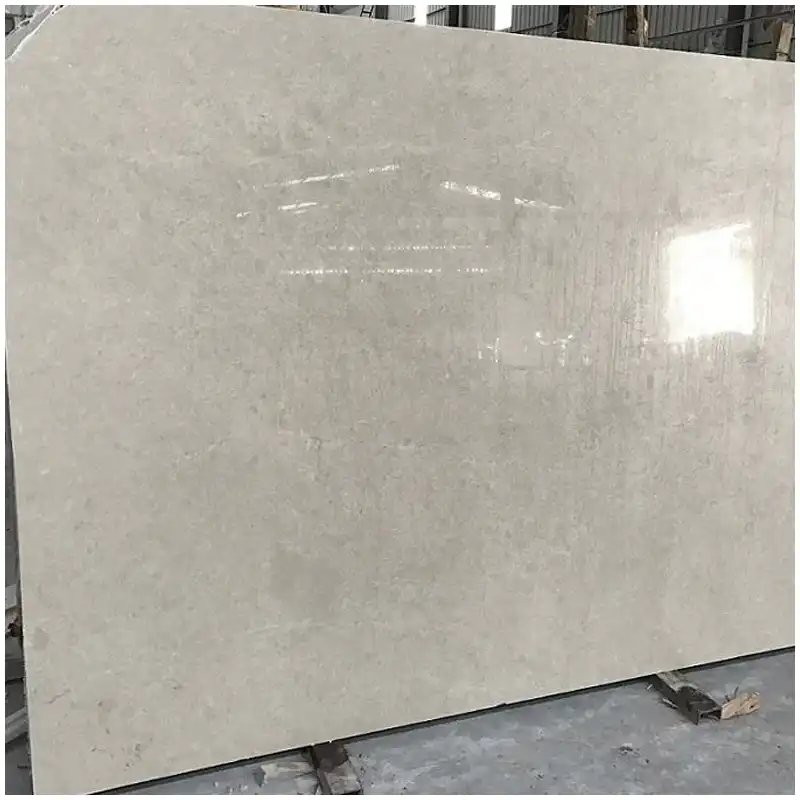
Osmaņu bēšā marmora plāksnes are used in residential interiors where the staircase forms a visible architectural connection between floors. The marble’s cream-beige background can continue from entrance flooring to stair treads, risers and upper landings without introducing a strongly contrasting stone pattern.
In a villa entrance hall, a marble staircase is often viewed from several directions. The upper surface of each tread, the vertical riser and the landing panels contribute to the overall appearance. Using an approved slab group helps limit unexpected changes between warmer and cooler beige pieces.
Ottoman Beige usually contains subtle cloudy mineral variations rather than bold continuous veins. This gives the staircase a relatively calm visual rhythm, particularly where individual steps have the same dimensions and are combined with plaster walls, timber handrails or metal balustrades.
For fabrication, a staircase should be planned as a coordinated set of components rather than a collection of unrelated floor tiles. The stone dimensions, edge profiles and selected finish need to relate to the structural stair geometry and the adjoining finished-floor levels.
Polished Ottoman Beige Marble Slabs for Hotel Floors and Wall Panels
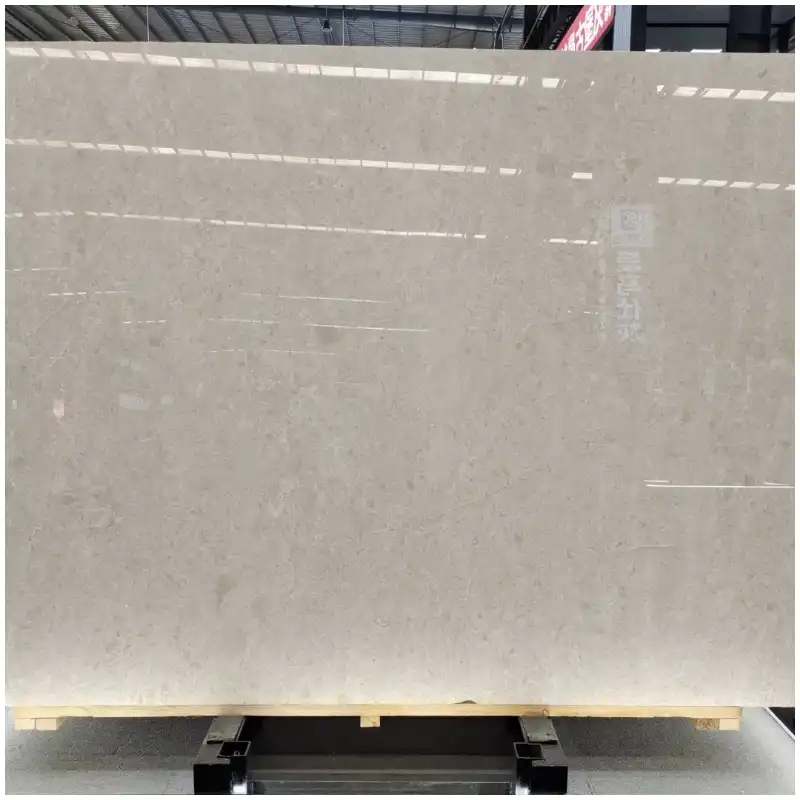
The polished surface of Osmaņu smilškrāsas marmors brings out its cream and pale brown mineral variations. Large slabs can be fabricated into hotel wall panels or interior floor pieces, with the natural background tone providing a warmer alternative to white and cool-grey marble.
For a hotel lobby wall, rectangular stone panels can be arranged around reception desks, doors and architectural openings. The relatively restrained mineral movement allows the proportions of the wall and the placement of joints to define the finished appearance.
On interior floors, broad beige surfaces can connect different areas of a building. Polished stone reflects overhead lighting, while honed marble creates a lower-gloss result. The appropriate finish depends on traffic and moisture conditions, not only on appearance.
The marble’s background shade may vary between blocks and batches. A pale cream selection beside a deeper golden-beige selection can produce a noticeable transition, especially under uniform ceiling lighting. Grouping material by approved tone becomes important when a project contains a large number of adjoining panels.
Ottoman Beige Marble Large Slabs and 18mm Stone Selection
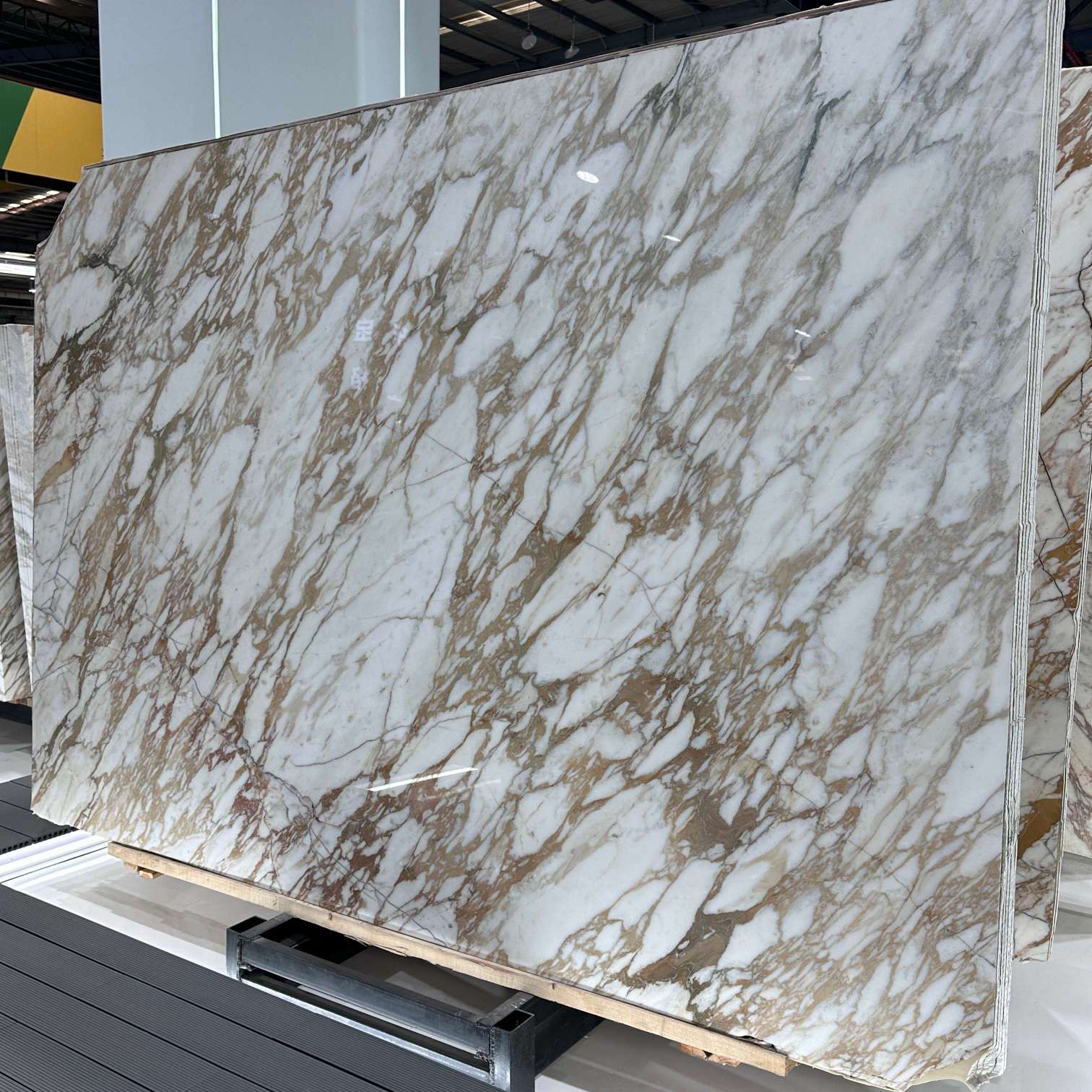
Large Ottoman Beige slabs can be cut into floor panels, wall cladding and individual staircase components. The two views below illustrate the importance of assessing the whole slab surface alongside the nominal thickness. The visible cream tone, cloudy areas and small mineral veins should be reviewed as a complete selection.
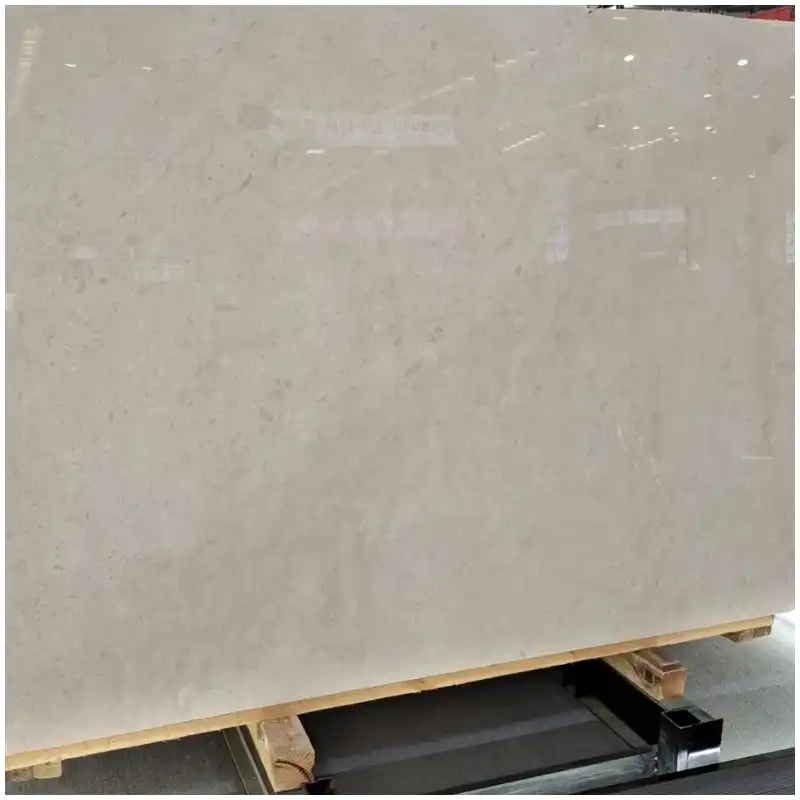
Large Ottoman Beige slab for assessing mineral distribution and usable cutting area.
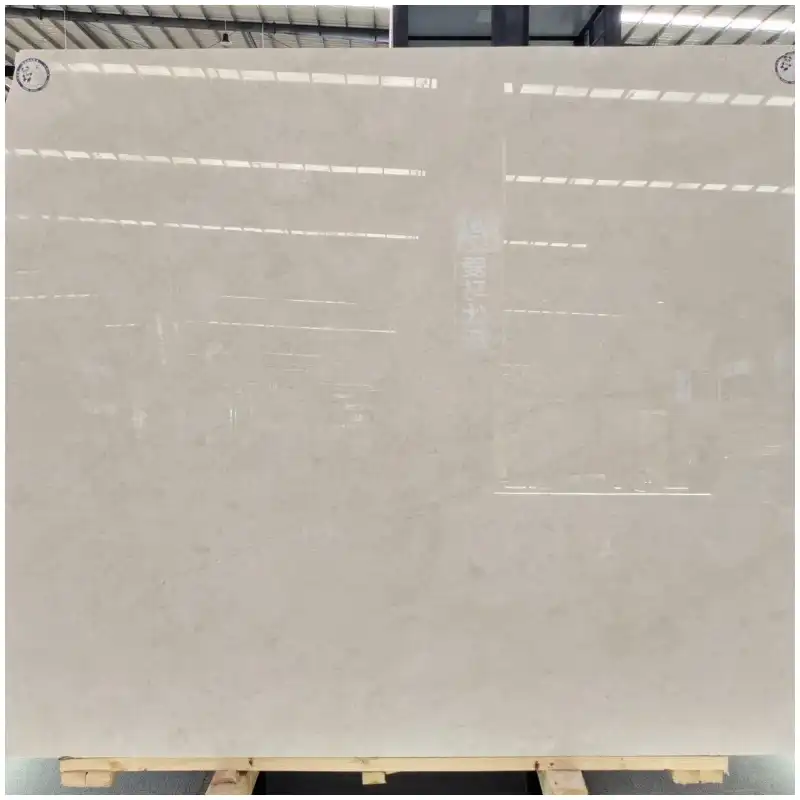
18mm Ottoman Beige slab reference for selected interior components.
The featured 18mm slab is relevant to the catalogue but should not be treated as a universal staircase thickness. Finished treads, risers and large wall panels have different support and loading requirements. Their dimensions must be established from the specific project drawings and structural construction.
Ottoman Beige Marble Slab Dimensions, Stair Treads and Tile Specifications
Esta Stone’s Ottoman Beige Marble product range covers large slabs, floor tiles and custom staircase components. The following measurements are catalogue and fabrication references rather than confirmed stock dimensions for every current slab.
| Produkta nosaukums | Osmaņu bēšā marmora plāksnes |
| Materiāls | Turkish Ottoman Beige Marble |
| Izcelsmes atsauce | Isparta Region, Turkey |
| Krāsa | Cream Beige / Warm Beige / Subtle Pale Brown Mineral Variations |
| Plāksņu Izmēru Atsauces | 1800mm+ × 600mm+ / 2400mm+ × 1200mm+ / 2800mm+ × 1500mm+ |
| Plāksnes biezuma atsauces | 15mm / 18mm / 20mm / 25mm / 30mm |
| Kvadrātveida flīžu atsauces | 305 × 305mm / 400 × 400mm / 457 × 457mm / 600 × 600mm / 800 × 800mm |
| Taisnstūrveida flīžu atsauces | 300 × 600mm / 400 × 800mm / 600 × 1200mm / Custom |
| Stair Components | Custom Treads / Risers / Landings / Edge Returns / Skirting |
| Stair Thickness Examples | 30mm Treads / 20mm Risers as design references; actual build-up and support to be engineered |
| Virsmas apdare | Polished / Honed; Brushed by material and finish assessment |
| Galvenie pielietojumi | Villa Stairs / Interior Floors / Hotel Wall Panels / Bathroom Cladding |
Ottoman Beige Marble Villa Stair Projects: Custom Treads, Risers and Landings
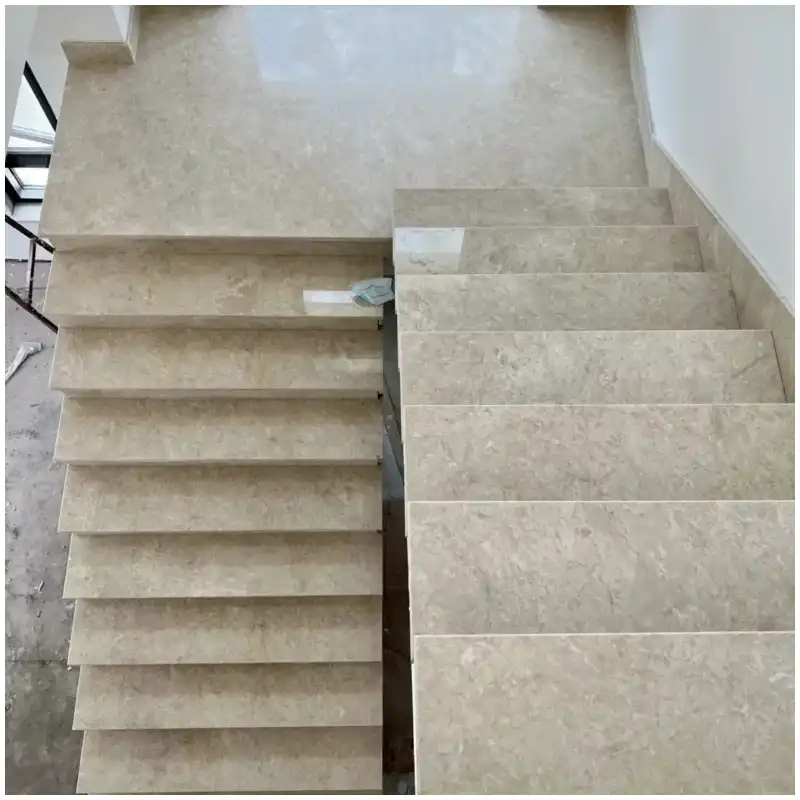
The staircase application illustrates how Ottoman Beige Marble can connect the lower floor, a flight of steps and the upper landing within one visual scheme. Its warm background reduces the contrast between separate stone pieces, while variations in cloudy mineral detail remain visible at close range.
For a straight staircase, individual treads are usually fabricated to match the structural width, finished going and required edge detail. Risers may be cut from thinner material where the assembly and substrate permit, but their exposed height must be coordinated with the tread build-up and local stair regulations.
A turning staircase or landing introduces more complex shapes. The cutting layout may include triangular pieces, curved edges or enlarged landing panels. These components should be identified separately so that the installation sequence and the position of visible stone patterns remain clear.
The finished staircase requires more than matching stone color. The geometry of each step, slip resistance, consistent riser heights, edge visibility and secure support are essential to safe installation. A polished Ottoman Beige tread should not be accepted for a particular stair solely because it has a smooth, attractive surface.
Stair Nosing Profiles and Ottoman Beige Marble Landing Coordination
The exposed front edge of a marble tread influences both the appearance and the usability of the staircase. Straight polished edges, eased corners and more pronounced edge details create different visual profiles. A nosing should be selected in coordination with the required tread dimensions, edge visibility and applicable stair safety requirements.
Large-format landing panels may require joints where the turning area exceeds the available slab dimensions. These joints can be aligned with the staircase geometry or placed to maintain a balanced stone layout. The same applies to skirting pieces running along a stair wall: changes in angle and elevation need precise cutting dimensions.
At the top and bottom of a stair flight, the completed stone thickness and bedding system affect the finished floor levels. This detail is important because inconsistent final riser heights can create a trip hazard even when individual marble pieces have been fabricated accurately.
Polished and Honed Ottoman Beige Marble for Stair and Floor Finishes
Polished Ottoman Beige Marble has a reflective surface that highlights the cream-colored background and finer mineral details. The finish is widely used for decorative interior wall panels and selected dry-area architectural surfaces where reflected lighting is part of the design.
Honed Ottoman Beige Marble has a lower-gloss surface. It may be preferable where strong reflections are unwanted, but its appearance does not independently prove that it meets slip requirements for stairs, entrances or wet floors.
On stair treads, the surface finish should be considered together with edge markings, walking conditions, maintenance and any specified anti-slip treatment. A staircase used by guests, children or older residents may have different performance and visibility requirements from an ornamental stair in a private interior.
Both finishes can experience abrasive wear from tracked-in grit. Marble also requires appropriate cleaning products. The finish should be reviewed using actual processed samples rather than assuming that the performance of one treatment can be inferred from another.
Ottoman Beige Marble Physical Properties and Technical Test Reference
The following published measurements relate to a commercial Ottoman Beige Marble reference. They are useful for preliminary material review, but do not replace test documentation for the particular slabs or staircase components selected for a project.
| Physical Property | Reference Value | Reported Unit / Note |
| Blīvums | 2,695 kg/m³ | Published commercial value |
| Ūdens absorbēšana pēc svara | 0.20% | Published commercial value |
| Flexural Strength | Approx. 13.81 MPa | Reported as 140.8 kgf/cm² |
| Kompresijas izturība | Approx. 91.77 MPa | Reported as 935.8 kgf/cm² |
Tehniskā atsauce: These values describe a published Ottoman Beige commercial stone sample and are not certified results for the current Esta Stone batch. Strength values are converted from the original kgf/cm² units to MPa. Complete test methods and individual batch traceability have not been established. These measurements do not determine stair slip resistance, allowable unsupported spans, anchor capacities or compliance with local building codes.
Maintaining Ottoman Beige Marble Stairs and Interior Surfaces
Ottoman Beige is a carbonate-based marble. Acidic cleaners, vinegar, some bathroom descalers and acidic food spills may etch its polished surface. The resulting dull areas can be particularly noticeable where direct lighting reflects across the stone.
For interior stairs, sand and abrasive grit should be removed regularly so that foot traffic does not gradually wear the exposed treads and nosings. Use a pH-neutral cleaner suitable for marble and avoid aggressive scrubbing pads or cleaning products that leave slippery residues.
A compatible impregnating treatment may reduce certain staining risks, but it does not prevent acid etching or substitute for a slip-resistant walking surface. The frequency of any sealing treatment should follow the actual stone, applied product and service conditions rather than a fixed calendar interval.
Iepakošanas, transportēšanas un inspekcijas darbplūsma
| Pirms ražošanas | Confirm Ottoman Beige slab selection, full-slab photographs, approved beige-tone range, cutting drawings, tread and riser dimensions, thickness and polished or honed finish. |
| Pirms iepakošanas | Inspect dimensions, thickness tolerances, surface quality, batch-tone consistency, nosing and edge profiles, corners, landing pieces and component identification labels. |
| Pirms nosūtīšanas | Review finished-component and slab photographs, export packing photographs, step numbers against the packing list, gross weight, destination port and shipping schedule. |
Common Ottoman Beige Marble Stair and Slab Specification Mistakes to Avoid
- Approving a staircase from a small beige sample: Full-slab and batch photographs are needed to assess cream-tone variation and pale mineral distribution across treads, risers and landings.
- Assuming polished marble is suitable for every stair: Slip resistance, tread-edge visibility and expected moisture conditions must be reviewed for the specific finished staircase.
- Using 18mm slab thickness as a universal tread specification: Tread thickness, substrate, support and edge detailing must correspond to the designed stair assembly.
- Ignoring the finished height of the first and last risers: Stone and bedding build-up can change finished stair geometry, creating inconsistent riser heights if landings are not coordinated.
- Mixing stone batches or overlooking maintenance: Different beige selections may create visible color changes, while acidic cleaners and abrasive grit can damage finished marble surfaces.
Frequently Asked Questions About Ottoman Beige Marble
Where does Ottoman Beige Marble come from?
Ottoman Beige Marble is commercially associated with quarries in the Isparta region of Turkey. It is used for marble slabs, stair components, floor tiles and interior architectural cladding.
What does Ottoman Beige Marble look like?
Ottoman Beige Marble has a cream-to-warm-beige background with subtle cloudy mineral variations and occasional pale brown or ivory veins. Individual slabs can differ in shade and mineral distribution.
What slab thicknesses are available for Ottoman Beige Marble?
Common catalogue thickness references include 15mm, 18mm, 20mm, 25mm and 30mm. Actual slab availability depends on the selected batch and required fabrication.
Can Ottoman Beige Marble be fabricated into villa stair treads and risers?
Yes. Ottoman Beige Marble can be cut into villa stair treads, risers, landing panels and skirting. Their dimensions, support, edge profiles and finish must be coordinated with the structural stair design.
Is 30mm Ottoman Beige Marble suitable for stair treads?
30mm is a common design reference for some marble stair treads, but suitability depends on the actual tread dimensions, substrate, support, selected stone and local building requirements. Thickness alone does not establish structural adequacy.
Is polished Ottoman Beige Marble safe for stairs?
Polished Ottoman Beige Marble should not automatically be treated as slip-resistant. Suitability depends on the finished surface, expected walking and moisture conditions, edge visibility and relevant project slip assessment.
What are the reference physical properties of Ottoman Beige Marble?
A published Ottoman Beige Marble reference lists density of 2,695 kg/m³, water absorption by weight of 0.20%, flexural strength of approximately 13.81 MPa and compressive strength of approximately 91.77 MPa. These are not certified results for the current slab batch.
How should polished Ottoman Beige Marble be cleaned?
Use a pH-neutral cleaner suitable for marble and non-abrasive equipment. Remove grit from stair treads, avoid acidic cleaning products and use a compatible sealer where appropriate. Sealing does not prevent acid etching.
Ottoman Beige Marble Compared with Four Interior Marble Slab Selections
Ottoman Beige provides a warm neutral background suited to coordinated staircases and floors. These four alternative marble selections introduce cooler grey tones, brighter white backgrounds and different mineral patterns for projects where a contrasting material is required.
| Marmors | Virsmas raksturojums | Dizaina atšķirība |
| Osmaņu smilškrāsas marmors | Warm cream-beige background with soft mineral movement | Coordinated villa stairs, landings and beige floor panels |
| Fior Di Pesco pelēkais marmors | Grey and pink-grey with irregular white mineral formations | More patterned residential wall and vanity surfaces |
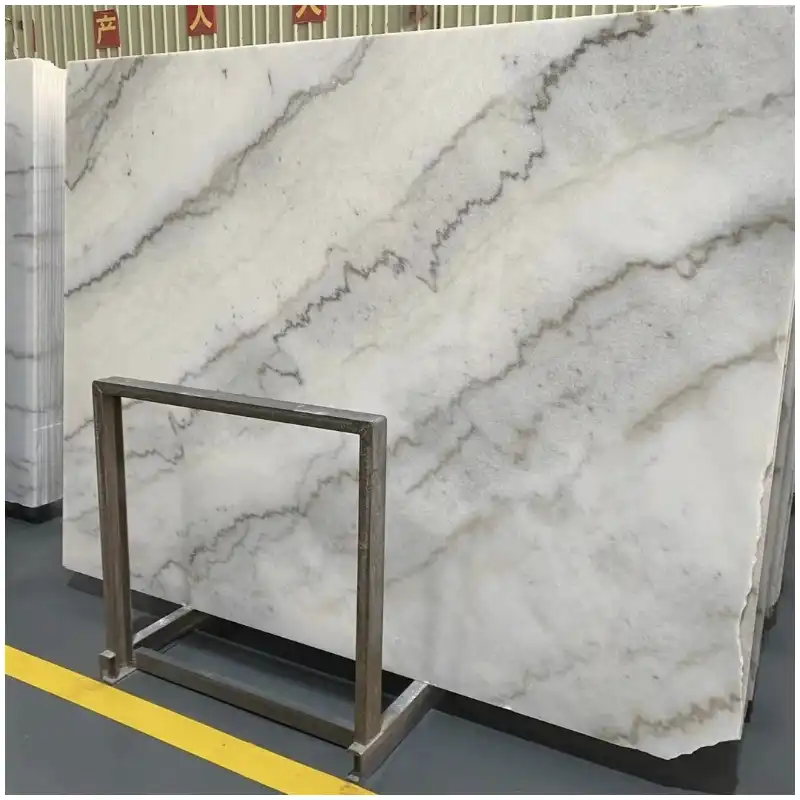
| Baltā Guangxi marmors | White background with delicate grey mineral lines | Bright wall and floor schemes with restrained grey veining |
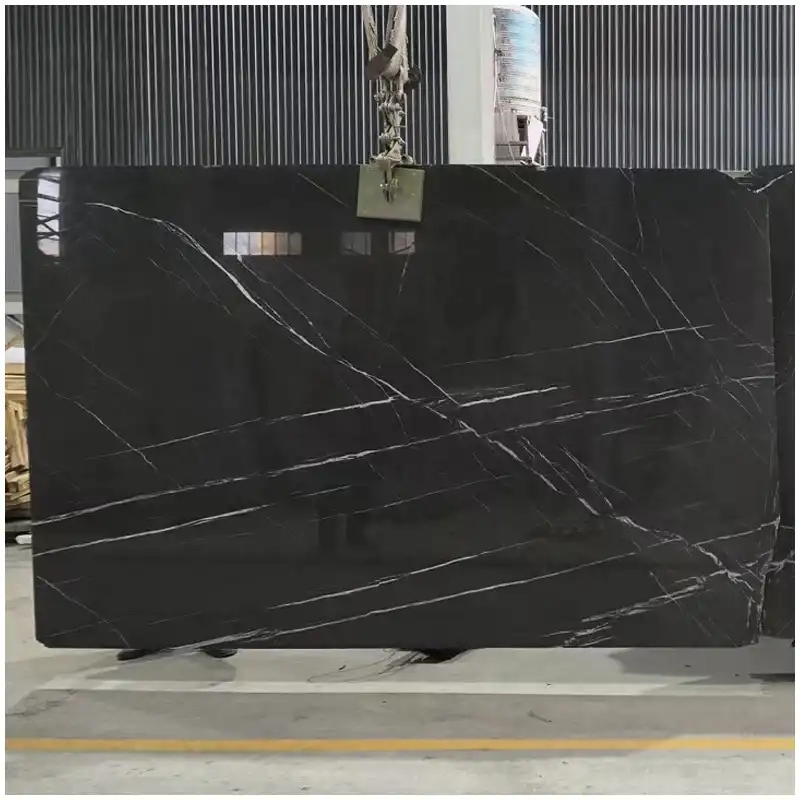
| Pietra pelēks marmors | Charcoal-grey stone crossed by fine pale veins | Dark feature walls and contrasting interior components |
| Thassos White Marble | Bright crystalline white with limited prominent veins | High-brightness bathrooms and white architectural panels |
Recommended Beige, Grey and White Marble Slabs
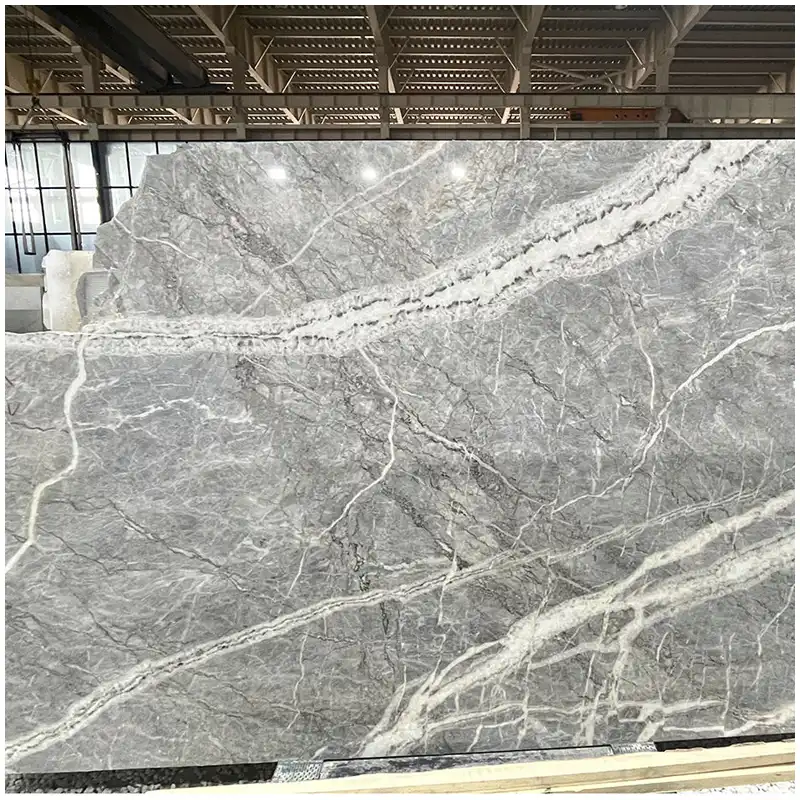
Fior Di Pesco pelēkais marmors
Italian grey marble with soft pink and white mineral movement.

Ottoman Beige Marble Slabs for Custom Villa Stair and Interior Stone Packages
Esta Stone supplies Ottoman Beige Marble Slabs for residential staircase and interior stone projects that require coordinated treads, risers, landing panels and adjoining floors. An approved slab selection can be used to establish the beige-tone range before fabrication, while project drawings define the individual step geometry, edge profiles and visible joints. Matching the warm stone background across these related pieces helps maintain visual continuity between the staircase and nearby interior surfaces.
For custom stair fabrication, the cutting schedule should distinguish each flight, landing, tread and riser rather than relying on a single standard tile dimension. Finished floor levels, stone build-up, nosing details, support and slip requirements also need to be coordinated with the building design. Full-slab photographs, component measurements and identification labels provide a practical basis for checking the stone package before shipment.
| Lūgt cenu piedāvājumu | Skatīt marmora plāksnes |