


Ātrs kopsavilkums
Guangxi White Travertine is a natural sedimentary stone from China, characterized by its ivory-white background, delicate mineral layering and naturally occurring pores. The featured 255×176cm and 302×145cm slabs have a honed and filled surface that combines the understated texture of travertine with a relatively smooth, low-gloss appearance. The material can be processed into architectural wall panels, interior floor tiles, bathroom surfaces and customized stone components for residential and commercial developments. Selection should account for background tone, filling consistency, sedimentary direction and the net usable area of each slab.
Guangxi White Travertine Slabs for Residential and Commercial Architecture
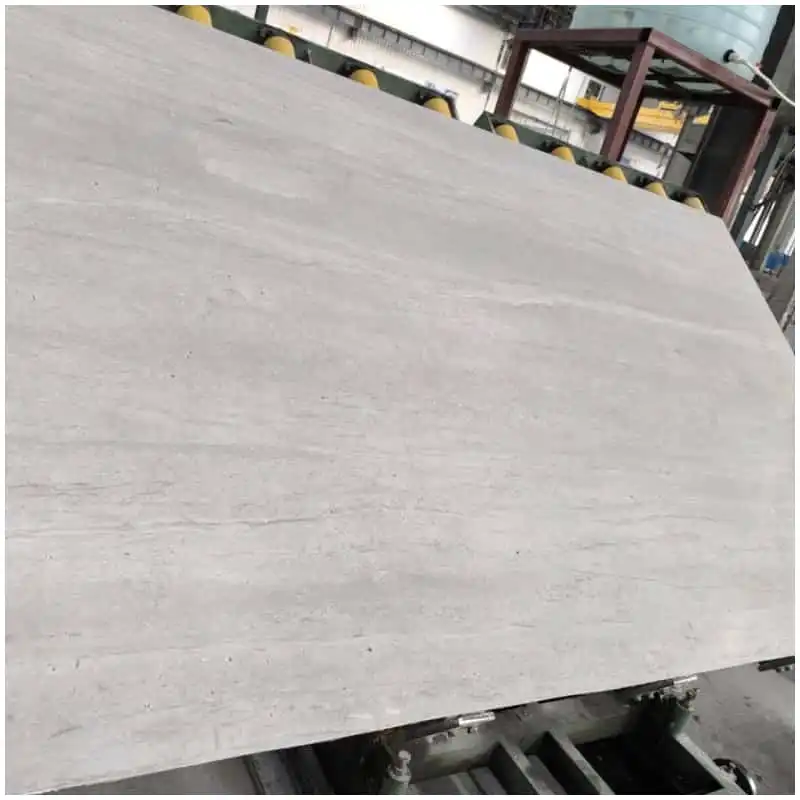
White travertine occupies a distinctive position among pale architectural stones. It has the brightness associated with light-colored marble and limestone, but its sedimentary structure introduces fine cavities, irregular mineral deposits and understated changes in surface texture.
Guangxi White Travertine belongs to this family of naturally porous carbonate stones. Its pale ivory color makes it suitable for interiors where the designer wants visible natural material without the pronounced contrasting veins commonly found in decorative white marble.
The relatively quiet appearance is useful when stone extends across several architectural elements. A hotel may incorporate matching wall panels, elevator surrounds and floor borders, while a residential development may carry the same material into living rooms, corridors and bathroom interiors.
What distinguishes this selection is not simply its light color. The relationship between the original stone and its filled cavities becomes increasingly visible when several square meters are installed together. Differences in filler shade, pore concentration and surface finishing can influence the continuity of an otherwise restrained interior.
The featured slab formats accommodate both elongated architectural components and broader panel arrangements. Importers purchasing full slabs can assess these dimensions against the requirements of their downstream fabrication customers. Contractors ordering finished pieces need to consider the cutting schedule, edge treatment and approved appearance range.
For either purchasing route, a small sample is only the starting point. Full-face slab photographs reveal the distribution of sedimentary layers and filled areas that will ultimately determine the character of larger finished surfaces.
Guangxi White Travertine Slab Sizes and Material Specifications
The two listed slab formats represent different cutting proportions. One is comparatively broad, while the other provides an extended length for architectural components requiring a longer uninterrupted stone face.
| Produkta nosaukums | Guangxi White Travertine |
| Akmens klasifikācija | Natural Sedimentary Carbonate Stone / Travertine |
| Izcelsme | Guangxi, China; Specific Quarry Documentation by Material Confirmation |
| Commercial Material Names | Chinese White Travertine / Guangxi Ivory White Travertine |
| Related Sourcing Names | Oriental White Travertine / Chinese Ivory Travertine; Confirm Actual Material Identity |
| Background Color | Ivory White / Cream White / Pale Beige |
| Slab izmērs A | 255×176cm / 2550×1760mm |
| Slab izmērs B | 302×145cm / 3020×1450mm |
| Biezums | Confirm from Selected Slabs and Finished-Product Drawings |
| Featured Surface | Honed and Filled |
| Natural Characteristics | Sedimentary Layers / Mineral Pores / Subtle Background Variation |
| Finished Product Forms | Full Slabs / Floor Tiles / Wall Panels / Stair Components / Customized Architectural Stone |
| Pieteikumi | Villas / Hotels / Commercial Interiors / Bathrooms / Architectural Cladding |
The dimensions are nominal slab measurements. Net fabrication sizes depend on perimeter trimming, natural cavities, edge condition and the required cutting orientation. No fixed thickness is assigned to these two formats until the actual slab measurements are confirmed.
Chinese Travertine: Understanding the Ivory Background and Natural Pore Structure
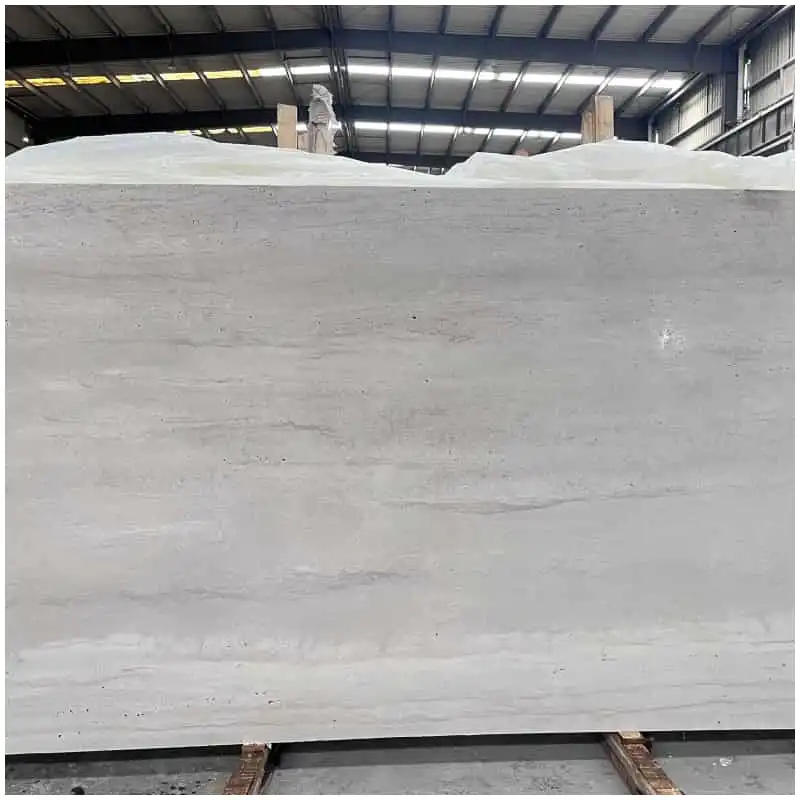
Travertine develops through the precipitation of calcium carbonate from mineral-bearing water. The resulting stone may contain cavities of different sizes, relatively dense mineral zones and layers formed during successive stages of deposition.
In pale Chinese Travertine, these features may appear as cream-colored marks, fine bands or small interruptions within the ivory background. Their visual importance depends on how the slab has been cut and subsequently finished.
Vein-cut travertine exposes the sedimentary layers in a more directional arrangement. Cross-cut material generally displays a less linear distribution. The two cutting orientations can produce noticeably different surfaces even when the stone originates from the same deposit.
For extensive interior cladding, the buyer should approve the direction of the visible sedimentary structure. Rotating an elongated panel to improve cutting efficiency may introduce a change in direction that becomes apparent only after installation.
The white background also requires a practical shade range. Natural ivory stone rarely maintains the identical brightness of a manufactured white surface. Pale cream areas may be acceptable within the approved selection, but conspicuous yellow or darker concentrations may require separate allocation.
Material approval works best when several representative slab faces are reviewed under consistent lighting. This establishes the expected relationship between background color, natural mineral variation and the areas modified by filling.
Choosing Between 255×176cm and 302×145cm Travertine Stone Slabs
A comparison of gross surface area alone gives an incomplete picture of material efficiency. The broader slab has a slightly greater total area, whereas the longer slab accommodates components that may exceed the cutting length available from the first format.
| Plāksnes Formāts | Gross Area | Potential Cutting Allocation | Key Review Point |
|---|---|---|---|
| 255×176cm | 4.49m² | Broader wall sections, rectangular floor modules and coordinated panel sets | Usable width, module arrangement and sedimentary direction |
| 302×145cm | 4.38m² | Elongated cladding components, tall panels and linear architectural elements | Net length, handling restrictions and cavity locations |
For an architectural panel measuring approximately 270cm in one direction, the longer slab is the more relevant starting format. However, its 302cm nominal length does not guarantee that every face can accommodate the finished component after damaged edges and unsuitable areas have been excluded.
The 176cm width of the shorter slab may be more useful for layouts requiring several coordinated pieces across the slab face. Its wider proportion can reduce unnecessary orientation changes when the approved cutting schedule contains rectangular components of varying widths.
When purchasing Travertine Stone Slabs for processing, request a cutting study based on actual dimensions and the intended finished products. The preferred format is the one that delivers acceptable finished pieces with the required appearance, not necessarily the one with the largest gross area.
Inspecting Guangxi White Travertine Before Cut-to-Size Production
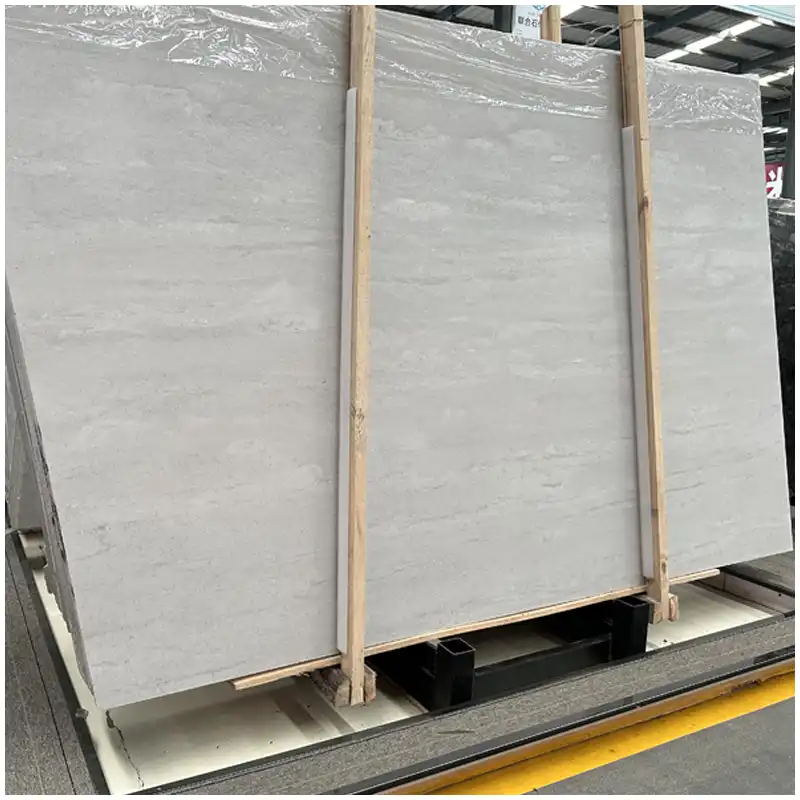
The surface of a finished travertine slab does not necessarily reveal the full depth of its natural cavities. A pore that has been filled successfully on the visible face may extend into the stone and become exposed when a new edge is cut.
This becomes important for stair treads, window surrounds, projecting shelves and furniture components. Their finished edges are visible and may require additional treatment that is unnecessary on a wall panel concealed within an adjoining joint.
Before fabrication, examine the slab perimeter and proposed cutting locations. Areas with concentrated cavities should not automatically be assigned to narrow components simply because those regions appear acceptable on the main surface.
For repetitive production, the approved sample should establish the permissible relationship between pale stone and filling material. A very uniform face may be appropriate for a contemporary commercial lobby, while another project may accept greater visible mineral texture.
The fabrication drawing should identify visible edges, concealed edges, corner connections, penetrations and any pieces requiring matching sedimentary direction. These details determine which sections of the slab can be allocated without creating avoidable repair work.
Travertine selection is most effective when appearance and component geometry are considered together. A visually attractive area is not necessarily the most suitable part of a slab for a narrow or projecting finished piece.
Honed and Filled Travertine Slabs: Surface Finish and Filling Acceptance
Honed and Filled Travertine Slabs combine two separate processing decisions. Filling addresses accessible natural cavities, while honing produces the relatively smooth, low-gloss surface associated with contemporary travertine interiors.
These treatments need to be evaluated independently. A slab may have an attractive honed finish yet contain poorly matched filler, small depressions or areas where newly exposed cavities remain untreated.
The color and type of filling material can also affect the finished appearance. Cementitious and resin-based filling systems have different visual and maintenance characteristics. The filling system used on the selected slabs should be confirmed rather than inferred from a photograph.
| Pārbaudes vienība | Acceptable Material Direction | Potential Concern |
|---|---|---|
| Filler Color | Compatible with the approved ivory stone background | Conspicuous dark or yellow filling patches |
| Filled Surface | Cavities treated according to the agreed finish sample | Loose filler, excessive recesses or unintended open cavities |
| Honed Consistency | Comparable low-gloss appearance across related pieces | Uneven polishing, visible machining marks or glossy patches |
| Exposed Edges | Finished edges consistent with the approved detail | Unaddressed cavities or fragile narrow sections |
Filling does not transform travertine into a nonporous engineered surface. The underlying stone retains its natural structure, and the finished product still requires application-specific assessment of moisture exposure, chemical sensitivity and mechanical performance.
Guangxi White Travertine Feature Wall Designs and Architectural Panel Layout
The following design reference illustrates the use of pale travertine on a prominent interior wall. The image demonstrates an architectural application rather than confirming a completed installation from the two listed slab formats.
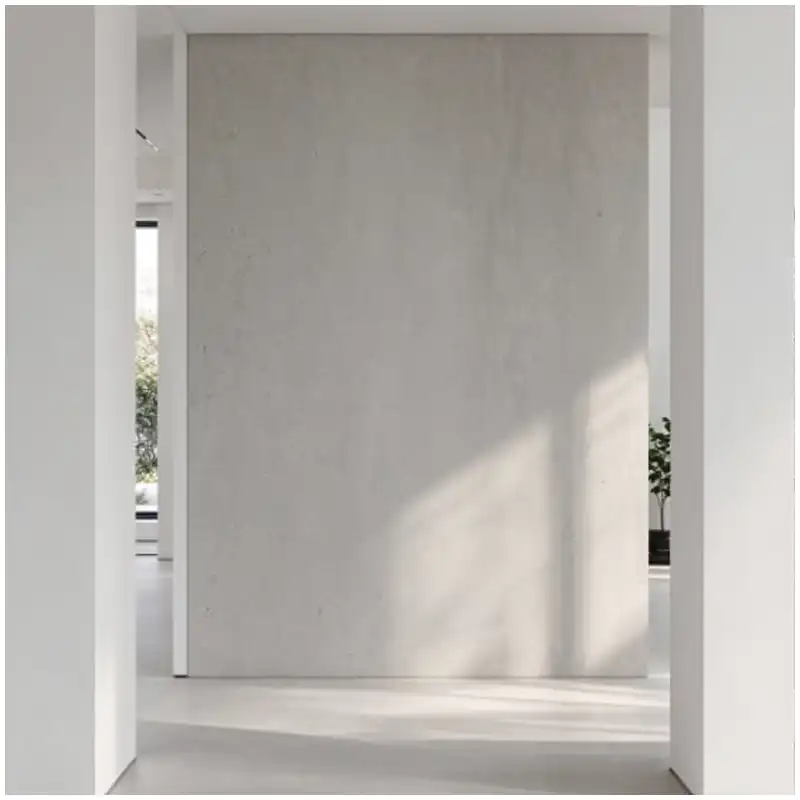
A pale travertine wall relies on its overall composition rather than a single dramatic vein. Joint placement, panel proportions and lighting often contribute more to the finished elevation than any isolated feature in a small sample.
In hotel lobbies and reception spaces, a consistent sedimentary direction can extend the apparent length of a wall. Taller panels may instead emphasize the vertical proportions of an entrance hall or double-height interior.
Directional wall lighting deserves particular attention. Grazing light can reveal shallow recesses, slight differences in filling and surface irregularities that are less apparent under diffuse illumination. Where wall washers are part of the interior design, a representative installed sample is useful for finish approval.
Internal corners, door openings and decorative metal trims should appear on the elevation drawing before panel dimensions are finalized. A seemingly minor change in joint position can affect the required slab allocation and the continuity of visible mineral layers.
The fixing arrangement must be specified according to panel geometry, actual thickness, substrate condition and relevant engineering requirements. Large travertine panels should not be approved for installation from appearance alone.
Honed Guangxi White Travertine for Interior Floors and Coordinated Stonework
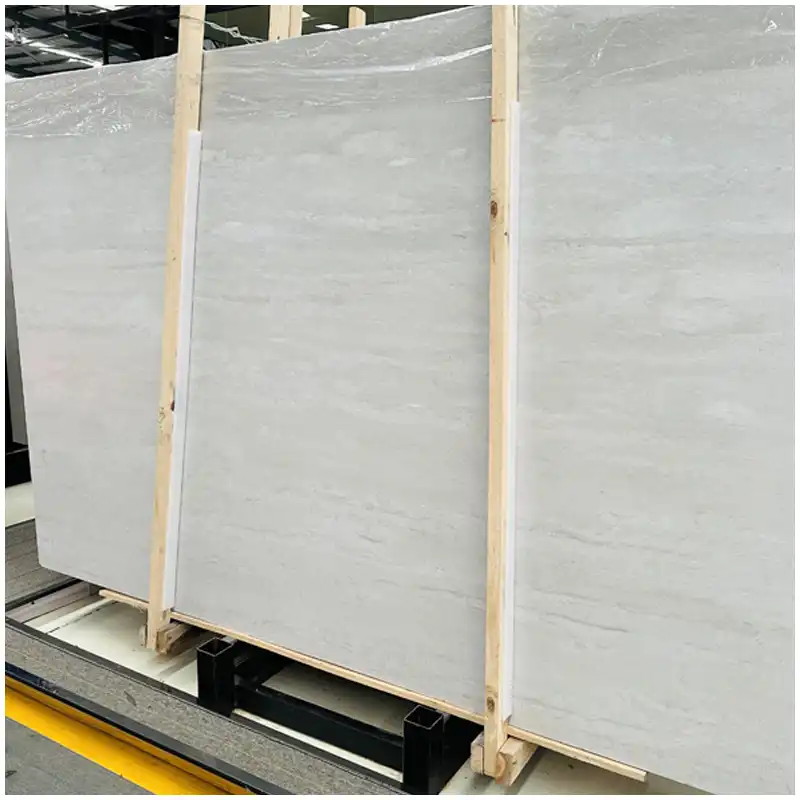
A honed white travertine floor has a different visual character from polished white marble. Reduced reflection places greater emphasis on the background shade, natural texture and joint arrangement rather than mirror-like surface gloss.
For a floor package, the principal processing task is producing tiles with compatible dimensions and calibrated thickness. Differences between adjoining pieces may create visible lippage or complicate installation, particularly under long uninterrupted lighting lines.
Filling integrity is equally important. Cavities exposed during calibration or final finishing need to be assessed according to the agreed surface specification. An open cavity that is acceptable on a decorative wall may be undesirable on a frequently cleaned walking surface.
The selected floor module also affects appearance. Larger rectangular pieces retain more of the original sedimentary movement, while smaller tiles distribute that character across a greater number of joints.
A honed finish should not automatically be described as slip-resistant. Suitability for a particular walking surface depends on the actual finish, expected moisture exposure, maintenance conditions and applicable testing requirements.
For commercial floors with substantial pedestrian traffic, obtain the relevant abrasion and slip-performance evidence before approving the finished tiles. The same stone may remain suitable for decorative cladding even where a more demanding floor specification cannot be established.
Oriental White Travertine Slabs and Chinese Ivory White Travertine Slabs: Material Identity
White travertine is an international sourcing category rather than a single geological material. Commercial selections are available from several stone-producing countries, with differences in background shade, pore structure, sedimentary movement and technical characteristics.
The designation Oriental White Travertine Slabs may appear in purchasing documents for pale decorative travertine. Its meaning is not sufficiently consistent across the international stone market to establish a particular quarry origin without additional documentation.
Chinese Ivory White Travertine Slabs is a more geographically specific sourcing description, although it can still encompass different Chinese selections. Buyers looking for the Guangxi material should identify the required stone through the approved photographs, reference samples and relevant origin records.
Esta Stone identifies this product primarily as Guangxi White Travertine. Related commercial names help communicate the required appearance during international purchasing, but they do not justify treating Chinese, Italian, Iranian or Turkish white travertine as interchangeable materials.
Guangxi White Travertine Bathroom Floor and Wall Designs
This bathroom design reference demonstrates how ivory-white travertine can connect horizontal flooring and vertical wall surfaces within one interior material palette.

Using travertine across a bathroom requires more than selecting a compatible shade for the walls and floor. The two surfaces have distinct installation conditions, and the areas directly exposed to water need additional consideration.
A wall panel can preserve long sedimentary layers around a mirror or vanity. The floor may require a smaller cutting module to accommodate drainage slopes, perimeter cuts and transitions into adjacent rooms.
In a shower enclosure, the waterproofing system belongs behind or beneath the stone finish. Filled travertine, grout and surface sealer are not substitutes for the required waterproof construction assembly.
The filling system should also be compatible with the proposed wet-area exposure and cleaning regime. Particular attention is needed around drain openings, sealant joints and cut edges where further natural cavities may become exposed during fabrication.
For bathroom floors, specify the necessary wet-slip performance separately from the wall finish. Visual continuity can be retained through a compatible material selection without requiring every surface to have identical finishing characteristics.
Architectural Application Guide for Chinese White Travertine
The material can be evaluated for several fabricated stone products. The following guide separates their main purchasing and installation requirements.
| Pieteikums | Finished Stone Product | Specification Requirement |
|---|---|---|
| Hotel Lobby | Wall panels, column facings and elevator surrounds | Panel dimensions, fixing design, shade grouping and exposed corner details |
| Villa Interiors | Feature walls, floor tiles and decorative stone elements | Room-by-room material allocation and finish coordination |
| Vannas istabas | Wall cladding, floor tiles and vanity components | Wet-area compatibility, drainage, waterproofing and surface maintenance |
| Kāpnes | Treads, risers and landing pieces | Nosing geometry, exposed cavities, support and slip requirements |
| Individuālas mēbeles | Tabletops, consoles and decorative stone facings | Edge treatment, supporting structure and expected surface exposure |
| Exterior Architecture | Selected cladding and architectural components | Weathering, frost exposure, fixing design and exterior-compatible filling |
Exterior use requires separate technical approval. The featured honed and filled interior selection should not be automatically specified for exposed facades, freeze-thaw environments or outdoor paving without evaluating the actual stone and treatment system.
Physical Properties and Technical Documentation for Guangxi White Travertine
The physical characteristics of travertine vary according to its natural cavity structure, mineral density, bedding direction and processing treatment. Test results obtained from another white travertine deposit cannot establish the performance of the featured Guangxi slabs.
Where architectural specifications require numerical material properties, the following test methods may be relevant to the stone approval process.
| Test Property | Reference Method | Project Relevance |
|---|---|---|
| Apparent Density and Open Porosity | EN 1936 | Stone characterization, cavity structure and material weight assessment |
| Ūdens absorbcija | EN 13755 | Moisture-related stone evaluation |
| Flexural Strength | EN 12372 | Assessment of panels and fabricated components |
| Kompresijas izturība | EN 1926 | Material characterization where required by specification |
| Abrasion Resistance | EN 14157 | Evaluation of wear-exposed floor surfaces |
| Salizturība | EN 12371 | Selected exterior applications exposed to freezing conditions |
These references identify potential testing methods, not completed test results or certifications for the listed slabs. Test reports should establish material identity and whether specimens represent the supplied treatment and intended use. Directional properties may also require consideration when evaluating sedimentary stone.
Guangxi White Travertine Quality Control, Fabrication and Export Packing
For a pale filled travertine order, final inspection must address the original natural stone as well as the quality of its surface treatment. The following acceptance points can be incorporated into the project purchase specification.
| Material Approval | Identify approved slab faces, ivory shade range, actual thickness and required material documentation. |
| Filling Inspection | Review filling color, adhesion, visible recesses and untreated cavities against the approved sample. |
| Dimensional Control | Measure finished length, width, thickness, squareness and calibration according to agreed project tolerances. |
| Surface Acceptance | Inspect honed finish uniformity, abrasion marks, visible repair areas and processing residue. |
| Dry-Lay Review | Arrange related components where specified to assess sedimentary direction, shade grouping and visible joints. |
| Piece Identification | Label finished components by drawing reference, installation location and approved orientation. |
| Export Protection | Use suitable slab bundles or reinforced crates with non-marking face separation, edge protection and appropriate transport restraint. |
Packing materials should be selected carefully for ivory-white stone. Direct contact with unsuitable timber, contaminated protective materials or unprotected metal components may leave marks on the surface. Finished pieces should remain identifiable through packing, unloading and installation.
Cleaning and Maintenance of Honed and Filled White Travertine
Guangxi White Travertine is a carbonate-based natural stone. Its surface can react with acidic substances, including vinegar, citrus juice and some bathroom descaling products. Routine cleaning is better carried out with a compatible pH-neutral stone cleaner and nonabrasive equipment.
An appropriate impregnating sealer may help reduce the penetration of certain liquids after compatibility testing. It does not eliminate acid sensitivity or replace the treatment of open cavities.
For commercial interiors, regular removal of abrasive grit can limit unnecessary wear on walking surfaces. Cleaning equipment and chemicals should also be compatible with the filling material used in the supplied stone.
Filled areas may require localized maintenance over the life of the installation. Repair materials should be matched to the surrounding ivory background and existing honed finish rather than selected solely for their ability to close a cavity.
Frequently Asked Questions About Guangxi White Travertine
What slab sizes are available for Guangxi White Travertine?
The featured slab sizes are 255×176cm and 302×145cm. The first provides a broader stone face, while the second offers greater nominal length. Actual thickness and net usable cutting dimensions should be confirmed from the selected slabs.
What is the difference between honed and filled travertine and unfilled travertine?
Honed and filled travertine has accessible natural cavities treated with a suitable filling material and a relatively smooth, low-gloss finish. Unfilled travertine retains more visible open pores. The appropriate treatment depends on appearance, cleaning requirements and the intended application.
Is Oriental White Travertine the same as Guangxi White Travertine?
Oriental White Travertine is a commercial sourcing name that may be used for different pale travertine selections. It does not independently establish Guangxi origin. Buyers should confirm the actual material through slab photographs, approved samples and relevant origin documentation.
Can Guangxi White Travertine be used for bathroom floors and walls?
Suitable material can be fabricated into bathroom wall panels and floor tiles. Wet-area use requires compatible filling and installation materials, appropriate waterproofing and drainage, and verified slip performance for the finished walking surface.
How should filling quality be checked before purchasing white travertine slabs?
Review representative slab faces and exposed edges for filler shade, untreated cavities, loose filling, visible recesses and consistency of the honed surface. Establish an approved appearance sample and acceptance criteria before cutting or bulk production.
What information is needed to request a Guangxi White Travertine quotation?
Provide the required slab or finished-piece dimensions, thickness, finish, quantity, application and destination. For fabricated orders, include cutting drawings, visible edge details, approved shade range, filling requirements and any application-specific testing or inspection criteria.
Final Note: Selecting Ivory White Travertine for Extensive Architectural Surfaces
The purchasing value of Guangxi White Travertine lies in the combination of a pale natural background, sedimentary character and a surface treatment that can be coordinated across multiple architectural components. For large orders, the accepted shade range and filling quality are as important as nominal slab dimensions. Establishing these requirements before fabrication allows the buyer to evaluate material yield, finished appearance and installation suitability as part of the same purchasing decision.
Guangxi White Travertine Compared with Four International Travertine Selections
The following selections represent different visual directions within natural travertine. Origin and commercial naming should be considered alongside the actual stone faces, available formats and approved surface treatments.
| Produkts | Izskats | Project Direction | Buyer Decision |
|---|---|---|---|
| Guangxi White Travertine | Pale ivory-white with understated mineral layering | Coordinated interior walls, floors and custom fabrication | Filling consistency, slab format and acceptable ivory shade range |
| Itālijas superbalta travertīna plāksnes | Light Italian travertine with subtle natural mineral movement | Pale architectural stone interiors and decorative panel compositions | Origin requirement, background brightness and selected slab character |
| Sudraba travertīns | Silver-grey and contrasting sedimentary layers | Grey architectural surfaces and contemporary interiors | Grey-tone distribution, layer direction and finish |
| Travertino Navona | Light cream to ivory with delicate travertine texture | Classical and contemporary neutral stone compositions | Warmth of background tone, pore treatment and material identity |
| Iranian Ultra-White Travertine | Light white to ivory travertine with variable mineral structure | Bright architectural cladding and selected interior stonework | Approved whiteness, actual pore distribution and project-specific testing |
Recommended Natural Travertine Slabs for Architectural Projects
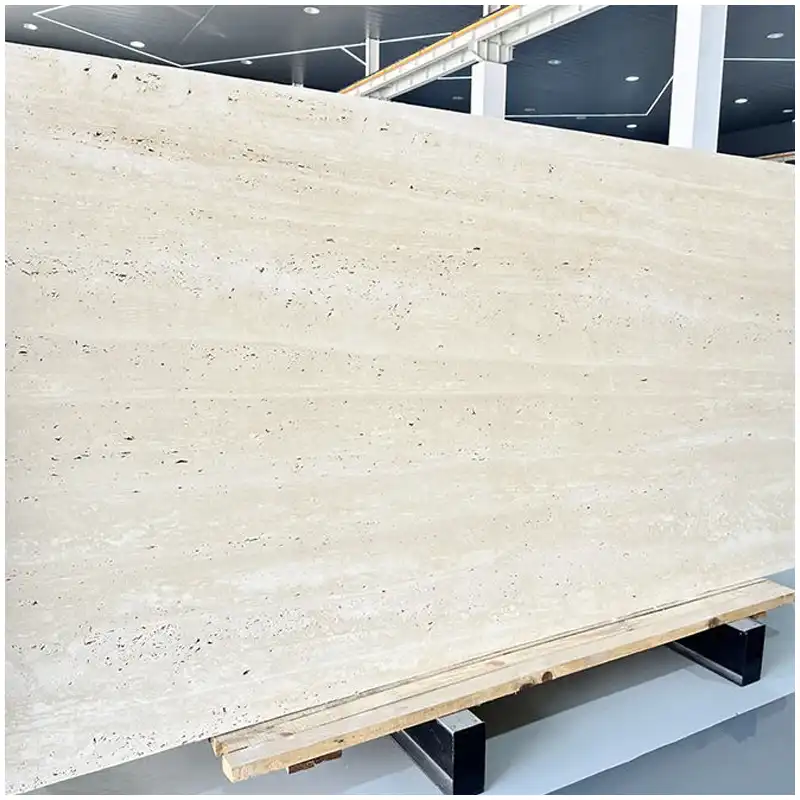
Itālijas superbalta travertīna plāksnes
A pale Italian travertine selection for projects where material origin and a restrained white stone composition are important.

Sudraba travertīns
A cooler grey alternative for architectural surfaces requiring more visible contrast and directional sedimentary movement.
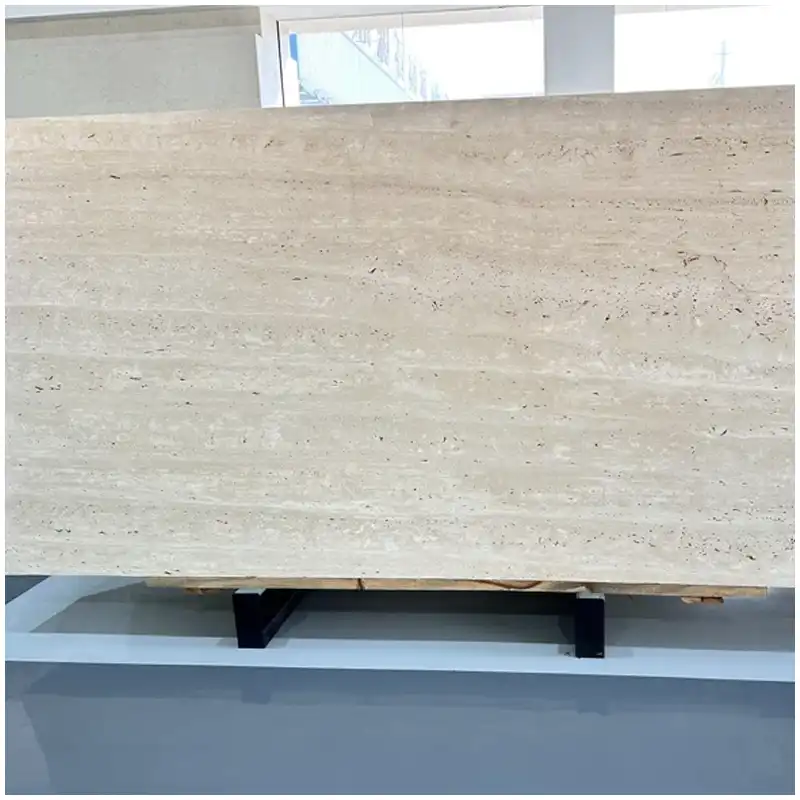
Travertino Navona
A light cream and ivory travertine direction for interiors that require a warmer neutral background and delicate natural texture.
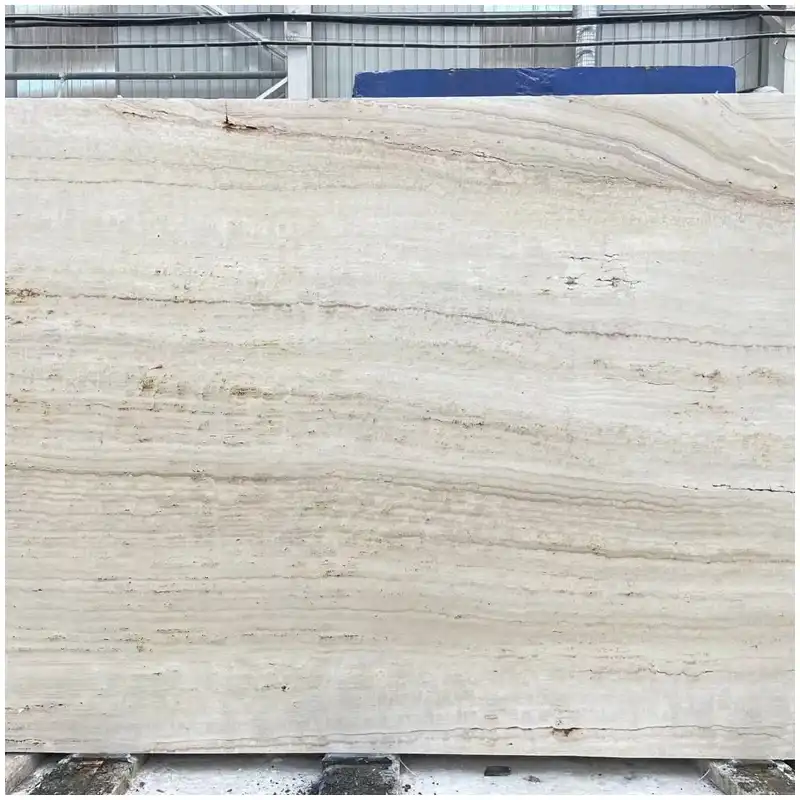
Iranian Ultra-White Travertine
An alternative white travertine selection for comparing background brightness, natural pore distribution and architectural panel options.
Request Guangxi White Travertine Slabs for Your Cutting Schedule
Whether purchasing full slabs for distribution or preparing a complete architectural stone package, send Esta Stone the required dimensions, finished application and preferred ivory-white shade range. The 255×176cm and 302×145cm formats can then be reviewed against the actual cutting requirements.
Include the required quantity, thickness, honed surface specification, filling preference, fabrication drawings, inspection requirements and shipping destination to establish a quotation with a clearly defined material and processing scope.