Rozmowa o łazience, która brzmi prosto, dopóki nie staje się skomplikowana
“We want it to feel bright, but not cold.”
“Kochamy marmur, ale nie chcemy, by podłoga była śliska.”
“I proszę, żeby łazienka nie wyglądała jak lobby hotelu z 2014 roku.”
Właśnie tutaj wybór odpowiedniego Płytki marmurowe staje się bardziej skomplikowany, niż oczekują tego większość właścicieli domów. Łazienka to nie tylko kolejny piękny pokój. To wilgotna przestrzeń, miejsce odpoczynku dla wzroku, strefa konserwacji i często jedno z najbardziej emocjonujących pomieszczeń w domu. Badanie Trendów Wzornictwa Własnościowych w Stanach Zjednoczonych na rok 2025, oparte na ankiecie przeprowadzonej wśród 1737 amerykańskich właścicieli domów, którzy niedawno przeprowadzili lub planują remont łazienki, pokazuje, że właściciele domów jednocześnie priorytetowo stawiają na wellness, dostępność i modernizację designu. Czy prognozy dotyczące wnętrz na rok 2026 również wskazują na wysokiej jakości materiały, takie jak szlifowany marmur, jako część długoterminowego przejścia ku bardziej dotykowym, trwałykom wnętrzom, zamiast szybkich trendów wizualnych.
Dlatego wybór marmuru do łazienki nie polega na tym, aby znaleźć najbiałszą płytę czy najodważniejszą żyłkowanie. Chodzi o dopasowanie kamienia do rozmiaru pomieszczenia, poziomu wilgotności, jakości światła, oczekiwań dotyczących antypoślizgowości, tolerancji na konserwację i ogólnego nastroju. Dostawca, taki jak Biały marmur granit ma tu ogromne znaczenie, ponieważ decyzja jest łatwiejsza, gdy źródło rozumie kamień jako materiał projektowy, a nie tylko jako próbkę na zdjęciu. I szczerze mówiąc, właśnie w tym miejscu wiele projektów łazienek albo płynie gładko, albo kończy się porażką.

Dlaczego płyty marmurowe nadal mają sens w łazienkach
Marmur nie przetrwał wieków cyklów wzornictwa przypadkowo. Działa, ponieważ daje łazienkom coś, czego syntetyczne powierzchnie często trudno imitować w sposób przekonujący: głębię, miękkość, zmianę tonacji i naturalne poczucie trwałości. Redakcyjne osłony ArchDaily poświęcone marmurowi nadal przedstawiają marmur jako materiał, który pozostaje istotny zarówno w klasycznych, jak i nowoczesnych wnętrzach, podczas gdy artykuł poświęcony marmurowi w łazienkach zauważa, że marmur szczególnie dobrze komponuje się z drewnem i innymi naturalnymi materiałami w obecnym wzornictwie łazienek. Czy raporty o trendach w zakresie płytek na rok 2025 również pokazują, że naturalne materiały, takie jak marmur, wapień i trawertyn, nadal cieszą się silnym zainteresowaniem w projektach wnętrz.
Jednocześnie łazienka się zmieniła. Nie jest już postrzegana wyłącznie jako przestrzeń użytkowa. Raport NKBA o trendach łazienkowych na rok 2025 podkreśla dalszy ruch w kierunku łazienek w stylu spa, skupionych na wellness, a raporty o trendach łazienkowych na rok 2025 pokazują podobny przesunek w stronę komfortu, dostępności i jakości sensorycznej. Ma to znaczenie, ponieważ kiedy łazienka staje się pomieszczeniem regeneracyjnym, a nie tylko miejscem mycia, materiały takie jak marmur zaczynają mieć jeszcze większy sens.
Właśnie tutaj przydatna staje się szersza kategoria, jak Marmurowy kamień Staje się ona przydatna. Projekt łazienki prawie nigdy nie odnosi sukcesu wyłącznie dzięki wyborowi płytek. Najlepsze rezultaty uzyskuje się poprzez koordynację płytek podłogowych, płytek ściennej, tonacji umywalki, wykończenia metalowego i oświetlenia, aby łazienka wydawała się warstwowo zbudowana, a nie przypadkowa.
Prawdziwe pytania, które powinniście zadać przed wyborem płytki
Przed wyborem płytki marmurowej większość ludzi najpierw skupia się na wyglądzie. To zrozumiałe. Ale właśnie w ten sposób trzy miesiące później piszą do wykonawcy: “Dlaczego to wygląda inaczej niż w salonie wystawowym?”
Lepszym porządkiem jest:
- Gdzie płyta będzie używana?
- Jak bardzo ta powierzchnia będzie mokra?
- Jak duża jest potrzeba przyczepności?
- Jak jasne lub ciemne jest pomieszczenie?
- Jak dużą zmienność może tolerować projekt?
- Jak dużo konserwacji jest realistyczne dla właściciela domu?
Te pytania są ważne, ponieważ marmur do łazienki musi działać w kontekście. Materiały edukacyjne Natural Stone Institute dotyczące kuchni i łazienek podkreślają ustanowienie odpowiednich oczekiwań względem różnych typów kamienia oraz zrozumienie procesów obróbki, montażu, pielęgnacji i konserwacji, aby zapewnić długowieczność i satysfakcję. Porady dotyczące usług testowych jasno wskazują, że testy specyficzne dla projektu mogą być potrzebne, gdy kamień wprowadzany jest w nowe warunki lub gdy wymagania instalacji są niejasne.
Dlatego poradniki takie jak Dlaczego warto wybrać naturalne płyty marmurowe do projektów podłóg i ścian wewnętrznych są przydatne. Płyty marmurowe to nie tylko wybór stylu; to wybór specyfikacji. Im wcześniej właściciel domu to zrozumie, tym mniejsza szansa, że kupi coś pięknego, ale nieodpowiedniego.
Szybka tabela do wyboru płytek łazienkowych, która naprawdę pomaga
| Potrzeby łazienki | Najlepsze kierunki dla płytek marmurowych | Dlaczego to działa | Główne zagrożenie |
|---|---|---|---|
| Jasny, spokojny, ponadczasowy wygląd | Biały lub delikatnie off-white marmur | Odbija światło i sprawia, że pomieszczenie wydaje się otwarte | Może wywoływać uczucie chłodu, jeśli zostanie połączony z niewłaściwymi wykończeniami |
| Mała łazienka, która potrzebuje podniesienia | Biały marmur z cieplejszym podtonem lub delikatnym żyłkowaniem | Rozszerza przestrzeń wizualną bez stania się sterylną | Trzeba go równoważyć z drewnem, ciepłymi metalam i fakturą |
| Wygłoszona umywalka lub akcentowa ściana | Marmur z odważnym żyłkowaniem | Dodaje luksusu i skupienia, nie pokrywając każdej powierzchni | Używać selektywnie, aby uniknąć przeciążenia wizualnego |
| Podłoga łazienki w strefie wilgotnej | Szlifowana lub uwzględniająca fakturę płyta marmurowa | Bardziej praktyczna niż wysoko polerowane powierzchnie w warunkach wilgotnych | Nadal należy sprawdzić odpowiedniość antypoślizgową |
| Łazienka w stylu spa, ciemna lub nastrojowa | Zielony marmur lub marmur o głębszych tonach | Dodaje głębię, bogactwo i charakter | Lepiej sprawdza się w pomieszczeniach z dobrym oświetleniem i dyscyplinowanym stylingiem |
Tabela wydaje się prosta, ale wskazuje na rzeczywisty problem: “najlepsza” płyta marmurowa zależy od tego, gdzie ma być użyta i czego pomieszczenie od niej oczekuje.
Podłoga czy ściana? To pytanie zmienia wszystko
This is where many projects go sideways. A marble tile that looks stunning on a bathroom wall is not automatically the smartest choice for the floor.
For flooring, slip awareness matters. TCNA notes that ANSI A326.3 is the American National Standard test method for measuring dynamic coefficient of friction for hard-surface flooring materials and that the standard includes product-use classifications and guidance for specifying such materials. In plain English: not every beautiful bathroom tile belongs on every wet bathroom floor. The same stone in a different finish can behave very differently underfoot.
For walls, the priorities shift toward tone, scale, and pattern behavior. Larger marble tiles often create a cleaner, quieter look because there are fewer grout joints and more uninterrupted veining. That is one reason current bathroom imagery and trend reporting keep leaning into more seamless stone looks in premium spaces.Is 2026 design-trends coverage specifically notes that bold marble and quartzite slabs are increasingly being used in bathrooms to create gallery-like spaces, but that does not mean tile is obsolete. It means tile has to work harder through finish, layout, and texture.
So the smart rule is this:
use wall marble to shape atmosphere, and use floor marble to balance atmosphere with practicality.
The Best Marble Tile Directions for Different Bathroom Styles
For bright, high-end calm: white marble done properly
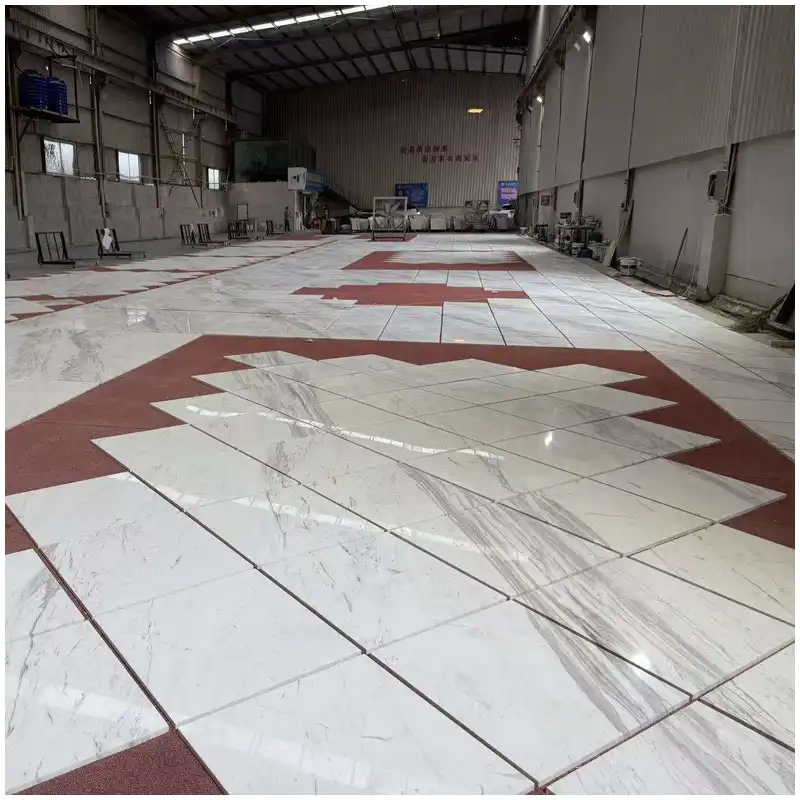
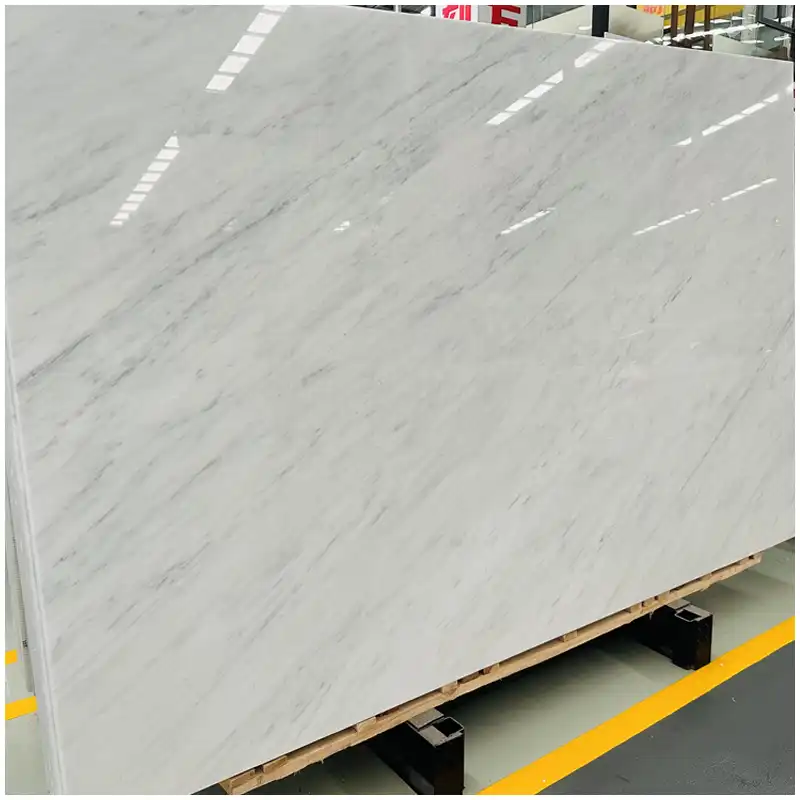
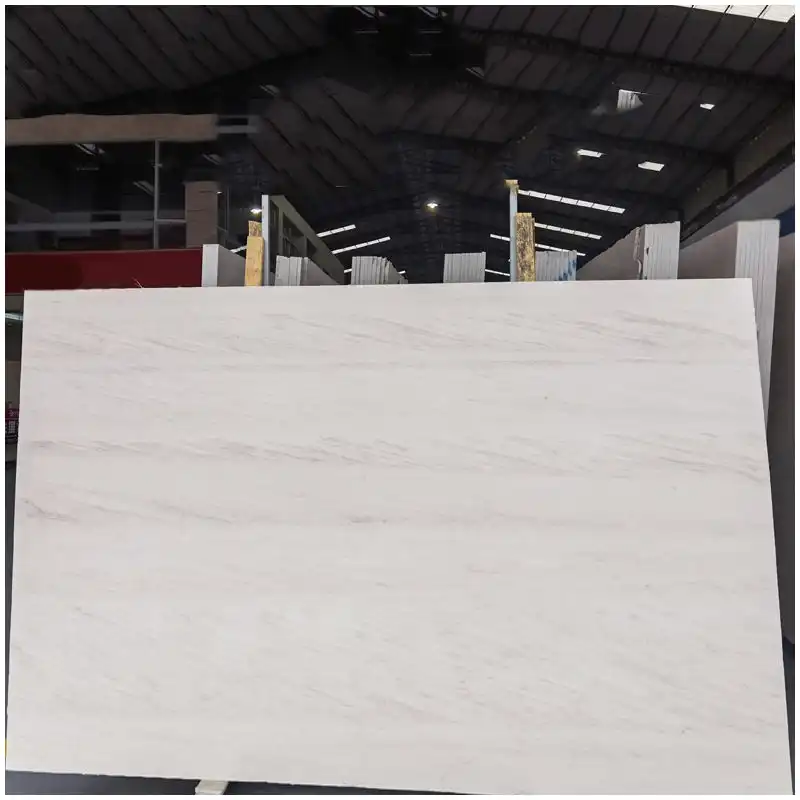
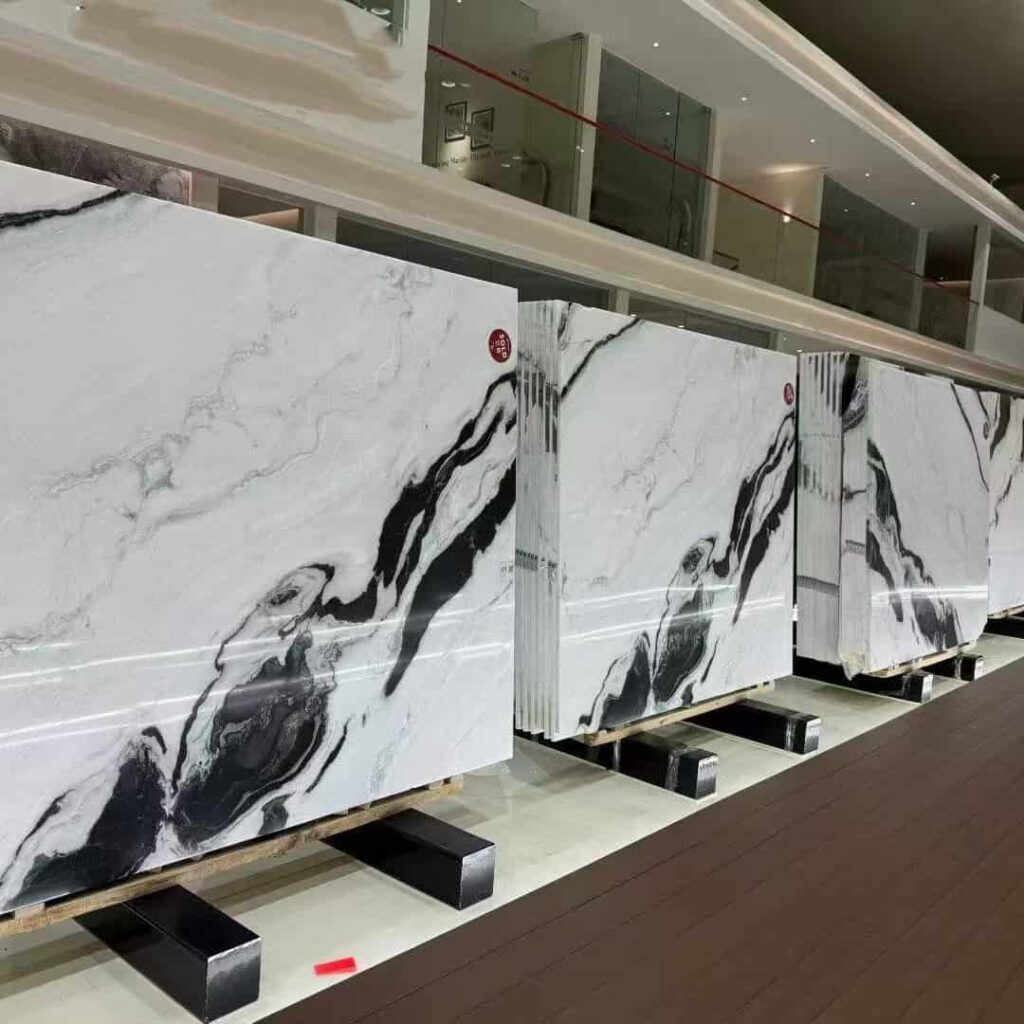
White marble remains the most reliable direction for bathrooms because it reflects light, feels clean, and pairs well with almost every fixture palette. But white can also turn clinical if it is handled badly. That is why a product like Chiński marmur biały Panda works best when the homeowner wants a more dramatic white stone with stronger movement, not a blank white box.
For smaller bathrooms, the challenge is even sharper. Light stone can visually enlarge the room, but too much stark contrast or too little warmth can make the space feel cold. That is exactly why white marble tiles in small spaces is such a relevant topic. In 2026, the best small bathrooms are not just bright; they are bright with warmth—think brushed brass, pale oak, warm white paint, soft gray grout, or honed finishes instead of mirror-like polish.Is 2026 predictions about honed marble and artisanal-feeling materials fit this direction perfectly.
For mood and depth: green marble tiles
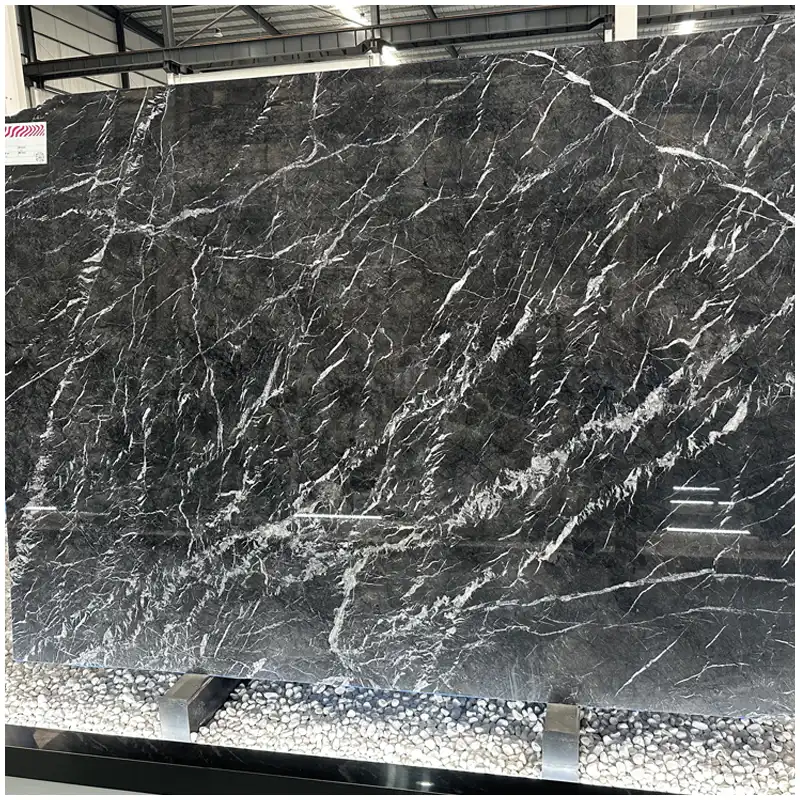
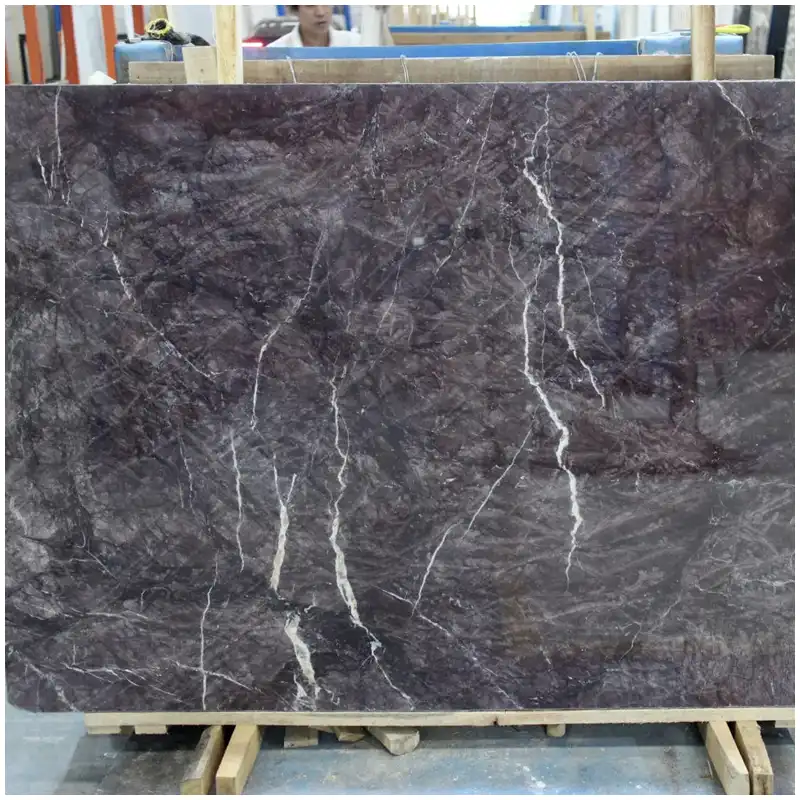
If white marble is the safe luxury choice, green marble is the confident one. Green marble works particularly well in powder rooms, vanity walls, shower accents, and bathrooms that want a more tailored, boutique-hotel mood. A product like Verde Alpi Marble Tiles is a strong example of this direction: richer, deeper, more character-driven, and especially effective when paired with darker woods, brass, or black details.
Green marble is not “too much” by default. It only becomes too much when every other element in the room also wants attention. The right way to use it is to let the marble carry the drama while cabinetry, mirrors, and lighting stay disciplined. ArchDaily’s marble-in-bathroom coverage makes a similar point in design language: marble can integrate beautifully with wood and contemporary geometry when the material palette is balanced rather than crowded.
|
|
|

Finish Matters More Than Most People Expect
Homeowners often choose marble by color and veining, then treat finish like a side note. That is backwards.
A polished finish gives more reflection and sharper pattern contrast, which can look extremely elegant on walls or vanity surfaces. But in wet flooring conditions, too much polish can become a practical concern. A honed finish often reads softer, warmer, and more current in bathrooms, especially in projects trying to achieve a spa-like atmosphere. Is 2026 design predictions specifically mention honed marble as part of a broader move toward materials that age gracefully and feel more tactile.
Finish also affects how “cold” the room feels visually. A glossy white marble can look formal and slightly hard; a honed white marble usually feels more relaxed and architectural. That is why finish selection should be treated as part of the design concept, not as a technical afterthought.
This is also where sourcing matters. A page like The Best Statuario White Marble Tiles Factory in China is relevant not just because of the material name, but because it reminds buyers that consistency, finish quality, and production discipline shape the final bathroom more than sample-board fantasy ever will.
Maintenance: The Part No One Wants to Hear, but Everyone Needs
Let’s be honest: people love marble until somebody mentions maintenance. Then the room gets quieter than a showroom on Monday morning.
The good news is that marble care is not mysterious. The Natural Stone Institute’s consumer-care guidance recommends neutral cleaners, stone soap, or mild dishwashing detergent with warm water, along with proper rinsing and avoiding acidic cleaners that can damage calcareous stone. Its stain guidance likewise points out that different stains need different approaches, and that harsh chemicals are not a magic shortcut.
The less-good news is that marble does ask the homeowner to behave like an adult. That means:
- wipe standing water when practical
- avoid aggressive cleaners
- use the right sealer if specified
- expect some patina over time in active spaces
That does not make marble a bad bathroom material. It makes it a natural one. If the homeowner wants zero-variation, zero-maintenance behavior, they probably do not want marble. If they want warmth, depth, and authenticity, then marble is still one of the strongest choices available.
How to Avoid the Three Most Common Bathroom Marble Mistakes
Mistake 1: Choosing tile by sample board only
Small samples lie. Or at least they flatter aggressively. Marble needs to be considered at room scale, under real lighting, with real grout, near real cabinetry.
Mistake 2: Ignoring room size and tone temperature
A small bathroom can benefit enormously from marble—but only when the tile tone and finish are chosen carefully. Too-cool white, too much contrast, or too many reflective surfaces can make the room feel colder than intended. This is why articles like how to make white marble tiles work in small spaces without looking cold are more useful than generic style inspiration. The room has to feel human, not just expensive.
Mistake 3: Treating all marble the same
Not all marble varieties behave, look, or age the same way. The Natural Stone Institute’s materials and testing resources make that clear: natural stone products vary, and physical properties should not be assumed without proper data or context.
A Better Way to Make the Final Decision
If you want a cleaner selection process, use this sequence:
Step 1: Start with the bathroom’s job
Is this your main family bathroom, a powder room, a showpiece primary bath, or a compact guest bath?
Step 2: Decide where marble should lead
Will marble be the floor hero, the wall hero, or a supporting material?
Step 3: Match the finish to the wetness level
Gloss for visual drama where appropriate; more tactile options where underfoot conditions matter more.
Step 4: Match the veining to the room size
Big dramatic movement often needs more visual breathing room. Smaller spaces usually do better with calmer patterns or more disciplined contrast.
Step 5: Choose a supplier that understands stone, not just stock names
That is where a specialist can save a project from avoidable mistakes.
A bathroom is a small room with unusually high design pressure. Tiny errors feel bigger there. Which is exactly why tile selection should be more thoughtful, not more impulsive.

Five Questions Homeowners Commonly Ask About Marble Tiles in Bathrooms
Are marble tiles good for bathroom floors?
Yes—if the finish, slip suitability, and application are chosen correctly. Marble can work beautifully on bathroom floors, but flooring decisions should consider wetness, maintenance expectations, and product-use classification. TCNA’s guidance around ANSI A326.3 matters here because it helps specifiers think more clearly about where different hard-surface materials are appropriate.
[CZĘŚĆ_QWEN_MT_1]Czy białe marmurowe płytki sprawiają, że łazienka wydaje się większa?[/CZĘŚĆ_QWEN_MT_1]
Zazwyczaj tak, zwłaszcza w mniejszych łazienkach, ponieważ odbijają światło i sprawiają, że pomieszczenie wydaje się bardziej przestrzenne. Jednak “większy” nie oznacza automatycznie “lepszy”. Jeśli płytki są zbyt jasne lub zbyt gładkie, a pozostała część pomieszczenia nie jest ocieplona za pomocą drewna, ciepłych metali czy miększych faktur, efekt może być chłodniejszy, niż zamierzono. Dlatego ton i wykończenie są równie istotne jak jasność.
[CZĘŚĆ_QWEN_MT_1]Czy polerowany marmur jest zbyt śliski do łazienki?[/CZĘŚĆ_QWEN_MT_1]
Dla niektórych zastosowań na mokrych podłogach może to okazać się nieodpowiedni wybór. Mądrzejszym podejściem jest nie pytanie, czy polerowany marmur jest piękny – bo jest – ale czy jest to właściwe wykończenie dla danej strefy podłogowej. Klasyfikacja scenariuszy użycia i myślenie o wydajności powierzchni mają większą wagę niż lśniący wygląd w salonie wystawowym.
Jak trudno jest konserwować marmurowe płytki łazienkowe?
Jest to łatwe do utrzymania, jednak wymaga odpowiedniej pielęgnacji. Porady Instytutu Kamienia Naturalnego zalecają stosowanie neutralnych środków czyszczących, delikatnego mydła, ostrożnego płukania oraz unikania produktów kwasowych. Zatem nie, nie jest to koszmar. Ale też nie jest to materiał, na który można bez przeszkód rozpylać dowolne środki.
[CZĘŚĆ_QWEN_MT_1]Czy powinienem kupić marmurowe płytki do łazienki w ogólnej sklepie z płytkami, czy u specjalisty od kamienia?[/CZĘŚĆ_QWEN_MT_1]
W przypadku wyniku na poziomie projektu specjalista od kamienia jest zazwyczaj lepszym wyborem. Marmur charakteryzuje się różnorodnością, jakością wykończenia, jednolitością partii oraz koniecznością doboru odpowiedniego materiału z uwzględnieniem jego zastosowania. Specjalista ma większą szansę pomóc Ci wybrać właściwą płytę do łazienki, niż tylko najbardziej fotogeniczną płytę z katalogu.
The Bathroom Should Feel Better, Not Just Look Expensive
At the start of this article, the homeowner wanted a bathroom that felt bright but not cold, luxurious but not slippery, current but not trend-drunk.
That is exactly the right instinct.
The best Płytki marmurowe for a bathroom are not the ones with the loudest name or the flashiest veining. They are the ones that fit the room’s light, size, moisture level, finish logic, and maintenance reality. In 2026, that usually means choosing more thoughtfully: softer whites when the room needs lift, deeper greens when it needs mood, honed finishes when it needs warmth, and better sourcing when the project needs consistency.
And that is why the smartest next step is not to over-scroll bathroom inspiration until your brain turns into grout haze. It is to narrow the application, shortlist the right materials, and contact White Marble Granite before a beautiful sample turns into an annoying bathroom. That is not just good taste. It is good project management.
References
- White Marble Granite official materials, including the company page, marble stone category, product pages, and internal marble-tile guidance articles.
- Houzz Research, 2025 U.S. Houzz Bathroom Trends Study.
- Houzz, 5 Big-Picture Bathroom Trends Shaping Remodels in 2025.
- Houzz Pro, 2026 Home Design Predictions.
- NKBA, Year in Review: Top Kitchen & Bath Trends of 2025.
- Natural Stone Institute, Natural Stone Countertops: Considerations for Kitchen and Bath Applications.
- Natural Stone Institute, Care and Cleaning of Natural Stone.
- Natural Stone Institute, NSI Materials Test Laboratory and related testing resources.
- TCNA, Dynamic Coefficient of Friction and ANSI A326.3 resources.
- ArchDaily, From Monumental Ruins to Lavish Interiors: 18 Projects that Prove Marble Is a Timeless Material oraz The Contemporary Use of Marble in Bathroom Design.