


Quick Summary
Italy Super White Travertine Slabs are natural Italian white travertine slabs with a light ivory-to-cream background, fine linear movement, and the controlled pore texture associated with vein-cut travertine. The material is specified for luxury hotel cladding, villa feature walls, bathrooms, floors, travertine tiles, vanity components, and drawing-based cut-to-size packages.
For project procurement, the decisive point is not simply choosing the whitest sample. Buyers should approve the current slab batch for background tone, vein direction, pore density, filling color, finish, usable area, and the sequence required across adjacent panels. Honed and filled travertine is especially useful where a quieter surface and more practical cleaning are required.
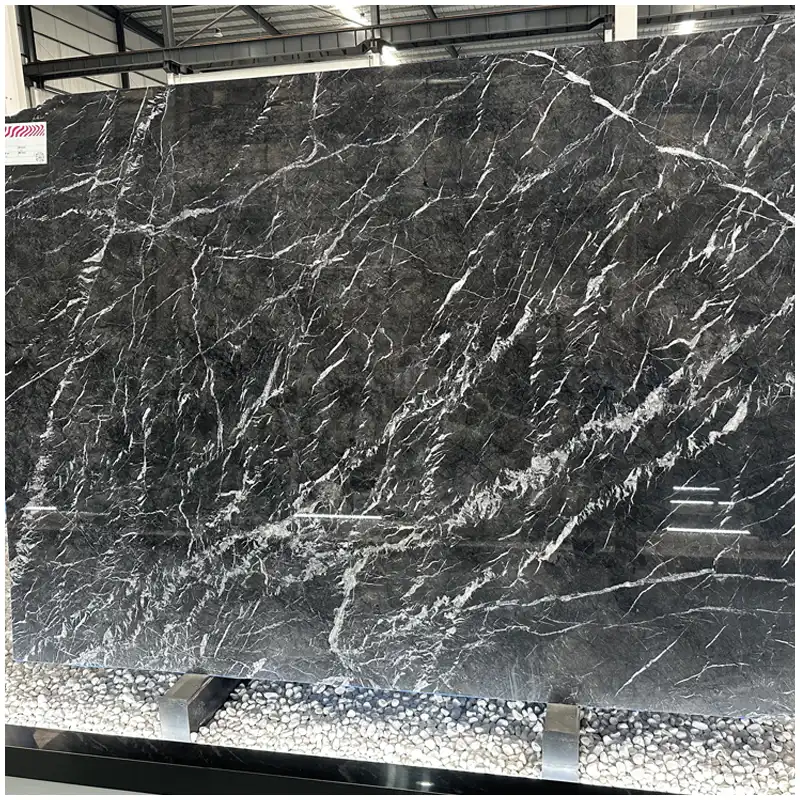
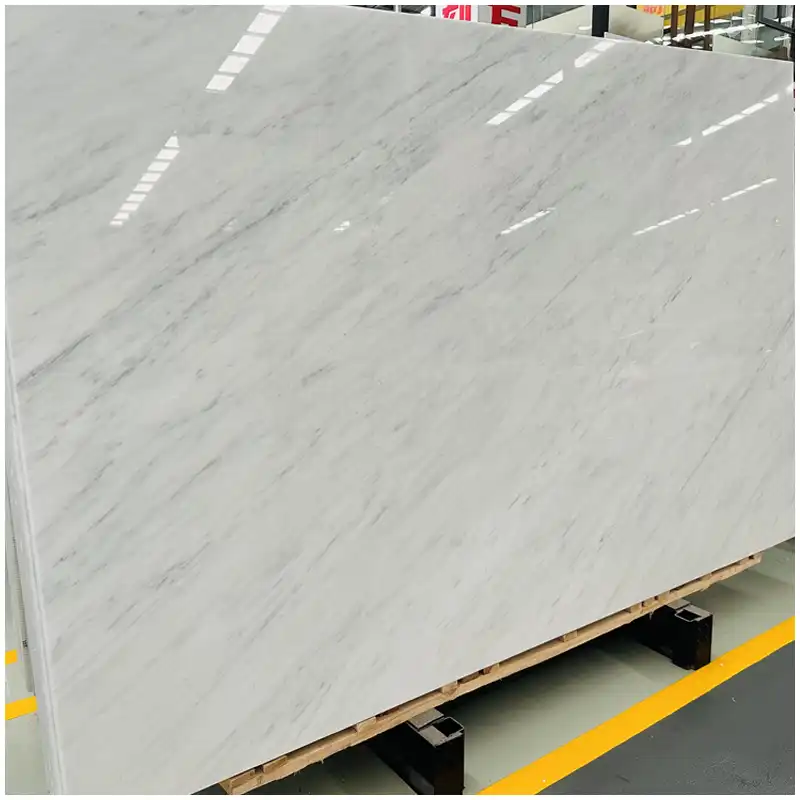
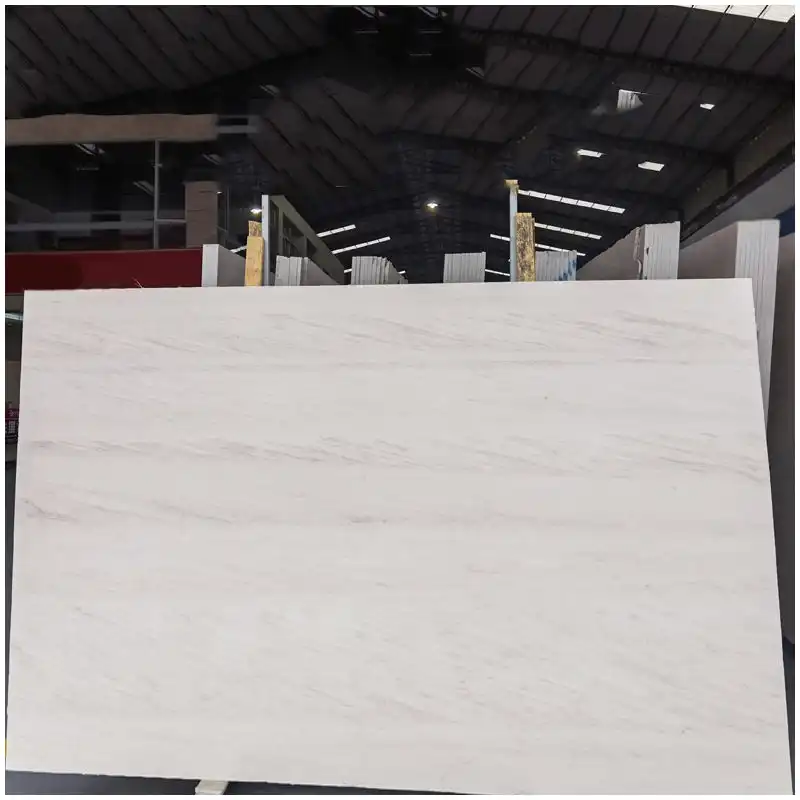
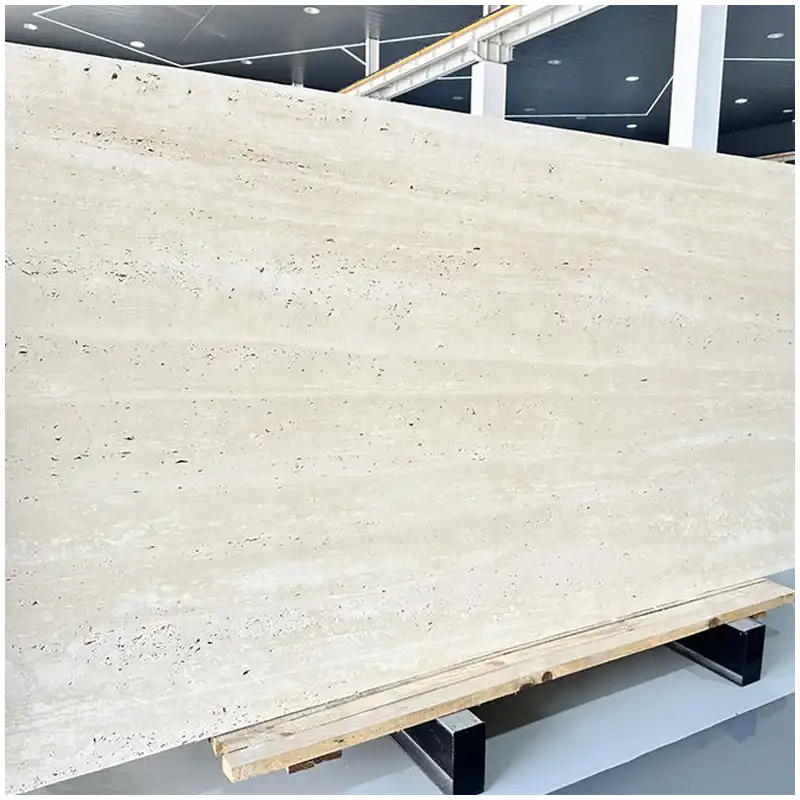
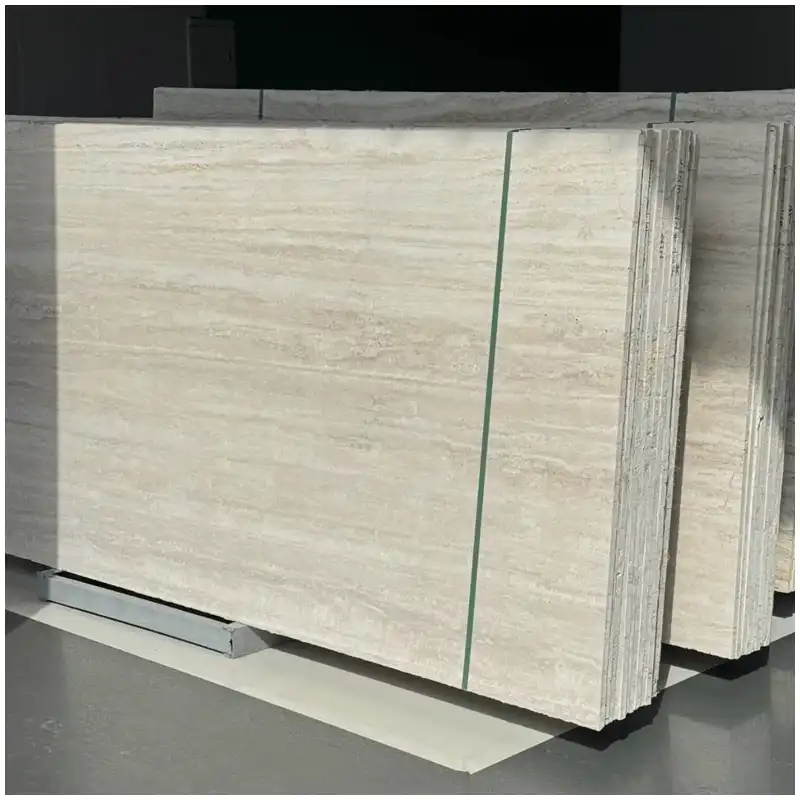
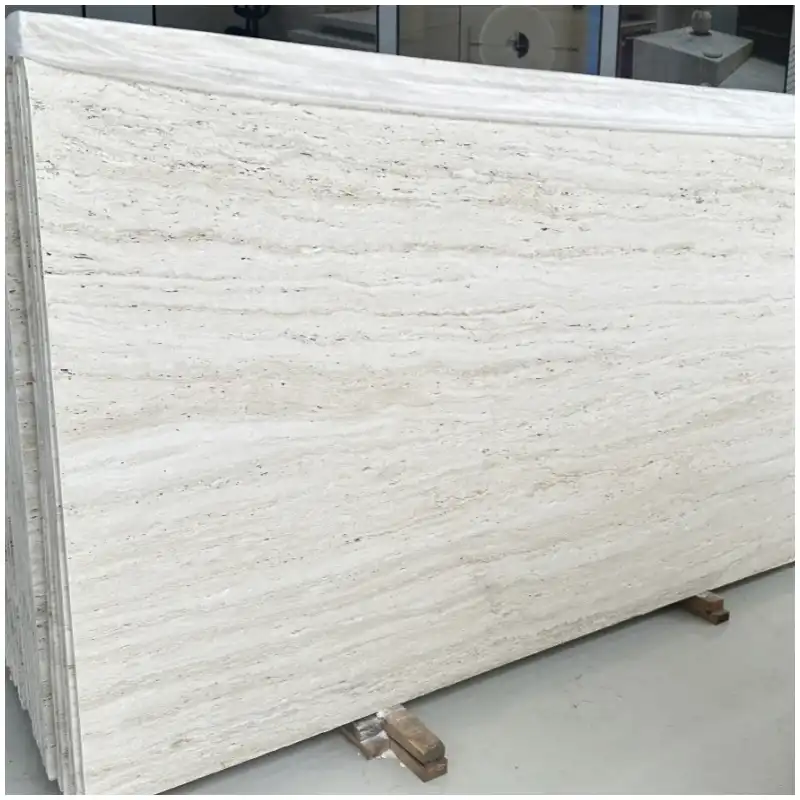
Main slab view for checking overall whiteness, vein direction, pore distribution, and usable cutting area before project approval.
Italy Super White Travertine Slabs for Luxury Hotel Cladding, Villa Feature Walls, Floors, and Bathrooms
Italian Super White Travertine sits in the lightest end of the travertine palette. Rather than the stronger gold-brown banding of classic beige travertine, it reads as pale ivory, warm white, and light cream with restrained grey-beige or faint warm mineral lines. Vein-cut slabs give the material an architectural direction that can be continued through wall panels, floor fields, bathroom elevations, stair details, and vanity surrounds.
The stone is naturally porous. Filled treatment can close visible cavities and produce a more continuous face, while an unfilled or lightly filled treatment keeps more of the raw travertine character. The finish therefore changes more than gloss level: it changes how pore structure, color depth, cleaning behavior, and joint lines read in the completed room.
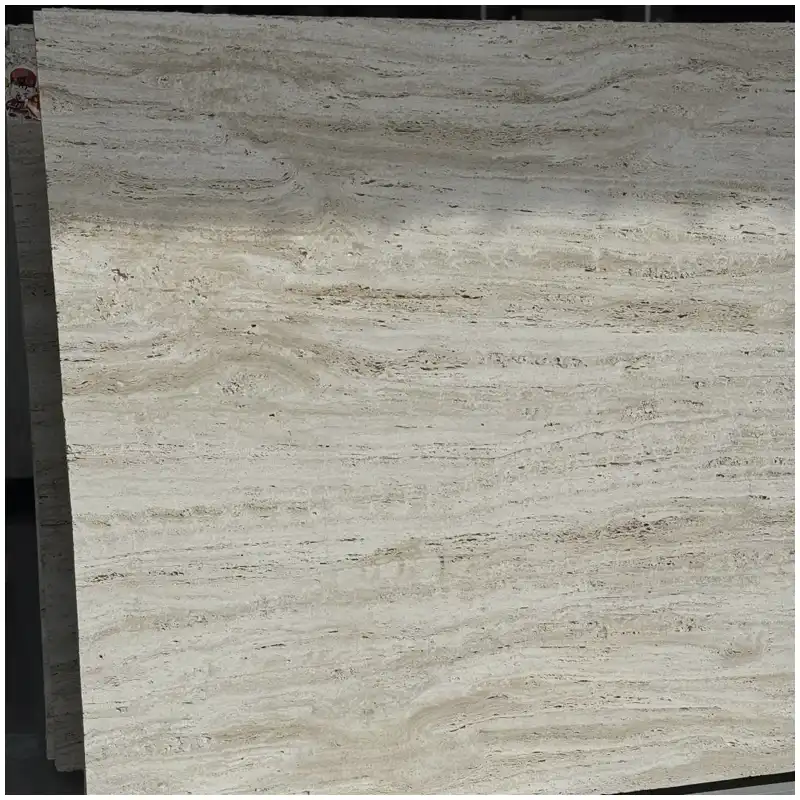
- Use full-slab photos to approve white/ivory tone and the density of linear movement.
- Confirm filled versus unfilled condition before the fabrication drawings are released.
- For large wall elevations, establish vein direction and panel sequence before cutting rather than correcting layout on site.
Honed and Filled Travertine: Surface Consistency, Pore Filling, and Slab Selection
Honed and filled travertine is often selected for hospitality walls, bathroom panels, vanity surrounds, and controlled interior floors because the matte surface keeps the pale stone calm while filling reduces open cavities on the face. The approval sample should show the proposed fill color and finish together. A fill that is too dark can emphasize every pore; an over-bright fill can create a spotted surface under grazing light. For repeated panels, review both close-up texture and full-slab distance so the finish decision does not hide variation that becomes obvious after installation.
White Travertine Identity: Vein-Cut Direction, Natural Pores, and Current-Batch Approval
Travertine is formed with natural voids and mineral layering, so a white travertine specification should not be written as though the stone were a uniform engineered surface. Even within a selected batch, slabs can vary in the warmth of the base, the width of linear bands, the visibility of pores, and the concentration of beige or grey mineral traces.
For long hotel corridors, villa walls, lift lobbies, reception backdrops, or bathroom elevations, the most visible difference is usually directional. Vein-cut panels create horizontal or vertical visual movement depending on rotation. Approve this orientation on an elevation drawing, then number pieces so the installation team can reproduce the planned sequence.
Italy Super White Travertine Slabs Specification for Hotel Walls, Villa Interiors, Travertine Tiles, and Vanity Projects
| Ürün Adı | Italy Super White Travertine Slabs |
| Malzeme | Doğal traverten |
| Menşe Referansı | Italy; confirm current slab batch and sourcing documentation for the order |
| Color Character | Pale ivory white, light cream, subtle beige-grey linear movement, and natural pore texture |
| Ürün Formları | Slabs, travertine tiles, wall panels, floor pieces, vanity components, stairs, and drawing-based cut-to-size fabrication |
| Finish Direction | Honed and filled, honed, polished, or other project-approved finish after sample review |
| Filled / Unfilled | Confirm according to application, cleaning requirement, pore expression, and approved sample |
| Boyut / Kalınlık | Confirm from current slab inventory and approved project drawings; do not release cutting from nominal assumptions |
| Özel ölçü, kıvrım, kalınlık, kenar profili ve taban eşleşmesi | Luxury hotel cladding, villa feature walls, bathrooms, reception areas, floors, travertine tiles, vanity tops, stairs, and custom stone details |
| Approval Priorities | Current slab photos, tone range, vein direction, pore density, fill color, finish, usable area, dry-lay sequence, and fabrication drawings |
Vein Direction, Cut-to-Size Planning, and Dry-Lay Control Before Fabrication
For linear white travertine, layout planning should start before the saw. On a feature wall, the drawing should define whether lines run horizontally, vertically, or continue through adjacent panels. On floors, a designer may choose one direction for a calm corridor flow or alternate selected pieces to reduce a striped effect. Stairs require the tread and riser direction to be coordinated so the assembly does not look visually disconnected.
- Wall panels: approve elevation, panel sizes, joint locations, vein direction, returns, corners, and visible faces.
- Floor tiles: confirm calibration, module size, finish, grout tone, joint width, movement-joint strategy, and laying direction.
- Vanity pieces: finalize sink opening, faucet holes, backsplash, edge profile, support, seam, and finished face before cutting.
- Dry-lay: use numbered pieces for large visible areas so tone, vein rhythm, fill quality, and panel sequence are checked before packing.
Luxury Hotel Cladding and Villa Feature Walls: Panel Rhythm, Lighting, and Fixing Review
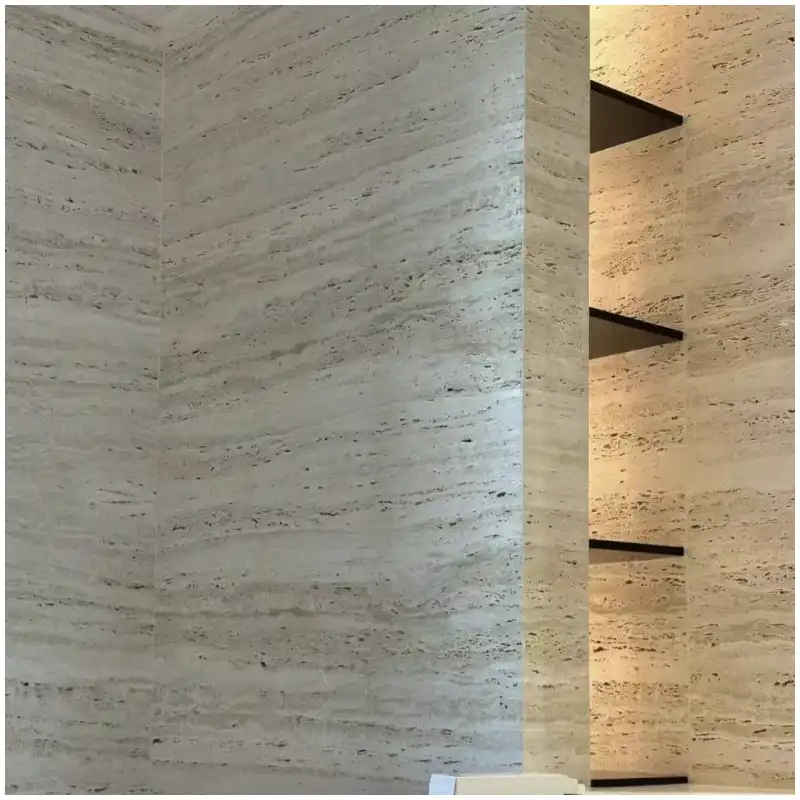
Large pale travertine walls are read from a distance, so overall batch tone and panel rhythm matter more than one attractive close-up. In hotel lobbies, lift surrounds, reception walls, corridors, and villa living rooms, the designer should review the slab layout under the intended lighting. Grazing light can emphasize fill, small cavities, lippage, and surface changes that are much less visible under diffuse light.
For mechanically fixed or dry-hung cladding, panel thickness, anchor or fixing design, substrate, edge distances, cutouts, corner returns, and engineering requirements must be resolved by the project team. For adhesive-fixed interior panels, substrate preparation, adhesive compatibility, moisture conditions, and movement joints still need a project-specific installation plan.
Bathroom Walls and Vanity Tops: Filled Surface, Cutouts, Sealing, and Wet-Zone Details
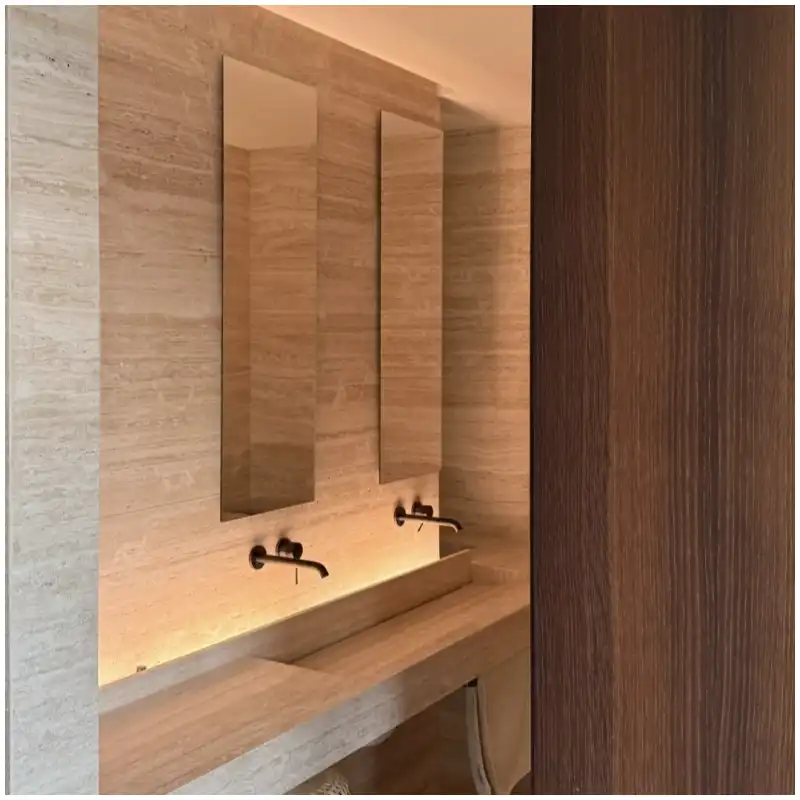
White travertine can create a continuous bathroom palette across wall panels, vanity surfaces, tub surrounds, thresholds, shelves, and selected floor areas. The stone is calcium based and naturally porous, so wet-zone performance depends on the complete assembly rather than stone appearance alone. Waterproofing, drainage, grout, sealing, ventilation, finish, and routine cleaning all need to be coordinated.
For vanity tops, approve the slab area around sink cutouts before fabrication. Confirm under-mount or vessel sink dimensions, faucet drilling, backsplash height, edge treatment, seam location, reinforcement or support where required, and the visible front edge. Filled and honed surfaces generally reduce open pores and reflection, but the approved sample should be reviewed under bathroom lighting before production.
Finish Selection: Honed and Filled, Honed, Polished, or Textured Surface
Finish selection should follow the use area rather than a single showroom sample. Honed and filled surfaces create a low-reflection face with fewer open cavities and are a practical direction for many bathrooms, wall panels, and controlled interior floors. Plain honed surfaces retain a soft appearance but the filling specification still needs to be defined separately. Polished surfaces deepen color and increase reflection, making slab variation and fill more visible under light.
- Hotel walls: prioritize even finish, fill color, panel alignment, and response to grazing light.
- Bathroom walls and vanities: prioritize filled face, sealing, stain management, neutral cleaning, and cutout details.
- Interior floors: review traffic, finish, slip expectation, lippage, grout, movement joints, and maintenance before specifying.
- Exterior or wet walking surfaces: do not select polished stone from appearance alone; review slip, drainage, climate, fixing, and exposure for the actual project.
Factory Support, QC, Inspection, and Packing for Italian White Travertine Projects
A useful factory workflow starts with material approval and ends with installation-ready identification. For this stone, the QC emphasis should remain on the details that change the finished visual field: batch tone, slab direction, pore condition, fill quality, surface finish, dimensions, visible faces, edge quality, and piece sequence.
- Current slab or panel photos for batch approval before cutting.
- Drawing review for wall elevations, tile modules, stairs, vanity cutouts, edges, and returns.
- Dry-lay or sequence review when adjacent pieces must continue the linear pattern.
- Dimensional and visible-face inspection after fabrication, with attention to pore fill and finish uniformity.
- Room, elevation, or piece labels coordinated with packing so the site team can identify the intended installation sequence.
Common Specification Mistakes to Avoid with Super White Travertine
- Approving the material from one small sample without seeing the current full-slab tone and vein range.
- Writing “honed” without defining whether pores are filled, how the fill should look, and what surface sample is accepted.
- Starting wall-panel cutting before the vein direction, elevation joints, corners, and returns are frozen.
- Using a glossy finish in wet walking areas without a project-specific slip review.
- Approving vanity fabrication without final sink, faucet, backsplash, edge, support, and seam drawings.
- Mixing slabs with noticeably different white/cream tone or fill appearance in one uninterrupted feature wall without approval.
Care and Maintenance for White Travertine Walls, Floors, and Vanity Surfaces
Travertine is calcium based, so acidic liquids and acidic cleaners can etch the surface. Use a pH-neutral stone cleaner for routine care, remove spills promptly, and avoid vinegar, lemon-based cleaners, aggressive descalers, and abrasive pads. Construction-stage protection is especially important on pale honed material because grout haze, metal dust, pigments, and site dirt can be more visible than on darker stone.
Sealing should be specified according to the finish, filling condition, location, and installer recommendation. In bathrooms and vanity areas, sealing does not replace waterproofing, drainage, ventilation, or correct joint detailing. Maintenance instructions should be handed over with the project so the approved surface is cleaned with products appropriate for natural stone.
FAQs of Super White Italian Travertine
What are Italy Super White Travertine Slabs?
Italy Super White Travertine Slabs are natural Italian travertine with a very light ivory-to-cream background, subtle linear mineral movement, natural pores, and a calm architectural appearance. They are specified as slabs, tiles, wall panels, bathroom surfaces, vanity components, and cut-to-size pieces for hospitality and residential projects.
Is honed and filled travertine suitable for hotel wall cladding?
Yes. Honed and filled travertine is often reviewed for hotel interiors because filling closes much of the open pore structure while the honed finish keeps reflection restrained. The fill color, fill density, panel direction, joint rhythm, substrate, fixing method, and finished lighting should still be approved for the specific elevation.
Can Italy Super White Travertine be used for villa feature walls?
Yes. The pale background and directional vein-cut movement work well on villa feature walls when the slabs or panels are selected as one visual set. Full-slab approval, vein direction, panel numbering, edge returns, joint locations, and dry-lay review are more important than approving the stone from one small sample.
What is the difference between filled and unfilled white travertine?
Filled travertine has the natural surface cavities filled to create a more continuous face that is generally easier to clean. Unfilled travertine keeps more of the original open-pore character. The correct choice depends on the design intent, wall or floor use, cleaning expectation, wet-area exposure, and approved finish sample.
Which finish should be selected for Italy Super White Travertine?
Honed and filled is a strong direction for many wall, bathroom, and controlled interior floor applications because it gives a soft matte appearance. Polished surfaces create more reflection and visual depth. Other textured finishes should be reviewed against slip, cleaning, exterior exposure, and the appearance of the actual stone.
Can Italy Super White Travertine Slabs be fabricated into vanity tops?
Yes. Vanity pieces can be cut from approved slabs when sink openings, faucet holes, edge profile, backsplash, support, seam position, visible face, filling, sealing, and finished dimensions are confirmed on the shop drawing. Natural pores and calcium-based stone chemistry should be considered in the maintenance specification.
What should buyers confirm before ordering Italy Super White Travertine Slabs?
Confirm current full-slab photos, slab identification, color range, vein direction, pore density, filled or unfilled condition, finish, usable dimensions, thickness, cut-to-size drawings, dry-lay requirement, inspection standard, packing labels, destination, and the intended application before production begins.
Recommended Travertine Products from Esta Stone
Gümüş Traverten Levhalar
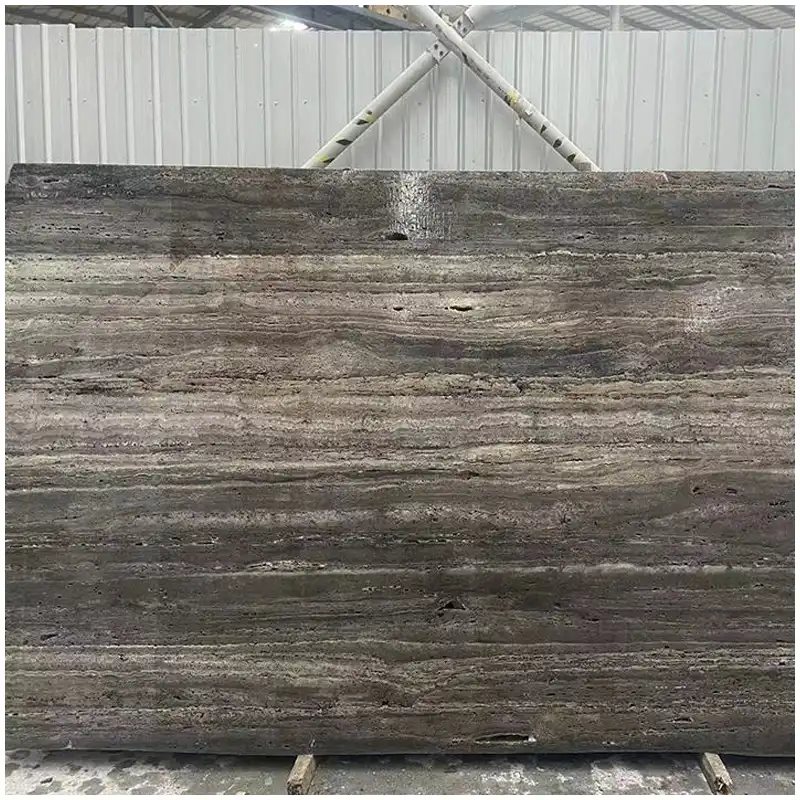
Italian silver-grey travertine with linear movement for wall panels, floors, bathrooms, and coordinated vein-cut layouts.
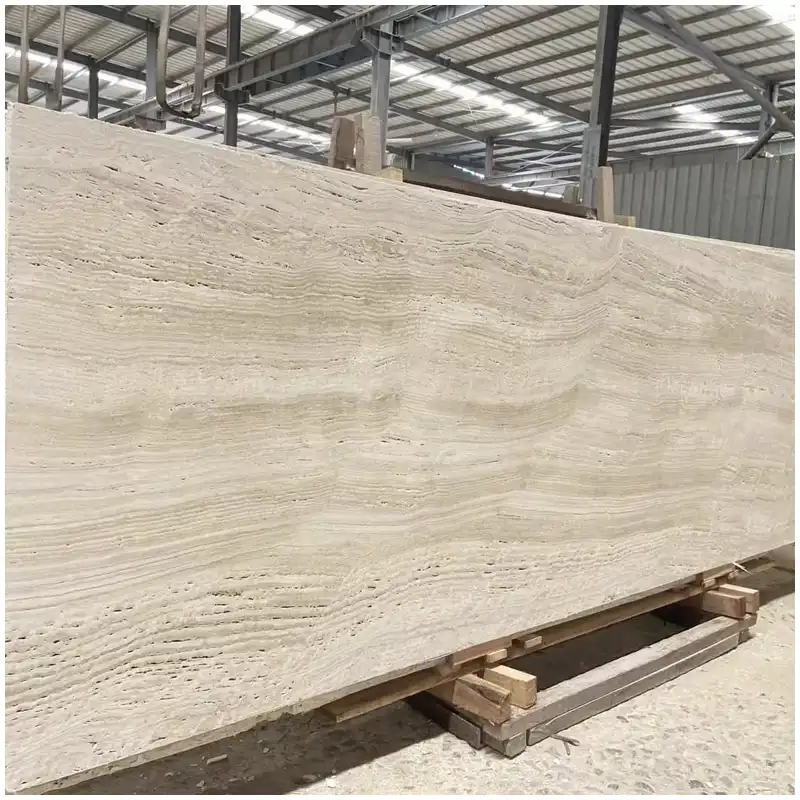
Iranian Ultra-White Travertine
Soft white Iranian travertine with straight linear movement for walls, floors, bathrooms, and light-toned architectural schemes.
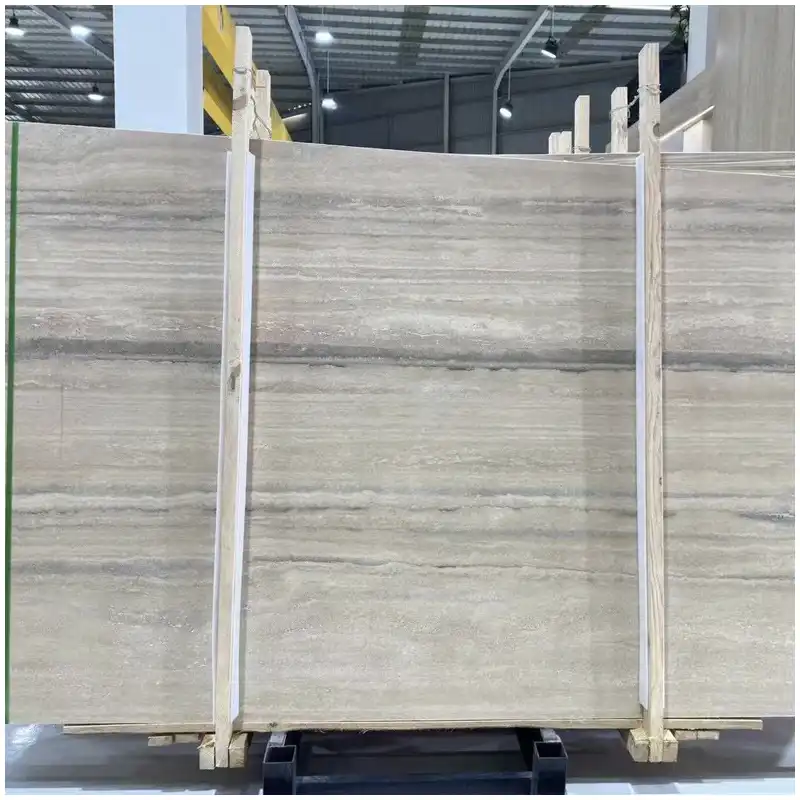
Italy Lane Crawford Travertine Stone Slab Tiles
Warm beige-brown Italian travertine with visible pore texture for floors, wall cladding, stairs, and natural-toned interiors.

Okyanus Mavisi Traverten
Italian grey-blue and beige travertine with directional veining for walls, bathrooms, floors, fireplaces, and statement interiors.
Request Italy Super White Travertine Slabs Photos, Finish Options, and Project Quotation
For a useful quotation and production review, send the application area and the information that affects selection and fabrication. Esta Stone can then review the current material direction against the intended hotel, villa, wall, bathroom, floor, tile, or vanity package rather than quoting from a generic sample reference.
- Required slab, tile, panel, or finished-piece quantity
- Target size, thickness, finish, filled or unfilled condition, and visible-face requirements
- Wall elevations, floor layouts, stair drawings, vanity drawings, sink and faucet details, edge profiles, and returns
- Need for current slab photos, sample approval, dry-lay, vein-direction planning, piece numbering, or inspection photos
- Packing labels, destination port, site sequence, and project schedule
| Request Italy Super White Travertine Slabs Quote | View Travertine Collection |