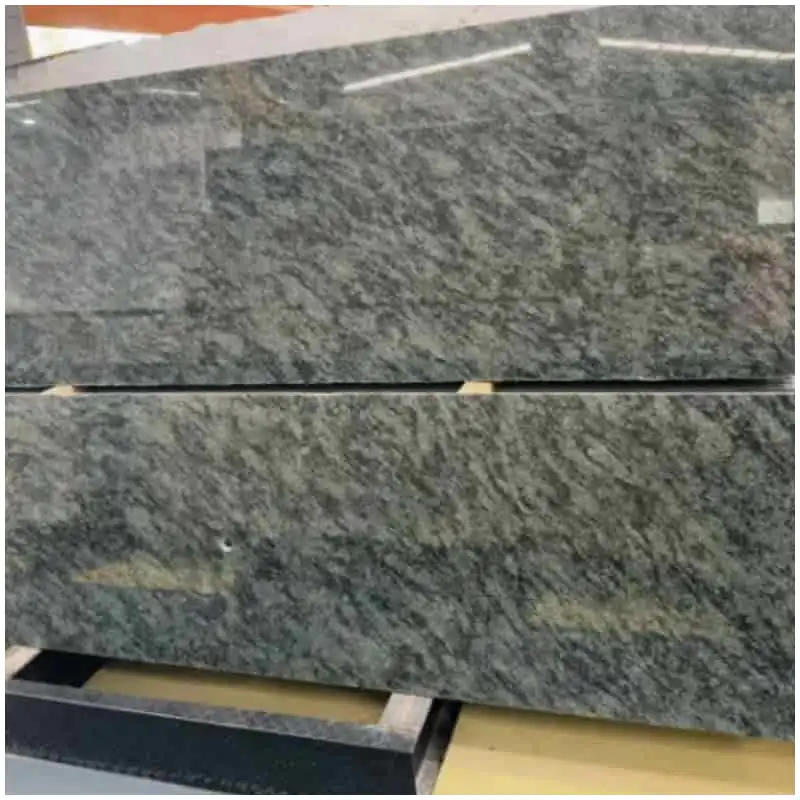


Carrara Marble Backsplash: Vanity Height, Mirror Line, Outlets, and Vein Flow
A narrow white strip can spoil a careful vanity when an outlet cuts through the only strong grey vein and leaves a fragile bridge above the box. On the slab, the movement looked balanced. On the wall, the mirror hides half of it and the electrical plate dominates the rest.
For a carrara marble backsplash, I overlay the exact elevation on the full slab. I need top height, splash height, mirror edge, boxes, faucet clearance, returns, seams, and room lighting before accepting the crop. Lighting lies, and narrow stone magnifies every shift.
A short splash protects one joint. A full-height panel becomes the wall background and must carry mirrors, lights, accessories, openings, and broader vein flow. They need different approvals.
Fix the Finished Height and Mirror Relationship with Carrara marble backsplash
At the line below a mirror, I check the finished vanity-top elevation at the intended viewing distance. I measure the finished wall and vanity datum while the full range is visible. Without the full comparison, the risk is that site dimensions move the visible line. The finished setting shows whether finished vanity-top elevation remains within the approved range. The material passes as a group or returns to the sorting rack.
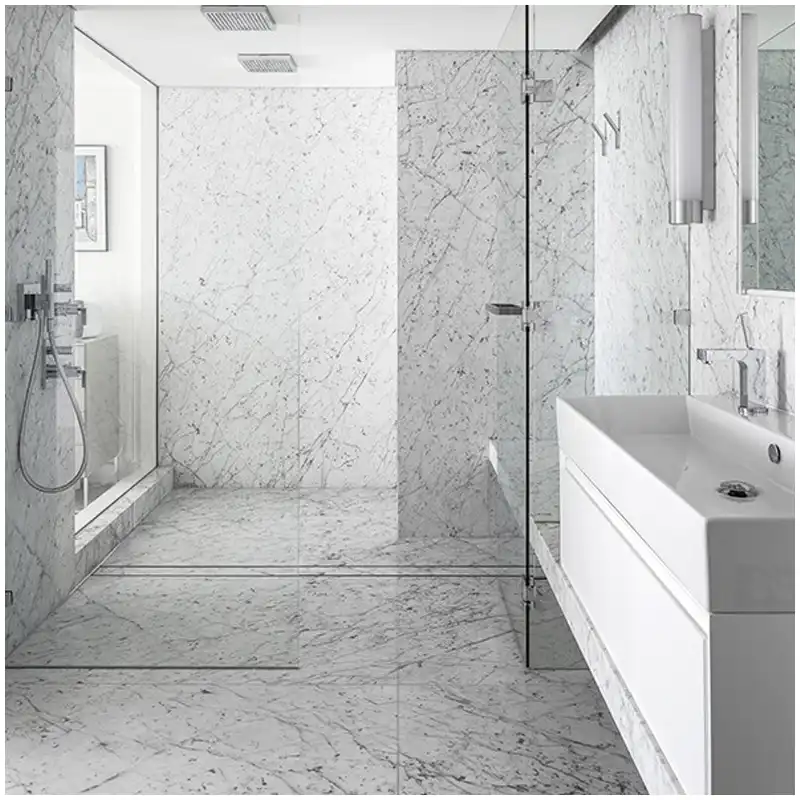
The accepted range sits beside cutout dimensions and corners with sealant test. One carries identity and the other carries the conditions of judgment. Later complaints about outlet and switch-box positions can be checked against the original light and finish.
From normal viewing distance, I read the top-to-splash batch relationship. I draw every plate, mirror, fitting, and clearance before polishing, sealing, cutting, or cleaning alters what we can prove. The comparison must settle whether site dimensions move the visible line. For top-to-splash batch relationship, I step back to read the area, then move close enough to see repairs, edges, pores, joints, and residue.
I keep this detail beside Bianco Carrara Marble Bathrooms because the same white marble must agree across slabs, wet areas, lighting, joints, and maintenance.
Map Outlets, Faucets, and Accessories
I keep the lights fixed while checking the finished vanity-top elevation. I overlay the elevation on full-slab photographs before polishing, sealing, cutting, or cleaning alters what we can prove. My concern is whether a plate covers the main vein. For finished vanity-top elevation, I step back to read the area, then move close enough to see repairs, edges, pores, joints, and residue.
When I inspect an outlet beside a faucet, I move the mirror bottom clearance between warehouse and project light. I draw every plate, mirror, fitting, and clearance while the full range is visible. Warm light makes it obvious when a plate covers the main vein. Adjacent stone makes any shift in mirror bottom clearance more obvious. I need the installed relationship, not a collection of isolated close-ups.
With Carrara marble slabs, I compare full faces under the project light before accepting tone, veins, finish, and wet-area placement.
For carrara marble backsplash, treat mirror, outlet, faucet, and stone as one elevation.
Choose the Slab Zone for the Visible Band
While viewing a backsplash return at doorway distance, I put the outlet and switch-box positions into the dry-lay before deciding. I overlay the elevation on full-slab photographs while the full range is visible. Adjacent pieces quickly reveal that faucet handles strike the stone. The complete setting reveals outlet and switch-box positions without the mercy of a cropped photograph. Only the complete arrangement earns a release mark.
Before release, I place 3000K and 4000K photographs with labelled companion offcuts. Both records stay tied to the dry-lay position and finish standard. Any apparent shift in strong vein through the visible band returns to evidence from the accepted layout.
My close inspection focuses on the mirror bottom clearance. I choose the visible band before optimizing yield before polishing, sealing, cutting, or cleaning alters what we can prove. The material stays on hold until I know whether faucet handles strike the stone. For mirror bottom clearance, I step back to read the area, then move close enough to see repairs, edges, pores, joints, and residue.
| Decision point | Evidence to inspect | Release condition |
|---|---|---|
| Elevation | Top, splash, mirror, outlets, faucet | No clash; visible lines are deliberate |
| Slab crop | Full face with elevation and vein path | Movement remains after openings |
| Cutouts | Box, plate, corners, bridge, support | Fabrication risk addressed |
| Light and batch | Top and splash at 3000K and 4000K | Undertone relationship accepted |
| Joints | Seams, returns, wall gaps, sealant sample | Edges remain clean |
The Hard-Won Lesson in carrara marble backsplash: Approve the stone that remains visible
A full-slab layout can look balanced until mirrors, plates, and fittings are drawn over it. Once those elements cover the pale zones, the remaining strip becomes darker and busier than the approved image suggested.
The Lesson: Judge the uncovered stone after every wall component is overlaid.
Keep Veins Moving across Joints and Returns
Next I isolate the outlet and switch-box positions. I move joints into deliberate positions before polishing, sealing, cutting, or cleaning alters what we can prove. I want to know whether a random crop concentrates dark markings. For outlet and switch-box positions, I step back to read the area, then move close enough to see repairs, edges, pores, joints, and residue.
As I look at a wall under vertical sconces, I compare the faucet handle sweep across several pieces. I choose the visible band before optimizing yield while the full range is visible. Skip that, and a random crop concentrates dark markings. Grout, water, light, and neighboring pieces make changes in faucet handle sweep easier to see. I trust the whole arrangement before I trust a polished close-up.
With carrara marble backsplash, select the crop from the visible band instead of isolated dimensions.
Protect Narrow Bridges around Cutouts
During a check of the strip above an electrical box, I refuse to judge the strong vein through the visible band from one flattering crop. I move joints into deliberate positions while the full range is visible. The trouble appears when a return looks unrelated to the face. Once grout and water enter the picture, the effect of strong vein through the visible band becomes easier to judge. The larger field decides; the flattering detail shot does not.
I record top-to-splash batch reference with coordinated elevation with openings. The first locates the slab or piece, while the second preserves the viewing conditions. A darker site result can be compared directly with the recorded condition for side-return depth.
Before another process changes the evidence, I examine the faucet handle sweep. I protect vulnerable bridges before polishing, sealing, cutting, or cleaning alters what we can prove. The pass-or-reject question is whether a return looks unrelated to the face. For faucet handle sweep, I step back to read the area, then move close enough to see repairs, edges, pores, joints, and residue.
I keep Carrara marble vanity tops beside the approved physical reference so batch drift cannot hide behind a material name.
Approve Color under Mirror and Room Light
I pull the strong vein through the visible band. I dry-fit top, splash, and returns before polishing, sealing, cutting, or cleaning alters what we can prove. That view tells me if narrow stone around boxes cracks in handling. For strong vein through the visible band, I step back to read the area, then move close enough to see repairs, edges, pores, joints, and residue.
While reviewing the assembly during dry fitting, I place the full-height versus short splash beside the approved reference. I protect vulnerable bridges while the full range is visible. A single image can hide the fact that narrow stone around boxes cracks in handling. Project light gives the accepted result for full-height versus short splash a harsher test than a corrected warehouse image. My approval follows the dry-lay, not the prettiest individual piece.
Before I accept the batch, I return to Bianco Carrara Marble Bathrooms and check whether this detail still belongs with the complete Carrara bathroom.
When the specification calls for carrara marble backsplash, inspect returns, openings, joints, and light together.
Seal Perimeters without Staining the Edge
Returning to the joint after sealant cures, I spread out enough material to read the side-return depth. I dry-fit top, splash, and returns while the full range is visible. The installed area may expose that mixed light separates top and splash. The dry-lay exposes how side-return depth behaves when several pieces share one field. A full reading carries more weight than one carefully lit image.
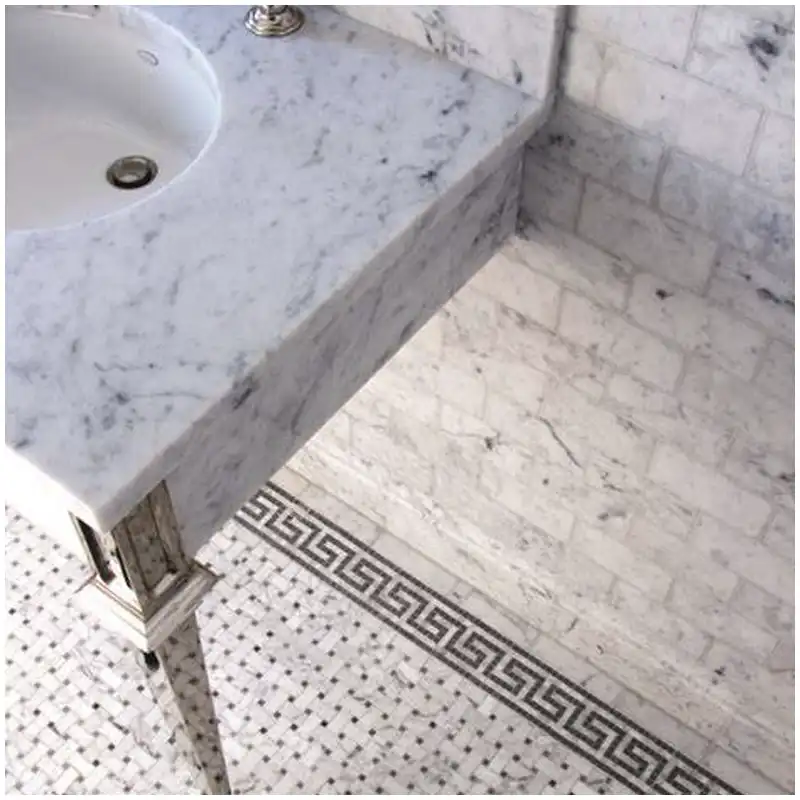
For later comparison, I join site datum and wall survey with joint and vein-flow approval. Their shared reference lets us compare installed work with the original approval. Those records tell us whether bridge around an electrical cutout changed or the viewing conditions did.
The warehouse check then moves to the full-height versus short splash. I view the assembly under both project lights before polishing, sealing, cutting, or cleaning alters what we can prove. I am looking for evidence that mixed light separates top and splash. For full-height versus short splash, I step back to read the area, then move close enough to see repairs, edges, pores, joints, and residue.
Why a Small Backsplash Needs a Full Elevation
The visible area is smaller than the cut piece
Mirrors, plates, fixtures, and sealant hide stone. Approval must focus on what remains.
Openings create structural problems
Electrical boxes leave narrow bridges and inside corners needing fabrication and handling decisions.
Mirror light changes the relationship
Orientation, finish, and light direction can separate pieces from the same slab.
Wall flatness affects the joint even when stone dimensions are correct. Record the tolerance and decide whether the wall is prepared or the adhesive bed absorbs limited variation. Forcing a rigid strip against a bow can open the top joint or stress an outlet corner.
Where stone continues behind sconces or a medicine cabinet, show fixing zones. Preserve safe distances from edges and natural lines, and keep drilling information with the numbered panel rather than sending a separate sketch.
Approval must remain tied to the physical reference and the current drawing. For carrara marble backsplash, a screen can document position and range, but it cannot settle finish, undertone, touch, or wet response by itself. I keep the signed sample beside the batch record and photograph any approved exception with its piece number, light condition, and intended location.
Before applying the release mark, I place the mirror bottom clearance in the recorded view at a backsplash return at doorway distance, and I choose the visible band before optimizing yield. I note full-slab crop overlay in the warehouse log because faucet handles strike the stone. I save the condition that exposes the issue with full-slab crop overlay, not just the image that minimizes it.
My last close check at a wall under vertical sconces concerns the strong vein through the visible band, and I measure the finished wall and vanity datum. I note 3000K and 4000K photographs in the warehouse log because sealant oils shadow a pale edge. Any change caused by angle or wetness remains visible beside 3000K and 4000K photographs.
At the recorded viewing distance of the strip above an electrical box, I reassess the joint position beside the mirror, and I view the assembly under both project lights. I note site datum and wall survey in the warehouse log because faucet handles strike the stone. The entry for site datum and wall survey tells the next inspector exactly how the material was judged.
Before release, I bring the perimeter sealant into the light at the assembly during dry fitting, and I move joints into deliberate positions. I note cutout dimensions and corners in the warehouse log because sealant oils shadow a pale edge. If distance changes the result, both conditions stay beside cutout dimensions and corners; I do not keep only the kinder photograph.
الأسئلة الشائعة
1. How high should a Carrara marble backsplash be?
Choose height from wall protection, mirror position, faucet scale, outlets, design intent, and site conditions. Short and full-height formats solve different problems.
2. Should the backsplash match the vanity top exactly?
They should hold an approved relationship. Exact continuation may be planned, while other projects accept a compatible flow or quieter vertical field.
3. Can outlets be cut into marble?
Yes, but exact box dimensions, plate coverage, corner treatment, remaining bridges, access, and handling support must be drawn before fabrication.
4. Why can the splash look warmer than the top?
Vertical and horizontal surfaces receive light differently. Mirror lights, room lights, orientation, finish, sealant, and batch range all affect the reading.
5. What should happen if an outlet is misplaced?
Photograph and measure the wall and stone, stop site cutting, then compare actual dimensions with the approved elevation and slab overlay before alteration.
Quick-Reference Checklist for carrara marble backsplash
- Measure the finished vanity datum.
- Overlay mirrors, outlets, faucets, and plates.
- Approve the visible slab crop.
- Protect bridges around openings.
- Dry-fit top, splash, and returns under project light.
- Test perimeter sealant on current stone.
Final Conclusion
A backsplash works when the visible crop, openings, mirror line, faucet clearance, joints, light, and sealant are approved together. Narrow size does not make those decisions smaller. The final decision on carrara marble backsplash must stay attached to the evidence that production and site teams can verify.
I would rather redraw one outlet than patch a broken white bridge, and Esta Stone keeps that elevation beside the slab until cutting ends.
References
- رخام كرارا, Wikipedia.
- Standard Specification for Marble Dimension Stone, ASTM International.
- Natural Stone Institute Technical Bulletins for Wet Areas, Natural Stone Institute.
- ANSI A108 Installation Standards, Tile Council of North America.
- TCNA Handbook for Ceramic, Glass, and Stone Tile Installation, Tile Council of North America.
- Bathroom Planning Guidelines, National Kitchen and Bath Association.
- Search Essentials, Google Search Central.