



Calacatta Viola Marble Slab Vein Layout Before Cutting
I stopped a vanity top five minutes before cutting because the sink outline sat directly over the best violet cloud on the slab. The designer had chosen that face for its dramatic center. The fabricator had centered the basin mechanically and was about to turn the focal movement into waste. “That slab doesn’t belong next to your bathtub” was not my complaint. The layout did not belong on that slab.

We shifted the top within the usable face, moved the basin relationship on the approved drawing, and saved the strongest vein beside the bowl. Don’t just look at samples. The veins on a small Viola chip feel decorative; on a full face they control the whole room. Lighting lies too, so I checked the revised outline under the same 3000K light planned for the bathroom.
Read a Calacatta Viola Marble Slab Before Drawing Pieces
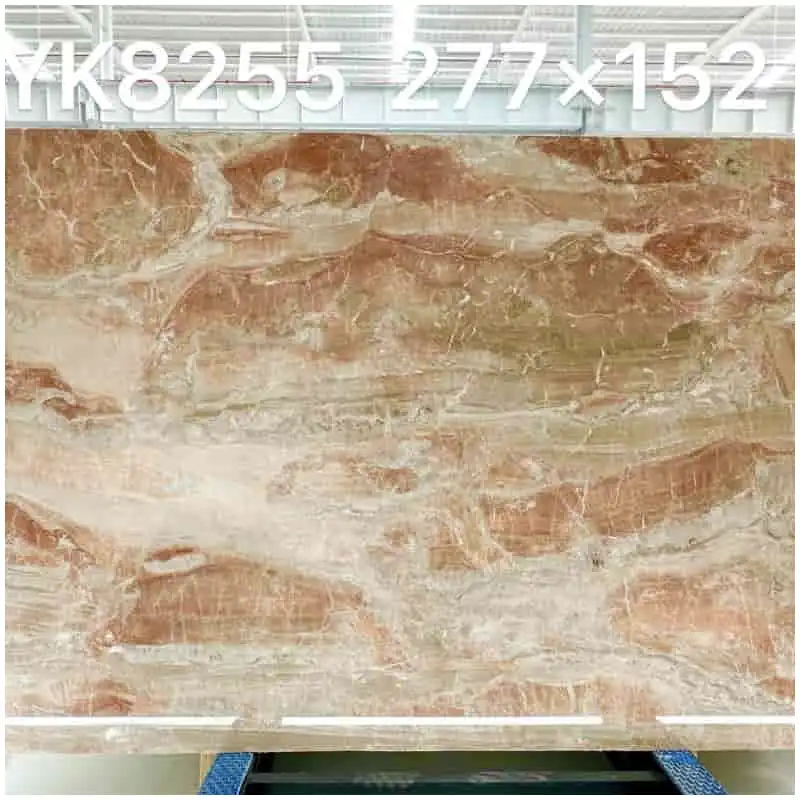
A Calacatta Viola marble slab often combines white or creamy calcite with burgundy, violet, gray, and ochre movement. I first identify the dominant band, quieter fields, natural features, usable edges, and any area that needs special fabrication attention.
Това Calacatta Viola marble material must be judged as a complete face. One sample may show color but not whether the main movement is narrow, cloud-like, diagonal, or concentrated at an edge.
I photograph the face straight-on and print a working image. Don’t just look at samples; mark the project on the actual slab. I want the designer to approve where the visual weight lands, not only the material name.
The warnings in Calacatta Marble Slabs Mistakes in Project Orders show why a dramatic sample cannot replace a marked full-slab cutting plan.
Build a Marble Vein Layout from the Elevation
Marble vein layout starts with the finished elevation at scale. I mark panel joints, corners, sink or fixture openings, edge returns, and visible sightlines. Then I place those shapes over the slab image, preserving enough fabrication allowance around every piece.
Strong movement can cross a joint when the pieces come from adjacent slab areas and the cutting sequence supports it. It can also stop at a corner. What I reject is an accidental half-vein that ends 20 millimeters from a joint because nobody looked at the full elevation.
Това Calacatta Viola red and white slabs may provide bookmatch or coordinated possibilities depending on the actual block cutting and faces. I verify the numbered sequence rather than promising a mirror relationship from a generic image.
Protect White Marble Cutout Planning
White marble cutout planning is both visual and practical. I keep major openings away from the feature movement when the design wants to preserve it. I also watch narrow stone bridges, inside corners, faucet holes, and the direction of natural features.
Fabrication support and reinforcement decisions belong to the responsible fabricator and project specification. I do not claim that every vein is weak or every clear area is strong. The actual slab, thickness, cutout geometry, handling, and installation system need professional judgment.
A Calacatta Viola marble vanity top looks deliberate when the bowl and vein have a relationship. Lighting lies when a glossy reflection hides the movement during layout review, so I check front and oblique views.
Dry-Lay Calacatta Viola Before Packing
Calacatta Viola dry lay confirms that the cut sequence still matches the approved slab map. I arrange pieces in installed orientation, clean the surfaces, control the light, and photograph overall and joint details.
Returns receive attention. A front edge or side panel can carry the movement around a corner, or it can create a clean intentional stop. The chosen result appears on the drawing. That slab doesn’t belong next to your bathtub when the tub apron uses the one face that visibly fights the wall behind it.
I use Viola Calacatta marble only after comparing the actual reserved batch. Commercial names vary, and screen color varies more. The numbered faces and dry-lay are the approval.
Carry Vein Movement Around Returns and Corners
Returns are where a convincing front composition often falls apart. A thick edge, waterfall side, niche return, or tub apron exposes another face. I map that face beside the main panel and decide whether movement continues, turns, or stops cleanly.

When adjacent strips come from nearby slab areas, the edge can feel carved from one body. When that is impossible, I choose a quieter return rather than forcing two strong unrelated veins into a narrow corner. The decision appears in the cut map and piece code.
Bookmatching is not automatically better. A mirrored Viola composition can dominate a small room. Sometimes one broad asymmetric movement gives the architecture more calm. I ask what the wall needs before I ask what the slab can perform.
Sequence Cutting Without Losing the Approved Composition
The cutting file numbers pieces in the order needed to preserve adjacency and orientation. The operator sees top, bottom, left, right, and visible face. Offcuts remain identified until replacements and small returns are complete.
I photograph the marked slab before the first cut, after primary pieces are separated, and at the final dry-lay. Those three records prove whether a later mismatch came from the approved map, cutting sequence, finishing, or installation order.
For a Calacatta Viola integrated marble sink, the basin components need even more careful visual and technical coordination. Curves, joints, waterproofing, support, fabrication, and maintenance belong to qualified specialists; the slab map still protects the intended movement.
Lighting lies when dense violet zones fall under one bright downlight and quiet white fields sit in shadow. I review the dry-lay under even light first, then under the project mood. Both views answer different questions.
Reserve and Document a Compatible Viola Replacement
A replacement cannot duplicate nature. I reserve material that belongs to the same visual conversation: similar background, vein color, scale, and finish. It receives a full-face image and a suggested allocation, not just the word “spare.”
If the original block sequence is exhausted, the project needs a new approval rather than a claim of exact match. Don’t just look at samples. Compare the proposed replacement beside the existing dry-lay and decide whether the joint can accept the difference.
I also keep a small labeled control piece when the project allows it. Years later, that reference cannot promise an exact new slab, but it gives facilities staff a more honest starting point than a phone image copied through several screens.
At final release, the slab map, cut file, dry-lay, piece codes, and reserve record carry one revision. A beautiful composition can still fail if the installer receives an older orientation plan.
I keep Statuario Marble Slab Approval Photos, Lighting and Bathroom Use in the same control file because its lighting method offers a useful comparison for a bold white-marble layout.
A Calacatta Viola dry lay must reproduce the intended elevation, including returns and orientation. I reject layouts arranged only for convenient warehouse photography.
Warehouse Layout Log for Viola Cutting
| Layout zone | Visual decision | Fabrication check | Approval evidence |
|---|---|---|---|
| Focal panel | Keep dominant cloud visible | Allowances and usable edge | Marked full-face image |
| Sink opening | Preserve intended movement | Bridges, corners, holes | Template overlay |
| Panel joint | Continue or stop intentionally | Piece sequence and orientation | Dry-lay joint photo |
| Replacement | Compatible visual group | Finished dimensions and finish | Reserved-piece record |
The Hard-Won Lesson: Do Not Cut Away the Reason the Slab Was Chosen
A vanity drawing centered the basin on the cabinet without overlaying the chosen Viola face. The outline removed the richest violet cloud and left two disconnected dark fragments beside the bowl. We stopped the saw, shifted the finished top within the usable slab area, coordinated the basin position, and obtained a new marked approval. The cabinet elevation barely changed, but the stone kept its identity.
The Lesson: Overlay every major opening on the numbered full slab and approve the visual result before cutting.
Understanding Viola Layout in Today’s White Marble Market
Why does bold movement need more control?
The eye follows high-contrast veins across a room. Their position affects balance, focal points, and joint perception. I use that visual power deliberately instead of allowing cutting efficiency to decide everything.
Does every project need bookmatching?
No. A single uninterrupted face, directional continuation, four-piece composition, or intentional contrast may suit the design. The actual slab sequence and available dimensions determine what is real.
What if the installed sequence does not match the dry-lay?
Photograph the full elevation, piece codes, and close joints under the room light. Stop further installation. Send the supplier the images with marked slab layout, dry-lay approval, packing record, and original inspection file.
The control belongs in The Complete Project Guide to Premium White Marble Selection and Quality Control. Layout is one link between the selected face and the installed room.
Frequently Asked Questions
1. How should a Calacatta Viola marble slab be laid out before cutting?
Overlay scaled finished pieces, joints, openings, visible edges, returns, and fabrication allowances on the numbered full-face image. Mark the dominant movement and obtain visual approval before releasing the cutting file.
2. Should the strongest Viola vein cross the sink opening?
Only when the design and fabricator accept the visual and technical relationship. Often I move the layout to preserve the focal movement and avoid awkward fragments around the bowl.
3. Can Calacatta Viola be bookmatched?
Some numbered slab sequences may support mirrored or coordinated layouts, but the actual block cutting and faces must prove it. Never promise bookmatching from a generic sample or unrelated slab photograph.
4. Why is a dry-lay necessary after the slab map is approved?
Cutting, finishing, repairs, orientation, and piece handling can affect the final sequence. The dry-lay verifies joint rhythm, background range, codes, and returns before packing.
5. What should I do if the installed vein sequence is wrong?
Photograph the entire elevation and close joints with piece codes, stop additional installation, and contact the supplier with the marked slab map, dry-lay approval, packing list, and inspection photographs.
Quick-Reference Checklist for Viola Vein Layout
- Photograph every complete numbered face under even light.
- Mark the dominant vein and quieter usable fields.
- Overlay finished elevations, joints, openings, and returns.
- Protect fabrication allowances around every mapped piece.
- Approve the visual position of major cutouts.
- Dry-lay adjacent work in installed orientation.
- Reserve a compatible replacement from the same range.
Final Conclusion
A bold slab should not be cut like anonymous white material. I want the elevation, opening, joint, return, and replacement plan drawn on the actual numbered face while the team still has choices.
A Calacatta Viola marble slab keeps its authority when the strongest movement lands where the room needs it. Don’t just look at samples; lighting lies, and that slab doesn’t belong next to your bathtub when its layout makes the tub and wall argue. Esta Stone protects the vein before the saw decides it by accident.

References
- Dimension Stone Design Manual, Natural Stone Institute.
- Natural Stone Care and Cleaning Guidance, Natural Stone Institute.
- ASTM C503 Standard Specification for Marble Dimension Stone, ASTM International.
- ASTM C97 Standard Test Methods for Absorption and Bulk Specific Gravity of Dimension Stone, ASTM International.
- Natural Stone Technical Guidance, Stone Federation Great Britain.
- The Lighting Handbook, Illuminating Engineering Society.
- Bathroom Planning Guidelines, National Kitchen and Bath Association.
- ASTM C1242 Standard Guide for Selection, Design, and Installation of Dimension Stone Attachment Systems, ASTM International.