


Кратко резюме
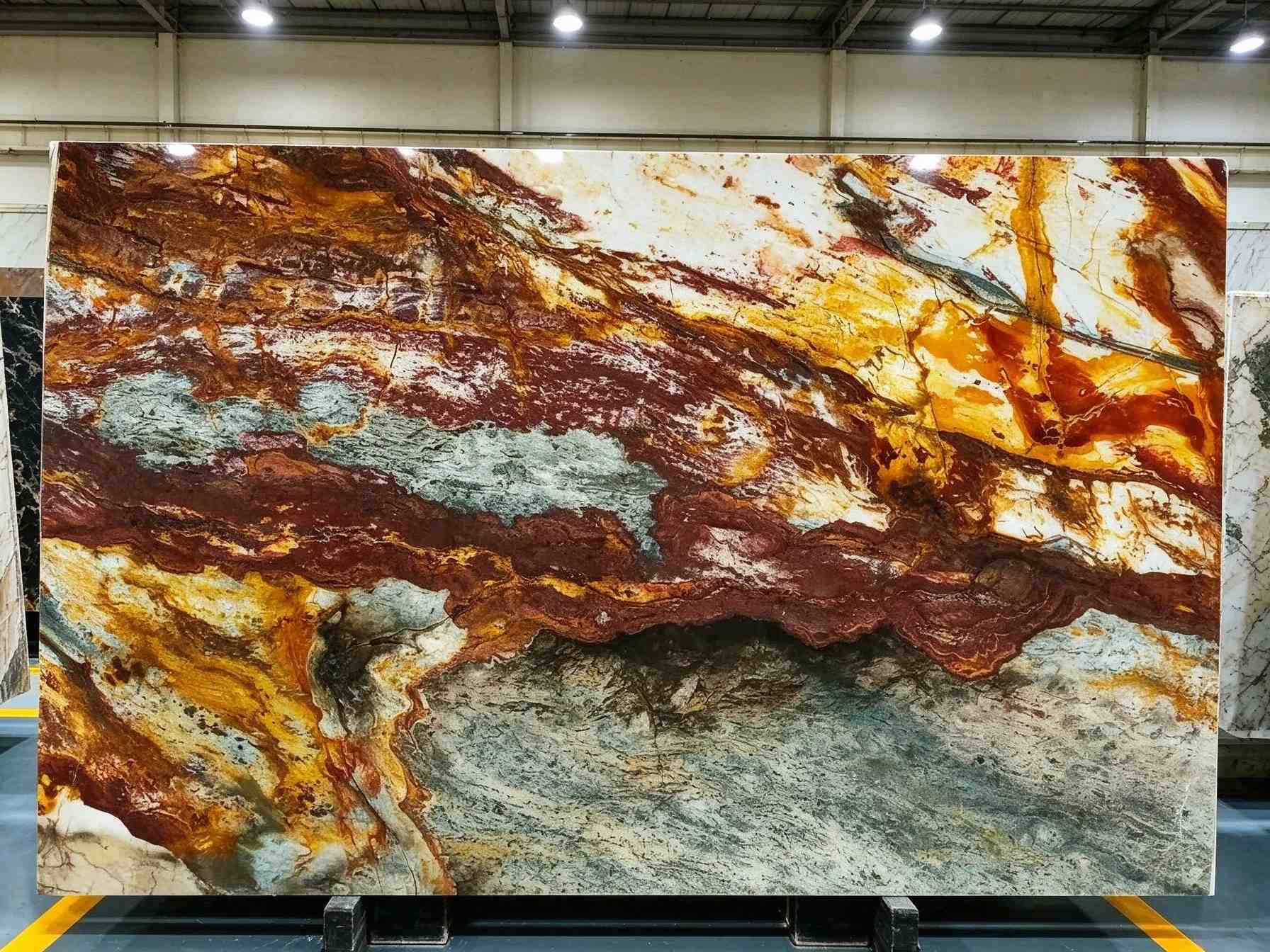
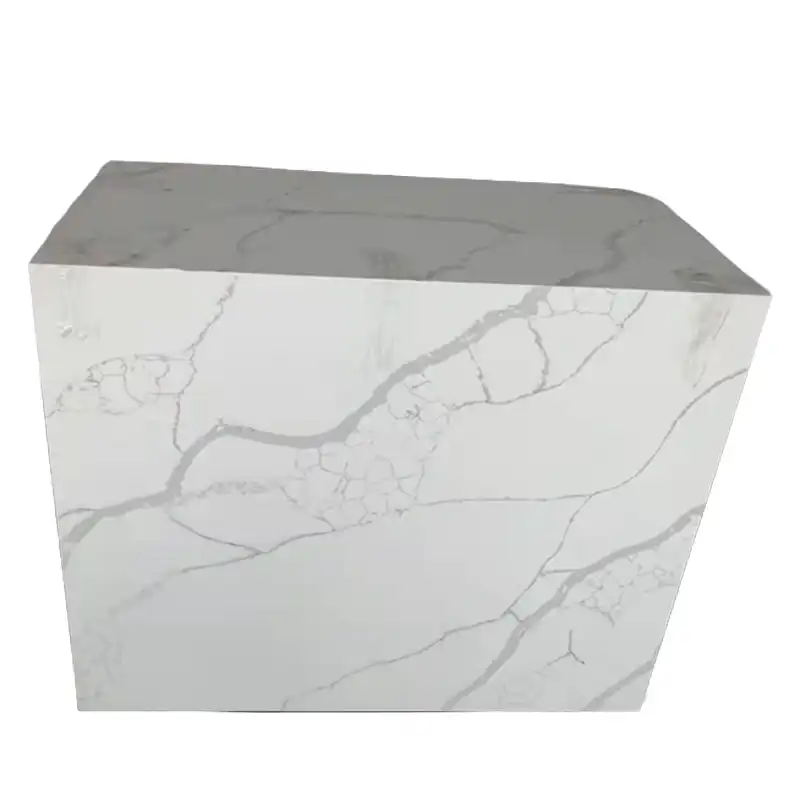
Сини кристални мраморни плочи are decorative natural calcite marble slabs distinguished by pale blue crystalline areas, white mineral formations and variable grey movement. The material can be fabricated into coordinated interior floor tiles, bathroom wall panels and custom vanity surfaces for villas, hotels and other architectural interiors. Polished slabs reveal the crystalline structure clearly, while honed finishes may be considered for applications requiring lower surface reflection. Floor specification depends on the selected finish and verified service conditions, as calcite-rich stone does not have the same chemical or wear behavior as quartzite.
Blue Crystal Marble Slabs for Interior Floor Tiles and Bathroom Wall Panels
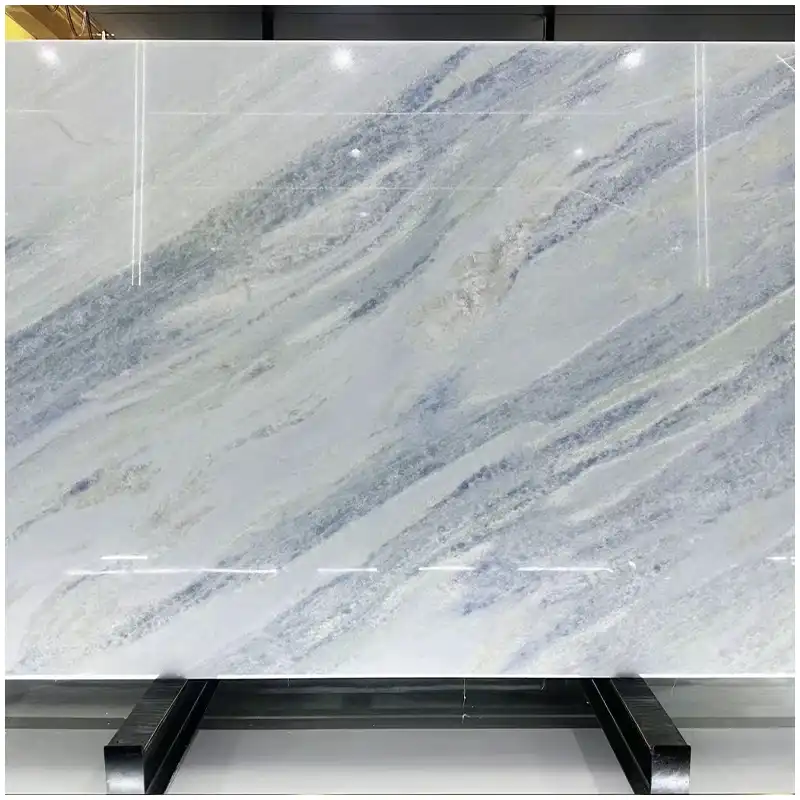
A blue crystalline slab changes character when it is divided into smaller pieces. On a full slab, a pale mineral formation may run uninterrupted across the stone face. Once the material becomes floor tiles, that same formation can be distributed between several joints and different walking directions.
Сини кристални мраморни плочи are therefore useful starting material for interiors where the floor and adjacent wall finishes are planned together. The visual result depends on how much blue, white and grey mineral movement appears within each finished piece.
The commercial stone is associated with Мрамор Азул Калцит, a calcite-rich blue decorative material. Its crystalline formations are distinct from the printed veining of porcelain tiles or engineered surfaces. Individual slabs can contain different proportions of pale blue and white mineral areas.
In a hotel suite, a designer may use a controlled distribution of blue tiles across the bathroom floor while reserving more distinctive crystalline sections for the wall behind the vanity. A private villa may use larger individual pieces to retain more of the original stone movement.
There is no reason to force every component into one pattern arrangement. Flooring needs a repeatable module and suitable surface performance; a vanity wall can be selected for the appearance of a particular slab face.
The material should be identified from actual slab photographs, appropriate samples and technical records. A Blue Crystal trade name alone does not establish the stone’s quarry, available thickness, suitability for pedestrian traffic or ability to transmit light.
Blue Crystal Marble Material and Fabrication Specifications
The product is listed as a natural blue crystalline marble slab selection. Finished sizes are determined by the actual available stone and the architectural cutting schedule. No new slab dimensions or current-lot thickness measurements have been supplied for this revision.
| Име на продукта | Сини кристални мраморни плочи |
| Материал | Blue Crystal Marble / Azul Calcite Marble |
| Свързани търговски марки | Blue Calcite Marble / Calcite Azul Marble; Actual Selection Must Match |
| Stone Family | Natural Calcite-Rich Decorative Marble |
| Цвят | Light Blue / Ice Blue / White / Grey Mineral Areas |
| Произход | Confirm Quarry and Origin for the Selected Lot |
| Налични размери на плочите | Current Slab List and Net Dimensions Subject to Confirmation |
| Дебелина | By Selected Slab and Finished-Product Requirement |
| Завършете | Polished Featured / Honed Subject to Sample Approval |
| Finished Forms | Slabs / Floor Tiles / Wall Panels / Vanity Tops / Decorative Insets |
| Изрязани по размер | According to Approved Tile Schedule and Fabrication Drawings |
| Основни приложения | Interior Floor Tiles / Bathroom Walls / Vanity Surfaces / Feature Panels |
From Azul Calcite Marble Slabs to Coordinated Floor Tile Sets
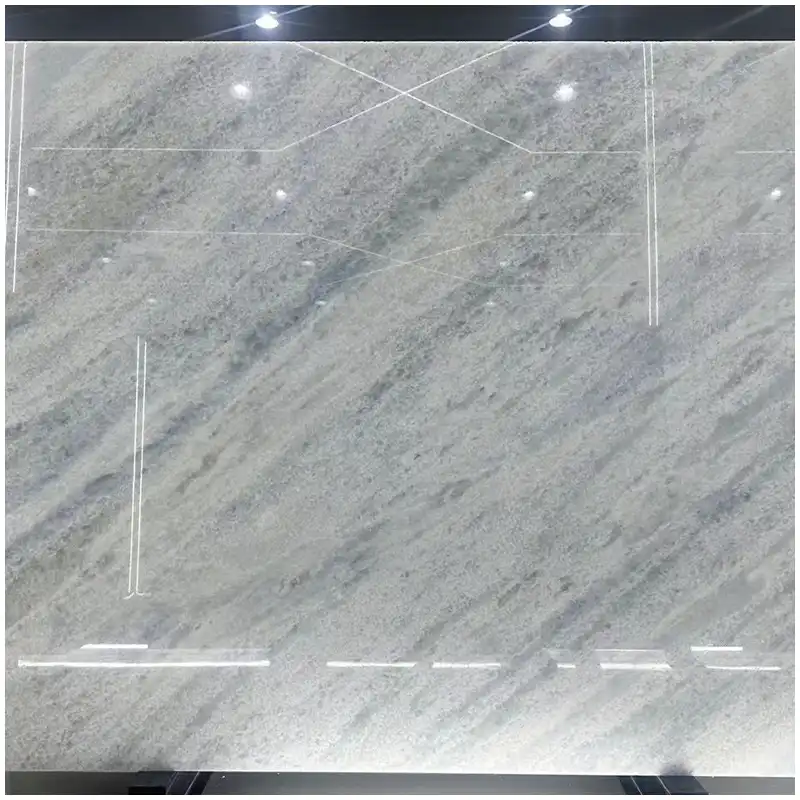
For a floor-tile order, the first drawing should be the completed floor layout. Tile dimensions, joint widths, direction changes and perimeter cuts determine the material allocation. Selecting a cutting module without that drawing can leave an excess of unsuitable pieces around doorways and floor transitions.
Blue Crystal Marble contains visible crystalline movement rather than a repeated manufactured pattern. A long white mineral band may occupy several neighboring tiles if the material is cut sequentially. If those tiles are mixed randomly, the final floor will have a different composition.
Two approaches are possible. A controlled directional layout can preserve parts of the original slab movement across tile joints. A blended layout can distribute stronger blue and white areas across the floor to avoid an isolated concentration of one color.
The required approach should be selected before cutting. It determines whether pieces need strict numbering or can be installed within an approved color group.
Very narrow border cuts deserve attention. A crystal-rich section near a thin edge strip may require a different cutting position, particularly if the natural stone contains visible boundaries or repairs.
For larger hotel floors, confirm the cutting module, tile calibration, permitted tone variation and installation sequence. The amount of material needed should be calculated from the approved cutting yield, not just the finished floor area.
Blue Crystal Marble Floor Tiles: Polished Finish Versus Slip Requirements
Polished blue calcite marble has a reflective surface that reveals the crystalline material clearly. That appearance is not enough to establish suitability for every walking surface, particularly where water or cleaning residue may be present.
A hotel entrance, a dry residential room and a bathroom floor have different exposure and traffic conditions. The required finish and performance should follow the specific location rather than using one finish for the entire project.
| Floor Location | Specification Decision | Technical Check |
|---|---|---|
| Private Villa Interior | Polished or honed appearance according to design | Intended use, scratching, cleaning and slip performance |
| Hotel Suite Floor | Repeatable finish and coordinated tile module | Traffic exposure, maintenance and actual tested performance |
| Bathroom Floor | Wet-use finish considered separately from wall panels | Wet slip resistance, waterproofing and drainage |
| Public Circulation Area | Use only where verified performance meets the specification | Abrasion, slip, traffic classification and maintenance regime |
A honed finish may reduce surface reflectivity, but it must not be assumed to satisfy a particular slip-resistance classification without testing. The finished tile, not only the raw stone, is the relevant product for assessing the walking surface.
Calcite-rich marble can also be vulnerable to abrasive wear and acidic cleaning chemicals. The material should not be marketed as universally suitable for high-traffic floors based only on its crystalline appearance.
Tile Cutting Yield, Calibration and Pattern Distribution
The difference between full-slab purchasing and finished-tile purchasing is measurable in the cutting schedule. Saw kerf, perimeter trimming, natural fissures and unusable narrow offcuts reduce the quantity of finished stone obtained from each slab.
For Blue Crystal Marble, pattern allocation is an additional constraint. If the buyer wants a sequence of tiles to retain the movement of a broad white crystal band, those pieces cannot be freely exchanged for other tiles of the same nominal size.
Tile calibration also requires approval. Differences in finished thickness can create lippage at joints, even where individual tile faces are visually acceptable. The cutting and finishing process must deliver the specified thickness and dimensional tolerances.
For a large modular floor, the installation plan should identify border pieces, full modules and transition details at adjoining finishes. This allows the most suitable blue-white material to be allocated to uninterrupted central areas rather than consumed indiscriminately by perimeter cuts.
A sample area assembled from actual production material is useful for establishing the expected distribution of blue crystal formations, grout color and joint appearance before a larger quantity is processed.
Blue Crystal Calcite Marble for Bathroom Wall Cladding
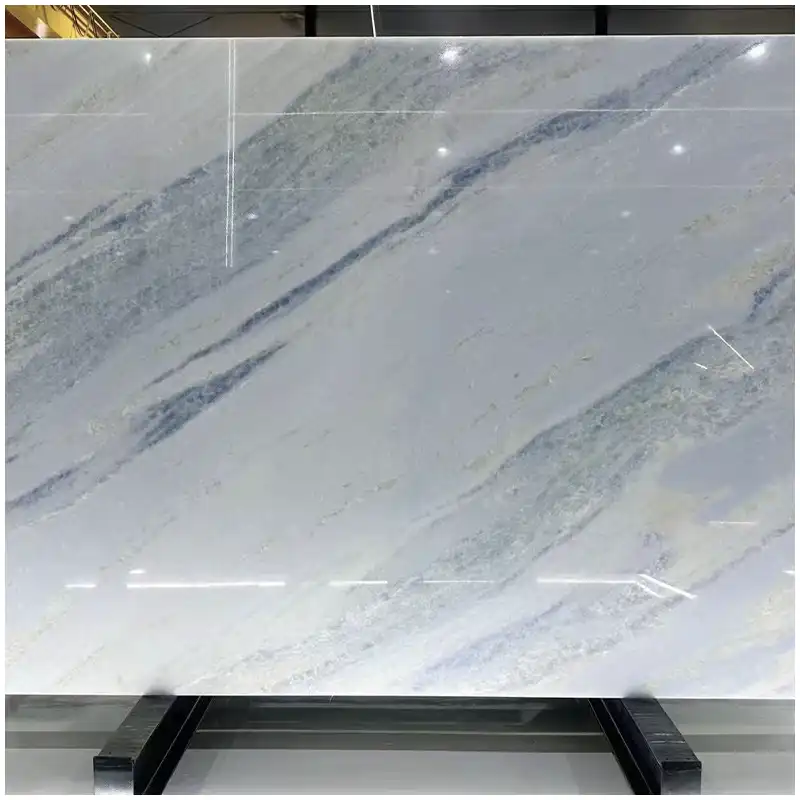
A bathroom wall gives the larger crystal formations more room to remain visible. Instead of distributing the stone over a floor grid, the selected slab can be positioned around mirrors, plumbing fixtures and a vanity elevation.
For a single feature wall, the main question is where the blue-white mineral composition will appear once the panel is trimmed. The drawing may require one large central section or several smaller panels separated by deliberate joints.
Natural blue calcite areas can differ in their response to light. A polished panel may show strong reflections beside a wall light, while other sections of the same stone remain visually quieter. The design should be reviewed under representative bathroom lighting.
Wet-area installation introduces separate requirements. Stone panels are a finish, not a waterproofing membrane. The substrate, waterproofing, compatible bedding material, movement joints and openings around bathroom fittings must be addressed in the construction specification.
Some crystalline areas may appear translucent in a small sample, but that does not establish uniform backlighting performance. This listing does not promise that every Blue Crystal Marble slab can function as an illuminated panel.
Where a large panel has natural fissures or resin repairs, the intended fixing and handling method should be reviewed for the selected piece. A decorative wall panel requires suitable support regardless of how the stone looks in a slab photograph.
Blue Crystal Marble Vanity Tops: Cutouts, Edges and Basin Support
A vanity top is different from a wall panel because the finished stone must accommodate a basin, faucet and the support beneath the countertop. The material’s blue crystalline distribution can be planned around those features, but it cannot override the geometry required for safe fabrication.
For an undermount basin, the opening leaves narrow stone areas along the front and rear edges. Their width, the stone condition and any reinforcement must be assessed together with the cabinet and basin support.
A vessel basin changes the cutting requirements. It may need a smaller drain opening, but the weight of the vessel and water still needs appropriate support. Faucet-hole position, spout reach and backsplash height should be included on the finished drawing.
A thicker-looking front edge may be created through a fabricated apron or another approved profile. Any visible joint should be planned so that the pale mineral formations do not terminate awkwardly at the corner.
Blue calcite is a carbonate material. Toothpaste, cosmetics, acidic cleaners and unsuitable descalers can affect polished surfaces. An approved maintenance plan is especially relevant when the finished top will be used by hotel guests or serviced frequently.
The buyer should provide the actual sink template, faucet details, finished countertop dimensions and cabinet support arrangement before the selected slab is released for cutting.
Blue Calcite Crystal Marble: Reviewing Mineral Boundaries Before Fabrication
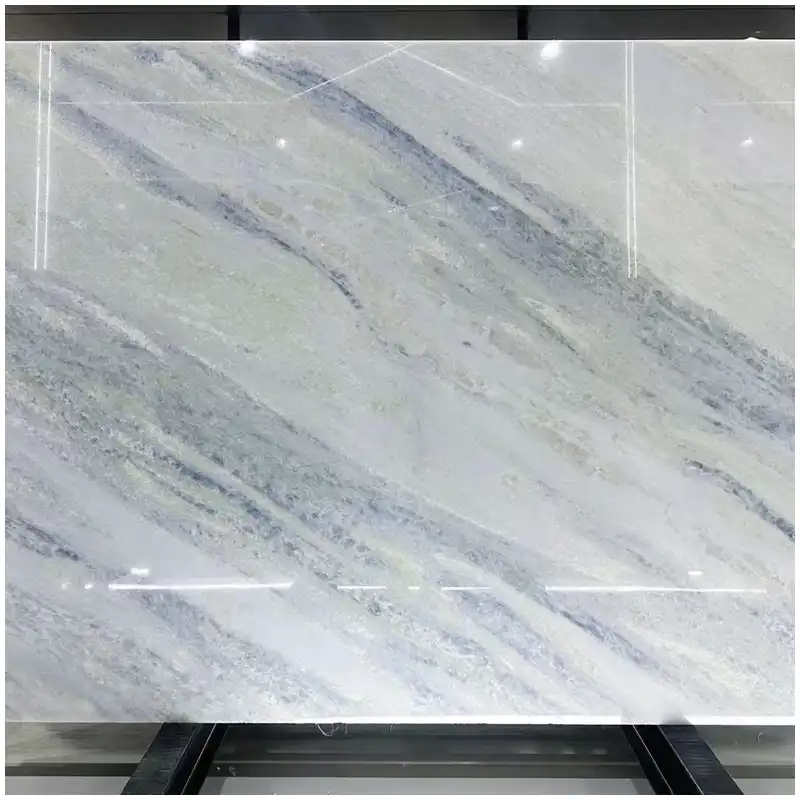
A large crystal formation can be the most distinctive part of a slab, but it may also contain natural changes in grain, mineral boundaries or small fractures. Those features need to be identified before the stone is assigned to a narrow finished component.
A wall panel containing a broad crystal area may be acceptable when properly supported. The same area may require closer evaluation if it is cut into a narrow countertop bridge beside a sink opening or into a long unsupported trim strip.
За Azul Calcite Marble Slabs, the intended visible face matters. The arrangement of blue and white mineral sections can change substantially when the slab is rotated, and a different face may not carry the same crystalline pattern.
Resin treatment and any backing reinforcement also affect fabrication. Their presence should be recorded so that the selected adhesive, cutting method and finished edge treatment are compatible with the actual material.
A polished front face should be examined separately from the stone edge. Some crystal boundaries become more visible on cut edges, particularly where the finished piece will have a prominent exposed front.
This inspection is not a reason to reject every naturally variable slab. It is a way to allocate each part of the stone to a product form that suits its pattern and condition rather than discovering a problem after cutting.
Blue Crystal Marble Versus Azul Calcite: What the Material Name Confirms
Син кристален мрамор и Мрамор Азул Калцит are closely associated commercial descriptions of light-blue calcite-rich decorative stone. Other terms, including Calcite Blue Marble and Blue Calcite Crystal Marble, occur in related sourcing markets.
Not every separately marketed blue calcite selection necessarily comes from the same quarry or block. Color similarity cannot establish a matching mineral composition, origin or performance certificate.
A calcite-rich marble should also not be treated as quartzite simply because an older listing includes that term. Calcite and quartz have different chemical and physical behavior. The actual stone classification needs appropriate material evidence where a project specification depends on it.
This matters when a buyer intends to use the slabs for floor tiles or vanity tops. The floor requires verified slip and wear performance, while a vanity application must account for chemical exposure and the strength of fabricated sections.
If a project uses the name Azul Crystal Blue Marble, the selected stone should still be matched to the approved sample. A commercial name helps communication, but the sample, slab identity and performance documentation determine whether the supplied material meets the project requirement.
Blue Crystal Marble Bathroom Wall and Vanity Countertop Design Reference
The following image illustrates a blue crystalline stone used for wall cladding and bathroom countertop design. It is an application reference, not evidence that the exact pictured layout was fabricated from the currently offered slabs or that an installation system has been independently verified.

A coordinated bathroom may combine a large decorative wall panel with smaller countertop components. The wall can preserve a more complete blue-white crystal formation, while the vanity top can be selected for an appropriate cutout area and compatible color balance.
The two stone surfaces should be reviewed together under the intended lighting. Polished horizontal and vertical faces reflect light differently, so the same stone may appear lighter on a wall and darker on a countertop depending on the room.
The bathroom drawing should establish the wall-panel joints, mirror positions, backsplash dimensions, sink openings and faucet arrangement. Where the vanity meets the wall, an appropriate sealant or movement detail is required rather than relying on a rigid stone-to-stone connection.
The project image can guide the composition, but the final cutting arrangement must follow the actual material faces and installation drawings.
Blue Crystal Marble Floor and Bathroom Project Acceptance Checklist
Inspection criteria should be tied to the finished application. For a floor, dimensional calibration and slip performance matter. For a bathroom wall or vanity, the key items are the selected mineral arrangement, fixing interfaces and precision of openings.
| Actual Material | Confirm slab identity, commercial name, selected origin where required, full-face photographs and any available technical report. |
| Floor-Tile Schedule | Approve the finished tile module, thickness, calibration, joint width, color grouping and installation direction. |
| Surface Performance | Obtain appropriate evidence for wet slip resistance, abrasion, water absorption and other project-required properties. |
| Wall Components | Review panel thickness, visible-face orientation, fixing or bonding method and interfaces with waterproofing and fixtures. |
| Vanity Fabrication | Check sink and faucet openings, remaining stone bridges, edge finish, cabinet support and backsplash dimensions. |
| Dry-Lay Review | Arrange related tiles or panels to check crystal distribution, direction, joint positions and approved shade variation. |
| Packing and Identification | Protect polished faces and vulnerable edges; keep coordinated tile groups and fabricated pieces labeled by project location. |
Where a project requires numerical material properties, the test report should identify the tested material, method, results and applicability to the approved selection. Public data for a similarly named blue calcite stone cannot be treated as this lot’s certification.
A completed floor sample can help resolve the visible joint pattern and finish expectations before shipment. For a bathroom, a sample wall-and-vanity assembly may be more relevant because it shows how the stone works around the actual fixtures.
Care and Maintenance of Blue Calcite Marble Floors and Vanity Surfaces
Calcite-rich stone is susceptible to acid etching. Use a compatible pH-neutral natural stone cleaner and avoid vinegar, acidic descalers and abrasive products. This is particularly important on bathroom vanities exposed to cosmetics and cleaning chemicals.
A suitable impregnating treatment may reduce some staining risks after sample testing, but it will not make the stone resistant to acidic substances. Surface treatment must also be checked for its effect on the finish and applicable slip requirements.
Floor maintenance should account for abrasive grit, cleaning equipment and pedestrian traffic. Entrance matting, regular removal of grit and appropriate cleaning procedures can help limit premature surface wear.
On bathroom walls, inspect grout, sealants and water-exposed interfaces routinely. The appearance of the marble does not replace maintenance of the waterproofing and joint system.
Frequently Asked Questions About Blue Crystal Marble Slabs
Can Blue Crystal Marble Slabs be cut into floor tiles?
Yes. Suitable slabs can be processed into floor tiles according to an approved cutting schedule. The final tile size, thickness, finish, calibration and suitability for the expected traffic or wet conditions must be checked before installation.
Are polished Blue Crystal Marble tiles suitable for bathroom floors?
A polished finish should not be approved for wet bathroom floors without appropriate slip-resistance evidence. The project must assess the actual finished tile, expected water exposure, drainage and applicable safety requirements.
Is Azul Calcite Marble the same as Blue Crystal Marble?
Azul Calcite and Blue Crystal Marble are related commercial names for blue crystalline calcite-rich stone. However, different suppliers may use the terms for different selections. Confirm the actual slabs and material identity before treating two products as equivalent.
What sizes and thicknesses are available for Blue Crystal Marble Slabs?
Current slab dimensions and thicknesses must be confirmed from the selected material lot. Cut-to-size floor tiles, wall panels and vanity pieces can then be evaluated against the approved drawings and the usable cutting area.
Can Blue Crystal Marble be used for bathroom wall panels and vanity tops?
Suitable material can be fabricated for bathroom walls and supported vanity surfaces. Wall installations require appropriate waterproofing and fixing, while vanity tops need approved sink openings, faucet holes, edge details and support.
What information is needed for a Blue Crystal Marble quotation?
Provide the required slab or finished-piece dimensions, thickness, finish, quantity, destination and application. Floor projects should include a tile layout and slip requirements. Bathroom orders should include wall elevations, sink templates and fabrication drawings.
Final Note: Specifying Blue Crystal Marble for Finished Interior Surfaces
A full Blue Crystal Marble slab can be used to produce several kinds of finished components, but each one has its own acceptance requirements. Floor tiles need an approved layout, calibration and service-appropriate finish; bathroom walls require coordinated mineral distribution and a suitable installation assembly; vanity tops depend on precise openings and structural support. The actual slab faces and technical documentation should determine which areas are allocated to each finished product.
Blue Crystal Marble Compared with Four Decorative Marble Slabs
The following five stones differ in background color, pattern scale and the type of selection control needed for architectural projects. Their technical suitability must be assessed individually.
| Продукт | Външен вид | Форма на продукта | Buyer Decision |
|---|---|---|---|
| Сини кристални мраморни плочи | Pale blue, white and grey crystalline areas | Slabs, cut-to-size tiles, wall panels and vanity tops | Crystal distribution, tile calibration and floor-finish suitability |
| China Oriental White Marble | White background with restrained grey movement | Large slabs and bathroom fabrication | White-tone matching and integration with bathroom fixtures |
| Мраморни плочи Cloud Jade | Green and pale flowing mineral formations | Decorative slabs and wall panels | Placement of dominant green movement at panel joints |
| Мрамор Nero Portoro | Black field crossed by golden veins | Large slabs and fabricated interior components | Gold-vein placement, edge details and surface care |
| Calacatta Gold Marble Slab | White with stronger grey and warm golden veins | Decorative slabs and large wall panels | Broad-vein positioning across finished architectural pieces |
Recommended Natural Marble Slabs for Interior Projects
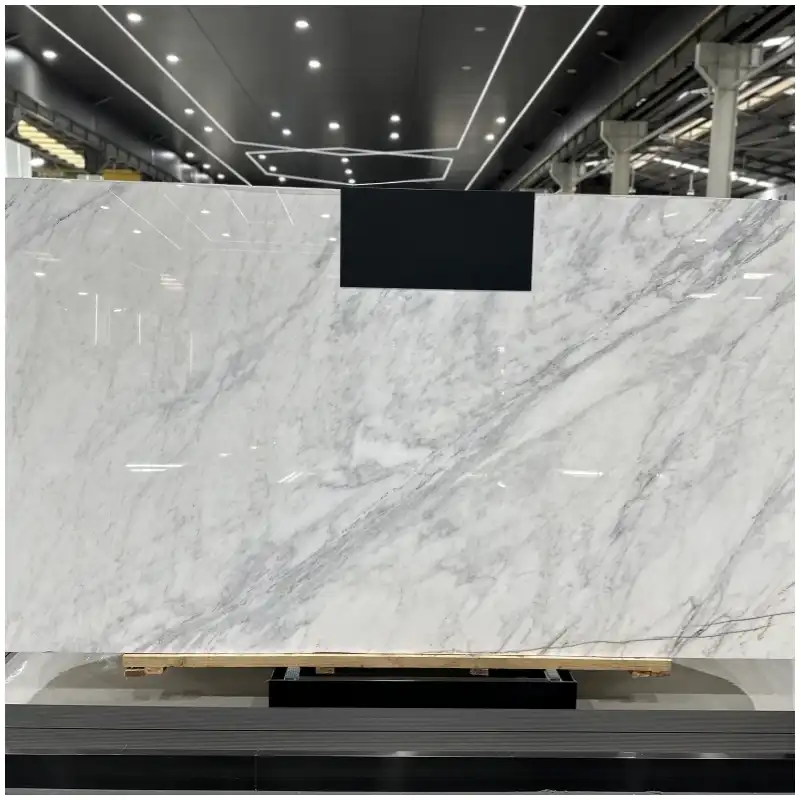
China Oriental White Marble
White marble for bathroom walls and vanity tops requiring subtle grey movement.
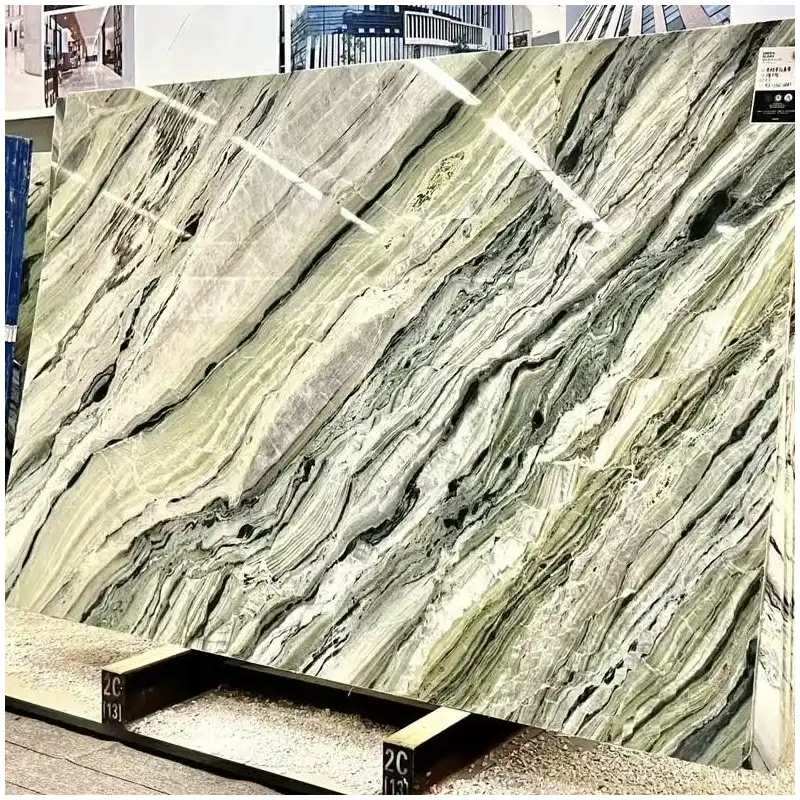
Мраморни плочи Cloud Jade
Green decorative marble for larger panels with directional mineral movement.
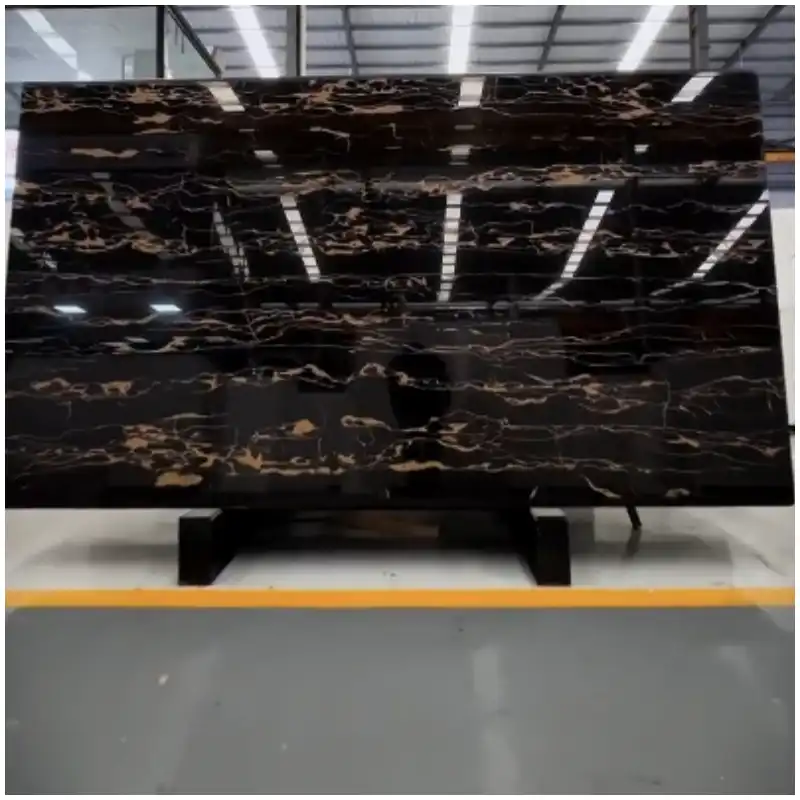
Мрамор Nero Portoro
Black-and-gold marble for interiors where contrasting veins are the main feature.
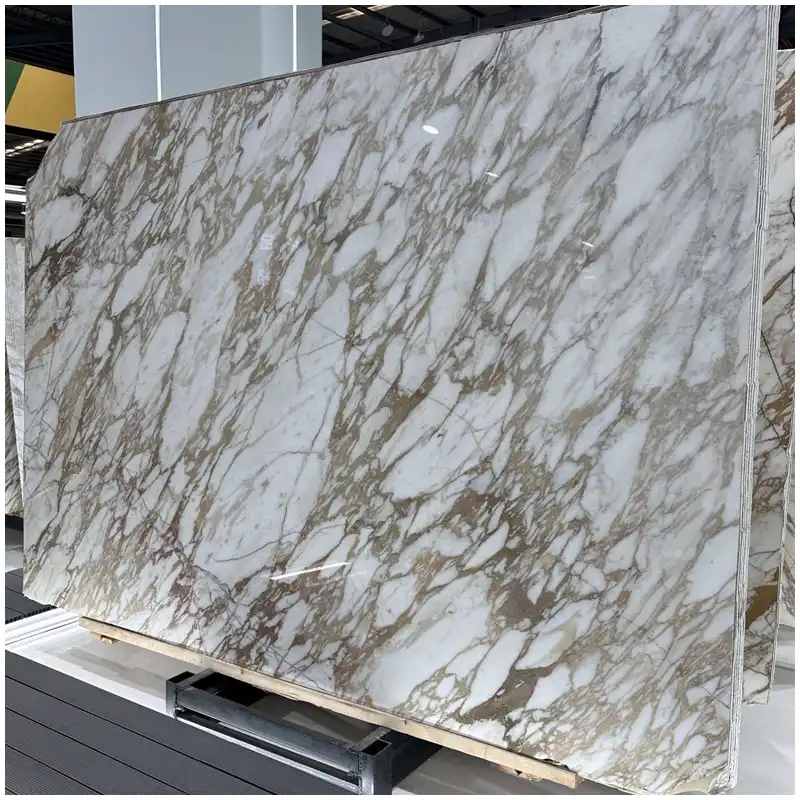

Request Blue Crystal Marble Slabs for Custom Tiles and Bathroom Projects
To receive a useful quotation for Сини кристални мраморни плочи, specify whether you require full slabs, calibrated floor tiles, bathroom wall panels or fabricated vanity tops. Include the finished dimensions, preferred finish, thickness, quantity and destination. Flooring orders should include the tile layout, service conditions and slip requirements; bathroom orders need wall elevations, sink templates and the intended installation system. Current slab photographs, samples and material-test documentation can be requested for approval.