Quick Summary
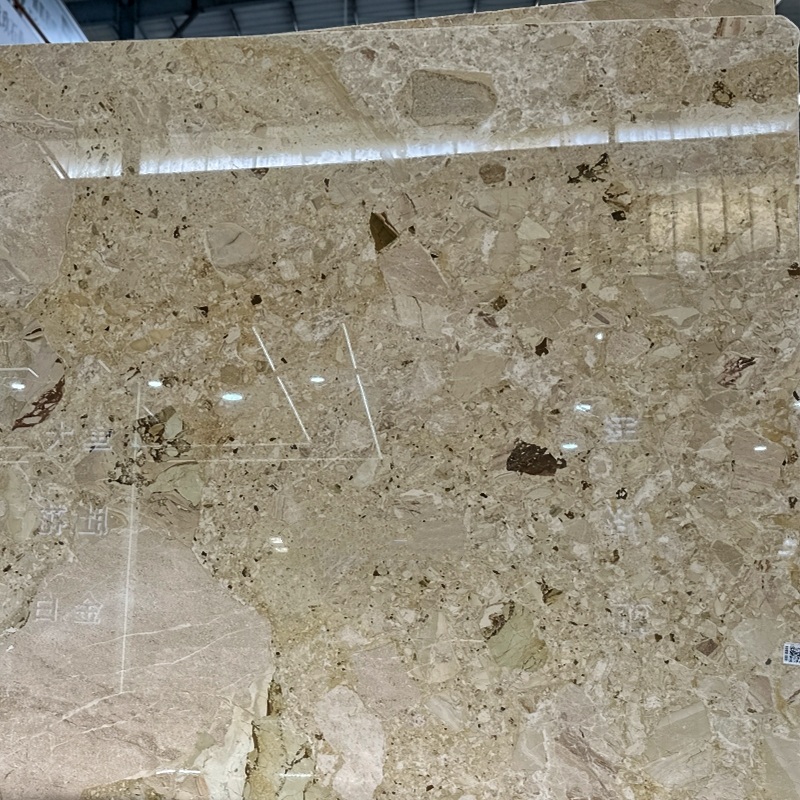
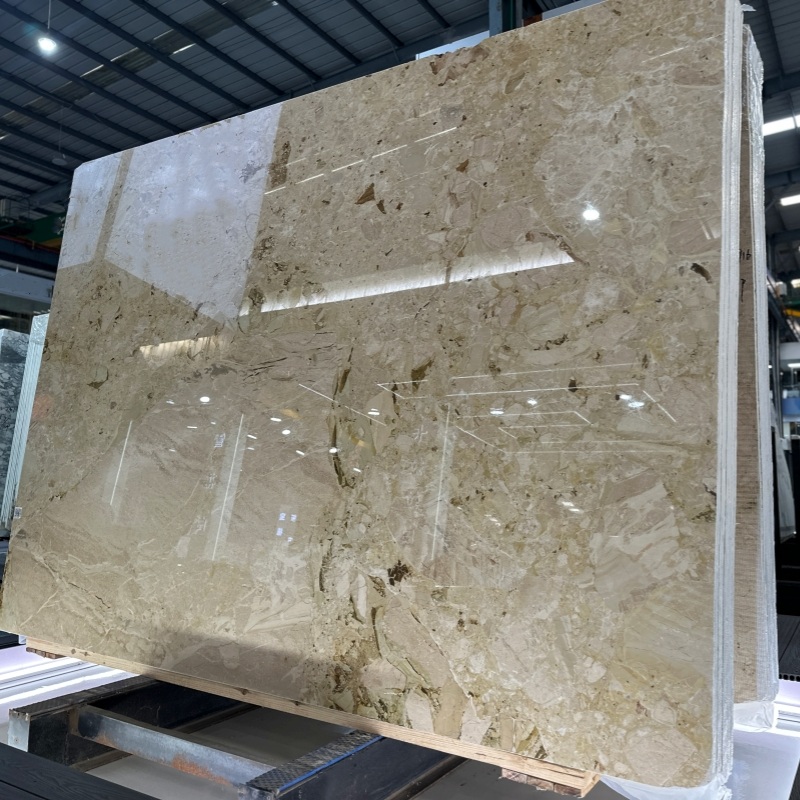
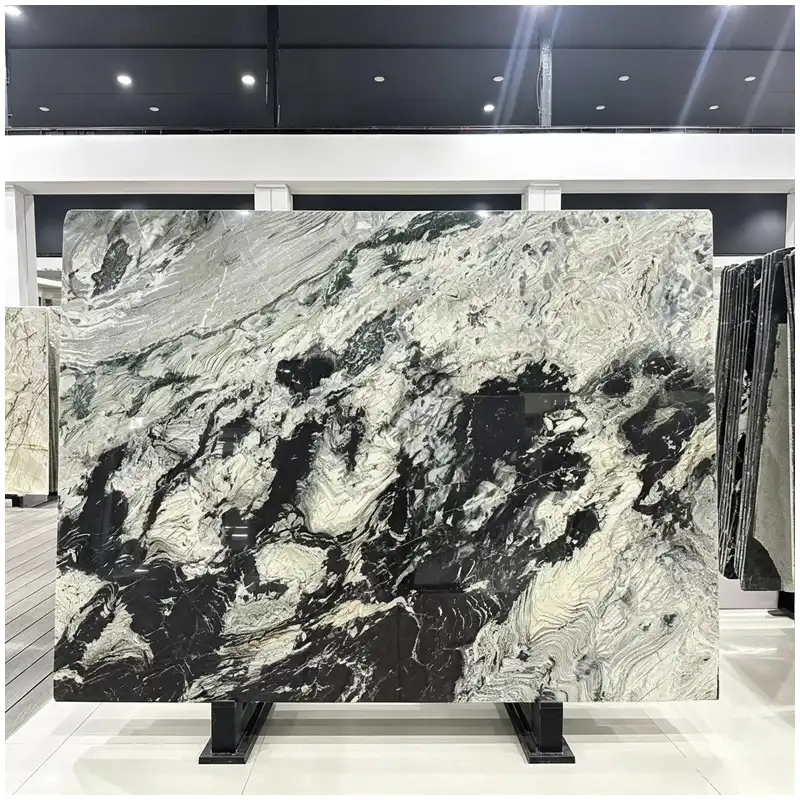
Monet Garden Marble is a soft, atmospheric decorative marble whose appeal is almost painterly: an ivory and cream ground carrying drifting fields of warm beige, sand and pale warm grey, with occasional thin ochre or brown lines threading through them. Instead of a dominant vein running across the slab, the stone offers tonal clouds with soft edges, so the face reads as light falling on a landscape rather than as a graphic pattern. That is what gives the material its name and its particular value in interiors: it brings warmth and depth without drama.
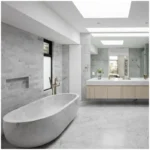
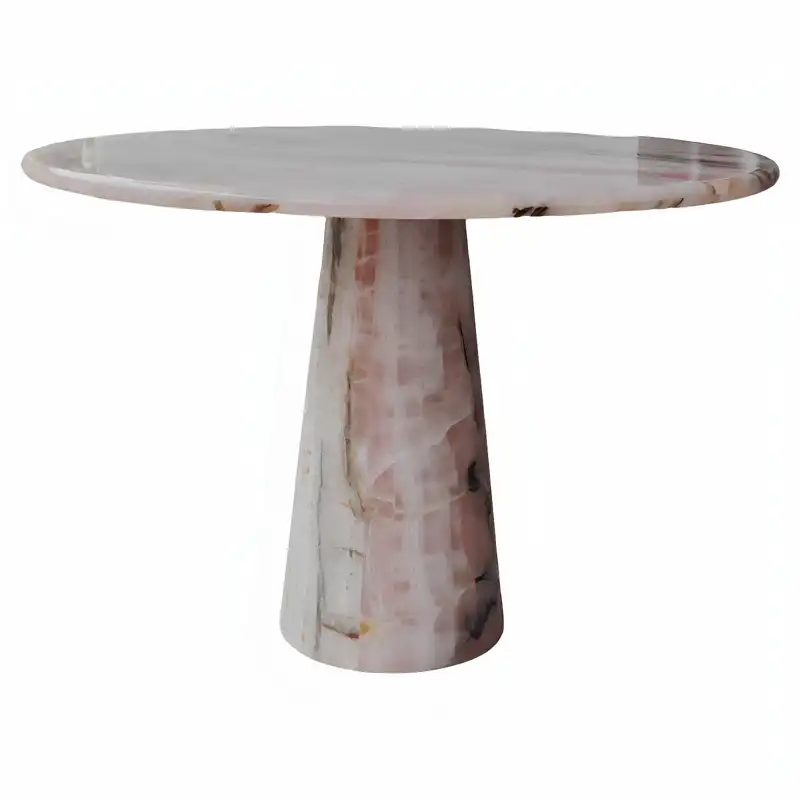
It is used for villa feature walls, living and dining room panels, fireplace surrounds, kitchen island fronts, vanity tops, reception counters, and custom stone furniture such as dining tables and cocktail tables. It works best in rooms with natural materials around it — oak, linen, plaster, brushed brass, travertine — where the stone is the quiet centre rather than the loudest element.
Because the pattern is a large-scale cloud, the practical question is not “which block” but “where does the cloud sit”. A slab cut one way
produces a balanced composition with the densest colour away from the edges; the same slab cut another way produces a dark mass in one corner and a washed-out field in the middle. Buyers should approve full-slab photographs with the intended cut-out positions marked, and should expect tone drift between slabs from the same bundle.
Monet Garden Marble Slabs for Feature Walls, Fireplaces, Vanities and Stone Furniture
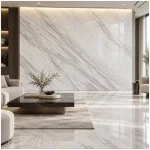
Monet Garden is chosen when a project wants stone that behaves like light and atmosphere rather than like marble. On a full-height wall behind a sofa, the soft clouds read almost as a fresco; on a fireplace surround, the same palette picks up the glow of the fire; on a kitchen island front, it stays quiet enough that the cabinetry and the metalwork can carry the detail. It is rarely used as a floor, and it is almost never used as a matching floor-and-wall scheme — the pattern is too large and too distinct for that.
Esta Stone supplies Monet Garden in jumbo slabs, cut-to-size panels, book-matched and continuous-sequence sets, tiles, kitchen and vanity components, fireplace surrounds and custom furniture tops. Our scope covers block allocation, full-slab photography before selection, cut-out and composition planning, edge profiling, polished and honed finishing, dry-lay photographs for approval, dimensional inspection and export packing.
The key control point is slab-level approval. Photographs taken at different times of day, with different lighting and different camera settings, make a warm-cream stone look like two different materials, so the approved reference should be a physical sample plus a slab photograph taken under consistent light. Where a project needs several panels in one view, all of them should be photographed together, because a bundle can drift from ivory-warm in one slab to sand-grey in the next.
The second control point is the tonality of the veins. The thin ochre and brown lines are what stop the stone from reading as a plain beige marble, but they vary — some slabs have almost none, others have several crossing the face. Buyers should decide whether those lines are welcome in a feature position or whether they should be reserved for secondary panels.
Monet Garden Marble Specification for Slabs, Panels and Furniture Tops
| Produktname |
Monet Garden Marble Slab
|
| Handelsüblicher Werkstoff |
Natural decorative marble
|
| Alternative Trade Names |
Breccia Aurora Marble / Marmi Breccia Aurora Marble / Breccia Aurora Classica / Loredo Chiaro |
| Geological Classification Reference |
Calcareous breccia marble — angular limestone fragments cemented by calcite; exact identity by petrographic verification |
| Herkunftsreferenz |
Italy, Brescia Province (Pre-Alps of Brescia); specific quarry and block according to material documentation |
| Background Color |
Warm beige / cream / pale grey-beige with a fine crystalline matrix |
| Vein Color |
Rust brown, ochre gold, burnt orange; occasionally muted pink or olive green |
| Plattengrößen |
307×183cm / 305×166cm / 309×196cm |
| Dicke Optionen |
16mm / 18mm / 20mm / 30mm |
| Oberfläche |
Polished Featured; Honed or Brushed by Processing Approval |
| [Musterzeichen] |
Irregular angular breccia fragments set in a fine beige matrix, cut by jagged rust-brown vein systems that gather in one zone of the slab |
| Bookmatch Selection |
Subject to Suitable Consecutive Slab Availability |
| Fabricated Forms |
Full Slabs / Stair Treads / Risers / Countertops / Wall Panels / Floor Tiles / Furniture |
| Anwendungen |
Villas / Mansions / Hotels / Luxury Apartments / Restaurants / Commercial Interiors |
The featured large slab formats accommodate broad countertops, staircase components and architectural wall panels. Select the appropriate thickness according to the finished component, supporting construction and approved fabrication requirements.
Layout and Composition Planning for Cloud-Patterned Marble
Cloud-patterned marble has no direction, which tempts people to treat layout as automatic. It is not.
- Composition, not repetition: approve each visible panel as a picture. The densest warm area usually belongs low or off-centre, not in the exact middle, where it can look like a stain rather than a design.
- Book-matched pairs: mirroring works, but on a cloud pattern it produces a symmetrical “butterfly” that can look artificial. Continuous (non-mirrored) sequencing is often the better choice for a wall spanning two or three slabs.
- Feature walls: set the panel height relative to the room’s furniture. A cloud that lands behind a sofa or a console will be partly hidden; confirm what remains visible.
- Kamine: confirm the opening position against the pattern before cutting. The area above the opening is the most visible square metre in the room.
- Kitchen islands and fronts: agree which face is primary. A waterfall end shows the pattern turned ninety degrees, and on a cloud stone that reads as a completely different image.
- Waschtischplatten: check the pattern at the basin cut-out. A warm cloud under a white basin looks intentional; a pale washed-out area under a dark basin looks like a mistake.
- Möbel: for dining and coffee tables, approve the composition as a circle, not as a rectangle. What works as a slab often fails once the edges are trimmed to a round.
Monet Garden Marble vs Related Warm-Toned and Cloud-Patterned Marbles
Monet Garden belongs to a family of warm-toned decorative marbles whose commercial names overlap with related stones from other regions. A shared name does not mean identical quarry origin, mineral composition or appearance.
| Handelsname |
Material Association |
Buyer Verification |
|
Monet Garden Marble
|
Soft ivory-cream marble with warm beige and grey clouds
|
Actual slab photographs and approved material selection
|
|
Breccia Aurora Marble
|
Beige marble with angular fragments and rust-brown veins
|
Fragment structure and vein colour; breccia, not cloud-patterned
|
|
Calacatta Gold Marmor
|
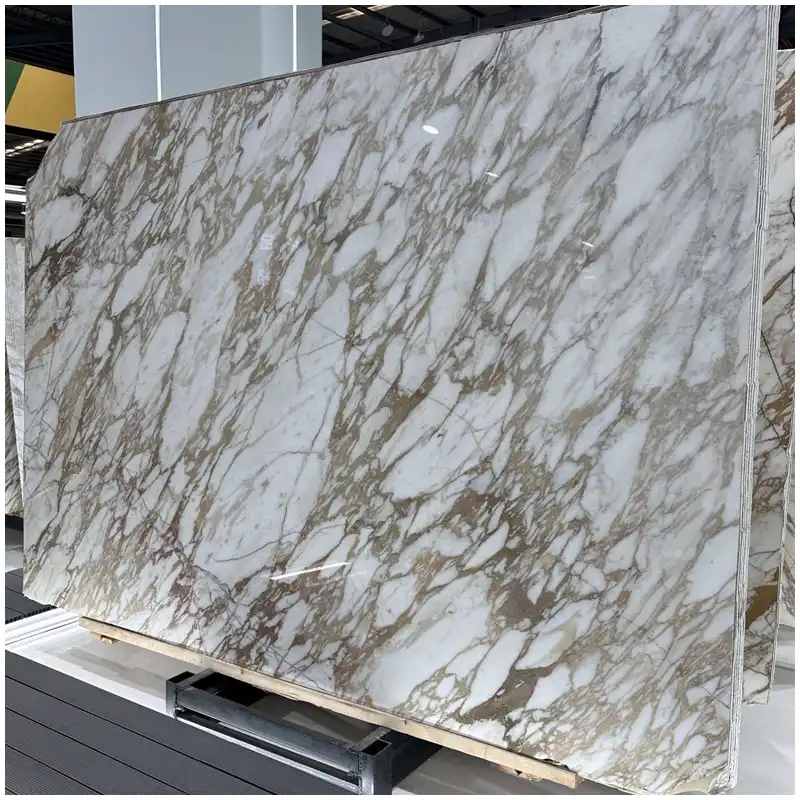
White to ivory marble with gold-brown and grey veins
|
Vein direction and gold balance; distinct linear veining
|
|
Taj Mahal Quarzit
|
Cream and sand quartzite with translucent quartz bands
|
Band position and hardness; quartzite, not marble
|
|
Crema Marfil-Marmor
|
Uniform cream beige marble with minimal movement
|
Tonal uniformity; almost no cloud or vein character
|
When purchasing Monet Garden Marble Slabs, confirm the intended material through approved slab references rather than relying on the trade name. This is especially important when matching existing stonework or coordinating material from separate production lots, because warm cream stones shift visibly under different lighting.
How to Select Monet Garden Marble Slabs
Monet Garden can vary considerably in appearance even when slabs share the same commercial name. The most useful selection criteria are background tonality, cloud density, ochre-line coverage, mineral condition and the intended location of the finished components.
A light, airy selection with faint sand clouds may be preferred for large residential feature walls, repeated panels and coordinated architectural surfaces where the stone must stay calm across the room.
More expressive selections with stronger beige fields and visible ochre lines are often reserved for fireplaces, reception desks and individual decorative walls, because these applications allow larger natural features to remain visible after fabrication.
Buyers should also examine whether the warm areas remain distributed throughout the slab or concentrate near one end. A material approved from a small photograph may produce unexpected shade differences when divided into several architectural components.
Review photographs taken under comparable lighting and exposure settings. Warm cream stone is especially susceptible to misleading photographic contrast when images are shot under showroom spotlights or automatically colour-balanced.
Natural fissures must be inspected to distinguish stable mineral features from open fractures or previously repaired discontinuities. Resin filling and mesh backing can help handling, but their presence does not by itself establish suitability for exposed edges or unsupported overhangs.
Approve both the decorative appearance and usable stone condition before committing the selected slabs to fabrication.
Monet Garden Marble Physical and Technical Properties
The engineering characteristics of beige calcareous marble depend on its mineral composition, natural discontinuities and bedding structure. Technical assessment is particularly important when Monet Garden is specified for stair treads, countertops or mechanically fixed wall panels.
The values below are published reference ranges for calcareous decorative marble, provided for preliminary material assessment. They must not be interpreted as certified laboratory results for the current Monet Garden supply lot, which should be tested and documented separately.
| Physikalische Eigenschaft |
Referenzwert |
Test Standard / Reference |
| Apparent Density |
2,639kg/m³ |
EN 1936 |
| Wasserabsorption |
0.60% by Weight |
EN 13755 |
| Flexural Strength |
19.0MPa |
EN 12372 |
| Abrasion Resistance |
20.4mm |
EN 1341, Annex C |
| Thermal Shock Mass Change |
-0.02% After 20 Cycles |
EN 14066 |
| Compressive Strength |
Approx. 140MPa |
Separate Published Verde Alpi Reference; Original Test Standard Not Specified |
| Mineral Hardness |
Variable by Mineral Composition |
Mineral Identification and Scratch Assessment |
| [Petrographische Klassifikation] |
By Representative Examination |
EN 12407 |
| Slip Resistance |
Finish-Specific Testing Required |
Applicable Walking-Surface Test Method |
| Moisture Stability |
Material-Specific Assessment Required |
Dimensional Stability and Adhesive Compatibility Assessment |
Technical data clarification: Density, absorption, flexural strength, abrasion resistance and thermal shock mass change are from one published natural Verde Alpi material dataset. The compressive-strength value is a separate published reference converted from 1,427kgf/cm². These figures do not constitute a single test report for the featured slabs.
Flexural Strength and Stone Fabrication
The reference flexural-strength result indicates the bending performance of tested Verde Alpi specimens. The same dataset reports a standard deviation of 5.8MPa, illustrating the variability that may exist within natural stone material.
Actual staircase spans, countertop projections and fixing arrangements must be established using appropriate design criteria, material condition and supporting construction rather than the published mean value alone.
Water Absorption and Dimensional Stability
Water absorption and moisture-related dimensional movement are separate properties. An absorption result does not independently establish whether a green stone will remain dimensionally stable when exposed to moisture from an adhesive or bedding material.
Abrasion Resistance and Bodenbelag Suitability
The abrasion result describes material wear under a specified laboratory procedure. It is not a slip-resistance rating and does not establish suitability for wet walking surfaces.
Projects with formal technical requirements should obtain representative laboratory data for the supplied Prada Green Marble and verify the complete installation specification.
Monet Garden Marble Fabrication and Edge Processing
Processing this stone requires attention to the difference between the fine crystalline ground and the softer mineral zones that form the clouds. The ochre lines and the densest beige areas may respond differently to machining and polishing than the surrounding ivory field.
Where a finished edge crosses several mineral boundaries, the fabricator should inspect the surface for localized relief, uneven gloss, small chips and unacceptable filler exposure.
This is particularly important for stair nosings, exposed kitchen island edges, waterfall panels and decorative furniture. These components remain visible from several directions and receive more direct contact than concealed wall edges.
Existing resin treatments or reinforcement mesh should be evaluated before fabrication. Such treatments may assist material handling, but their presence does not independently establish the suitability of the stone for structural loading or unsupported projections.
The position of natural discontinuities should also be considered when machining sink openings, internal corners and narrow supporting sections. A visually attractive cloud may be acceptable within a supported decorative panel but unsuitable at a vulnerable cutout.
For mitered stone components, inspect the completed ivory-to-beige transition together with the quality of the bonded connection. Decorative continuity and mechanical integrity require separate approval.
Professional fabrication should follow appropriate dust-control procedures; crystalline silica exposure applies to all stone cutting and should be controlled regardless of the colour or pattern of the material.
Monet Garden Marble Stairs, Treads and Risers
Monet Garden Marble can be fabricated into staircase treads, risers, landings, skirting and decorative stair-side panels. The warm cream tone suits residential stair packages in villas and hotels, particularly where the surrounding joinery and plaster are also light.
Stair Treads and Risers in a Cream Marble
The horizontal tread and the vertical riser are viewed under different lighting conditions. Even pieces cut from the same slab can appear different in colour once installed, because the faces receive and reflect light differently — and on a cream stone this difference is more visible than on a grey one.
For a consistent staircase, related components should be reviewed together before production. Similarity of background tonality is more important than attempting to reproduce an identical cloud on every step.
The riser can accommodate a stronger area of pattern than the tread in some designs, particularly where the horizontal walking surface needs a calmer decorative appearance and suitable traction.
Stair Nosing and Exposed Edge Construction
Stair nosings experience repeated pedestrian contact and are vulnerable to impact. The selected edge profile should correspond to the actual stone condition, supporting arrangement and applicable stair construction requirements.
Cloud boundaries, previously repaired areas and natural discontinuities near projecting edges require particular assessment. A visually attractive section should not be assigned to a vulnerable nosing merely because its pattern matches the adjacent components.
Where anti-slip grooves or supplementary traction treatments are specified, assess their effect on the finished appearance and on the soundness of the remaining stone section. On a soft cream marble, a bullnose or eased profile is usually more robust than a sharp projection.
Marble Staircase Landings and Component Matching
Landings expose broader stone surfaces than individual stair treads and can reveal stronger clouds, creating a visible transition between stair flights.
Reserve suitable slab areas for these larger components during initial material selection. Allocating landings only after the smaller stair parts have been cut may leave limited options for achieving a coordinated cream background.
Slip Resistance and Staircase Installation
Slip resistance depends on the finish, the environment, cleaning conditions and applicable building regulations. A polished cream marble tread in a wet or frequently cleaned stair should not be approved on appearance alone.
The actual finish must be evaluated where slip resistance is specified. Structural support, stair geometry, joint treatment and dimensional consistency also require independent approval.
Monet Garden Marble Kitchen Countertops and Islands
Cream and beige natural stone countertops can be coordinated with white, sand, walnut, oak and black kitchen cabinetry. Monet Garden introduces soft tonal depth while maintaining a predominantly light working surface, which suits kitchens where the countertop should not become a dark visual band.
Countertop Selection for a Cloud-Patterned Marble
A kitchen island exposes a substantial horizontal stone surface, making the distribution of the clouds an important purchasing consideration. A broad warm formation positioned within an unobstructed section of the countertop may remain visible after installation, while the same feature could be partially removed by a sink or appliance opening.
Review the actual slab against the approved kitchen drawings before fabrication. This allows significant cloud features to be preserved without compromising the condition of the remaining stone around functional openings.
Sink Cutouts and Countertop Support
Basin and cooktop openings reduce the continuous stone section within a countertop. Existing fissures, repaired areas and concentrated stresses around internal corners deserve particular attention, and cream marble makes any crack or fill visible.
Cabinet support, appliance clearances and reinforcement details should be established through the finished countertop design. Published stone-strength values cannot independently determine acceptable overhangs or unsupported spans.
Waterfall Kitchen Islands and Matching Side Panels
Where a Monet Garden island incorporates waterfall sides, the selected sections should be reviewed across the horizontal and vertical planes. A cloud that ends abruptly at a mitered corner may produce a visibly disconnected composition.
Related slab sections can improve visual coordination, although perfect cloud continuity cannot be assumed for every natural pattern.
Is Monet Garden Marble Suitable for Kitchen Countertops?
Suitable Monet Garden selections can be fabricated into residential countertops and kitchen islands. Buyers should nevertheless understand that calcareous marble is acid-sensitive and softer than granite or quartzite.
Citrus juice, vinegar, wine, descalers and many household cleaners can etch the polished surface, and cutting directly on the stone will scratch it. A honed finish, a penetrating sealer, prompt spill removal and a chopping board are part of the specification, not optional advice.
For kitchens where minimal maintenance and resistance to intensive food preparation are the principal requirements, granite or appropriately verified quartzite may be more practical. Monet Garden is a decorative natural stone choice for buyers willing to maintain its surface appropriately.
Green Marble Installation and Moisture Sensitivity
Certain commercially classified green marbles, particularly serpentinite-rich materials, can experience dimensional changes when exposed to moisture. This behavior is an important specification issue that is not always addressed in decorative green stone product descriptions.
Not every Verde Alpi or Prada Green slab will respond identically. Material-specific assessment is necessary before selecting the bonding system for floors, staircase components, countertops or wall installations.
Green-Free Note on Installation, Moisture and Efflorescence
Calcareous cream marble is less prone to the moisture-related warping seen in some serpentine green stones, but it is more visible when it does stain. Moisture entering from the substrate or the bedding can produce efflorescence, damp patches and yellowing, all of which read strongly on a light warm ground.
Why Cream Marble Can Show Damp Marks
When moisture enters one face of a stone component, dissimilar drying rates may develop between exposed and concealed surfaces. In bonded installations this can result in surface staining, efflorescence at the joints and, in severe cases, localized stress within the assembly.
A dry slab that appears flat and clean during inspection is not necessarily proven stable under every bonding arrangement.
Adhesive Selection for Light Warm Marble
Water-retentive adhesive systems are the usual cause of early damp marks on light stone. Where the substrate is new or the environment is humid, rapid-curing or low-moisture adhesive systems, together with a properly dry substrate, reduce the risk of efflorescence appearing through the joints.
The selected adhesive must also be compatible with any existing rear reinforcement, resin treatment and supporting substrate. Bonding requirements should be established through the installation-system manufacturer and responsible project professionals.
Substrate Moisture and Waterproofing Requirements
Moisture can originate from the substrate, the bedding system, surrounding construction or subsequent service exposure. Reviewing only the adhesive does not address every potential source.
For bathroom and wet-area projects, waterproofing, drainage and substrate preparation require separate approval. Natural stone and surface sealers cannot replace a correctly specified waterproofing assembly.
Pre-Installation Testing and Sample Approval
For unfamiliar lots or demanding projects, representative stone specimens can be assessed for dimensional stability and adhesive compatibility before the main package is installed.
Any observed staining, discoloration or unsuitable bonding behaviour should be resolved during technical approval rather than after the principal stone package has been laid.
Polished and Honed Monet Garden Marble Slabs
Surface finishing changes the apparent warmth of the stone and the visibility of its clouds. The correct finish depends on the decorative objective, service conditions and maintenance expectations.
| Oberfläche |
Erscheinungsbild |
Application Consideration |
| Poliert |
Brighter cream, stronger tonal depth and reflective surface
|
Feature walls, fireplaces, furniture and selected interior surfaces
|
| Geschliffen |
Matte or satin appearance with reduced reflection
|
Countertops, stair treads and floors where marks must stay discreet
|
| Gebürstet |
Light texture with a low sheen across the clouds
|
Selected decorative applications after processing and maintenance assessment
|
| Protective Surface Treatment |
Potential reduction in liquid penetration or alteration of colour warmth
|
Compatibility testing with the actual stone, finish and previous treatments
|
Polished cream marble reveals scratches, water rings and localized gloss changes very clearly, especially under directional lighting. Honed finishes reduce the visibility of gloss differences but do not make the material immune to staining or chemical damage.
Alternative surface finishes should be approved on representative Monet Garden stone rather than inferred from samples of unrelated beige marbles.
Monet Garden Marble Applications for Residential and Commercial Projects
Although staircases and kitchen countertops are important applications, Monet Garden Marble Slabs can also be considered for a broader range of decorative and architectural stone products.
| Anmeldung |
Finished Stone Products |
Specification Priority |
| Residential Staircases |
Treads, risers, landings and stair-side panels |
Edge integrity, structural support and walking-surface traction |
| Küchenarbeitsplatten |
Worktops, islands, backsplashes and waterfall panels |
Cutout condition, surface protection and chemical sensitivity |
| Bathroom Stonework |
Vanity tops, decorative walls and approved floor components |
Moisture stability, backing compatibility and waterproofing |
| Hotel Reception Areas |
Reception desk facings, countertops and feature walls |
Public-area impact exposure and maintenance requirements |
| Restaurant and Bar Interiors |
Bar fronts, decorative counters and wall panels |
Beverage exposure, edge protection and cleaning compatibility |
| Innenbodenbelag |
Floor tiles, decorative borders and stone inlays |
Abrasion resistance, verified traction and dimensional stability |
| Wandverkleidung |
Large architectural panels, columns and fireplace surrounds |
Attachment design, mineral condition and joint coordination |
| Maßgefertigte Möbel |
Dining tables, coffee tables, console tops and cabinet inserts |
Finished furniture stability and exposed-edge workmanship |
Exterior cladding, permanently wet installations, heated surfaces and demanding public flooring require independent material and construction approval. The commercial designation of Italian green marble does not guarantee suitability for every environmental condition.
Wholesale Monet Garden Marble Slabs and Project Supply
Wholesale purchasing requirements differ between stone distributors buying full slabs and contractors ordering fabricated architectural components. The former generally require commercially attractive stone faces with a defined acceptable quality range, while the latter must also consider the position of individual cloud formations within finished drawings.
For a combined staircase and kitchen stone package, reserving every visually exceptional slab for one application may create unnecessary limitations elsewhere in the project. Material allocation should reflect the actual visibility, geometry and performance requirements of each finished product.
Full-Slab Approval for Stone Distributors
Importers should establish a representative acceptable range of background tonality, cloud density, ochre-line coverage, surface condition and repair characteristics. This provides a clearer purchasing basis than general descriptions such as premium grade or first quality.
Where individual stone faces will be marketed separately, maintaining corresponding slab identification and full-face photographs can help distributors present the actual material to their customers.
Cut-to-Size Marble for Architectural Projects
Contractors purchasing finished stone components should provide approved drawings, installation references, required finishes and acceptance tolerances before production. Material suitability can then be reviewed in relation to individual stair parts, countertops, wall panels and other components.
For repeated architectural elements, approve representative completed pieces before releasing the main fabrication schedule. This can help identify unsuitable tonal transitions or inconsistent edge workmanship before they affect a larger quantity of finished stone.
Monet Garden Marble Slab Price Factors
Wholesale quotations depend on the actual material selection, thickness, requested surface finish, order quantity and supply scope. A quotation for full slabs should be distinguished from pricing that includes staircase processing, countertop openings, edge profiles or project-specific packing.
For meaningful quotation comparisons, buyers should establish whether the quoted area refers to gross slab area, accepted usable material or finished component area.
Monet Garden Marble Quality Control and Pre-Shipment Inspection
Quality inspection of Monet Garden Marble should address the condition of its cream ground, cloud distribution, surface finish and previous stabilization treatments. For fabricated stonework, the inspection scope must also cover the finished component requirements.
| Material Identification |
Verify the approved commercial stone identity, slab references, origin documents and material lot information. |
| Green Background Selection |
Confirm the permitted range of green intensity and distribution of pale mineral formations. |
| Mineral and Fracture Condition |
Distinguish natural veins from open fractures, unstable sections and unsuitable repairs. |
| Slab Flatness |
Inspect the actual slab geometry and verify any specified flatness or dimensional tolerances. |
| Moisture Compatibility |
Review required dimensional-stability assessments and compatibility with the proposed installation system. |
| Surface Workmanship |
Inspect polished or honed finishes for unacceptable scratches, local relief, processing marks and irregular gloss. |
| Staircase Component Inspection |
Review tread and riser geometry, nosing integrity, edge profiles and relevant finish requirements. |
| Countertop Fabrication Inspection |
Check openings, internal corners, exposed edges, seam quality and conformity with approved fabrication drawings. |
| Representative Dry-Lay |
Arrange related finished components where specified to review mineral coordination and installation sequence. |
| Pre-Shipment Release |
Verify accepted quantities, component identification, required inspection documents and unresolved material issues. |
Inspection criteria should be agreed before production. A natural variation accepted for a decorative wall may require different treatment when it occurs near a projecting staircase edge or vulnerable countertop opening.
Monet Garden Marble Slab Packing and International Shipping
Full slabs and fabricated Monet Garden components require different packing configurations. Natural discontinuities, existing repairs and the geometry of the finished pieces should be considered when selecting the transport support and protective arrangement.
Full slabs require suitable supporting frames, protective separators and restraints based on their actual dimensions, material condition and measured weight. Polished surfaces should be protected against abrasive contamination and uncontrolled contact with adjoining stone.
For staircase packages, projecting nosings and narrow decorative strips require protection against concentrated pressure. Countertop sections containing basin or appliance openings should be supported according to their remaining stone geometry.
Project packing lists should distinguish stair flights, landing components, countertop sections and related architectural stonework. Identification should correspond to the approved drawings so that destination contractors can locate the required components without unnecessary handling.
Packing materials should remain clean and dry. Cream marble should never be packed wet: prolonged moisture exposure during a sea voyage can leave permanent staining or efflorescence that no surface cleaning will remove.
International shipping arrangements must account for actual package dimensions, gross weights, transport restraints and safe unloading procedures. Wooden packaging should comply with applicable destination-market phytosanitary requirements.
How to Clean and Maintain Monet Garden Marble
The maintenance requirements of Monet Garden reflect both its light background and its calcareous composition. Surface deposits, dried water marks and localized changes in polish become especially visible under directional lighting, and on a cream stone every mark reads more strongly than it would on a grey one.
Routine cleaning should use a compatible pH-neutral natural stone cleaner and a soft cloth. Avoid acidic household cleaners, descalers and abrasive scrubbing products.
Cream Marble Countertop Maintenance
Remove wine, coffee, citrus juice, cooking oils and other potentially damaging substances promptly. Cutting boards, coasters and trivets help reduce direct exposure to abrasive tools, acidic ingredients and concentrated heat.
An impregnating sealer may reduce the absorption of certain liquids, but it cannot prevent acid reactions with calcite or eliminate scratching. Sealer choice should be tested on an offcut, because many products yellow or darken a cream ground.
Marble Stair and Floor Maintenance
Remove abrasive grit regularly from stair treads and walking surfaces. Tracked-in particles can gradually affect the finish, particularly along frequently used walking paths.
Avoid cleaning procedures that leave unnecessary standing water on the stone. Any protective treatment used on stairs or floors must also be assessed for its effect on surface traction.
Restoring Scratches and Uneven Gloss
Different mineral zones may respond differently during restoration. Localized polishing can therefore create visible gloss variations if the treatment is not compatible with the actual stone composition and previous repairs.
For substantial surface damage, persistent discoloration or suspected moisture-related staining, professional stone assessment is preferable to aggressive household restoration methods.
Frequently Asked Questions About Monet Garden Marble Slabs
Is Monet Garden Marble the same as Calacatta Marble?
No. Calacatta is a family of white marbles defined by distinct linear veining; Monet Garden is a warm ivory-cream marble defined by soft, large-scale tonal clouds. Similar commercial naming does not establish the same quarry origin, mineral composition or appearance.
Is Monet Garden Marble suitable for kitchen countertops?
Suitable selections can be used for residential kitchen countertops and islands with appropriate support and fabrication. Buyers should account for the acid sensitivity of a calcareous marble, potential scratching, surface-treatment compatibility and regular maintenance requirements.
Can Monet Garden Marble be used for staircases?
Yes. It can be fabricated into treads, risers, landings and related components. The finished stair specification should address stone soundness, nosing integrity, structural support, dimensional consistency and verified walking-surface traction — a honed or textured finish is usually preferred over a polished tread.
Why can cream marble show staining or efflorescence after installation?
Moisture from adhesives, bedding materials or substrates can carry salts to the surface, and a light warm ground makes the resulting marks conspicuous. Representative material assessment and a compatible, low-moisture installation system with a properly waterproofed substrate help reduce this risk.
What is the difference between polished and honed Monet Garden Marble?
Polished Monet Garden generally displays a brighter cream, stronger tonal depth and greater reflection. Honed marble has a matte or satin appearance with reduced gloss. The appropriate finish depends on the intended application, maintenance expectations and any required surface-performance testing.
Can the slabs be book-matched?
Yes, subject to consecutive slab availability from the same block. On a cloud pattern a mirrored pair can look artificially symmetrical, so continuous sequencing is often the better choice for feature walls. Either option should be approved on the actual slabs as one composition.
What affects the wholesale price of Monet Garden Marble Slabs?
Wholesale pricing depends on material selection, slab dimensions, thickness, surface finish, order quantity and delivery requirements. Fabricated staircase components, countertops and custom architectural stonework may require separate processing quotations based on approved drawings and inspection requirements.
Monet Garden Marble Slab Purchasing Guide
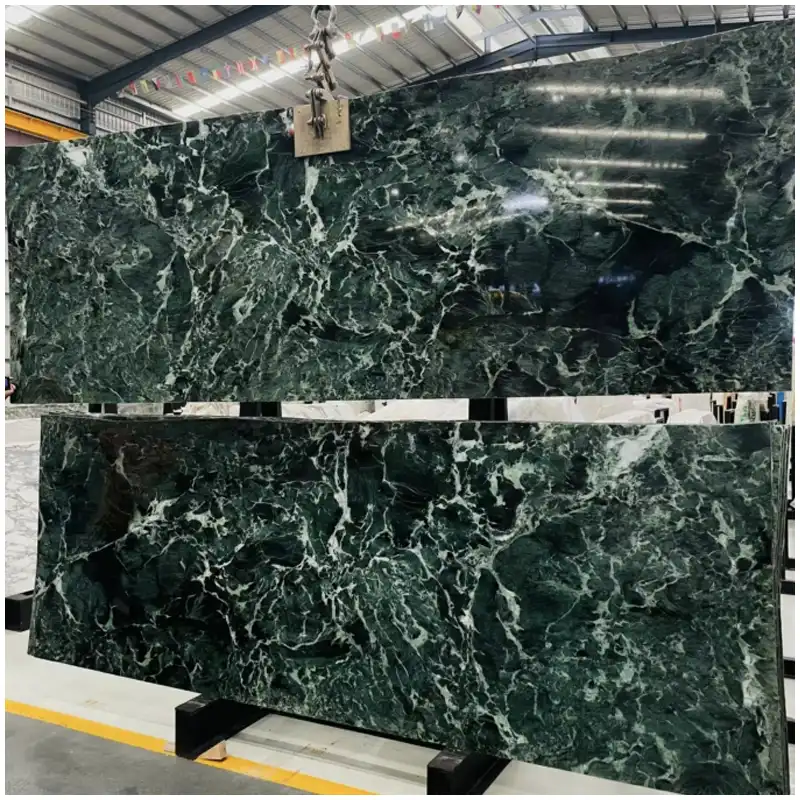
The character of Prada Green comes from the tension between a very dark field and a bright, irregular web. The strongest specification balances that drama with an honest finish choice, a confirmed cut-out layout and a clear acceptance standard for web density and repairs. For architects, interior designers and project buyers, approving the full slab with its marked layout establishes a clearer standard than approving a sample alone.
Monet Garden Compared with Other Warm-Toned Marbles
| Produkt |
Farbe und Muster |
Hauptanwendungsbereiche |
Purchasing Priority |
|
|
Ivory-cream ground with soft beige and warm grey clouds
|
Slabs, panels, fireplace surrounds, tops
|
Cloud composition, tonality under light and line density
|
| Breccia Bohemien Marble Slabs |
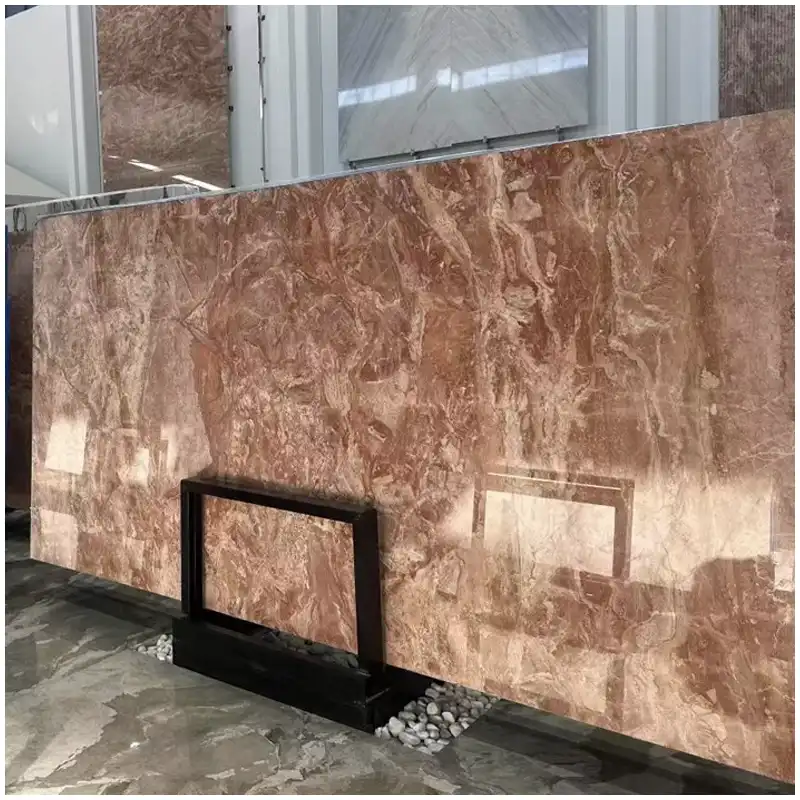
Red and terracotta mineral fragments with contrasting cream formations |
Decorative kitchens, stairs and feature walls |
Breccia fragment distribution, natural discontinuities and edge processing |
| Calacatta-Gold-Marmorplatte |
White background with contrasting grey and golden mineral veins |
Luxury countertops, vanity tops and wall cladding |
Background whiteness, vein arrangement and material coordination |
| Nero Portoro Marmor |
Deep black background with contrasting golden mineral veins |
Reception counters, luxury furniture and decorative wall panels |
Black background intensity, golden vein distribution and finish consistency |
| Cloud Jade Marmorplatten |
Green mineral coloration with softer cloud-like natural formations |
Decorative furniture, feature walls and custom interiors |
Green shade selection, mineral identity and actual application suitability |
Empfohlene Naturmarmorplatten
Red decorative breccia marble with contrasting cream mineral fragments for custom kitchen countertops, residential staircases and natural stone feature walls.
View More
White natural marble with grey and golden mineral veins for luxury kitchen islands, bathroom vanity surfaces and coordinated architectural stone installations.
View More
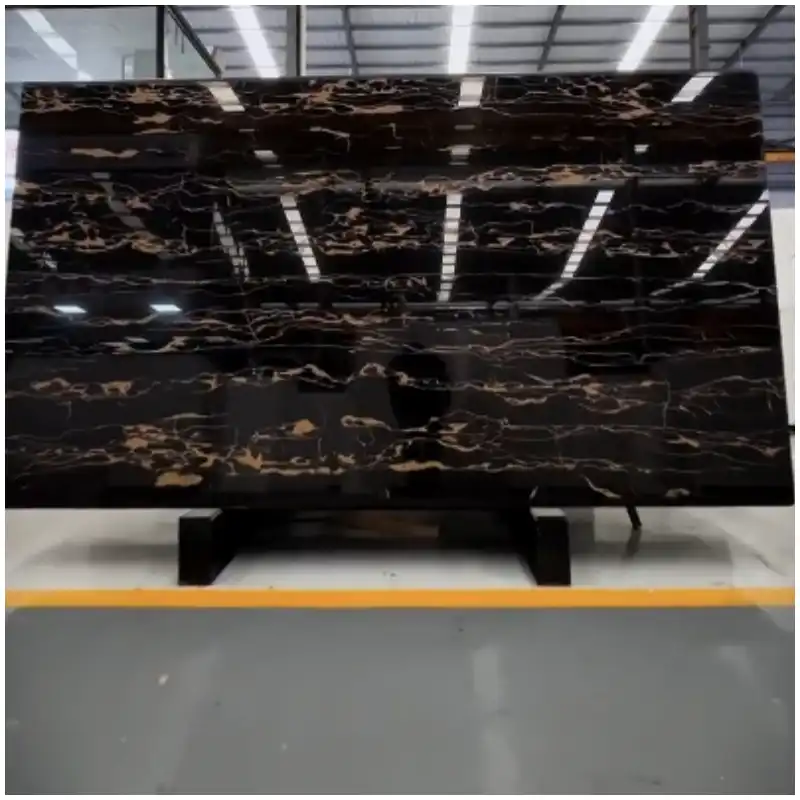
Black and gold decorative marble for hotel reception desks, fireplace surrounds, custom furniture and high-contrast natural stone wall panels.
View More
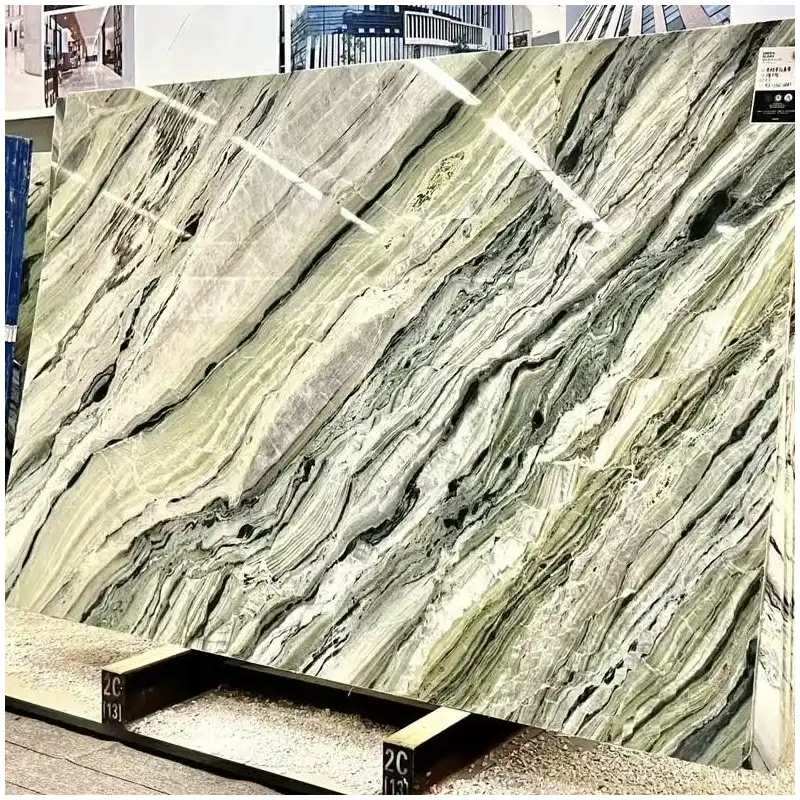
Green decorative stone with softer cloud-like mineral movement for custom tabletops, architectural feature walls and coordinated luxury residential interiors.
View More
Request Monet Garden Slab Selection and Bulk Pricing
Send your slab dimensions, required thickness, finish, project quantity and shipping destination for a quotation. For feature walls and fireplaces, include the elevation with the visible area marked, so the composition can be planned on the actual slab before sawing. Where several panels appear in one view, ask for the bundle photographs taken together — tonality drift is the most common complaint on warm cream marbles.