


White Marble Repair Acceptance: Resin Lines, Pinholes, Edge Chips, Color-Matched Fill, and Final Lighting
Example: a polished vanity piece arrives at final inspection with a pale fill on the rear edge and a darker resin line beside the faucet hole. The first is hidden after installation. The second sits under direct mirror lighting. Calling both “small repairs” avoids the real question. White marble repair acceptance must judge where the work appears and how the finished room exposes it.

My direct answer is to classify the feature, trace when it appeared, clean the surface, inspect it under agreed light, and compare it with the approved slab and repair limits. Do not accept or reject from one phone close-up. Lighting lies, and so does a photograph without context.
Define White Marble Repair Acceptance before Fabrication
The project needs written categories before the first batch is cut. I separate natural features, factory fill, slab stabilization, fabrication chips, site damage, and approved remedial work. The same visible line can have a different cause and responsibility, so the record begins with the full slab.
The broader White Marble Slabs: Complete Guide to Types, Selection, Price, Bathrooms, Lighting, and Batch Control establishes selection and batch evidence. This decision takes over after a feature or damage needs evaluation.
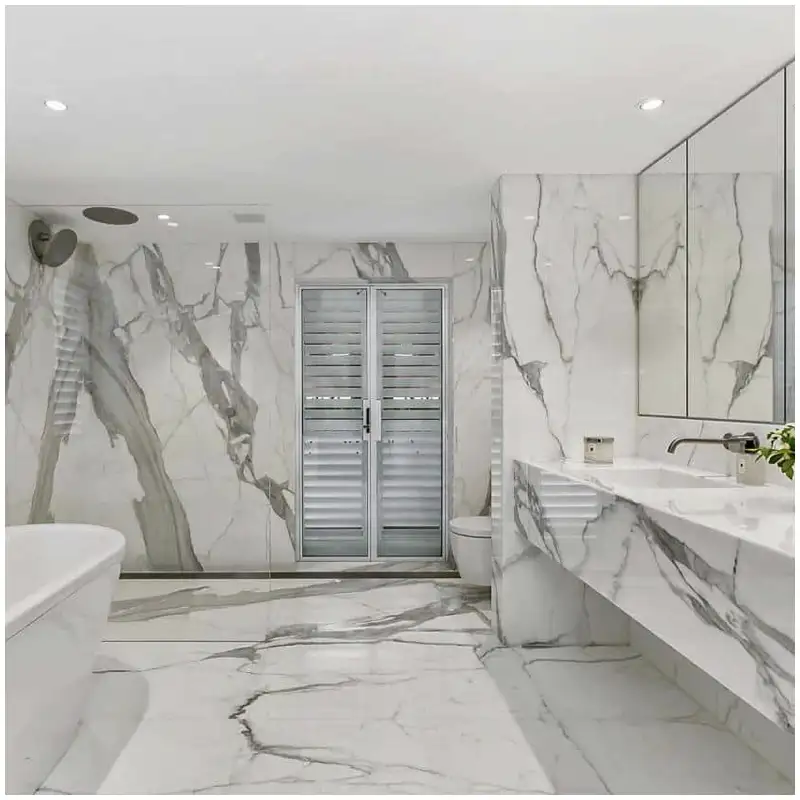
On Carrara-weiße Marmorplatten, fine grey veining and small natural features can be part of the selected character. A repair should not erase the stone into a flat painted patch. It should remain compatible with the approved visual range.
Start with identity, not the close-up
Every repair photograph begins with the piece code, slab code, room or area, face, orientation, finish, and location on the drawing. Then I add a mid-range image and a close-up with a scale. Without those views, a 3 mm pinhole can look like a crater and a long resin line can look harmless.
A useful marble resin line inspection compares the line with the pre-cut slab photograph. If it existed before cutting, the team can judge its selected character and any change after finishing. If it appeared during fabrication, the record must say so.
| Condition | Evidence required | Acceptance question | Typical hold reason |
|---|---|---|---|
| Resin line | Full piece, close-up, pre-cut slab image, light condition | Does color and gloss sit within the approved face? | Dark or reflective line crosses a focal zone |
| Pinhole | Clean dry close-up with scale and finish noted | Is it natural, stable, cleanable, and acceptable in use? | Open pocket collects water or residue |
| Edge chip | Edge profile, dimensions, repair shape, viewing angle | Does the profile remain true and the fill remain unobtrusive? | Repair changes the visible line or weakens a sensitive zone |
| Cutout repair | Sink or outlet drawing, remaining strip, underside view | Can fabrication and support accept the correction? | Repair sits beside a stressed opening |
| Color fill | Wet and dry views under project light | Does tone change after cure, polish, or sealing? | Fill becomes yellow, grey, or glossy |
| Site damage | Delivery record, unpacking photos, installation sequence | When and where did the condition appear? | Responsibility cannot be traced |
Use White Marble Repair Acceptance after Cleaning and Drying
Dust and water can hide or exaggerate fill. I clean the area with the agreed method, allow it to dry, and inspect from the normal approach as well as close range. Low-angle light reveals gloss differences that overhead light misses.
The earlier White Marble Resin and Mesh Backing: Full-Slab Approval, Cutouts, Adhesive Compatibility, and Fabrication Limits records treatment before cutting. The repair decision compares the finished piece with that baseline.
With Calacatta Gold marble for bathrooms, warm gold movement can make a pale fill disappear under 3000K light yet expose a grey undertone at 4000K. I use both the project light and a neutral inspection condition when color matters.
Gloss mismatch can matter more than color
A resin may match the white tone but reflect light differently from the polished or honed surface. Under mirror lighting, that line flashes each time the viewer moves. A low-angle video can document the effect better than one still photograph.
White marble repair acceptance therefore records finish continuity as well as color. On honed work, an over-polished fill looks darker and sharper. On polished work, a dull patch reads as a cloud.
The Hard-Won Lesson: The Fill Matched in the Warehouse and Flashed under the Mirror
Example: a vanity edge repair appears close in color under diffuse 4000K warehouse lighting. In the room mock-up, a directional light above the mirror catches the repair at a low angle, and its higher gloss becomes visible from the doorway. The piece has not changed color; the reflection exposes a finish mismatch that the first photograph never tested.
The Lesson: Approve every visible repair under the real viewing angle and light direction, not under one convenient warehouse lamp.
Judge White Marble Edge Chip Repair by Geometry
An edge correction must restore more than color. I check the straightness, radius, arris, polish transition, corner shape, and relationship to the adjacent piece. A soft lump or flattened profile can remain visible even when the fill tone is close.

White marble edge chip repair near a sink, anchor, or narrow strip also needs a fabricator’s technical assessment. I do not make structural claims from appearance. The repair location and remaining geometry go back to the person responsible for fabrication and support.
A Statuario white marble slab can carry a crisp, high-contrast vein across an exposed edge. Filling a chip with plain white resin may interrupt the vein more obviously than the original loss. Sometimes a carefully toned repair is acceptable; sometimes the piece belongs elsewhere.
Color matching needs wet and dry observation
A color matched marble fill can shift as it cures, when the stone is sealed, or when the surface becomes wet. I ask for the repair to reach its stated cure before final judgment and repeat the approved finish process around it.
That slab doesn’t belong next to your bathtub if an open repair traps residue, flashes under wet light, or falls outside the agreed appearance. A hidden wall return and a vanity front edge do not carry the same visual burden.
Place Pinholes and Natural Features in the Use Context
Small pits may be natural to the stone or finish, but wet zones and horizontal surfaces demand practical judgment. Can the feature be cleaned? Does it retain water or product? Is it stable? Is it in a focal field or a concealed edge?
Der Bathroom Vanity Top Supplier: White Marble Project Orders helps locate those decisions within a complete vanity order. I add the exact piece code and view direction so the team does not debate an anonymous spot.
Marble resin line inspection should never turn into a promise of absolute invisibility. Natural stone and repair materials respond differently to angle, moisture, and time. The project needs an agreed appearance standard and traceable evidence.
Use 3000K and 4000K Light without Pretending They Are Identical
Warm 3000K light can make cream and gold undertones feel stronger. Cooler 4000K light often sharpens blue-grey zones and reflective fill. The effect depends on the lamp spectrum, intensity, direction, finish, nearby colors, and camera settings. I do not reduce it to one universal color shift.
Der Statuario Marble Slab Approval Photos, Lighting, and Bathroom Use explains the approval setup. For repairs, I keep the camera position and exposure stable, then inspect with my own eyes at the normal viewing distance.
White marble repair acceptance is signed against named lighting and location. If the project later changes the light source or wall color, the original photographs still show what the team approved.
Record White Marble Repair Acceptance before Packing
The repair log lists piece code, slab code, condition, location, cause if known, repair material, date, finish, photographs, inspector, and decision. Accepted with location change, accepted as supplied, rework, and replace are separate outcomes.
A color matched marble fill gets its own final image after cure and finishing. I will not accept a promise that it will become less visible in the crate.
If several pieces show the same issue, I review the process and remaining batch before packing continues. One accepted repair does not automatically approve every similar-looking mark in a different location.
Where Repair Decisions Usually Go Wrong
The first mistake is judging a close-up without location. The second is using only one light. The third is calling all natural features damage. The fourth is treating every resin line as normal. The fifth is approving wet stone that dries to a different appearance.
White marble repair acceptance needs limits that fit the application. A wall panel ten meters above a lobby is not inspected like a vanity edge beside a mirror. Neither should be dismissed with “natural material” when the supplied condition differs from approval.
I use Marmor as a natural material with variation, not as an excuse for missing records. Evidence protects both the project team and the supplier.
What to Do When White Marble Repair Acceptance Is Disputed on Site
First, photograph the full installed or unpacked piece, the repair, label, location, lighting, and scale. Second, stop installation or further finishing around the disputed area. Third, send the supplier the original slab image, repair log, factory inspection, packing record, and approved light condition for comparison.
The next step may be cleaning, additional observation, a controlled rework, relocation, replacement, or acceptance. Make that decision before adjacent work hides access or changes the evidence.
Frequently Asked Questions
1. What determines white marble repair acceptance?
Identify the condition, cause, piece location, use, finish, viewing distance, lighting, size, color, gloss, geometry, and approved slab baseline. One close-up or a generic natural-stone statement is not enough.
2. Are resin lines in white marble always unacceptable?
No. Some natural fissures receive factory fill, and the selected stone may include them. Acceptance depends on the approved visual range, treatment quality, location, finish, use, and whether fabrication changed the feature.
3. How should an edge chip repair be inspected?
Check color, gloss, profile, straightness, radius, corner shape, polish transition, and the adjacent piece. Sensitive areas near cutouts or anchors also need the fabricator’s technical assessment.
4. Why inspect marble repairs under different light?
Color and gloss differences respond to lamp spectrum, direction, surface finish, moisture, and viewing angle. Project lighting can reveal a repair that diffuse warehouse light hides, so both conditions belong in the record.
5. What should I do if I find an undisclosed repair on site?
First, document the full piece, repair, label, location, light, and scale. Second, stop installation or further finishing. Third, compare the condition with the approved slab images, repair log, factory inspection, and packing record through the supplier.
Quick-Reference Checklist for Repair Acceptance
- Identify the piece, slab, room, face, orientation, finish, and repair location.
- Compare the condition with full-slab photographs taken before cutting.
- Clean and dry the surface before judging color, gloss, and open pores.
- Inspect from normal viewing distance and under the project’s actual light direction.
- Check edge geometry and sensitive cutout locations with the responsible fabricator.
- Record accepted, rework, relocate, or replace decisions before packing continues.
Final Conclusion
White marble repair acceptance depends on traceable identity, pre-cut evidence, location, geometry, color, gloss, finish, and real project lighting. Classify the condition, inspect it clean and dry, then record the decision before packing or installation.
I would rather reject one uncertain close-up at Esta Stone than approve a repair whose full piece and viewing light nobody has seen.

Referenzen
- Dimension Stone Design Manual, Natural Stone Institute.
- Natural Stone Institute Technical Bulletin: Repair of Dimension Stone, Natural Stone Institute.
- ASTM C503 Standard Specification for Marble Dimension Stone, ASTM International.
- ASTM C97 Standard Test Methods for Absorption and Bulk Specific Gravity of Dimension Stone, ASTM International.
- ASTM C880 Standard Test Method for Flexural Strength of Dimension Stone, ASTM International.
- Natural Stone Flooring and Paving Technical Guidance, Stone Federation Great Britain.
- Epoxy, Wikipedia, Wikimedia Foundation.