


Why Taj Mahal Quartzite is the Definitive Choice Over Synthetic Counterparts in 2026

This executive brief serves as a definitive resource for architects, interior designers, and real estate developers navigating the high-end surface market in 2026. Our objective is to provide a multi-dimensional analysis—covering mineralogy, tactile psychology, and financial ROI—to demonstrate why Taj Mahal Quartzite from Esta Stone Factory remains the superior architectural investment compared to porcelain and sintered stone alternatives.
1. Introduction: The Luxury Market’s “Flight to Reality” of Brazilian Taj Mahal Exotic Quartzite
In recent years, the global surface industry has been flooded with engineered materials—porcelain slabs, sintered stone, and quartz composites designed to mimic natural aesthetics. However, by 2026, a decisive shift is underway. Elite homeowners and architects are rejecting imitation in favor of authenticity. The era of “printed luxury” is fading.

At the center of this transformation is Taj Mahal Quarzit, a material that transcends its role as a surface. Formed over millions of years, it is not simply decorative—it is geological history captured in stone. Unlike synthetic products, which rely on inkjet printing and resin bonding, this Brasilianischer Quarzit embodies natural variation, depth, and permanence.
This shift reflects a broader cultural movement. Luxury is no longer defined by appearance alone. Instead, it is about origin, material integrity, and emotional resonance. As explored in the 2026 quartzite market report, natural stone is reclaiming its position as the gold standard in high-end interiors.
2. The Haptic Experience: The One Thing Printing Can’t Copy of Brazilian Luxury Quartzite like Taj Mahal
The most immediate difference between Luxus Quarzit and synthetic materials is tactile. This is the “haptic experience”—how a material feels when touched.
Taj-Mahal-Quarzit-Arbeitsplatten possess a natural thermal conductivity that allows them to adapt subtly to ambient temperature. Unlike engineered quartz, which often feels artificially warm due to resin content, quartzite surfaces feel alive—cool in the morning, balanced throughout the day.
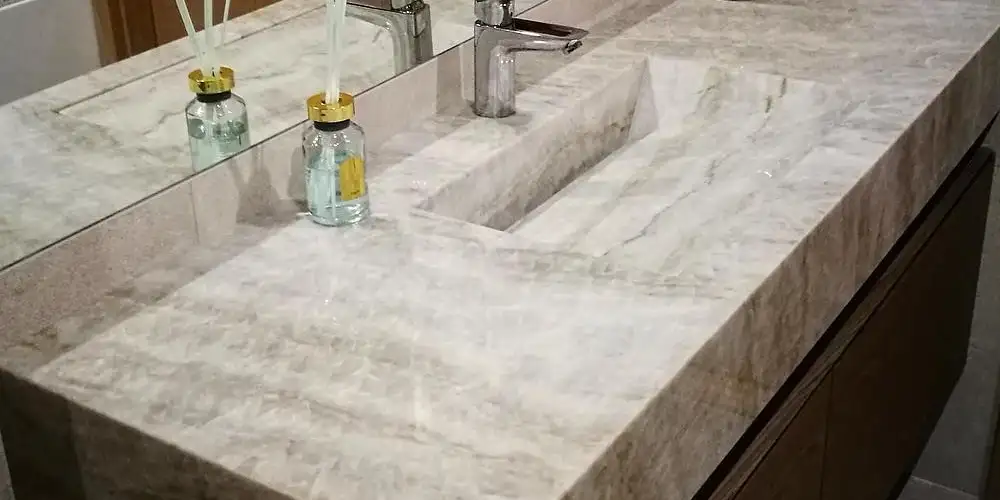
The micro-texture of Taj Mahal Quarzit-Platten further distinguishes them. Under magnification, natural quartz crystals create a complex, irregular surface. In contrast, porcelain and sintered stone present a uniform, glass-like finish. This difference is not merely aesthetic; it directly influences user perception and comfort.
Neuroscience studies suggest that humans respond more positively to irregular, organic patterns. This explains why Taj Mahal Quartzite Tiles create a calming, grounded atmosphere in residential and commercial spaces alike. Synthetic materials, with their repetitive prints, lack this psychological depth.
3. The “Translucency Gap”: Deep Aesthetics of Exotic Taj Mahal Quartzite
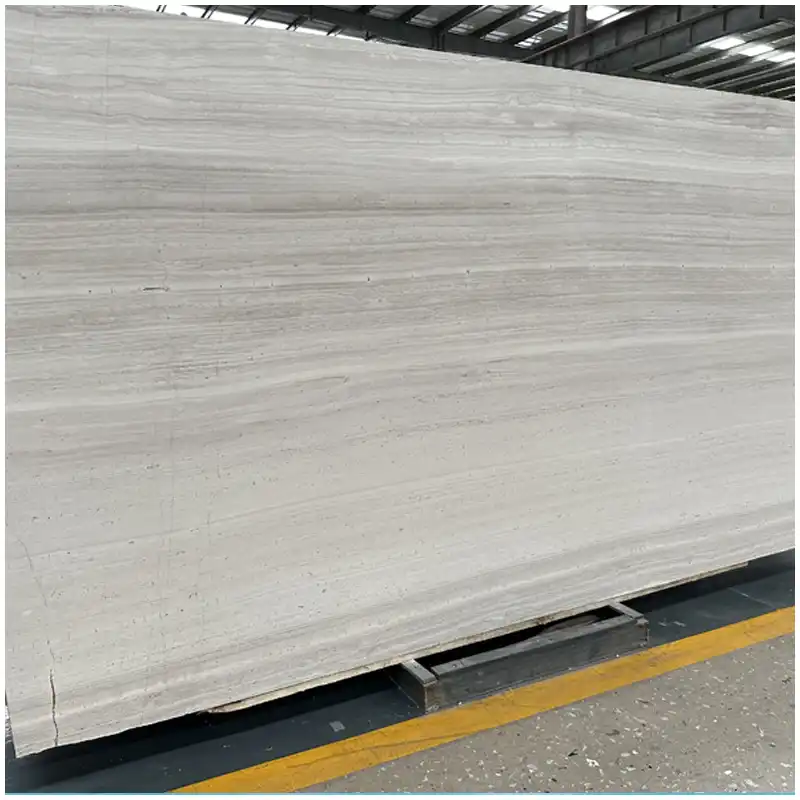
One of the most critical distinctions lies in light interaction. Taj Mahal Quarzit exhibits subtle translucency, allowing light to penetrate its surface by 1–3 millimeters. This creates a soft internal glow, enhancing its creamy white and gold veining.
By contrast, printed surfaces are inherently flat. When exposed to direct sunlight, porcelain often appears lifeless because it reflects rather than refracts light. This “flatness” limits its application in high-end design.

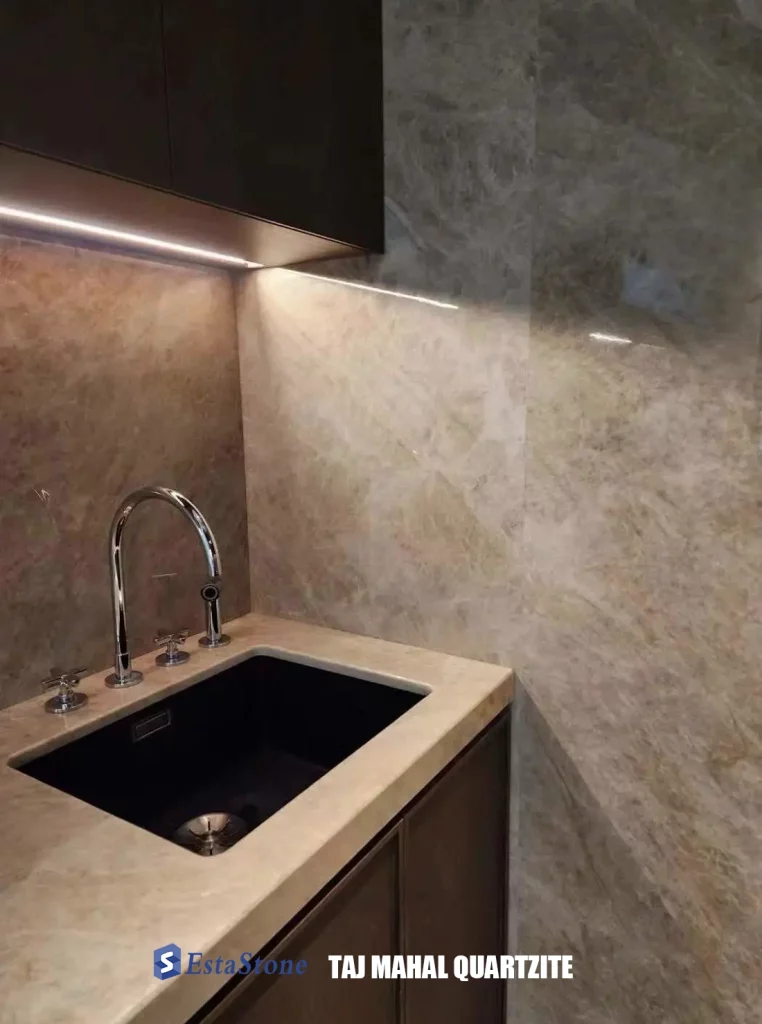
Designers leverage the depth of Taj Mahal Quarzit-Platten to create waterfall islands, feature walls, and expansive Taj-Mahal-Quarzit-Bodenfliesen that respond dynamically to lighting conditions. As detailed in premium slab collections, each piece offers unique visual movement impossible to replicate digitally.
4. Technical Resilience vs. Aesthetic Fragility of Taj Mahal Brazilian Quartzite
Beyond aesthetics, performance is where Taj Mahal Quarzit decisively outperforms synthetic materials.
One common issue with porcelain is edge chipping. When damaged, it reveals a contrasting core, compromising visual integrity. In contrast, Taj-Mahal-Quarzit-Arbeitsplatten maintain consistent coloration throughout their thickness, ensuring seamless durability.
On the Mohs hardness scale, quartzite typically ranks around 7, significantly higher than most engineered surfaces. This makes it highly resistant to scratches and capable of withstanding direct heat exposure. For chefs and high-traffic kitchens, this resilience is critical.

Moreover, natural stone develops a patina over time—a subtle enhancement of character. Synthetic materials, however, tend to degrade, losing their finish without gaining aesthetic value.
For a deeper technical comparison, refer to this professional guide.
Table 1: Performance Matrix – Taj Mahal Quartzite vs. Sintered Stone
| Merkmal | Taj Mahal Quarzit | Sintered Stone (Porcelain) |
|---|---|---|
| Hardness (Mohs Scale) | 7.0 (Extreme) | 6.0 – 7.0 (Varies) |
| Visual Depth | 1-3mm Translucency | Flat (Surface Print Only) |
| Repairability | High (Can be repolished) | Low (Chip reveals white core) |
| VOC Emissions | Zero (100% Mineral) | Variable (Resin dependant) |
Global Usage Guidelines by Project Sector
- Wohnsitz: Waterfall kitchen islands, master bath Taj Mahal Quartzite Vanity Tops, and bespoke fireplace surrounds.
- Gastfreundschaft: 5-star hotel reception desks, luxury spa wet areas, and VIP lounge flooring.
- Commercial: High-end retail facades and executive boardroom tables where “Quiet Luxury” is the primary branding.
5. The Financial Logic: Resale Value in Ultra-Luxury Real Estate
In the realm of ultra-luxury real estate, material selection directly impacts property valuation. Appraisers consistently differentiate between “natural stone” and “engineered surfaces.”
Properties featuring that the highly customized Taj Mahal Quartzite Vanity Tops and countertops at Esta Factory are often classified as premium, while synthetic materials may be categorized as standard finishes. This distinction becomes especially significant in properties exceeding $5 million USD.
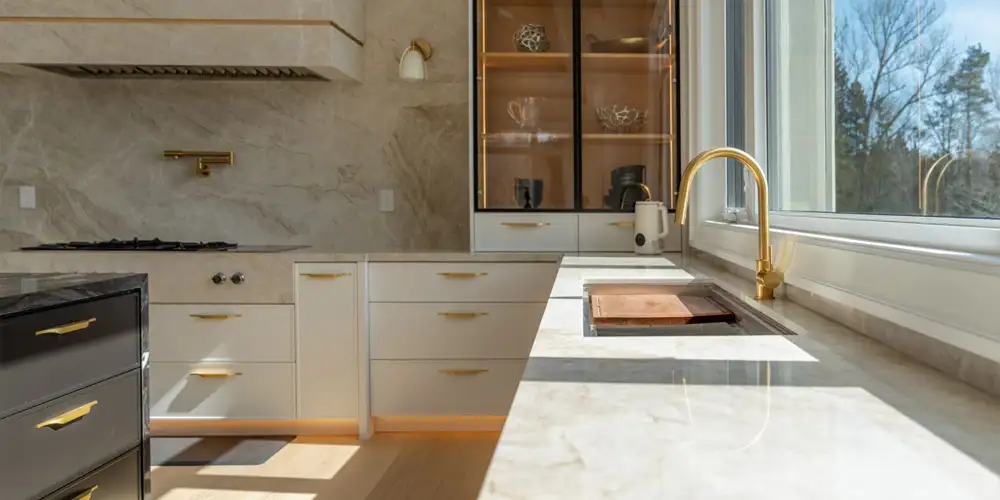
The long-term ROI is equally compelling. While synthetic surfaces may require replacement within 10–15 years, Taj Mahal Quartzite Tiles and slabs can last decades with minimal maintenance. Over 30 years, this translates into lower lifecycle costs and higher resale value.
Explore real-world applications in luxury global projects.
Voices of Authority: Why Pros Choose Taj Mahal
“In 2026, we are seeing a ‘Material Renaissance.’ Clients no longer want a digital print of a stone; they want the stone itself. Taj Mahal Quarzit offers a luminous depth that porcelain simply cannot mimic. It is the cornerstone of our high-end residential portfolio.”
— Marcus V., Principal Architect, London Design Collective
“From a hospitality perspective, durability is key. But luxury is about the soul of the space. We specified 8,000 sqm of Taj Mahal Quarzit-Platten for our newest Dubai resort because it withstands traffic while maintaining an organic warmth that synthetic surfaces lack.”
— Sarah L., Director of Procurement, Global Hospitality Group
6. Sustainable Luxury: The Carbon Footprint of “Natural.”
Sustainability is a defining concern in 2026 architecture. Unlike sintered stone, which requires energy-intensive manufacturing, Brasilianischer Quarzit undergoes a relatively simple process: extraction, cutting, and polishing.
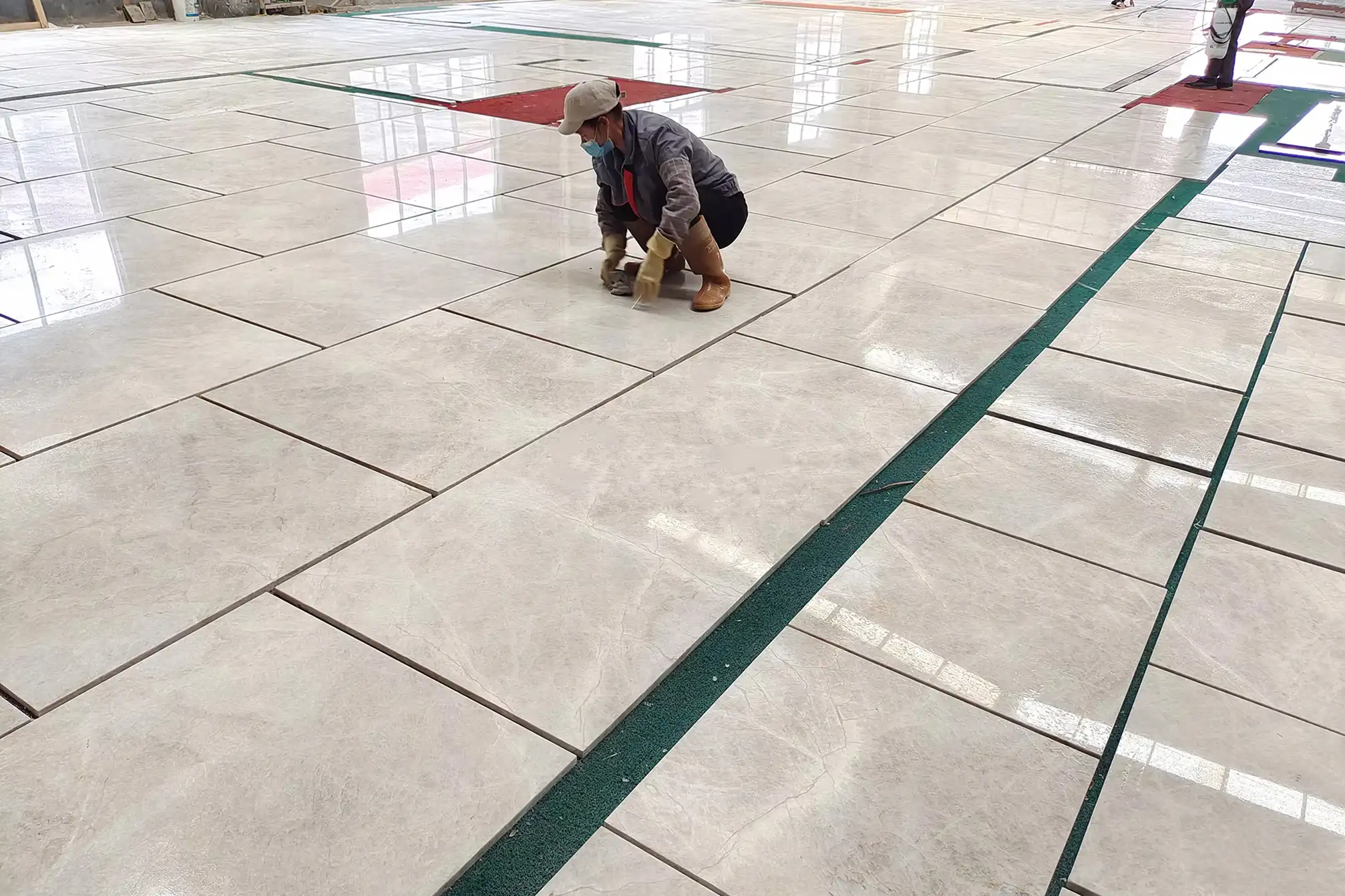
This low-energy production reduces carbon emissions significantly. Additionally, Taj Mahal Quarzit contains no resins or synthetic binders, eliminating VOC emissions and microplastic pollution.
At the end of its lifecycle, natural stone can be repurposed or returned to the earth without environmental harm. Synthetic materials, by contrast, contribute to long-term waste.
For further insights, review sustainable quartzite solutions.
7. Specifying for Success: The Architect’s Checklist
When specifying Taj Mahal Quarzit-Platten, professionals should prioritize consistency within the same block for large-scale installations. Book-matching techniques enhance visual continuity, particularly for feature walls and expansive flooring.
Finish selection is equally critical. Honed finishes align with the 2026 “soft minimalism” trend, while polished surfaces maximize light reflection. For bathrooms, Taj Mahal Quartzite Vanity Tops offer both functionality and elegance, as seen in custom vanity solutions.
8. 2026 Trending FAQs About Taj Mahal Quartzite
Q: Can Taj Mahal Quartzite really withstand direct heat better than quartz?
A: Yes. Since it is 100% natural stone with no resin binders, it has a much higher thermal threshold. While engineered quartz can scorch or discolor at 150°C, quartzite is stable at much higher temperatures.

Q: Why is there a price gap between Taj Mahal and sintered stone?
A: The cost reflects the rarity and technical difficulty of extraction in Brazil. Sintered stone is mass-produced in factories; Taj Mahal is a finite natural resource. In the luxury market, this rarity translates directly into higher resale value for the property.
Q: Does Taj Mahal Quartzite turn yellow over time?
A: No. Yellowing in synthetic quartz is often caused by the UV degradation of resins. Genuine Brasilianischer Quarzit is UV-stable and maintains its pristine creamy-white tone even in sun-drenched environments.
Q: How do I verify if a slab is “Real” Taj Mahal or a look-alike?
A: Always request a Mohs Hardness Test and check for translucency. Genuine Taj Mahal will scratch glass and allow a flashlight to penetrate the surface edges—porcelain will not.
9. Conclusion: Reclaiming the Real
The rise of Taj Mahal Quarzit signals a broader return to authenticity in luxury design. It bridges the gap between ancient geological processes and modern architectural innovation.
For those seeking materials that offer both beauty and substance, this Luxus Quarzit represents the ultimate choice. To explore curated collections, visit premium quartzite inventory or review 2026 design inspirations.

References blogs about Brazilian Exotic Taj Mahal Quartzite | Esta Stone
- Why Taj Mahal Quartzite is the High-Yield Architectural Asset of 2026: A Strategic Analysis
- Taj Mahal Quartzite for Luxury Interiors in 2026
- Der Quarzit-Bericht 2026: Warum Taj Mahal Immobilien im Ultra-Luxus-Segment neu definiert
- 2026: Warum Taj-Mahal-Quarzit bei Luxusprojekten im Nahen Osten dominiert
- Top 15 FAQs of Taj Mahal Quartzite You Should Know
- Warum Taj Mahal Quarzit für Innenraumdekorationsprojekte wählen?
- Taj-Mahal-Quarzit für die besten Innenarchitekturdesigns des Jahres 2026
- Luxuriöse Steinkunst aus Taj Mahal Quarzit
- How to Source Premium Taj Mahal Quartzite Slabs: A Wholesaler’s Inspection Checklist
- The Ultimate Guide to Taj Mahal Quartzite: Prices, Durability, and Design 2026
Taj Mahal Quartzite represents a decisive evolution in luxury material selection. It outperforms synthetic surfaces across tactile experience, visual depth, durability, sustainability, and long-term financial value. For architects and developers aiming to create timeless, high-performance spaces, specifying natural quartzite is not just a design choice—it is a strategic investment in authenticity and longevity.