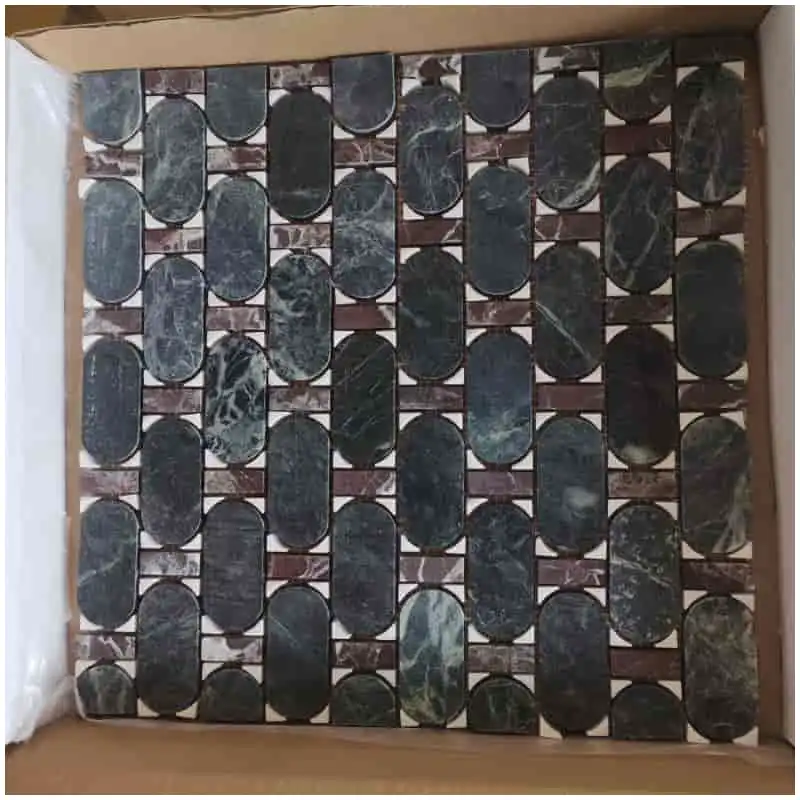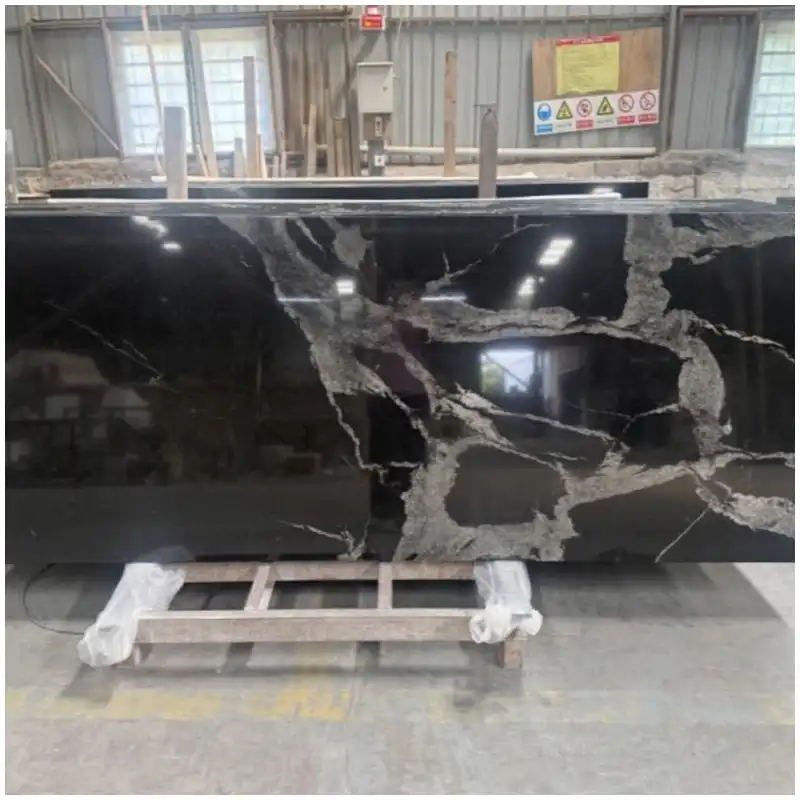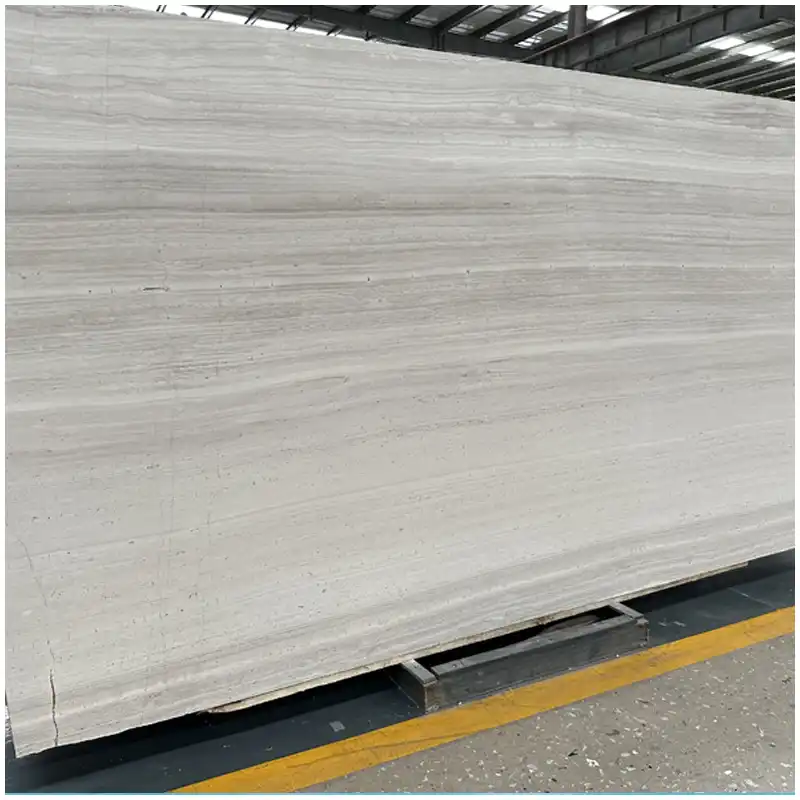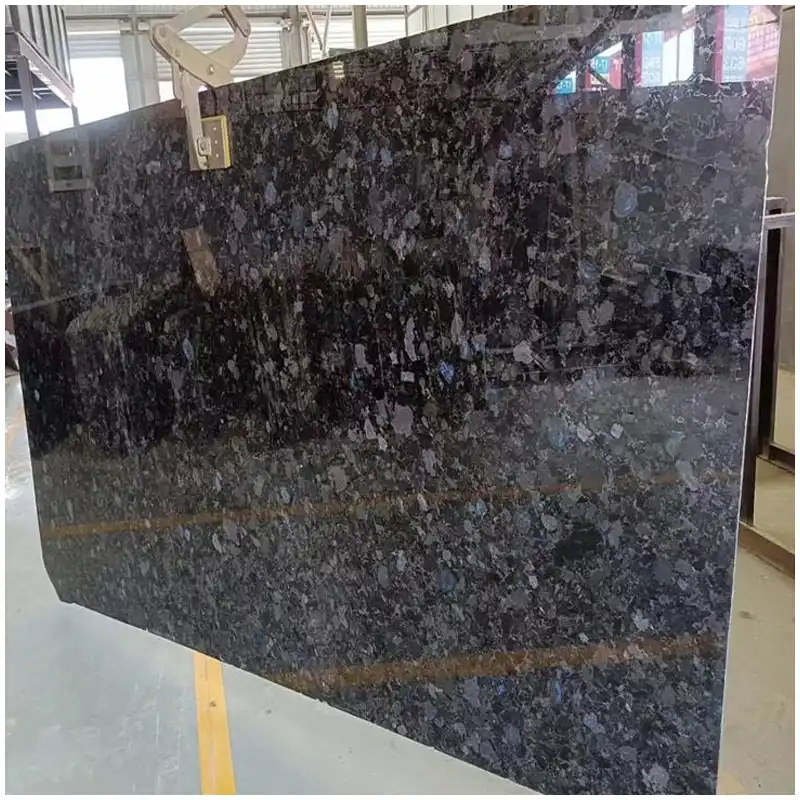
The marble market entering 2026 is increasingly divided between buyers who purchase stone as a visual commodity and buyers who purchase it as a controlled project material. The first group asks for a color, a price and a photograph. The second group asks which block the slabs came from, how much usable material exists in the bundle, where repairs are located, whether bookmatching is possible, what testing is available, how the slabs will be numbered, and what happens if a panel is damaged six months later.
That second approach is becoming more important as marble projects grow larger and more international. Hotels, villas, multifamily developments, luxury retail, high-end bathrooms and commercial lobbies can use dozens or hundreds of slabs. Small inconsistencies in color, thickness, fabrication or packing can therefore be multiplied across an entire project.
ESTA STONE describes its natural stone manufacturing and project supply capability as combining Xiamen sourcing, a Shuitou processing hub, slab inventory, CNC fabrication, digital slab scanning, project drawings and export logistics. For procurement teams, the important lesson is not simply the size of one factory. It is that marble purchasing becomes more predictable when material sourcing, selection, fabrication, QC and logistics can be connected under one traceable workflow.

Start With the Stone Family Before You Start With the Price
A procurement team should first define what kind of marble is appropriate for the project. White Italian marble, beige marble, dark marble, green marble and regional materials all create different design effects and sourcing challenges. A hotel lobby may justify highly dramatic Calacatta or Statuario, while a large residential floor may benefit more from a calmer material that can be supplied consistently in volume.
ESTA STONE’s Marble Stone collection spans different natural-marble families and project applications, which reflects a practical sourcing principle: buyers should compare material categories before locking themselves into one famous trade name. Prestige can add value in a focal area, but availability, yield and consistency often matter more across large repetitive surfaces.
The purchase specification should therefore describe the intended result. Is the project looking for bright-white marble with bold movement, warm beige flooring, dark statement stone, controlled hotel-bathroom slabs or a rare bookmatched wall? Once that role is clear, suppliers can be compared on actual suitability instead of marketing labels.
A Good RFQ Should Make Competing Suppliers Quote the Same Job
Many marble quotations are difficult to compare because one supplier prices random slabs, another includes selected bundles, another includes cut-to-size fabrication, and another excludes packing or special matching. A lower number can simply mean that less scope has been included.
Before requesting a final price, prepare the application, estimated quantity, slab or finished-piece dimensions, preferred stone, thickness, finish, acceptable visual range, bookmatching requirements, packing method, destination and documentation needs. Buyers can then request a Marble Slabs project quotation using one consistent scope.
This becomes especially important when comparing factory-direct supply with local stock. The factory price may look lower, but the buyer must still understand fabrication, ocean freight, local delivery, customs, inspection, replacements and lead time. Conversely, local stock may have a higher unit price but lower schedule risk for a small urgent order.
If quotations include different scopes → normalize the scope before comparing price.
If the project is large → compare usable project yield, not only gross slab area.
What Buyers Can Learn From a Dedicated Slab Category
The market often uses the words marble, marble slab and marble product interchangeably, but procurement becomes more precise when the supply form is clearly defined. Full slabs, cut-to-size panels, tiles, stairs and fabricated countertops require different pricing, inspection and packing strategies.
ESTA STONE’s dedicated Marble Slabs collection gives buyers a clearer view of slab-oriented materials that can later be selected for countertops, bathrooms, wall cladding, floors or custom fabrication. For a large project, this distinction matters because the buyer may want to approve raw slabs first and release cutting only after vein layouts and room allocations are confirmed.
Full-slab procurement gives the architect more visual control, but it also transfers more responsibility to the downstream fabricator. Cut-to-size procurement shifts more responsibility to the factory, which means drawings, edge details, tolerances and piece numbering become more important.
Lighting and Batch Control Are Procurement Variables, Not Just Design Details
White and light marble can change substantially under different lighting. A cool LED can emphasize blue-grey veins, while warm lighting may make the same stone appear creamier. When twenty bathroom vanities are installed under identical lighting, even a small shift between marble batches can become obvious.
ESTA STONE’s article on Statuario Marble Slabs for bathrooms under real light highlights this issue directly: slab approval should consider how the stone looks in conditions similar to the final bathroom, not only under warehouse lighting.
This is especially important for luxury hospitality and villa projects. The procurement team should record the approved slab photographs, bundle references and room allocations so production does not mix visually incompatible material after approval.
Use a Dedicated White-Marble Guide for Deeper Batch and Color Decisions
White marble procurement deserves its own selection discipline because background cleanliness, vein density, lighting and batch variation can materially affect the finished room. Buyers who need deeper guidance on Carrara, Calacatta, Statuario, bathroom lighting, batch control and white-marble price factors can also review ESTA STONE’s White Marble Slabs selection and batch-control guide.
For this procurement article, the larger lesson is simple: the trade name establishes the category, but the actual slab lot establishes the project result. Marble is a geological material. A future shipment with the same commercial name can have a different white tone, vein scale or repair pattern.
Buyer rule: Approve the lot you are purchasing, not only the product name you searched for.
Quick Answer: What Should Buyers Check Before Ordering Marble Slabs?
| Check | Why It Matters |
|---|---|
| Marble type | Determines aesthetics, availability and maintenance direction |
| Origin / quarry | Improves material identification and sourcing traceability |
| Current slab photos | Natural stone varies from lot to lot |
| Dimensiones | Controls usable cutting layout |
| Espesor | Affects weight, support and fabrication |
| Acabado | Changes appearance and maintenance |
| Fissures / cracks | Influence structural suitability and cutting yield |
| Resin / mesh | Indicates reinforcement and repair conditions |
| Bundle / slab numbers | Protect selection traceability |
| Test data | Supports technical specification where required |
| Embalaje | Protects material during long-distance transport |
| Plazo de entrega | Must align with project schedule |
What Are Marble Slabs?
Marble forms when carbonate-rich rock is transformed by heat, pressure and geological processes. Commercial slab production begins with quarry blocks, which are cut into large sheets using gang saws, diamond wire or other block-processing technology. The resulting slabs are then calibrated, reinforced where necessary, polished or honed, inspected and bundled.
Every slab records the geology of the original block. Vein direction, mineral inclusions, background tone and fissures can therefore change gradually from one slab to the next.
Common Supply Forms
- random slabs;
- large slabs;
- sequential slabs;
- cut-to-size panels;
- countertops;
- vanity tops;
- stairs;
- wall panels;
- floor tiles.
Standard vs Large Marble Slab Sizes
Natural marble does not have one universal slab size. The dimensions depend on the extracted block, quarry geology and processing system.
| Supply Type | Typical Direction | Buyer Impact |
|---|---|---|
| Random slab | Block-dependent dimensions | Verify actual usable dimensions before layout |
| Large slab | Larger pieces from suitable blocks | Useful for islands, walls and fewer seams |
| Sequential slabs | Consecutive cuts from one block | Important for bookmatching and visual flow |
| Corte a medida | Pieces fabricated to project drawings | Requires tighter drawing and QC control |
| Project panels | Numbered wall / floor / facade pieces | Packing sequence becomes critical |
Marble Slab Thickness: 18 mm vs 20 mm vs 30 mm
| Espesor | Typical Direction | Main Procurement Consideration |
|---|---|---|
| 18 mm | Selected walls, furniture, lightweight fabrication | Lower weight but greater handling sensitivity |
| 20 mm | Walls, vanities, countertops and general fabrication | Common balance between weight and strength |
| 30 mm | Countertops, heavy edges, stairs and architectural features | More weight and shipping load |
Thickness should follow the application rather than prestige. A 30 mm panel is not automatically a better wall panel, and an 18 mm piece is not automatically too thin for every project.
If the application is vertical cladding → prioritize weight, support and fixing design.
If the design requires a deep exposed edge → thicker material may simplify fabrication.
Popular Marble Types Buyers Are Sourcing in 2026
Carrara
Carrara remains one of the most broadly recognized white-grey marbles. Its relatively subtle veining can make it easier to use across floors, bathrooms and large quantities.
Calacatta
Calacatta is often selected for brighter backgrounds and larger dramatic veins, sometimes with gold or beige movement. Its value is strongest in focal areas where the slab pattern becomes architecture.
Statuario
Statuario offers a clean white luxury direction with confident grey veining and is often specified for master bathrooms, fireplaces, bookmatched walls and statement counters.
Mármol verde
Green marble and commercially grouped green natural stones continue to gain attention for hotel bars, bathrooms, feature walls and high-end furniture.
Nero Marquina
Dark black marble with white veins provides a strong counterpoint to white-stone interiors and works well in fireplaces, powder rooms and bar fronts.
Beige, Emperador and Crema Marfil
Warm marble families remain relevant for hotels, villas and classical interiors where white marble would feel too cold.
Regional and Emerging Marble Varieties
Buyers in 2026 are increasingly open to regional materials when they provide better availability, lower freight risk or more stable project quantities.
Marble Slab Comparison Table
| Material Direction | Visual Character | Availability | Price Direction | Best Application | Main Buyer Risk |
|---|---|---|---|---|---|
| Carrara | Soft white-grey | Relatively broad | Lower–medium | Floors, bathrooms, classic interiors | Lot-to-lot grey variation |
| Calacatta | Bright white with dramatic movement | More selective | High–very high | Islands, walls, fireplaces | Vein matching waste |
| Statuario | Premium white with controlled grey veins | Limited premium selections | High | Bathrooms, features, luxury interiors | Limited matching quantity |
| Green marble | Mint to forest green | Stone dependent | Medium–high | Bars, bathrooms, walls | Geology and tone variation |
| Nero Marquina | Black with white veining | Material dependent | Medium–high | Feature walls, fireplaces | Strong visual contrast |
| Beige / Emperador | Warm cream to brown | Broad depending on type | Lower–medium | Floors, hotels, warm interiors | Consistencia entre lotes |
Price directions are relative market positioning only, not fixed 2026 prices.

Marble Grades: Why Premium, A and AA Are Not Universal
Natural stone suppliers often use internal grade terms such as Premium, A, AA, First Selection or Commercial Grade. These labels can be useful within one supplier’s inventory, but they are not a universal worldwide visual grading standard.
One supplier may prioritize background cleanliness while another prioritizes fissure level or slab size.
Compare These Instead
- background range;
- vein character;
- structural condition;
- repair extent;
- slab dimensions;
- usable yield;
- bundle consistency.
Buyer rule: Treat grade names as screening tools. Final approval should be based on actual slabs and contractual acceptance criteria.
Fissures, Cracks, Resin and Mesh
Natural Fissures
Natural fissures can form during the geological development of the marble and may follow veins or mineral transitions. They are not automatically defects.
Structural Cracks
A structural crack is more significant because it may affect handling, fabrication or the service performance of a narrow piece.
Resin Repairs
Transparent or colored resin can stabilize suitable fissures and improve the finished surface.
Mesh Reinforcement
Fiberglass mesh is commonly used on the back of more fragile slabs to improve handling stability.
| Condition | General Direction | Buyer Action |
|---|---|---|
| Tight natural fissure | Often normal | Review location and stability |
| Small color-matched resin repair | Common processing condition | Check appearance and cutting plan |
| Mesh backing | Common on fragile stone | Confirm compatibility with fabrication / installation |
| Open structural crack | Higher risk | Review or exclude critical area |
| Repair crossing a narrow structural strip | Higher risk | Re-nest or reject the location |
How to Inspect a Marble Slab Before Buying
A useful slab inspection should include:
- full-surface visual review;
- background color;
- vein direction;
- fissures;
- cracks;
- repair zones;
- flatness;
- edge condition;
- thickness;
- finish consistency;
- slab number;
- bundle number;
- high-resolution photos.
Why Full-Slab Approval Matters More Than Small Samples
A hand sample cannot show:
- full vein scale;
- large tone changes;
- bookmatching potential;
- major repairs;
- large fissures;
- usable cutting yield.
If the marble is a major visual feature → approve full slabs rather than relying only on sample chips.
What Is Bookmatching?
Bookmatching uses sequential slabs opened like pages of a book so the vein pattern mirrors across a joint.
Common Applications
- hotel lobbies;
- master bathrooms;
- fireplaces;
- reception walls;
- villa feature walls;
- large bars.
The decision to bookmatch should be made before slabs are randomly cut.
Flow Matching vs Bookmatching
Bookmatching creates symmetry. Flow matching follows the general vein direction across several panels without requiring mirror symmetry.
If the design is formal and symmetrical → bookmatching may provide stronger impact.
If the marble has long directional movement → flow matching may look more natural.
How to Calculate Usable Marble Yield
Raw slab area is not the same as usable project area.
Yield may be reduced by:
- edge trimming;
- structural cracks;
- unwanted repair zones;
- sink cutouts;
- cooktop cutouts;
- vein direction;
- bookmatching;
- visual rejection;
- spare-material reservation.
Illustrative Example
A slab with a gross area of 5.0 m² may provide only 3.8 m² of approved project pieces after vein alignment, damaged-edge removal and a large sink cutout.
That is a 76% usable yield.
A more expensive slab with 88% usable yield may therefore create a lower finished material cost.
Why Price per Square Foot Can Mislead Buyers
A more realistic equation is:
Slab Price + Selection Loss + Fabrication + Matching + Packing + Freight + Replacement Risk = Effective Project Cost
The cheapest marble slab can become expensive if the project requires remakes, extra containers or late replacement purchases from a visually different batch.
Marble Slab Pricing in 2026: What Actually Drives Cost?
The main drivers include:
- quarry source;
- rarity;
- block quality;
- background color;
- vein character;
- slab dimensions;
- thickness;
- finish;
- repairs;
- quantity;
- fabrication;
- freight;
- currency and logistics conditions.
2026 buying rule: Avoid publishing or relying on one universal price table for natural marble. Request current slab-specific pricing with the actual project scope.
Supplier A vs Supplier B: Illustrative Cost Comparison
| Factor | Supplier A | Supplier B |
|---|---|---|
| Slab price index | 100 | 108 |
| Usable project yield | 68% | 84% |
| Bundle matching | Mixto | Controlled |
| Dry layout | Not included | Included |
| Fabrication support | Limitado | Project drawing based |
| Replacement stock | Uncertain | Reserved |
| Final cost predictability | Lower | Higher |
Illustrative procurement model only. These figures are not ESTA STONE project prices.
How Much Extra Marble Should You Buy?
| Project Condition | Illustrative Planning Allowance | Main Reason |
|---|---|---|
| Simple repetitive cuts | Approx. 10–15% | Cutting and edge waste |
| Directional vein matching | Approx. 15–20% | Reduced nesting flexibility |
| Heavy bookmatching | Approx. 20–30% or more | Visual selection and spare stock |
These are illustrative planning ranges only. The final allowance should be calculated from actual slabs and project drawings.
Local Distributor vs Factory vs Direct Import
| Buying Model | Main Strength | Main Limitation | Best Fit |
|---|---|---|---|
| Local distributor | Immediate viewing and short lead time | Limited large-lot matching | Small or urgent orders |
| Factory / project supplier | Selection, fabrication, QC and packing | Longer international logistics | Hotels, villas, cut-to-size projects |
| Direct raw-slab import | Potential large-volume economics | Buyer manages local fabrication and QC | Distributors and fabricators |
When Factory-Direct Marble Sourcing Makes Sense
Factory-direct supply becomes attractive when:
- quantity is large;
- cut-to-size fabrication is required;
- bookmatching is important;
- project drawings are stable;
- container utilization matters;
- the buyer has enough lead time;
- QC can be completed before shipment.
When Local Stock Is Better
Local inventory may provide better value when:
- only one or two slabs are needed;
- installation is urgent;
- a replacement must be found immediately;
- the buyer needs to inspect the material in person;
- international logistics would outweigh material savings.
If quantity is small and schedule is urgent → local stock often wins.
If quantity is large and customization matters → factory-direct sourcing deserves evaluation.
Technical Data Buyers Should Request
ASTM C503/C503M is the active specification framework for marble dimension stone used in general building and structural applications. ASTM test methods commonly used in stone evaluation include C97, C99, C170 and C880. ASTM C1528 provides additional guidance for dimension-stone selection.
| Estándar | What It Addresses | Buyer Use |
|---|---|---|
| ASTM C503/C503M | Marble dimension stone specification | Material specification framework |
| ASTM C97/C97M | Absorption and bulk specific gravity | Moisture / density characterization |
| ASTM C99/C99M | Modulus of rupture | Bending-related stone performance |
| ASTM C170/C170M | Compressive strength | Compression characterization |
| ASTM C880/C880M | Flexural strength | Panels and bending performance |
| ASTM C1528/C1528M | Selection of dimension stone | Application-specific selection guidance |
Do not copy generic marble numbers and present them as product-specific test data. Request test information that applies to the actual stone source and project where performance matters.
Marble Slabs for Kitchen Countertops
Natural marble can be used successfully in kitchens, but buyers must understand etching and patina.
Main Risks
- acid etching;
- staining;
- fine scratches;
- visible wear on polished finishes.
A penetrating sealer can reduce staining risk, but it does not prevent acid from reacting with calcitic marble.
If the client expects zero etching → compare quartzite, engineered quartz or sintered stone before choosing marble.
Marble Slabs for Bathrooms
Bathrooms are among the strongest marble applications because much of the material is vertical and visually important.
Check:
- finish;
- slip resistance for floors;
- waterproofing;
- cleaning products;
- sealant compatibility;
- lighting;
- batch consistency.
Marble Slabs for Flooring
Large floors require more emphasis on technical performance and consistency.
Prioritize:
- abrasion behavior;
- slip requirement;
- bundle consistency;
- quantity;
- finish repeatability;
- spare material.
Marble Slabs for Hotels and Commercial Projects
Commercial projects increase the cost of inconsistency because one selection decision can affect hundreds of pieces.
Important Controls
- full-slab approval;
- slab numbering;
- digital dry layout;
- piece numbering;
- room allocation;
- crate labeling;
- replacement stock;
- staggered delivery where required.
For a 200-room hotel, the procurement goal is not to make every vanity visually identical. It is to keep variation within the approved design range and prevent random batch mixing.
Installation Planning
Template
Field measurements or approved architectural drawings define the finished piece geometry.
Corte CNC
Digital fabrication can improve repeatability but cannot correct an incorrect drawing.
Edge Profiles
Confirm:
- eased edge;
- bullnose;
- miter;
- waterfall;
- custom profiles.
Seams
Seam location should consider both structure and visual vein flow.
Substrate and Adhesive
The complete installation system must suit the application, stone and environment.
Packing and Shipping Marble Slabs
Marble is heavy and brittle. A good material selection can still fail if the packing system does not protect edges, surfaces and sequential pieces.
Check:
- wood bundles or crates;
- edge protection;
- internal padding;
- moisture management;
- steel strapping where appropriate;
- crate numbers;
- piece labels;
- container blocking;
- loading photographs.
Pre-Shipment Inspection Checklist
| Inspection Item | What to Confirm |
|---|---|
| Material | Correct marble and approved batch |
| Slab number | Matches approved list |
| Dimensiones | Within project tolerance |
| Espesor | Correct production thickness |
| Acabado | Consistent polish / honed / textured surface |
| Reparaciones | Acceptable and documented |
| Cantidad | Matches purchase order |
| Piece labels | Matches drawings |
| Embalaje | Suitable for shipping method |
Sustainability and Responsible Sourcing in 2026
Natural-stone procurement increasingly includes environmental and supply-chain questions.
Buyers may ask about:
- quarry traceability;
- water recycling;
- energy use;
- sludge and waste recovery;
- quarry reclamation;
- transport distance;
- worker safety;
- third-party sustainability certification.
ANSI/NSI 373 Sustainable Production of Natural Dimension Stone provides a multi-attribute framework for responsible natural-stone quarrying and fabrication. It covers areas such as water, energy, waste, site management, transportation and social responsibility.
If sustainability certification is required → verify the actual quarry or fabricator certification rather than assuming every stone from the same country qualifies.
Eight Common Marble Procurement Mistakes
Mistake 1 — Buying by Trade Name Only
Consequence: Same-name material may vary dramatically between blocks.
Better practice: Approve current slabs and lot.
Mistake 2 — Buying From Small Samples
Consequence: Vein scale, cracks and color range remain unknown.
Better practice: Review full slabs.
Mistake 3 — Comparing Price Only
Consequence: Higher waste may erase the price advantage.
Better practice: Compare effective project cost.
Mistake 4 — Ignoring Yield
Consequence: Gross square metres do not convert efficiently into approved pieces.
Better practice: Calculate usable yield from drawings.
Mistake 5 — Mixing Bundles
Consequence: Adjacent areas look inconsistent.
Better practice: Reserve compatible lots.
Mistake 6 — Ordering No Spare Material
Consequence: Future repairs may be impossible to match.
Better practice: Keep labelled spare pieces.
Mistake 7 — Requesting No Technical Data
Consequence: Material may be approved without confirming project performance requirements.
Better practice: Request relevant test documentation.
Mistake 8 — Skipping Pre-Shipment Inspection
Consequence: Problems are discovered after the container reaches site.
Better practice: Inspect material, fabrication and packing before shipment.

Buyer Decision Matrix
| Project Situation | Recommended Direction |
|---|---|
| Small urgent renovation | Local stock |
| Large villa | Project supplier with slab reservation and fabrication |
| Hotel | Factory + QC + dry layout + piece numbering |
| Bookmatched wall | Sequential slabs reserved before cutting |
| Large floor | Consistent lot + abrasion/slip review |
| Kitchen | Match marble choice to maintenance tolerance |
| Distributor buying containers | Raw slabs with clear bundle and QC control |
| Complex cut-to-size project | Factory fabrication with shop drawings and crate sequencing |
What Should Buyers Ask a Marble Supplier?
- What is the stone’s stated origin?
- Which quarry or source is used?
- Can you provide current slab photos?
- What are the block and bundle numbers?
- What are the slab numbers?
- What dimensions are available?
- Which thicknesses can be supplied?
- ¿Qué acabados están disponibles?
- Is resin treatment present?
- Is mesh backing used?
- What technical reports are available?
- Can you provide bookmatching or dry-layout support?
- What is the MOQ?
- Can you fabricate cut-to-size pieces?
- How is the material packed?
- What is the production lead time?
- Can matching replacement material be reserved?
- Is third-party inspection supported?
Frequently Asked Questions
1. What marble slab size is most common?
There is no single universal Marble Slab size because natural slab dimensions depend on the quarry block and processing method. Many natural slabs fall within a broad large-format range suitable for countertops, bathrooms and wall panels, but buyers should work from actual current slab dimensions rather than designing around a theoretical standard. Large islands and bookmatched walls may require oversized blocks, while cut-to-size hotel projects may be more efficient when several smaller pieces can be nested on one slab. The correct procurement approach is to obtain the available slab list, compare those dimensions with project drawings and calculate usable yield before releasing the order.
2. How much do Marble Slabs cost in 2026?
Marble Slabs do not have one reliable global 2026 price because cost changes according to quarry, origin, rarity, background color, vein character, slab size, thickness, finish, repair level, available quantity, fabrication and freight. Carrara and more available regional marbles may occupy lower price positions, while selected Calacatta and Statuario lots can cost substantially more. Buyers should also calculate selection waste, cutting, bookmatching, packing, freight, customs, local delivery and replacement stock. For commercial procurement, the better metric is effective finished-project cost rather than raw price per square metre.
3. How much extra marble should I order?
There is no universal overage percentage because the correct quantity depends on the design and selected slabs. For early budgeting, simple repetitive layouts may use an illustrative planning allowance around 10–15%, directional vein-matching projects may require approximately 15–20%, and highly curated bookmatched walls can require 20–30% or more. These are planning ranges rather than fixed industry rules. Final quantity should be calculated using the actual slab photographs, cut drawings, repair zones, sink or cooktop openings and spare-material requirements. Large luxury projects should also consider storing labelled replacement pieces from the original lot.
4. How do I inspect Marble Slabs before buying?
Inspect the complete slab rather than relying only on a small sample. Review background color, vein direction, fissures, structural cracks, resin repairs, mesh reinforcement, surface flatness, finish, edge damage, dimensions and thickness. Record the slab and bundle numbers and take full-slab photographs under consistent lighting. For multi-slab projects, compare adjacent pieces and create a dry layout where visual continuity matters. If the supplier will fabricate the material, mark significant repair zones before nesting. For high-value international orders, inspection should also cover finished dimensions, labels, quantity and packing before shipment.
5. Is factory-direct marble cheaper than local stock?
Factory-direct marble can offer better economics for large orders, container quantities and projects requiring custom fabrication, bookmatching or coordinated slab selection, but it is not automatically cheaper for every purchase. International sourcing adds freight, customs, lead time, inspection and replacement risk. Local stock can provide better total value for one or two urgent slabs, short schedules or replacement work because the buyer can inspect material immediately and avoid international logistics. The best decision should compare the complete landed and installed cost, required quantity, customization level, schedule and replacement strategy rather than factory price alone.
References
- Standard Specification for Marble Dimension Stone, ASTM C503/C503M-23 — ASTM Committee C18 on Dimension Stone — ASTM International — ASTM Book of Standards, Volume 04.07.
- Standard Test Method for Absorption and Bulk Specific Gravity of Dimension Stone, ASTM C97/C97M — ASTM Committee C18 on Dimension Stone — ASTM International — Dimension Stone Testing Standards.
- Standard Test Method for Modulus of Rupture of Dimension Stone, ASTM C99/C99M — ASTM Committee C18 on Dimension Stone — ASTM International — Dimension Stone Testing Standards.
- Standard Test Method for Compressive Strength of Dimension Stone, ASTM C170/C170M — ASTM Committee C18 on Dimension Stone — ASTM International — Dimension Stone Testing Standards.
- Standard Test Method for Flexural Strength of Dimension Stone, ASTM C880/C880M — ASTM Committee C18 on Dimension Stone — ASTM International — Dimension Stone Testing Standards.
- Standard Guide for Selection of Dimension Stone, ASTM C1528/C1528M — ASTM Committee C18 on Dimension Stone — ASTM International — Dimension Stone Selection Guidance.
- Dimension Stone Design Manual — Natural Stone Institute Technical Committee — Natural Stone Institute — 2024 Dimension Stone Design Manual.
- ANSI/NSI 373 Sustainable Production of Natural Dimension Stone — Natural Stone Institute and NSF International — Natural Stone Institute — Natural Stone Sustainability Standard.
How to Build a More Predictable Marble Procurement Strategy in 2026
What Makes a Marble Procurement Decision Reliable?
A reliable purchase combines visual approval with commercial and technical control. The buyer knows which marble is being supplied, which slabs belong to the project, how much usable yield exists, where repairs are located, how the pieces will be fabricated, which standards apply and how the material will be packed. This does not remove natural variation; it separates acceptable geological variation from avoidable procurement uncertainty.
Why Is Usable Yield More Important Than Raw Slab Price?
Natural marble cannot always be nested as efficiently as a manufactured sheet. Vein direction, cracks, bookmatching, edge damage and visual selection can remove otherwise usable areas from the cutting plan. A lower-price slab with 65–70% usable yield can therefore cost more per finished piece than a higher-price slab with 85% yield. Procurement teams should ask suppliers or fabricators to review drawings against actual slab photography before comparing final material cost.
Which Sourcing Model Fits Different Buyers?
| Buyer Condition | Recommended Direction |
|---|---|
| One urgent countertop | Local distributor / stock fabricator |
| Large luxury villa | Project supplier with lot reservation and cut-to-size capability |
| Hotel bathrooms | Factory supply with batch control, room numbering and QC |
| Stone distributor | Direct slab sourcing with strong bundle documentation |
| Pared de acento con emparejamiento de libros | Sequential slab selection before fabrication |
| Commercial floor | Consistent lot plus technical floor-performance review |
What Should Be Confirmed Before the Purchase Order?
Confirm the stone name, origin, approved slab or bundle, dimensions, thickness, finish, acceptable visual range, repairs, mesh, technical requirements, fabrication scope, quantity, overage strategy, packing, delivery schedule and replacement plan. If the order is cut-to-size, shop drawings, piece numbering and crate allocation should also be agreed before production. These controls make quotations more comparable and reduce late changes.
The Buyer Risk Most Often Underestimated
The most underestimated risk is future matching. Natural marble cannot be reproduced to an exact color code. A replacement slab purchased later may come from another block and look different under the project’s lighting. This is particularly important for hotel bathrooms, large white-marble floors and bookmatched installations. Keeping spare material from the original lot can be more valuable than saving a small percentage by ordering only the exact net quantity.
How Is Marble Procurement Changing in 2026?
Digital slab scanning, high-resolution photography, virtual dry layouts, BIM-linked cutting drawings and cloud-based QC are making long-distance stone buying more transparent. At the same time, buyers are asking more questions about responsible sourcing, quarry traceability, water recycling, waste recovery and embodied impact. This means suppliers are increasingly evaluated on data, traceability and project coordination as well as stone inventory.
Recommended Procurement Sequence
Define the application first. Select the material family. Review actual slabs. Confirm quantity and reserve the lot. Calculate usable yield against the drawings. Verify relevant test data. Approve bookmatching or flow matching. Release fabrication. Inspect dimensions, finish and labels. Verify packing before shipment. Keep matching spare material for critical areas. This sequence is far more reliable than buying by trade name and price alone.
Soft Buying Recommendation
Before requesting a Marble Slabs quotation, prepare the application, total quantity, preferred material, slab or cut-to-size requirement, thickness, finish, vein style, bookmatching requirement, destination, technical documentation requirements and target delivery schedule. A complete RFQ allows suppliers to quote the same job and gives buyers a clearer view of true project cost.
The Best Marble Procurement Decision Is the One That Still Works After the Container Arrives
A successful marble order is not measured when the purchase order is signed. It is measured when the approved material arrives, the slabs match the agreed visual range, the fabricated pieces fit the drawings, the crates are labeled correctly and the installer can complete the project without emergency replacements.
That is why 2026 marble procurement should move beyond simple slab pricing.
Choose the material family carefully. Approve real slabs. Record bundle numbers. Understand fissures and repairs. Calculate yield. Compare landed cost. Request technical data where relevant. Build fabrication around approved drawings. Inspect before shipment. Protect spare material.
The cheapest Marble Slabs are not always the lowest-cost project material.
The strongest purchase is the one where stone quality, selection, fabrication, logistics and future replacement have all been considered before the first slab is cut.