
Experiencia y calidad de la fábrica de mármol, granito, cuarcita de lujo, cuarzo de ingeniería en China
Fabricante profesional de baldosas de mármol blanco y mármol artificial

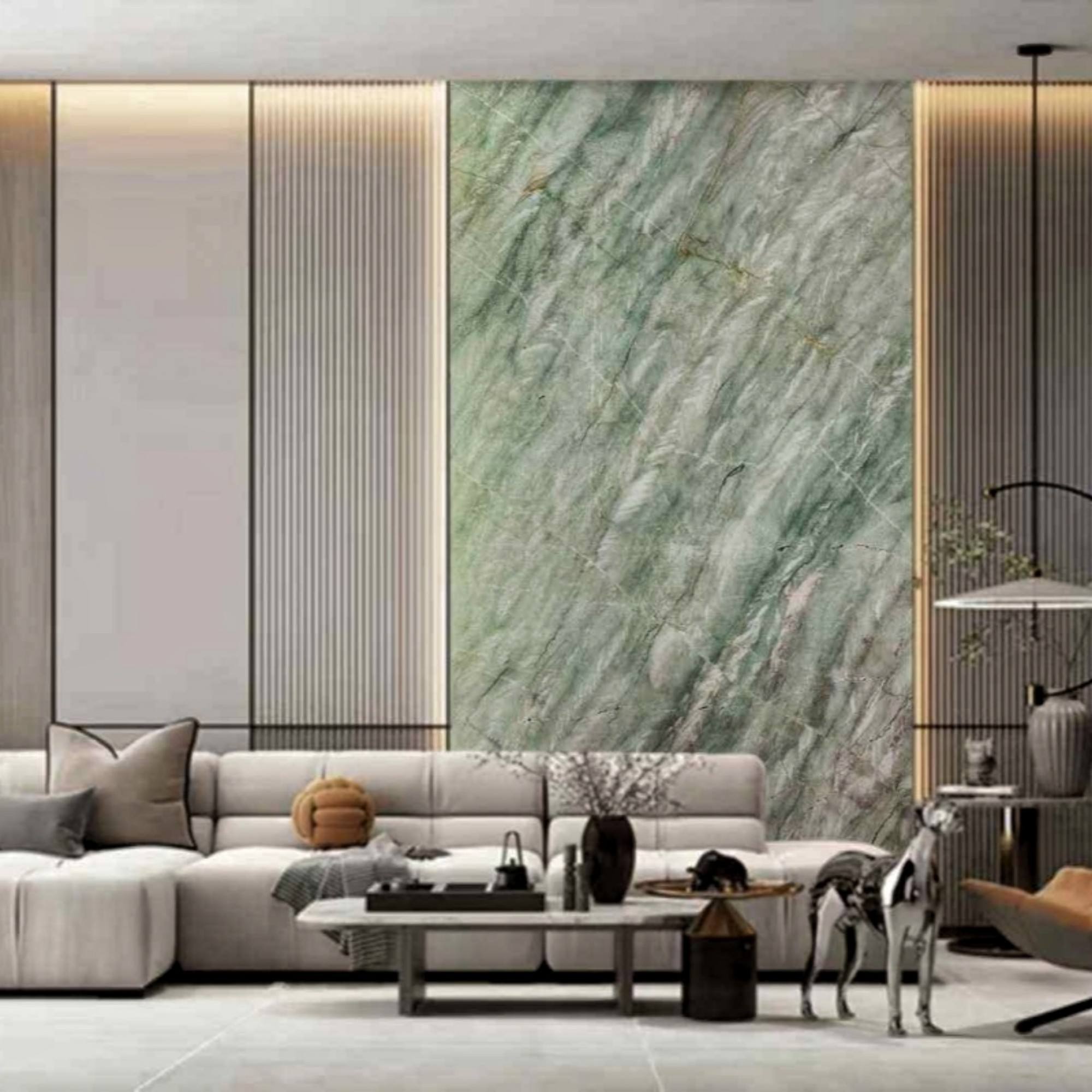
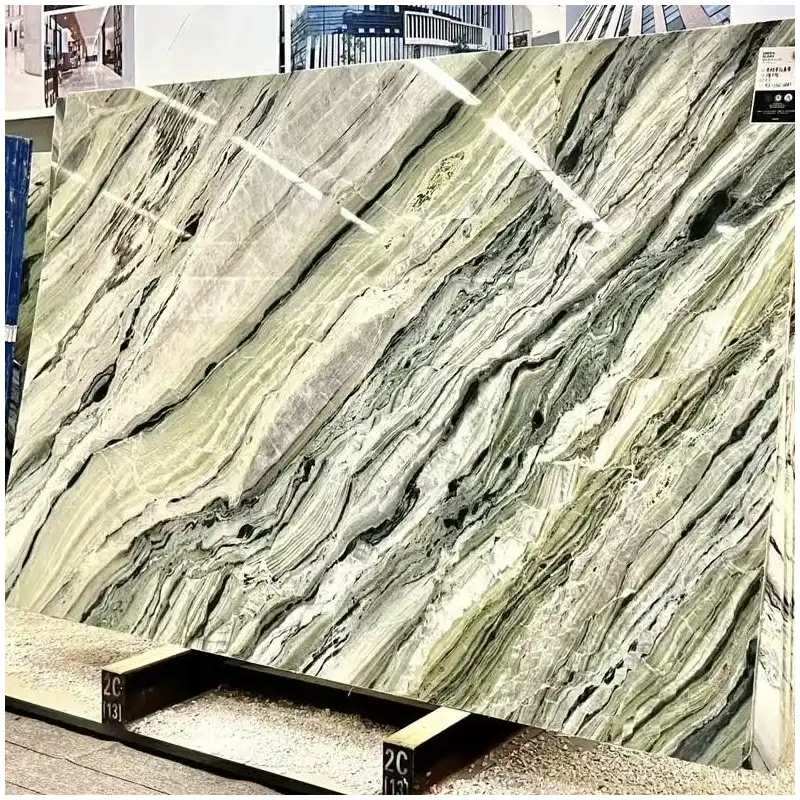
Light Green Quartzite Slab

Categorías

Póngase en contacto con nosotros

Light Green Quartzite Slab
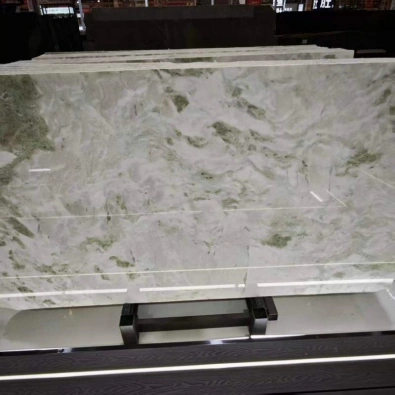
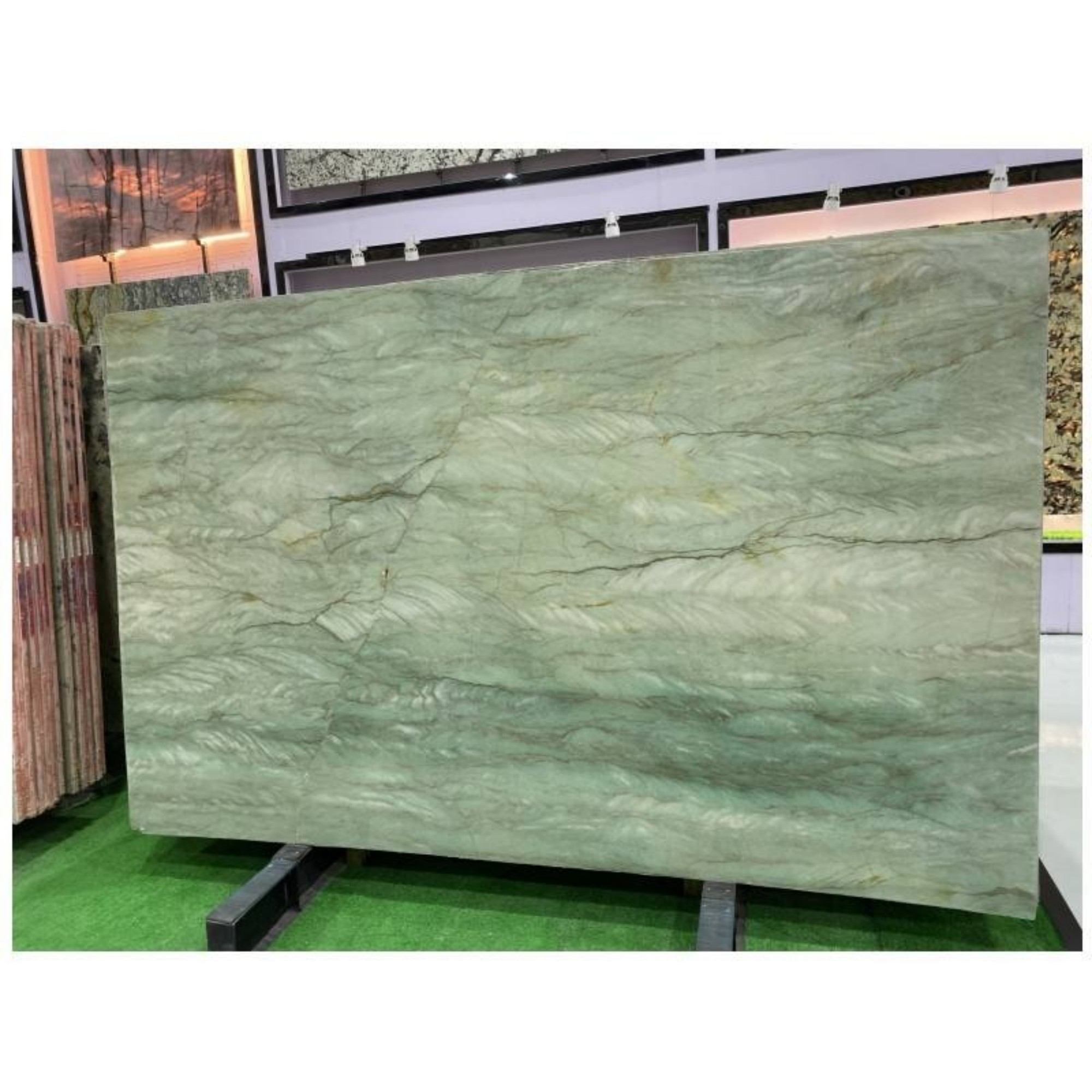
Light Green Quartzite Slabs are pale sage-green natural stone slabs carrying soft white and grey-green veins that flow in a calm, directional rhythm across the face. The restrained palette and low-contrast movement make the stone read as quiet texture rather than a statement pattern, which suits large wall panels, kitchen islands, bathroom surfaces and coordinated architectural work. Quartzite performance supports that calm appearance: high hardness, low water absorption and good acid resistance keep it practical for daily use. The featured slab formats measure【240】×【120】cm, in【18】mm thickness. Each slab carries its own vein rhythm, so full-face selection and a confirmed joint sequence are essential for high-end residential and commercial projects.
Nombre del producto
Light Green Quartzite Slab
Material comercial
Cuarcita natural
Alternative Trade Names
Light Green Quartzite / Pale Green Quartzite / Green Mist Quartzite / Soft Green Quartzite
Geological Classification Reference
Quartzite — metamorphosed quartz-rich sandstone; exact identity by petrographic verification
Referencia de origen Brasil
Background Color
Pale sage green / light seafoam / soft grey-green
Vein Color
White, cream and grey-green veins in a calm diagonal flow
Tamaños de losas 240upcm×160upcm / 270×140cm / 300×160cm
Thickness Options 16mm / 18mm / 20mm / 30mm
Acabado superficial Polished Featured; Honed or Brushed by Processing Approval
Carácter de patrón
Low-contrast directional vein rhythm with soft clouded green fields; no dominant graphic formation
Bookmatch Selection
Subject to Suitable Consecutive Slab Availability
Fabricated Forms Full Slabs / Stair Treads / Risers / Countertops / Wall Panels / Floor Tiles / Furniture
Aplicaciones Villas / Mansions / Hotels / Luxury Apartments / Restaurants / Commercial Interiors

Descripción

Quick Summary

Light Green Quartzite is a pale, restrained natural quartzite whose identity comes from softness rather than drama: a sage and seafoam green ground carrying white, cream and grey-green veins that flow diagonally across the slab in a calm rhythm. Where many green stones are dark and graphic, this one is light and atmospheric — closer to mist over water than to a bold mineral pattern — which makes it unusually easy to place in residential interiors without overwhelming the room.
It is used for feature walls, kitchen islands and countertops, bathroom walls and vanity tops, fireplace surrounds, reception counters, and custom stone furniture. Quartzite performance supports the decorative calm: hardness around Mohs 6.5–7, water absorption typically under 0.5%, and good resistance to acids make it a practical working surface rather than a purely decorative one.
The practical points before ordering are the vein rhythm of the block — how strong the diagonal movement is, how much white is present, and whether the green reads warm or cool — plus the joint sequence on a directional pattern, the finish for the intended use, and the acceptance range for natural fissures. Because the palette is low-contrast, mismatched joints and tone drift between bundles are more visible than buyers usually expect.

Light Green Quartzite Slabs for Feature Walls, Kitchen Islands and Bathroom Surfaces

Light Green Quartzite is chosen when a project wants green without weight. In a room of oak, linen and warm plaster, a pale green wall reads as a natural extension of the palette rather than a decorative gesture; on a kitchen island, the same stone gives colour without darkening the space, which is why light green quartzite has become common in kitchens where a dark green marble would have been too heavy.
Esta Stone supplies Light Green Quartzite in jumbo slabs, cut-to-size panels, kitchen island and counter sets, vanity tops, tiles, fireplace surrounds and custom furniture tops. Our scope covers block allocation, full-slab photography before selection, cut-out and vein-direction planning, edge profiling, polished and honed finishing, dry-lay photographs for approval, dimensional inspection and export packing.
The key control point is vein rhythm. Unlike a heavily figured stone, this material fails quietly: a slab that looks pleasing on its own can produce a disjointed wall once three panels are placed side by side, because the veins run at different angles or the green shifts from warm sage to cool grey. Approval should be on consecutive slabs photographed together, with the joint lines drawn on the image.
The second control point is mineral condition. Quartzite of this type can carry fine quartz veins and natural fissures; most are stable, but open fractures on a visible face or near a sink cut-out should be graded out at selection rather than discovered during fabrication.

Light Green Quartzite Slabs Specification for Walls, Islands and Tops

Nombre del producto
Light Green Quartzite Slab
Material comercial
Cuarcita natural
Alternative Trade Names
Light Green Quartzite / Pale Green Quartzite / Green Mist Quartzite / Soft Green Quartzite
Geological Classification Reference
Quartzite — metamorphosed quartz-rich sandstone; exact identity by petrographic verification
Referencia de origen Brasil
Background Color
Pale sage green / light seafoam / soft grey-green
Vein Color
White, cream and grey-green veins in a calm diagonal flow
Tamaños de losas 240upcm×160upcm / 270×140cm / 300×160cm
Thickness Options 16mm / 18mm / 20mm / 30mm
Acabado superficial Polished Featured; Honed or Brushed by Processing Approval
Carácter de patrón
Low-contrast directional vein rhythm with soft clouded green fields; no dominant graphic formation
Bookmatch Selection
Subject to Suitable Consecutive Slab Availability
Fabricated Forms Full Slabs / Stair Treads / Risers / Countertops / Wall Panels / Floor Tiles / Furniture
Aplicaciones Villas / Mansions / Hotels / Luxury Apartments / Restaurants / Commercial Interiors

The featured large slab formats accommodate broad countertops, staircase components and architectural wall panels. Select the appropriate thickness according to the finished component, supporting construction and approved fabrication requirements.

Layout and Vein-Direction Planning for Light Green Quartzite

This stone is directional, but gently so — which is exactly why layout discipline matters.
  • Vein direction: horizontal veins calm a tall wall and widen the room; vertical veins make it taller. Confirm direction on the elevation and keep it identical across all panels in one view.
  • Joint sequence: place the joint where the vein flow is weakest. On a low-contrast stone a badly placed joint reads as a seam in the material rather than as a design line.
  • Book-matched pairs: mirroring produces a symmetrical chevron. It works on a fireplace or a bed head; on a long wall, continuous sequencing usually looks more natural.
  • Kitchen islands: confirm the visible face, the waterfall returns and the front edge in one layout. A vein that stops dead at a mitered corner reads as a mistake on this stone.
  • Bathroom and vanity tops: check the pattern at the basin cut-out, and place the calmest area where the eye rests.
  • Suelos: possible, and the pale tone hides dust well, but confirm a honed finish and a lower-contrast selection, and check slip resistance for wet areas.

Light Green Quartzite vs Related Green and Neutral Stones

Green stones and pale neutral stones are frequently sold under overlapping names. A shared colour description does not mean identical origin, composition or performance.
Commercial Name Material Association Buyer Verification
Light Green Quartzite
Pale sage quartzite with soft white veins
Vein rhythm, green temperature and quartzite hardness
Blue Louise Quartzite
Deep blue and teal quartzite with copper-rust bands
Colour saturation and white-cloud density; a dark, figured stone
Cuarcita Taj Mahal
Cream and sand quartzite with translucent quartz bands
Band position and translucency; warmer, not green
Mármol Verde Alpi
Dark forest-green serpentine-type marble
Much darker and more graphic; softer, not a quartzite
Mármol Grigio Carnico gris
Dark grey marble with white veins
Neutral grey contrast rather than green
When purchasing Light Green Quartzite Slabs, confirm the intended material through approved slab references rather than relying on the trade name, especially when matching existing stonework or coordinating material from separate production lots.

How to Select Light Green Quartzite Slabs

Light Green Quartzite can vary considerably in appearance even when slabs share the same commercial name. The most useful selection criteria are green temperature, vein strength, cloud density, mineral condition and the intended location of the finished components.
A cool, pale selection with restrained veins is usually preferred for large wall panels, repeated surfaces and coordinated architectural work where the stone must stay quiet across the room.
Warmer or more strongly veined selections are often reserved for islands, fireplace surrounds and reception counters, where a larger surface allows the movement to remain visible after fabrication.
Buyers should also check whether the green stays consistent across the slab or drifts from sage at one end to grey at the other. A material approved from a small photograph may produce unexpected shade differences when divided into several components.
Review photographs taken under comparable lighting. Pale green stone is easily misrepresented by showroom spotlights and automatic colour balancing — a warm-lit slab can look olive in the warehouse and mint on site.
Inspect natural fissures to distinguish stable quartz veins from open fractures or previously repaired discontinuities. Resin filling and mesh backing assist handling, but do not by themselves establish suitability for exposed edges or unsupported overhangs.
Approve both the decorative appearance and usable stone condition before committing the slabs to fabrication.

Light Green Quartzite Physical and Technical Properties

The engineering characteristics of quartzite depend on its mineral composition, natural discontinuities and metamorphic structure. Technical assessment matters when the material is specified for kitchen surfaces, stair treads or mechanically fixed wall panels.
The values below are published reference ranges for quartzite, provided for preliminary material assessment. They must not be interpreted as certified laboratory results for the current supply lot, which should be tested and documented separately.
Propiedad física Valor de referencia Test Standard / Reference
Apparent Density 2,639kg/m³ EN 1936
Absorción de agua
0.10–0.40% by Weight
EN 13755
Flexural Strength
15–30 MPa
EN 12372
Resistencia a la abrasión
Good; finish-dependent value required
EN 1341, Annex C
Thermal Shock Mass Change
Assessment by test where required
EN 14066
Resistencia a la compresión
150–250 MPa
Not specified for this lot
Mineral Hardness
Approx Mohs 6.5–7
Mineral Identification and Scratch Assessment
Clasificación petrográfica
Cuarcita
EN 12407
Slip Resistance Finish-Specific Testing Required Applicable Walking-Surface Test Method
Moisture Stability
Low moisture movement expected; verify with installation system
Dimensional Stability and Adhesive Compatibility Assessment
Technical data clarification: the ranges above describe this stone family and illustrate normal variability. They do not constitute a single test report for the featured slabs; project specifications should rely on test data obtained from the supplied lot.
Flexural strength and stone fabrication. The reference range indicates bending behaviour of quartzite specimens, and natural stone typically shows variability within a block. Actual island spans, countertop projections and fixing arrangements must be established from design criteria, material condition and supporting construction, not from a published average.
Water absorption and dimensional stability. Quartzite absorbs very little water, which supports its use in kitchens and bathrooms, but low absorption does not by itself prevent staining from oils, or efflorescence arising from moisture behind the panel. A low-absorption result is a material property, not an installation warranty.
Abrasion resistance and flooring suitability. The abrasion result describes wear under a specified laboratory procedure; it is not a slip rating. A polished pale green floor becomes slippery when wet, which is why honed or textured finishes are normally specified for bathrooms, stairs and entrances.

Light Green Quartzite Fabrication and Edge Processing

Processing this stone requires attention to the difference between the quartz-rich ground and the softer mineral zones along the veins, which may respond differently to machining and polishing.
Where a finished edge crosses several mineral boundaries, the fabricator should inspect the surface for localized relief, uneven gloss, small chips and unacceptable filler exposure. Quartzite is hard and holds an edge well, but chipping at a vein boundary is still possible if tooling is blunt or feed rates are forced.
This matters most for stair nosings, exposed island edges, waterfall panels and furniture tops, which remain visible from several directions and receive direct contact.
Existing resin treatments or reinforcement mesh should be evaluated before fabrication. Such treatments assist handling but do not independently establish suitability for structural loading or unsupported projections.
Natural discontinuities should be considered when machining sink openings, internal corners and narrow supporting sections. A visually attractive vein may be acceptable inside a supported panel and unsuitable at a vulnerable cutout.
For mitered components, inspect the finished green-to-white transition together with the bonded connection. Decorative continuity and mechanical integrity require separate approval.

Light Green Quartzite Stairs, Treads and Risers

Light Green Quartzite can be fabricated into staircase treads, risers, landings, skirting and stair-side panels. The pale green tone suits contemporary residential stair packages and hotel circulation areas, particularly where the surrounding palette is timber, plaster and brass.
Treads and risers. The horizontal tread and vertical riser are viewed under different light. Even pieces cut from the same slab can appear different once installed, and on a pale stone this difference is visible without being dramatic. Related components should be reviewed together, and similarity of green tone matters more than reproducing an identical vein on every step.
Nosing and exposed edges. Nosings take repeated contact and are vulnerable to impact. The selected profile should suit the actual stone condition, support arrangement and applicable stair requirements. Broad veins and repaired areas near a projecting edge need particular assessment. Where anti-slip grooves are specified, check their effect on the finished appearance and the soundness of the remaining section.
Landings and component matching. Landings expose broader surfaces than individual treads and can reveal stronger movement, creating a visible transition between flights. Reserve suitable slab areas for landings during initial selection rather than after the smaller parts are cut.
Slip resistance. Traction depends on finish, environment, cleaning practice and local regulation. A polished tread in a wet or frequently washed stair should not be approved on appearance alone; honed or bush-hammered treads with a defined slip result are the safer specification.

Light Green Quartzite Kitchen Countertops and Islands

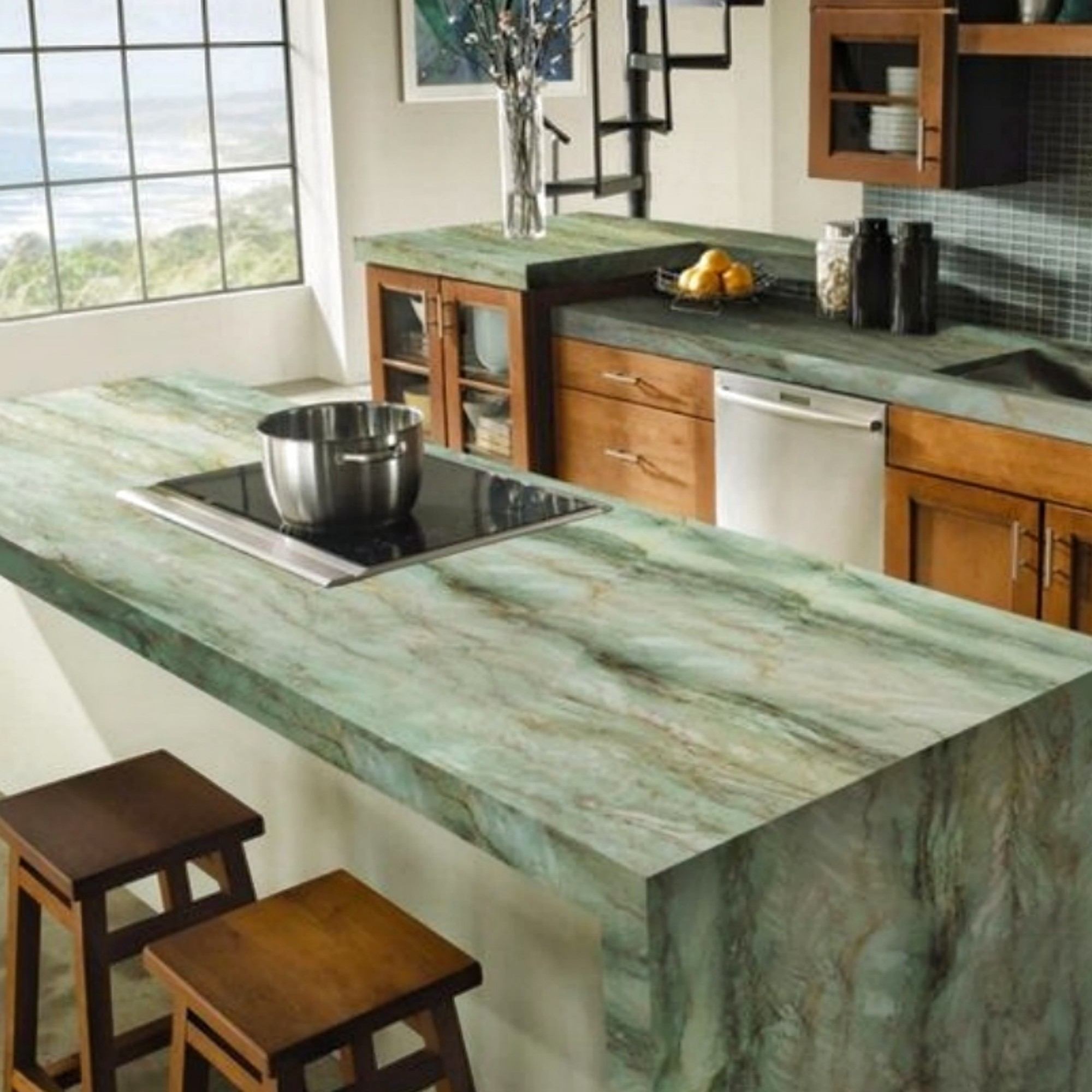
Pale green quartzite countertops coordinate with white, oak, walnut, sand and dark green cabinetry. The stone introduces colour without turning the kitchen into a dark room, and quartzite hardness makes it more practical than marble for a working surface.
Countertop selection for a directional stone. An island exposes a large horizontal surface, so the vein rhythm becomes the design. A vein placed within an unobstructed section stays visible after installation, while the same formation may be partly removed by a sink or hob opening. Review the actual slab against the kitchen drawing before fabrication.
Sink cutouts and support. Basin and hob openings reduce the continuous stone section. Existing fissures and repaired areas near internal corners deserve attention. Cabinet support, appliance clearance and reinforcement should be established through the finished design; published strength values cannot determine acceptable overhangs.
Waterfall islands. Where the island has waterfall sides, review the horizontal and vertical sections together — a vein that stops abruptly at the mitered corner looks disconnected, and on a low-contrast stone that is the first thing a buyer notices.
Is it suitable for kitchen countertops? Yes, and it is one of the more forgiving natural stones for this use. Quartzite is hard, absorbs little water and resists mild acids far better than marble; but it is not immune. Strong acids, harsh descalers and abrasive powders can still dull the surface, and direct cutting will scratch it. Sealing, a chopping board and pH-neutral cleaning remain part of the specification.

Installation, Moisture and Joint Detailing

Quartzite is far less moisture-sensitive than serpentine green stone or calcite marble, which is one of its practical advantages in large-format work. It is not, however, a waterproof material, and pale green surfaces show damp marks and efflorescence more readily than dark ones.
Why pale stone can still show marks. Moisture from a new substrate or a water-retentive adhesive can migrate to the surface and leave a haze or salt line at the joints. On a light green ground these marks read immediately.
Adhesive selection. Rapid-curing or low-moisture adhesive systems and a properly dried substrate reduce the risk of early efflorescence. The adhesive must also be compatible with any rear reinforcement, resin treatment and substrate.
Substrate and waterproofing. Moisture can come from the substrate, the bedding, surrounding construction or later service exposure. In bathrooms and wet areas, waterproofing, drainage and substrate preparation require separate approval — a sealer is not a substitute for a waterproofing assembly.
Pre-installation testing. For unfamiliar lots or demanding projects, test a representative specimen for dimensional stability and adhesive compatibility before the main package is installed. Resolve any staining, discolouration or bonding issue at technical approval stage, not after installation.

Polished and Honed Light Green Quartzite Slabs

Surface finish changes the apparent depth of the green and the visibility of the veins.
Acabado superficial Apariencia Application Consideration
Pulido
Brighter green, stronger vein contrast and reflective surface
Feature walls, fireplaces, island fronts and selected interior surfaces
Pulido mate
Matte or satin appearance with reduced reflection
Countertops, stair treads and floors where marks must stay discreet
Brushed
Light texture with a low sheen across the clouds
Selected decorative applications after processing and maintenance assessment
Protective Surface Treatment
Potential reduction in liquid penetration or alteration of colour warmth
Compatibility testing with the actual stone, finish and previous treatments
Polished pale stone reveals scratches, water rings and gloss variation clearly under directional light. Honed finishes reduce the visibility of gloss differences but do not make the material immune to staining or chemical damage.
Approve finishes on representative Light Green Quartzite rather than inferring from samples of unrelated green stones.

Light Green Quartzite Applications for Residential and Commercial Projects

Aplicación Finished Stone Products Specification Priority
Residential Staircases Treads, risers, landings and stair-side panels Edge integrity, structural support and walking-surface traction
Encimeras de cocina Worktops, islands, backsplashes and waterfall panels Cutout condition, surface protection and chemical sensitivity
Bathroom Stonework Vanity tops, decorative walls and approved floor components Moisture stability, backing compatibility and waterproofing
Hotel Reception Areas Reception desk facings, countertops and feature walls Public-area impact exposure and maintenance requirements
Restaurant and Bar Interiors Bar fronts, decorative counters and wall panels Beverage exposure, edge protection and cleaning compatibility
Pisos interiores Floor tiles, decorative borders and stone inlays Abrasion resistance, verified traction and dimensional stability
Wall Cladding Large architectural panels, columns and fireplace surrounds Attachment design, mineral condition and joint coordination
Mobiliario a medida Dining tables, coffee tables, console tops and cabinet inserts Finished furniture stability and exposed-edge workmanship
Permanently wet installations, heavily trafficked public floors and heated surfaces require independent material and construction approval. The commercial description of a quartzite does not guarantee suitability for every environmental condition.

Wholesale Light Green Quartzite Slabs and Project Supply

Wholesale requirements differ between distributors buying full slabs and contractors ordering fabricated components. Distributors need commercially attractive faces within a defined acceptable range; contractors must also consider the position of the vein flow within finished drawings.
For a combined kitchen and wall package, reserving every visually strong slab for one application creates limitations elsewhere. Material allocation should follow the visibility, geometry and performance requirement of each finished product.
Full-slab approval for distributors. Importers should establish an acceptable range for green temperature, vein strength, cloud density, surface condition and repair characteristics. This gives a clearer purchasing basis than terms such as premium grade or first quality. Where individual faces will be marketed separately, keep slab identification and full-face photographs.
Cut-to-size for architectural projects. Contractors should provide approved drawings, installation references, required finishes and acceptance tolerances before production, so suitability can be reviewed against individual island parts, wall panels and stair components. For repeated elements, approve representative completed pieces before releasing the main schedule.
Price factors. Wholesale quotations depend on material selection, slab dimensions, thickness, finish, quantity and supply scope. A full-slab quotation should be distinguished from pricing that includes cutouts, edge profiles, waterfall fabrication or project-specific packing. Confirm whether the quoted area is gross slab area, accepted usable material or finished component area【confirm your quotation basis】.

Light Green Quartzite Quality Control and Pre-Shipment Inspection

Inspection should address the green ground, vein flow, surface finish and previous stabilization treatments, and — for fabricated work — the finished component requirements.
Material Identification Verify the approved commercial stone identity, slab references, origin documents and material lot information.
Green Background Selection Confirm the permitted range of green intensity and distribution of pale mineral formations.
Mineral and Fracture Condition Distinguish natural veins from open fractures, unstable sections and unsuitable repairs.
Slab Flatness Inspect the actual slab geometry and verify any specified flatness or dimensional tolerances.
Moisture Compatibility Review required dimensional-stability assessments and compatibility with the proposed installation system.
Surface Workmanship Inspect polished or honed finishes for unacceptable scratches, local relief, processing marks and irregular gloss.
Staircase Component Inspection Review tread and riser geometry, nosing integrity, edge profiles and relevant finish requirements.
Countertop Fabrication Inspection Check openings, internal corners, exposed edges, seam quality and conformity with approved fabrication drawings.
Representative Dry-Lay Arrange related finished components where specified to review mineral coordination and installation sequence.
Pre-Shipment Release Verify accepted quantities, component identification, required inspection documents and unresolved material issues.

Inspection criteria should be agreed before production. A natural variation accepted for a decorative wall may require different treatment when it occurs near a projecting staircase edge or vulnerable countertop opening.

Light Green Quartzite Slab Packing and International Shipping

Full slabs and fabricated components need different packing configurations. Discontinuities, existing repairs and finished geometry should be considered when choosing support and protection.
Full slabs require suitable frames, separators and restraints based on actual dimensions, condition and measured weight. Polished faces must be protected from abrasive contamination and uncontrolled contact with adjacent stone.
For staircase packages, projecting nosings and narrow strips need protection against concentrated pressure. Countertop sections with basin or hob openings should be supported according to remaining geometry.
Packing lists should distinguish stair flights, landing components, countertop sections and related stonework, with identification matching the approved drawings so destination contractors can work without unnecessary handling.
Packing materials should remain clean and dry; pale stone should never be packed wet. International shipping arrangements must account for package dimensions, gross weight, restraints and safe unloading, and wooden packaging should meet destination phytosanitary requirements.

How to Clean and Maintain Light Green Quartzite

Quartzite is more forgiving than marble, but the pale green surface still records what happens to it.
Routine cleaning is a soft cloth, clean water and a pH-neutral stone cleaner. Avoid strong acids, descalers and abrasive powders, which can dull the finish even on a hard stone.
Countertop maintenance. Remove wine, coffee, citrus, oils and coloured spices promptly — a pale green surface shows a stain that a dark stone would hide. Cutting boards, coasters and trivets reduce direct exposure to abrasion, acid and heat.
Stair and floor maintenance. Remove abrasive grit regularly from treads and walking surfaces, since tracked particles gradually dull the finish along used paths. Avoid leaving standing water, and check that any protective treatment does not reduce traction.
Restoring scratches and uneven gloss. Quartzite responds well to professional re-polishing, but mineral zones can respond differently, producing visible gloss variation if the treatment is not compatible with the actual composition and previous repairs. For substantial damage or persistent staining, professional assessment is preferable to aggressive household methods.

Frequently Asked Questions About Light Green Quartzite Slabs

Is Light Green Quartzite the same as green marble?
No. Quartzite is a metamorphosed quartz-rich stone, harder and far less acid-sensitive than a carbonate marble. Green marbles and serpentine-type stones are softer, absorb more water and etch or stain more readily. The two should not be quoted as substitutes.
Is it suitable for kitchen countertops and islands?
Yes, and it is among the more practical natural stones for that use: hard, low absorption and good acid resistance. It still scratches if cut on directly and should be sealed, cleaned with pH-neutral products and protected with a chopping board.
Can the slabs be book-matched?
Yes, subject to consecutive slab availability from one block. Because the vein is soft, a mirrored pair produces a symmetrical chevron; continuous sequencing is usually better for long walls. Approve the pair as one composition on the actual slabs.
Does it need sealing?
Sealing is recommended for all applications and required in wet areas. On a pale green stone, test the sealer on an offcut first — some products deepen the green or leave a slight sheen band that becomes visible under directional light.
Will a pale green quartzite show joints and stains?
More than a dark stone. Joint lines, tone drift between bundles and water marks are all easier to see on a light ground, which is why the joint sequence and bundle tonality should be confirmed before fabrication.
Why do panels from the same lot look different after installation?
Two reasons: the vein runs at slightly different angles between slabs, and the green temperature shifts between bundles. Both are solved by approving consecutive slabs photographed together, with the joint lines drawn on the image.
¿Puede utilizarse en exteriores?
It can be used for exterior cladding and covered terraces in many climates, but UV exposure, freeze–thaw cycles, salt and permanent moisture require independent assessment. Confirm the finish, the fixing design and the sealer for the specific exposure rather than assuming quartzite is suitable everywhere.

Monet Garden Marble Slab Purchasing Guide

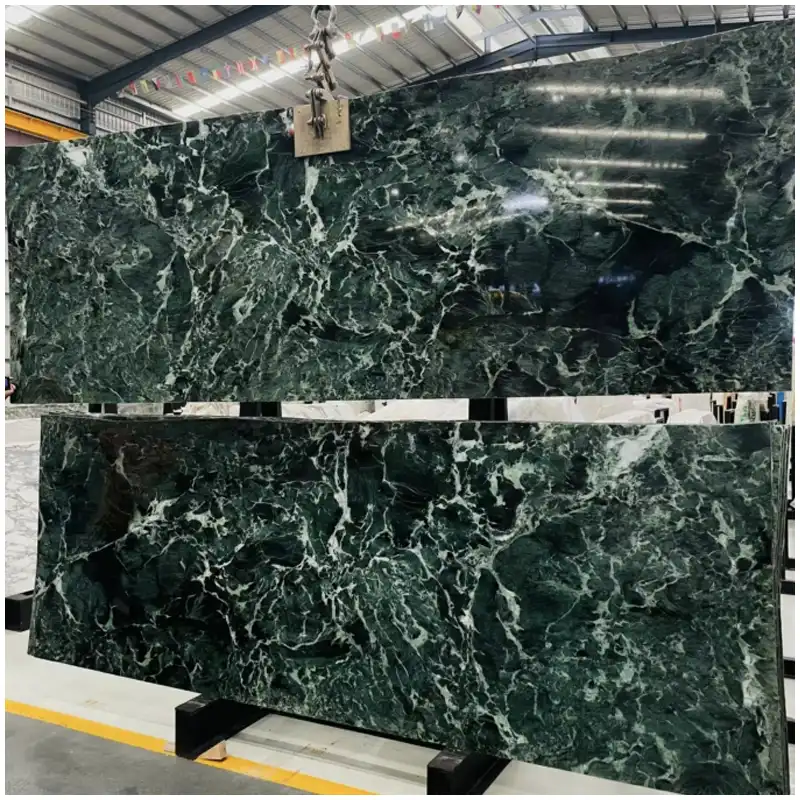
The character of Prada Green comes from the tension between a very dark field and a bright, irregular web. The strongest specification balances that drama with an honest finish choice, a confirmed cut-out layout and a clear acceptance standard for web density and repairs. For architects, interior designers and project buyers, approving the full slab with its marked layout establishes a clearer standard than approving a sample alone.

Recommended Natural Marble Slabs
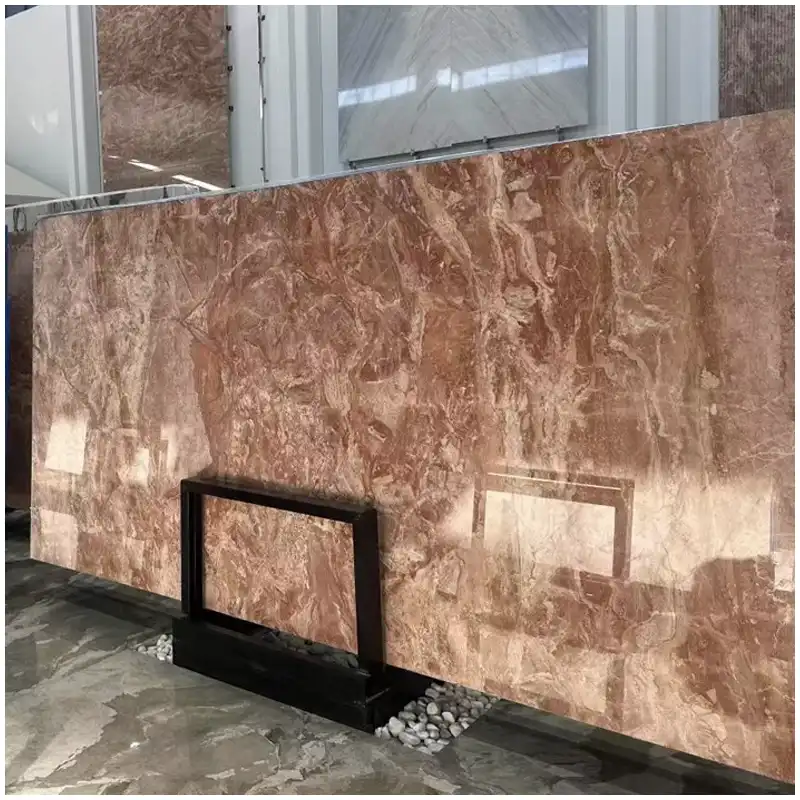
Breccia Bohemien Rosso Marble Slab with terracotta red and cream natural mineral formations

Breccia Bohemien Marble Slabs

Red decorative breccia marble with contrasting cream mineral fragments for custom kitchen countertops, residential staircases and natural stone feature walls.
View More

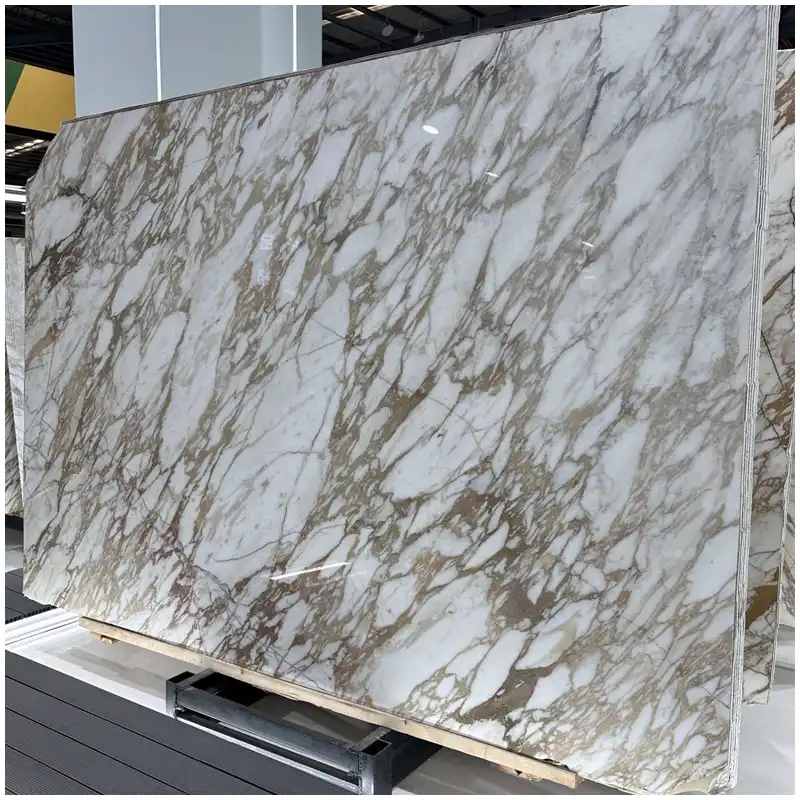
Calacatta Gold Marble polished slab with white background and contrasting grey golden veins

Calacatta Gold Marble Slab

White natural marble with grey and golden mineral veins for luxury kitchen islands, bathroom vanity surfaces and coordinated architectural stone installations.
View More

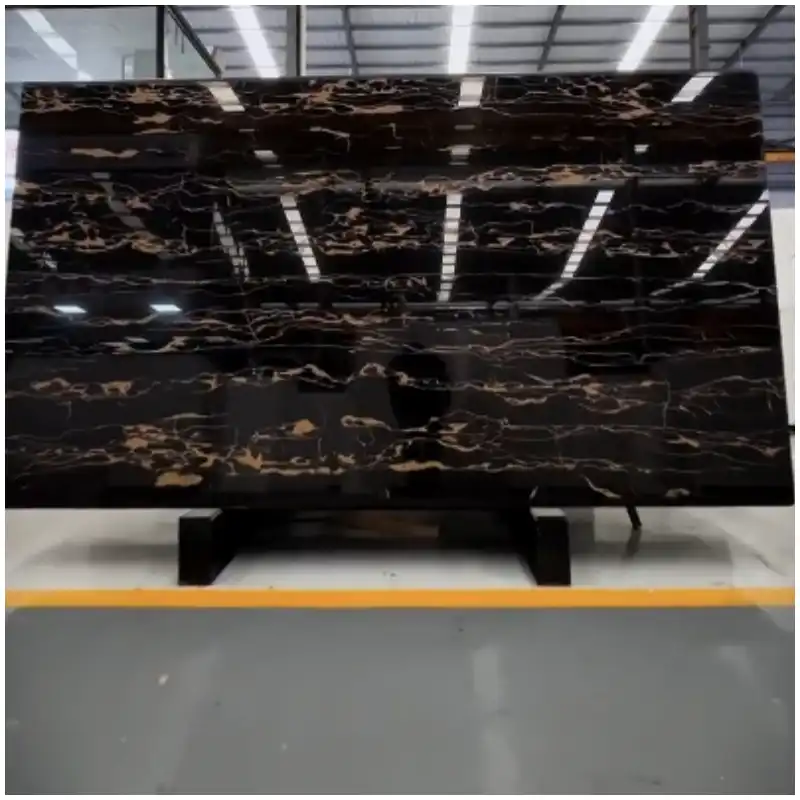
Nero Portoro Marble with deep black background and contrasting golden mineral veins

Mármol Nero Portoro

Black and gold decorative marble for hotel reception desks, fireplace surrounds, custom furniture and high-contrast natural stone wall panels.
View More

Cloud Jade Green Marble Slab with natural green coloration and cloud-like mineral patterns

Losas de Mármol Jade Nube

Green decorative stone with softer cloud-like mineral movement for custom tabletops, architectural feature walls and coordinated luxury residential interiors.
View More

The Leading 10 Prada Green Marble Slabs, Tiles, Tables, Stairs, Countertops, and Columns Factory-Esta Stone

Request Monet Garden Slab Selection and Bulk Pricing
Send your slab dimensions, required thickness, finish, project quantity and shipping destination for a quotation. For feature walls and fireplaces, include the elevation with the visible area marked, so the composition can be planned on the actual slab before sawing. Where several panels appear in one view, ask for the bundle photographs taken together — tonality drift is the most common complaint on warm cream marbles.

También le puede gustar

Enviar consulta

Consulta