Pikaesite
White marble bathroom tiles for walls, floors, and vanities
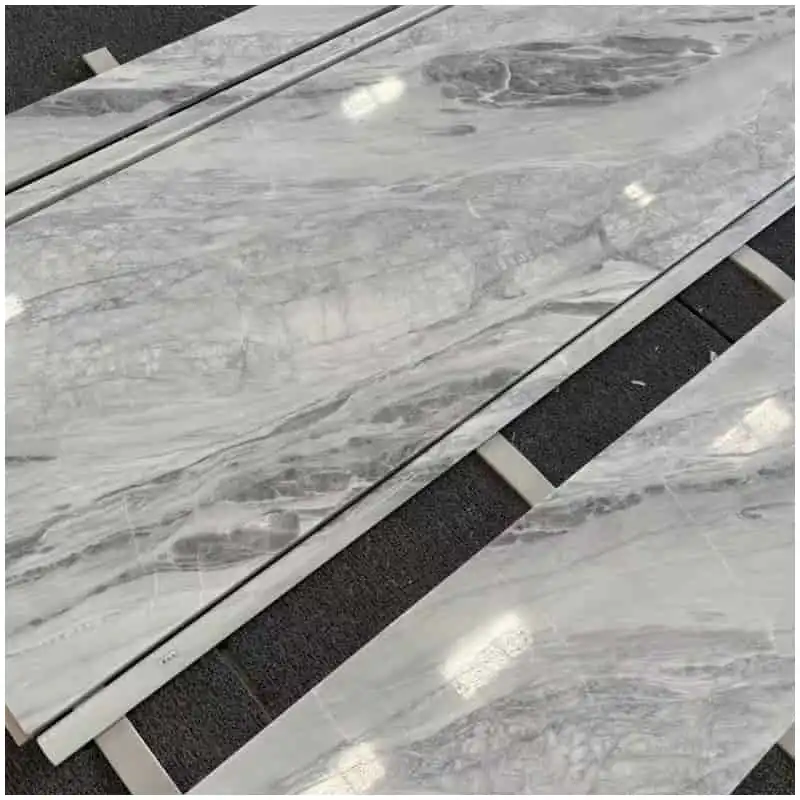
White marble is still one of the most searched materials for bathroom walls and floors because it gives a room a bright, clean surface without making the design feel flat. The look can be quiet, with soft gray movement, or dramatic, with broad veins that become part of the architecture. In current bathroom design, that flexibility matters. Many projects are moving away from small decorative surfaces and toward calmer rooms with larger stone fields, better lighting, and fewer visual breaks.
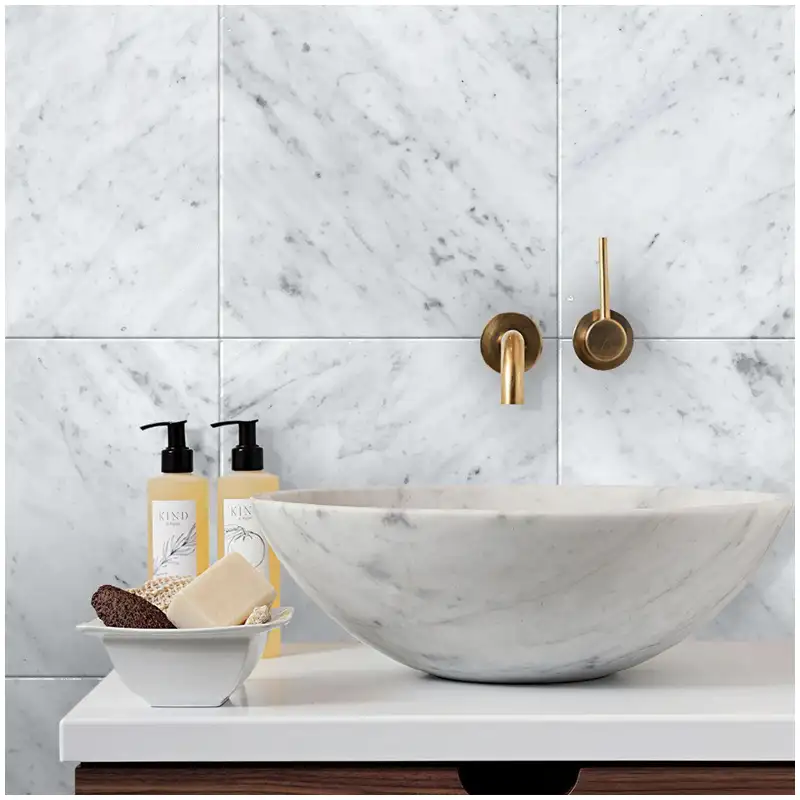
The difficulty is that “white marble bathroom” is too broad as a planning phrase. A bathroom wall behind a freestanding tub does not ask the same questions as a shower floor. A powder room vanity top has different risks from a family bathroom floor. Even within white marble, Calacatta, Carrara, Statuario, Volakas, Thassos, and other materials can vary in background tone, vein size, porosity, surface finish, and how strongly the stone reacts to light.
This article is written for homeowners planning a remodel, interior designers preparing material boards, hotel design teams reviewing bathroom suites, and renovation companies trying to avoid late-stage stone changes. It focuses on practical selection: where to use white marble tiles, when to review marmorilevyjä, how to think about finish and maintenance, and when a different white surface may be the cleaner decision.
Why white marble is still relevant in bathroom design
White marble works in bathrooms because it reflects light and keeps the room visually open. That matters in apartments, hotel bathrooms, villa suites, and small powder rooms where wall color, mirror placement, and ceiling lighting all affect how large the space feels. A white stone surface can carry pattern without using strong color, which makes it easier to pair with brushed nickel, chrome, black metal, warm oak, walnut, or painted cabinetry.
The material also gives designers a range of moods. Carrara marble often feels softer because the gray veining is usually finer and more even. Calacatta marble can feel more architectural because the vein pattern may be wider and more defined. Statuario marble often sits between the two, with a bright white ground and clearer movement. These are broad design descriptions, not guarantees. Each slab or tile lot still needs to be reviewed before approval.
Bathrooms also expose stone to water, cosmetics, soap, cleaning products, and foot traffic. That is why marble planning should not stop at color. The best projects connect appearance with function. A honed marble wall may look calm under side lighting, while a polished floor may become difficult to manage in a wet room. A bookmatched slab feature wall can look refined behind a bathtub, while the same material may not be the right answer for a shower pan.
For Esta Stone, the practical starting point is to separate decorative impact from daily use. Decorative areas can often carry more dramatic marble. Heavy-use zones need a tighter review of finish, slip resistance, cleaning routine, and installation details. That is the difference between a bathroom that photographs well on day one and a bathroom that still feels considered after years of use.
Start with the bathroom zone, not the stone name
Many material decisions become easier when the bathroom is divided into zones. The same white marble tile can behave differently depending on whether it is installed on a dry feature wall, a shower wall, a floor near a bathtub, or a vanity backsplash. The stone name matters, but the application matters more.
Wall areas outside the shower usually allow the widest design range. Large-format marble tiles, bookmatched slabs, and decorative vein layouts can all work here if the wall structure, fixing method, and installation plan are suitable. A dry wall behind a vanity can use strong veining without the same cleaning and slip concerns that apply to the floor.
Shower walls need more attention. White marble can be used, but water exposure, shampoo, soap residue, and repeated cleaning make the finish and sealing plan more important. Designers should ask how the shower will drain, how often it will be cleaned, and whether the stone has resin fill, open veins, or areas that may collect residue. A beautiful slab can become a maintenance complaint if the room is not planned around real use.
Floors need the most practical review. A marble floor tile should be selected with the finish, tile size, grout joint, slope, and local slip requirements in mind. Large polished marble may look clean in a dry showroom, but wet bathroom conditions change the conversation. A honed or textured finish may be more suitable in many wet areas, while polished marble may be better reserved for lower-risk walls or decorative zones.
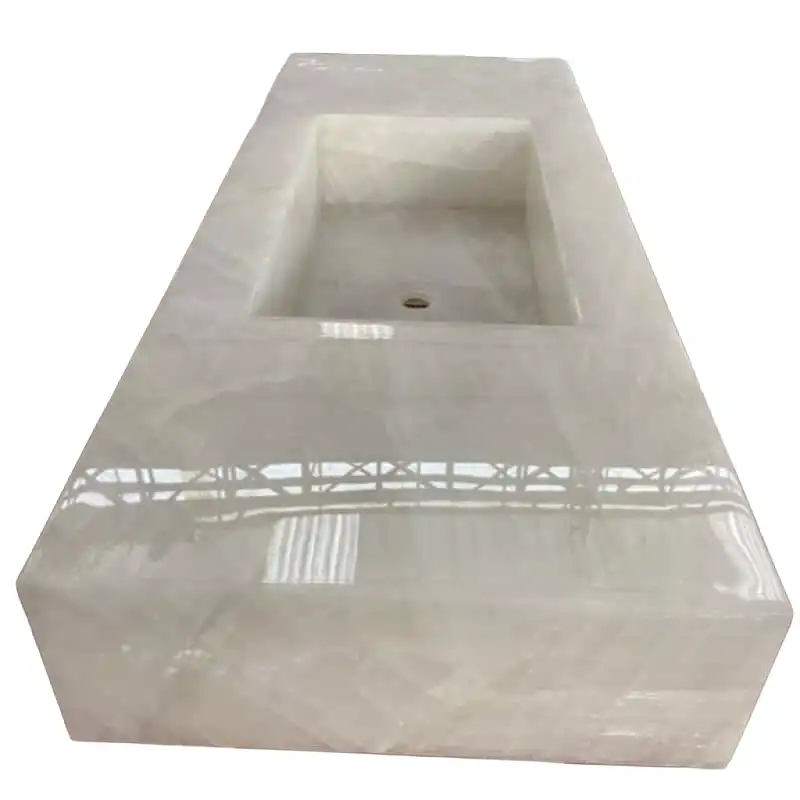
Vanity tops sit between design and use. They are seen closely, touched daily, and exposed to water, toothpaste, cosmetics, and cleaners. Marble can work beautifully for vanity tops when the owner accepts natural patina and follows a careful cleaning routine. If the project needs a whiter, more uniform, lower-maintenance counter surface, kvartsityötasoja or sintered stone may deserve review.
How to choose between marble tiles and marble slabs
Both tiles and slabs can create a strong white marble bathroom, but they solve different design problems. Tiles are usually easier to adapt to walls, floors, niches, small bathrooms, and areas with more cuts. Slabs are better when the design needs a continuous surface, strong vein movement, or a feature wall with fewer grout lines.
Marmorilaatat are often the practical choice for shower walls, bathroom floors, and repeated rooms in a hotel or apartment project. They allow more control over module size, layout, grout width, and replacement. They can also reduce visual risk because the pattern is broken into smaller pieces. That makes them useful when the stone has lively veins but the room should still feel calm.
Marble slabs work better when the wall itself is a design feature. A slab behind a bathtub, around a vanity wall, or on a large shower back wall can make the bathroom feel more custom. The tradeoff is that slab work needs earlier coordination. The designer has to review the slab photo, choose the vein direction, confirm bookmatch or vein continuation, and coordinate cutouts for taps, niches, outlets, mirrors, and lighting.
Budget is not the only difference. A tile bathroom can look higher quality than a slab bathroom if the layout is balanced and the installation is clean. A slab bathroom can look weak if the vein direction is awkward or the cutouts interrupt the best part of the stone. The right choice depends on the room size, desired pattern scale, installation skill, and how much control the design team needs over each visible surface.
Comparison: where each white surface usually fits best
| Surface option | Best bathroom use | Planning notes |
|---|---|---|
| Valkoisia marmorilaattoja | Walls, floors, shower walls, vanity backsplashes | Review finish, lot variation, grout color, slip needs, and sealing routine. |
| Valkoisia marmorilevyjä | Feature walls, bathtub walls, large vanity backsplashes | Approve slab photos, vein direction, cutouts, bookmatch, and installation access early. |
| Kvartsitia-kivi | Vanity tops, feature walls, selected wet areas after review | Natural quartzite can offer stronger daily-use performance than many marbles, but each material still needs sealing and sample review. |
| Quartz countertops | Vanity tops and counters that need more uniform color | Works well when the design needs a consistent white surface and predictable slab appearance. |
| Sintered stone | Large wall panels, vanity tops, and modern low-maintenance bathrooms | Useful for large-format white looks, especially where stain resistance and panel consistency are priorities. |
The table should not be read as a fixed rule. It is a planning shortcut. Every project still needs sample approval, local installation advice, and a review of the room’s real use. A guest powder room can accept a more delicate marble choice than a busy family bathroom. A boutique hotel suite may prioritize a dramatic wall, while a commercial restroom may need a surface that is easier to maintain at scale.
Finish selection matters more than many people expect
The finish changes how white marble looks and how it behaves. Polished marble reflects light and makes veins appear sharper. It can look bright and formal, especially in a vanity area or on a feature wall. It also shows etching and water marks more clearly, so it needs realistic maintenance expectations.
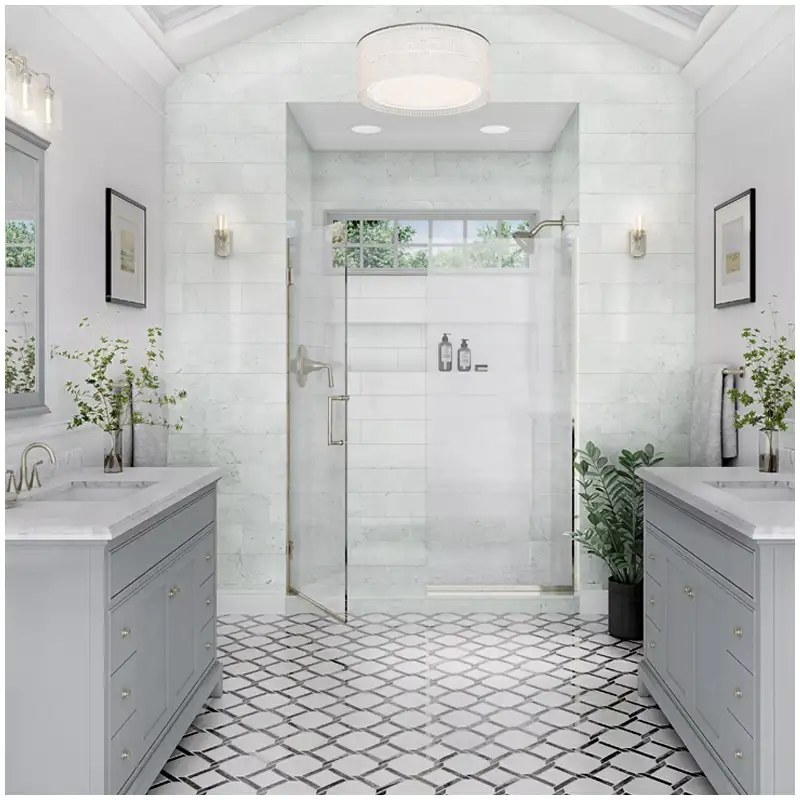
Honed marble has a softer surface with less reflection. In bathrooms, this can make the room feel calmer and reduce glare from mirrors and downlights. Honed surfaces may show oils or marks differently from polished surfaces, but many designers prefer the more relaxed appearance for walls and floors. It can also be a better visual fit for spa-style bathrooms with wood, linen tones, and brushed metal.
Textured or brushed finishes may be considered for flooring or areas where slip review is important. The exact finish should be discussed with the supplier and installer because texture affects cleaning, grout choice, and how the stone color appears. A heavily textured white stone may collect more residue, while a very smooth finish may not be appropriate for wet floor conditions.
Do not approve the finish from a small photo alone. Ask for a close-up image, a low-angle light photo, and sample confirmation when possible. Bathroom lighting can exaggerate small scratches, resin lines, or uneven polishing. This is especially important for white stone because shadows and reflections appear more clearly on pale surfaces.
Veining, shade, and layout: how to avoid a messy result
White marble is not plain white. It has background color, vein color, vein width, clouding, crystals, and occasional natural markings. These details are the reason people choose marble, but they also create risk if the layout is not planned. A bathroom wall can look unsettled if dark veins stop randomly at corners or if one tile lot is warmer than another.
For tile projects, ask how the tiles are sorted. Some projects want a blended layout where variation is spread across the wall. Others want quiet pieces at eye level and stronger pieces in less central areas. For slab projects, ask for full-slab photos before cutting. A small sample cannot show the whole pattern, and it cannot show whether the best vein will be lost to a mirror opening or faucet cutout.
Bookmatching needs special care. A bookmatched marble wall can be beautiful behind a bathtub or vanity, but it must be centered on the feature. The installer needs clear drawings showing the slab order, seam location, and finished opening sizes. If wall lights, mirror edges, or taps cut across the main vein, the design may feel accidental rather than intentional.
Shade also matters. White marble can lean cool gray, warm cream, blue gray, or almost pure white. A cool marble may work with chrome and white cabinetry. A warmer marble may pair better with beige paint, brushed brass, oak, or walnut. Before approval, compare the stone with cabinet samples, wall paint, metal finishes, and bathroom lighting. A surface that looks white in daylight can look cream or gray under warm LEDs.
Wall planning: shower walls, vanity walls, and bathtub surrounds
Bathroom walls are where white marble often gives the strongest visual return. They are vertical, easy to see, and less exposed to foot traffic than floors. Still, wall planning should be specific. A shower wall, vanity wall, and bathtub surround each have different cutouts and exposure.
For shower walls, the layout should respect drain slope, niche position, glass screen location, and plumbing. Avoid placing the best part of a slab where it will be broken by a valve or niche. If using tiles, consider how the grout grid meets corners and ledges. A poorly aligned grout line can be more distracting than a natural stone vein.
For vanity walls, think about the mirror first. A large mirror can hide much of the stone, so the visible stone may be around the edges rather than in the center. If the project uses an open mirror or narrow metal frame, the stone pattern behind it becomes more important. A marmorikivi slab with a centered vein can make the vanity area feel designed, not just finished.
For bathtub surrounds, comfort and cleaning matter. Horizontal ledges can collect water and soap residue. If marble is used there, the detail should allow water to drain and the edge should be easy to wipe. A vertical marble wall behind the tub is often simpler to maintain than wide horizontal marble surfaces around it.
Floor planning: beauty, slip review, and daily cleaning
White marble floors need more discipline than white marble walls. The floor is wet, walked on, cleaned often, and exposed to grit from shoes. The design may still be worth it, but the project should not treat floor selection as a purely visual choice.
Start with the finish. Polished marble floors can look elegant in dry areas, but they may not be suitable for wet bathroom conditions without careful review. Honed or lightly textured finishes are often considered for bathroom floors because they reduce glare and can improve underfoot feel. The final decision should follow applicable local requirements and the installer or design professional’s slip review.
Tile size also affects safety and layout. Smaller tiles create more grout joints, which can help traction in some wet areas. Larger tiles reduce grout lines and create a cleaner look, but they need accurate substrate preparation and slope control. In a shower floor, mosaic marble may be more practical than large-format marble because it follows slope more easily. Outside the shower, larger tiles may work if the room size and floor condition allow it.
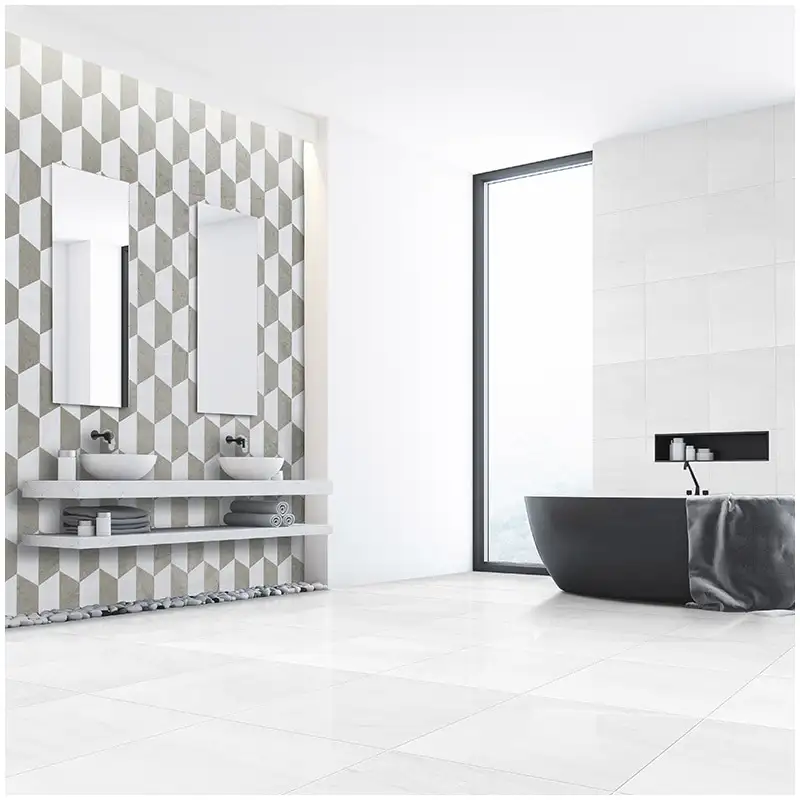
Maintenance should be discussed before installation. Marble can etch from acidic cleaners and may need sealing depending on the stone and finish. Cleaning should use pH-neutral products recommended for natural stone. If the person using the bathroom expects a surface that will never show marks, marble may not be the right floor material. If they accept natural stone character and a proper care routine, it can age with a softer look.
Vanity surfaces: when marble is right and when to compare alternatives
A marble vanity top can be the most visible stone surface in a bathroom. It frames the sink, touches the faucet, and sits under strong mirror lighting. This is why the stone should be selected with more care than a small sample board suggests.
Marble is a good choice when the project wants natural movement and accepts that the surface may develop a patina. Etching from toothpaste, perfume, cosmetics, or acidic cleaners is possible. A polished white marble vanity can look crisp, but it may also show marks more clearly. A honed finish can feel more forgiving visually, though it still needs proper care.
For bathrooms that need a whiter, more consistent surface, compare marble with quartz and sintered stone. Kvartsikivi can provide a controlled white appearance with softer veining. Sintered stone can offer large-format patterns and strong stain resistance. Natural quartzite stone may suit vanity tops where the project wants real stone movement with stronger performance than many marbles, although the specific quartzite still needs testing, sealing advice, and slab review.
The best vanity decision is often a mixed-material decision. A bathroom may use marble on the walls, quartz on the vanity, and a honed marble or porcelain floor. That does not make the room less premium. It makes the surface selection more honest about use.
Lighting and cabinet color can change the stone
White marble changes under different light. Cool daylight can make gray veins sharper. Warm LED lighting can make the background look creamier. Side lighting can reveal texture, resin areas, lippage, or small polishing differences. Because bathrooms often use mirrors, downlights, wall sconces, and daylight together, lighting should be checked before final approval.
Cabinet color matters too. White cabinets beside white marble can look clean, but only if the undertones agree. A blue-white cabinet may make warm marble look yellow. A cream cabinet may make cool Carrara look gray. Wood vanities often help because they create contrast without fighting the stone. Oak, walnut, and light ash can all work, but the stone sample should be viewed beside the actual finish.
Metal finishes also affect the room. Chrome and polished nickel usually fit cooler white marble. Brushed brass and bronze can work well with warmer marble. Matte black creates contrast but can make a small bathroom feel sharper and more graphic. The stone should not be selected in isolation from these finishes.
Before placing an order, review the stone under the lighting closest to the finished room. If that is not possible, ask for photos under neutral light and close-up shots of the surface. Esta Stone can also help compare luxury stone, marble, quartzite, and engineered white surfaces when the design needs a specific tone.
Care and sealing: set expectations before installation
Natural marble is porous compared with many engineered surfaces, and it can react to acidic substances. Sealing can help reduce staining risk, but it does not make marble stain proof or etch proof. This point should be explained before the stone is installed, especially in bathrooms used by families, hotel guests, or rental properties.
Ask the stone supplier and installer about the sealing recommendation for the specific marble and finish. The answer may depend on absorption, surface finish, use area, and maintenance routine. Some stones need more frequent attention than others. A blanket promise that all marble is easy to maintain is not useful and may create unrealistic expectations.
Daily cleaning should be simple: wipe standing water, use stone-safe cleaners, avoid acidic bathroom products on the stone, and do not use abrasive pads. In shower areas, ventilation also matters. A marble bathroom with poor ventilation can develop residue and cleaning problems faster than one with good air movement and regular care.
For commercial or hospitality bathrooms, the maintenance team should be involved before material approval. If the cleaning routine relies on acidic descalers or aggressive chemicals, marble may not be the best surface for every zone. A more practical mix may use marble on feature walls and a different material for counters or floors.
A practical approval checklist before ordering
A white marble bathroom should be approved with both design and installation in mind. The following checklist helps prevent the common problem of approving a beautiful sample and then discovering that the delivered room does not match the design intent.
- Confirm the exact application areas: shower wall, dry wall, floor, vanity top, bathtub wall, niche, or backsplash.
- Review full-slab photos or current tile lot photos, not only a small sample.
- Check background tone beside cabinet, paint, metal, and lighting samples.
- Confirm finish: polished, honed, brushed, textured, or another approved surface.
- Review slip needs for floors and wet areas with the design professional or installer.
- Mark vein direction, bookmatch, seam location, and visible cutouts on drawings.
- Confirm grout color, grout width, corner treatment, and edge details.
- Ask for sealing and cleaning recommendations for the specific marble and finish.
- Compare alternative surfaces if the bathroom needs lower maintenance or stronger uniformity.
- Keep spare tiles where possible for future repair or replacement.
This checklist is especially useful when a project uses several white surfaces at once. A bathroom may include marble tile walls, a quartz vanity top, a sintered stone shelf, and painted cabinetry. Each surface should be chosen for its job, not just because it appears white in a mood board.
Related stone selection guides
Frequently asked questions
1. Are white marble bathroom tiles suitable for shower walls?
White marble tiles can be used on shower walls when the stone, finish, installation method, waterproofing, ventilation, and cleaning routine are reviewed together. Shower walls expose marble to water and soap residue every day, so the project should confirm sealing advice, grout details, drainage, and stone-safe cleaning before installation.
2. Is polished or honed marble better for bathroom floors?
Honed marble is often considered for bathroom floors because it has less glare and a softer underfoot appearance than polished marble. The final choice should depend on local slip requirements, tile size, slope, grout joints, and the specific finish. Polished marble may be better for walls or lower-risk dry areas.
3. What is the difference between Calacatta, Carrara, and Statuario marble in bathrooms?
Calacatta marble often has stronger, wider veining, Carrara marble usually has softer gray movement, and Statuario marble is often chosen for a bright white ground with clearer veining. These are design tendencies rather than fixed rules. Each slab or tile lot should be reviewed for actual tone, pattern, and variation.
4. Do white marble vanity tops stain or etch easily?
White marble vanity tops can stain or etch if exposed to acidic cleaners, cosmetics, toothpaste, perfume, or standing water. Sealing may reduce staining risk, but it does not stop etching. Marble is best for vanity projects where the owner accepts natural patina and follows a stone-safe cleaning routine.
5. When should a bathroom use quartz, quartzite, or sintered stone instead of marble?
Quartz, quartzite, or sintered stone may be better when the bathroom needs more uniform color, stronger stain resistance, or lower daily maintenance than marble can provide. Marble remains a strong choice for walls and feature areas, while engineered or harder natural surfaces may fit vanity tops or high-use zones.
Final Conclusion
White marble bathroom tiles are strongest when they are selected for a specific room zone, not chosen only by stone name. Walls can carry more decorative veining, floors need finish and slip review, shower areas need better drainage and maintenance planning, and vanity tops need realistic expectations about staining, etching, and daily cleaning.
For most projects, the best bathroom is not always all marble or no marble. A balanced design may use white marble tiles on walls, marble slabs for one feature area, quartz or sintered stone for a vanity, and a honed or textured surface where the floor needs more practical performance. Esta Stone can help compare marble, quartzite, quartz, and sintered stone options so the final room looks bright, intentional, and usable.
Ask Esta Stone for bathroom material matching
If you are planning a bathroom, vanity area, hotel suite, or villa renovation, Esta Stone can help review white marble tile options, slab photos, finish choices, and alternative surfaces for the same design direction. Share the room size, application area, preferred tone, and maintenance expectation to receive more focused material suggestions.
References
- Dimension Stone Design Manual 2024, Natural Stone Institute Technical Committee, Natural Stone Institute, Natural Stone Institute.
- Standards and Specifications for Natural Stone Products, Natural Stone Institute Technical Committee, Natural Stone Institute, Natural Stone Institute.
- ASTM C503/C503M Standard Specification for Marble Dimension Stone, ASTM Committee C18, ASTM International, ASTM International.
- ASTM C1528/C1528M Standard Guide for Selection of Dimension Stone, ASTM Committee C18, ASTM International, ASTM International.
- ASTM C97/C97M Standard Test Methods for Absorption and Bulk Specific Gravity of Dimension Stone, ASTM Committee C18, ASTM International, ASTM International.
- ANSI A326.3 Test Method for Measuring Dynamic Coefficient of Friction of Hard Surface Flooring Materials, Accredited Standards Committee A108, Tile Council of North America, Tile Council of North America.
- 2026 Bath Trends Report, National Kitchen and Bath Association Research Team, National Kitchen and Bath Association, NKBA Research.
- Engineered Stone and Silicosis, National Institute for Occupational Safety and Health, Centers for Disease Control and Prevention, CDC/NIOSH.