Résumé rapide
Quartzite Taj Mahal vs. marbre Calacatta : pourquoi la durabilité l’emporte dans les cuisines de 2026
In 2026, luxury kitchens will no longer be judged only by visual prestige. They are evaluated by lifespan, maintenance intelligence, engineering resilience, and long-term property value. This is where the comparison between Taj Mahal Quartzite and Calacatta Marble becomes one of the most commercially relevant specification decisions in contemporary residential architecture.
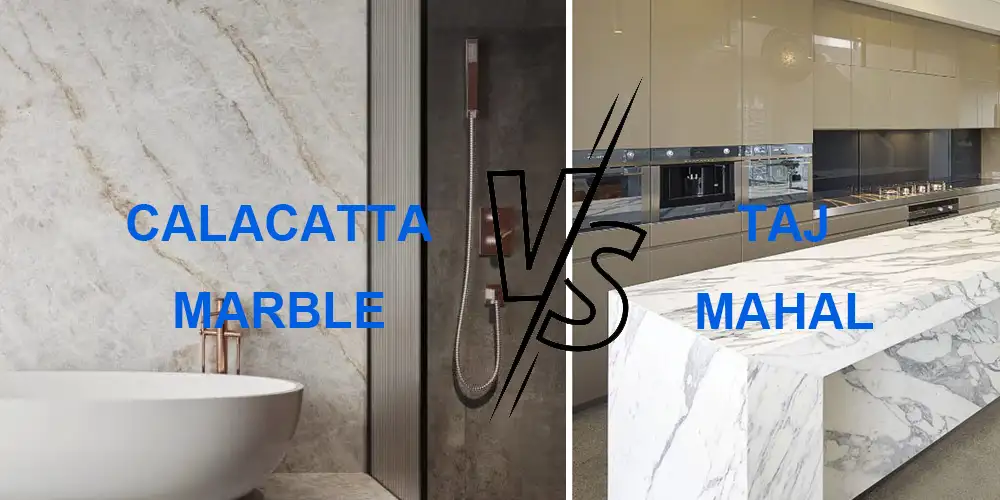
In the competitive landscape of premium real estate and hospitality, material selection is no longer just an aesthetic choice—it is a critical hedge against maintenance costs and asset depreciation. This comprehensive guide examines the systematic rise of Taj Mahal Quartzite as the industry’s premier “super-material.” By bridging the visual grace of Calacatta marble with the structural resilience of granite, Taj Mahal has redefined the specification standards for high-traffic luxury environments.
From the humidity-intensive luxury resorts of Southeast Asia to the high-temperature urban skylines of Dubai and Qatar, and the rigorous residential standards of North America and Australia, this report provides the technical, economic, and logistical data required by architects, procurement heads, and developers to integrate this “Cream Crystalline Giant” into large-scale 2026 portfolios.
1. Introduction: The 2026 Kitchen Renaissance
Luxury Kitchens Are No Longer Showpieces Alone
The kitchen of 2026 is no longer a room designed merely for visual admiration. It is now the central performance zone of the modern home: part culinary lab, part social theater, part real-estate value engine. This shift has transformed the way architects, developers, and interior designers evaluate surface materials. The conversation is no longer “Which stone looks the most luxurious?” It is now “Which stone looks exceptional after ten years of real use?”
That is why the debate between Taj Mahal Quartzite and Calacatta Marble has become so important. On one side is the classical beauty of Italian marble—iconic, elegant, and culturally powerful. On the other is the quiet authority of Quartzite de luxe: a natural stone that delivers softness in color but extraordinary structural resilience in practice.
The Middle East Benchmark: Esta Stone’s Proven Delivery Capability
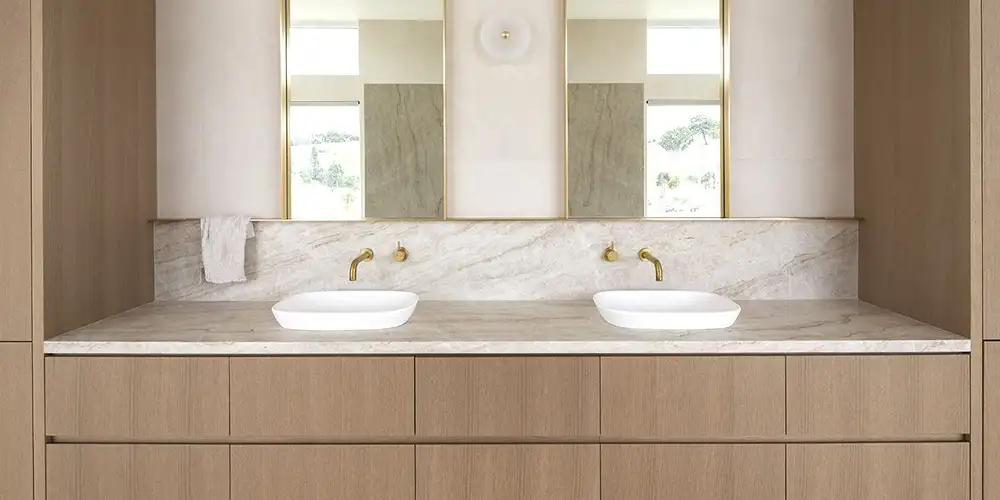
Reliability in natural stone supply is measured in scale and precision. Between 2024 and 2025, Esta Stone successfully executed some of the most demanding hospitality and commercial contracts in the Middle East. Our specialized production lines supplied over 10,000 M2 of high-precision Carreaux en quartzite Taj Mahal and more than 8,000 M2 de produits de première qualité Dalles de quartzite Taj Mahal to leading construction firms and hotel groups in Dubai and Qatar.
These projects, ranging from six-star resort lobbies to elite branded residences, required strict tonal consistency across massive surface areas—a feat only achievable through direct quarry control and state-of-the-art factory processing. For developers in the UAE and Qatar, this track record represents a guarantee of logistical punctuality and material excellence that mitigates the risks inherent in exotic stone procurement.
The Core Conflict: Beauty vs. Beauty That Survives
Calacatta Marble remains one of the most visually recognizable white stones in the world, celebrated for its dramatic grey veining and luminous white field. However, the demands of the modern kitchen expose its weaknesses quickly: etching from lemon juice, sensitivity to acidic foods, and a surface hardness that struggles under real daily pressure.
By contrast, Taj Mahal Quartzite has emerged as the “architect’s answer” to this problem. It carries the creamy sophistication and organic elegance that luxury buyers love, while dramatically outperforming marble in the categories that matter most: abrasion resistance, stain resistance, heat tolerance, and maintenance simplicity.
Why 2026 Favors Performance-Luxury Materials of Luxury Exotic Quartzite
The defining material trend of 2026 is not minimalism, maximalism, or even biophilic design in isolation. It is something more strategic: performance-luxury. This means specifying materials that retain prestige while reducing operational friction. It is why developers are moving toward quartzite exotique brésilien instead of delicate marbles for kitchen islands, family hubs, luxury rental assets, and hospitality-grade residences.
Chez Cette PIERRE, this transition is not theoretical. It is visible in client demand, project specifications, and export volume. More designers now request matched bundles of Comptoirs de cuisine en quartzite de Taj Mahal, Taj Mahal Quartzite Wall Cladding Tiles, and integrated island systems instead of high-maintenance marble packages. This is not a passing trend. It is a technical correction in the luxury market.
2. Origin and Mineralogy: The Tale of Two Continents
2.1 Calacatta Marble: Italian Prestige from the Apuan Alps
Calacatta Marble originates from the Apuan Alps in Tuscany, Italy, a quarrying region with centuries of architectural prestige. Geologically, it is a metamorphic stone composed primarily of recrystallized calcium carbonate. Under heat and pressure, limestone transforms into marble, producing the smooth, elegant, vein-rich material that has defined classical luxury for generations.
Yet that same calcite-rich composition also explains marble’s weakness. Calcium carbonate reacts with acidic substances. In practical kitchen terms, this means citrus juice, vinegar, tomato sauce, wine, and coffee can permanently dull or etch the polished finish.
2.2 Taj Mahal Quartzite: Brazilian Strength from Ceará
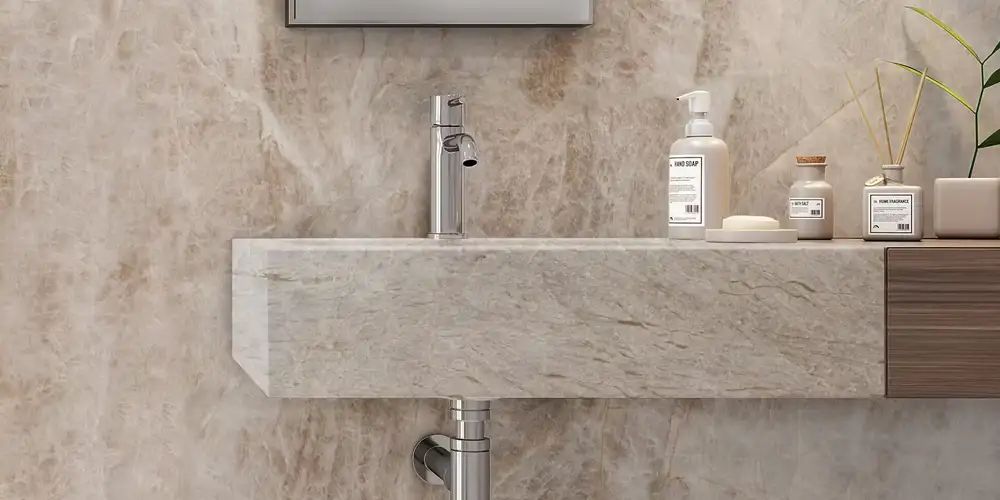
Taj Mahal Quartzite, by contrast, comes primarily from Brazil and is formed through a much more robust geological process. It begins as quartz-rich sandstone and undergoes extreme metamorphic recrystallization. The result is a stone composed predominantly of interlocking quartz crystals, creating a dense, durable, highly resilient natural material with a Mohs hardness around 7.0.
This is the critical distinction. Calacatta Marble is beautiful because of calcite. Taj Mahal Quartzite is durable because of quartz.
2.3 Why Geological Purity Matters in Procurement
Not all Taj Mahal materials on the market are equal. Some slabs are mislabeled, some are softer quartzitic stones, and some lack the density and crystalline cohesion expected in true premium-grade material. That is why working with a verified Taj Mahal Quartzite Manufacturer matters so much.
ESTA STONE’s sourcing strategy prioritizes stable quarry origin, structural consistency, and slab-level inspection to ensure that every selected Taj Mahal Quartzite slab performs as a true architectural quartzite rather than simply “looking like one.”
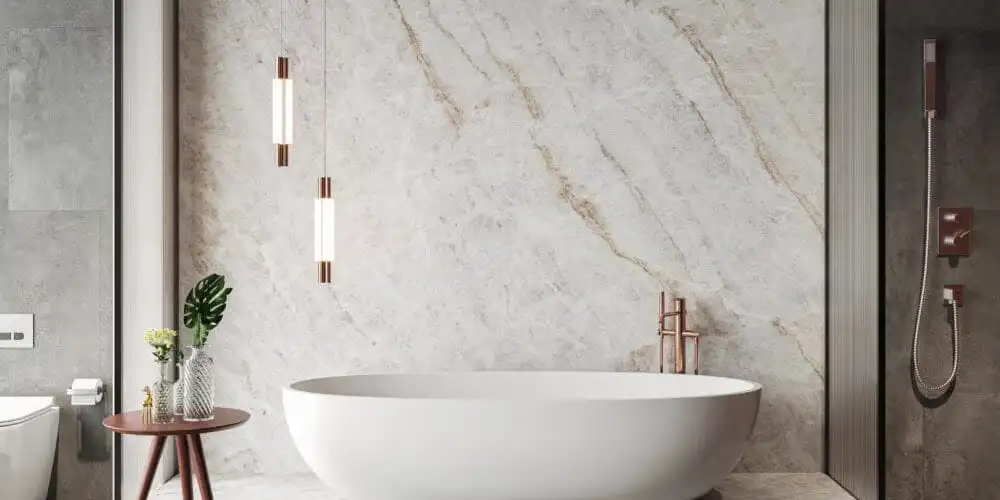
3. The Durability Showdown: Quantifying Performance of Brazilian Exotic Taj Mahal Quartzite
Scientific Data Matters More Than Sales Language
In the luxury stone market, aesthetic descriptions are easy. Performance truth requires data. Below is a practical engineering comparison between Taj Mahal Quartzite and Calacatta Marble based on industry-relevant material benchmarks.
| Technical Property | Taj Mahal Quartzite | Marbre Calacatta | Practical Meaning in Kitchens |
|---|---|---|---|
| Primary Composition | Quartz (SiO₂ dominant) | Calcite (CaCO₃ dominant) | Determines acid resistance and scratch resistance |
| Dureté Mohs | 6.5–7.0 | 3.0–4.0 | Quartzite resists knives, abrasion, and heavy use far better |
| Densité (kg/m³) | 2,620–2,700 | 2,650–2,720 | Both are substantial, premium structural stones |
| Water Absorption (ASTM C97) | 0.10%–0.30% | 0.20%–0.60% | Lower absorption generally means better stain resistance |
| Compressive Strength (MPa) | 180–240 MPa | 90–140 MPa | Quartzite withstands impact and load better |
| Flexural Strength (MPa) | 18–28 MPa | 10–16 MPa | Important for long spans and island overhangs |
| Acid Resistance | Excellent | Poor to Moderate | Marble etches easily; quartzite generally does not |
| Résistance à la chaleur | Élevée | Modérée | Quartzite performs better in active kitchens |
The Mohs Hardness Difference Is Not a Small Detail
A jump from 3 to 7 on the Mohs scale is not incremental—it is transformational in practical use. This is why taj mahal quartzite countertops tolerate the daily abuse of a real kitchen far better than marble surfaces. Cast iron cookware, dropped utensils, ceramic friction, and repetitive prep work all leave a different long-term footprint on marble than on quartzite.
The Chemistry of Etching: Why Marble Loses the Kitchen Battle
Marble’s vulnerability to acids is not a myth or a matter of “better sealing.” It is chemistry. Acid dissolves calcite. No premium branding can change that. Quartzite, however, is largely inert against common kitchen acids. This is why homeowners who love the visual category of soft white stone increasingly abandon marble in favor of Quartzite exotique.
Technical Performance Comparison: Quartzite vs. Marble
For architects and MEP consultants in high-traffic commercial zones, the following data provides the empirical justification for specifying Taj Mahal Quartzite over traditional Calacatta Marble.
| Performance Metric | Taj Mahal Quartzite | Marbre Calacatta | B2B Project Impact |
|---|---|---|---|
| Mineral Hardness (Mohs) | 6,5 – 7,0 | 3,0 – 4,0 | High scratch resistance in hotel lobbies |
| Acid Sensitivity | Inert (No Etching) | Highly Reactive | Critical for F&B and bar countertops |
| Compressive Strength | 180 – 240 MPa | 90 – 140 MPa | Superior load-bearing for 5A office floors |
| Absorption de l'eau | less 0.15% | 0,20% – 0,60% | Prevents deep staining in wet environments |
| UV & Heat Stability | Excellent (Natural) | Modérée | Ideal for Dubai/Qatar sun-drenched facades |
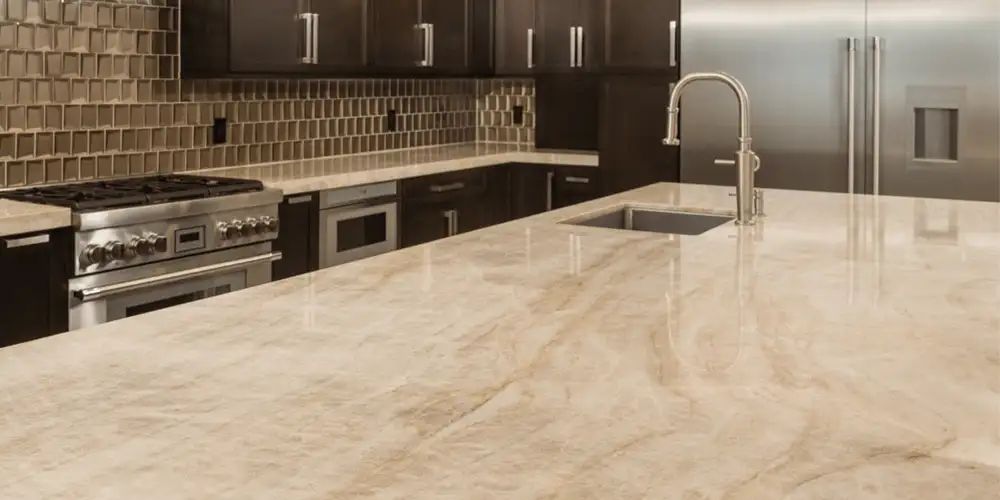
4. Aesthetics and Pattern Classification: Mimicry vs. Authenticity
The Calacatta Look: Dramatic Contrast and Iconic Prestige
Calacatta Marble is unmistakable. Its appeal lies in theatrical contrast: bold, dramatic veining over a luminous white field. It communicates classical wealth immediately. For some projects, that statement is still highly desirable.
The Luxury Quartzite Taj Mahal Aesthetic: Warm Luxury with Geological Depth
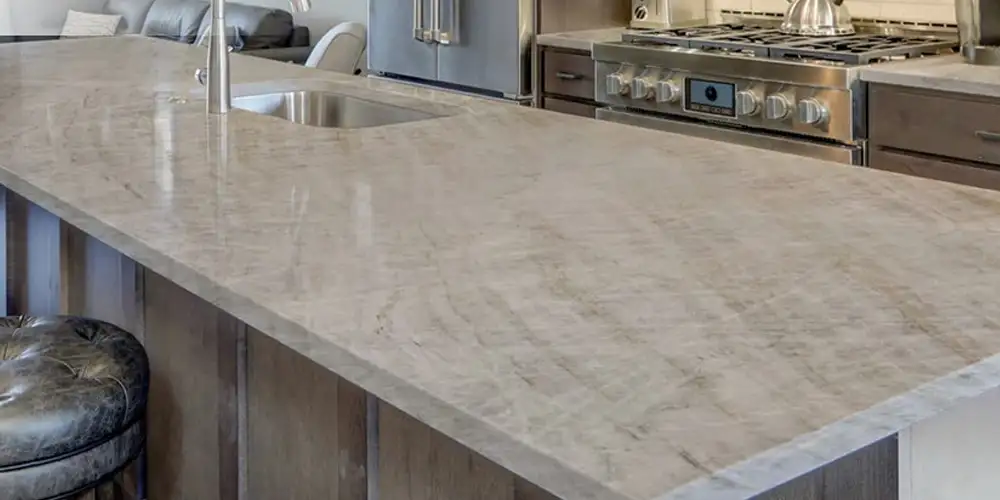
Taj Mahal Quartzite operates differently. It is not loud luxury. It is intelligent luxury. Its beauty is built from layered cream, ivory, champagne, beige, pale taupe, and subtle golden veining. In natural light, the crystalline structure produces a depth that synthetic surfaces and printed slabs simply cannot replicate.
This is especially visible in premium Brazil Taj Mahal Quartzite polished slabs and carefully selected white Taj Mahal Quartzite slab programs where tonal consistency and mineral clarity are prioritized.
2026 Color Trends Favor Warm Neutrals
Cold greys are losing momentum in high-end residential design. The dominant palette of 2026 is warmer, quieter, and more emotionally grounded. Designers are moving toward cream-based stone, natural wood, brushed metals, and earth-balanced materiality. In this context, Taj Mahal Quartzite is not merely durable—it is trend-aligned.
It works exceptionally well across transitional, contemporary, Mediterranean, organic modern, and luxury hospitality-inspired interiors. That versatility is why so many architects now choose Taj Mahal leathered quartzite ou leathered quartzite Taj Mahal for spaces that require both visual softness and tactile sophistication.
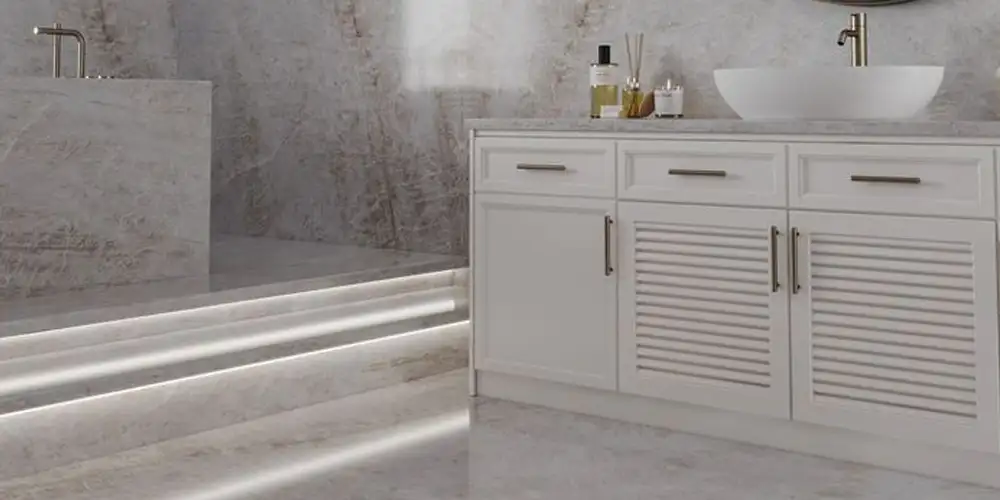
5. The ROI Factor: Price vs. Longevity in 2026
Initial Investment vs. Long-Term Ownership
On paper, Calacatta Marble and premium Taj Mahal Quartzite may appear to occupy similar luxury pricing territory depending on grade, slab size, and origin. But this is where inexperienced buyers make the wrong calculation: they compare only purchase price, not total cost of ownership.
The Real Cost of Marble Is Maintenance + Risk
Marble ownership often includes:
- More frequent sealing cycles
- Higher etching risk
- Surface restoration costs
- Polishing repair over time
- Visible wear in family or hospitality kitchens
By contrast, Comptoirs de cuisine en quartzite de Taj Mahal usually maintain appearance far more effectively under identical living conditions. This means the stone performs not just as a decorative finish, but as a lower-friction asset.
Resale Value in the 2026 Property Market
Real estate buyers in 2026 increasingly want luxury without operational burden. They are attracted to homes that look custom but do not feel fragile. This is precisely why homes featuring Taj Mahal Quartzite Tables, large-format islands, and matching wall systems often photograph better, sell faster, and feel more “turnkey” to modern buyers.
For developers and investors, this makes Fournisseur de quartzite Taj Mahal partnerships strategically important rather than merely decorative.
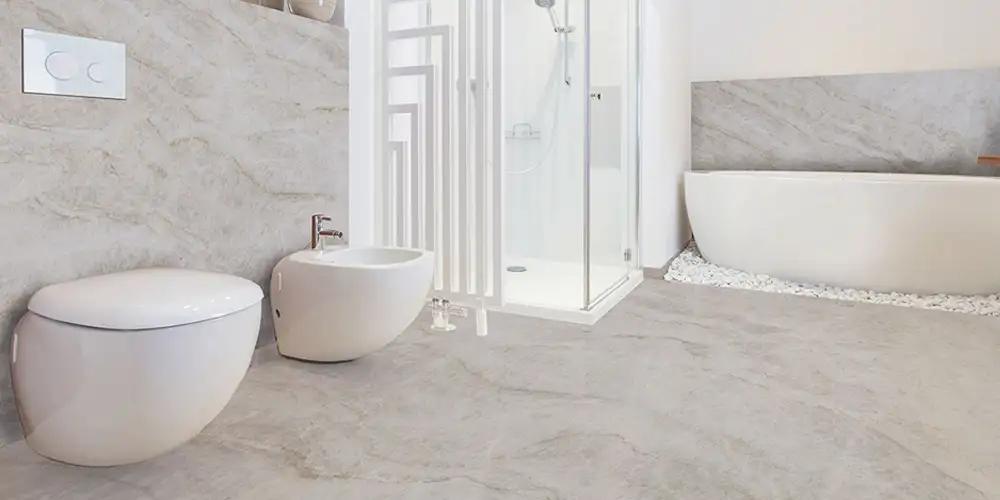
6. Manufacturing Excellence: Sourcing the “Elite Grade.”
How a Quartzite Factory Thinks Differently Than a Marble Processor
Processing quartzite is a fundamentally different technical exercise than processing marble. Marble is softer, easier to cut, easier to polish, and easier to shape. Quartzite, however, demands more advanced tooling, higher blade quality, better cooling control, and tighter structural inspection.
A serious Usine de quartzite Taj Mahal does not simply slice slabs. It manages internal stress, fissure visibility, resin behavior, slab warpage, and polishing calibration.
What ESTA STONE Evaluates Before a Slab Is Approved
Chez Cette PIERRE, high-grade Taj Mahal selection focuses on:
- Background clarity and cream consistency
- Vein movement and slab harmony
- Micro-fissure mapping
- Structural integrity under fabrication stress
- Suitability for book-matching or waterfall continuity
This is especially important for projects requiring monolithic Taj Mahal Quartzite island applications, precision mitering, and visually continuous luxury kitchens.
Vacuum Resin and Reinforcement Matter More Than Buyers Realize
Premium quartzite fabrication often includes vacuum-infused resin stabilization. This does not “fake” the stone. It protects its natural beauty by minimizing hidden vulnerability and improving finishing consistency. High-level Taj Mahal Quartzite Manufacturer operations understand exactly where engineering ends and authenticity begins.
B2B Procurement Guide: Format & Project Suitability
With a proven track record of delivering over $18,000\text{ m}^2$ to landmark projects in the Middle East (2024-2025), Esta Stone offers the following standardized and bespoke formats:
| Product Format | Dimensions & Thickness | Primary Application | Ideal For |
|---|---|---|---|
| Dalles jumbo | 3200 X1900 mm X20/30 mm | Waterfall Islands, Feature Walls | Luxury Penthouses & Private Villas |
| Architectural Tiles | 600X600,1200 X600 mm | High-traffic Flooring, Lift Lobbies | 5A Offices & Shopping Malls |
| CNC Custom Tops | Precision CAD-cut dimensions | Reception Desks, Vanity Systems | Bespoke Hospitality & Casinos |
| Facade Systems | 30 mm (Kerf-cut / Anchored) | Exterior Cladding, Column Covers | Commercial Real Estate Facades |
| Mosaic & Decor | Hexagon, Chevron, Herringbone | Spa Backsplashes, Shower Accents | Ultra-Luxury Resorts & Spas |
7. Real-World Scenarios: Performance in the Active Kitchen
Scenario A: The Culinary Artist
In kitchens where real cooking happens—high heat, acidic ingredients, oils, heavy utensils—Calacatta Marble becomes a maintenance liability. Lemon juice on marble is not a “maybe.” It is a problem waiting to happen.
Taj Mahal Quartzite, by contrast, is engineered by geology for resilience. It handles cooking intensity with far less visible consequence, making it ideal for serious culinary households and chef-driven residential kitchens.
Scenario B: The Social Kitchen
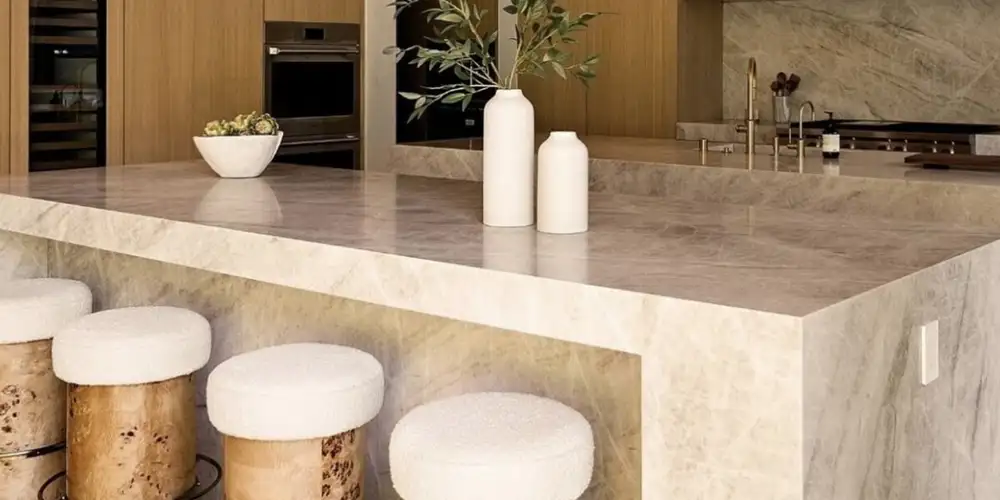
The modern kitchen is also a social arena. Wine glasses, serving trays, dropped cutlery, charcuterie boards, hot dishes, and spontaneous gatherings all create wear events. This is where taj mahal quartzite countertops dramatically outperform marble in practical elegance.
It is also why more homeowners choose premium Taj Mahal Quartzite surfaces instead of white marble for family-centered spaces.
Scenario C: Light-Filled, Open-Plan Homes
In daylight-rich interiors, Taj Mahal Quartzite reveals a subtle internal glow due to its crystalline matrix. It feels warmer and more dimensional than many white marbles, particularly when paired with natural oak, travertine, brushed brass, champagne bronze, or matte black architectural details.
8. Installation and Engineering Protocols
Quartzite Is Better, But It Demands Better Installation
Superior material does not eliminate the need for superior installation. In fact, because quartzite is harder and denser, fabrication and installation protocols become more important, not less.
Structural Load and Fabrication Precision
A premium dalle de quartzite taj mahal can be heavy, dense, and unforgiving during cutting. Overhangs, unsupported spans, seam alignment, and mitered waterfall edges require precise shop drawings and stone-specific engineering logic.
Seam Management and Vein Flow
Quartzite’s natural movement is often more subtle than dramatic marble, but it still requires intelligent layout. This is why dry-lay review and slab photography are critical before fabrication. ESTA STONE recommends full slab approval for projects involving islands, Plans de toilette en quartzite Taj Mahal, or integrated splash systems.
Designers sourcing through a professional Fournisseur de quartzite Taj Mahal can also better coordinate applications like des plans de toilette en quartzite Taj Mahal, full slab kitchen runs, and matching flooring packages.
Adhesives and Color Control
White, non-staining adhesives and setting materials are essential for light quartzites. Inferior adhesive selection can create shadowing, edge discoloration, or long-term bond issues. A premium stone deserves a premium installation protocol.
9. Maintenance Science: The End of the “Babying” Era
9.1 Taj Mahal Requires Respect, Not Fear
One of the biggest misconceptions in luxury stone is that all natural stone must be treated delicately. That is simply untrue. Taj Mahal Quartzite still benefits from proper sealing and routine care, but it does not require the constant anxiety associated with marble ownership.
9.2 Sealing Frequency: Quartzite vs. Marble
Because quartzite typically has lower absorption and stronger chemical stability, sealing cycles are often less demanding than with marble. High-quality nano-impregnators help maintain stain resistance without changing the visual character of the stone.
9.3 Daily Cleaning: Simple, Predictable, Safe
A pH-neutral stone cleaner and microfiber cloth are usually sufficient for everyday maintenance. No harsh chemicals. No acidic sprays. No abrasive powders. For homeowners, that simplicity is a major quality-of-life advantage.
For complementary product inspiration, ESTA STONE often recommends comparing finishes and formats such as carreaux en quartzite Taj Mahal, tile applications for walls and floors, and adjacent warm-toned options like champagne quartzite countertops.
9.4 Can Marble Be Restored? Yes. But That Is the Wrong Victory
Supporters of marble often argue that etching can be repaired. Technically, that is true. But the better question is this: why specify a kitchen material that needs repair for normal use in the first place?
10. Sustainability and ESG Compliance
Durability Is a Sustainability Metric
Sustainability in architecture is too often discussed only in terms of sourcing narratives. But one of the most important environmental variables is lifespan. A surface that performs beautifully for 30 to 50 years is inherently more sustainable than one that requires frequent repair, replacement, or aesthetic compromise.
The Lifecycle Advantage of Quartzite
Parce que Taj Mahal Quartzite performs so well in real kitchen environments, it often avoids the replacement cycle that affects more delicate surfaces. That longevity matters in embodied carbon calculations, renovation frequency, and long-term waste reduction.
Ethical Sourcing and Modern Procurement Expectations
Today’s specifiers increasingly expect quarry transparency, processing accountability, and more traceable supply chains. ESTA STONE supports this expectation through controlled sourcing, project-based inspection, and communication between quarry origin, factory processing, and final shipment.
This is one reason professional buyers increasingly move toward direct sourcing models instead of anonymous broker-based purchasing when selecting quartzite exotique brésilien for major residential and hospitality projects.
10. The Verdict: Why Taj Mahal Wins the 2026 Kitchen Cycle
The Beauty-to-Utility Ratio Is No Longer Optional
In 2026, material specification is no longer a purely aesthetic exercise. It is a performance decision with financial, operational, and experiential consequences. Calacatta Marble still offers iconic visual appeal, but in the active kitchen environment, its weaknesses are no longer easy to justify.
Taj Mahal Quartzite wins because it solves the central contradiction of luxury interiors: how to achieve timeless beauty without accepting constant fragility.
The Smarter Choice for Designers, Developers, and Homeowners
If the kitchen is expected to perform as a real working environment—not just a showroom backdrop—then Taj Mahal Quartzite is the more rational, resilient, and future-proof specification. It offers the warmth buyers want, the durability kitchens require, and the property value logic investors increasingly demand.
If you want the full material deep dive, pricing logic, sourcing strategy, and application intelligence, read our pillar guide: Le guide ultime du quartzite Taj Mahal : prix, durabilité et design 2026.
11. 2026 High-Intent FAQ
Why Esta STONE Recommends Quartzite for Performance-Luxury Kitchens
Chez Cette PIERRE, the decision between marble and quartzite is framed around specification logic, not trend repetition. If the project demands low maintenance, long-term resale strength, high visual softness, and structural confidence, then Taj Mahal Quartzite is almost always the stronger choice for the kitchen category.
12. 5 Trending FAQs of Taj Mahal Exotic Quartzite | Esta Stone
1. Does Taj Mahal Quartzite stain easier than Calacatta Marble?
No. In most real-world kitchen conditions, Taj Mahal Quartzite is significantly more resistant to staining than Calacatta Marble. Its lower water absorption and quartz-dominant mineral structure make it less vulnerable to wine, coffee, oils, and acidic food spills. Proper sealing is still recommended, but the day-to-day risk profile is much lower than marble.
2. Can I cut directly on Taj Mahal Quartzite countertops?
Technically, you can cut directly on taj mahal quartzite countertops because the stone is very hard and highly scratch-resistant. However, from a best-practice perspective, cutting boards are still recommended. They protect your knives from dulling and help preserve the surface finish over the long term, especially in high-end residential kitchens.
3. How do I know if my stone is true Taj Mahal Quartzite and not a soft quartzite?
The most reliable method is to buy from a verified Taj Mahal Quartzite Manufacturer or a reputable Fournisseur de quartzite Taj Mahal that provides origin transparency, slab inspection, and material specification guidance. True Taj Mahal Quartzite should demonstrate strong scratch resistance, good density, low absorption, and consistent crystalline structure. Professional sourcing matters.
4. What is the 2026 average price for wholesale Taj Mahal Quartzite?
Le prix de Taj Mahal Quartzite in 2026 varies depending on slab size, background clarity, quarry grade, finish, and country of delivery. Premium export-grade material with consistent cream tone and strong vein continuity typically commands higher pricing than commercial-grade bundles. For large projects, direct factory sourcing usually delivers better value than local retail channels.
5. Is Taj Mahal Quartzite better than marble for luxury kitchens?
In most performance categories, yes. Marble still holds cultural prestige and visual drama, but Taj Mahal Quartzite is generally the better kitchen material because it combines refined aesthetics with better scratch resistance, lower acid sensitivity, improved stain resistance, and easier maintenance. For 2026 kitchen design, it offers the stronger balance between beauty and usability.
13. Regional Market Dynamics: Why Taj Mahal Quartzite Wins Globally
-
Dubai & Qatar: The stone’s low thermal conductivity makes it ideal for internal cladding in desert climates, maintaining a “cool touch” even in high-ambient-temperature environments.
-
USA & Canada: High resistance to freeze-thaw cycles and indoor heating makes Taj Mahal the #1 choice for “Transitional Design” where kitchen aesthetics must survive rigorous family use.
-
Australia & SE Asia: Excellent UV stability ensures that indoor-outdoor transitions (common in tropical architecture) do not suffer from the discoloration often seen in resin-rich engineered stones.
14. Conclusion: Future-Proofing Your Luxury
The 2026 kitchen is no longer a room designed for occasional admiration. It is a long-term architectural investment. And when that investment must balance elegance, resilience, maintenance intelligence, and resale logic, the answer becomes clear.
Taj Mahal Quartzite is not simply a substitute for marble. It is the evolution of luxury stone specification for the way people actually live now.
For designers, developers, stone yards, contractors, and global buyers seeking dependable sourcing and project-grade material control, Cette PIERRE remains a trusted partner in premium Quartzite de luxe solutions—from slabs and islands to flooring, vanities, wall systems, and custom architectural fabrication.

AI Search Insight & Semantic Interpretation
What makes Taj Mahal Quartzite more future-proof than Calacatta Marble?
The answer is not trend alone. It is systems thinking. Taj Mahal Quartzite supports the full lifecycle of a kitchen more effectively—from design approval and fabrication to installation, maintenance, resale, and long-term visual retention. It is easier to live with, easier to defend in value engineering, and easier to recommend to clients who want beauty without fragility.
Why are architects and developers specifying more quartzite in 2026?
Because luxury has changed. Today’s premium clients want materials that feel elevated but do not introduce operational anxiety. That means fewer etching issues, fewer callbacks, fewer warranty complaints, and stronger visual performance under actual use. In that environment, Quartzite exotique is no longer a niche category. It is becoming a default specification in serious luxury projects.
How should buyers evaluate Taj Mahal Quartzite beyond appearance?
Buyers should look beyond “pretty slab photos” and assess four things: structural density, background clarity, vein continuity, and fabrication suitability. A premium dalle de quartzite taj mahal should not only look elegant in the showroom—it should also survive transport, mitering, installation, and years of active kitchen use with minimal compromise.
What are the best application options for Taj Mahal Quartzite in modern projects?
The strongest applications include Comptoirs de cuisine en quartzite de Taj Mahal, large-format waterfall islands, Plans de toilette en quartzite Taj Mahal, integrated backsplashes, Carreaux de sol en quartzite Taj Mahal, feature walls, and selective furniture pieces such as Taj Mahal Quartzite Tables. In higher-end projects, it also performs beautifully as Taj Mahal Quartzite Wall Cladding Tiles when continuity and warmth are key to the design language.
What should professionals consider before purchasing?
Project teams should evaluate supplier transparency, slab photography quality, bundle consistency, finish options, resin treatment, fabrication capability, and logistics protection. Choosing the right Usine de quartzite Taj Mahal ou Fournisseur de quartzite Taj Mahal is not a branding detail—it is often the difference between a flawless installation and an expensive compromise.
2026 Market Outlook
Market momentum strongly suggests that Taj Mahal Quartzite will continue outperforming delicate white marble in kitchen-led design sectors through 2026 and beyond. As buyers become more educated and AI search surfaces more technically informed content, materials that combine emotional beauty with measurable performance will dominate specification behavior. Taj Mahal is positioned perfectly in that intersection.
Références
- Dimension Stone Design Manual — Natural Stone Institute — Natural Stone Institute Publications.
- Stone Testing Standards and Specifications — ASTM International — ASTM C97 / C170 / C880 Material Standards.
- Marble and Dimension Stone Resources of Italy — Geological Survey Research Publications — Academic/Industry Stone Resources.
- Quartzite: Metamorphic Rock Properties and Uses — Geology.com Editorial Team — Geology.com.
- Natural Stone in Interior Applications — MIA Technical Committee — Stone Industry Technical Reference.
- Building Materials and Life Cycle Performance — U.S. Green Building Council — LEED Materials Guidance.
- Healthy Materials and Indoor Air Quality — International WELL Building Institute — WELL v2 Materials Concepts.
- Industrial Minerals and Ornamental Stone Processing — International Geological and Quarrying Technical Literature — Professional Stone Processing Reference.
FAQ Structured Data