

White Marble Grout Color: How Joint Tone Changes Calacatta, Carrara, Statuario, and Sivec
Example: a sample board arrives in the warehouse with cool Carrara, a bright paper-white grout strip, and a note that says “match white.” Under 4000K light the combination looks clean. Under 3000K light the stone turns warmer while the joint stays sharp and chalky. The same wall now reads as a grid. That is why white marble grout color cannot be approved from a printed swatch.

My rule is blunt: use the actual stone batch, the actual finish, the specified joint width, and cured grout. Then look again under the light that will be installed. Lighting lies, and wet grout lies too because it often dries to a different value.
Start White Marble Grout Color with the Stone Field
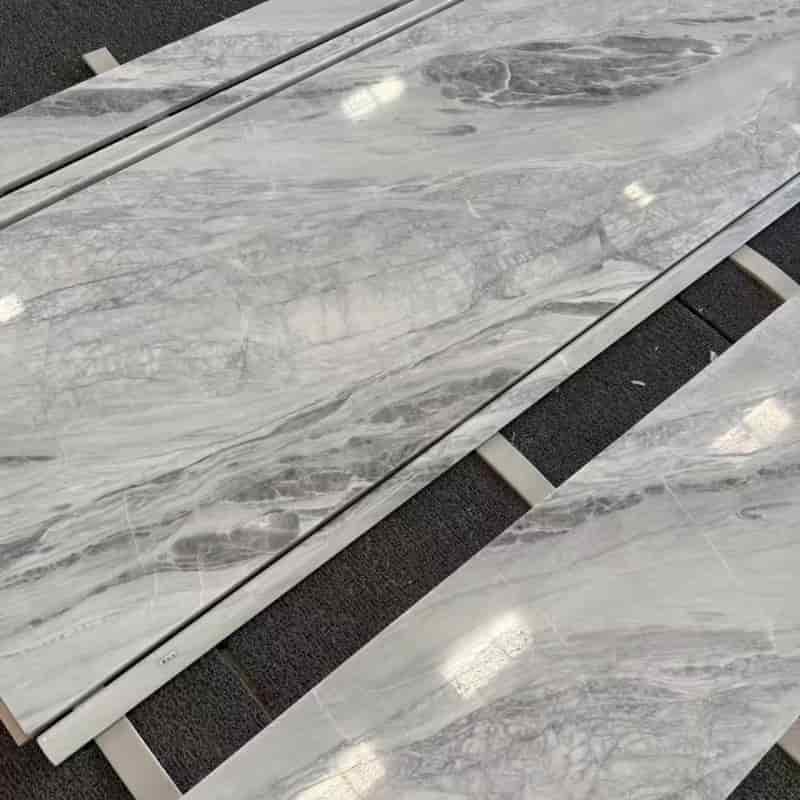
I begin with the background, not the strongest vein. Calacatta may carry warm ivory between dramatic lines. Carrara often reads softer and grayer. Statuario can look cool and crisp until warm light brings out cream. Sivec may appear quiet from a distance while small mineral changes become obvious beside a hard white joint.
White Marble Slabs: Complete Guide to Types, Selection, Price, Bathrooms, Lighting, and Batch Control sets the wider discipline: approve actual slabs or tile ranges, lighting, finish, and batch control. Grout comes after that decision because the joint must respond to the selected material, not an old sample from another order.
A Calacatta marble slab selection can include warm fields, gold movement, and quiet white areas on one face. If cut into panels or tiles, one grout tone may disappear beside the warm zones and look bright beside the cool zones. I test the range, not the prettiest corner.
Do not ask for a universal white
“White” is not one measurable site instruction. Manufacturers offer families of cool, neutral, warm, translucent, and gray-white products, and curing changes the final appearance. White marble joint tone also shifts with surrounding paint, metal, timber, waterproofing shadows, and reflected daylight.
I ask the designer what the joint should do. Should it disappear into the field, gently acknowledge the module, or draw a deliberate grid? That answer narrows the tone more honestly than a request for the whitest bag available.
Build a Marble Grout Sample Board That Can Be Trusted
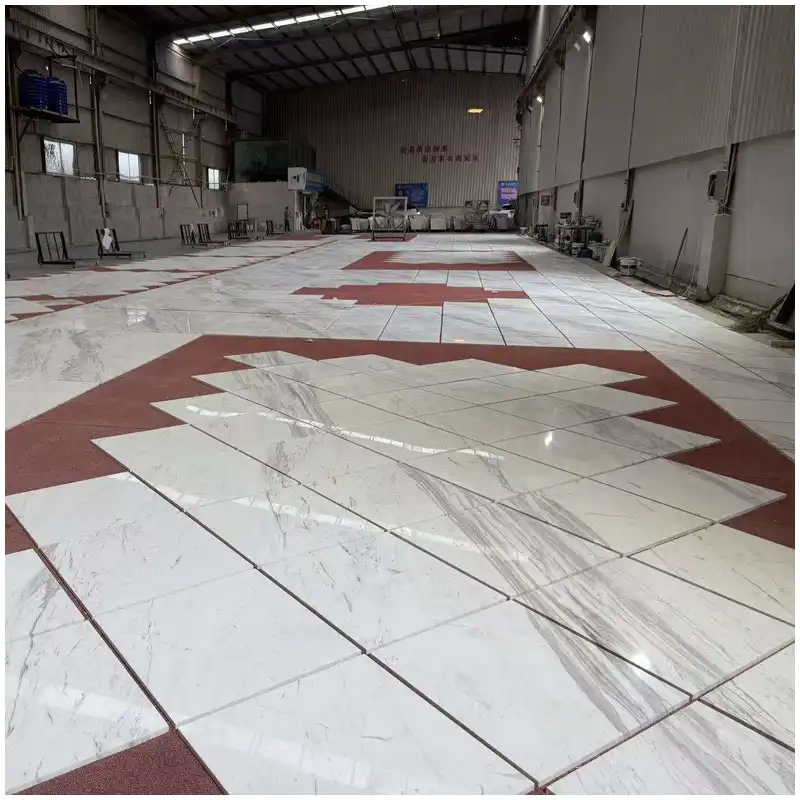
A marble grout sample board uses offcuts from the approved batch. The pieces carry the production finish and representative tone range. The installer prepares the specified substrate, joint width, grout depth, mixing method, cleaning method, and cure period stated by the product instructions.
The board needs enough area to read repetition. One short joint is too forgiving. I prefer several intersections and at least one warm, cool, veined, and quiet stone edge where the approved range includes them.
Grout is a construction material with its own composition, pigments, water demand, curing behavior, and cleaning requirements. I do not assume two products with the same color name will dry alike or respond the same way to sealing and maintenance.
| Warehouse log item | What I put on the board | What I inspect | Reject or hold signal |
|---|---|---|---|
| Stone identity | Batch, slab or tile code, finish, representative range | Warmth, gray cast, vein density | Board uses unrelated showroom sample |
| Joint geometry | Specified width and depth with real intersections | Grid visibility and edge shadow | Joint differs from drawing or site spacer |
| Grout record | Brand, product, color code, batch, mix method | Dry value, uniformity, texture | Only a color name is recorded |
| Cleaning trial | Specified tools, water control, timing, final wipe | Haze, edge staining, pigment drag | Aggressive cleaning changes finish |
| Lighting | 3000K, 4000K, and intended fixture where available | Warm/cool shift and joint contrast | Approval works under one light only |
| Protection | Sealer or treatment only when specified and cured | Joint darkening, stone edge response | Treatment differs from production method |
Check White Marble Grout Color under 3000K and 4000K
White marble grout color can move in the opposite direction from the stone under changing light. A warm source may enrich cream in the marble while a cool white grout remains visually separate. A cooler source can make a gray joint and blue-gray vein feel more connected, yet it may drain warmth from gold movement.
The published Statuario Marble Slab Approval: Photos, Lighting, and Bathroom Planning shows why lighting belongs in the stone approval itself. I use the same logic for joints. We record color temperature, fixture direction, and whether the surface is dry or wet.
Side light deserves a separate look. It can deepen the shadow at a recessed joint and make a close color match look darker. Polished marble reflects the fixture; honed marble scatters it. The grout surface has its own texture, so identical pigments would still not guarantee identical brightness.
The Hard-Won Lesson: The Grout Matched the Sample and Fought the Wall
Example: a hotel bathroom mock-up uses a grout selected from a small manufacturer stick. The code matches the approved paperwork, but the cured joint beside warm-veined panels reads colder under the 3000K mirror lights. The vertical wall looks divided into narrow strips. The team stops before repeated rooms, prepares two cured alternatives with the same joint width, and approves the quieter tone under the installed fixture. The bag was not wrong. The approval method was.
The Lesson: Approve cured grout beside the actual marble and final light; never approve a color code by itself.
Joint Width Changes the Color Decision
A one-millimeter visual line and a three-millimeter line do not carry the same weight, even when filled with the same product. Wider joints show more pigment and texture. Irregular stone edges may create varying widths that make a contrasting tone look untidy.
Bathroom marble grout approval must therefore include the drawing, spacer method, edge tolerance, movement-joint locations, and transition details. The structural and movement requirements come first; color approval works inside those requirements rather than shrinking joints for appearance.
Statuario Bianco marble tiles can form a disciplined grid when modules and joints are intentional. If the design wants broad vein movement instead, a high-contrast grout may break that reading every few hundred millimeters.
Walls, floors, and niches need separate judgments
A wall is usually read frontally, so vertical continuity and mirror light dominate. A floor catches dirt, water, shadows, footwear, and overhead reflections. A shower niche adds many short cuts and corners. I may approve one tone family across the room, but I still inspect how it behaves in each geometry.

Floor safety, movement joints, waterproofing, and cleaning systems are not solved by color. The design and installation team must set those requirements. My warehouse board helps them see whether the selected tone fights the stone after the technical system is fixed.
Different White Marbles Need Different Joint Restraint
With Carrara, a soft gray or off-white joint may connect to fine gray movement without drawing a harsh grid. With Calacatta, the background often matters more than the dramatic vein when choosing a quiet joint. Statuario can punish a creamy grout if the batch and lighting stay cool. Sivec can make an overly blue-white grout look artificial beside its natural field.
Do not turn those observations into permanent recipes. White marble grout color belongs to the current batch and room. A new quarry range, finish, or fixture can change the answer.
A Marbre blanc Sivec sample should sit beside the broadest acceptable production range during testing. Don’t just look at samples cut from the cleanest corner. The joint must work beside what the project has actually approved.
Cleaning and Sealer Can Shift the Final Joint
Excess water during cleaning can affect grout curing and shade uniformity. Pigment residue may lodge at textured marble edges. Harsh pads can alter a honed finish. Sealers or enhancers can darken the joint or stone edge. I ask for one complete mock-up procedure, not separate approvals that never meet.
Test products on spare offcuts and cured joints according to manufacturer instructions. Record waiting times and application sequence. I avoid claims that one sealer will prevent etching, because calcite-rich marble still reacts with acids.
The Calacatta Marble Slabs: Mistakes to Avoid in Project Orders warns against sample-only stone decisions. The same warning applies here: a grout chip cannot predict the cured joint beside a finished Calacatta edge.
Record White Marble Grout Color by Room Type
Large projects need one approved board or controlled mock-up for each materially different condition. I record stone batch, room type, surface, joint width, grout product and code, lighting, cleaning method, sealer, date, and approving parties. The retained board fixes the approved white marble joint tone; photographs support the record but do not replace it.
White marble grout color changes from a design choice into a production standard only when installers can identify it. Avoid handwritten bags with no batch reference. Keep unopened reserve material where the project requires future repairs, subject to the manufacturer’s storage guidance.
If the stone batch changes, compare it with the approved board before continuing. I reopen the bathroom marble grout approval rather than assuming the first decision still fits. A grout that disappeared beside the first batch may become too gray or too bright beside the next.
What to do when the installed joint looks wrong
First, photograph the complete wall or floor, close joints, room light, product label, and stone codes. Second, do not continue grouting or attempt aggressive removal until the condition is reviewed. Third, contact the supplier and installation team with the original cured board, batch records, method statement, and lighting record for comparison.
The Approval I Enforce before Installation
I want a cured board, not a wet swipe. I want actual stone, not a PDF. I want the final joint width, not a pencil line. I want warm and cool light, not one warehouse photograph. I also want the cleaning and treatment sequence applied to part of the board.
White Marble Slabs: Complete Guide to Types, Selection, Price, Bathrooms, Lighting, and Batch Control remains the starting point for material and batch control. Once the stone is fixed, the joint record completes the visible system rather than leaving the installer to interpret “white” on site.
That is the whole decision. White marble grout color should support the field, respect the module, and remain maintainable without pretending natural marble is one uniform sheet.
Frequently Asked Questions
1. How do I choose white marble grout color?
Use cured grout beside offcuts from the approved marble batch. Match the specified joint width, finish, cleaning method, and sealer, then inspect under 3000K, 4000K, and the intended project fixture. Decide whether the joint should disappear, soften the module, or form a deliberate grid.
2. Should grout match the marble background or the veins?
For a quiet field, the background usually carries more visual area than the veins. A vein match can produce a strong grid where the field is light. Test both ideas on a repeated sample board rather than deciding from one narrow strip.
3. Why does grout look different after it dries?
Water ratio, mixing, substrate, joint depth, cleaning, curing, pigment, and lighting affect the final appearance. Wet grout often looks darker. Approve the fully cured product prepared with the intended installation method and record the exact product code and batch.
4. Can the same grout be used on white marble walls and floors?
Possibly, but the decision needs separate visual and technical checks. Floors face dirt, water, abrasion, drainage, and movement details, while walls are read through vertical joints and directional light. Confirm performance with the grout manufacturer and installation team.
5. What should I do if the installed grout tone looks wrong?
First, photograph the full area, close joints, lighting, labels, and stone codes. Second, stop further grouting or aggressive removal until review. Third, compare the site condition with the cured approval board, batch record, and installation method before selecting corrective work.
Quick-Reference Checklist for Grout Approval
- Select offcuts from the approved marble batch and finish.
- Build several joints at the specified width and depth.
- Record grout product, color code, batch, mix, and cleaning method.
- Allow the board to cure before making the color decision.
- Inspect under 3000K, 4000K, side light, and the intended fixture.
- Apply the approved sealer or treatment to a test section.
- Keep the signed board and room-type record available to installers.
Final Conclusion
White marble grout color deserves the same discipline as the stone. Cure it beside the actual batch, use the specified joint, check warm and cool light, test cleaning and treatment, and preserve one approved board for the installers.
Lighting lies, so Esta Stone would rather reject one attractive grout chip in the warehouse than explain a cold grid across a warm marble wall.

Références
- Dimension Stone Design Manual, Natural Stone Institute.
- Natural Stone Tile Installation Guide, Natural Stone Institute.
- TCNA Handbook for Ceramic, Glass, and Stone Tile Installation, Tile Council of North America.
- ANSI A108/A118/A136 Installation Standards, Tile Council of North America.
- ASTM C503 Standard Specification for Marbre Dimension Stone, ASTM International.
- Natural Stone Care and Cleaning Guidance, Natural Stone Institute.
- Bathroom Planning Guidelines, National Kitchen & Bath Association.