

Does Carrara Marble Stain Easily? Water, Oils, Grout, and Cleaning
The first mistake happens when every mark gets called a stain. A pale ring beside a bottle may be acid etching. A dark edge around a tile may be moisture. A yellow-brown point may involve iron. A cloudy film across the floor may be grout haze or cleaner residue. One bottle of stain remover cannot fix all four.
So, does Carrara marble stain easily? Carrara is calcite-rich natural stone and can absorb staining agents if they remain on the surface or enter through vulnerable conditions. Yet diagnosis matters more than the label. Staining changes material within pores; etching changes the surface; moisture changes appearance while present; residue sits on top.
Do not start with aggressive cleaning. Photograph the condition, record when it appeared, identify the products and water sources nearby, let a controlled area dry where appropriate, and compare the texture with an unaffected area. That first hour can save days of wrong treatment.
Does Carrara Marble Stain Easily or Is the Mark Something Else?
A true absorbed stain usually carries color from a substance that entered the stone. Oil may darken. Organic materials can leave brown or colored marks. Cosmetics, hair products, metal containers, pigments, or construction chemicals may create local discoloration. The shape often follows a spill, object, joint, or repeated use area.
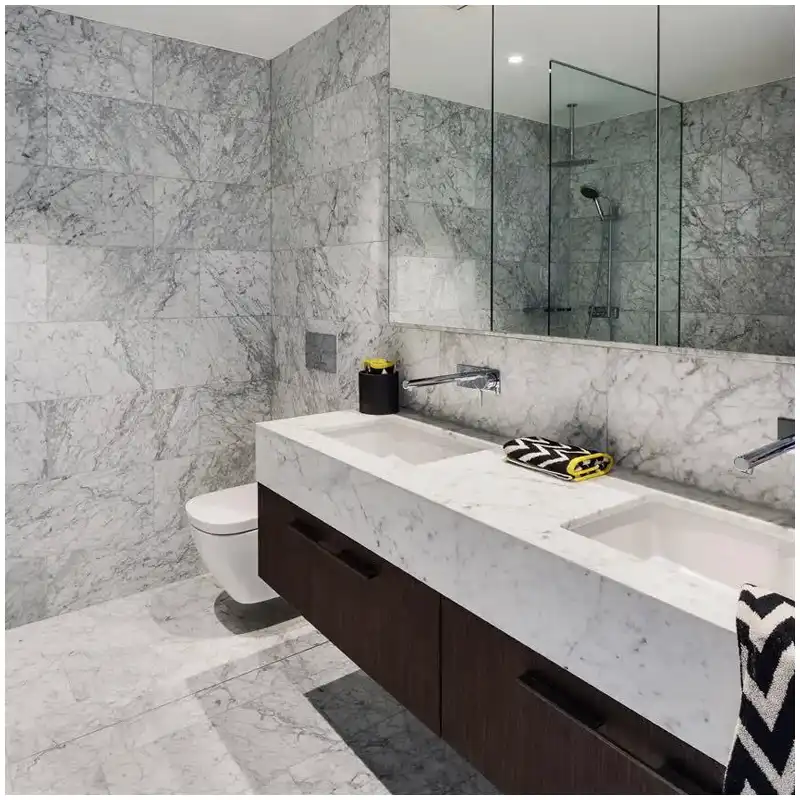
Etching is different. Acids react with calcite and alter the finish. On polished Carrara, an etched spot often looks dull or lighter from one angle and may feel slightly different. Bathroom descalers, acidic cleaners, some cosmetics, and beverages can cause it. A sealer does not stop acid from reacting with calcite.
Moisture darkening can appear around shower floors, joints, tile edges, fixtures, or areas with slow drying. The pattern may expand after use and recede during drying. Persistent moisture needs an installation and water-source investigation, not immediate polishing.
Grout haze and cleaner residue sit on the surface. They can create a cloudy field, streaks, or low-gloss patches. Test a small area with the approved method before assuming the stone itself changed. Wrong chemicals can turn a removable residue problem into permanent etching.
The question does Carrara marble stain easily becomes useful only after the team separates absorption from surface reaction. A darker color, changed gloss, and wet perimeter point toward different investigations, even when they appear beside the same basin.
Rust-related discoloration can originate from stone minerals, embedded metal, tools, fasteners, water, or contamination. Yellowing can also come from adhesives, resins, waxes, sealers, organic contamination, or moisture. Color alone does not prove one cause.
The parent Bianco Carrara Marble for Bathroom Projects: Slab Range, Light, and Approval shows how slab selection, finish, lighting, wet-zone layout, and dry-lay prepare the material before installation. This diagnosis article begins after a mark appears or when a project writes its prevention plan.
| Observed condition | Useful clue | Do not assume | First action |
|---|---|---|---|
| Dark local patch | Follows oil, wet object, joint, or repeated splash | Every dark mark is oil | Record source and drying behavior |
| Dull ring or splash | Gloss changes under raking light | Sealer failure caused it | Compare texture with unaffected finish |
| Dark tile edge or shower zone | Changes with use and drying time | More sealer will solve trapped moisture | Investigate water path and assembly |
| Cloudy film or streaks | Broad surface deposit after grouting or cleaning | The slab batch is defective | Test approved residue-removal method |
| Yellow or brown point | Related to metal, mineral mark, chemical, or moisture | Bleach is the safe response | Document and identify likely source |
Use touch and raking light carefully
A polished etched area often loses reflection even when color barely changes. View the surface at a low angle and compare with a clean unaffected zone. Do not scratch it with a metal tool. A qualified stone professional can assess finish change and treatment options.
Lighting lies. Warm light can make a yellow mark look stronger; cool light can make a grey moisture area more obvious. Photograph the condition under normal operating light and a stable inspection light. Keep both sets instead of selecting the one that proves a preferred explanation.
The direct care resource How to Clean a White Marble Bathroom covers routine methods. Diagnosis comes first when the condition is unknown, because routine cleaning instructions are not a repair specification.
Trace Water, Oils, Grout, Metal, and Cleaning Sources
Ask when the mark first appeared. Before grouting points toward fabrication, storage, adhesive, handling, or stone features. After grouting raises questions about grout, wash water, haze remover, moisture, and protection. After occupancy brings cleaners, toiletries, water, metal containers, oils, and maintenance habits into the record.
If the question does Carrara marble stain easily comes from a vanity top, inspect faucet bases, soap dispensers, cosmetic storage, toothbrush cups, sink sealant, backsplash joints, and drain overflow. Repeated small spills can be more revealing than one dramatic accident.
In showers, map water use, drainage, slopes, joints, niches, corners, penetrations, sealant, waterproofing interface, ventilation, and drying time. A dark band that follows a joint needs water-path investigation. Do not call it a surface stain until the assembly has been checked.
On floors, note entry routes, bath mats, metal furniture, construction protection, adhesives, grout, cleaning machines, and standing water. Stains under protection may come from trapped moisture, dyes, adhesives, dirt, or transferred chemicals. Keep removed protection for evidence.
At the warehouse, I also inspect slabs and cut pieces before packing. A mineral mark present before shipment should be in the approval record. A new mark after arrival needs comparison with the pre-shipment image. This is why complete clean photographs matter.
Read the shape before choosing the chemical
A circular ring suggests an object. A straight line may follow a joint, crate separator, tape, or protection edge. Darkening around the perimeter can suggest moisture or installation-related picture framing. Random fine dull spots may follow overspray or acidic droplets.
The shape is not proof, but it narrows the investigation. Add timing, location, texture, moisture behavior, material records, and products used. A good diagnosis collects clues before disturbing the surface.
The Hard-Won Lesson: Do not poultice an etched surface
A dull splash beside a vanity basin may look pale and therefore get called a stain. If the area has lost polish because an acidic product reacted with calcite, a poultice aimed at drawing pigment from pores will not restore the finish. Repeated wet treatment may only delay the correct assessment and change the surrounding appearance.
The Lesson: Identify whether the problem is in the pores, on the surface, or in the finish before applying any treatment.
Control Selection, Fabrication, Installation, and Protection
Prevention begins with the slab range. Inspect mineral marks, repairs, fills, resin, and back treatment. Map sink openings, faucet holes, niches, edges, and highly lit zones so questionable features do not land where water or close viewing will emphasize them.
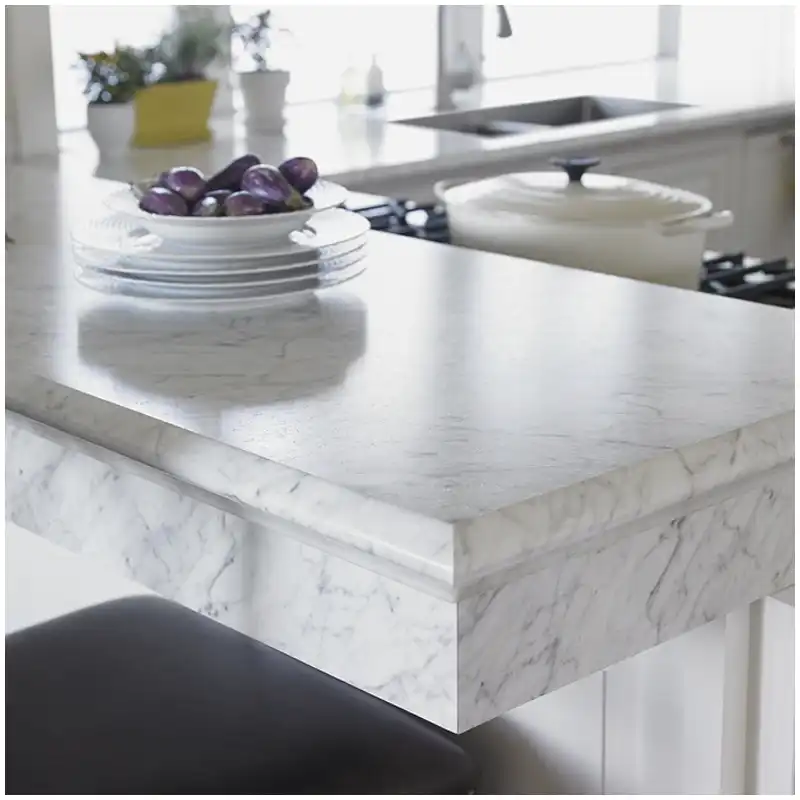
ए Bianco Carrara marble vanity top can guide the format, while कैरारा मार्बल टाइलें suit many modular wall and floor discussions. Actual pieces still need compatible installation materials, finish approval, and protection for their location.
Use setting materials, grouts, sealants, waterproofing, membranes, cleaners, and sealers specified for the project and compatible with the stone and substrate. White stone can reveal adhesive color, moisture, cure differences, and contaminants more readily than darker material.
Mock-ups should include the real build-up. A dry sample sitting on a table cannot show picture framing, adhesive moisture, grout interaction, joint color, or cleaning. Observe the mock-up through the specified curing and cleaning process before widespread installation.
Construction protection must be clean, compatible, breathable or sealed as the specification requires, and installed only after the stone and setting system reach the appropriate condition. Tape, cardboard, timber, metal, plastic, dirt, and trapped water can all transfer or concentrate contamination.
Sealer selection follows absorption, finish, location, desired appearance, and manufacturer instructions. A sealer can reduce absorption of some substances. It does not prevent acid etching, correct trapped moisture, stop rust from a metal source, or make poor joints harmless.
Write a cleaning rule people can follow
List permitted routine products, dilution, tools, rinse method, drying, and prohibited chemicals. Train staff to blot spills and report unusual marks early. Store acidic descalers away from stone areas unless a qualified procedure specifically permits their use.
A housekeeping label saying “marble safe” is not enough evidence for every finish and installation. Test the actual product on the approved stone and joint materials. Watch for residue under mirror or raking light after drying.
Choose a Measured Response instead of a Stronger Cleaner
When a team asks does Carrara marble stain easily after a mark appears, begin with documentation. Record date, area, piece code, normal lighting, close detail, dimensions, texture, moisture condition, nearby products, construction stage, cleaning history, and whether the mark changes over time.
Do not experiment on the center of the visible area. A qualified professional may use controlled cleaning tests, moisture assessment, stain-specific poultice methods, rust treatment, residue removal, or refinishing depending on diagnosis. Follow product instructions and the project’s technical guidance.
Etched polished marble may require professional refinishing to restore gloss. The treatment should blend with the surrounding finish. A local shiny patch can be as objectionable as the original dull mark. Honed finishes also need controlled restoration to avoid halos.
Persistent moisture demands source correction and drying assessment. Surface treatment before the assembly dries can trap confusion and alter appearance. Check drainage, joints, waterproofing interfaces, leaks, ventilation, setting bed, and adjacent materials with the responsible specialists.
Rust or yellowing should not receive a generic bleach response. Identify metal contact, internal mineral features, water, adhesives, resins, waxes, sealers, and contamination. Some treatments can alter stone or grout, so test and document before broader work.
The White Marble Poultice article describes that technique’s proper role. A poultice is a method for particular absorbed stains, not a universal answer to etching, moisture, residue, or finish mismatch.
Escalate before the area spreads
If several rooms or pieces show the same pattern, pause the related cleaning or installation process. Photograph complete areas and codes. Compare product batches, adhesives, grout, sealer, protection, water exposure, and housekeeping records. One repeated condition points to a system issue.
Contact the stone supplier with the original slab and pre-shipment records, but include site evidence. The supplier can compare whether the feature existed before delivery. The installer, chemical supplier, waterproofing specialist, or consultant may also need to review the assembly.
Keep Evidence for Repeated Bathrooms and Future Care
The handover file should include stone identification, finish, slab or batch records, piece codes, installation materials, grout, sealant, sealer, protection method, curing notes, cleaning products, mock-up approval, maintenance instructions, and spare locations.
के लिए Carrara marble stains, photographs need context. A close image shows detail; a room image shows location and pattern. Keep both. Add a simple plan marking affected pieces. Record whether the surface was wet, recently cleaned, or under unusual light.
Replacement is the last option, not the first reaction. It may be necessary for structural damage, unacceptable embedded contamination, or an unrepairable appearance condition. Before removal, document the piece and surrounding installation so the replacement addresses the cause rather than repeating it.
If replacement proceeds, use the approved range, finish benchmark, area group, and spare record. Compare the piece under normal light before installation. A technically clean replacement can still look wrong if its background or vein density does not belong to the surrounding group.
Quick-Reference Checklist for a New Carrara Mark
- Photograph the complete area, close detail, piece code, normal light, and inspection light.
- Record when the mark appeared and every product, water source, joint, or object nearby.
- Compare color, gloss, texture, shape, moisture behavior, and drying pattern with unaffected stone.
- Pause aggressive cleaning, sealing, polishing, or poulticing until the condition is identified.
- Check slab, installation, grout, sealer, protection, and housekeeping records for repeated patterns.
- Test the selected response in a controlled inconspicuous area with qualified guidance.
- Correct the source before treating or replacing the visible stone.
How to Answer the Staining Question Honestly
Why Does Carrara Marble Stain Easily in Some Settings?
Carrara can absorb staining agents, but performance depends on finish, exposure, time, protection, installation, maintenance, and substance. Many visible problems are not absorbed stains. A useful answer explains conditions and diagnosis.
What a sealer changes
A suitable sealer may reduce absorption and allow more response time for some spills. It does not prevent acid etching, fix moisture paths, remove residues, or guarantee that pigments and oils cannot mark the stone.
When specialist help is needed
Bring in qualified help when the source is unknown, the area is large, moisture persists, rust or yellowing spreads, the finish needs restoration, the installation may be involved, or earlier treatments have changed the surface.
अक्सर पूछे जाने वाले सवाल
1. Does Carrara marble stain easily on a bathroom vanity?
It can absorb some oils, pigments, and organic materials, especially when spills remain. Prompt blotting, appropriate cleaning, suitable sealer where specified, sound joints, and good product storage reduce risk. Acidic products can etch even when staining is controlled.
2. How can I tell a stain from an etch mark?
A stain usually adds color or darkness within the stone. Etching changes surface texture or gloss and often appears dull under raking light. Some conditions overlap, so document the mark and seek qualified assessment before treatment.
3. Will sealing Carrara prevent every mark?
No. A suitable sealer may reduce absorption of some staining agents. It does not stop acid etching, trapped moisture, rust from metal, grout haze, surface residue, or damage caused by incompatible products.
4. Can dark water marks disappear as marble dries?
Some moisture darkening may reduce during drying, but persistent or repeated darkening needs investigation of water sources, joints, drainage, waterproofing, setting materials, ventilation, and drying conditions. Do not seal over an unexplained moisture problem.
5. What should I do first when a new mark appears?
Photograph it under normal and inspection light, record the location, timing, nearby products, water exposure, cleaning history, and texture, and pause aggressive treatment. Compare with project records and contact the responsible supplier or specialist before choosing a remedy.
Final Conclusion
The honest answer to does Carrara marble stain easily is that it can absorb some materials, while many marks blamed on staining come from etching, moisture, rust, grout, residue, or finish change. That slab doesn’t belong next to your bathtub without a realistic care plan, and Esta Stone would rather diagnose one mark properly than damage a whole bathroom with the wrong treatment.
References
- Natural Stone Institute Care and Cleaning Guidance, Natural Stone Institute.
- Dimension Stone Design Manual, Natural Stone Institute.
- ASTM C503 Standard Specification for Marble Dimension Stone, ASTM International.
- Natural Stone Flooring Guidance, Stone Federation Great Britain.
- TCNA Handbook for Ceramic, Glass, and Stone Tile Installation, Tile Council of North America.
- Kitchen & Bathroom Planning Guidelines, National Kitchen & Bath Association.
- Poultice, Wikipedia, English edition.