त्वरित सारांश
White Marble Slab Matching for Bathroom Feature Walls and Vanity Tops
This guide is for interior designers, homeowners planning a bathroom renovation, hotel design teams, renovation companies, and stone fabricators comparing marble slabs for visible bathroom surfaces. It explains how to plan white marble slab matching for feature walls, vanity tops, shower walls, and backsplashes without treating every white stone as the same material.
Why full-slab review matters more than a small sample
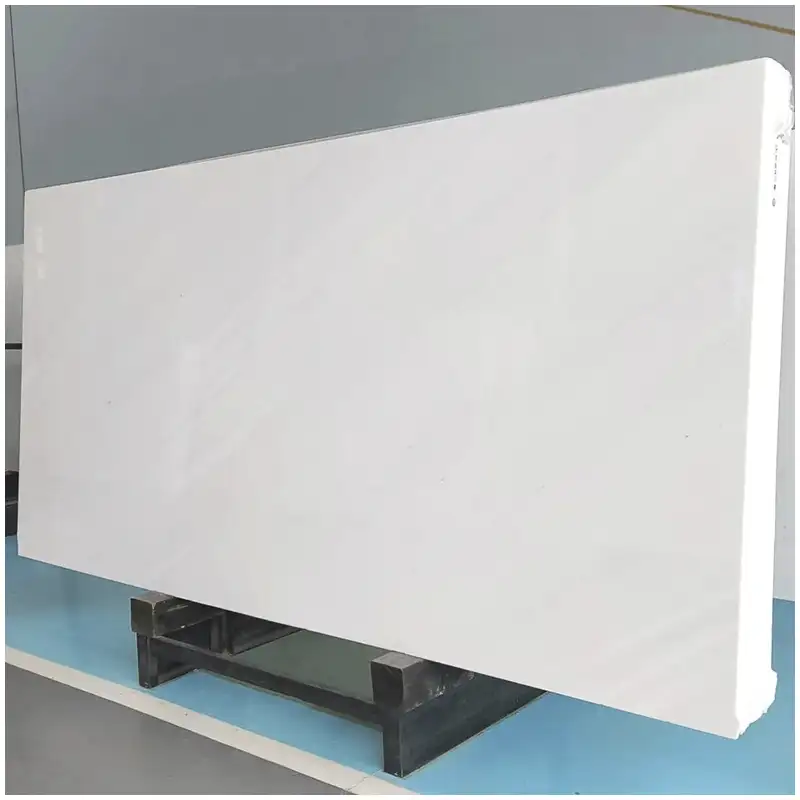
Small samples are useful for checking color, finish, and basic tone. They are not enough for slab matching. A white marble sample may show a clean background and one narrow vein, while the full slab may have broad movement, cloudy areas, diagonal bands, or a warmer section that changes the design.
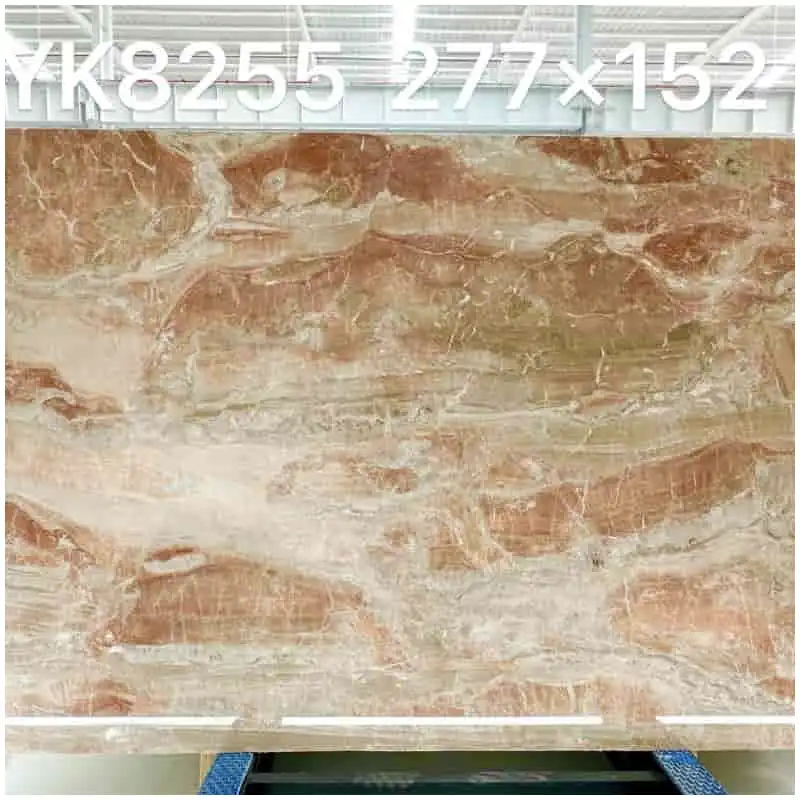
Full-slab photos show the real pattern scale. They help the designer decide whether the marble should become a feature or stay in the background. A strong Calacatta slab can carry a vanity wall by itself. A softer Carrara slab may be better for a calm wall or a set of मार्बल का खपरा. A bright Statuario slab can work well when the room needs a crisp white ground with clear movement.
For slab matching, ask for photos that show the complete slab, the slab number if available, and the surface under neutral light. Close-up photos are useful, but they should support the full-slab view rather than replace it. If the project uses more than one slab, ask how the slabs relate to each other in sequence and whether bookmatching or vein matching is possible.
The goal is not to find a perfect slab. Natural marble is not printed material. The goal is to understand the stone before it is cut so the best areas are used where they will be seen, and the less important cuts are placed in less visible zones.
Bookmatch, vein match, and simple slab alignment
Several terms are used when people discuss marble slab layout. They are related, but they do not mean the same thing. Understanding the difference helps avoid unclear instructions between the designer, supplier, fabricator, and installer.
Bookmatching usually means two sequential slabs are opened like a book so the veining forms a mirror-image pattern. This can work beautifully on a centered bathroom feature wall, especially behind a freestanding bathtub or a double vanity. It is strongest when the wall has enough width and the fixtures do not interrupt the main vein.
Vein matching is broader. It means aligning the stone movement across seams so the pattern continues naturally. The slabs do not have to mirror each other. A vein can run from one slab into the next, or from a vanity top up into a backsplash. This approach is useful when the room needs continuity but not formal symmetry.
Simple slab alignment is the practical choice when the stone has gentle movement or when the wall is broken by mirrors, niches, doors, or cabinets. In that case, forcing a bookmatch may not add much value. A clean direction, balanced shade, and good seam placement may matter more than symmetry.
Where slab matching gives the strongest result
Bathroom slab matching gives the strongest result on surfaces that are easy to see and not broken by too many details. A vanity wall, tub wall, shower back wall, or powder room feature wall can all work. The best location depends on the room’s main view.
A vanity wall is often the first candidate. It sits at eye level, is framed by the mirror and lighting, and can connect the vanity top with the backsplash. If a bookmatched slab is used here, the mirror size and faucet location should be planned early. A large mirror can hide the center of the stone, while a smaller mirror may let the main vein remain visible.
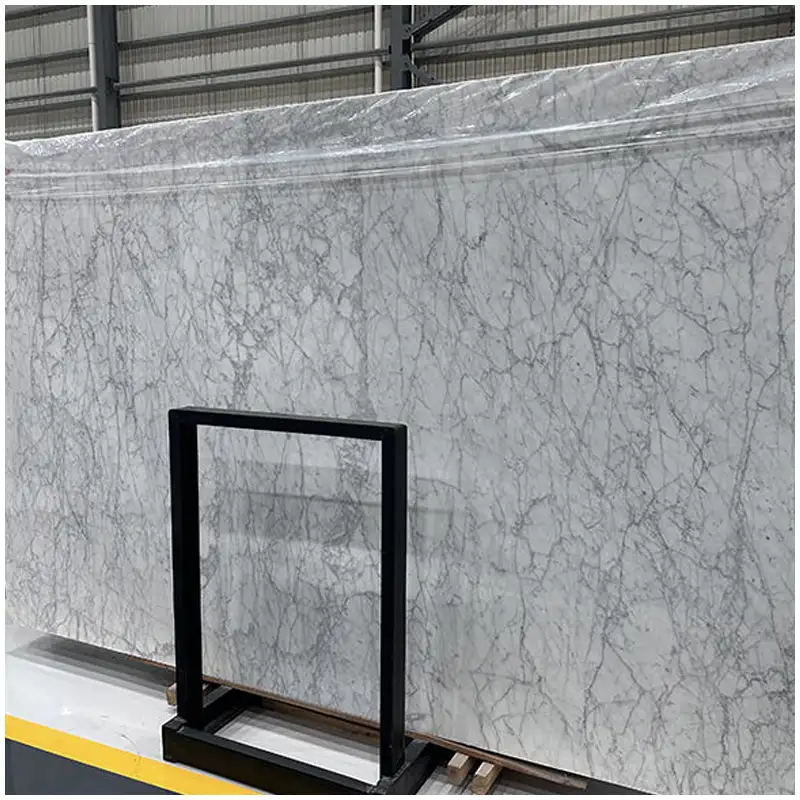
A bathtub feature wall can use stronger marble movement because it is often a cleaner vertical surface. There may be fewer outlets and cutouts. The wall can act as the main visual surface in the room. A bookmatched Calacatta or Statuario wall can work well here if the slab layout is centered and the tub does not cover the best movement.
A shower wall needs more practical review. The slab can look refined, but the area has water, soap, shampoo, niches, glass screens, drains, and frequent cleaning. White marble can be used in shower areas when the stone, finish, sealing, ventilation, waterproofing, and maintenance routine are reviewed together. The layout should not place the strongest vein where a niche or valve will cut through it.
Vanity tops need a different layout logic
A vanity top is smaller than a feature wall, but it is used more directly. It has sink cutouts, faucet holes, cabinet edges, backsplash details, and daily contact with water, cosmetics, toothpaste, and cleaners. This changes the slab matching decision.
For a single vanity, the best piece may be a quiet section of the slab with movement that does not fight the sink. Strong veins can look beautiful, but they should not be broken awkwardly by the basin opening. For a double vanity, the layout should consider whether the two sink openings should sit symmetrically within the stone pattern.
If the vanity top continues up the wall as a slab backsplash, the vein direction becomes more important. Some projects want the countertop vein to continue visually into the backsplash. Others use a quieter backsplash to let the top stay practical. Both can work, but the drawing should show the relationship before cutting.
Marble vanity tops need honest care expectations. Sealing can reduce staining risk, but it does not stop etching from acidic products. If the bathroom needs a white surface with more predictable daily maintenance, compare marble with क्वार्ट्ज़ काउंटरटॉप या sintered stone.
Comparison: matching options for bathroom marble
| Layout option | सबसे अच्छा उपयोग | What to check before cutting |
|---|---|---|
| Bookmatched slabs | Centered vanity walls, tub feature walls, large powder room walls | Sequential slabs, mirror axis, vein center, wall width, fixture positions, and installation access. |
| Vein-matched slabs | Vanity top to backsplash, long walls, shower back walls, feature panels | Vein direction, seam position, cutout locations, slab sequence, and whether the pattern can continue naturally. |
| Single-slab feature wall | Small bathrooms, powder rooms, vanity backsplashes, fireplace-style wall panels | Best visible area, mirror size, tap holes, wall lights, edge treatment, and lighting angle. |
| Slab plus tile combination | Bathrooms with one feature wall and simpler side walls or floors | Color match between slab and tile, finish consistency, grout color, and transition detail. |
| Quiet non-matched layout | Busy bathrooms, rental renovations, rooms with many cutouts | Shade consistency, balanced movement, practical cutting yield, and whether symmetry is worth the cost. |
The right option depends on the room. A bookmatch can be memorable in a large bathroom, but it may be wasted behind a mirror cabinet. A quiet slab layout can be more refined in a smaller room. A slab-and-tile mix can keep the feature wall special while making the rest of the bathroom easier to install and maintain.
How to plan the slab layout before approval
Slab layout should be drawn before fabrication. It does not have to be a complicated drawing, but it needs to show the visible surfaces, the main cutouts, the seam locations, and the direction of the stone movement. Without this step, the supplier and fabricator may choose a practical yield that does not match the design intention.
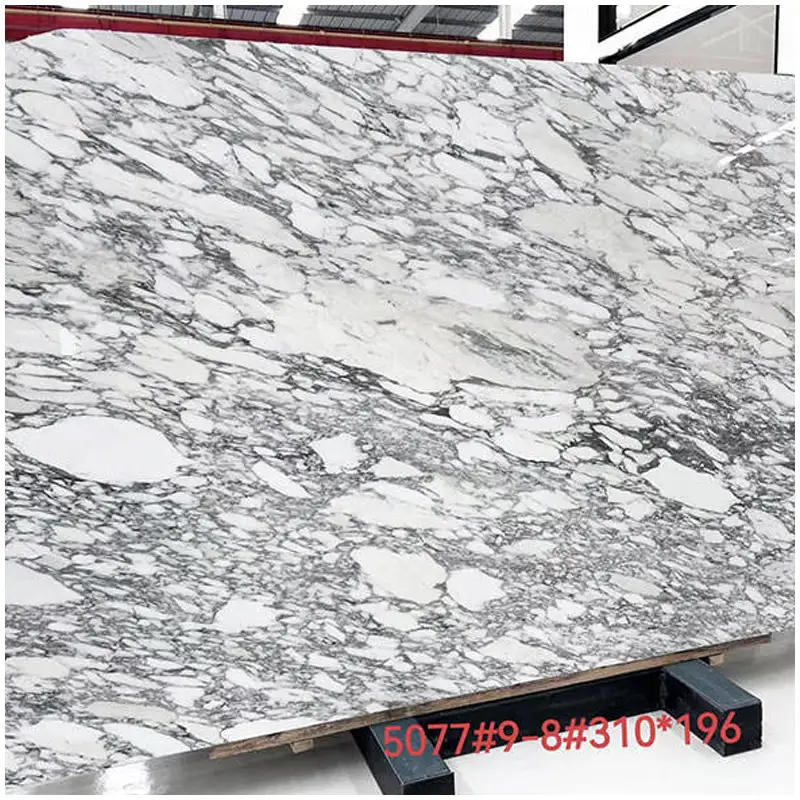
Start with the room elevation. Mark the vanity width, mirror size, wall lights, faucet height, outlet positions, medicine cabinet, niche, towel warmer, and any shelf or ledge. Then place the slab movement over that elevation. This reveals whether the best vein will remain visible or be covered.
For a vanity top, mark sink type, basin cutout, faucet holes, side splashes, backsplash height, and edge profile. For a shower wall, mark valves, shower head, niche, bench, glass line, curb, and drain slope where relevant. For a tub wall, mark tub height, filler, ledges, and any wall-mounted hardware.
If using several slabs, ask for a numbered slab layout. Identify which slab becomes the left panel, right panel, vanity top, backsplash, or side return. This helps all parties discuss the same piece of stone. It also reduces the risk of approving one slab photo and receiving a different layout in the finished room.
Lighting can make or break the match
White marble is sensitive to lighting. A slab that looks balanced in daylight may show different undertones under warm LED lighting. Side lighting can reveal surface texture, lippage, resin areas, or polishing differences. Mirror lighting can make a vanity backsplash look brighter in the center and darker at the edges.
For feature walls, check the direction of light. A downlight washing over polished marble can create strong reflections. A honed finish may reduce glare and give a softer look. In a bathroom where the stone is viewed close up, this difference matters more than it might on a distant wall.
Cabinet color should be reviewed under the same light. A warm wood vanity can make white marble feel softer. A cool white cabinet can make Carrara appear grayer. Matte black hardware can sharpen the veins, while chrome or polished nickel can make the room feel cooler. The slab should be checked beside the actual cabinet or finish sample before approval.
If the project cannot review the slab in the final room, ask for several photo types: full slab under neutral light, close-up surface photo, angled light photo, and layout photo with the planned cuts marked. This gives a more realistic basis for approval.
Finish and edge details for vanity and wall slabs
Polished marble is often chosen for feature walls because it reflects light and makes the vein movement sharper. It can work well behind a vanity, in a powder room, or on a bathtub wall. The tradeoff is that polished marble can show etching, water marks, and fine scratches more clearly in daily use.
Honed marble gives a softer, less reflective surface. It is often a good choice when the bathroom should feel calm rather than glossy. Honed marble can also make strong veining feel less sharp. It still needs proper sealing and stone-safe cleaning, especially around sinks and showers.
Edge details matter on vanity tops. An eased edge keeps the surface simple. A small bevel gives a cleaner line. A thicker built-up edge may make the vanity feel more substantial, but it needs careful finishing at corners, sink openings, and side splashes. The edge should suit the cabinet style and the slab thickness.
Wall slabs need edge planning too. Exposed side edges, inside corners, outside corners, niche edges, and mirror returns should be discussed before cutting. A stone wall can lose its clean look if trims, exposed edges, or corner details are treated as afterthoughts.
Care expectations before choosing white marble
White marble is a natural stone, and it should be presented honestly. It can stain if liquids sit on the surface, and it can etch from acidic products. Bathroom exposure includes toothpaste, perfume, cosmetics, soap, standing water, and cleaning products. A vanity top has more direct exposure than a decorative wall.
Sealing may help reduce staining risk, but it does not make marble stain proof or etch proof. The sealing recommendation should be tied to the specific marble, finish, and use area. A polished feature wall may have different care needs from a honed vanity top or shower panel.
Daily care should be simple and realistic: wipe standing water, use stone-safe cleaners, avoid acidic bathroom products on the marble, and keep ventilation working in wet areas. For hotels or rental interiors, the maintenance team should know which cleaners are acceptable before marble is approved.
If the design needs the look of white stone but the room has heavy daily use, compare marble with natural quartzite stone, quartz, or sintered stone. Marble may still be the right answer for the feature wall, while another surface may be better for the vanity top.
Approval checklist for marble slab matching
Before confirming white marble slabs for a bathroom feature wall or vanity top, use this checklist:
- Confirm the exact application: vanity top, vanity wall, tub wall, shower wall, backsplash, side return, or niche.
- Review full-slab photos, not only small samples.
- Confirm whether the layout needs bookmatching, vein matching, or simple balanced alignment.
- Mark mirror size, faucet holes, outlets, wall lights, niches, and other cutouts on the elevation.
- Check slab undertone beside cabinet, paint, metal, tile, and flooring samples.
- Choose finish: polished, honed, brushed, textured, or another approved surface.
- Confirm seam locations, exposed edges, side splashes, and corner treatment.
- Review wet-area details, waterproofing, ventilation, and cleaning expectations.
- Ask for sealing and care guidance for the exact stone and finish.
- Compare quartz, quartzite, or sintered stone if the vanity top needs lower maintenance than marble can offer.
This checklist is especially useful when one bathroom uses several white surfaces. A room may include slab marble on the vanity wall, सफेद मार्बल टाइल्स on the floor, quartz on the vanity top, and painted cabinetry. Each piece should have a reason.
Related white marble guides
Frequently asked questions
1. What is white marble slab matching?
White marble slab matching is the process of planning how slab veins, shade, seams, and cutouts line up across visible surfaces. It can include bookmatching, vein matching, or simple balanced alignment. The goal is to make feature walls, vanity tops, and backsplashes look intentional after installation.
2. Is bookmatched marble always the best choice for a bathroom wall?
No. Bookmatched marble works best on centered feature walls with enough width and limited cutouts. It may not be worth the cost or planning effort if a large mirror, niche, cabinet, or fixture hides the main pattern. In smaller bathrooms, a quiet single-slab layout can look cleaner.
3. Should a marble vanity top match the backsplash?
A marble vanity top can match the backsplash when the vein direction, sink cutout, faucet holes, and wall layout work together. It is not required. Many bathrooms use marble on the wall and quartz, quartzite, or sintered stone on the vanity top when daily maintenance is a concern.
4. What photos should be checked before approving marble slabs?
Check full-slab photos, close-up surface photos, angled light photos, and layout photos with planned cuts marked. If the project uses more than one slab, review the slab sequence and confirm whether bookmatching or vein matching is possible. A small sample is not enough for layout approval.
5. Does white marble need sealing in bathroom vanity areas?
Many white marble vanity areas benefit from sealing, but the recommendation depends on the specific stone, finish, and use area. Sealing can reduce staining risk, but it does not prevent etching from acidic products. Use stone-safe cleaners, wipe standing water, and confirm care guidance before installation.
Final Conclusion
White marble slab matching is not only a decorative decision. It affects whether a bathroom feature wall, vanity top, backsplash, or shower wall looks planned after the stone is cut. Full-slab review, vein direction, bookmatch choice, seam location, lighting, and fixture placement should all be decided before fabrication.
For the best result, choose the marble by application area rather than name alone. Use dramatic slabs where the room can carry them, quieter layouts where the bathroom needs calm, and alternative surfaces where daily maintenance matters more than natural variation. Esta Stone can help compare marble slabs, marble tiles, white marble tiles, quartzite, quartz, and sintered stone for a clearer bathroom surface plan.

Ask Esta Stone for slab layout support
For a bathroom feature wall, vanity top, shower wall, or slab backsplash, share the room size, wall elevations, preferred marble look, finish, and maintenance expectations. Esta Stone can help review slab photos, matching options, tile alternatives, and practical surface choices before the order is prepared.
References
- Dimension Stone Design Manual 2024, Natural Stone Institute Technical Committee, Natural Stone Institute, Natural Stone Institute.
- Standards and Specifications for Natural Stone Products, Natural Stone Institute Technical Committee, Natural Stone Institute, Natural Stone Institute.
- ASTM C503/C503M Standard Specification for Marble Dimension Stone, ASTM Committee C18, ASTM International, ASTM International.
- ASTM C1528/C1528M Standard Guide for Selection of Dimension Stone, ASTM Committee C18, ASTM International, ASTM International.
- ASTM C119 Standard Terminology Relating to Dimension Stone, ASTM Committee C18, ASTM International, ASTM International.
- ASTM C1242 Standard Guide for Selection, Design, and Installation of Dimension Stone Attachment Systems, ASTM Committee C18, ASTM International, ASTM International.
- Bookmatching: Geology Meets Geometry, Use Natural Stone Editorial Team, Natural Stone Institute, Use Natural Stone.
- Which Bathroom Tiles Will Make Your Scheme Look More Expensive?, Livingetc Editorial Team, Future PLC, Livingetc.