Gyors összefoglaló
How to Source Premium Taj Mahal Quartzite Slabs: A Wholesaler’s Inspection Checklist
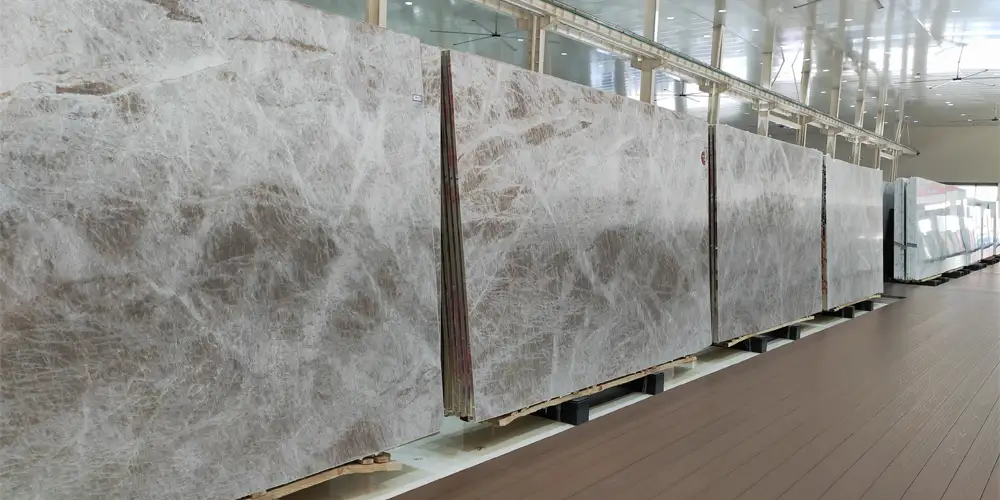
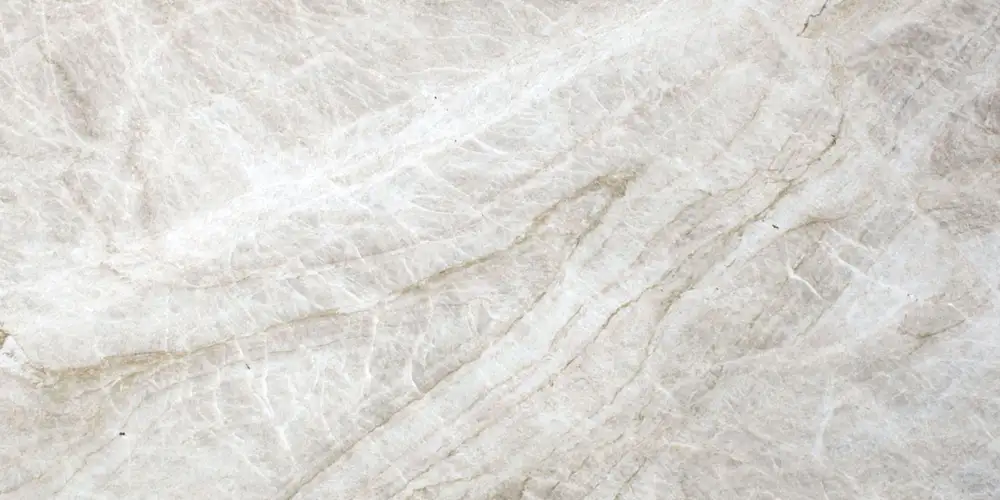
The luxury stone market in 2026 is no longer driven by cold minimalism alone. Across premium kitchens, branded hospitality projects, penthouse developments, and high-end retail interiors, warm neutrals are replacing the icy grays that dominated the previous decade. In this transition, Taj Mahal kvarcit has moved from a beautiful countertop choice into something far more strategic: an architectural investment material.
Its popularity is not accidental. Designers specify it because it delivers the creamy softness of marble without marble’s vulnerability. Contractors favor it because it performs with the structural confidence expected from a high-grade quartzite. Wholesalers pursue it because demand is broad, resilient, and international. Yet there is a problem hiding beneath the trend: not all Taj Mahal slabs are created equal.
That is precisely why buyers in 2026 are becoming more selective. In a market where “premium” is often used too casually, slab inspection is no longer optional. Color consistency, mineral density, resin treatment, fissure behavior, and finish stability all directly affect downstream value. A slab that looks acceptable in a warehouse may become a fabrication headache or a claim issue after installation.
For procurement teams, distributors, and project managers, working with a verified Taj Mahal Quartzite Manufacturer, a trusted Taj Mahal Kvarcit-szállítóval, or a transparent Taj Mahal Kvarcit-gyárból like Esta Stone is no longer just about convenience. It is about protecting margin, reducing waste, and preserving reputation.

At Esta STONE, this shift is increasingly visible among global clients who are not simply asking for slabs. They are asking for quarry consistency, performance data, finish predictability, and large-format suitability. That is the real 2026 market.
If you are sourcing for kitchens, islands, wall cladding, floor systems, vanity programs, or hospitality interiors, this inspection guide will help you distinguish visually attractive material from commercially intelligent material.
For readers who want a broader technical and market overview after this article, the essential cornerstone resource is A Taj Mahal Kvarcit végső útmutatója: árak, tartósság és dizájn 2026-ban.
1. Introduction: The 2026 State of the Taj Mahal Quartzite Worldwide Market
The “beige revolution” is not a passing aesthetic cycle. It reflects a deeper design correction. Homeowners and architects are moving away from overly cold, monochromatic surfaces and returning to warmer, more human-centered palettes. In this shift, Luxus kvarcit is outperforming many synthetic and short-lifecycle materials because it offers depth, permanence, and natural individuality.
Within that movement, Taj Mahal kvarcit has become one of the most commercially important stones in the global premium surface market. It bridges architecture and interior design. It works in minimalist spaces, transitional spaces, hospitality spaces, and ultra-luxury residential environments. But because demand is high, market inconsistency has also increased. The difference between a high-yield premium slab and a visually average commercial slab can be substantial in both price and long-term project value.
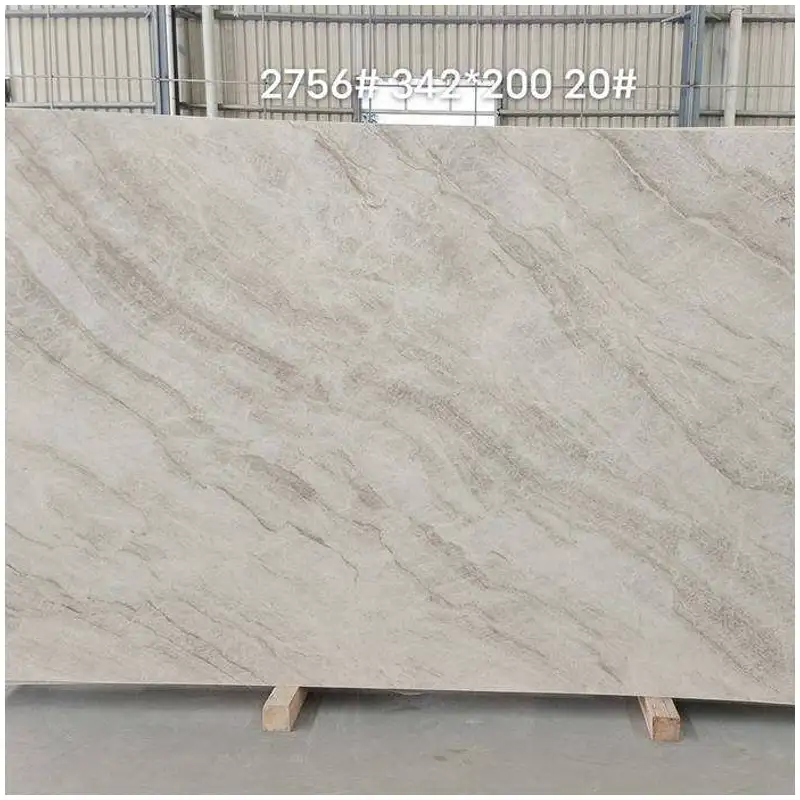
That is why high-tier supplier partnerships matter. A serious buyer should never treat wholesale Taj Mahal slabs as interchangeable inventory. Slab bundles from different quarries, processors, or grading standards can vary significantly in background clarity, movement, fissure stability, and polish response. For project-based sourcing, especially in kitchens and large-format installations, these variables directly influence yield, fabrication efficiency, and final visual success.
2026-ban, Taj Mahal kvarcit is no longer simply a countertop material. It is a specification-grade natural surface used in villas, branded commercial interiors, penthouse towers, luxury hospitality, and full architectural envelope applications. That means sourcing decisions must be made with the same seriousness given to stone for facades, flooring systems, and structural cladding.
2. Geological Provenance: The Brazilian Heartland
The prestige of Taj Mahal kvarcit begins in Brazil, but “Brazilian origin” alone is not enough to guarantee quality. The best material typically comes from quartz-rich metamorphic formations where sandstone underwent intense pressure and heat over geological time, recrystallizing into an interlocking quartz matrix with far greater density and durability than marble.
This is what gives Taj Mahal its unique dual identity. Aesthetically, it resembles a soft ivory marble with gold-beige movement. Structurally, however, it behaves more like a high-performance engineering stone. That is why it has become one of the most commercially successful categories of Brazilian Exotic Quartzite in the global market.
2.1 Why Metamorphism Matters
Taj Mahal’s value lies in transformation. Under metamorphism, the original sandstone’s grains recrystallized into tightly bonded quartz crystals. That crystalline fusion is what creates better scratch resistance, lower water absorption, improved flexural performance, and far greater acid tolerance than calcitic stones.
This is also why buyers comparing Taj Mahal against marble frequently underestimate the performance gap. Visually, the two may appear related. Technically, they are not even close. If your project demands both softness of tone and structural reliability, Taj Mahal kvarcit offers a far more stable solution than marble-based alternatives.

2.2 The Quarry Variable
Not every quarry zone produces the same color or density. Premium zones tend to yield slabs with creamy white to soft ivory backgrounds, fine warm gold veining rather than muddy brown intrusion, lower concentrations of iron-reactive mineral pockets, and more stable internal quartz fusion.
That means quarry source directly affects resale quality. A strong Taj Mahal Quartzite manufacturer will not merely say “Brazil origin”; they should be able to explain slab selection criteria, block grading logic, and consistency standards. This becomes especially important when sourcing for repeated commercial projects or multi-slab installations such as Taj Mahal Quartzite Wall Cladding Tiles és Taj Mahal Quartzite Floor Tiles.
2.3 Sustainability and Certification
In 2026, buyers are increasingly asking where and how the stone was extracted. That is not just an ESG trend. It is becoming a procurement requirement in commercial specifications. Higher-tier buyers are beginning to prioritize quarry partners and processors aligned with environmental restoration programs, dust control protocols, and responsible extraction frameworks, including ANSI/NSC 373-oriented supply chains where available.
For hospitality groups, developers, and public projects, premium sourcing now means more than beauty. It means traceability, environmental accountability, and supply-chain transparency.
3. Műszaki specifikációk: A számszerűsített mérnöki központ
Visual appeal sells the slab once. Performance keeps it sold. Below is a practical reference table wholesalers, architects, and procurement managers can use when evaluating premium-grade Taj Mahal kvarcit against marble and standard granite benchmarks.
3.1 2026 Material Performance Table
| Fizikai tulajdonság | Taj Mahal Quartzite (Premium) | Carrara Marble (Reference) | Standard Granite |
|---|---|---|---|
| Mohs-fokozat | 7.0 | 3.0 | 6.0 – 6.5 |
| Vízfelvétel | < 0.20% | 0.50% – 0.60% | 0.30% – 0.40% |
| Sűrűség (kg/m³) | 2,650 – 2,750 | 2,600 – 2,700 | 2,600 – 2,800 |
| Savállóság | High | Alacsony | High |
| Flexural Strength | 18.0 – 20.0 MPa | 7.0 – 10.0 MPa | 10.0 – 15.0 MPa |
| Nyomószilárdság | 170 – 210 MPa | 70 – 140 MPa | 130 – 220 MPa |
| UV Stability | Excellent | Közepes | Excellent |
| Typical Slab Thickness | 20mm / 30mm | [AQWEN_MT_ITEM_37]18 mm / 20 mm[/AQWEN_MT_ITEM_37] | 20mm / 30mm |
3.2 What These Numbers Mean in Real Projects
The low water absorption rate is especially important for taj mahal quartzite countertops, vanity installations, and splash-prone kitchen applications. If properly sealed, premium slabs resist staining and moisture ingress far better than softer decorative stones.
Its hardness rating also explains why taj mahal kvarcit konyhai munkalapok continue to outperform marble in family kitchens, chef kitchens, hotel service areas, and luxury rentals. You get the elegance of soft neutral movement without inheriting a fragile maintenance profile.
This is one of the core reasons many project buyers now classify Taj Mahal as Luxus kvarcit rather than simply another beige slab.
4. Section A: The Visual Audit (The Aesthetics of Scarcity)
A premium Taj Mahal slab should not only look beautiful in isolation. It must also work as part of a larger architectural system. That means visual auditing should focus on repeatability, matching potential, and spatial continuity.
1. Color Pooling
One of the first things a wholesaler should inspect is uneven mineral concentration. Premium Taj Mahal should show warm movement, not blotchy “gold pools” that create abrupt visual interruptions.
Excessive clustering can become a problem in waterfall islands, book-matched wall panels, large vanity runs, and hotel reception desks. This is particularly relevant if you are sourcing slabs for Taj Mahal Quartzite island applications or long-format kitchen installations.
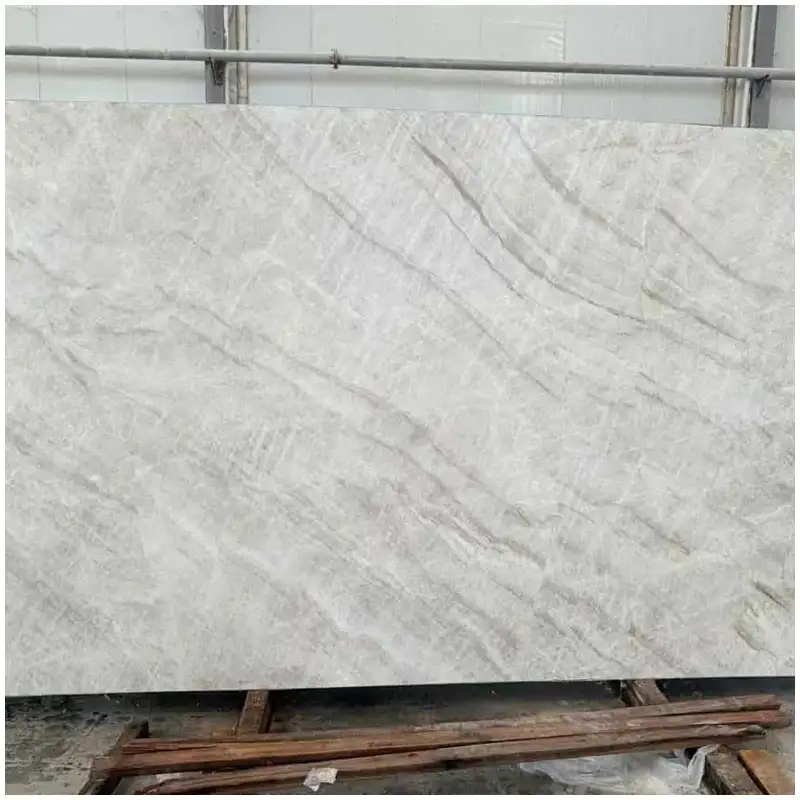
2. Vein Continuity
A slab can be individually attractive but commercially weak if its vein flow breaks too abruptly. Premium buyers should inspect whether the pattern is linear and directional, flowing and cloud-like, or chaotic and fragmented.
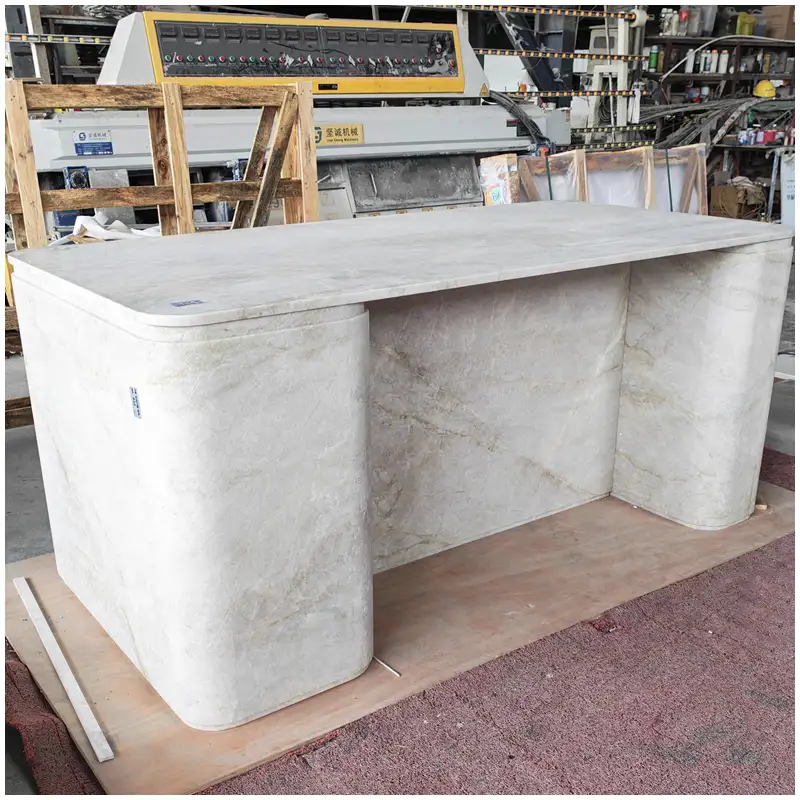
A reliable Taj Mahal Kvarcit-gyárból typically sorts slabs into design-friendly visual families because fabricators and designers need continuity for Taj Mahal Quartzite Tables, Taj Mahal kvarcit fürdőszoba munkalapok, Taj Mahal Quartzite Wall Cladding Tiles, mitered islands, and full-height backsplashes.
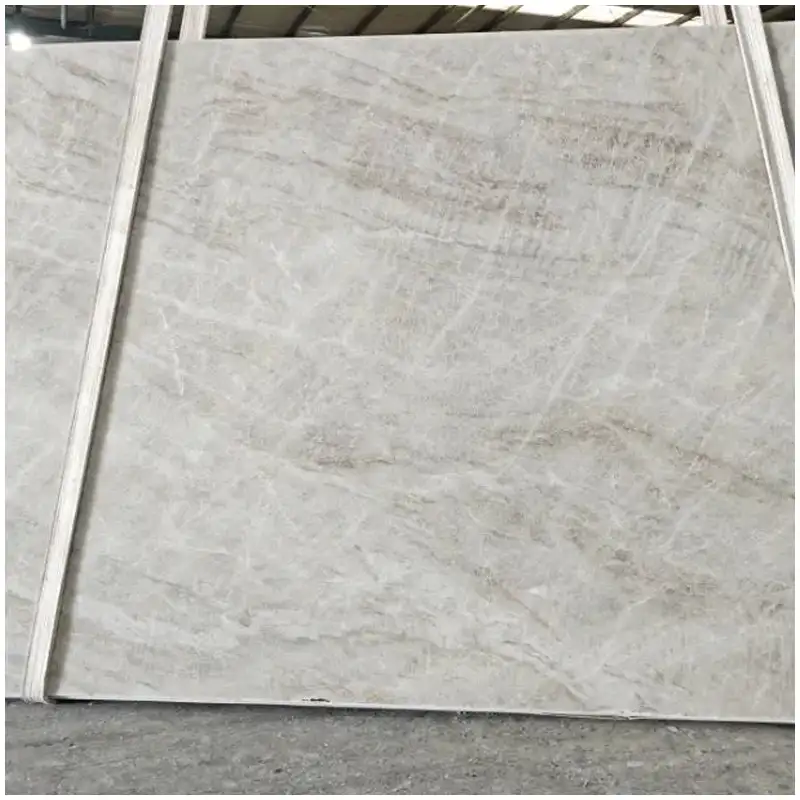
3. Background Clarity
The difference between a premium and secondary grade Taj Mahal often comes down to the base tone. A high-grade slab should feel creamy white, soft ivory, and warm neutral. A lower-grade slab often drifts into muddy beige, flat tan, or uneven gray-beige haze.
That background clarity becomes crucial when the stone is installed under high-end lighting, especially in luxury residential kitchens and boutique retail interiors. For a product-focused visual reference, buyers often compare multiple polished options such as Brazília Taj Mahal kvarcit polírozott lapok és Fehér Taj Mahal kvarcit lemez before final block selection.
5. Section B: The Structural Audit (The Wholesaler’s Inspection Checklist)
This is where amateurs buy beauty and professionals buy performance. A true inspection checklist must go beyond polish and color.
1. Fissure vs. Crack Identification
This is one of the most misunderstood aspects of quartzite sourcing. Natural quartzite often contains geological fissures. These are not automatically defects. Many are stable, mineral-healed, and structurally harmless. Cracks, however, are different. They indicate stress separation and may compromise fabrication or long-term use.
The Fingerprint Test
Run your fingertip lightly across the line.
- If the line is visually visible but physically stable and flush, it is often a natural fissure.
- If the line catches sharply, opens under light pressure, or shows displacement, it may be a structural crack.
Wholesalers should always inspect slab edges and corners too, not just the polished face.
2. Resin and Mesh Backing
Resin treatment is common in natural stone. In premium quartzite, resin can be beneficial when used to stabilize natural movement zones. But excessive resin or aggressive mesh backing may indicate a weaker block.
A buyer should ask:
- Is the resin transparent and evenly applied?
- Is the mesh reinforcement minimal and strategic?
- Is the backing used for transport safety or to disguise instability?
A trustworthy premium quartzite supplier will answer clearly. A vague answer is usually the answer.
3. Iron Spotting and Oxidation Risk
Small iron-bearing mineral inclusions can oxidize when exposed to moisture, especially in outdoor or wet-area applications. This matters for Taj Mahal Quartzite Floor Tiles, exterior cladding, pool-adjacent paving, and garden kitchens.
Look for:
- Tiny rust-colored freckles
- Brown halos around mineral points
- Linear discoloration zones
If the project includes wet conditions, slab inspection should include moisture-risk review before purchase.
4. Surface Pitting Under 4000K Lighting
A polished slab can hide micro-pitting under poor warehouse lighting. Always inspect under neutral 4000K LED illumination.
What to check:
- Pinholes in polished areas
- Surface drag lines
- Fill inconsistencies
- Resin clouding
This is especially important for premium polished inventory like Taj Mahal kvarcit lapok és Taj Mahal Quartzite Slab intended for close-view kitchen and vanity use.
5. Wholesaler Intelligence: Grading Standards & Quality Markers
To assist in objective valuation, we categorize Taj Mahal Quartzite into two primary tiers based on mineral clarity and structural consistency:
| Quality Metric | Premium Grade (A) | Standard Grade (B) |
|---|---|---|
| Background Clarity | Translucent cream/beige; zero “muddy” inclusions. | Opaque zones with potential yellowish/grey shadows. |
| Vein Consistency | Elegant, flowing linear veins; ideal for book-matching. | Fragmented or erratic veining; high waste ratios. |
| Resen Treatment | Ultra-clear, high-penetration vacuum resin. | Visible resin lines or surface “burning” marks. |
| Market Application | 5A Offices, Luxury Hotels, High-end Penthouses. | Standard residential renovations, multi-unit housing. |
6. Comparative Analysis: Taj Mahal vs. Perla Venata and Cristallo
In wholesale markets, confusion between related beige or translucent stones is common. That confusion creates both opportunity and risk.
Taj Mahal vs. Perla Venata
Perla Venata is often mislabeled or loosely marketed as Taj Mahal because the palette overlaps. However, Taj Mahal typically offers better structural density, more quartz-driven consistency, stronger premium market recognition, and higher resale confidence.
Perla Venata can be attractive, but it does not always deliver the same long-term specification strength in high-traffic applications. For a focused comparison, buyers should also review Taj Mahal Quartzite vs. Perla Venata Quartzite: Which Cream Luxury Stone Is Right for You?
Taj Mahal vs. Cristallo
Cristallo brings translucency and dramatic glow. Taj Mahal brings depth, warmth, and broader practical usability.
Choose Cristallo when the project requires:
- Backlighting
- Hangsúlyos falak
- Statement hospitality zones
Choose Taj Mahal when the project requires:
- Tartósság
- Daily usability
- Commercially safe luxury
That is why Taj Mahal often wins in hotel lobbies, premium villas, executive kitchens, and branded real estate developments.

7. Finishing and Fabrication: 2026 Trends
The same slab can perform very differently depending on finish and fabrication.
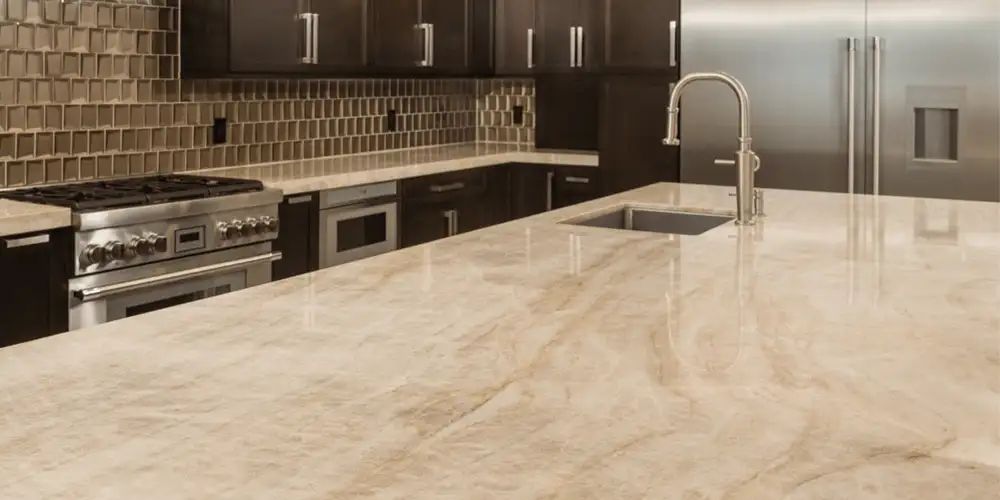
Polírozott felület
Polished remains the global default for luxury. It maximizes movement clarity and light reflectivity while emphasizing cream-gold depth.
This finish is ideal for:
- taj mahal quartzite countertops
- Taj Mahal kvarcit fürdőszoba munkalapok
- Full-height splash walls
- Recepciós pultok
A polished finish is also the most common presentation format in premium product lines such as Taj Mahal kvartsit csiszolt lapok.
Bőrrel kezelt felület
Demand for taj mahal bőrözött kvarcit continues to rise because it introduces tactile sophistication while reducing visible fingerprints and smudges.
A well-executed leathered quartzite taj mahal finish is ideal for:
- Family kitchens
- Butler pantries
- Boutique hospitality counters
- Textured vanity environments
This finish has become especially relevant in 2026 because luxury buyers increasingly want surfaces that feel less “showroom polished” and more materially authentic.
Csiszolt felület
Honed Taj Mahal delivers a velvety matte look without the etching vulnerability associated with marble. It is often chosen for calm, architectural interiors where glare control matters.
Best uses include:
- Spa vanities
- Soft-lit bathrooms
- Minimalist wall cladding
- Boutique office interiors
8. 2026 Pricing Intelligence: The Economics of Procurement
One of the biggest mistakes in wholesale procurement is treating Taj Mahal as a commodity. It is not.
Grade-Based Price Spread
The price gap between A-grade and commercial-grade material can easily reach 20–25% or more, depending on background clarity, vein elegance, structural stability, slab dimensions, and yield efficiency.
That is why Taj Mahal slabs price 2026 cannot be understood through a single number. Pricing must be interpreted through grade logic.
Logistics and Freight
For global buyers, logistics now influence profitability almost as much as slab price itself. Key cost drivers include:
- Block-to-slab yield efficiency
- Container loading optimization
- Breakage insurance
- Port congestion timing
- Inland delivery handling
Számára bulk natural stone procurement, a supplier with better logistics discipline can often outperform a cheaper slab quote.
Fabrication Complexity
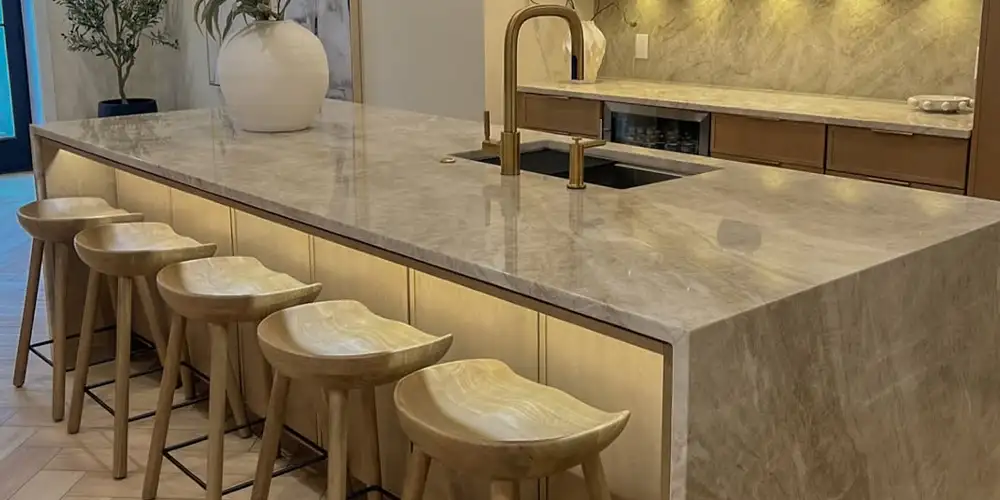
Not every slab costs the same to turn into a final product. Pricing rises significantly with waterfall edges, mitered islands, integrated sinks, full-height splash fabrication, and vein-matched paneling.
This is especially true for custom products like Taj Mahal kvarcit fürdőszoba munkalapok and large-format taj mahal kvarcit konyhai munkalapok.
For a broader price and design reference, also connect this page contextually with A Taj Mahal Kvarcit végső útmutatója: árak, tartósság és dizájn 2026-ban és Lehet-e Taj Mahal kvartit elszíneződni? Gyakori tévhitek és valóságos tesztelések.
9. The Installation Protocol for Wholesalers and Contractors
Even premium stone can fail if installation is careless.
White Adhesive Is Not Optional
Using gray thin-set or dark adhesive beneath a light quartzite is a classic avoidable mistake. It can alter the optical appearance of the stone, especially in thinner sections or lighter zones. For light-toned Egzotikus kvarcit, white-setting materials should be standard protocol.
Sealing Strategy
Although Taj Mahal kvarcit is relatively dense, it still benefits from proper sealing. A nano-impregnating sealer helps preserve appearance while maintaining low absorption performance.
This is especially important for:
- taj mahal quartzite countertops
- Taj mahal quartzite tiles
- Taj Mahal Quartzite Floor Tiles
- Kitchen islands
- Vanity programs
For maintenance-oriented users, this article should internally connect to How to Seal Taj Mahal Quartzite: A Step-by-Step Maintenance Guide.
Weight Management
A 30mm premium quartzite slab is not light. Cabinets, subframes, vanity supports, and island structures must be engineered accordingly.
This is particularly critical for:
- Taj Mahal Quartzite Tables
- Oversized islands
- Long-span vanity systems
- Floating counter concepts
If you are sourcing large-format pieces, also review application-specific formats such as Taj Mahal Quartzite premium tiles, slabs, countertops & surfaces és Champagne-kvarcit munkalapok for palette and fabrication comparison.
10. Global Regulatory Standards & ESG
In 2026, natural stone procurement is increasingly shaped by compliance, health, and environmental standards.
Silica Safety
Fabrication teams must manage respirable crystalline silica exposure through wet cutting, extraction systems, PPE, and shop ventilation controls. This is no longer a “best practice” issue. It is a legal and operational one.
Indoor Air Quality and VOC Expectations
Natural stone remains attractive in sustainable architecture because it can support low-VOC interior strategies when processed and installed responsibly. This makes Luxus kvarcit especially relevant in healthcare-adjacent spaces, wellness design, green-certified homes, and corporate fit-outs.
Circular Material Logic
A premium quartzite installation can remain in service for generations. That lifecycle profile is fundamentally different from many trend-driven synthetic surfaces that are replaced within a decade.
This is one reason Brazilian Exotic Quartzite continues to gain respect among architects seeking both beauty and long-term material credibility.
11. 2026 Industry Forecast: The Scarcity Warning
The next phase of the Taj Mahal market is not just about style. It is about supply tension.
Quarry Depth and Selective Yield
As premium extraction zones become harder to access, the cost of obtaining top-tier blocks rises. The best slabs are becoming more selective, not more abundant.
AI-Driven Slab Mapping
Advanced suppliers are now using digital slab scanning, pattern indexing, and pre-visualization systems to help buyers reserve slab groups before fabrication. This is especially useful for hotels, multi-unit villas, branded retail, and full-house stone packages.
The Rise of Mega-Islands
The market is clearly moving toward larger uninterrupted surfaces. Buyers increasingly request slabs capable of supporting 3500mm+ island runs with minimal seams.
That trend favors suppliers who can consistently deliver large-format premium material rather than isolated showroom pieces.
For design-led search traffic and user journey depth, this article should also point readers toward:
- 15 lenyűgöző konyhaprojekt Taj Mahal kvartcit használatával vízesés-szigetekkel
- Why Taj Mahal Quartzite Is the Definitive Choice Over Synthetic Counterparts in 2026
- The 2026 Quartzite Report: Why Taj Mahal Is Redefining Ultra-Luxury Real Estate
- Taj Mahal Kvartsit a luxus belső terekhez 2026-ban
- 2026: Why Taj Mahal Quartzite Dominates Luxury Middle East Projects
- Why Taj Mahal Quartzite Is the High-Yield Architectural Asset of 2026
- A Taj Mahal kvartsitjának legfontosabb 15 gyakori kérdése, amelyeket tudnia kell
- Why Choose Taj Mahal Quartzite for Interior Deco Projects
- Taj Mahal Quartzite for 2026 Best Interior Designs
- Taj Mahal kvartsit vs. Calacatta márvány: Miért nyer a tartósság a 2026-os konyhákban?
12. High-Intent Industry FAQs
Q1 Is Taj Mahal kvarcit Slabs more expensive than marble in 2026?
In many premium markets, yes. High-grade Taj Mahal often costs more than standard marble because of quarry selectivity, durability, international demand, and fabrication value retention. However, it often delivers better lifecycle value because it is less prone to etching, scratching, and moisture-related maintenance issues.
Q2 Does Taj Mahal kvarcit require sealing?
Yes, although not as aggressively as many softer stones. Proper sealing helps preserve stain resistance and surface clarity, especially in kitchens, bathrooms, and floor applications.
Q3 What is the difference between Perla Venata and Taj Mahal?
Perla Venata usually has a similar creamy-beige family appearance but often differs in quartz density, movement style, and market grading consistency. Taj Mahal generally holds stronger recognition and broader premium acceptance.
How do I find a verified Taj Mahal Quartzite manufacturer?
Q4 Look for a supplier who can provide slab photos and videos under neutral lighting, thickness and finish consistency, clear defect disclosure, packing standards, quarry or source transparency, and technical performance data. That is the difference between buying inventory and buying confidence.
13. Conclusion: The Definitive Choice for Value of Best Quality Taj Mahal Quartzite Slabs from Esta Stone
The reason Taj Mahal kvarcit continues to dominate luxury interiors is simple: it solves a problem that very few stones can solve well. It offers the softness and elegance buyers want, while delivering the strength and long-term reliability that serious projects require.
But in 2026, success is not about choosing Taj Mahal in general. It is about choosing the right Taj Mahal.
A slab that photographs well is not automatically a slab that will fabricate cleanly, install safely, age beautifully, and preserve project value. That is why wholesalers, fabricators, developers, and designers must inspect beyond appearance. Background clarity, fissure behavior, resin logic, finish quality, density, and application fit all matter.
Whether you are sourcing for Taj Mahal Quartzite Floor Tiles, Taj Mahal Quartzite Wall Cladding Tiles, Taj mahal quartzite tiles, taj mahal kvarcit lemez programs, or full taj mahal kvarcit konyhai munkalapok, the most profitable decision is rarely the cheapest slab. It is the most predictable one.
That is where a technically informed sourcing process becomes your competitive advantage.
For project buyers looking to build with confidence, Esta STONE remains a useful partner reference point for understanding specification quality, finish consistency, and commercial-grade selection strategy in the premium quartzite segment.

And if your goal is to understand the full design, durability, application, and pricing ecosystem behind this material, your cornerstone content destination should remain: A Taj Mahal Kvarcit végső útmutatója: árak, tartósság és dizájn 2026-ban.
Top 5 Google-Intent FAQs About Taj Mahal Quartzite
1. How to identify real Taj Mahal Quartzite before buying slabs in bulk?
Real Taj Mahal kvarcit should show a dense quartz structure, natural creamy-white to warm ivory background, and elegant beige-to-gold movement rather than flat printed repetition or chalky calcite softness. Buyers should inspect the slab under neutral lighting, test for hardness, review resin treatment, and verify whether the material behaves like quartzite rather than marble. In bulk purchasing, the best verification method is to evaluate an entire slab bundle instead of relying on a single showroom sample, because consistency is what determines commercial value.
2. Is Taj Mahal Quartzite harder than granite and suitable for commercial projects?
Számos esetben igen. A prémium Taj Mahal általában körülbelül a Mohs-féle 7-es skálán helyezkedik el, ami azt jelenti, hogy karcolási ellenállás szempontjából egyenértékű vagy éppen valamivel jobb, mint sok gyakori gránit. Ezáltal erős jelölt a szállodai pultok, luxus kereskedelmi felületek, márkás recepcióterek és prémium lakókonyhák számára. Azonban a keménység önmagában nem elegendő. A vásárlóknak értékelniük kell továbbá a repedésstabilitást, a felszívódási sebességet és a megmunkálási viselkedést is, mielőtt specifikálnák a nagy igényeket támasztó kereskedelmi felhasználásra.
3. Does Taj Mahal Quartzite stain or absorb water over time?
A magas minőségű Taj Mahal a márványhoz képest viszonylag alacsony felszívóképességgel rendelkezik, a megfelelő szabványok szerinti vizsgálat során gyakran 0,20% alatt marad. Ennek ellenére ez is természetes kő, ezért helyesen kell bevonni, különösen konyhai, mosdó- és padlóburkolati alkalmazások esetén. A legtöbb foltosodási probléma nem azért következik be, mert a kő gyenge, hanem azért, mert elmaradt a bevonás, a tisztítószerek nem voltak megfelelőek, vagy a telepítés részleteit rosszul kezelték. Gyakorlati értelemben a megfelelően bevonott Taj Mahal nagyon jól teljesít a mindennapi használat során.
4. What is the difference between Taj Mahal Quartzite and Taj Mahal Marble sold online?
This is one of the most common market confusions. Genuine Taj Mahal kvarcit is a quartz-rich metamorphic stone known for hardness, durability, and lower absorption. “Taj Mahal Marble” is often a naming shortcut, a mislabel, or a softer lookalike used in some markets. For wholesalers and project buyers, the difference is critical. Quartzite can support more demanding countertop and flooring applications, while softer marble-like materials usually carry a higher maintenance risk and lower long-term durability.
5. What should wholesalers inspect first when sourcing premium Taj Mahal slabs in 2026?
The first five checkpoints should be background clarity, vein continuity, fissure stability, resin transparency, and edge integrity. Those five factors reveal more about commercial quality than polish alone. Buyers should also inspect whether slab bundles are visually consistent enough for book-matching, waterfall islands, and large kitchen layouts. In 2026, the strongest wholesale buyers are not simply purchasing beautiful slabs. They are purchasing repeatable quality with low downstream risk.
References
- Dimension Stone Design Manual — Natural Stone Institute — Natural Stone Institute — Technical design and stone specification reference.
- ANSI/NSC 373 Sustainable Production of Natural Dimension Stone — Natural Stone Institute — ANSI / NSC — Sustainability and quarrying compliance framework.
- ASTM C97 Standard Test Methods for Absorption and Bulk Specific Gravity of Dimension Stone — ASTM International — ASTM — Physical property testing reference.
- ASTM C170 Standard Test Method for Compressive Strength of Dimension Stone — ASTM International — ASTM — Compressive performance standard.
- ASTM C880 Standard Test Method for Flexural Strength of Dimension Stone — ASTM International — ASTM — Flexural strength testing standard.
- Silica, Crystalline — Occupational Safety and Health Administration — OSHA — Worker safety and respirable silica guidance.
- Natural Stone in Architecture: Durability and Lifecycle Performance — M. D. Tucker — Building Stone Institute / Architectural Materials Review — Lifecycle and durability perspective.
- Quartzite: Metamorphic Processes and Commercial Performance in Architectural Applications — Dr. Alan R. Whitmore — Journal of Applied Stone Materials — Geological and technical interpretation of quartzite behavior.
Semantic Loop Insight
Why Premium Taj Mahal Quartzite Is More Than a Beautiful Slab
Taj Mahal kvarcit is not simply a neutral luxury stone. In 2026, it has become a procurement-sensitive architectural material defined by consistency, durability, and long-term design value. For buyers, designers, and wholesalers, the real question is no longer “Is it beautiful?” but “Is it stable, grade-consistent, and commercially intelligent?”
How should premium Taj Mahal be evaluated in real sourcing scenarios?
Premium slabs should be assessed through a layered framework: visual harmony, structural integrity, finish response, moisture behavior, and fabrication yield. A slab with elegant beige-gold movement but poor edge stability can quickly become a loss during fabrication. Likewise, a technically strong slab with muddy visual tone may fail in premium design applications. The best wholesale purchases happen when aesthetics and engineering align.
Why is Taj Mahal Quartzite Slabs considered a “safe luxury” material?
Because it occupies a rare middle ground in natural stone. It offers the soft visual warmth of marble, but with the hardness, lower porosity, and daily-use resilience expected from quartz-rich metamorphic stone. That makes it highly adaptable across kitchens, hospitality spaces, vanity programs, flooring systems, and large-format wall installations.
What makes one Taj Mahal slab more valuable than another?
Not all value is visible at first glance. True premium value comes from creamy background clarity, elegant vein continuity, low oxidation risk, minimal unstable fissures, balanced resin treatment, and high fabrication predictability. In wholesale terms, repeatability often matters more than dramatic individuality. Buyers are not only purchasing stone—they are purchasing reduced project risk.
What are the best application options for premium-grade Taj Mahal?
High-grade material performs especially well in waterfall islands, kitchen countertops, vanity tops, large dining tables, floor tiles, wall cladding systems, and luxury hospitality interiors. Polished surfaces maximize visual depth, leathered finishes add tactile sophistication, and honed finishes support quiet architectural minimalism. The right finish should be selected based on traffic, lighting, and user behavior—not trend alone.
What should wholesalers and contractors consider before ordering in bulk?
Bulk purchasing decisions should include slab bundle consistency, block yield efficiency, logistics protection, resin transparency, edge soundness, and installation suitability. It is also essential to confirm whether the material is intended for interior-only applications or wet/outdoor environments. In 2026, the strongest stone procurement strategies are technical, not speculative.
Market Insight: Why Taj Mahal Quartzite is strategically important in 2026
The market is moving toward larger islands, warmer palettes, longer slab spans, and lower-maintenance luxury materials. At the same time, quarry selectivity is increasing and top-grade extraction is becoming more difficult. This means premium Taj Mahal is not becoming more generic—it is becoming more stratified. Buyers who understand grading and inspection now will have a stronger competitive position later.
FAQ Structured Data (Schema.org / FAQPage)