

White Marble Slab Supplier Guide for Calacatta, Carrara, Statuario, and Sivec
Two slabs with the same commercial name started a three-hour warehouse argument. The person holding the sample kept saying it looked whiter in the meeting room. I looked at the slab photos, then at the bathroom light, and I knew where the fight started. Lighting lies.

Don’t just look at samples. A small piece behaves nicely because it hides the vein that will cross the vanity, the warm patch that sits near the tub, and the cloudy corner that becomes obvious under mirror light. I sound strict because returns are uglier than honest approval notes.
I keep Sivec White Marble for Hotels, Villas, and Commercial Interiors close to every white stone decision.
When the supplier discussion starts, I put Lempengan Marmer Calacatta on one side of the table and ask how much movement the room can tolerate.
How white marble slab supplier decisions go wrong before production
The first risk is pretending white marble has one color. It does not. A full slab can hold warm milk, cold grey, cloudy white, and sharp veins in the same piece. That slab doesn’t belong next to your bathtub if the busiest part lands where water spots and mirror light meet.
No shortcuts.
What I check before the order moves forward
| Check | What I want to see | Why it matters |
|---|---|---|
| Drawing | Size, holes, edge, returns, and reference direction | Stops late arguments before cutting |
| Photo set | Full view, close view, side light, label, and mock-up | Keeps the project team looking at the same evidence |
| Sampel | Finish, tone, touch, and cleaning expectation | Shows what the hand and eye will notice |
| Packing note | Piece code, crate order, mark position, and spare pieces | Makes site handling less chaotic |
I check light before I trust color. Warm 3000K light can make a white field look creamy. Cooler 4000K light can sharpen grey veins and make a calm slab feel harder. Lighting lies, so I photograph the same slab under more than one condition.
For calmer grey-white work, Lempengan Marmer Carrara needs a separate batch photo instead of being judged from a small corner.
I also want the client to say where the stone goes. A vanity top, shower wall, floor border, and bathtub surround do not judge marble the same way. I use Sivec White Marble: Carrara Supplier Details Before Bathroom Project Approval when the team starts mixing names instead of looking at slab behavior.
My warehouse rule is simple. If the buyer expects paper white, stop the order. Natural white marble is not paper.
How I read drawings, photos, and samples together
I start with the drawing because measurements decide what the material can become. Then I put the photo beside the drawing. If the strongest vein, color change, or joint line lands in the wrong place, I want to know before anyone approves the order.
The sample comes last, not first. A sample helps confirm touch and finish, but it cannot explain the whole surface. I use it as a witness, not as the judge.
For repeated rooms or repeated pieces, I like a control note. It says which variation is acceptable, which part of the slab goes where, and which feature needs special packing or handling. That small note keeps people honest when the order gets busy.
Lead time and approval habits that save the job
Lead time goes wrong when people approve color too late. A white marble batch may not sit in the warehouse forever. If the project waits, the next batch may be colder, warmer, or busier. Then the old sample becomes a problem.
I want signed slab photos, not only sample approval. I also want one note about finish and one note about wet-zone use. That slab doesn’t belong next to your bathtub if the care plan is only a wish.
Keep the rejected photos too. They explain why a slab was refused when everyone forgets three weeks later.
The warehouse approval notes I trust
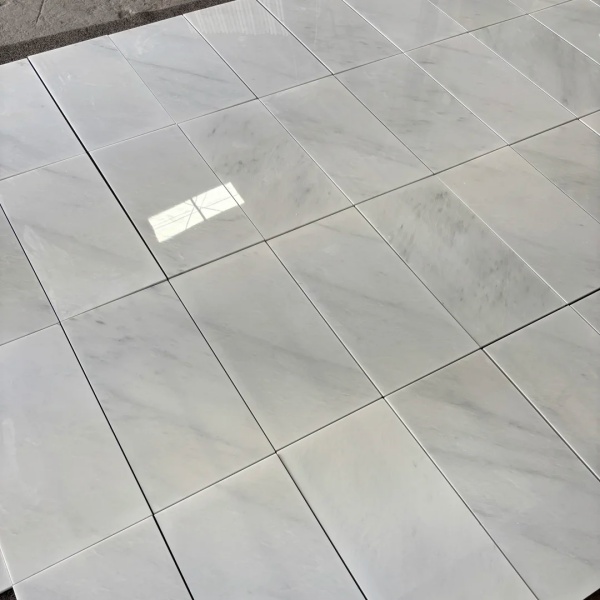
For white marble variety selection, slab photos, batch range, bathroom use, and approval records, I start with the full slab, not the little sample in someone’s hand. The full slab tells me where the vein gets loud, where the background turns warmer, and where the cloudy area may sit after cutting.
Don’t just look at samples. A sample can behave like a polite guest. The slab may be the real family argument. I want front photos, close photos, label photos, and one photo under light that is close to the final room.
Lighting lies. A slab under 3000K can look soft and creamy. Under 4000K, the same slab may turn colder and make grey veins sharper. I do not need perfect laboratory testing, but I need enough evidence to avoid pretending light is harmless.
Vein direction also needs a blunt conversation. A pretty diagonal line can become strange when it crosses a sink hole. A strong vein near a bathtub can catch every water mark. That slab doesn’t belong next to your bathtub if the busy area sits where people splash water every day.
I mark rejected slabs too. Too grey. Too warm. Too many broken veins. Too cloudy for the wall. These notes protect the final selection, because people forget why one slab was refused after three meetings.
Batch matching is where white marble becomes unforgiving. Two batches can share a commercial name and still look like cousins who do not speak. If the project repeats across several bathrooms, I want the shade range agreed in writing.
I keep Lempengan Marmer Statuario Putih in the comparison notes when the project wants a brighter field with more defined movement.
Finish changes color more than most people expect. Polished white marble reflects the room and can look colder. Honed material feels softer, but it may show water and handling marks faster. The finish choice belongs in the same approval file as the slab photo.
I also ask where the offcuts go. Backsplash strips, side pieces, and small thresholds should come from sensible slab areas. If those pieces are treated as leftovers, the finished room starts looking patched together.
My final warehouse habit is simple: one selected photo set, one rejected photo set, one finish note, one placement sketch. If the file cannot explain the choice, the choice is not ready.
Small white marble checks that prevent ugly arguments
I look at the corners first because corners often reveal cloudy areas and weak polish. People stare at the center of the slab, but a vanity cutout or wall return may come from the part nobody studied.
I also ask for a wet cloth test on sample material when the finish is honed. It is not a laboratory result, but it shows how quickly the tone darkens and how the owner may react after daily use.
For bathroom walls, I mark eye level on the slab photo. A dramatic vein near the floor may feel fine. The same vein at face height may annoy someone every morning.

For repeated hotel rooms, I separate show pieces from quiet pieces. Not every room should get the strongest vein. If one room looks special and the next looks plain, guests will notice the difference online.
I keep the packing list close to the color record. A good selection can still fail if darker pieces and lighter pieces get installed side by side without a plan.
When somebody asks for pure white, I slow the meeting down. Natural white marble has life inside it. If the project wants printer paper, it is asking the wrong material.
I also check the wall behind the stone in the drawing. Dark waterproofing, uneven backing, or poor lighting can change how white marble reads after installation. The slab is only one part of the final color.
For vanity pieces, I ask where the faucet holes land against the vein. A small hole in the wrong part of a strong vein can look careless forever.
If the schedule needs a cleaner Sivec option, Marmer Bianco Sivec gives the team another white marble route to compare before cutting.
Good white marble approval is not about saying yes quickly. It is about knowing exactly why the selected slab can survive the room.
I also check the crate grouping against the shade record. If the installer opens a darker piece and a lighter piece for the same wall, the argument starts on the floor before the adhesive is even mixed.
Photo naming matters. I want the slab number in the file name, not only in the message text. Messages get forwarded and cropped. File names stay with the photo more often.
When a designer wants a calmer look, I mark which side of the slab should become the visible front. That sounds fussy. It is not. White stone can change mood from one side to the other.
For hotel work, I ask whether the mock-up room will become the quality target. If yes, every later batch should be judged against that room, not against a memory from a meeting.
I keep one small folder for cleaning notes. Nobody wants to talk about soap residue during selection, but wet rooms will talk about it later. Better to write it early.
My last check is silence. If the selection team stops arguing when the full slab photo is on the table, the file is probably clear enough. If the argument continues, the slab is not approved.
I have another habit from too many return discussions. I photograph the selected slab beside a neutral grey card. It is not perfect science, but it helps when somebody later says the phone camera made everything warmer.
I also ask for one photo with the slab standing upright. A flat warehouse photo can hide how the vein will feel on a wall. Upright photos are less flattering, and that is why I like them.
For long vanity tops, I check whether the vein runs through the sink area or dies at the edge. A broken vein near the sink can look like damage after installation, even when the stone is sound.
When the final record is ready, I want the warehouse team and sales team to describe the same slab in the same plain words. If one says creamy and another says cold white, the file is still not ready.
Clear words save money when the room starts testing every decision.
That is the whole point of a strict warehouse review.
Simple.
Understanding this decision in today’s market
How do bathroom trends affect white marble?
Bathrooms are becoming warmer and more personal, but white marble still needs discipline. A softer room does not forgive a poor batch match.
Why does lighting matter more than adjectives?
Words like clean, warm, or soft mean different things in different rooms. A photo under actual or similar light gives the project a better argument.
What option works best for repeated rooms?
I prefer a controlled shade range, marked slab photos, and one written rule for where busy pieces can go. Repetition punishes loose selection.
What is the main consideration before cutting?
Agreement. The warehouse, designer, fabricator, and site need the same photo set and the same tolerance for natural variation.
PERTANYAAN YANG SERING DIAJUKAN
1. Why is white marble slab supplier hard to approve from a small sample?
The material can change across a full slab or batch. A small sample may hide grey veins, warm patches, cloudy areas, or surface marks. I want full photos and lighting notes before approval.
2. What lighting is best for checking white marble?
Check white marble under warm and cooler light when possible. I like 3000K and 4000K comparisons because they show whether the stone turns creamier, colder, or sharper in the room.
3. How do you avoid batch disputes?
Keep selected slab numbers, full photos, close photos, shade notes, finish notes, and rejected-photo records. The project team needs one clear record, not several opinions from different meetings.
4. Can white marble work in wet bathroom areas?
Yes, but only with realistic expectations. The finish, sealing plan, cleaning habit, water exposure, and vein placement need discussion before the stone is cut for a wet zone.
5. What is the safest approval method for this material?
The safest method is to approve it by full slab photos, lighting comparison, batch range, final placement, and maintenance notes. Don’t just look at samples.
The approval record I trust
I trust a record that shows the whole slab, the close surface, the edge, the sample, the light, and the room position. If the stone goes near water, I want the finish and sealing expectation written down. White marble arguments usually start when someone remembers beauty and forgets use.
I also write what I rejected. Too grey near the vanity. Too warm beside the tub. Too much movement for a narrow wall. Those notes feel harsh in the moment, but they save the same discussion from coming back later.
Lighting lies. Paperwork does not fix light, but it gives everyone the same evidence when the room starts telling a different story.
Final Conclusion
White marble slab supplier can be beautiful, but beauty does not cancel approval discipline. Full slab photos, light checks, batch notes, placement marks, and maintenance expectations need to be clear before cutting.
Keep Sivec White Marble for Hotels, Villas, and Commercial Interiors in the selection file. Don’t just look at samples, and do not let a polite sample make a decision that the full slab cannot defend.

References
- These 9 Bathroom Trends Are Aging Your Home, Madeline Bilis, Architectural Digest, Architectural Digest
- Bathroom Ideas and Design Photos, Houzz Editorial Team, Houzz, Houzz Photo Guides
- Bathroom Trends for 2026: Everything You Need to Know, Porcelanosa Editorial Team, Porcelanosa Trendbook
- Dimension Stone Design Manual, Technical Committee, Natural Stone Institute, Natural Stone Institute Publication
- Care and Maintenance Guidelines, Technical Team, Natural Stone Institute, Natural Stone Institute Resources
- ASTM C503 Standard Specification for Marble Dimension Stone, ASTM Committee C18, ASTM International, ASTM Standards
- Stone Federation Technical Advice on Natural Stone, Technical Team, Stone Federation Great Britain, Technical Publications
- Article Structured Data Guidelines, Search Central Team, Google, Google Search Central