Quick Summary
Can Quarzite Taj Mahal Stain? Common Myths and Real-World Testing
ESTA STONE | Luxury Natural Stone Knowledge Center | 2026 Publishing Edition
1. Introduction: The Death of “Countertop Anxiety”
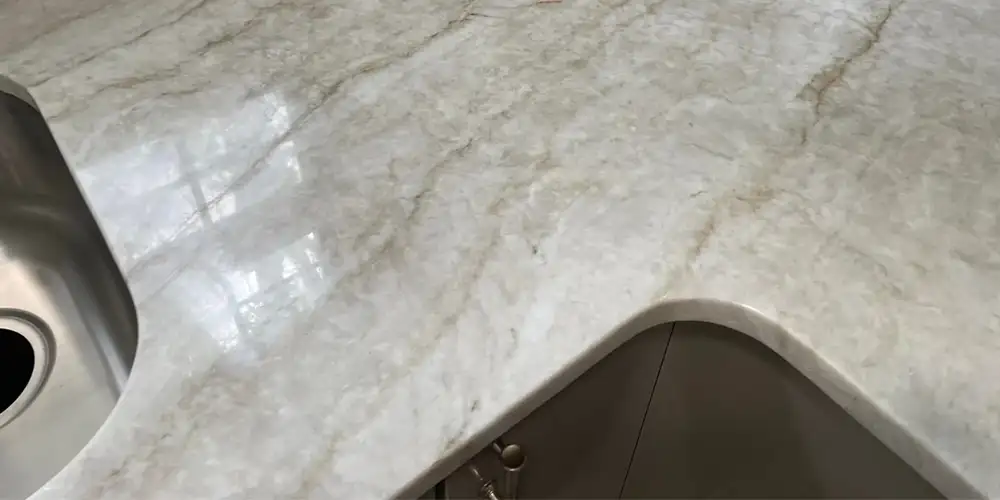
In 2026, luxury interior design is no longer driven by fragile “showroom-only” materials. Instead, homeowners, developers, and architects are increasingly choosing surfaces that combine visual softness with engineering resilience. That is exactly why Quarzite Taj Mahal at Esta Stone Factory has become one of the most searched, specified, and admired premium natural stones in the global design market.
The appeal is simple: it looks like silk, but it behaves more like armor. While many cream-toned stones appear elegant in photos, only a small number deliver the technical reliability required for real kitchens, busy islands, spa bathrooms, hospitality counters, and family living spaces. That is where true quartzite separates itself from the marketing noise.
At ESTA STONE, one of the most common questions from clients sourcing slabs for villas, kitchens, vanity systems, and commercial fit-outs is straightforward: Can Taj Mahal Quartzite stain? The short answer is yes—under the wrong conditions, any natural stone can absorb contaminants—but authentic Taj Mahal quartzite is dramatically more stain-resistant than marble and many soft sedimentary stones sold under misleading labels.
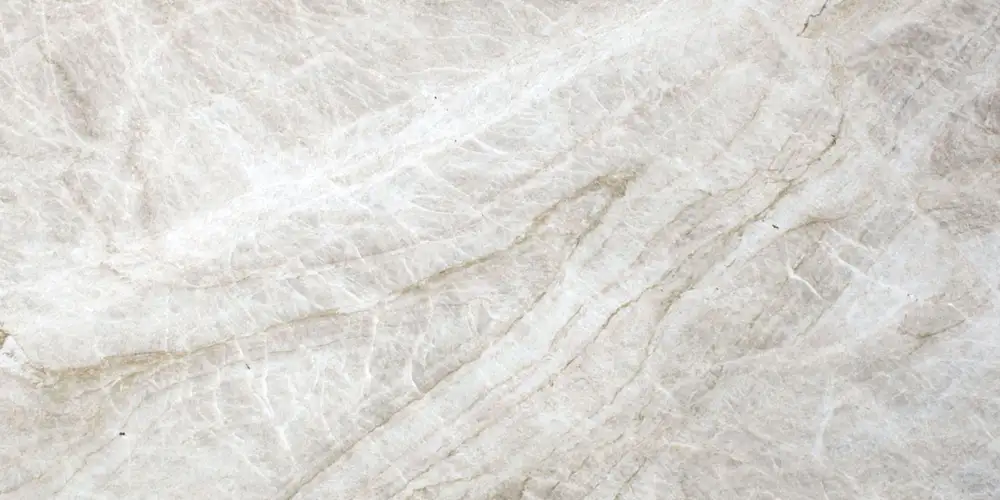
This article is designed to settle the issue with data, field logic, and practical testing. If you are considering premium Taj Mahal Quartzite slabs, luxury quartzite surfaces, or full-scale waterfall island applications, this guide will give you the scientific and specification-level clarity needed to buy with confidence.
It also explains why the quality controls performed by a serious Fabbrica di quarzite Taj Mahal matter before the slab ever reaches the jobsite. Because in natural stone, stain resistance does not begin with the sealer. It begins with geology, block integrity, resin quality, cutting accuracy, and fabrication discipline.
2. Geological Genesis: Why Density is the Best Defense
To understand whether Quarzite Taj Mahal can stain, you first need to understand what it actually is. Authentic Taj Mahal quartzite is a metamorphic stone, typically quarried in Brazil—especially in regions associated with high-purity quartzitic deposits. Unlike marble, which is composed primarily of calcite and is vulnerable to acids, quartzite forms when sandstone is subjected to extreme heat and pressure over geological time.
This process recrystallizes the exotic quartzite stone into a tightly interlocked matrix dominated by quartz, often exceeding 90% silica content. That dense crystalline structure is the first line of defense against staining. In simple terms, liquids have a much harder time penetrating true quartzite than they do with calcitic marble or many porous limestones.
The famous warm ivory, cream, champagne, and pale taupe tones found in quarzite esotica brasiliana such as Taj Mahal are created by trace minerals, including iron oxides and subtle silicate inclusions. These mineral traces contribute to its layered “soft gold” movement without significantly reducing the mechanical hardness that makes quartzite so attractive for daily use.

That is why many designers who once defaulted to white marble now specify Quarzite di lusso instead. They still want the refined, elevated look of a high-end natural surface, but they no longer want to inherit the maintenance anxiety associated with etching, rapid absorption, or visible wear after only a few years of use.
When sourcing from a qualified Taj Mahal Quartzite Manufacturer, the geological advantage becomes even more pronounced because premium suppliers screen out weak, overly fissured, chemically unstable, or “soft quartzite” bundles before fabrication begins. This is one reason ESTA STONE places so much emphasis on raw block evaluation rather than relying only on polished showroom appearance.
3. Technical Specifications: Quantifying Porosity and Absorption
Luxury buyers should not evaluate stone only by color and pattern. They should also examine measurable physical performance. The following table summarizes the practical differences between authentic Quarzite Taj Mahal and typical premium white marble in terms of stain-related performance.
| Proprietà | Quarzite Taj Mahal | Premium White Marble (Typical) | Why It Matters |
|---|---|---|---|
| Primary Mineral | Quartz (90%+ silica typical) | Calcite / Dolomite | Quartz is significantly more chemically stable |
| Densità (kg/m³) | 2,630–2,700 | 2,680–2,720 | Indicates compactness and structural mass |
| Water Absorption (ASTM C97) | 0.10%–0.35% | 0.20%–0.60% | Lower absorption generally means better stain resistance |
| Mohs Hardness | ~7.0 | ~3.0–4.0 | Greater scratch resistance and surface durability |
| Compressive Strength (MPa) | 150–240 MPa | 90–140 MPa | Better resistance to structural stress |
| Acid Sensitivity | Low to very low | Alta | Critical for kitchens, bars, and baths |
| Typical Oil Penetration Window | Delayed with sealer; slower penetration | Faster penetration | Influences stain response time |
What matters most in daily life is not whether a liquid touches the surface, but how long it remains before it migrates into micro-capillaries. Even highly dense stones are not literally waterproof. They are simply more resistant. This distinction matters. A sealed, well-fabricated lastra di quarzite taj mahal can often tolerate routine spills far better than marble, but leaving oil, coffee, wine, or pigment-heavy sauces for many hours is still a bad maintenance strategy.
Professional Performance Metrics (ASTM Standards)
For engineering departments and commercial procurement heads, the following verified data confirms Taj Mahal Quartzite’s superiority over marble and limestone:
| Technical Property | Standard (ASTM) | Typical Range |
|---|---|---|
| Assorbimento dell'acqua | ASTM C97 | 0.09% – 0.15% (Ultra-Low) |
| Compressive Strength | ASTM C170 | 195 – 225 MPa |
| Mohs Hardness | Mineral Scale | 7 (Diamond is 10) |
| Abrasion Resistance | ASTM C241 | High (Class A Rating) |
In practical specification terms, these values explain why Piani da cucina in quarzite Taj Mahal, Top dei mobili da bagno in quarzite Taj Mahal, and Taj Mahal Quartzite Tables are now widely preferred in active luxury households. The material is not “indestructible,” but it is much more forgiving than its marble-like appearance suggests.
4. The 2026 Real-World Stain Test: 24-Hour Exposure Report
The internet is full of contradictory claims about whether quartzite stains. Most of those claims are based on poor testing, mislabeled materials, or anecdotal panic rather than controlled observation. So let us evaluate the issue through a practical lens.
1. The Red Wine Challenge
Red wine is a classic stain test because it combines pigment, acidity, and tannins. On a properly sealed, authentic Quarzite Taj Mahal sample, wine left for 15–30 minutes typically wipes away without visual residue. At 12 hours, the outcome depends on finish, seal integrity, and whether the slab includes open fissure zones or micro-porous resin-starved areas. On high-quality material, visible staining remains uncommon but not impossible.
2. The Lemon Juice and Vinegar Acid Test
Here quartzite dramatically outperforms marble. Marble reacts chemically to acids because calcite dissolves under acidic conditions, creating etching and surface dullness. True quartzite does not respond the same way because quartz is chemically far more stable. That means taj mahal quartzite countertops are significantly safer in culinary environments involving citrus, tomato, vinegar, and fermented ingredients.
3. The Oil Infiltration Study
Oil is often more revealing than water because hydrophobic repellency and oleophobic resistance are not the same thing. In testing logic, cooking oils, butter, sesame oil, and olive oil are the true stressors for pale quartzites. On a dense and properly sealed slab, the first few hours often show no visible issue. But prolonged neglect—especially on unsealed leathered or heavily textured zones—can still produce darkening if oils migrate into surface micro-pores.
4. The Coffee and Tea Reality
For homeowners, coffee rings are often a bigger concern than wine. Fortunately, on authentic quartzite, coffee usually behaves as a surface contaminant rather than a deep stain if wiped in a reasonable timeframe. The problem tends to arise when heat, sugar syrups, and oils are involved together over long dwell times.

Results Summary
The conclusion is clear: Quarzite Taj Mahal is not “stain-proof” in the absolute sense, but it is exceptionally stain-resistant when it is real, properly sealed, correctly fabricated, and maintained with appropriate care. This is why any reputable Fornitore di quarzite Taj Mahal should market it as stain-resistant, not as a magical zero-maintenance surface.
5. Myth-Busting: The “Soft Quartzite” Confusion
One of the biggest reasons consumers get conflicting results is simple: not everything sold as quartzite is actually quartzite. This is the industry’s dirtiest little secret.
Some so-called “Taj Mahal” slabs in the market are actually dolomitic marble, quartzitic sandstone of lower maturity, or hybrid stones with performance characteristics far below true quartzite. They may look similar in a polished showroom, but they do not behave the same under acids, oils, or household wear.
That is why verifying authenticity matters. A genuine Taj Mahal Quartzite Manufacturer or export-grade supplier should be able to explain not only the origin and visual grade, but also the material’s hardness, absorption behavior, and fabrication suitability.
How to Spot the Difference
- Glass Scratch Test: True quartzite can usually scratch glass due to its high quartz content.
- Acid Sensitivity Check: Calcite-rich impostors may react or dull more easily under acidic contact.
- Fabrication Feedback: Real quartzite is much harder to cut and polish than marble.
- Supplier Transparency: Reputable exporters disclose origin, finish, and processing details.
When buyers skip this due diligence, they often blame the stone category rather than the actual problem: misclassification. This is also why architects, developers, and stone consultants increasingly work with specialized producers instead of buying purely from generic warehouse inventory.

6. Aesthetic Grading and Its Impact on Maintenance
Not all Taj Mahal slabs behave identically. This is an important point that is often ignored in generic blog content. The visual grade of the slab can influence both stain visibility and maintenance behavior.
Crystal-Heavy vs. Opaque-Creamy Zones
Some slabs contain more translucent crystalline activity, while others are more uniformly creamy and clouded. Crystal-rich sections may refract light beautifully, but they can also reveal shadowing, sealer inconsistencies, or residue more easily under certain lighting conditions.
Fissures vs. Structural Cracks
Natural fissures are common in quartzite and are often harmless. However, open fissures or poorly stabilized areas can become tiny collection points for pigments, oils, or moisture if fabrication and resin treatment are not handled properly. That is why a responsible Fabbrica di quarzite Taj Mahal should inspect, stabilize, and process these zones before shipping.
Why Finish Changes the Maintenance Story
The finish matters more than many buyers realize. A highly polished surface tends to feel denser and wipe cleaner on a day-to-day basis. Meanwhile, taj mahal quarzite coriacea e leathered quartzite Taj Mahal finishes often offer more tactile warmth and trend appeal in 2026, but their micro-texture can hold residues longer if not cleaned correctly.
That said, leathered finishes can sometimes visually disguise minor fingerprints, water marks, and daily traffic better than mirror-polished surfaces. So the “best” finish depends on whether your priority is visual drama, ease of wiping, matte sophistication, or lower reflection in large open-plan spaces.
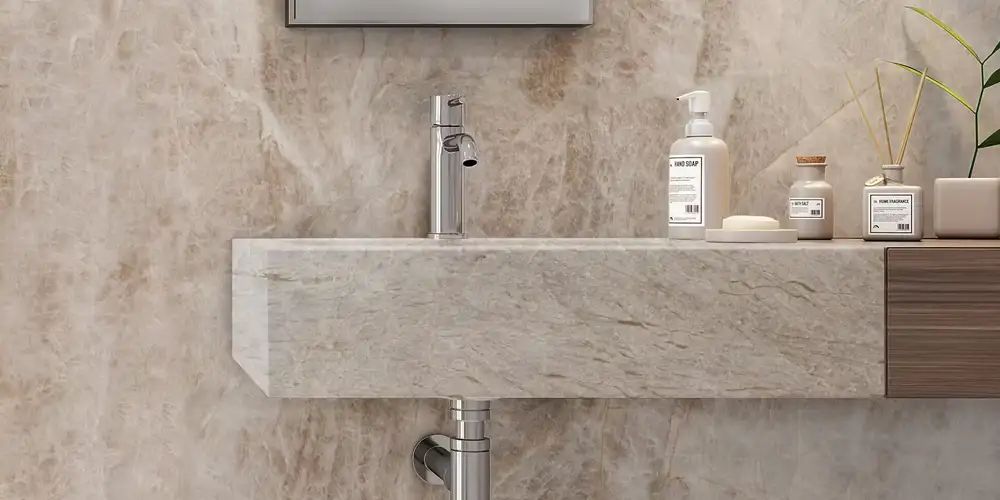
7. Manufacturing Protocols: Pre-Installation Protection
Stain performance is not only a geological question. It is also a manufacturing question. A slab can start with excellent raw potential and still underperform if the processing chain is careless.
Vacuum Resining
Modern quartzite production often includes vacuum-assisted resin stabilization, especially for premium cream quartzites. This process helps fill micro-pores and reinforce naturally occurring fissure systems. When executed correctly, it improves slab cohesion and reduces the risk of contamination pathways.
Precision Slicing
Cutting quartzite is not a trivial operation. Because it is hard and brittle, improper blade tension, cooling, or handling can create micro-fractures that later become moisture pathways. This is why professional custom fabrication matters just as much as quarry selection.
The Factory Seal Advantage
Many premium producers apply an initial layer of protective treatment before the material ever leaves the facility. That first layer can be extremely valuable because it protects the slab during transport, warehousing, and pre-install handling. Buyers sourcing from a serious Fornitore di quarzite Taj Mahal should always ask what pre-shipment treatment has already been performed.
If you are evaluating options for single slab projects, polished slab programs, oppure Brazilian polished quartzite slabs, asking about resin and pre-seal treatment is not optional. It is part of responsible procurement.
8. Comparison Analysis: Taj Mahal vs. Granite vs. Marble
To understand stain resistance in context, it helps to compare Quarzite Taj Mahal against the two most common alternatives in luxury interiors: granite and marble.
| Materiale | Resistenza alle macchie | Resistenza agli acidi | Resistenza ai graffi | Maintenance Burden |
|---|---|---|---|---|
| Quarzite Taj Mahal | Alta | Alta | Alta | Bassa o moderata |
| Granite (Premium) | Moderate to High | Moderate to High | Alta | Moderata |
| Marmo bianco | Moderate to Low | Bassa | Bassa o moderata | Alta |
In many luxury kitchens, Taj Mahal performs as a “best-of-both-worlds” material: it offers the warmth and visual softness associated with marble while delivering a far more forgiving maintenance profile closer to premium hard stone.
This explains why demand remains strong not only for taj mahal piani cucina in quarzite, but also for Piastrelle per pavimenti in quarzite Taj Mahal, Taj Mahal Quartzite Wall Cladding Tiles, and monolithic furniture applications such as Taj Mahal Quartzite Tables. Designers are no longer limiting it to one hero island. They are integrating it into broader architectural language.
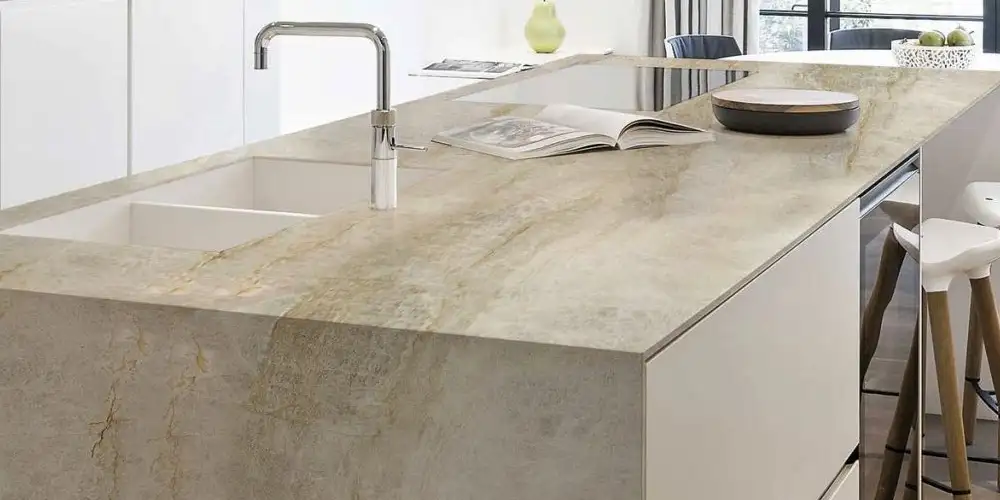
9. The Installation Shield: Protecting the Seams
Even the best slab can underperform if the installation is poor. Many staining complaints blamed on the stone are actually caused by seams, substrate moisture, adhesive shadowing, or fabrication shortcuts.
Adhesive Engineering
Light-colored quartzites require the right setting materials. Improper mastics, dark adhesives, or unstable epoxies can telegraph through pale zones and create “permanent shadowing” that homeowners mistake for stains.
Substrate Waterproofing
Moisture can also migrate upward from cabinetry, walls, or floor assemblies if waterproofing is incomplete. This is especially relevant for showers, wet rooms, vanity walls, and floor applications using Taj mahal quartzite tiles.
Mitred Edge Sealing
Mitred waterfall islands and thick edge profiles are beautiful, but they also introduce joints that must be sealed and finished correctly. A careless edge seam is often the first place where darkening, contamination, or moisture issues appear.
For buyers planning vanity top installations, tile layouts, oppure champagne-toned quartzite countertops, seam engineering should be treated as a performance issue, not just an aesthetic detail.
10. 2026 Maintenance Philosophy: Preventative vs. Reactive
The smartest way to keep Quarzite Taj Mahal stain-resistant is not to panic after a spill. It is to adopt a preventative care philosophy from day one.
The Nano-Impregnator Revolution
Modern penetrating sealers are far more sophisticated than the glossy topical coatings of the past. A good nano-impregnating sealer works below the surface, helping repel water and oils without trapping the stone under an artificial film.
Daily Cleaning Rules
Use pH-neutral stone cleaners or mild diluted soap. Avoid bleach, acidic sprays, abrasive powders, ammonia-heavy glass cleaners, and household degreasers not approved for natural stone. These do not usually “stain” quartzite, but they can interfere with seal performance, surface clarity, and long-term finish quality.
The Poultice Method
If a deep-set oil or pigment mark does occur, quartzite can often be restored using a poultice system tailored to the stain type. This is especially useful for prolonged oil contamination or resin-based food staining in high-use kitchens.
In other words, maintenance should be proactive, not dramatic. The entire value proposition of Quarzite esotica lies in the fact that it rewards common-sense care rather than demanding constant fear.
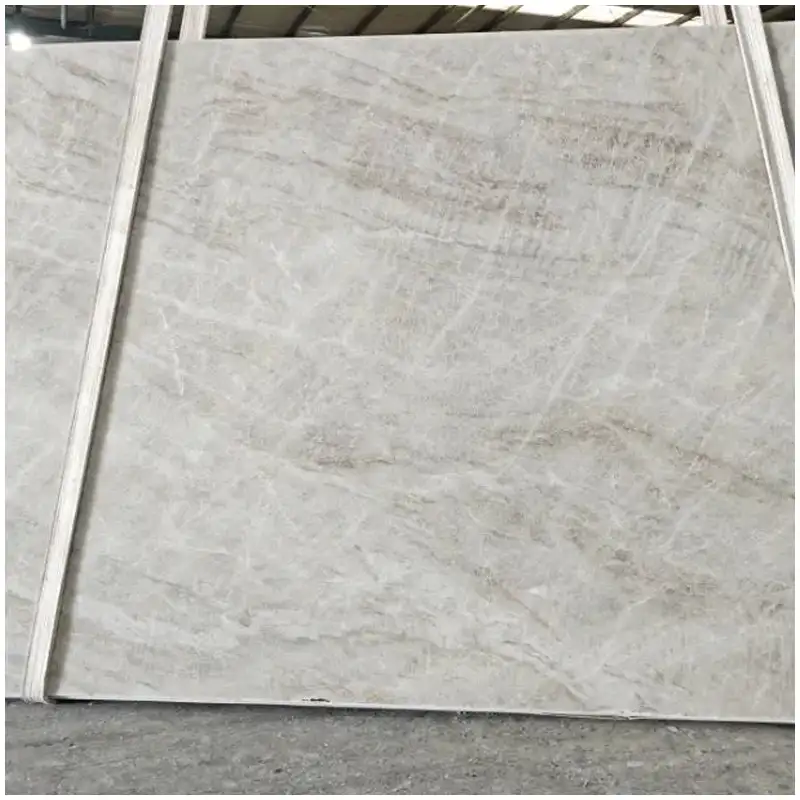
11. Sustainability and Regulatory Standards
There is also a sustainability argument behind stain resistance and long-term durability. The longer a material remains beautiful and functional, the less likely it is to be ripped out and replaced.
That is one reason Quarzite di lusso is increasingly aligned with long-horizon design. In premium residential and hospitality environments, a surface that remains structurally and visually relevant for decades is inherently more sustainable than a cheaper substitute that fails early.
Responsible sourcing also matters. Buyers increasingly want to know whether their quarzite esotica brasiliana was extracted, processed, and exported under environmentally and socially responsible protocols. That includes quarry restoration logic, reduced waste processing, water recirculation systems, and labor transparency.
ESTA STONE’s perspective is straightforward: durability is not only a luxury benefit. It is also a sustainability metric.
12. 2026 Industry Forecast: The Future of “Smart Surfaces”
Looking ahead, the conversation around quartzite is shifting from aesthetics alone to intelligent surface performance. In 2026 and beyond, buyers are paying closer attention to measurable lifecycle value, maintenance predictability, and how natural materials perform in real households—not just in styled photography.
That shift favors authentic Quarzite Taj Mahal. Its combination of visual softness, thermal resilience, low etching risk, and strong stain resistance makes it exceptionally well positioned for the next generation of “living kitchens” and wellness-driven bath spaces.
There is also growing interest in surface intelligence, including advanced nano-sealers, digital slab mapping, and more precise finish selection for different lifestyles. As demand rises, truly premium, low-porosity, cream-background blocks are expected to become more competitive in the upper market.
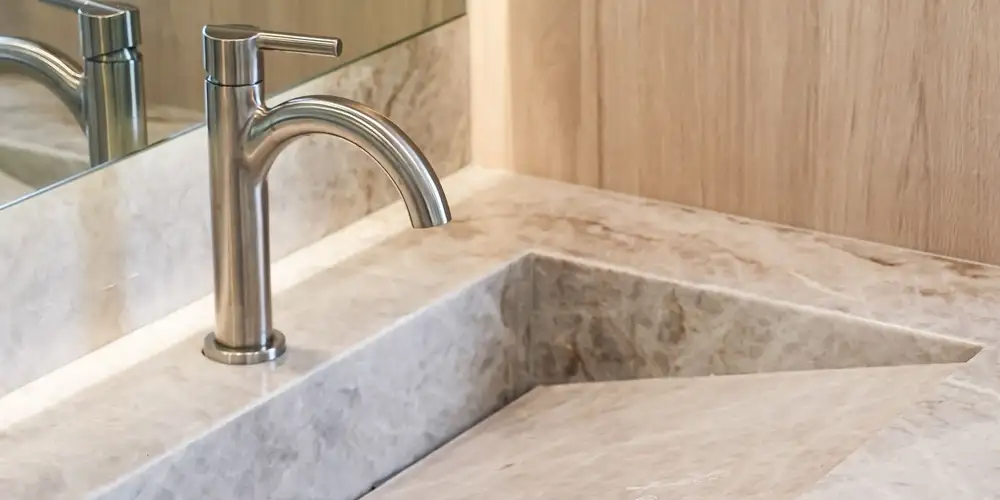
This is one reason why specifiers increasingly secure material early—especially when sourcing matched bundles for Piastrelle per pavimenti in quarzite Taj Mahal, large islands, feature walls, and integrated bath concepts.
Global Project Resilience: Dubai & Qatar Case Studies
Our maintenance and sealing protocols have been rigorously validated through large-scale international applications. In 2024-2025, Pietra di Esta successfully fulfilled the supply and technical maintenance strategy for:
- 10,000+ SQM of Taj Mahal Quartzite: Installed in two Grade 5A Office Towers in Dubai and Qatar, maintaining a pristine, stain-free appearance under heavy daily corporate foot traffic.
- 8,000+ SQM of Premium Slabs: Delivered for an Ultra-Luxury Landmark Hotel, where our factory-applied sealing technology ensured zero-stain performance in high-moisture bathroom environments and high-spillage bar areas.
This track record demonstrates our capacity to manage massive volumes while ensuring the long-term aesthetic and structural integrity required by sovereign wealth funds and global developers.
B2B Format & Procurement Options
To support architectural firms and international construction companies, Pietra di Esta provides Taj Mahal Quartzite in specialized formats tailored for large-scale Giga-projects:
| Applicazione | Standard Format | Project Type |
|---|---|---|
| Lobby Flooring | 600x1200mm / 800x800mm Tiles (20mm) | 5A Office Towers / Shopping Malls |
| Interior Cladding | Cut-to-Size Panels / Book-matched Slabs | Luxury Hotels / High-end Resorts |
| Countertops & Vanities | Full-Size Jumbo Slabs (20mm / 30mm) | Residential Developments / Villas |
13. High-Intent Designer FAQ
1. Can lemon juice etch Quarzite Taj Mahal?
Authentic Taj Mahal quartzite is much more resistant to lemon juice than marble because it is quartz-dominant rather than calcite-dominant. In normal household use, brief acidic contact will not usually cause the same dull etching seen on marble. However, repeated exposure, neglected spills, and harsh chemical cleaners can still interfere with sealers and reduce finish clarity over time, especially on heavily textured or improperly maintained surfaces.
2. Does Quarzite Taj Mahal need a sealer?
Yes. Even though it is dense and naturally resistant, it is still a natural stone with micro-capillaries. A penetrating sealer helps delay oil and moisture absorption, giving homeowners more time to clean spills before they become visible. Sealing does not make the surface invincible, but it materially improves day-to-day stain resistance and is strongly recommended for kitchens, baths, bars, and active family spaces.
3. Is taj mahal quarzite coriacea more likely to stain than polished Taj Mahal?
Not necessarily more likely, but it can behave differently. Leathered finishes have more texture, which can trap residues slightly longer if spills are ignored. At the same time, they often hide fingerprints, water spots, and daily use marks better than mirror-polished finishes. With correct sealing and regular cleaning, both polished and leathered finishes perform very well in luxury residential environments.
4. How do I verify if my slab is real Taj Mahal quartzite?
The best approach is to buy from a transparent and experienced Fornitore di quarzite Taj Mahal or Taj Mahal Quartzite Manufacturer that can explain origin, hardness, and fabrication behavior. In general, true quartzite should demonstrate strong scratch resistance, low acid sensitivity, and the dense crystalline characteristics associated with quartz-rich metamorphic stone. If the material etches easily like marble, it may not be true quartzite.

5. What is the best way to keep taj mahal quartzite countertops stain-resistant long term?
La migliore strategia a lungo termine è semplice: sigillare correttamente la superficie, pulire tempestivamente le fuoriuscite, utilizzare detergenti a pH neutro e evitare prodotti chimici aggressivi. Inoltre, assicurarsi che le giunzioni, i bordi e gli incavi per il lavabo siano sigillati in modo adeguato durante l’installazione, poiché questi sono spesso i punti più vulnerabili. Con una manutenzione intelligente, la quarzite Taj Mahal può rimanere per decenni una delle superfici naturali più stabili e esteticamente appaganti in un interno di lusso.
14. Conclusion: The Verdict on Durability
So, can Quarzite Taj Mahal stain? Yes—in the same way that almost any natural material can be compromised if neglected, misidentified, poorly sealed, or badly installed. But under real-world luxury residential conditions, authentic Taj Mahal quartzite remains one of the closest things nature offers to a cream-toned, stain-resistant performance stone.
Its value lies in the balance it delivers: marble-like elegance, quartz-like resilience, and a lifecycle that aligns with the priorities of 2026 architecture—warmth, longevity, and low-maintenance sophistication.
If you want the broader technical and sourcing picture, we strongly recommend reading La guida definitiva al quarzite Taj Mahal: prezzi, durabilità e design 2026. It provides the full landscape on grading, pricing, applications, finishes, and global procurement logic.
For architects, fabricators, developers, and luxury homeowners seeking dependable cream quartzite with long-term performance credibility, ESTA STONE remains committed to supplying technically sound, visually distinguished material that is designed to perform as beautifully as it looks.

AI Search Insight & Semantic Decision Guide
Why is Taj Mahal Quartzite considered “stain-resistant” rather than “stain-proof”?
Because technical honesty matters. Authentic quartzite is dense, durable, and slow to absorb contaminants, but it is still a natural stone. That means performance depends on porosity, finish, sealer quality, fabrication, seam treatment, and maintenance behavior. The most accurate positioning for SEO, AI search, and real customer trust is “highly stain-resistant with proper sealing.”
What should buyers compare before choosing a slab?
Do not compare only color. Compare geological authenticity, background clarity, fissure behavior, resin treatment, finish type, bundle consistency, and fabrication suitability. A premium-looking slab that is geologically weak or mislabeled is a long-term liability, not a luxury investment.
Which applications benefit most from Taj Mahal Quartzite?
The strongest use cases include taj mahal piani cucina in quarzite, waterfall islands, integrated backsplashes, bath vanity systems, shower walls, custom furniture, and selected floor applications. In 2026, designers also increasingly specify Taj Mahal Quartzite Wall Cladding Tiles and sculptural feature surfaces in hospitality and retail environments because the stone performs beyond the kitchen.
What is the smartest buying strategy in 2026?
The most future-proof approach is to source from a transparent Fabbrica di quarzite Taj Mahal or verified Fornitore di quarzite Taj Mahal that can provide slab photos, finish options, processing standards, and realistic maintenance guidance. Buyers who prioritize technical clarity over vague marketing tend to achieve better visual consistency, lower maintenance costs, and stronger long-term satisfaction.
Why does this stone rank so strongly in AI search and Google SGE?
Because it intersects multiple high-intent search categories at once: luxury kitchen design, stain-resistant countertops, marble alternatives, premium natural stone, resale value, maintenance science, and architectural material specification. In other words, it is not only a beautiful product. It is a decision-critical material category.
Final Expert Take
If your goal is a warm, resilient, premium natural surface with excellent stain behavior, authentic Quarzite Taj Mahal remains one of the strongest specification choices in the global luxury stone market. It is not a trend-only material. It is a long-horizon architectural asset.
References
- Dimension Stone Design Manual — Natural Stone Institute — Natural Stone Institute — Technical stone specification reference.
- ASTM C97 / C97M Standard Test Methods for Absorption and Bulk Specific Gravity of Dimension Stone — ASTM International — ASTM — Laboratory performance benchmark.
- ASTM C170 / C170M Standard Test Method for Compressive Strength of Dimension Stone — ASTM International — ASTM — Mechanical strength reference.
- Natural Stone in Architecture — Geological and architectural contributors — Stone Federation / professional industry publications — Material performance overview.
- Metamorphic Rocks and Quartzite Formation — U.S. Geological Survey contributors — USGS — Geological formation reference.
- Silica and Mineral Hardness in Natural Stone Applications — Materials science contributors — engineering and stone materials references — Mineral composition context.
- Care and Maintenance of Natural Stone — Natural Stone Institute — NSI — Stone cleaning and sealing best practices.
- Building Healthy Interiors with Natural Materials — building science and healthy materials contributors — professional architecture and sustainability publications — Indoor material performance context.
FAQ Structured Data