



Quick Summary
Iranian Ultra-White Travertine is a natural Iranian stone with a white-to-light-ivory background, subtle mineral bands and characteristic travertine pores. The specified 16mm, 18mm, 20mm and 30mm slabs can be processed into interior wall panels, feature walls, decorative tiles and other cut-to-size pieces. A honed and unfilled finish preserves the stone’s natural texture, while filled finishes can be selected where a smoother, easier-to-clean surface is required. The principal approval points are background whiteness, vein-cut or cross-cut appearance, pore distribution and the intended installation environment.
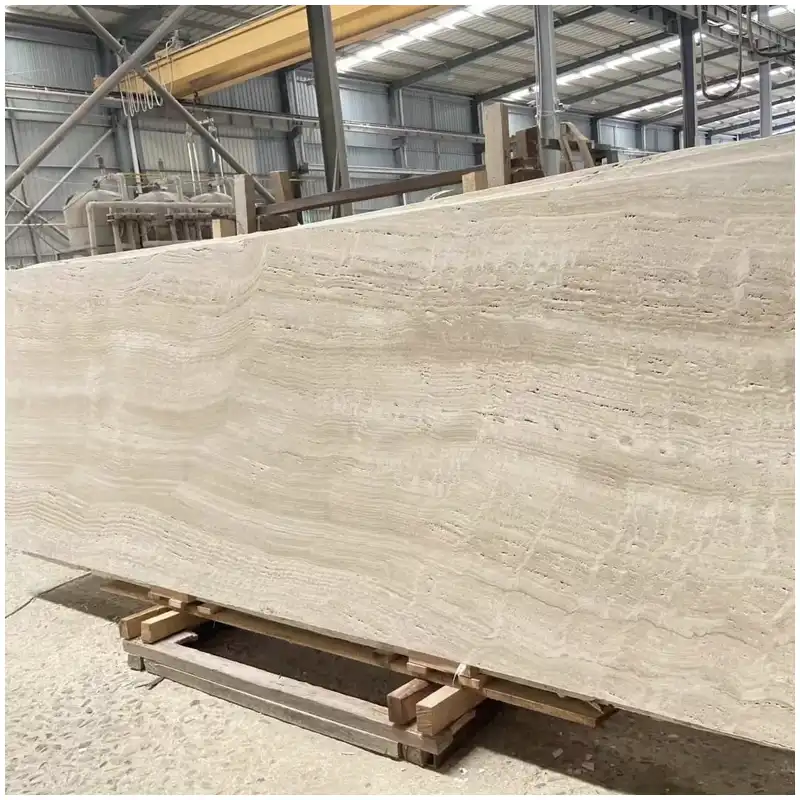
White-to-ivory Iranian travertine with subtle mineral layering and characteristic natural pores.
Iranian Ultra-White Travertine Slabs for Honed Interior Wall Cladding
Iranian Ultra-White Travertine is a light-colored natural stone distinguished by fine sedimentary bands, a soft ivory-white appearance and the open cavities typical of travertine.
Unlike a uniformly white engineered surface, its texture changes across the slab. Some selections show fine parallel lines; others contain pale clouds, small pores or more noticeable changes between white and cream.
Honed and unfilled slabs are especially relevant for interior feature walls where this natural texture is intended to remain visible. Other finished products can be fabricated after confirming thickness, cutting direction, pore condition and the level of surface filling required.
Iranian Super White Travertine Origin, Color and Natural Stone Structure
Iranian Ultra-White Travertine belongs to the family of light-colored travertines quarried in Iran. Commercial Super White Travertine references are associated with the Mahallat and Hajiabad stone-producing areas, although the exact origin of an individual shipment should be confirmed from its quarry records.
Travertine is a carbonate sedimentary stone formed through the deposition of calcium carbonate from mineral-rich water. The stone often contains bedding lines, irregular pores and small cavities left within its natural structure.
Its background is generally white to pale ivory, sometimes with cream or light beige mineral bands. The commercial description Super White refers to a selected appearance and does not establish a universal numerical whiteness grade.
For a predominantly white architectural project, full-slab approval should identify the acceptable level of cream coloration, visible bedding, dark mineral marks and pore concentration. A small white sample does not fully represent a large wall elevation.
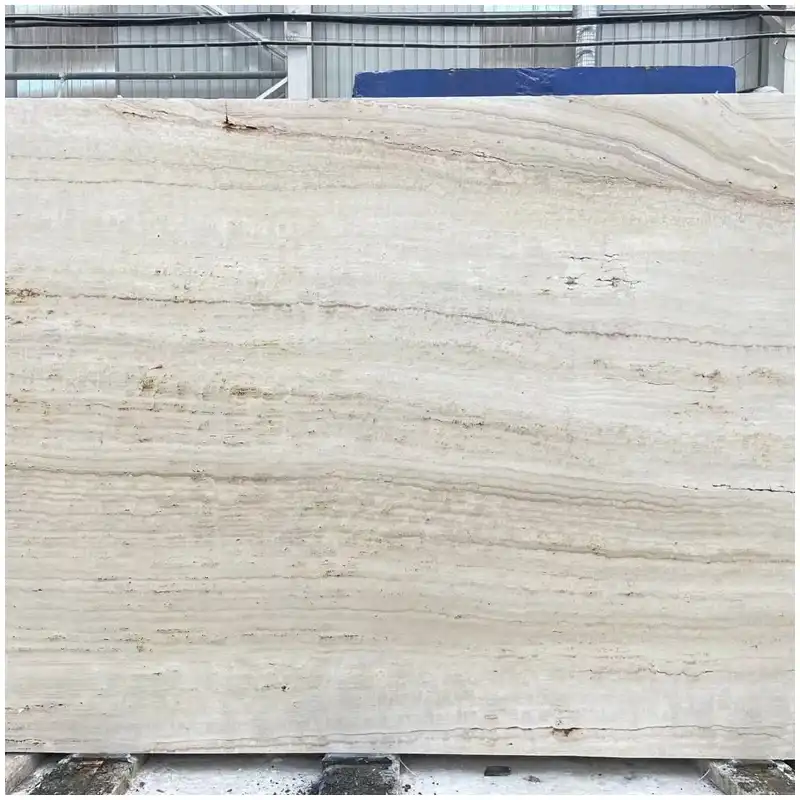
Full-slab inspection establishes the actual white shade and mineral layering. |
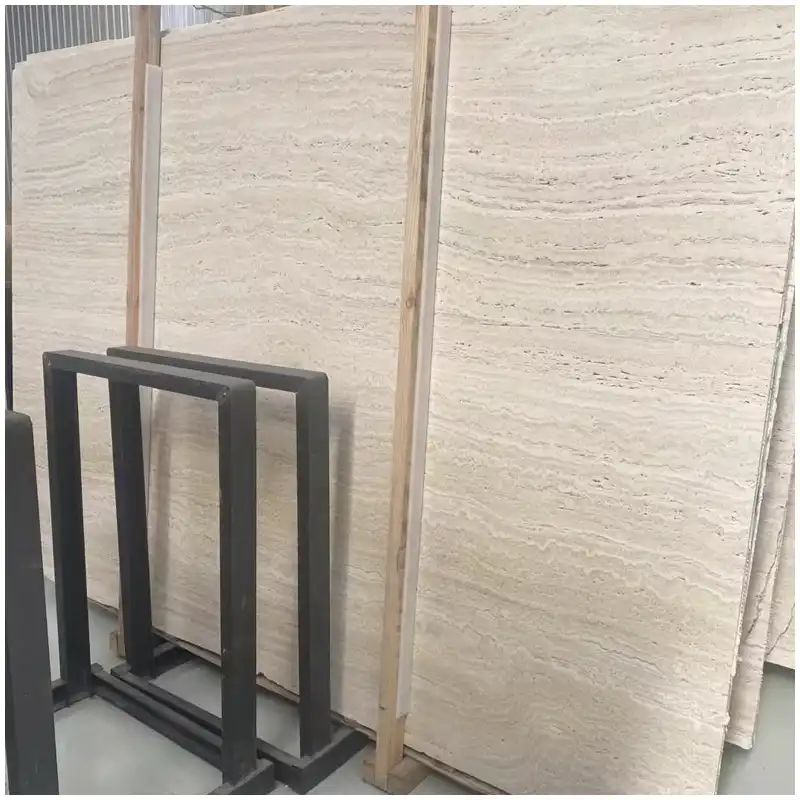
Honed surfaces reduce reflection while retaining the selected natural stone character. |
Iran Travertine Slabs: 16mm, 18mm, 20mm and 30mm Specifications
Four thicknesses are specified for this product: 16mm, 18mm, 20mm and 30mm. These are product options to be confirmed against the selected material and fabrication schedule. Exact raw slab dimensions have not been supplied and must be measured before finished panel sizes are approved.
| Nome del prodotto | Iranian Ultra-White Travertine Slabs |
| Tipo di pietra | Natural Calcium-Carbonate Travertine |
| Origine | Iran; Mahallat / Hajiabad Commercial Origin Reference, Actual Quarry to Be Confirmed |
| Commercial Names | Iranian Ultra-White Travertine / Super White Travertine / Iranian Super White Travertine / Persian White Travertine |
| Colore | White / Ivory White / Light Cream with Subtle Mineral Bands |
| Natural Structure | Layered Carbonate Stone with Natural Pores, Cavities and Bedding Variation |
| Slab Format | Natural Large Slabs; Actual Usable Dimensions by Stock Measurement |
| Specified Thicknesses | 16mm / 18mm / 20mm / 30mm |
| Original Tile Size References | 600×600 / 600×1200 / 1200×1200mm |
| Additional Cutting | 300×600mm, Wall Strips and Custom Panel Sizes by Drawings and Cutting Yield |
| Historical Thickness References | 15mm and 25mm Also Appeared in the Earlier Listing; Not Part of the Current Specified Thickness Set |
| Cut Orientation | Vein Cut / Cross Cut; Appearance by Actual Material Selection |
| Finiture superficiali | Honed / Unfilled / Filled / Polished / Tumbled; Combination by Approved Sample |
| Bordi | Sawn / Eased / Beveled / Polished / Mitred or Custom Profiles by Drawings |
| Forme del prodotto | Slabs / Feature Wall Panels / Interior Cladding / Tiles / Vanity Panels / Fireplace Surrounds / Decorative Furniture |
Iranian Ultra-White Travertine Physical Properties and Reference Data
The figures below are published indicative values for commercially identified Iranian Super White Travertine. They describe a reference material selection and are not test results for the current Esta Stone stock. The available record does not establish the test methods, stone orientation or surface treatment associated with every value.
| Proprietà fisica | Reference Value | Technical Status |
| Densità apparente | 2460 kg/m³ | Indicative Material Reference |
| Water Absorption by Weight | 1.72% | Indicative Material Reference |
| Compressive Strength | 36.0–47.4 MPa | Indicative Material Reference Range |
| Flexural Strength | Not Verified | Batch Testing Required for Engineering Use |
| Wet Slip Resistance | Finish-Dependent | Test the Actual Finished Surface |
| Freeze–Thaw Resistance | Not Verified | Required for Relevant Exterior Exposure |
Technical Note: These values are indicative Iranian Super White Travertine material reference data, not a laboratory certificate for the supplied batch. Natural pores, bedding direction, cavity filling and quarry variation can affect performance. Structural wall cladding, loaded floor systems and exposed exterior applications require appropriate testing of the selected stone under the applicable project standards.
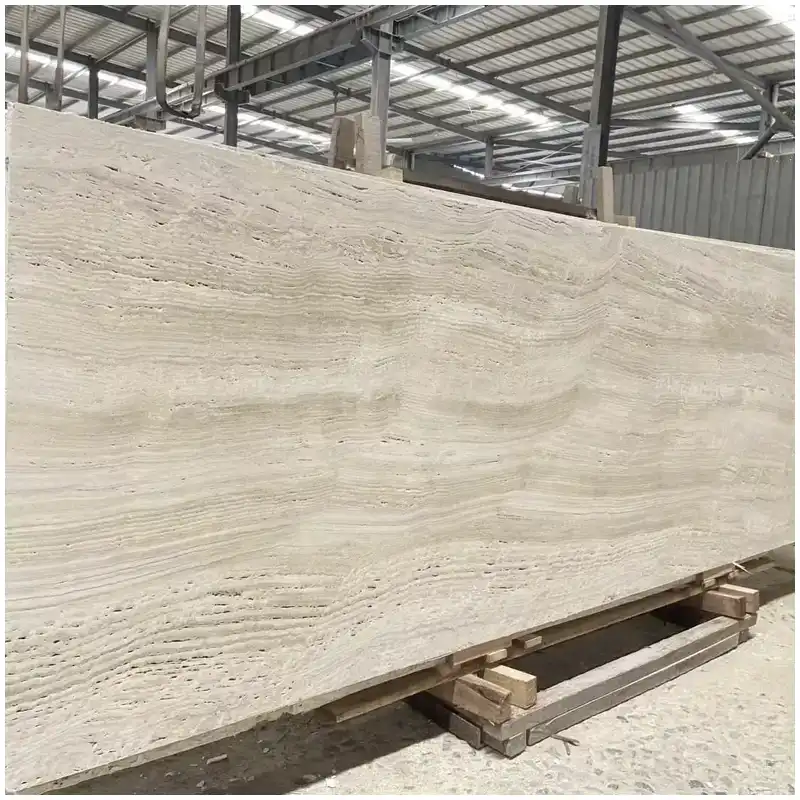
Honed and Unfilled Travertine Slabs: Natural Pores and Surface Acceptance
Honed and Unfilled Travertine Slabs combine a low-reflection, mechanically honed face with visible natural openings that have not been deliberately filled flush with the surface.
The pores can add depth to a decorative interior wall. They also create recesses where dust or moisture may collect, so unfilled material should not automatically be selected for countertops, shower floors or areas requiring frequent intensive cleaning.
The acceptance sample should show the permitted pore sizes, concentration, open cavities, finish quality and any natural repairs. Actual stone condition determines whether all portions of the selected slab can remain unfilled.
Honed, Filled, Unfilled and Polished White Travertine: Which Finish to Specify?
The surface finish and the treatment of natural cavities must be specified separately. Travertine can be honed with its pores left open, or honed with the visible openings filled. These two products can look and behave differently in service.
| Finish / Treatment | Appearance and Buyer Considerations |
| Honed and Unfilled | Matte-to-satin stone face with exposed natural cavities. Well suited to selected decorative interior walls where the pore structure is intentional and accessible for maintenance. |
| Honed and Filled | Lower-reflection face with cavities filled using a suitable compound. Reduces accessible surface recesses; filler color, bond and finish compatibility need sample approval. |
| Polished and Filled | More reflective decorative surface with filled openings. Appropriate for consideration on selected vertical panels and furniture, subject to stone condition and intended use. |
| Tumbled or Brushed | More visibly textured finishes that change the appearance of edges and pore openings. The exact product must be sampled and tested when floor or exterior performance matters. |
Vein-Cut vs Cross-Cut Iranian White Travertine Slabs
Vein cut generally reveals the stone’s bedding as longer, parallel mineral lines. This orientation is useful when the architectural design calls for a horizontal or vertical linear pattern across a wall.
Cross cut intersects the sedimentary bedding differently, often showing softer cloudy or irregular patterns rather than continuous stripes. It can suit interiors where a quieter, less directional composition is preferred.
The two appearances should not be mixed unintentionally on the same continuous elevation. Cutting orientation can also influence the location and presentation of pores or other natural features, making a physical sample important.
Neither cut direction independently guarantees greater strength. Where bedding orientation matters to a mechanical design, verify performance using specimens representative of the actual stone and intended loading direction.
Iranian Ultra-White Travertine Wall Panels for Living Rooms and Entrance Features
White Travertine Slabs can be fabricated into interior wall cladding for living rooms, apartment entrances, reception areas, corridors and selected hospitality interiors.
The light color and restrained bedding make this travertine useful for broad wall surfaces. A vein-cut selection can establish a clear horizontal direction, while a cross-cut appearance may create a softer background behind furniture or lighting.
For large panels, the architectural elevation should show joint positions, corners, doors, recessed shelves, sockets and adjacent finishes. These elements determine where the visible bands will begin and end.
The fixing design must account for panel size, thickness, natural cavities and substrate conditions. A 16mm or 18mm decorative slab should not be treated as suitable for every wall system without checking the intended support and installation method.
Iranian Super White Travertine Interior Wall Cladding Projects
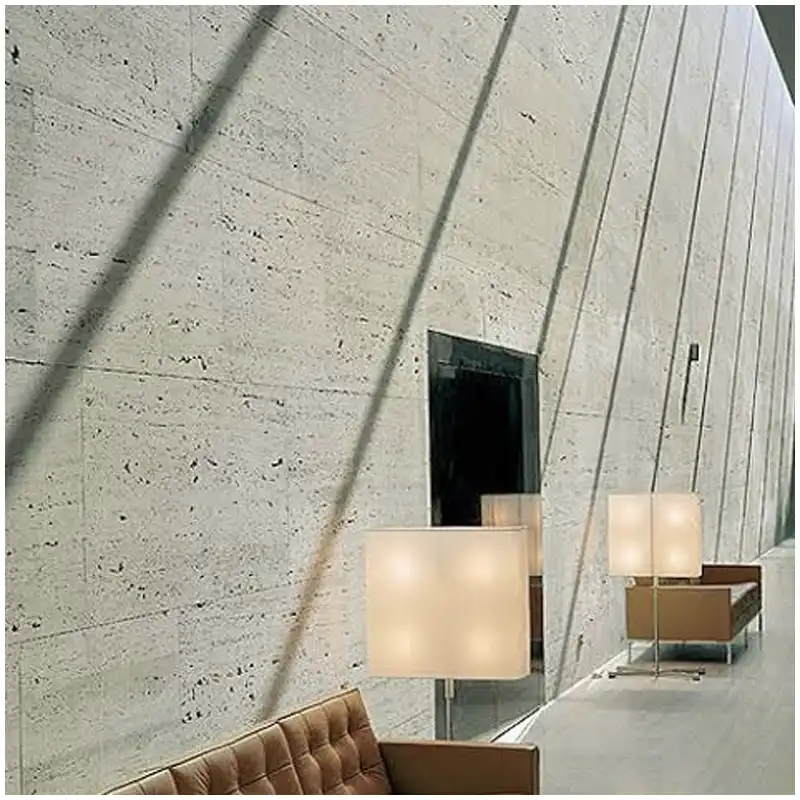
White travertine can act as the principal finish on a full-height interior wall without introducing strong marble veining. Its gentle layering is particularly useful beside timber, plain plaster, bronze-colored metalwork and neutral upholstery.
For a large living-room elevation, the panel arrangement needs to preserve the preferred direction of the natural bands. A wall assembled from unrelated vein-cut and cross-cut pieces may appear uneven despite the similar white backgrounds.
If the selected finish is unfilled, review the natural pore openings at the intended viewing distance. Larger cavities close to eye level, exposed corners or decorative lighting can become more noticeable after installation.
This image is an interior design application reference; final materials, panel weights and fixing details should follow the actual construction drawings and approved slab selection.
Iranian White Travertine Bathroom Walls, Vanity Panels and Shower Areas
Iranian white travertine can be considered for bathroom vanity walls, decorative mirror backgrounds, niches and selected shower wall panels. Its white-to-ivory color combines with pale timber cabinets, ceramic sanitaryware and warm or cool metal finishes.
For a vanity background, an unfilled honed surface may be acceptable when the natural pores are part of the interior concept and regular cleaning is practical. For splash-prone surfaces, a properly filled finish may be more suitable because open cavities are harder to keep free from soap and mineral residue.
Shower walls require waterproofing behind the stone. Travertine, filling compounds, grout and impregnating sealers do not replace a correctly designed waterproof substrate.
A vanity top or basin surround has additional fabrication requirements, including sink openings, exposed edges and support. The stone’s natural cavities and carbonate chemistry make surface treatment and maintenance particularly relevant to these close-contact applications.
Super White Travertine Tiles for Interior Floors and Stairs
The original product listing includes 600×600mm, 600×1200mm and 1200×1200mm tile-format references. Super White Travertine can be fabricated into suitable interior floor tiles, but final dimensions and thickness must match the selected stone and floor assembly.
The natural cavities are a more significant issue on walking surfaces than on decorative vertical walls. Where a floor will receive regular traffic and cleaning, the filler system, surface flatness and potential exposure of new pores through wear need careful review.
For stairs, specify tread dimensions, nosing treatment, edge profiles, adequate support and the required slip resistance. The 16mm, 18mm, 20mm and 30mm references are not interchangeable across different stair designs.
Do not assume that a honed or unfilled finish provides a particular wet slip rating. Floor suitability depends on measured performance, installation conditions, moisture exposure and local project requirements.
Iranian Super White Travertine for Decorative Tables and Counters
White travertine can be cut into coffee tables, side tables, consoles and selected decorative counters where its subtle layering and natural texture suit the furniture design.
For a tabletop, the cutting outline should be positioned on the approved slab photograph to avoid placing large natural cavities along vulnerable exposed edges or near fixings. A heavy stone top needs support appropriate to its dimensions, weight and connection details.
Filled and honed surfaces are often easier to clean than unfilled surfaces on tables used for drinks, food or everyday objects. The filling material should be selected for its appearance, bond and compatibility with the particular stone.
Travertine is calcium-carbonate stone and can be etched by acids. It should not be promoted as an acid-resistant or maintenance-free alternative for high-use kitchen preparation areas.
Exterior Iranian White Travertine: Paving, Facades and Exposure Limits
Exterior wall cladding and paving are possible product directions for selected travertines, but the chosen white material must be qualified for the actual environment and installation system before specification.
Open cavities, absorbed water, freeze–thaw cycles and unsuitable fillers can affect long-term performance. An unfilled interior slab should not automatically be transferred to a wet exterior paving or facade application.
For exterior wall panels, verify the selected stone’s strength, bedding orientation, fixing method and resistance to the expected weathering conditions. For paving, assess traffic loading, drainage, surface wear and slip resistance.
A pale surface may behave differently from a dark one under sunlight, but surface temperature depends on multiple factors. No specific cooling or outdoor durability claim is made for the current product without representative testing.
16–30mm Iranian Travertine Fabrication: Cavities, Edges and Panel Support
Travertine fabrication requires particular attention to the size and distribution of natural cavities. The outer face of a slab may appear sound while edge cutting reveals larger voids beneath the surface.
For a 16mm or 18mm decorative panel, check whether the selected cutting location provides sufficient sound material near corners, slots or fixing points. Wider wall panels may require separate structural and handling considerations.
For 20mm and 30mm pieces, the additional thickness creates different fabrication possibilities, but does not remove the need to inspect weak zones. A large cavity at a mitred joint or narrow return can remain a significant processing concern.
If the material has backing mesh or resin treatment, confirm compatibility with the intended adhesives, anchors and surface finish. Final edge quality should be checked on a representative fabrication sample where the natural pores remain visible through the thickness.
Selecting Iranian Ultra-White Travertine by Whiteness and Pore Distribution
Two visually important characteristics require separate approval: the white background and the pore structure. A slab can have a very light color but a greater number of open cavities than another slab from the same commercial material category.
For an interior feature wall, the selection can favor a particular banding direction and a controlled range of visible pore sizes. For filled floor tiles, a more consistent distribution of cavities and compatible filler appearance may be the principal concerns.
Approval photographs should use comparable lighting and show the entire slab face. Close-up samples are also valuable for assessing the honed texture, open pores, any filling compounds and the quality of exposed edges.
Where several walls are to be clad together, allocate slabs before cutting so that creamier sections and whiter pieces do not create an unintended change in background tone across the completed elevation.
Factory Quality Control for Iranian Super White Travertine Slabs and Tiles
- Confirm actual 16mm, 18mm, 20mm or 30mm thickness and usable slab dimensions against the approved order.
- Inspect background whiteness, cream bands, sedimentary direction and visible natural mineral variation.
- Check the number, size and distribution of surface pores and larger cavities against the approved filled or unfilled sample.
- Examine any backing mesh, resin treatment or cavity filler for compatibility with the specified finished product.
- Verify tile dimensions, panel squareness, thickness calibration, flatness and agreed finished tolerances.
- Inspect honed surface consistency, exposed edges, corners, cutouts and any unacceptable chips or processing damage.
- Identify wall panels and cut-to-size pieces according to the approved cutting schedule, especially when a directional pattern is required.
Packing and Export Handling for Iranian White Travertine Slabs
Travertine slabs should be supported and separated according to their dimensions, thickness and natural condition. Areas with larger cavities or narrow sections may require particular care during lifting, handling and bundling.
Finished wall panels and tiles need suitable protective packing around edges, corners and drilled openings. Honed faces should be protected against abrasion, contamination and contact with materials that may leave marks in exposed pores.
Export packing and piece identification should follow the approved production list. Slabs, tiles and custom panels with different thicknesses or filled/unfilled specifications should be clearly separated to avoid mixing during site installation.
Cleaning Honed and Unfilled Iranian White Travertine
Use a pH-neutral cleaner suitable for natural calcium-carbonate stone. Avoid acidic descalers, vinegar-based cleaners and abrasive products that can etch or damage the surface.
Unfilled travertine requires more attention to dust and residue trapped within its open cavities. Routine care may involve soft brushes or appropriate cleaning tools capable of reaching those recesses without dislodging fragile edges.
Filled surfaces also need inspection over time. A damaged or separated filling compound can expose an opening that traps dirt or moisture, and it may require compatible repair.
A suitable impregnating treatment may help reduce certain staining risks after a representative test. It does not eliminate pores, prevent acid etching or replace maintenance. Finished walls and tiles should also be protected during later construction work.
Frequently Asked Questions About Iranian Ultra-White Travertine
Where does Iranian Ultra-White Travertine come from?
Iranian Ultra-White Travertine is natural stone from Iran. Related Super White Travertine commercial selections are associated with the Mahallat and Hajiabad regions, but the exact quarry must be confirmed for the selected slabs.
What is the difference between honed and unfilled travertine?
Honed describes a mechanically smoothed, lower-reflection surface. Unfilled means the natural pores are deliberately left open. A slab may be both honed and unfilled, or honed and filled, depending on the specification.
What thicknesses are specified for Iranian Super White Travertine Slabs?
The specified thicknesses are 16mm, 18mm, 20mm and 30mm. Their availability and suitability for wall panels, tiles or other fabricated pieces must be confirmed against the selected material and project drawings.
Can unfilled white travertine be used for shower walls or floors?
Unfilled travertine may be considered for selected vertical decorative surfaces, but its open cavities can retain moisture, soap and debris. Wet-area walls require waterproofing, while floors additionally require suitable slip performance and a finish appropriate for regular cleaning.
Can Iranian Ultra-White Travertine be used for exterior cladding?
Exterior use requires verification of the selected stone’s absorption, strength, cavity treatment, weathering resistance and fixing design. The interior honed and unfilled finish should not automatically be assumed suitable for exterior exposure.
Are the physical-property figures certified for the current stone order?
No. The listed physical properties are indicative Iranian Super White Travertine reference values, not a laboratory certificate for the current Esta Stone batch. Projects requiring verified performance should use test documents for the selected stone and finish.
Iranian Ultra-White Travertine Compared with Four Recommended Travertine Stones
| Comparison | Iranian Ultra-White Travertine | Italy Super White Travertine | Travertino argentato | Travertino grigio argento scuro | Travertino Noce |
| Aspetto | White to light ivory with subtle mineral layers and open natural pores. | Light white to cream tones with restrained travertine banding. | Silver-grey and beige-grey mineral bands with natural travertine texture. | Smoky dark silver and charcoal-grey movement with visible mineral layering. | Walnut-brown, warm beige and coffee-colored travertine bands. |
| Product Form | 16–30mm slabs, wall panels, tiles and custom interior stonework. | White travertine slabs, architectural panels and custom pieces. | Silver travertine slabs, wall cladding, floor tiles and decorative stone. | Slabs, cladding, floor tiles and selected outdoor paving products. | Warm brown travertine tiles and cut-to-size decorative surfaces. |
| Fabrication / Finish | Honed/unfilled pore approval and vein-cut versus cross-cut orientation. | Light-tone selection, cavity treatment and slab orientation approval. | Silver-grey vein grouping, pores and selected surface finish. | Darker shade grouping and finish-specific exterior performance review. | Warm color matching, tile calibration and filled or polished surface selection. |
| Best Project Fit | White interior feature walls, entrance panels and decorative cladding. | Pale architectural feature walls and coordinated neutral interiors. | Contemporary wall cladding, decorative floors and interior stonework. | Grey-toned walls, selected terraces and architectural paving. | Warm residential floors, wall tiles and decorative bathroom interiors. |
| Project Positioning | Light Iranian travertine emphasizing natural white pores and bedding. | Italian-origin light travertine for restrained architectural surfaces. | Mid-tone silver travertine with visible sedimentary character. | Deep grey travertine for stronger tonal contrast. | Warm walnut-brown travertine for earthy interior palettes. |
Recommended Travertine Slabs and Tiles for Architectural Interiors
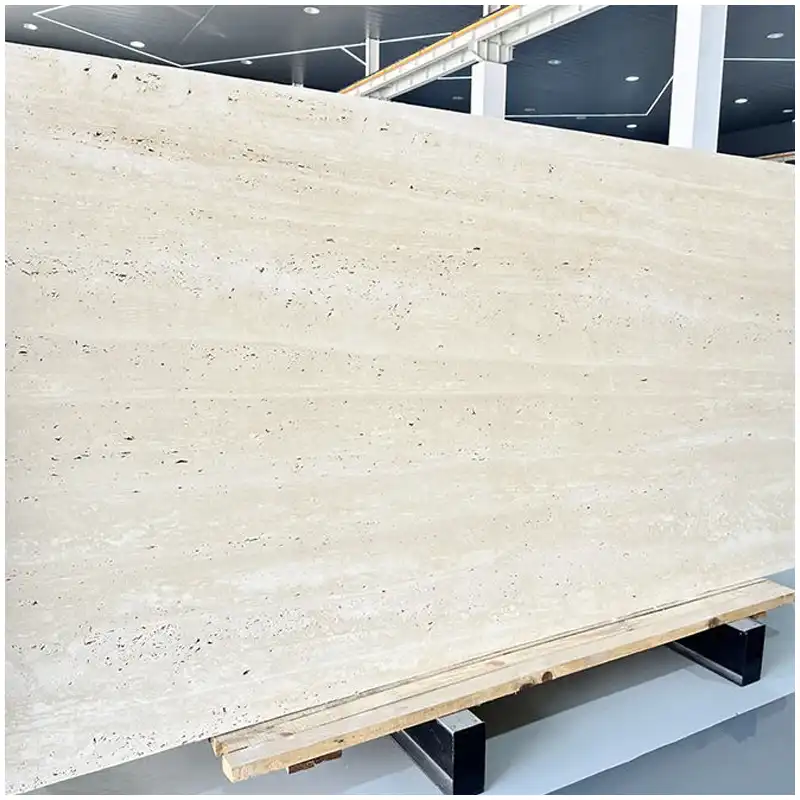
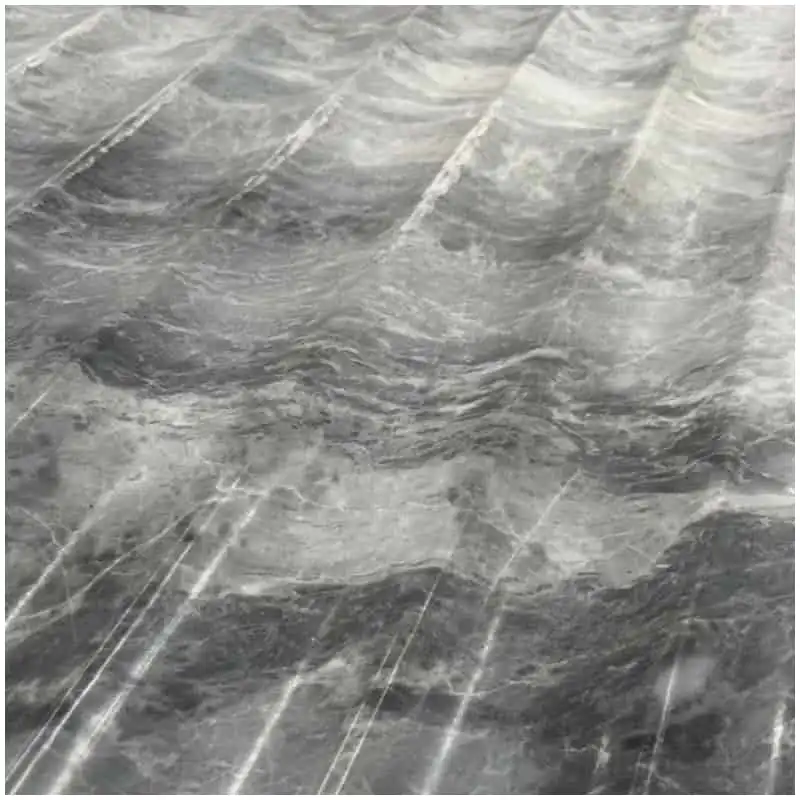
Italy Super White Travertine
Light Italian travertine with subtle cream layering for architectural walls and custom interior panels.

Travertino argentato
Silver and beige-grey travertine for feature walls, interior floors and cut-to-size architectural panels.
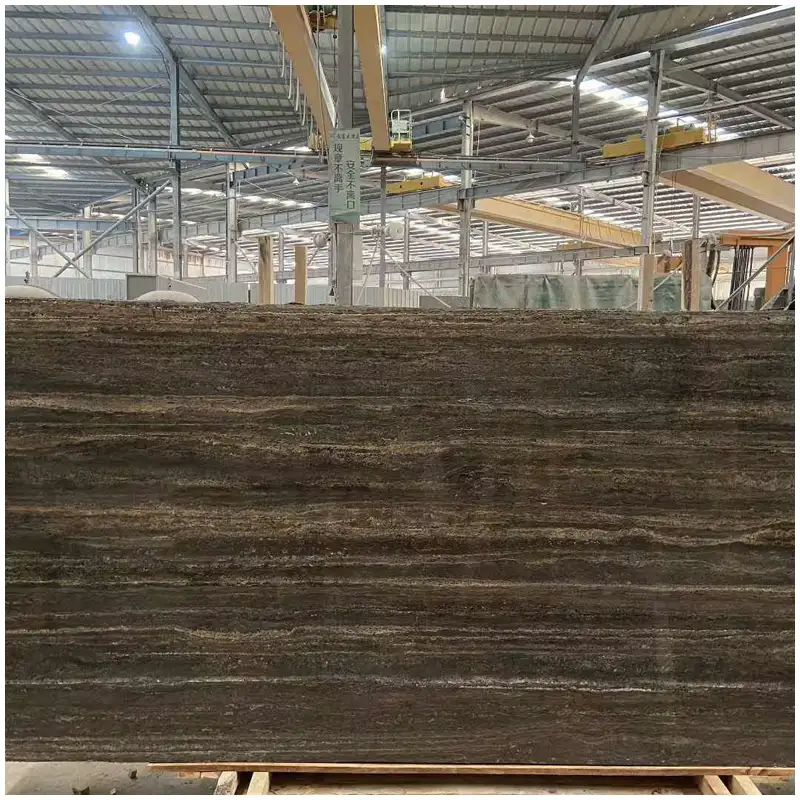
Travertino grigio argento scuro
Smoky grey layered travertine for decorative cladding, flooring and selected outdoor applications.

Noce Travertine Tiles
Warm brown travertine tiles with walnut and coffee tones for interior floors and decorative wall finishes.
Request Iranian Ultra-White Travertine Slabs for Interior Wall Projects
Send the required 16mm, 18mm, 20mm or 30mm thickness, slab or finished panel dimensions, surface finish, filling preference, cutting direction and destination. For Iranian Ultra-White Travertine wall cladding, include the approved white-tone range, pore acceptance requirements and panel layout. Project drawings and the actual selected slabs should be checked before fabrication.
| Request Iranian White Travertine Quote | View Travertine Collection |