
Quick Summary:Architects and distributors worldwide are rapidly adopting marble slabs as the material of choice for luxury and large-scale projects. From five-star hotels to private villas, marble slabs meet strict performance standards (ASTM C503, CE marking, ISO-certified quarries), deliver unmatched elegance compared with engineered stone, and align with sustainability frameworks such as LEED and BREEAM. Buyers must evaluate quarry origins, finishing quality, inspection protocols, export packaging, MOQ requirements, and lead times—ensuring supply depends on both durability and operational reliability.
The natural stone industry is undergoing a once-in-a-generation shift. As synthetic alternatives reach maturity, developers are fast-tracking authentic natural marble slabs that can pass audits, maintain structural performance, and create premium spaces. For wholesalers, contractors, and architects, reliable bulk supply—backed by proper certifications and logistics—has become non-negotiable.
This guide explains (1) the global demand drivers making marble slabs a necessity, (2) the quality and testing standards behind premium supply, (3) where marble slabs outperform alternatives in real-world projects, and (4) exactly what architects and buyers should check—MOQ, slab dimensions, certificates, QC, lead times—before securing container-level orders.
Why regulations and market trends are driving marble slab demand
-
Europe. EU Green Building initiatives such as BREEAM and circular economy regulations encourage the use of traceable natural stone. Projects now require verified quarry sources and documented performance data before approval.
-
United States. LEED v4.1 guidelines reward material transparency. Major states like California mandate Environmental Product Declarations (EPD), pushing contractors to choose marble slabs suppliers with sustainability documentation.
-
Middle East. GCC mega-projects (Dubai Expo legacy, Saudi NEOM) are prioritizing natural stone facades and luxury marble slabs for long-term performance under harsh climates.
-
China. Government green construction policies and export demand have turned China into both the largest producer and a significant consumer of gray marble slabsそして white marble slabs.
Market Impact: The global natural stone market was valued at USD 60 billion in 2023 and is projected to reach nearly USD 95 billion by 2030 (CAGR 6–7%), with architectural marble slabs leading the growth.

What marble slabs are—and how quality is defined
“Marble slabs” are large, cut sections of metamorphic stone, typically 20mm or 30mm thick, designed for flooring, wall cladding, countertops, and structural use.
Key Quality Factors of Marble Slabs
| Factor | Details |
|---|---|
| 起源 | Italian Carrara, Turkish Tundra Grey, Chinese Haisa Grey—each with distinct reputations in color, veining, and prestige. |
| Physical Properties | Tested under ASTM C503 standards: compressive strength, flexural strength, density, and water absorption. |
| 仕上げ | – Polished marble slabs: reflective, elegant – Honed marble slabs: matte, soft look – Brushed & leathered: tactile and textured surfaces |
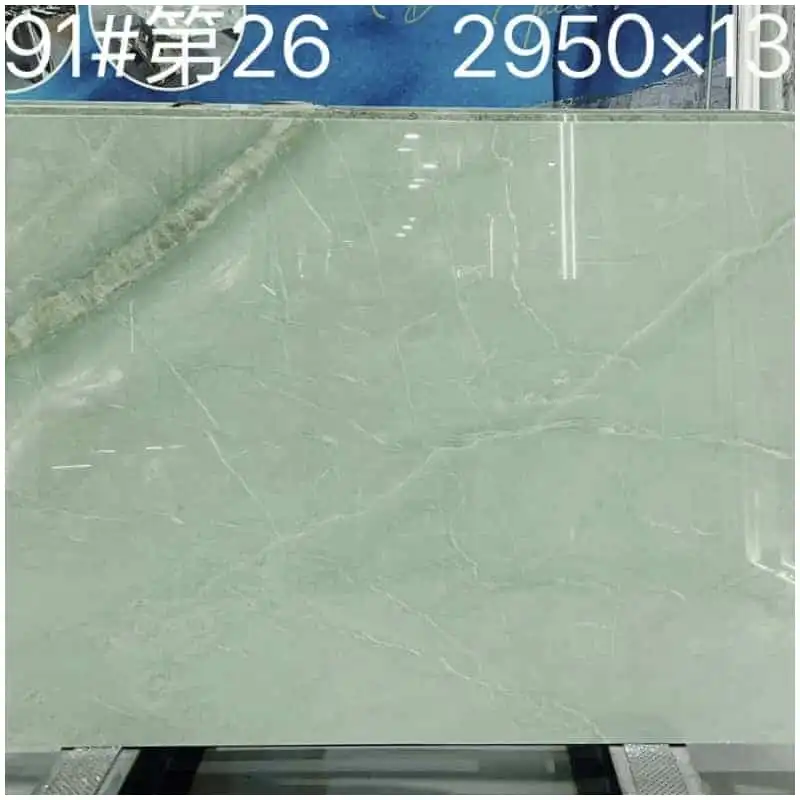
| 寸法 | Standard export slabs: 2400×1200mm Jumbo slabs: 3000mm+, increasingly used for bookmatched walls and large feature panels. |
Performance & design: how marble slabs solve architectural challenges
-
Durability. Properly sealed, natural marble slabs can last decades, even centuries, in high-traffic spaces.
-
Heat resistance. Unlike composites, marble withstands fire and high temperatures, critical for fireplaces and facades.
-
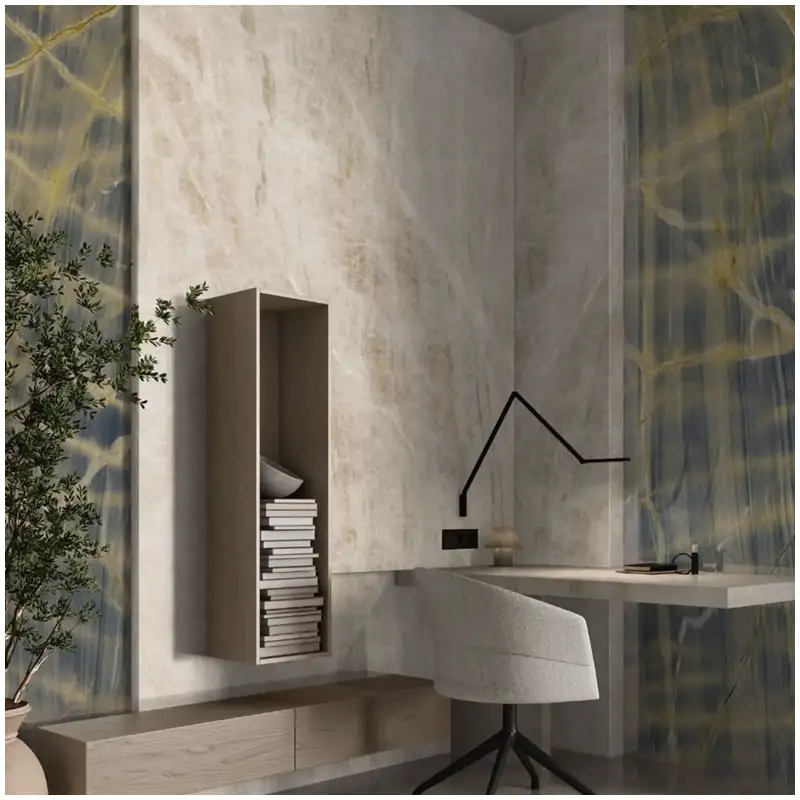
Aesthetic uniqueness. Each slab is one-of-a-kind, offering exclusive designs that artificial materials cannot replicate.
-
Prestige. Luxury buyers perceive marble not just as material, but as an investment in brand image.
Case Study: A five-star hotel in Dubai installed luxury marble slabs across 3,000 sqm of lobby flooring. Post-renovation, the hotel reported a 22% increase in guest satisfaction scores tied to interior design.
Where marble slabs fit best
-
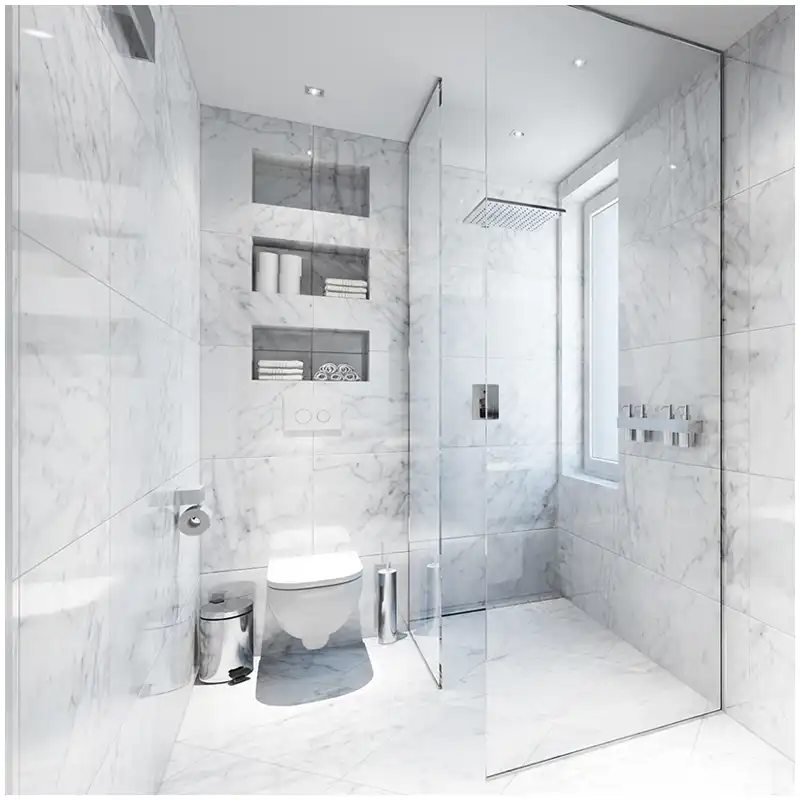
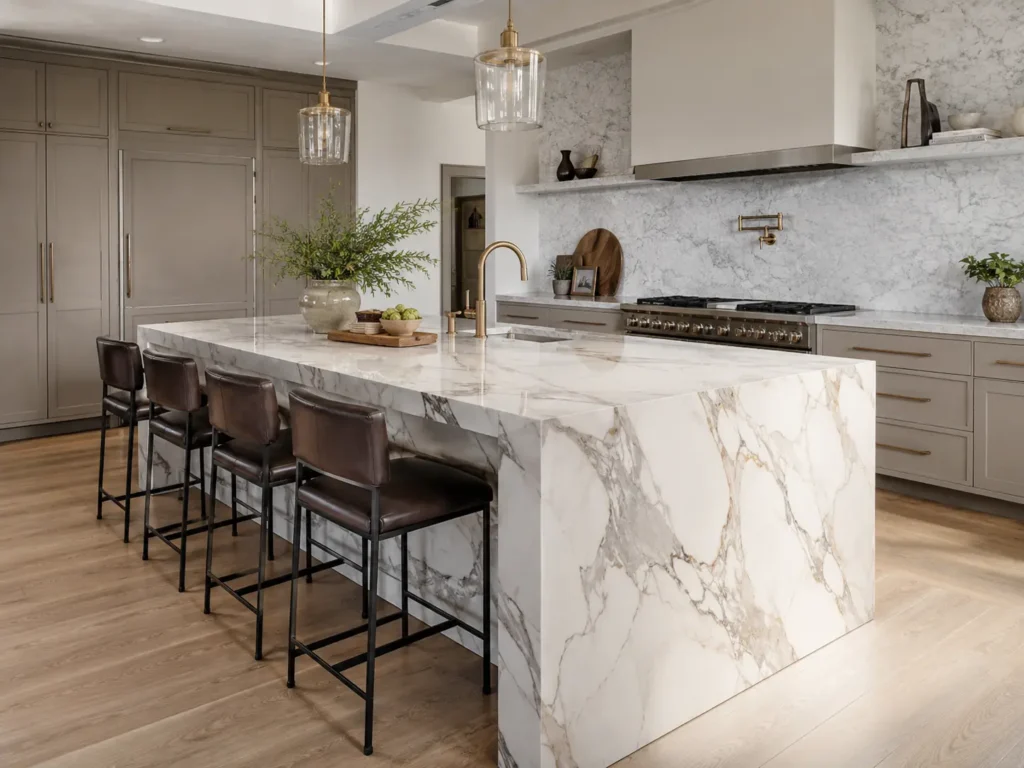
Residential projects. Kitchen countertops, bathroom vanities, flooring, staircases.
-
Commercial spaces. Office lobbies, hotel receptions, retail showrooms.
-
Public architecture. Museums, airports, government buildings.
-
Outdoor use. Cladding, pool decks, monuments (with weather-resistant finishes).
Bulk-buy checklist for architects & wholesalers
A. Product & Certification
-
Thickness: 20mm, 30mm.
-
Certificates: ASTM C503, CE Marking, ISO 9001/14001 for quarrying.
-
Quarry data: verified country-of-origin documents.
B. Performance & QC
-
Inspection: dry-lay slab inspections before shipment.
-
Testing: flexural strength, slip resistance for flooring.
-
Golden sample retention in contracts.
C. Packaging for Export
-
Wooden crates with moisture barrier lining.
-
Plastic wrapping inside crates to reduce humidity exposure.
-
CBM optimization for 20′/40′ HQ containers.
D. Commercial Terms
-
MOQ: typically one container (~400–450 slabs).
-
Lead time: 25–40 days after sample approval.
-
Incoterms: FOB, CIF, DDP depending on buyer region.
Compliance, labeling & sustainability
-
Traceability. Buyers increasingly demand digital QR codes linking slabs to quarry origin.
-
Carbon footprint. Suppliers must disclose energy usage during extraction and transport.
-
Recycling. Cut-off and waste slabs can be reprocessed into tiles or aggregates.
よくあるご質問
1. What is the standard size of export marble slabs?
Most slabs are 2400×1200mm, but larger 3000mm+ jumbo slabs are available for feature walls.
2. How can I ensure color consistency in gray marble slabs?
Request bundle-based shipments and dry-lay inspections to match veining across projects.
3. Can marble slabs be used outdoors?
Yes, but require dense, weather-resistant types (e.g., Silver Grey, Pietra Grey) and proper sealing.
4. What are typical MOQ and lead times?
MOQ: one container (400–450 slabs). Lead time: 25–40 days after artwork/sample approval.
5. How do marble slabs compare to engineered stone?
While engineered stone offers uniformity, natural 大理石 スラブ provide unique beauty, higher prestige, and better alignment with luxury branding.

The global supply of marble slabs in 2025 is not simply a matter of sourcing stone—it’s about securing compliance, sustainability, and long-term value. With stricter regulations, rising global demand, and consumer preference for authentic luxury, buyers must treat marble slabs procurement as strategic risk management.
Whether you are an architect designing a museum, a contractor sourcing for a high-rise, or a wholesaler consolidating orders, aligning with reliable marble slab suppliers ensures not just beauty but also operational peace of mind.