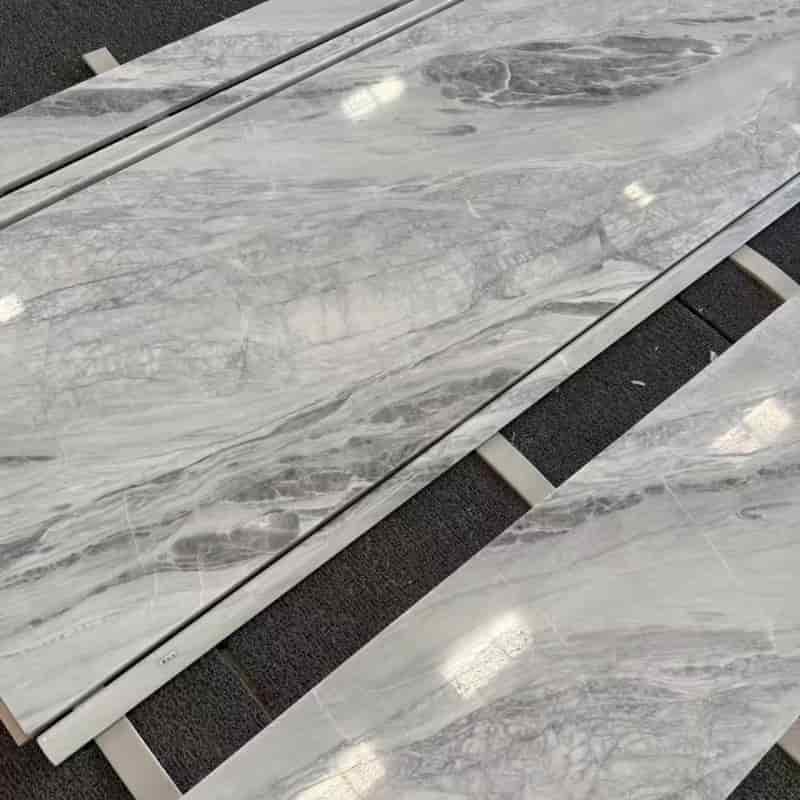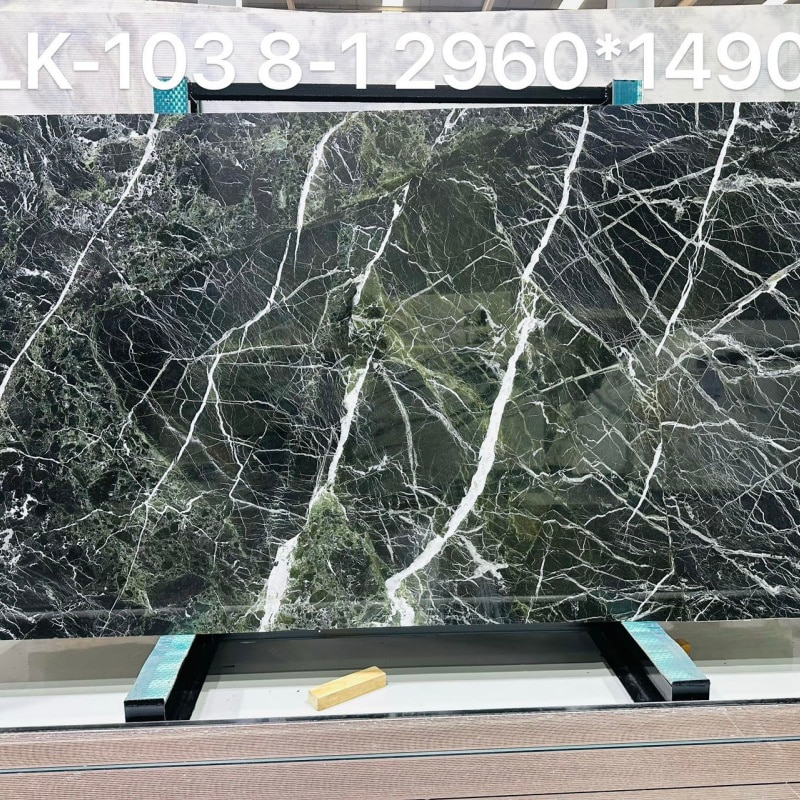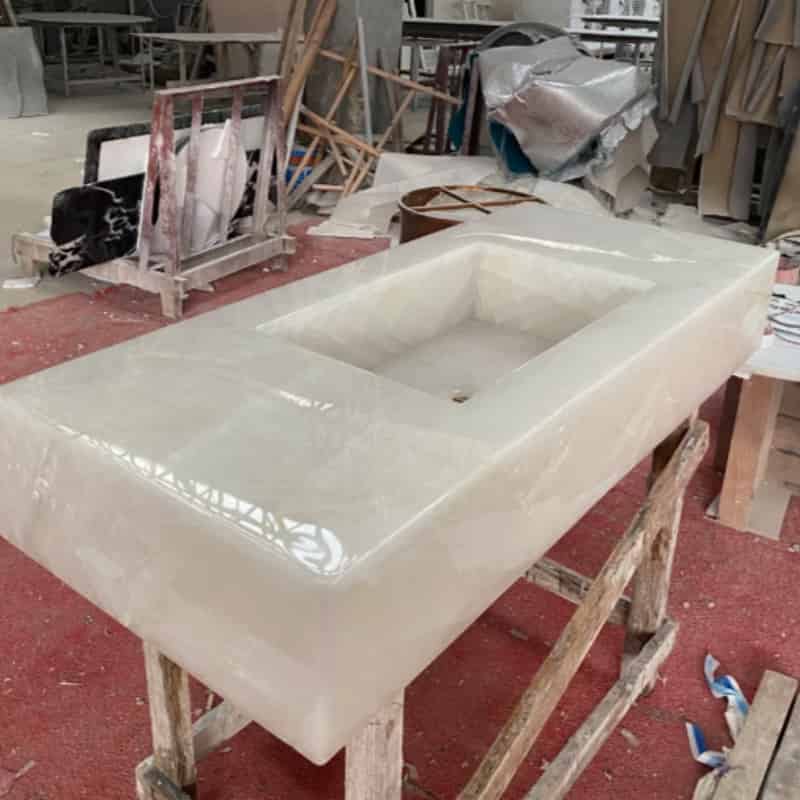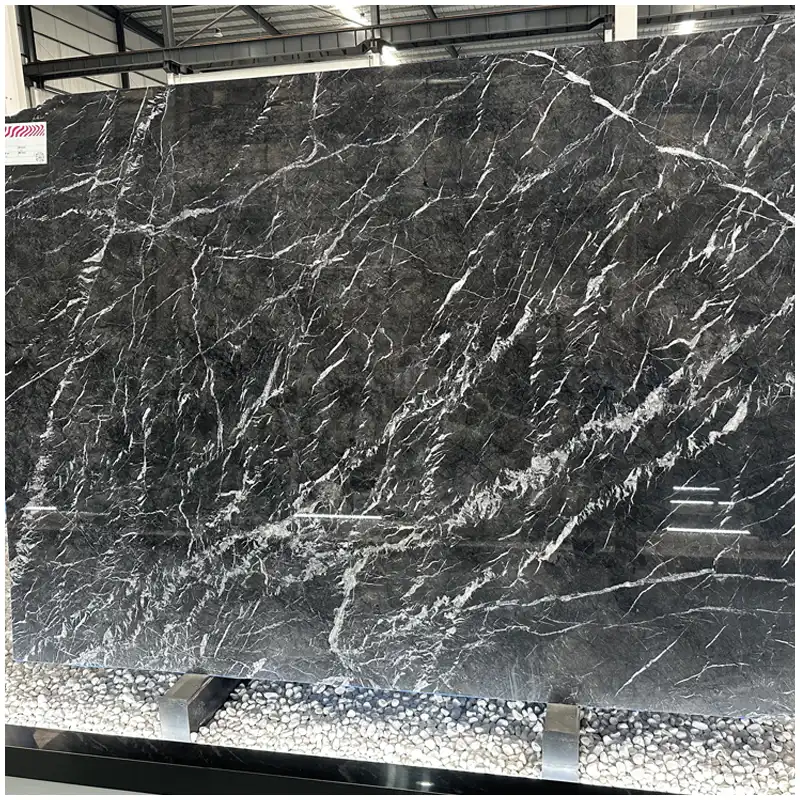



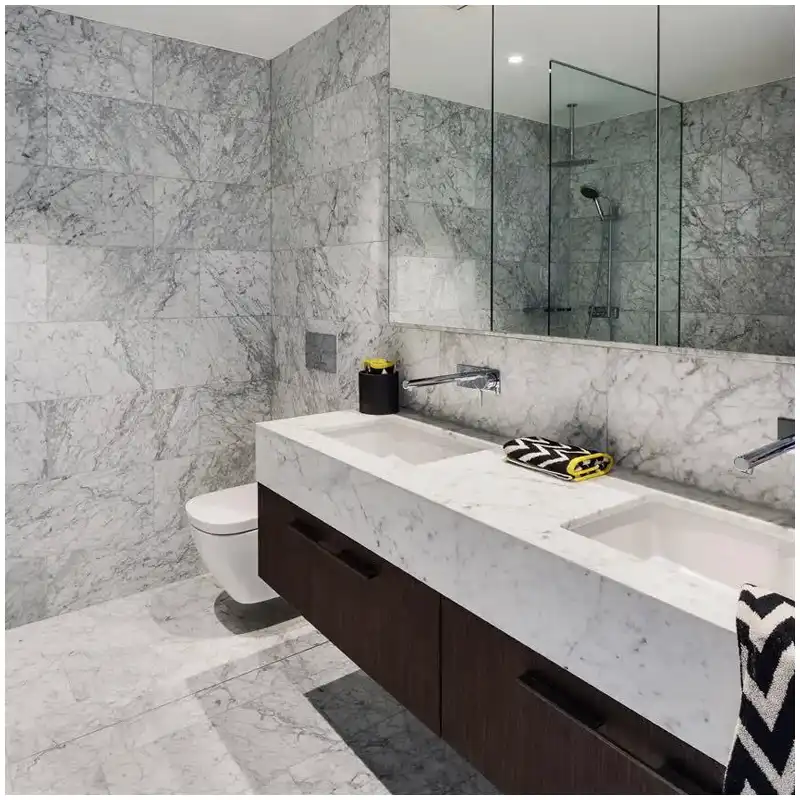
Calacatta Gold Marble Slab Under 3000K and 4000K Light
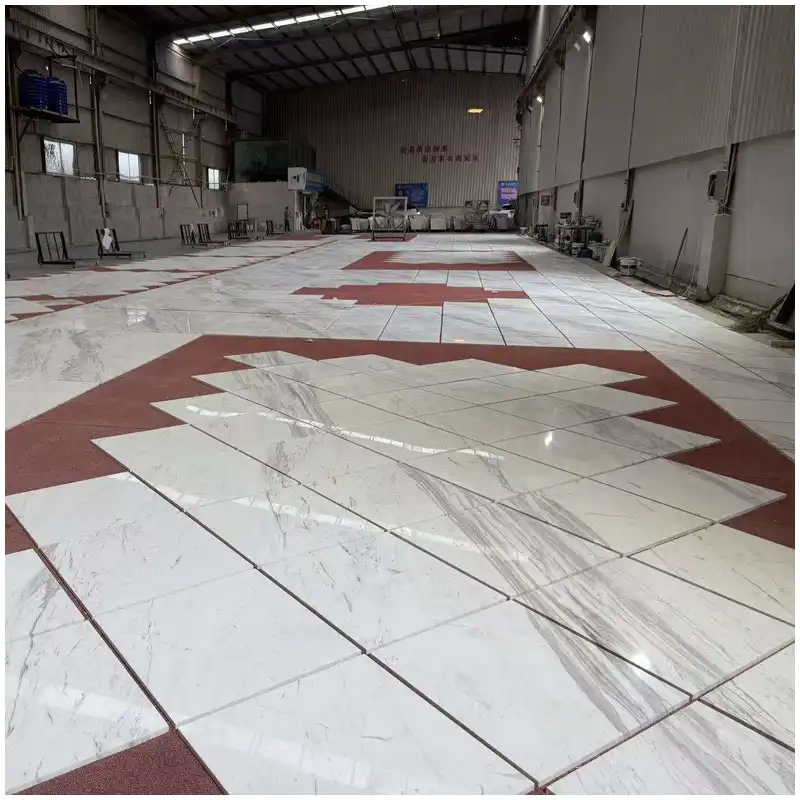
A hotel team once rejected a Calacatta Gold batch after seeing warm phone photographs from the warehouse. I moved the same slab under a calibrated 4000K inspection line and placed the approved wall tile beside it. The “yellow” background became a calm ivory, while the gold vein stayed warm. Then we switched to the project’s 3000K lamp, and the cream returned. Lighting lies.

The slab was acceptable, but the first photographs were not. Don’t just look at samples, and do not judge white marble from an auto-adjusted screen. I told the designer, “That slab doesn’t belong next to your bathtub” only after we compared the face with the actual bronze fittings and found one much warmer outlier.
How a Calacatta Gold Marble Slab Reads Under Different Light
A Calacatta Gold marble slab contains a light calcite background with gray, taupe, and sometimes warmer mineral movement. Light source, color rendering, intensity, angle, surrounding finishes, and camera processing all affect perception. I control the variables before blaming the stone.
Svetainė Calacatta Gold marble for bathroom applications deserves full-face review. A small chip cannot show whether warm veins gather in one corner or whether open areas remain consistent across the intended vanity and wall panels.
At 3000K, warm finishes often feel richer and cream undertones become more visible. At 4000K, gray movement can appear clearer and the background may read more neutral. These are visual tendencies, not fixed numerical color shifts. Lighting lies when someone treats a single photograph as universal truth.
Build a White Marble Lighting Test
I place the slab upright when the final application is a wall. Light direction changes reflections, especially on polished material. The lamp position and distance stay fixed between comparisons. I include the specified metal finish, wall tile, paint chip, and mirror edge because nearby colors affect the eye.
Camera auto white balance is turned off or documented. The image includes a neutral reference, slab number, and lamp condition. Don’t just look at samples; compare the actual reserved face and then confirm the decision in person or through a controlled approval method agreed by the team.
A Calacatta Gold marble vanity top also changes with horizontal reflection. Downlights, mirror lights, and warm timber doors can make the same stone read differently from a vertical wall panel.
Compare Polished and Honed Appearance
Polish increases reflection and often sharpens contrast. Honed finishes scatter light and can soften the vein, though they also show touch, moisture, and maintenance differently. I compare the specified finish, not a polished slab when the order will be honed.
Water temporarily deepens tone on many natural stones. In a wet zone, I wet a controlled test area and let it dry while watching the background and veins. This is not a substitute for technical suitability, sealing, installation, or maintenance planning. It simply shows the project team what normal visual change can look like.
The broader The Complete Project Guide to Premium White Marble Selection and Quality Control keeps lighting connected to batch control and wet-zone use. That slab doesn’t belong next to your bathtub if the team dislikes its wet and warm-light behavior before installation.
I compare that decision with Statuario Marble Slab Approval Photos, Lighting and Bathroom Use because another premium white marble can reveal the same approval error through a different undertone and vein scale.
Control Full-Slab Photography and Screen Review
I take one full-face image under each agreed light condition, using the same framing. Close views record vein minerals and natural features. I do not increase saturation or contrast to make the face look dramatic.
Svetainė Calacatta Gold Extra marble may carry warmer movement that needs honest screen handling. Two monitors can display the same file differently, so critical color approval should not depend on uncalibrated phones alone.
I also include a group image. One face can look neutral until it stands beside a cooler slab. Batch approval is relational. The finished room will compare adjacent pieces whether the approval process did or not.
Test Mirrors, Metals and Reflected Color Together
Bathroom mirrors double parts of the room and can amplify warm timber, painted walls, or bronze fittings. A slab that appears neutral alone may look warmer when a large mirror reflects the opposite finish across its surface. I set the material board where the face will actually be seen, not flat on a desk.
Metal finishes matter because polished brass, brushed nickel, and black hardware create different contrast. I am not matching the vein to the faucet like a fabric swatch. I am checking whether the whole group creates the intended temperature and whether one outlier becomes obvious.

For vanity lighting, I observe the stone from standing distance and from the mirror position. Grazing light can reveal surface texture, filled areas, and fine mineral lines that disappear under flat overhead light. That is useful information, not a reason to demand an impossible blank surface.
Commission the Installed Light Before Blaming the Marble
When an installed room looks wrong, I first verify the lamp specification, dimming level, surrounding finishes, and whether temporary construction lighting remains. Different lamps can share a nominal color temperature while rendering colors differently. I describe the observed condition and ask the lighting professional to confirm the fixture data.
Then I compare the piece codes with the approved slab group. If the right stone is in the right place, the team can adjust a lighting or finish problem without falsely rejecting the batch. If an outlier entered the room, the records make that visible too.
Do not correct color photographs before sending them for review. Include one wide room image, one straight stone view, one close comparison, and the lamp or control information. Lighting lies most convincingly when every person shares a differently edited crop.
I use the white Calacatta Gold marble countertop as a horizontal comparison when the same palette continues from vanity to ledge. The angle of view changes, so approval must include both orientations.
I repeat the test after dimming because many hospitality rooms run below full output. Low light can reduce gray definition and leave the warmest movement dominant. The approval need not cover every setting, but it should represent the scene selected by the lighting designer.
Window light adds another variable. I observe the face during the day when the room receives daylight, then after electric light takes control. The project is approving a room across time, not one warehouse minute.
3000K bathroom lighting needs a physical mock-up because warm metal, mirrors, and wall paint change perception together. I photograph the actual combination before release.
Marble undertone approval depends on a controlled comparison, not a single phone screen. I retain the slab number and lamp condition with every accepted image.
I repeat the 3000K bathroom lighting check after the specified finish is applied. Honed and polished faces do not return the same reflection.
A second marble undertone approval under neutral inspection light helps separate true batch range from a warm-room effect. Both records stay in the project file.
Warehouse Lighting Matrix for Calacatta Gold
| Condition | What I watch | Common mistake | Approval record |
|---|---|---|---|
| 3000K warm light | Cream background and gold-taupe veins | Calling all warmth a batch defect | Full face with lamp note |
| 4000K neutral-white | Gray definition and slab-to-slab range | Assuming it matches the final room | Same framing and reference |
| Polished reflection | Glare and contrast | Judging from one angle | Front and oblique views |
| Wet test area | Temporary darkening and drying | Ignoring real wet-zone appearance | Timed before-and-after images |
The Hard-Won Lesson: The Slab Did Not Turn Yellow; the Approval Light Changed
A hotel team rejected a reserved group after receiving warm phone images. Under the warehouse’s mixed daylight and auto white balance, the stone looked creamier than the approved chip. We repeated the full-face photographs under fixed 4000K light, then under the project’s 3000K lamp with bronze hardware and wall tile. Most faces fell inside the approved range; one warmer outlier was replaced.
The Lesson: Approve the real slab under documented project-relevant light before describing a color problem.
Understanding Lighting Decisions in Today’s White Marble Market
Does color temperature change the stone?
No. It changes the spectral composition of the light and therefore perception. Surrounding materials, reflection, and the viewer also matter. I describe the observed effect instead of claiming one universal color conversion.
Which light should control approval?
Use the project’s actual or representative fixture condition, plus a consistent inspection light that helps compare batches. The first predicts the room; the second makes differences easier to document.
What if the installed surface looks warmer than the approval?
Photograph the whole area and close comparison with the lamp type and surrounding finishes visible. Stop additional installation. Send the supplier the images with full-slab approvals, lighting notes, dry-lay record, and piece codes.
I return to The Complete Project Guide to Premium White Marble Selection and Quality Control because light, batch range, finish, and placement cannot be approved independently.
Dažnai užduodami klausimai
1. Why does a Calacatta Gold marble slab look warmer under 3000K light?
Warm light can emphasize cream, beige, and gold perception while reducing the cool appearance seen under neutral-white inspection light. Surrounding finishes, lamp quality, intensity, angle, polish, and camera processing also affect the result.
2. Is 4000K always better for white marble inspection?
It is useful for consistent comparison when the setup is controlled, but it may not represent the finished room. Use both a repeatable inspection condition and the project-relevant light before approval.
3. Can phone photographs approve marble undertone?
They can support documentation when capture settings and references are controlled, but auto white balance, screen differences, filters, and mixed light can mislead. Critical decisions need agreed full-face evidence.
4. Does polished marble look different from honed marble under the same lamp?
Yes. Polish reflects more directional light and often increases apparent contrast, while a honed finish scatters light and softens reflection. Compare the finish actually specified for the project.
5. What should I do first if installed marble looks too warm?
Photograph the full area and close comparison under the actual lighting, stop further installation, and contact the supplier with the approved slab images, lamp condition, dry-lay record, and piece codes.
Quick-Reference Checklist for White Marble Lighting Approval
- Use complete numbered faces rather than cropped details.
- Document lamp color temperature and position.
- Keep camera white balance and framing consistent.
- Place specified metal, tile, paint, and mirror samples nearby.
- Compare the actual polished or honed finish.
- Record group range before approving individual faces.
Final Conclusion
Light is part of the approval condition. I want the team to see the whole face under repeatable inspection light and the actual room mood, with surrounding finishes close enough to influence the eye honestly.
A Calacatta Gold marble slab should be selected for the effect it will have under the intended light, not for one flattering phone image. Don’t just look at samples; lighting lies, and that slab doesn’t belong next to your bathtub if the warm room turns its undertone into something you already dislike. Esta Stone keeps that argument in the warehouse, where it still has an easy answer.

References
- Dimension Stone Design Manual, Natural Stone Institute.
- Natural Stone Care and Cleaning Guidance, Natural Stone Institute.
- ASTM C503 Standard Specification for Marble Dimension Stone, ASTM International.
- ASTM C97 Standard Test Methods for Absorption and Bulk Specific Gravity of Dimension Stone, ASTM International.
- Natural Stone Technical Guidance, Stone Federation Great Britain.
- The Lighting Handbook, Illuminating Engineering Society.
- Bathroom Planning Guidelines, National Kitchen and Bath Association.
- ASTM C1242 Standard Guide for Selection, Design, and Installation of Dimension Stone Attachment Systems, ASTM International.