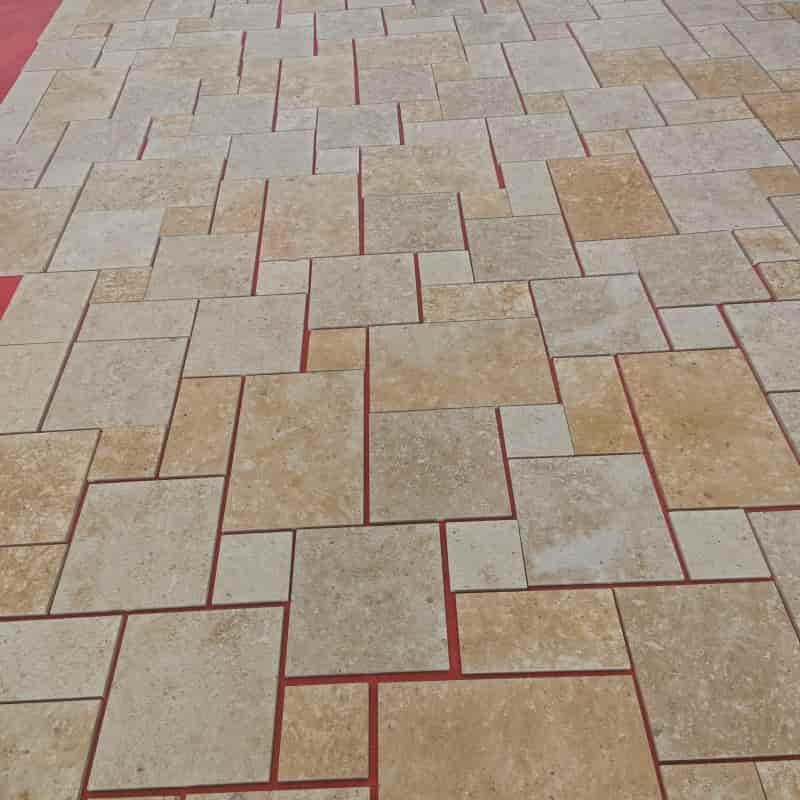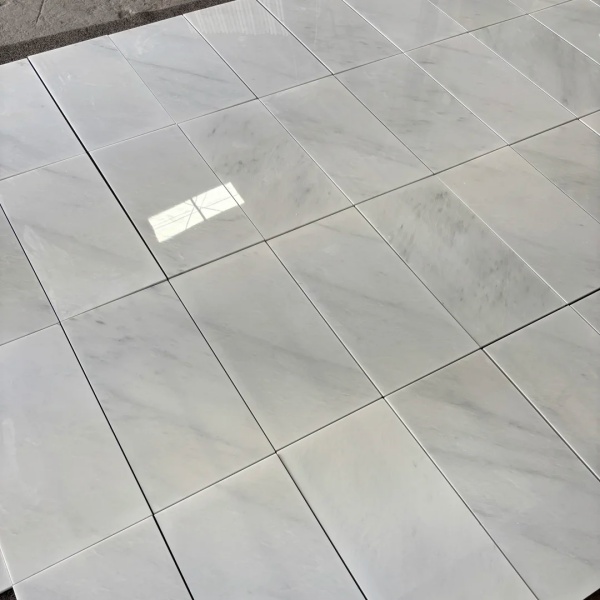
In the ultra-prime real estate markets of 2026, natural stone is no longer viewed merely as a finish; it is a high-performance asset. For a procurement director or head architect, the difference between Calacatta and Carrara marble represents the fine line between a project that appreciates in value and one that incurs massive remediation costs. Securing authentic white luxury marble slabs requires navigating a supply chain fraught with “commercial grade” substitutions and geological inconsistencies. Partnering with a vertically integrated Italian marble factory is not just a sourcing choice—it is a risk-transfer strategy that ensures structural integrity and aesthetic alignment across a project’s entire lifecycle.
Visual Identity: Brand Authority vs. Spatial Harmony
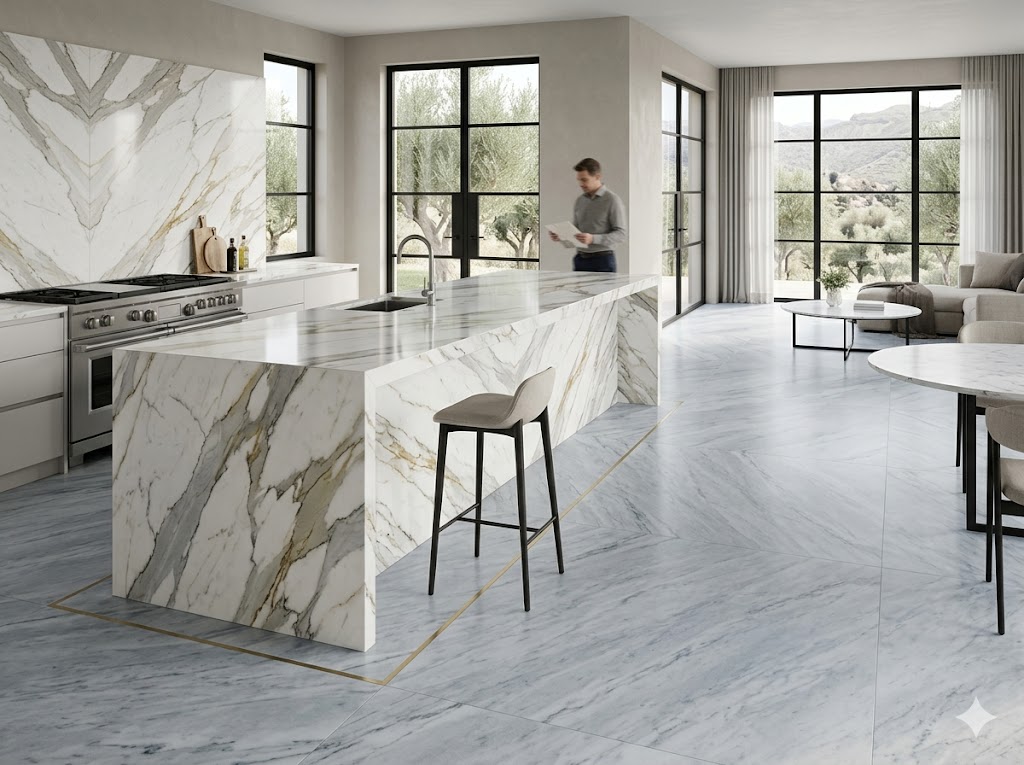
Marble dictates the “emotional temperature” of a space. Designers must align the stone’s energy with the project’s brand identity. Calacatta Marble is universally defined by its striking, high-contrast, and deeply dramatic appearance. Across its luminous canvas, you will find thick, bold veining that flows with immense energy. For avant-garde luxury, designers are increasingly specifying rare variations like Calacatta Violet marble to introduce a rare, brecciated violet-gold texture that commands immediate market attention. Because the veins are large and expressive, Calacatta is the ultimate choice for book-matching on monumental feature walls.
Conversely, Karara marmuras is the absolute epitome of understated, quiet luxury. Its background leans toward a soft, misty grey or blue-grey with feathery, linear veins. When designing a sprawling luxury hotel lobby or a massive corporate atrium, procuring wholesale Carrara white marble slabs ensures a serene, continuous surface. The uniform nature of its pattern makes it incredibly forgiving during installation, guaranteeing a harmonious flow across thousands of square feet without overwhelming the eye or competing with other design elements.
Material Performance: Scientific Data & Compliance
For structural engineers, visual beauty is always secondary to empirical performance data. Both of these stones were forged millions of years ago through intense subterranean heat and tectonic pressure. Below is a comparative look at the technical parameters of these premium stones to assist in high-accuracy procurement.
| Technical Parameter | Carrara Marble (Average) | Calacatta Marble (Average) | Regulatory Compliance (ASTM C503) |
| Density (g/cm³) | 2.71 | 2.72 | Minimum 2.59 |
| Water Absorption (%) | 0.22% | 0.18% | Maximum 0.20% |
| Compressive Strength (MPa) | 120.0 | 125.0 | Minimum 52.0 |
| Flexural Strength (MPa) | 14.5 | 15.2 | Minimum 7.0 |
| Mohs Hardness Scale | 3.0 – 3.5 | 3.0 – 3.5 | Calcite Standard |
While Calacatta frequently exhibits marginally lower water absorption and higher density, both stones remain porous natural materials. To maintain the integrity of a Carrara marble table top, Gamintojai turi naudoti pažangias vakuumines dervos linijas, kad užpildytų mikroskopinius natūralius tuščius tarpus, taip ženkliai padidindami plokštės lenkimo stiprumą dar prieš jai pasiekiant vartotoją. Norėdami sužinoti daugiau apie naują „Carrara“ marmurą, skaitykite šiuos tinklaraščius: Profesionalus pirkėjo vadovas apie Bianco Carrara marmuro klasifikavimą: suprasti CD, C ir ypač aukštos kokybės Kaip įsigyti didelio masto Karos marmurą aukščiausios klasės komerciniams projektams: tiekėjo patikrinimo sąrašas
Buyer Pain Points: Identifying Hidden Risks in Procurement
B2B buyers often face “Slab Anxiety”—the fear that the material delivered won’t match the sample or will fail shortly after installation. In large-scale projects, sourcing from multiple batches can lead to “Visual Discontinuity,” where one block has a crisp white background while the next has a muddy yellow undertone. To mitigate this, expert procurement teams insist on block-locking at the source. This ensures that a Carrara marble bathroom countertop matches the surrounding floor tiles perfectly.
Furthermore, there is a common misconception that “premium price equals indestructible.” In reality, both marbles are calcium carbonate-based and will etch (dull) upon contact with acidic substances like lemon juice or wine. Without proper expectation management, homeowners may be disappointed by the natural patina that develops over time. Professionals should always provide a detailed maintenance protocol to clients before final specification. If you are unsure of the best stone for a high-traffic zone, you should contact us for a specialized consultation on material suitability and protective sealing options.

The B2B Decision Matrix: If X → Choose Y
To maximize ROI and minimize site delays, modern developers utilize a rigorous procurement logic that balances aesthetics with the Total Cost of Ownership (TCO).
-
IF the project is a massive commercial footprint (lobby/hallway) → CHOOSE Karara marmuras for its feathery pattern continuity and cost-efficiency.
-
IF the focal point is a signature kitchen island or reception desk → CHOOSE Calacatta Marble for its dramatic architectural energy.
-
IF the design calls for bespoke furniture in residential suites → CHOOSE a precisely fabricated Carrara marble table top for its understated elegance.
-
IF the application is in a high-turnover rental or hospitality environment → CHOOSE a honed finish to better mask the microscopic scratches that inevitably occur in public spaces.
Industry Trends and Regulatory Standards
The architectural sector is experiencing a massive pivot toward “Biophilic Design.” This trend favors authentic, unpredictable natural veining over sterile synthetic surfaces. Projects that utilize authentic Italian stone with transparent ethical sourcing documentation are achieving higher market valuation. However, aesthetic vision must never supersede building safety codes. In commercial public applications, specifying a highly polished marble floor is a severe legal liability.
According to international building safety codes, flooring in wet areas must meet strict Dynamic Coefficient of Friction (DCOF) standards. Polished marble—whether Calacatta or Carrara—is incredibly slippery when wet. Therefore, commercial architects must legally mandate a “honed” or “leathered” finish for marble floors to add essential microscopic surface grip, ensuring legal compliance and preventing slip-and-fall litigation.
Sourcing Strategies for Asset Appreciation
The decision between the bold authority of Calacatta and the serene grace of Carrara is ultimately a balance of budget and emotional intensity. By navigating the supply chain with a focus on scientific parameters and direct-factory partnerships, you move beyond simply “buying stone” to building a lasting legacy. To optimize budgets, intelligent procurement teams abandon localized retail distributors and establish direct relationships with vertically integrated processing facilities. This reduces material costs by up to 40% while ensuring batch-level color consistency for expansive architectural layouts.
|
|
|


DUK
1. Is Calacatta marble more expensive than Carrara marble?
Yes, Calacatta marble is significantly more expensive than Carrara marmuras due to its extreme geological rarity. While Carrara is abundant and acts as the “workhorse” of the Italian stone industry, Calacatta is found in limited seams and isolated pockets. Its stark white background and highly sought-after bold veining represent a very low percentage of total quarry output, driving its status as a premier luxury commodity with a much higher price point per square foot.
2. Can natural white marble be used safely in high-traffic commercial flooring?
Yes, but only if the correct finish is specified. In high-traffic commercial environments such as hotel lobbies or shopping malls, polished marble presents a major slip liability and will quickly show signs of wear. Architects must legally mandate a honed or leathered finish to meet Dynamic Coefficient of Friction (DCOF) standards. These matte finishes provide better microscopic surface grip and are more forgiving of the micro-scratches caused by heavy footfall.
3. Why does some white marble turn yellow or brown after installation?
Yellowing is a common pain point typically caused by internal iron oxidation or improper maintenance. Because marble is a natural stone, it contains trace minerals, including iron. If exposed to excessive moisture or non-breathable sealers, the iron can oxidize (rust). Additionally, using improper floor waxes or acidic cleaners can trap dirt, leading to a yellowed appearance. Sourcing from a reputable Italian marble factory that uses high-quality resin-vacuum lines helps mitigate these internal risks.
4. How do I maintain a Carrara marble countertop to prevent etching?
Maintaining marble requires consistent, informed care. Because marble is calcareous, it will “etch” (dull) upon contact with acids like vinegar, lemon, or wine. To prevent this, a Carrara marble bathroom countertop should be sealed with a professional-grade impregnating sealer upon installation and resealed every 6-12 months. For daily cleaning, always use a pH-neutral stone cleaner and a soft cloth, avoiding any harsh abrasive chemicals.
5. What are the advantages of buying marble slabs direct from a manufacturer?
Buying direct from a vertically integrated factory offers three major advantages: cost optimization, batch consistency, and technical quality. By choosing to buy marble slabs direct, procurement teams can save up to 30-40% on material costs. Furthermore, it allows for “block locking,” ensuring that every slab in a project comes from the same geological block for perfect color harmony, which is nearly impossible to achieve through secondary retail distributors.
References
-
“ASTM C503: Standard Specification for Marble Dimension Stone.” ASTM International, 2025.
-
“Natural Stone Institute: Dimension Stone Design Manual (v2026).” Natural Stone Institute.
-
“Dynamic Coefficient of Friction (DCOF) Testing and Slip Resistance Standards.” Tile Council of North America (TCNA).
-
“The Geology of the Apuan Alps: Extraction Yields and Scarcity.” Italian Geological Society.
-
“Biophilic Design and the Return to Natural Materials in Corporate Architecture.” Journal of Architectural Science.
-
“Chemical Etching and Sealing Protocols for Calcareous Stones.” International Stone Maintenance Association.
-
“The Economic Impact of Natural Stone in Luxury Real Estate Appreciation.” Global Property Guide, 2026.
-
“Sustainable Quarrying: Environmental Standards in Modern Stone Extraction.” European Stone Federation.
Expert Insights: Strategic Procurement of White Marble Assets
Strategic Sourcing Logic (Why & How): In the 2026 luxury construction market, the allocation of white marble dictates both the aesthetic triumph and the financial viability of a project. Calacatta Marble, due to its extreme geological rarity and energetic veining, functions as a high-impact architectural focal tool. Conversely, Karara marmuras offers high-yield availability and subtle, feathered backgrounds, establishing it as the undisputed standard for expansive commercial flooring and large-scale residential continuity.
Key Sourcing Options & Operational Considerations
- Total Cost of Ownership (TCO) Strategy
To minimize long-term remediation costs, savvy buyers should bypass retail markups and buy marble slabs direct from a vertically integrated Italian marble factory. Šis požiūris užtikrina “blokų fiksavimą” dėl spalvų vienodumo partijos lygmenyje ir suteikia prieigą prie pažangių vakuuminių dervos technologijų, kurios padidina plokščių struktūrinį lenkimą atsparumą. - Komercinis atitikimas (sauga ir rizika)
Estetinė vizija niekada neturi būti aukštesnė už pastatų saugos taisykles. Komercinėse zonose su dideliu lankytojų srautu architektai privalo įstatymiškai nurodyti šlifuotus ar odos apdailos paviršius visoms white luxury marble slabs tam, kad būtų laikomasi Dinaminio trinties koeficiento (DCOF) standartų. Poliruotas marmuras, nors ir akį traukiantis, sudaro didelę paslydimo ir kritimo riziką viešose ar drėgnose aplinkose.