



Greitas apibendrinimas
Travertino Navona is an Italian travertine distinguished by an ivory-to-beige background, understated cream mineral layers and naturally occurring pores. Vein-cut slabs emphasize the stone’s linear sedimentary structure, whereas cross-cut pieces reveal softer, irregular formations. The material is used in architectural wall cladding, villa interiors, interior flooring, staircases and selected custom furniture. Available fabrication includes slabs, cut-to-size panels and shaped architectural components, with honed, filled or other approved finishes. The appearance and maintenance requirements of finished Navona Travertine depend on the cutting direction, filling treatment and intended installation environment.
Travertino Navona Slabs For Wall Cladding and Vanity Tops
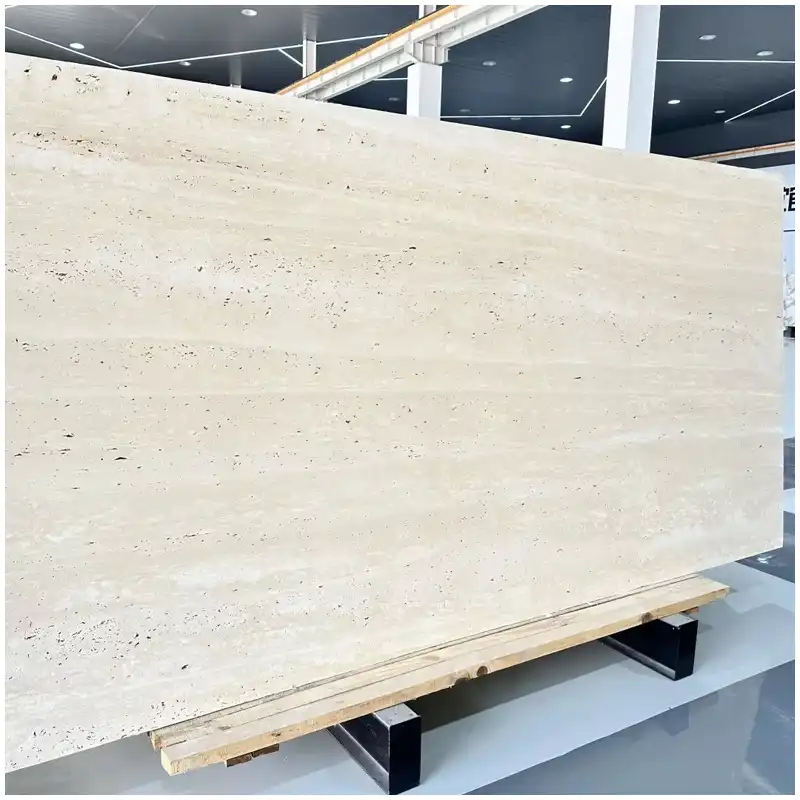
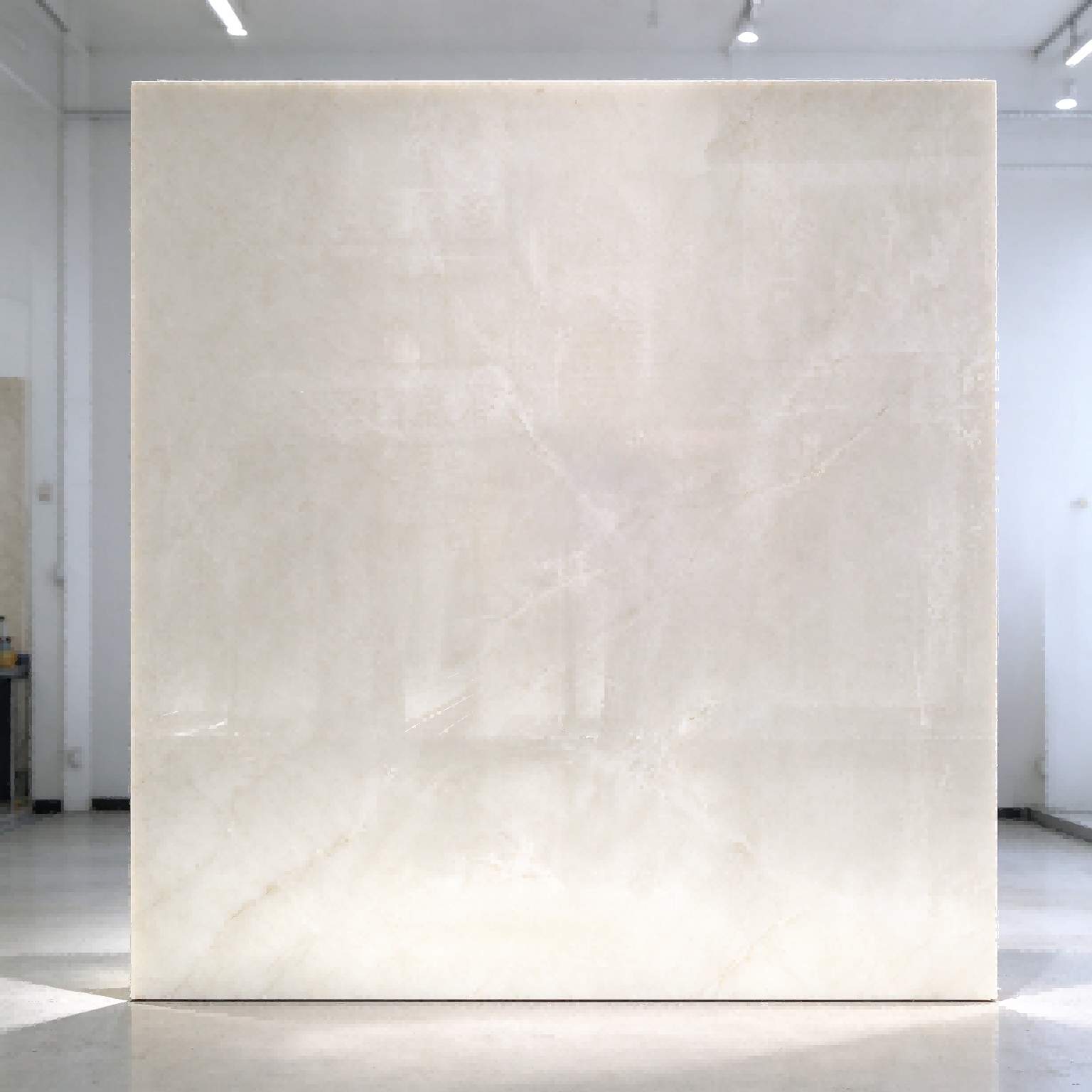
Travertino Navona belongs to the Roman travertine family associated with the Tivoli area near Rome. Its principal colors range from warm ivory to pale beige, with soft cream sedimentary formations and naturally occurring pores.
Compared with travertine varieties that have pronounced brown bands, Navona can appear more continuous across a large surface. The movement is generally restrained, although individual slabs may contain stronger layers or changes in pore concentration.
Pavadinimas Beige Travertino Navona describes this light-colored stone variety. Commercial descriptions may also use Navona Travertine, Navona Travertino or Travertino Navona Romano. Exact quarry origin should be established from the selected material documentation when an Italian source is a contractual requirement.
Its light background allows the stone to sit beside oak, walnut, limestone, plaster and neutral-colored porcelain without introducing a sharply contrasting mineral pattern. The final visual effect depends as much on the selected cut and surface treatment as on the beige color itself.
Vein-Cut and Cross-Cut Navona Travertine Slabs
Two pieces of the same Navona Travertino Stone can look noticeably different when the block is cut in different directions. The decision affects the finished pattern of wall panels, stair components and large architectural surfaces.
Vein cut exposes the sedimentary layering as relatively continuous lines. These bands can be positioned horizontally for long wall elevations or vertically when the design requires a more upright visual rhythm.
Cross cut reveals a less directional pattern. The surface may show cloud-like mineral movement, rounded deposits and irregularly distributed pores rather than parallel bands.
For a wall assembled from several pieces, the selected cutting direction should be consistent with the architectural elevation. Mixing vein-cut and cross-cut panels without a deliberate design can make adjacent sections appear unrelated.
The fabrication drawings should therefore identify more than finished dimensions. They should also show the intended orientation of visible mineral layers, especially around wall corners, stair returns and adjoining panels.
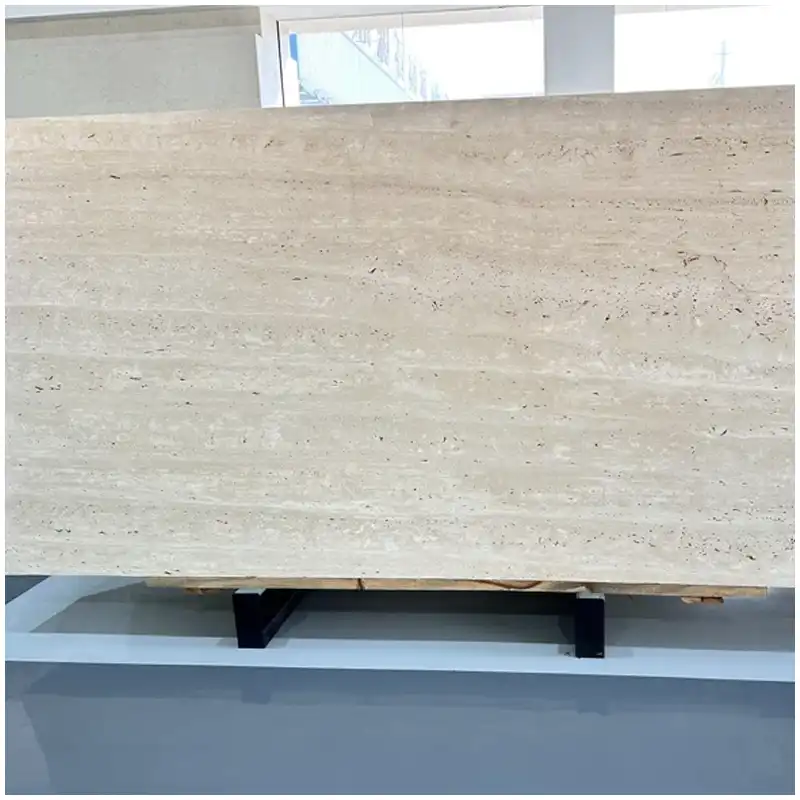
Beige Travertino Navona Slab Sizes, Thickness and Finishes
Navona can be supplied as slabs for fabrication or processed into architectural panels and tiles. The Esta Stone product listing identifies common thickness references of 18mm, 20mm and 30mm. Actual slab dimensions, usable cutting areas and finish availability depend on the selected production lot.
| Komercinis pavadinimas | Travertino Navona |
| Medžiaga | Natural Calcareous Travertine |
| Other Names | Navona Travertine / Beige Navona Travertino Stone / Travertino Beige Navona / Travertino Navona Romano |
| Tradicinis akmens kilmės | Roman Travertine Region, Tivoli, Italy; Selected Material Lot to Be Verified |
| Spalva | Ivory, Light Beige, Cream and Subtle Warm Mineral Layers |
| Pjovimo kryptis | Gyslų pjovimas / skersinis pjovimas |
| Slab Thickness | 18mm / 20mm / 30mm Reference; Confirm Current Material |
| Plytelių dydžio nuorodos | 300×600mm / 600×600mm / 457×457mm / 800×800mm, Subject to Cutting Schedule |
| Paviršiaus apdaila | Honed / Polished / Brushed / Other Approved Textured Finishes |
| Pore gydymas | Filled / Unfilled, with Filling Material and Color by Approval |
| Fabrication Forms | Slabs / Tiles / Wall Panels / Stair Treads and Risers / Custom Stone Components |
| Paraiškos | Interior Walls / Villa Floors / Staircases / Selected Kitchen Islands / Decorative Architectural Features |
Honed Navona Travertino: Natural Pores, Filling and Surface Texture
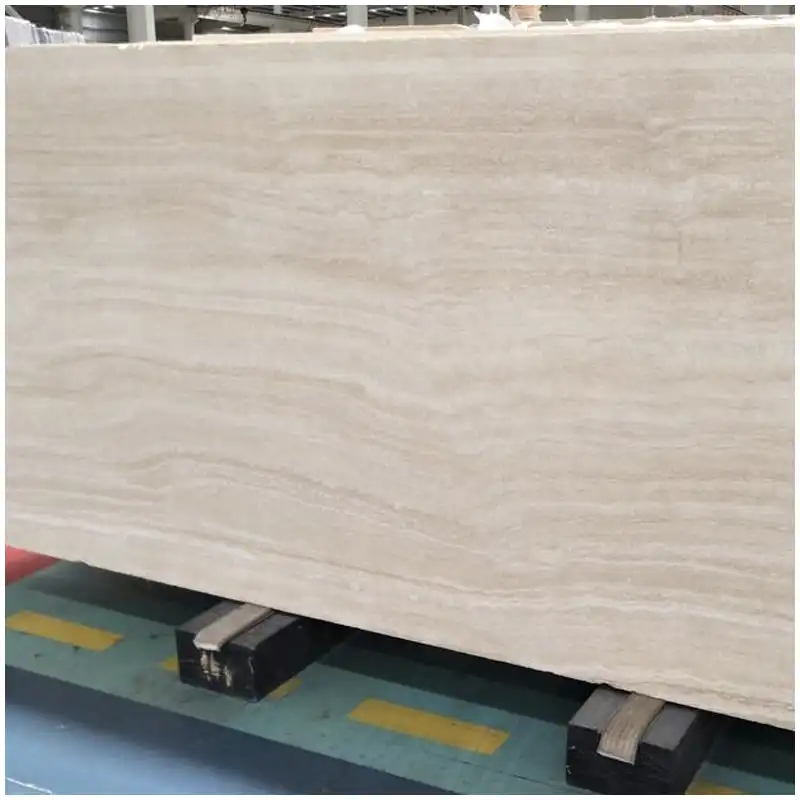
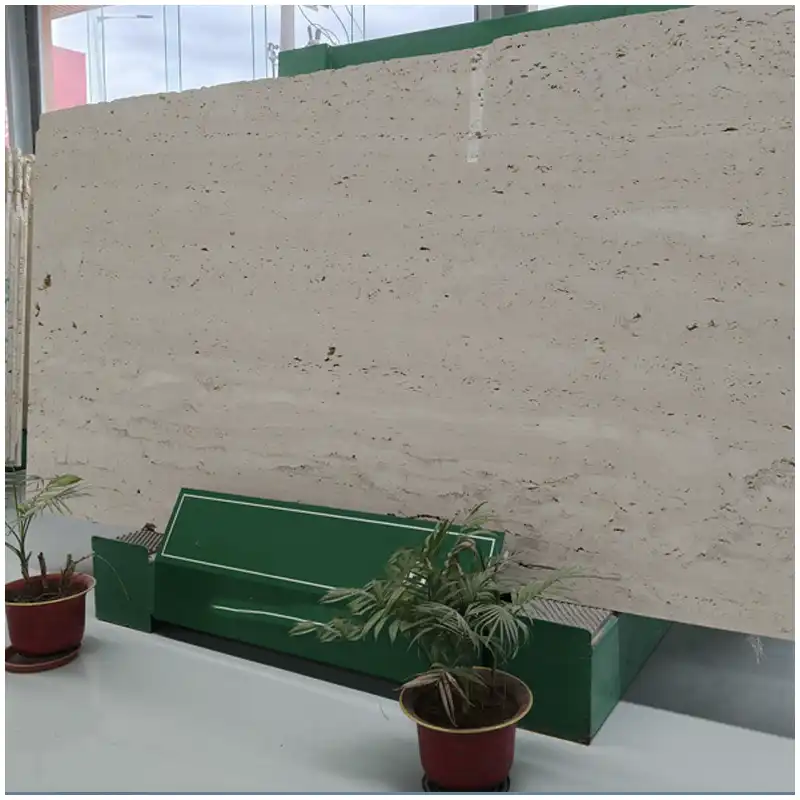
Travertine forms with natural cavities and sedimentary openings. On a Navona slab, these features may range from fine pores to larger irregular voids. They are part of the stone’s structure, but the way they are treated determines the finished surface.
A honed and filled finish provides a relatively smooth, low-reflection surface. Suitable filling material is introduced into selected openings before the final face is processed. The color of the fill affects how visible the repaired areas remain against the ivory stone.
An unfilled and brushed surface retains more tactile variation. This can work on protected decorative walls where the cavities are part of the intended material expression. It is less straightforward for surfaces exposed to food preparation, frequent spills or demanding cleaning routines.
Polished filling is another option for interiors requiring more reflected light. The appearance should be approved from an actual finished sample because polishing and filling can change the perceived tone of the beige background.
For visible bathroom surfaces, the specification should distinguish natural open pores from damaged or poorly filled areas. The acceptance criteria need to describe the intended finish, not simply require the stone to look completely uniform.
Italian Travertine Slabs for Matching Architectural Wall Panels
Italian Travertine Slabs are frequently specified in interiors where adjoining stone panels need a consistent visual direction. With Navona, that consistency is created through the chosen cut, panel order and acceptable range of natural beige tones.
For a large wall, the cutting schedule should be developed from the actual slab arrangement. Panels near an entrance or central focal area may benefit from more continuous sedimentary movement, while narrower returns can be cut from suitable adjoining portions.
Vein-cut Navona allows the direction of the bands to become an architectural element. Horizontal lines can visually connect a long corridor or wall elevation; vertical lines may be preferable for tall panels between architectural openings.
Cross-cut panels are less dependent on continuous linear alignment, although differences in pore concentration and overall tone still need attention. The designer should not assume that cross-cut pieces from unrelated blocks will produce an identical background.
Where the project uses Navona across multiple rooms, slab allocation can separate highly visible architectural panels from smaller pieces without discarding usable material unnecessarily. This requires a cutting plan based on the actual available dimensions rather than only the nominal square-meter requirement.
Navona Travertine Physical and Mechanical Properties
The following figures are representative technical references for Travertino Navona. Density, absorption and compressive-strength ranges describe the commercial stone variety. The flexural-strength results represent two separately reported test orientations. They are not a combined laboratory certificate for the currently supplied slabs.
| Material Property | Bandymo metodas | Reference Result | Vienetas |
|---|---|---|---|
| Matoma tankis | EN 1936 | 2350–2550 | kg/m³ |
| Vandens absorbcija | EN 13755 | 1–3 | % |
| Suspaudimo stiprumas | EN 1926 | 60–110 | MPa |
| Mean Flexural Strength — Test Orientation A | UNI EN 12372 | 11.4 | MPa |
| Mean Flexural Strength — Test Orientation B | UNI EN 12372 | 10.4 | MPa |
These figures are material references only. Natural porosity, quarry selection, vein direction and stone condition can affect actual results. A project requiring certified performance data should use testing documentation for the selected Navona material and the applicable intended use.
Travertino Navona Villa Kitchen Island Tops: Design and Material Limits
A light beige travertine island can complement a kitchen with oak cabinetry, warm plaster and restrained metal finishes. The material creates a softer appearance than a strongly veined white marble or dark granite, but a kitchen island also exposes the stone to stains, acidic food and repeated cleaning.
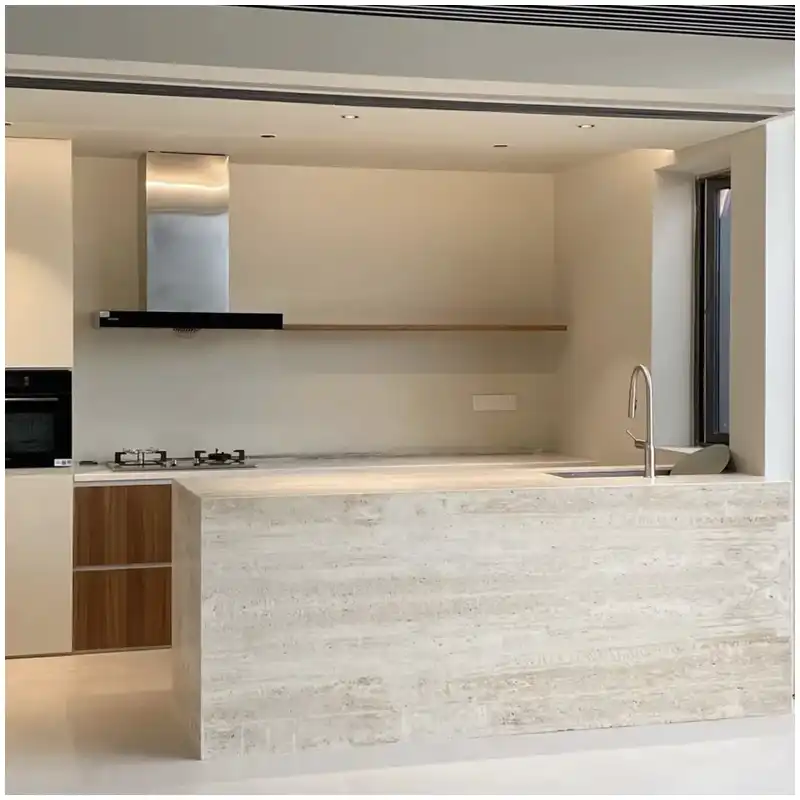
For this application, a filled surface is generally easier to maintain than an open-pore finish. Large exposed cavities can trap cooking residue and complicate cleaning. The selected filling material must also be compatible with the expected use and finishing process.
Travertine is calcium-carbonate-based and can etch when exposed to acidic liquids such as lemon juice, vinegar or certain kitchen cleaners. Sealing can help with some staining risks but does not prevent acid etching. Buyers who need a low-maintenance preparation surface should assess this limitation before selecting Navona for the main worktop.
A stone island also needs suitable support around hob and sink cutouts. The available material thickness, edge profile, overhang and cabinet construction must be evaluated together rather than copied from a drawing prepared for engineered quartz.
The supplied image illustrates a villa kitchen design application. It is not presented as independent verification of a specific completed project, installation date or project owner.
Travertino Navona for Mansion Wall Cladding and Interior Staircases
Large residential interiors often use the same beige stone family across entrance walls, corridors and staircases. Navona can support that continuity, but wall cladding and stair treads do not have identical performance requirements.

Wall cladding: Beige Navona Travertino Stone may be installed as broad rectangular panels, narrow strips or cut-to-size pieces around door openings. The fixing method must suit panel weight, substrate and the approved structural requirements. Panel joints should be coordinated with the architectural layout rather than positioned solely to maximize slab yield.
Stair treads: Filled pores, edge durability, slip resistance and finished tread dimensions become more important. A smooth honed surface may be considered for selected interiors, but the actual slip requirement depends on traffic, moisture conditions and local regulations.
Risers and landings: Vein direction can be used to continue a horizontal pattern across the staircase. The transition between tread and riser should be defined in the drawings so the finished stone is not unintentionally reversed during fabrication.
The application photograph is a visual reference for residential stonework. Specific installed dimensions and structural performance are not inferred from the image.
Choosing Navona Travertine Finishes by Application
The best finish is determined by where the stone will be installed and how frequently the surface will be touched or cleaned. The following comparison separates visual appearance from practical maintenance requirements.
| Apdaila | Išvaizda | Application Consideration |
|---|---|---|
| Honed and Filled | Low-reflection surface with selected pores closed | Suitable for many interior panels and selected furniture surfaces; filling quality should be specified. |
| Polished and Filled | Higher gloss and more visible contrast between mineral areas | Useful for decorative interior pieces; etching and wet slip behavior still require attention. |
| Brushed and Unfilled | Textured surface with more visible natural cavities | Best considered for protected decorative areas where open pores can be maintained. |
| Textured or Tumbled | More irregular surface and softened edge appearance | Application-specific suitability and slip performance should be verified from the actual finish. |
Navona Travertine Fabrication Inspection and Acceptance
Natural pores are expected in Travertino Navona, but not every opening or filled area should automatically be accepted. Inspection needs to distinguish the approved appearance from processing defects, particularly on surfaces intended to be smooth and filled.
For a multi-room project, a single small sample may not communicate the full range of pore density, light beige background and sedimentary pattern. Material approval should therefore include the finish sample and the relevant slab or finished-panel photographs.
| Medžiagos pasirinkimas | Check overall ivory-beige tone, slab dimensions, cut orientation, natural fissures and the intended sequence of visible panels. |
| Surface and Filling | Confirm fill color, pore-treatment coverage, surface continuity and the approved sheen. Inspect for unintended open voids or loose filling on finished surfaces. |
| Cut-to-Size Work | Check finished dimensions, joint locations, exposed edges, stair profiles, visible vein direction and correspondence with the fabrication schedule. |
| Eksporto pakavimas | Separate finished faces, protect long edges and corners, provide suitable support for the stone dimensions and label components according to their installation locations. |
Cleaning and Maintaining Beige Navona Travertino Stone
Navona Travertine is a calcium-carbonate-based natural stone. Acidic cleaning products can etch the surface, while abrasive pads may alter its finish. A soft cloth or suitable mop and a pH-neutral stone cleaner are appropriate for routine maintenance.
Filled travertine should be monitored for loosened or damaged filling, especially around frequently cleaned edges and joints. Where necessary, damaged filling should be repaired with a compatible material rather than left as an open cavity that collects dirt.
Sealing may be appropriate depending on stone absorption, pore treatment and exposure. However, a sealer cannot prevent acid etching and does not replace proper waterproofing behind bathroom wall panels.
For staircases and floors, removing abrasive grit is important. The maintenance plan should also reflect the selected finish and any slip-resistance requirements of the installation.
Frequently Asked Questions About Travertino Navona
What is Travertino Navona?
Travertino Navona is a light ivory-beige travertine associated with the Roman travertine region near Tivoli, Italy. It contains natural pores and soft sedimentary layers and is used for architectural wall panels, interior flooring, staircases and custom stonework.
What is the difference between vein-cut and cross-cut Navona Travertine?
Vein-cut Navona Travertine shows more directional sedimentary lines, while cross-cut material displays softer, less continuous mineral formations. The cut direction affects the appearance of adjoining panels and should be specified before fabrication.
Does Beige Travertino Navona need its natural holes filled?
Not every installation requires filling. Honed and filled finishes are generally more practical for surfaces needing easier cleaning, whereas unfilled finishes preserve more natural texture. The filling material and acceptable pore coverage should be included in the finish specification.
Can Travertino Navona be used for kitchen countertops?
It can be considered for selected kitchen countertops and islands, but travertine is susceptible to acid etching and requires suitable pore treatment. The buyer should account for food preparation, cleaning habits, support around cutouts and the maintenance expectations of the finished surface.
Is Navona Travertine suitable for interior stairs?
Navona Travertine can be fabricated into stair treads, risers and landings where the material and finish meet the project’s loading, slip-resistance and installation requirements. Tread dimensions, edge profiles and substrate support must be defined in the approved drawings.
What thicknesses and tile sizes are available for Navona Travertine Slabs?
Common product references include 18mm, 20mm and 30mm thicknesses, with tile formats such as 300×600mm, 600×600mm, 457×457mm and 800×800mm. The actual available slab dimensions, thickness and usable cutting area must be confirmed for the selected production lot.
Travertino Navona Compared with Four Other Travertine Slabs
The alternatives below differ mainly in color depth, mineral movement and the architectural effect of their finished surfaces. The appropriate choice depends on the actual stone selection and the intended project rather than the commercial name alone.
| Produktas | Stone Appearance | Visual Direction | Best Application |
|---|---|---|---|
| Travertino Navona | Ivory-beige and cream sedimentary layers | Soft, pale Roman travertine appearance | Villa walls, staircases and coordinated beige interiors |
| Sidabrinis travertinas | Grey, taupe and silver mineral bands | Cooler layered stone appearance | Contemporary grey walls and neutral architectural cladding |
| Iranian Ultra White Travertine | Light white and pale ivory tones | Brighter and less beige in appearance | White architectural panels and light-colored interiors |
| Dark Silver Gray Travertine Slabs | Deeper silver-grey and charcoal mineral variation | Stronger grey contrast | Feature walls and interiors with dark metal or stone finishes |
| Juodos travertino plokštės | Very dark stone with contrasting mineral movement | Dark, high-contrast travertine | Dark stone walls and architectural accent areas |
Recommended Natural Travertine Slabs

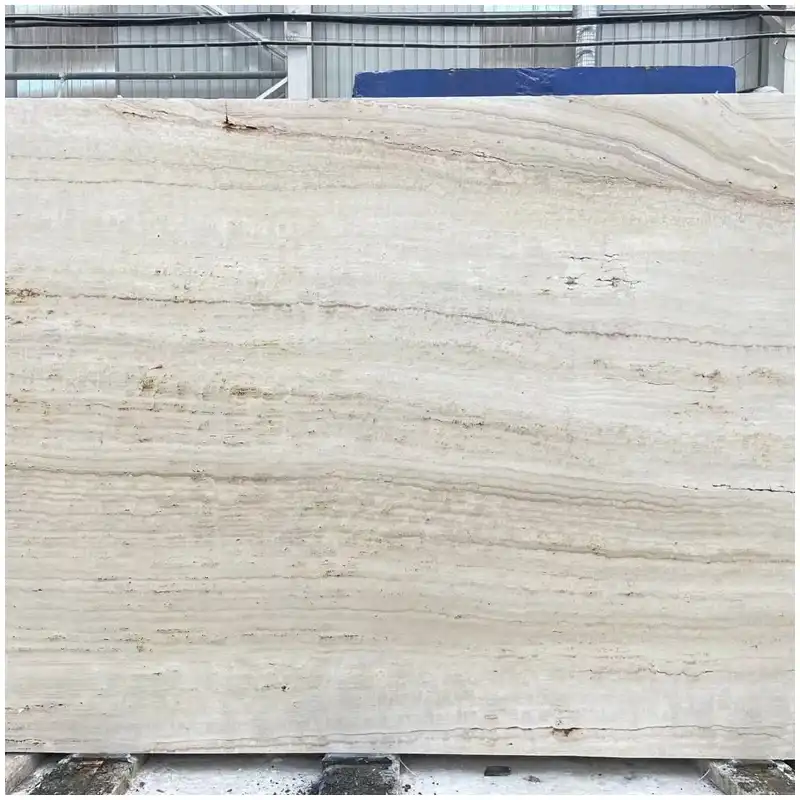
Sidabrinis travertinas
Layered silver-grey travertine for interiors with a cooler stone palette.
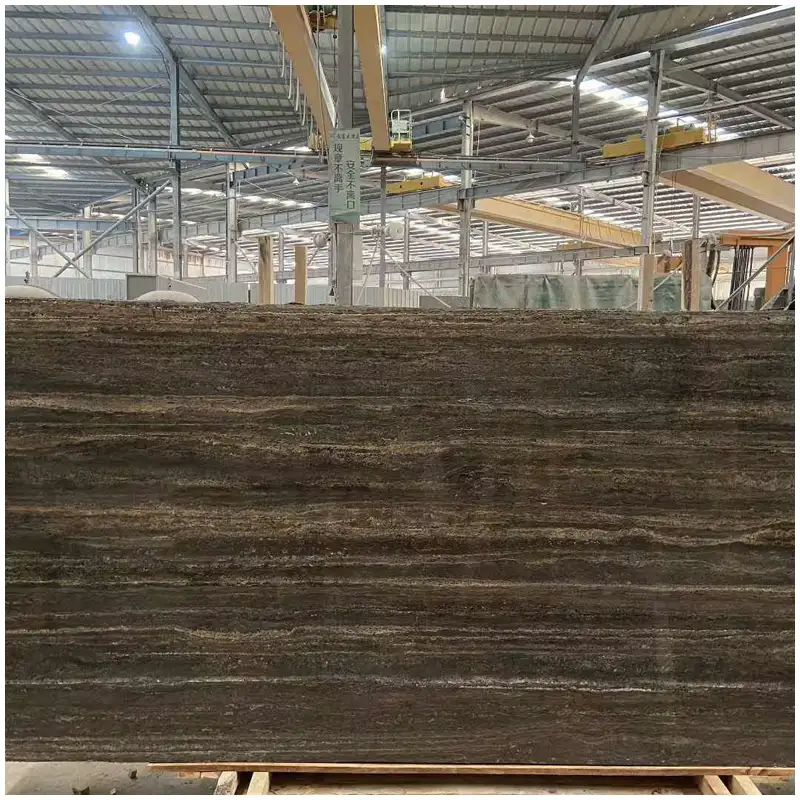
Iranian Ultra White Travertine
Pale white travertine for bright architectural panels and interior finishes.
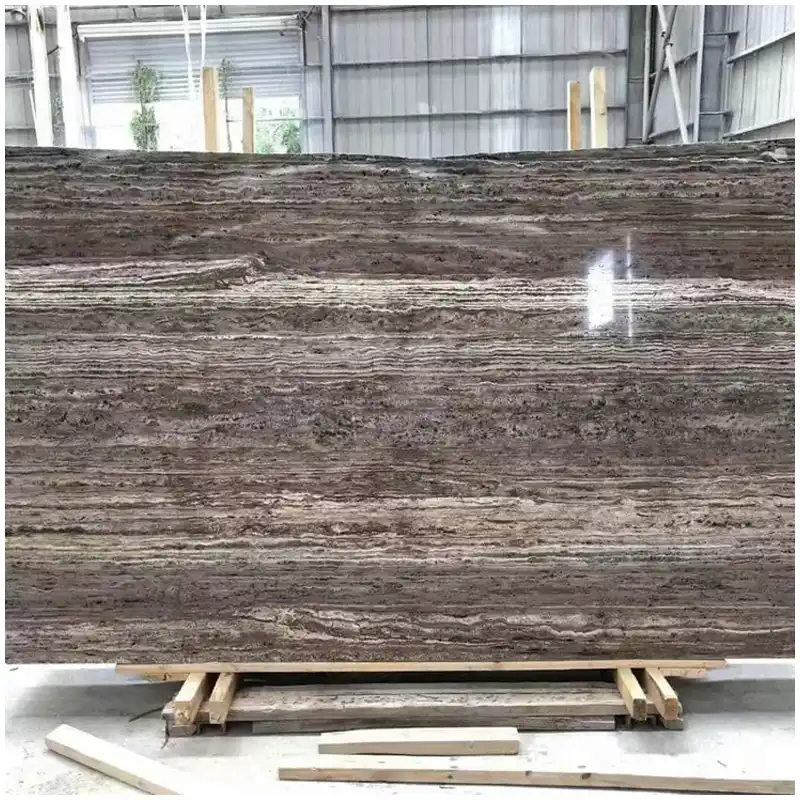
Dark Silver Gray Travertine Slabs
Deeper grey travertine for architectural walls with stronger mineral contrast.
Juodos travertino plokštės
Dark travertine for contrasting stone walls and distinctive interior details.
Request Travertino Navona Slabs for Your Architectural Project
To prepare a Travertino Navona quotation, provide the intended application, slab or finished-panel dimensions, required thickness, cut direction and surface treatment. Wall and stair projects should include architectural elevations or fabrication drawings. If filled stone is required, indicate the preferred filling color and finished texture so the material can be reviewed against the actual design.
| Request Travertino Navona Quote | View Travertine Slabs |