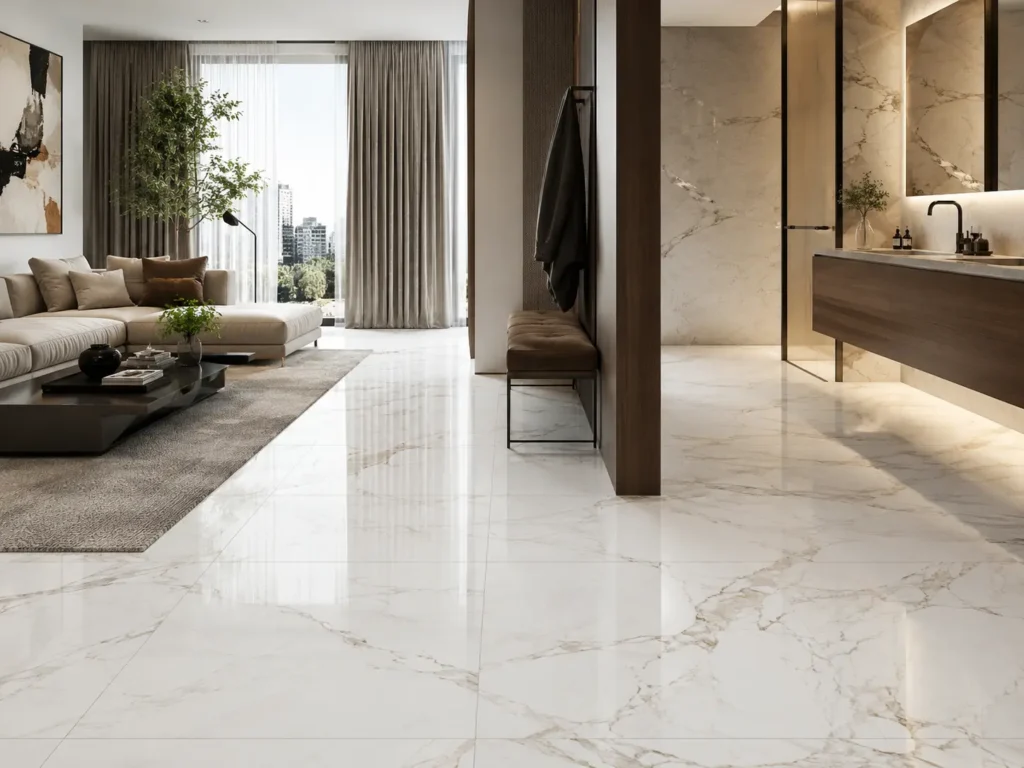


Calacatta Statuario vs Calacatta Gold under Real Bathroom Light
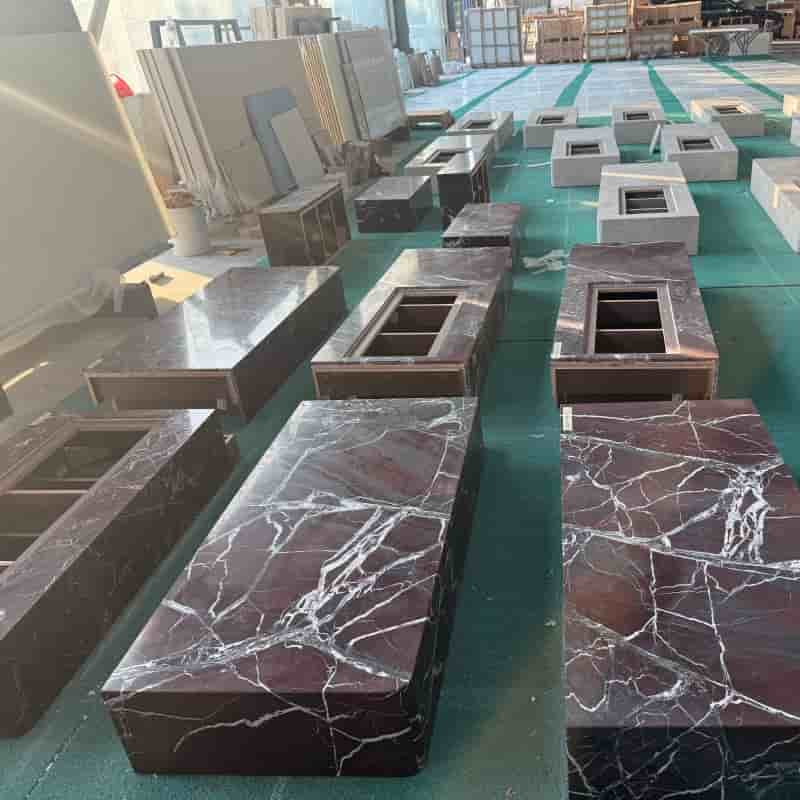
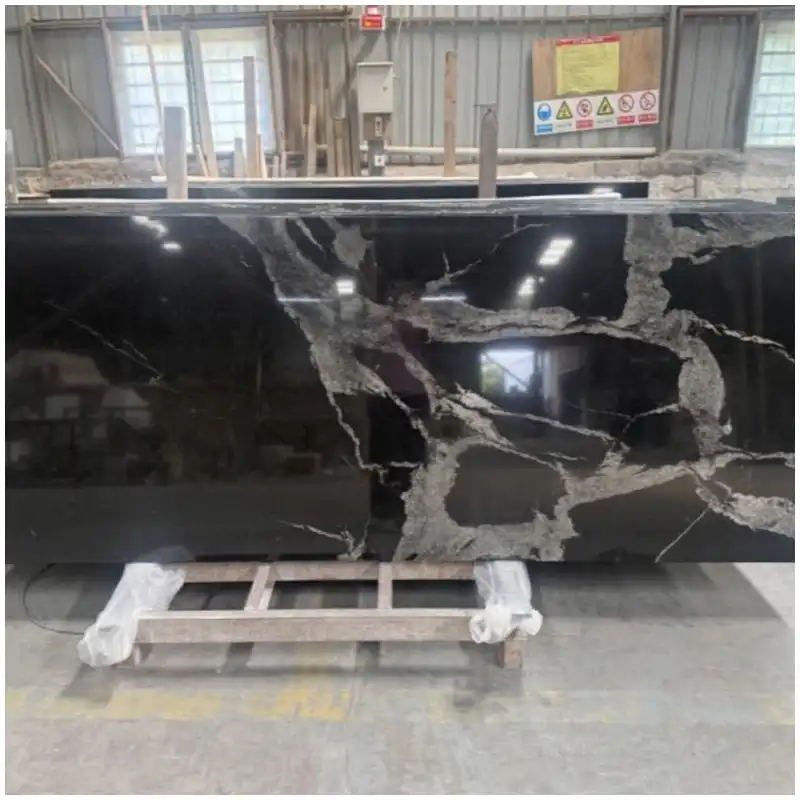
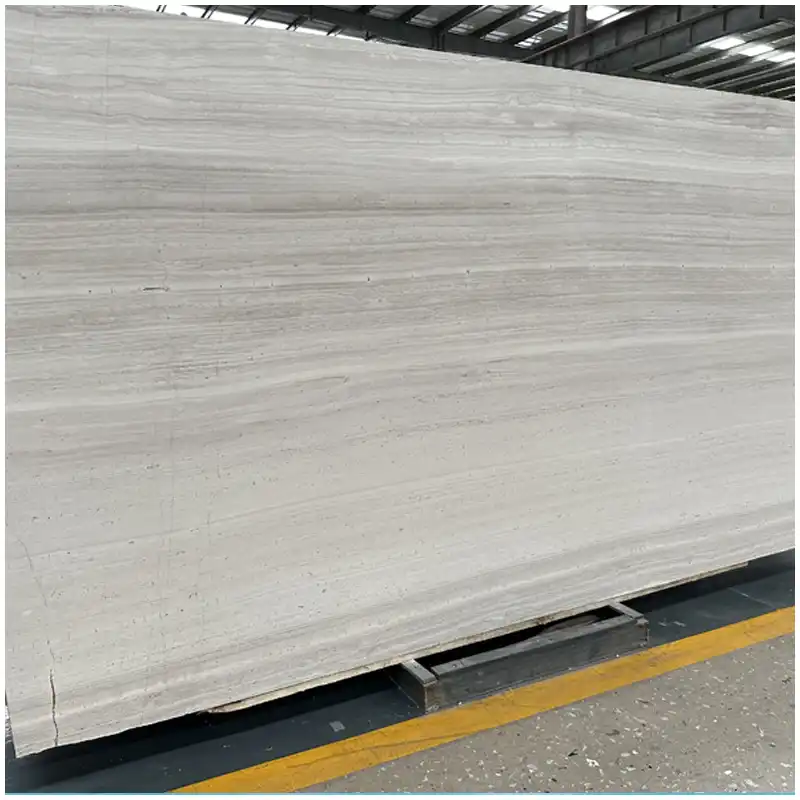
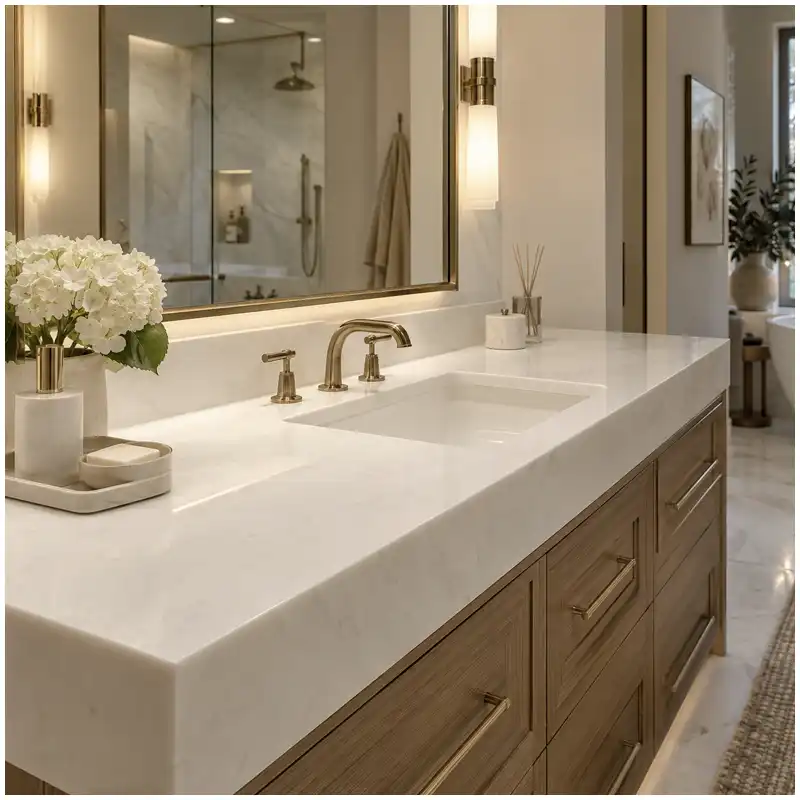
The warehouse image looks white because the camera corrects it. The bathroom mock-up tells another story. Under a warm mirror light, one slab turns creamy while the adjacent basin stays blue-white. Under neutral ceiling light, the grey vein on the other slab becomes harder and more graphic. The photographs were not false, but they were incomplete.
I approach Calacatta Statuario vs Calacatta Gold with fixed light, not adjectives. Statuario is usually chosen for a bright field and defined grey movement. Gold is usually chosen for a warmer field with gold, beige, or warm-grey veining. Those descriptions help me start sorting. They do not release a batch.
My short answer is practical. Use Statuario when the design depends on a crisp, cooler white and accepts stronger grey definition. Use Gold when warm metals, timber, or soft neutral finishes need a marble that does not feel icy. Then compare the actual slabs beside the real fixture palette. Lighting lies.
Calacatta Statuario vs Calacatta Gold Begins with the White Field
White marble is recrystallized carbonate stone, and its grey, gold, beige, or brown structures come from mineral impurities and geological events within the original material. A general explanation of marble describes the metamorphic base. Project approval still depends on current slabs because natural white fields and veins vary across every lot.

Statuario needs control around brightness
A full face of Calacatta Statuario marble may show a clear pale ground crossed by grey veins that range from fine lines to broader strokes. The white field creates the sense of brightness. If that field turns bluish under cool light or creamy under warm light, the intended contrast changes.
I inspect cloudy areas as carefully as the veins. A cropped photograph can avoid a soft grey patch and make the slab look cleaner than it is. That patch may be completely acceptable, but it belongs in the approval range and the cut allocation.
Tā Calacatta Statuario vs Calacatta Gold, the most expensive mistake is often approving brightness without defining it. I place a stable white tile and the chosen basin beside each slab. If Statuario suddenly reads blue or Gold suddenly reads cream, the room palette needs adjustment before the warehouse starts cutting.
Gold carries warmth through the composition
The name Gold does not mean every line is metallic yellow. A Calacatta Gold marble face can combine grey structure with beige, honey, or gold-toned passages. The white field may be warm or relatively neutral. The team has to judge the actual balance.
Gold often sits comfortably beside brushed brass, warm timber, and cream finishes. It can also clash with a very cool basin, blue-white wall panel, or 4000K mirror light if the palette was approved from separate samples. I place the materials together. That is faster than arguing about the word white.
| Bathroom check | Statuario direction | Calacatta Gold direction | Pass record |
|---|---|---|---|
| Field tone | Crisp to cool pale field | Neutral to warm pale field | Slab beside fixture palette |
| Vein reading | Grey definition and graphic contrast | Grey with beige or gold warmth | Full face under fixed exposure |
| 3000K light | May soften cool field | Can strengthen cream and gold | Warm-light mock-up photograph |
| 4000K light | Can sharpen grey structure | May separate grey from warm veins | Neutral-light comparison |
| Repeated rooms | Sort by field brightness and vein strength | Sort by warmth and gold density | Numbered range board and room allocation |
How to Run a Useful Lighting Test
Par Calacatta Statuario vs Calacatta Gold, I do not accept two photographs taken at different times. Put both samples or slabs in the same position. Use the same camera. Lock exposure and white balance where possible. Include a neutral reference and the actual metal, basin, tile, or paint sample.
Start with diffuse warehouse light
Diffuse neutral light gives a baseline for field tone, clouds, veins, repairs, and polish. Photograph the complete slab straight on. Then move closer for the areas that may affect cutouts or visible edges. Do not use a dramatic wet face or strong spotlight as the only approval image.
Repeat at the specified color temperature
Many bathrooms combine ceiling light, mirror light, and daylight. A nominal color temperature does not describe fixture quality, output, beam, wall color, or reflection. Use the intended fixture where practical, or make a controlled mock-up that records the actual lamp and distance.
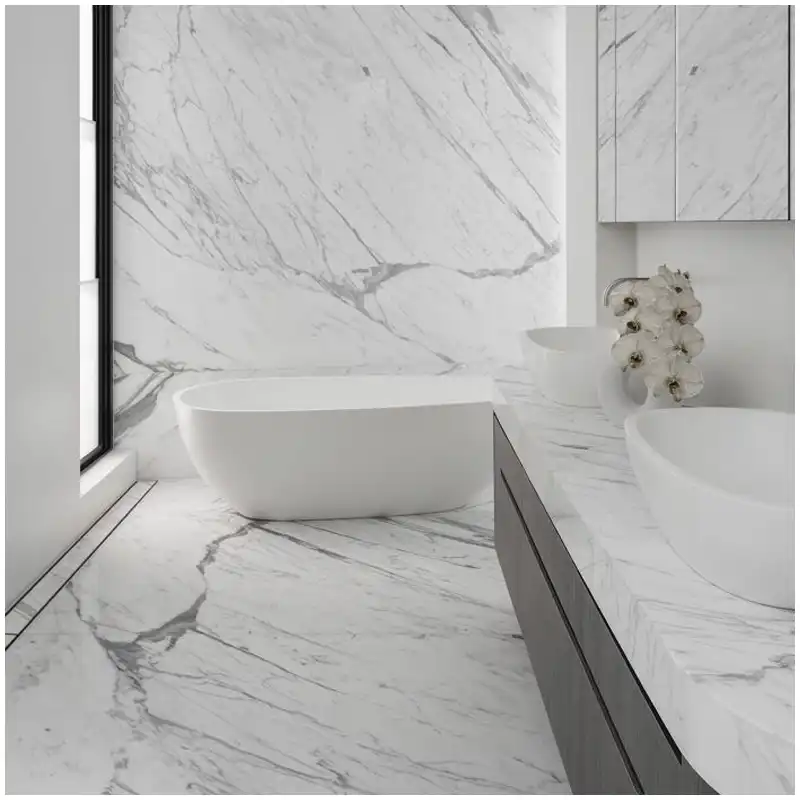
The published Statuario Marble Slab Approval process shows why warehouse and bathroom photographs need to remain connected. A team cannot solve a light mismatch by renaming the stone after delivery.
I also compare Calacatta Statuario vs Calacatta Gold with the mirror switched off. Decorative lighting can dominate the first impression, while daylight or ceiling light controls the room for much of the day. The stone should not depend on one flattering setting to remain compatible with the basin, wall finish, and cabinet color.
Add raking light for finish defects
A polished face viewed straight on can hide waviness, fine scratches, resin edges, and dull repairs. Raking light exposes them. It also increases vein contrast, so use it for finish inspection rather than as the only color judgment.
Where Each Marble Earns Its Place
Vanity tops reward controlled placement
A sink opening removes a large part of the composition. With Statuario, a defined grey vein can disappear into the bowl or leave a heavy fragment on one side. With Gold, a warm line may fall beside the faucet and look like a stain if the rest of the top is quiet.
I overlay the basin and faucet on the slab image before cutting. I also inspect the front edge and backsplash extraction. A beautiful face can produce an ugly edge when the strongest line is divided between two components.
On a double vanity, Calacatta Statuario vs Calacatta Gold becomes a balance problem across two openings. Statuario’s grey structure can link the basins when the vein runs through the center field. Gold’s warmer movement can soften the long top, but a heavy line trapped beside one bowl makes the pair look uneven.
Shower walls expose tone and maintenance
Large shower panels show field color clearly because grout joints are limited. They also experience water, cleaning products, soap residue, sealant joints, and repeated drying. Both materials are calcite-rich marble and can etch when exposed to acids.
That slab doesn’t belong next to your bathtub if the owner expects a factory-new polish forever while using acidic cleaners. The finish and care expectations must be agreed honestly. A sealer may help with some staining risks, but it does not prevent acid etching.
Floors amplify batch differences
On a floor, the eye sees many pieces together. Statuario needs sorting so grey movement does not form accidental stripes. Gold needs sorting so warm pieces do not collect in one corner. Lighting from windows and ceiling fixtures can create different color zones across the same room.
Finish selection also affects traction, reflection, scratching, and maintenance. The responsible designer and installation team must use applicable test data, standards, manufacturer instructions, and local requirements for the actual floor. A visual comparison does not replace those decisions.
A Four-Step Release for White Marble Bathrooms
1. Approve the range
The range includes more than the best slab. I want the brightest, warmest, quietest, busiest, and most repaired acceptable examples. Each image carries a slab ID. If the order spans lots, the lots remain separated until the project approves mixing.
The range board for Calacatta Statuario vs Calacatta Gold should use separate acceptance language. Statuario is sorted by field brightness, clouding, and grey-vein strength. Gold is sorted by background warmth, gold density, and grey balance. One generic white-marble tolerance cannot describe both materials honestly.
2. Approve the finish
Use current stone for the polished or honed sample. Inspect it under neutral and raking light. Record acceptable resin, fill, edge appearance, and sheen. A finish name without a physical sample leaves too much room for interpretation.
3. Approve the cut map
The map assigns visible faces to rooms and places openings over the slab. It should protect coherent veins, avoid weak or heavily repaired zones near narrow strips, and keep backsplash movement related to the top where the design expects it.
4. Approve the dry-lay
The dry-lay checks adjacent relationships. Use piece labels, room numbers, and the same viewing direction as the installation. Photograph the full arrangement square to the surface. Close images document details after the overall composition is clear.
The Hard-Won Lesson: One warm room can make an approved batch look mixed
Two adjacent mock-up bathrooms receive stone from the same approved range. One uses a warm mirror fixture and cream wall paint. The other uses a neutral fixture and a cooler wall panel. The first room reads noticeably warmer even before water or sealer enters the picture. Without a lighting record, the material is blamed for a palette difference created by the room.
The Lesson: Approve white marble beside the actual fixture palette under the actual bathroom light.
Keep Color, Finish, and Use in the Same Approval
A white field needs a reference
Human vision adapts quickly. A slab can look white alone and warm beside porcelain. Include stable comparison materials in approval photographs. Keep the same reference through later batch checks so the team can spot drift.
Replacement planning matters too. A future Calacatta Statuario vs Calacatta Gold decision should not begin again from supplier names. Store the approved photographs, finish sample, room allocation, and one representative reference. Natural stone changes from lot to lot, so the record provides a target even when an exact replacement cannot be promised.
I add a cleaning trial to the mock-up when the marble will sit beside cosmetics, soap, and regular housekeeping. The test does not promise immunity from staining or etching. It confirms that the proposed cleaner, cloth, water removal, and finish leave an acceptable appearance under the same mirror light used for approval.
Sealant color deserves a place in the palette. A cool grey joint can sharpen Statuario, while a warm off-white joint may sit more quietly beside Gold. Test the actual sealant after cure because uncured color can mislead. The joint should support the stone field rather than draw a separate line around every panel.
Record the cured joint beside both dry and damp stone. Temporary moisture darkening can change the contrast and expose a joint choice that looked harmless on a dry sample.
I keep the approved set where my warehouse team and our cutting team can compare it.
Natural variation needs boundaries
The Calacatta Marble Slabs Guide covers the broader selection record. Here, the boundary is narrower: define how cool or warm the field may be, how strong veins may become, and where each range belongs in the room schedule.
Problems need evidence before treatment
If a site piece looks yellow, grey, or mismatched, photograph the whole room with the lights identified. Add close images, labels, adjacent materials, and moisture condition. Stop installation or chemical treatment. Compare the evidence with the slab range, lighting test, cut map, and dry-lay before assigning a cause.
Quick-Reference Checklist for Bathroom Marble Lighting
- Photograph complete slabs under diffuse neutral light.
- Repeat the comparison under the specified bathroom fixtures.
- Place basin, metal, tile, and paint samples beside the stone.
- Lock the cut map before strong veins reach sinks or niches.
- Sort repeated rooms by field tone and vein strength.
- Record finish, wet-zone care, repair limits, and replacement stock.
Bieži uzdotie jautājumi
1. Which marble looks whiter in a bathroom?
Statuario often reads crisper or cooler, while Calacatta Gold often carries more warmth. That is a tendency, not a guarantee. Fixture color temperature, wall color, finish, daylight, moisture, and the actual batch can change the result. Compare current slabs in a controlled mock-up.
2. Does 3000K lighting suit Calacatta Gold?
It can support the stone’s warm movement, especially beside brass or timber. It can also make a warm field look creamier than expected. Check the slab beside the full fixture palette. Do not approve the lamp and stone in separate rooms.
3. Is Statuario better for a modern bathroom?
Statuario can suit a crisp modern palette, but the decision depends on actual vein scale, field tone, room proportion, openings, and finish. A strong grey vein may dominate a compact wall. A quieter Gold slab can also work in a modern room when warmth is intentional.
4. What photographs are required for Calacatta Statuario vs Calacatta Gold?
Use complete slab faces with readable IDs, a neutral reference, consistent exposure, and fixed camera position. Add sets under diffuse neutral light and the intended bathroom light. Include raking-light details for polish, resin, repairs, and surface waviness.
5. What should happen when the installed stone does not match the mock-up?
Document the room, fixture type, color temperature, adjacent finishes, labels, moisture, and affected pieces. Stop further installation. Compare the site evidence with the approved range, lighting record, finish sample, cut map, and dry-lay before deciding whether material, allocation, light, or installation caused the difference.
Final Conclusion
Calacatta Statuario vs Calacatta Gold becomes clear only when both slabs meet the same light, finish, fixtures, and cut drawing. Statuario can deliver a crisp field with stronger grey definition. Gold can bring controlled warmth. Neither name protects a project from poor photography, mixed batches, or careless allocation. At Esta Stone, I would rather reject one flattering image than approve a bathroom whose white marble changes character the moment the mirror lights switch on.
References
- Dimension Stone Design Manual, Natural Stone Institute.
- Care and Cleaning of Natural Stone, Natural Stone Institute.
- ASTM C503 Standard Specification for Marble Dimension Stone, ASTM International.
- ASTM C97 Standard Test Methods for Absorption and Bulk Specific Gravity of Dimension Stone, ASTM International.
- ASTM C880 Standard Test Method for Flexural Strength of Dimension Stone, ASTM International.
- Bathroom Planning Guidelines, National Kitchen and Bath Association.
- Dabiskais Marmors Stone Slab and Wet-Area Technical Guidance, Stone Federation Great Britain.