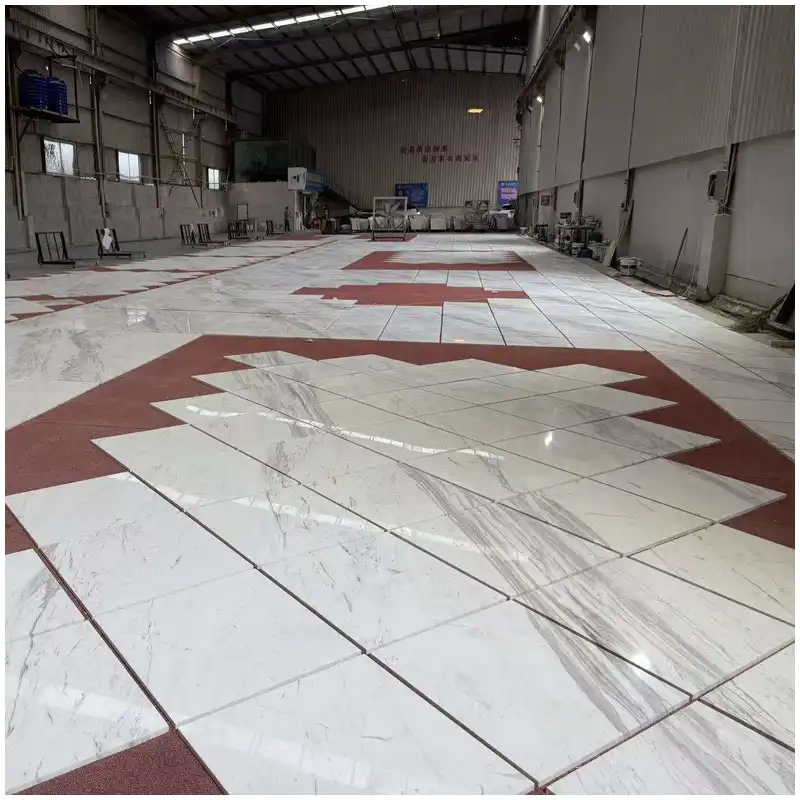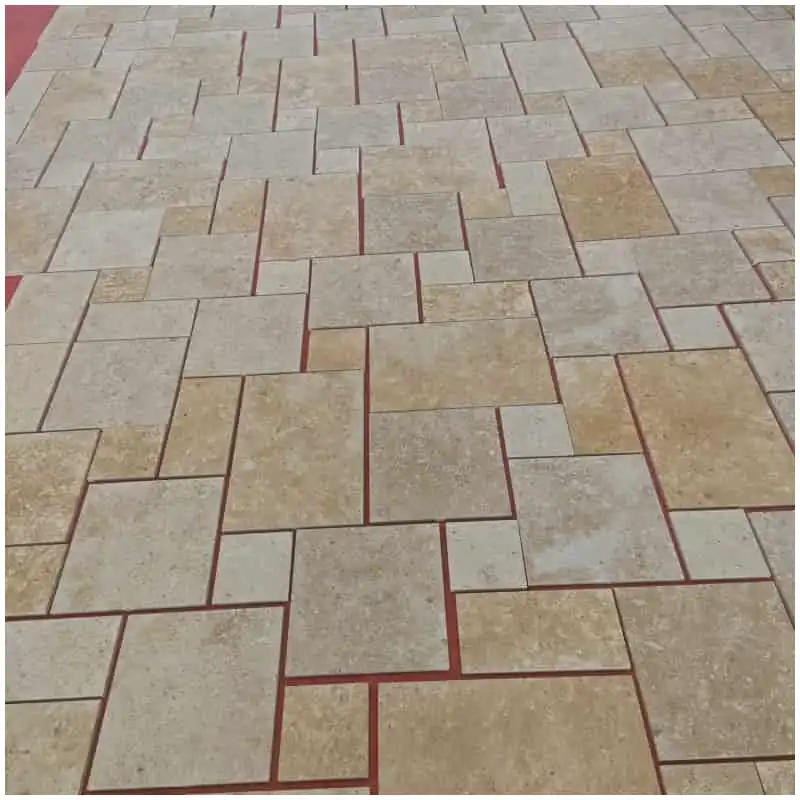
Quick Summary: Green Onyx Is Chosen for Light, Depth, and Luxury Impact
Green Onyx Is Not Ordinary Green Stone
Green Onyx is one of those materials that can completely change a room before the furniture even arrives. When used correctly, it does not simply cover a wall or counter. It glows, layers, reflects, and creates emotional depth. This is why designers use it in hotel lobbies, villa bathrooms, spa walls, luxury bars, reception counters, retail feature walls, and statement interiors where ordinary stone would feel too quiet.
However, Green Onyx should not be selected only from a beautiful photo. Its real value comes from translucent optics. That means buyers must understand how light passes through the slab, how thickness affects brightness, how natural mineral bands respond to LEDs, and how resin repairs or cloudy zones may appear when backlit. A slab that looks perfect under normal light may look very different after illumination. Stone has secrets. Backlighting exposes them with no mercy.
For early material comparison, reviewing a professional Oniksa akmens collection helps buyers understand how green, white, honey, jade, and layered onyx varieties differ in transparency, pattern, and luxury interior applications.
What Is Green Onyx?
Basic Definition of Green Onyx
Green Onyx is a translucent natural decorative stone commonly used for interior feature surfaces. In the architectural stone market, “onyx” usually refers to calcite-based banded onyx, sometimes called onyx marble or calcite onyx depending on the supplier and origin. It is different from small black gemstone onyx used in jewelry.
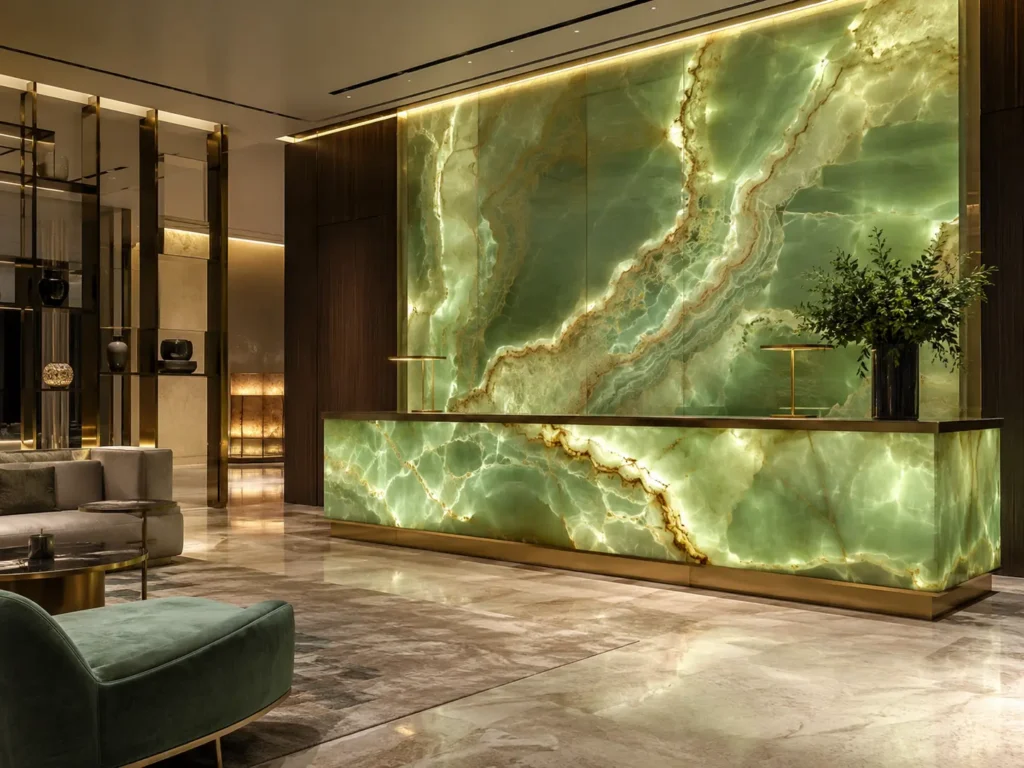
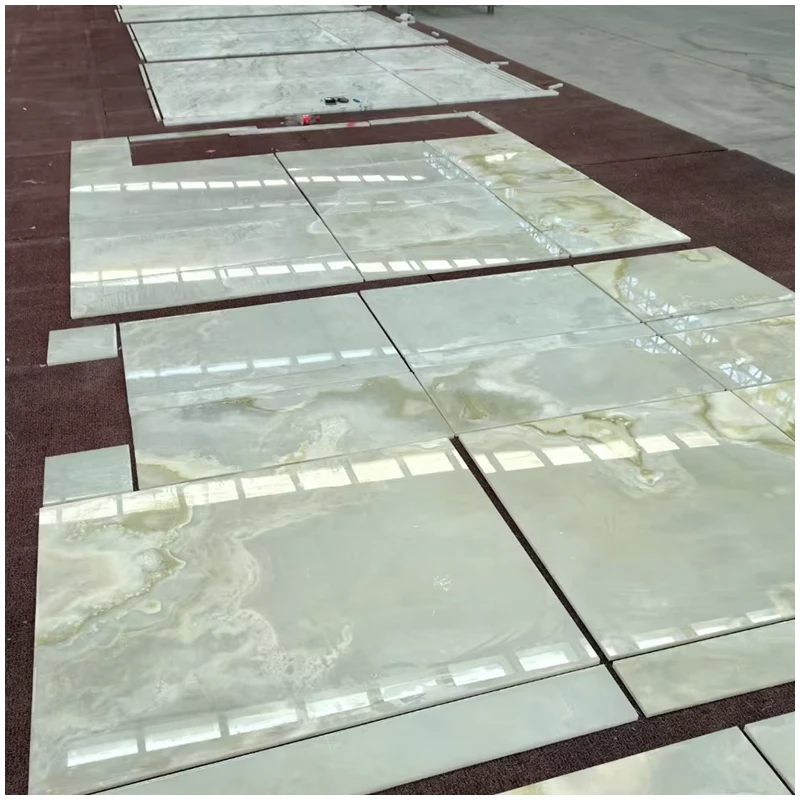
Green Onyx is known for its jade-like color, emerald movement, mint-green layers, honey-green bands, white clouds, crystalline depth, and light-transmitting behavior. It is commonly supplied as slabs, tiles, cut-to-size panels, mosaics, wall cladding, reception counter fronts, bar faces, bathroom feature walls, tabletops, and decorative panels.
A high-quality Green Onyx slab should be inspected both with and without backlight because normal surface beauty does not fully reveal how the stone will behave in a finished feature wall or counter installation.
Green Onyx vs Gemstone Onyx: Naming Clarification
Architectural Green Onyx is usually calcite-based, softer, more translucent, and used for slabs, wall panels, decorative counters, and interior features. Gemstone onyx is usually chalcedony or microcrystalline quartz, harder, and commonly used for jewelry, carvings, and small decorative items.
This distinction matters because some buyers hear “onyx” and assume gemstone-level hardness. That is not how architectural Green Onyx should be evaluated. It is better understood as a luxury translucent decorative stone, not a heavy-duty work surface for every condition.
Why Designers Love Green Onyx
Designers love Green Onyx because it creates a visual effect that most stones cannot achieve. Under backlighting, the green bands can become warm, deep, layered, and almost liquid. It works beautifully with brass, bronze, dark wood, black metal, cream marble, warm LED lighting, and luxury hospitality interiors.
If the project needs a glowing bar front, a dramatic reception counter, a spa-like bathroom wall, or a memorable hotel lobby feature, Green Onyx can become the central design element. If the surface is hidden, heavily abused, or purely functional, another material may be more practical. The magic is real, but it should be placed where people can actually see it.
The Formation and Microcrystalline Structure of Pure Green Onyx
How Green Onyx Forms
Architectural Green Onyx forms through mineral-rich water deposits. As water moves through geological environments such as caves, springs, and calcium-rich spaces, minerals gradually precipitate and form layered structures. Over time, calcium carbonate deposits build bands, waves, clouds, and translucent zones.
The green color may come from trace mineral content and natural impurities in the stone. These mineral variations create different tones such as pale mint green, jade green, emerald green, honey-green, brown-green, and white-green layered patterns. This formation process is why Green Onyx often looks more layered and luminous than many ordinary stones.
Why Green Onyx Is Translucent
Green Onyx transmits light because its fine calcite crystal structure and layered mineral deposition allow light to pass through certain sections of the stone. The effect is not uniform across every slab. Thin, pale, crystalline zones may glow strongly, while dense, dark, cloudy, or highly fractured zones may transmit less light.
This is why buyers must test the actual slab. A catalogue photo cannot tell you the true light behavior. A flashlight test is useful for quick observation, but a full LED panel test is better for serious hotel, bar, retail, and villa projects.
Microstructure and Buyer Meaning
The internal structure of Green Onyx affects its design performance. Fine crystal layers create soft glowing depth. Mineral bands create dramatic pattern movement. Dense cloudy zones reduce light transmission. Natural fissures may add visual drama but must be checked before cutting. Resin reinforcement can improve handling, but it may become visible under strong backlight if not carefully selected.
| Structural Feature | Vizuālais efekts | Buyer Meaning |
|---|---|---|
| Fine calcite crystal layers | Soft glowing depth | Good for backlit panels |
| Mineral banding | Green, white, honey, or amber movement | Strong design value |
| Dense cloudy zones | Lower light transmission | Better for non-backlit areas |
| Natural fissures | May create dramatic lines | Must inspect before cutting |
| Resin reinforcement | Improves handling | May be visible under backlight |
| Thickness variation | Changes brightness | Needs lighting test |
Understanding Light Transmittance Rates of Onyx Slabs
What Light Transmittance Means
Light transmittance describes how much light passes through the stone. Green Onyx is valuable because selected slabs can glow when illuminated from behind. However, not all slabs transmit light equally. Transmittance depends on slab thickness, mineral density, color darkness, resin repair, backing, LED power, light distance, diffuser quality, and installation design.
For a serious backlit project, buyers should never rely only on a small sample. A full panel test is more reliable because Green Onyx may have bright and dark zones across the same slab. That variation can be beautiful when planned, but painful when discovered after installation.
Typical Light Behavior by Thickness
The following table gives general project reference behavior. Actual performance must be confirmed by slab testing because every Green Onyx block and panel can behave differently.
| Green Onyx Thickness | Typical Light Behavior | Best Application | Buyer Note |
|---|---|---|---|
| 6–8 mm laminated panel | Higher light transmission | Backlit feature panels | Needs backing support |
| 10–12 mm panel | Balanced glow and handling | Backlit walls, bar fronts | Good project compromise |
| 15–18 mm slab | Softer light transmission | Reception counters, walls | Needs stronger lighting |
| 20 mm slab | Lower transmission but stronger body | Decorative slabs, counters | Backlight test required |
| 30 mm slab | Limited transmission in many cases | Thick counters, sculptural use | Often better as non-backlit |
How to Test Green Onyx Before Ordering
Buyers should request photos and videos with and without backlight. The test should show warm LED, neutral LED, and if needed, cool LED. It should also show the full slab or full panel, not only one small glowing corner. Inspect the edge, fissures, resin lines, cloudy zones, and banding transitions.
For high-value projects, ask for a lighting mockup. A mockup can show whether the selected panel glows evenly, whether the LED spacing creates hotspots, and whether the final color tone matches the design mood.
Lighting Color Temperature and Final Appearance
Lighting color temperature changes how Green Onyx feels. Warm white LED makes the stone softer, more honey-like, and more atmospheric. Neutral white LED shows the stone more accurately. Cool white LED makes the green tone clearer and more modern, but it can feel cold if overused.
| Lighting Type | Visual Effect on Green Onyx | Labākais lietojums |
|---|---|---|
| Warm white LED | Soft, golden, relaxing glow | Spa, bar, hotel bathroom |
| Neutral white LED | Balanced and realistic color | Reception, retail, wall panels |
| Cool white LED | Crisp, modern, stronger contrast | Contemporary interiors |
| RGB LED | Dramatic and changeable | Clubs, bars, entertainment spaces |
| Edge lighting | Softer directional glow | Thin panels, decorative effects |
| Full back panel lighting | More even illumination | Feature walls and counters |
Onyx vs. Marble: Structural and Visual Dissimilarities
Mineral and Structural Differences
Green Onyx and marble can both be associated with calcite-based mineral composition in architectural stone markets, but their structure and use logic are different. Onyx forms through layered mineral deposition and is often more translucent. Marble is a metamorphic stone and is more commonly used for broad floors, walls, bathrooms, tiles, slabs, and architectural interiors.
Onyx is usually more decorative, more fragile, and more dependent on reinforcement and careful handling. Marble is usually more versatile for large surfaces and repeated flooring or wall applications. This does not make one “better” than the other. It means they should be specified by function.
Visual Differences
Green Onyx is glowing, layered, exotic, and artistic. Marble is classic, architectural, elegant, and more broadly usable. If the project needs light-transmitting drama, choose Green Onyx. If the project needs large flooring, consistent wall cladding, or broad interior coverage, marble may be more practical.
| Factor | Green Onyx | Marmors | Buyer Decision |
|---|---|---|---|
| Translucency | High in selected slabs | Usually low | Choose onyx for backlighting |
| Structure | Layered calcite deposits | Metamorphic stone | Different fabrication behavior |
| Cietība | Usually around Mohs 3 | Usually around Mohs 3–4 | Both need care |
| Best use | Feature walls, bars, counters | Floors, walls, bathrooms, lobbies | Choose by application |
| Visual mood | Glowing and exotic | Classic and architectural | Match design intent |
| Large flooring | Less common | More practical | Marble usually safer |
Best Applications of Green Onyx in Luxury Interiors
Backlit Green Onyx Feature Walls
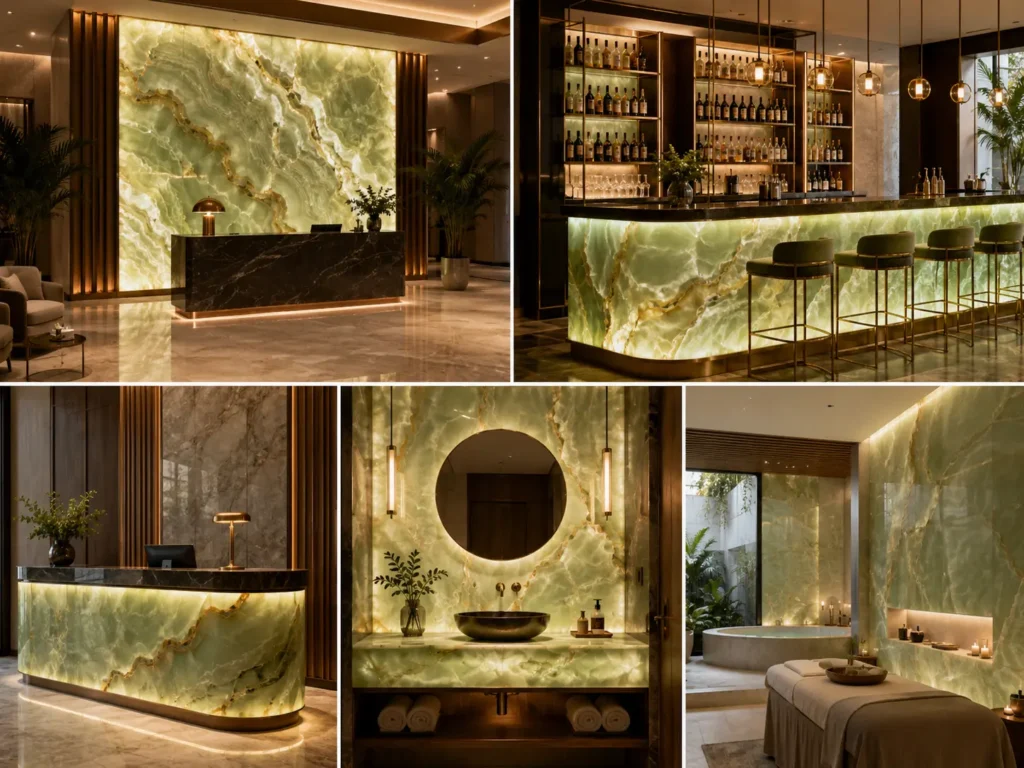
Backlit Green Onyx feature walls are among the strongest applications for this material. They work beautifully in hotel lobbies, reception areas, villa entrance halls, luxury retail stores, spas, clubhouses, elevator halls, and restaurant entrance walls. The stone becomes a visual anchor instead of just a background surface.
If the wall is meant to impress visitors, Green Onyx is a strong choice. If the wall is hidden behind furniture or not part of the main visual route, a more economical material may make better project sense.
Green Onyx Bar Counters and Front Panels
Green Onyx is excellent for bar fronts and vertical counter panels because the surface can glow with warm lighting and create a strong hospitality atmosphere. Hotels, restaurants, lounges, private villas, clubs, and entertainment spaces often use backlit onyx to create a memorable mood.
For horizontal tops exposed to alcohol, citrus, cleaning chemicals, impact, and daily abrasion, buyers should plan protection carefully or combine Green Onyx fronts with a more durable countertop material.
Green Onyx Reception Counters
A reception counter made with Green Onyx can become a brand statement. It works especially well when the front face is backlit while the working top uses a more durable or protected surface. This approach balances visual impact with practical daily use.
Green Onyx Bathroom Walls and Vanity Backgrounds
Bathrooms, powder rooms, spa suites, and vanity walls are excellent places to use Green Onyx. The stone creates a calm, luminous, and premium atmosphere. For smaller areas, Green Onyx tiles can help designers achieve the color and texture of onyx in a more modular format.
Jade Green Onyx for Softer Luxury Spaces
Some projects need a softer green tone rather than a dramatic emerald effect. In that case, Jade Green Onyx slabs can be suitable for spa interiors, villa bathrooms, wellness rooms, feature walls, and decorative panels where the design needs a natural jade-like mood.
Where Green Onyx Needs Careful Specification
High-Traffic Flooring
Green Onyx is usually not the first choice for heavy public flooring. If the project requires high foot traffic, rolling loads, outdoor-connected entrances, or intensive cleaning, marble, granite, quartzite, terrazzo, or porcelain may be more practical. Use Green Onyx where its optical value is visible and protected.
Busy Kitchen Countertops
Green Onyx can be used decoratively in kitchens, but active food preparation areas need caution. If the countertop will receive knives, acids, oils, cookware, and daily cleaning, quartzite, granite, porcelain, or engineered quartz may be considered depending on project needs.
Ārējie pielietojumi
Green Onyx is usually better for interiors. Exterior applications require careful review of weathering, UV exposure, water penetration, freeze-thaw conditions, anchoring, and long-term maintenance. For most luxury projects, the strongest value is indoors under controlled lighting.
Scientific Material Parameters Buyers Should Check
Typical Green Onyx Performance Data
The following values are general reference ranges. Actual performance varies by quarry, slab, thickness, reinforcement, finish, resin treatment, and testing method. For commercial projects, request supplier-specific data and project-specific recommendations.
| Parametrs | Typical Onyx Reference Range | Why It Matters |
|---|---|---|
| Blīvums | About 2.5–2.8 g/cm³ | Affects panel weight and anchoring |
| Mosa cietība | Around 3 | Affects scratch sensitivity |
| Water absorption | Often variable, approx. 0.1%–2% | Important for wet areas |
| Compressive strength | Variable by stone and structure | Relevant for handling and support |
| Flexural strength | Variable and often lower than hard stones | Important for large panels |
| Common slab thickness | 18–20 mm or custom | Affects strength and light transmission |
| Backlit panel thickness | Often 6–15 mm with support | Affects illumination and safety |
| Light transmission | Highly variable | Must be tested by slab |
Standards and Testing Buyers Can Reference
Buyers may reference ASTM C97 for absorption and bulk specific gravity, ASTM C170 for compressive strength, and ASTM C880 for flexural strength. For large backlit wall panels, local building codes, anchoring systems, substrate conditions, and electrical installation standards must also be reviewed.
How to Choose Green Onyx by Color and Pattern
Emerald Green Onyx
Emerald Green Onyx is bold, rich, and dramatic. It works well for hotel lobbies, luxury bars, retail feature walls, and reception counters where the project needs high visual impact.
Light Green Onyx
Light Green Onyx feels soft, fresh, and calming. It is suitable for spa interiors, bathrooms, villa walls, wellness centers, and spaces where the design needs natural serenity.
Honey-Green Onyx
Honey-Green Onyx creates a warm and atmospheric glow. It is strong for restaurants, lounges, hospitality interiors, and private entertainment spaces with warm lighting.
White-and-Green Layered Onyx
White-and-green layered onyx creates an elegant mineral pattern and usually performs well in backlit panels, vanity backgrounds, feature walls, and decorative surfaces.
| Green Onyx Type | Visual Mood | Labākais lietojums | Lighting Suggestion |
|---|---|---|---|
| Emerald Green Onyx | Bold and dramatic | Bar, lobby, retail wall | Neutral or warm LED |
| Light Green Onyx | Soft and calming | Spa, bathroom, villa | Warm LED |
| Honey-Green Onyx | Warm and luxurious | Restaurant, lounge, hotel | Warm LED |
| White-Green Layered Onyx | Elegant and layered | Feature walls, panels | Full backlighting |
| Dark Green Onyx | Deep and moody | Clubs, statement counters | Controlled accent light |
Backlighting Design: What Buyers Must Plan Before Installation
LED Panel System
A full LED panel system is often the safest solution for even backlighting. It reduces hotspot risk and helps large Green Onyx panels glow consistently. For bars, reception counters, and feature walls, LED layout should be planned before the stone is cut.
Light Distance and Diffusion
If the light source is too close to the stone, hotspots may appear. If it is too far away, brightness may drop. Diffuser panels can help create a softer glow. The correct distance depends on stone thickness, translucency, LED strength, and design intent.
Maintenance Access
Backlit Green Onyx installations need future access for LED replacement or electrical maintenance. A glowing wall with no access panel is a future headache wearing very expensive shoes. Plan access points before installation.
Backlit Green Onyx Installation Checklist
- Test slab transparency before cutting.
- Confirm panel thickness and backing support.
- Select LED color temperature.
- Create a lighting mockup for high-value projects.
- Plan wiring, transformer location, and maintenance access.
- Use diffusion layers if needed.
- Avoid visible hotspots.
- Confirm waterproofing in wet areas.
- Confirm wall support and anchoring.
Green Onyx vs Other Translucent or Luxury Stones
Green Onyx vs White Onyx
Green Onyx is more nature-inspired and dramatic. White Onyx is softer, cleaner, and more neutral. Choose Green Onyx for stronger identity and White Onyx for calmer glow.
Green Onyx vs Marble
Green Onyx is stronger for backlit feature areas. Marble is more practical for broader flooring, wall coverage, bathrooms, and architectural interiors.
Green Onyx vs Quartzite
Green Onyx is more translucent and decorative. Quartzite is harder and better for active countertops and high-use surfaces.
Green Onyx vs Porcelain Slabs
Green Onyx is natural and luminous. Porcelain is more practical, uniform, and lower maintenance. Choose based on whether the project values optical drama or easy technical performance.
| Materiāls | Main Strength | Labākais lietojums | Selection Logic |
|---|---|---|---|
| Green Onyx | Translucent glowing luxury | Backlit walls, bars, counters | Choose for visual drama |
| White Onyx | Soft translucent elegance | Spa walls, bathrooms | Choose for calmer glow |
| Marmors | Classic natural luxury | Floors, walls, bathrooms | Choose for broad use |
| Kvarcīts | Harder natural stone | Countertops, active surfaces | Choose for durability |
| Porcelain Slabs | Low maintenance | Commercial walls and counters | Choose for practicality |
Common Mistakes When Buying Green Onyx
Mistake 1: Buying from Normal Photos Only
Normal photos do not show real optical behavior. Always request backlit photos and videos when the project depends on illumination.
Mistake 2: Ignoring Slab Thickness
Thickness affects both strength and light transmission. A thicker slab may be stronger but less luminous. A thinner panel may glow better but needs support.
Mistake 3: Not Testing the Backlight
Every slab transmits light differently. Without a lighting test, the final result can be too dark, too uneven, or too patchy.
Mistake 4: Using Green Onyx in High-Abuse Areas
Green Onyx should be placed where its beauty is protected and visible. For heavy-use work surfaces, compare other materials based on durability requirements.
Mistake 5: No Maintenance Access for LED Systems
LEDs may need replacement or repair. If the installation has no access, maintenance becomes difficult and expensive.
Mistake 6: Ignoring Resin and Reinforcement Visibility
Backlight can reveal hidden repairs, resin lines, or backing shadows. Inspect the slab under illumination before approval.
Buyer Decision Table: When Should You Choose Green Onyx?
| Project Need | Choose Green Onyx? | Best Format | Key Check |
|---|---|---|---|
| Hotel lobby feature wall | Jā | Backlit slabs or panels | Transparency and layout |
| Bar front | Jā | Thin backlit panels | LED design and protection |
| Reception counter front | Jā | Vertical panels | Edge and light test |
| Bathroom vanity wall | Jā | Slabs or panels | Waterproofing and sealing |
| Heavy-use kitchen countertop | Consider carefully | Protected slab or alternative top | Scratch, acid, and impact exposure |
| High-traffic flooring | Usually compare alternatives | Marble, granite, porcelain | Wear and maintenance |
| Ārējais apšuvums | Usually not first choice | Project-specific | Weathering and anchoring |
| Retail feature panel | Jā | Backlit panel | Color and brand mood |
Quality Control Checklist Before Ordering Green Onyx
- Confirm exact stone name and variety.
- Request full slab photos.
- Request backlit photos and videos.
- Check slab thickness and usable area.
- Inspect translucency zones.
- Confirm green tone and pattern direction.
- Inspect cracks, fissures, and resin repair.
- Check mesh, backing, or laminated support.
- Request a mockup for large backlit projects.
- Confirm LED system design.
- Confirm packing method and panel labels.
- Reserve extra material for replacement.
- Confirm installation and maintenance guidance.
For project-based sourcing, work with a professional Green Onyx supplier that can support slab selection, backlight testing, packing, labeling, and export communication. Pretty stone is important. Pretty stone with technical support is what keeps the project calm.
Before ordering, share your panel size, lighting concept, desired green tone, slab thickness, application area, installation environment, and delivery schedule through a Green Onyx project consultation. This helps match the right slab to the right lighting and reduces the risk of expensive surprises.
Industry Trends: Why Green Onyx Is Rising in Luxury Interiors
Backlit Stone Is Becoming a Signature Luxury Feature
Hotels, bars, spas, villas, and retail stores increasingly use backlit natural stone to create memorable spaces. Green Onyx is well suited for this trend because its layered green tones respond dramatically to light.
Biophilic Green Tones Are Popular
Green interiors continue to grow because they connect luxury design with nature-inspired emotion. Green Onyx offers a richer and more artistic version of this trend.
Hospitality Projects Want Photogenic Spaces
Backlit Green Onyx walls and counters are naturally photogenic. In hotels, restaurants, and lounges, one glowing stone feature can become the visual memory of the space.
Buyers Are Asking More Technical Questions
Modern stone buyers are no longer asking only whether the slab looks beautiful. They ask about transparency, thickness, resin, backing, LED access, maintenance, packing, and installation. That is good. Smart questions save money.、
|
|
|

Final Recommendation: Choose Green Onyx for Light, Drama, and Emotional Value
Green Onyx is best when the project needs luminous beauty, backlit drama, and rare natural stone identity. It is excellent for feature walls, bar fronts, reception counters, bathroom walls, spa interiors, retail displays, and decorative luxury panels.
It should be specified carefully. Buyers need to check slab translucency, thickness, reinforcement, resin repair, LED design, wiring access, waterproofing, anchoring, installation method, and maintenance plan. For heavy-use floors or active countertops, compare marble, quartzite, granite, porcelain, or engineered stone based on project function.
The correct decision is application-based. If the surface must glow, attract attention, and create emotional value, Green Onyx is a strong choice. If the surface must survive extreme traffic, food preparation, outdoor weather, or heavy impact, another material may be more practical. Use Green Onyx where it can perform like a star, not where it is forced to work like a warehouse floor.
FAQ About Green Onyx
1. What is Green Onyx?
Green Onyx is a translucent natural decorative stone, usually calcite-based in architectural applications, known for green layers, crystalline depth, and backlit design value. It is commonly used for luxury feature walls, reception counters, bar fronts, bathroom walls, spa interiors, retail panels, and decorative surfaces where visual impact is more important than heavy-duty surface performance.
2. Can Green Onyx be backlit?
Yes, selected Green Onyx slabs can be backlit, but transparency varies by slab thickness, mineral density, color tone, cloudy zones, resin repair, backing, and lighting system. Buyers should request backlit photos and videos before ordering. For high-value projects, a mockup using the actual LED color temperature and panel thickness is strongly recommended.
3. Is Green Onyx the same as marble?
No, Green Onyx and marble are not the same in project behavior. Architectural Green Onyx is usually a layered calcite-based decorative stone with stronger translucency, while marble is a metamorphic stone more commonly used for broad floors, walls, bathrooms, and architectural surfaces. Green Onyx is better for glowing feature areas, while marble is usually more practical for larger continuous coverage.
4. Is Green Onyx suitable for countertops?
Green Onyx can be used for decorative counters, reception fronts, bar faces, and protected tabletop surfaces, especially when visual impact is the priority. For busy kitchen countertops or heavy-use commercial worktops, buyers should compare quartzite, granite, porcelain, or engineered stone because these materials may offer stronger scratch, impact, and maintenance performance for active daily use.
5. What should buyers check before ordering Green Onyx?
Before ordering Green Onyx, buyers should check full slab photos, backlit videos, thickness, transparency zones, color tone, pattern direction, cracks, fissures, resin repair, backing, LED mockup, packing method, panel labels, installation access, and maintenance guidance. For backlit projects, the actual slab should be tested with the intended lighting system before cutting.
References
- “ASTM C97/C97M Standard Test Methods for Absorption and Bulk Specific Gravity of Dimension Stone” — ASTM Committee C18 — ASTM International — Stone Testing Standards
- “ASTM C170/C170M Standard Test Method for Compressive Strength of Dimension Stone” — ASTM Committee C18 — ASTM International — Stone Testing Standards
- “ASTM C880/C880M Standard Test Method for Flexural Strength of Dimension Stone” — ASTM Committee C18 — ASTM International — Stone Testing Standards
- “Dimension Stone Design Manual” — Natural Stone Institute Technical Committee — Natural Stone Institute — Dimension Stone Design Manual
- “Care and Cleaning of Natural Stone” — Natural Stone Institute Education Team — Natural Stone Institute — Stone Care Guide
- “Lighting Design Basics for Interior Feature Walls” — Lighting Design Team — Illuminating Engineering Society — Interior Lighting Resource
- “Stone Wall Cladding and Anchoring Guidance” — Technical Design Team — Stone Federation Great Britain — Stone Cladding Resource
- “Luxury Hospitality Interior Surface Trends” — Design Research Team — Hospitality Design — Interior Materials Resource
Ready Buyer Insight for Green Onyx
What should buyers understand first? Green Onyx is a translucent natural decorative stone, usually calcite-based in architectural applications, selected for green layers, glowing depth, and backlit luxury effects.
Why is Green Onyx different? Unlike most marble or granite, selected Green Onyx slabs can transmit light. The final appearance depends on slab thickness, mineral density, color tone, resin repair, reinforcement, LED color temperature, and lighting distance.
How should buyers choose? If the project needs a backlit feature wall, bar front, reception counter, spa wall, or luxury bathroom background, Green Onyx is a strong choice. If the project needs heavy-use flooring, active kitchen countertops, or exterior cladding, compare marble, quartzite, granite, porcelain, or engineered stone based on function.
Option insight: Emerald Green Onyx creates bold luxury, light Green Onyx creates calm spa-like interiors, honey-green onyx creates warm hospitality atmosphere, and white-green layered onyx works well for elegant backlit panels.
Consideration insight: Buyers should request normal photos, backlit videos, thickness details, slab transparency tests, resin inspection, backing information, LED mockups, packing labels, and maintenance access plans before ordering.
Recommendation: Choose Green Onyx where light, visual drama, and emotional impact matter most. For successful backlit projects, test the actual slab with the actual lighting concept before cutting and installation.
Before purchasing, prepare your project area, panel size, desired color tone, lighting concept, thickness preference, installation location, and usage level. A professional supplier can help match the right Green Onyx slab to the right application.