White Marble Rust Stains: Find the Iron Source before Treatment
One orange crescent appears beside a faucet hole while the rest of the top stays clean. The shape follows the metal washer rather than the vein. I hold the area because white marble rust stains must be traced to iron and water before anyone reaches for a remover.
Color does not prove cause. Orange wax, adhesive, timber tannin, dirty rinse water and transferred steel dust can mimic corrosion. The first task is to preserve the mark and inspect what touches it.
Map White Marble Rust Stains before Cleaning
I draw the mark on the piece elevation and note distance from edges, holes, joints, anchors and plumbing. A circular halo around a fixing tells a different story from a line dragged across the face or a point following a mineral inclusion.

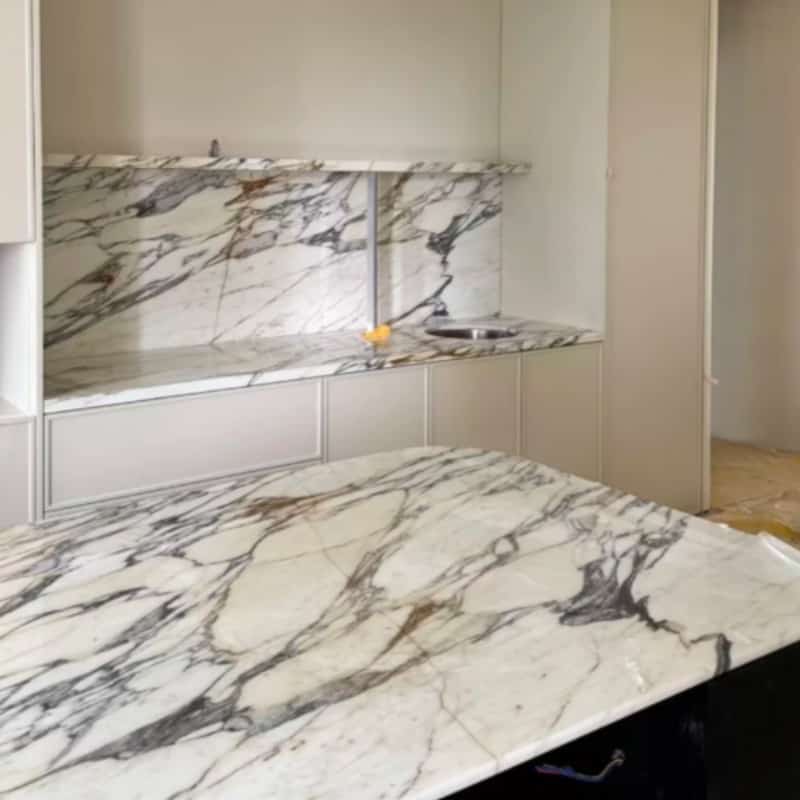
The White Marble Slabs: Complete Guide to Types, Selection, Price, Bathrooms, Lighting, and Batch Control supplies the visual baseline. Full-slab photographs show whether a colored feature existed before cutting and whether the current mark grew beyond it.
Separate Orange Stains on Marble by Shape and Timing
A fresh linear streak after fabrication suggests transferred particles or dirty equipment. A mark that develops around a concealed fixing asks for moisture and metal checks. A feature visible in every pre-cut photograph may be part of the stone rather than site contamination.
The general chemistry of rust requires iron, oxygen and water, but the site still has to prove where those conditions meet the stone.
White marble rust stains that deepen after repeated wetting need the water route documented. Drying the face while a leak or metal contact remains active only pauses the evidence.
Check the surrounding trades
Grinding, welding, cutting steel and leaving wet tools on pale stone can transfer particles. I ask who worked nearby, what protection was in place and whether the mark appears on other light surfaces at the same level.
Use Full-Slab Images to Read White Marble Rust Stains
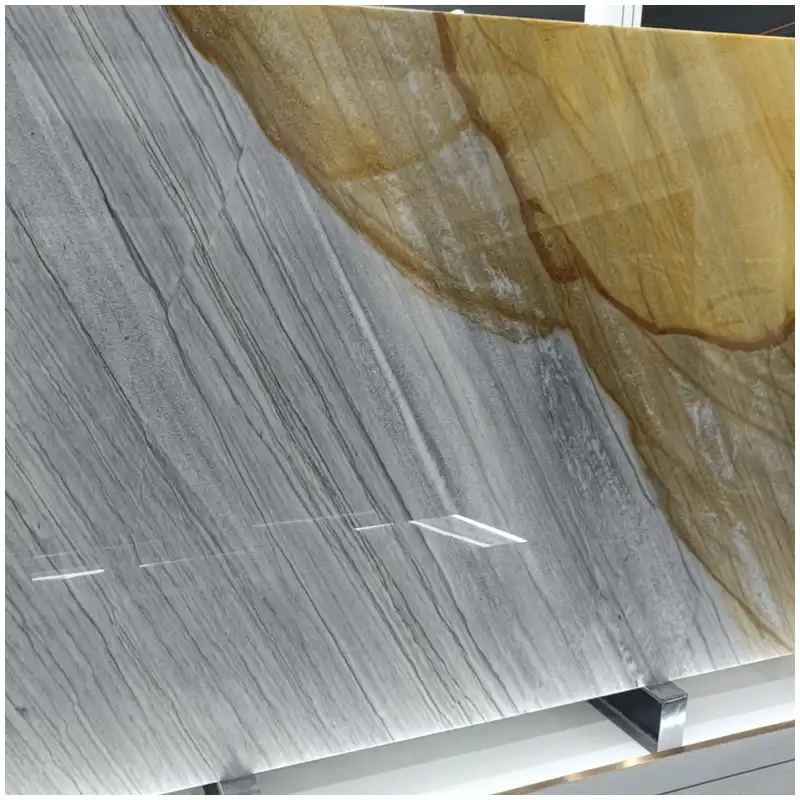
Before fabrication, I zoom into the numbered slab under neutral light and compare the cut map. A natural iron-bearing spot may be visible as a small warm point. The cut layout should avoid uncertain features in wet or highly visible zones when practical.
A Calacatta Gold marble slab for bathroom use naturally carries warm gold movement. That warmth is not rust. The distinction depends on vein continuity, original photographs, surface texture and change over time.
| Mark pattern | Likely source to inspect | Evidence needed | Unsafe shortcut |
|---|---|---|---|
| Ring around metal opening | Washer, fastener, fitting or trapped water | Removal view, metal grade, moisture and pre-install photo | Treating only the visible ring |
| Fine dragged line | Steel dust, tool, trolley or dirty cloth | Fabrication and protection record | Aggressive full-face scrubbing |
| Point follows natural feature | Iron-bearing inclusion or mineral contact | Full-slab image and cut map | Calling every warm mineral spot contamination |
| Lower edge band | Water route and concealed metal | Elevation, waterproofing and drying record | Replacing stone before stopping water |
| Several unrelated orange drops | Construction liquid, timber or chemical residue | Trade sequence and small test | Using rust remover without identification |
The remover lightened the spot and etched the polish
A treatment test is placed on the center of the visible mark without a protected comparison edge. The orange color fades, but the reflected light breaks around a dull patch. The team now has two conditions to judge instead of one: remaining discoloration and finish loss. A small offcut test would have revealed that risk before the installed face changed.
The Lesson: Prove the source and treatment on a spare or concealed test area before touching the visible stone.
Inspect Metal Contact and Water Together
Stainless steel is not one universal guarantee, and the site specialist must judge the grade and environment. I check whether clips, screws, washers, channels or tools can touch the stone or release contaminated water onto it.
Iron contamination marble records should include fabrication tables, lifting equipment and rinse systems as well as installed hardware. A clean workshop photograph helps only when it shows the actual stage and piece number.
Decide Whether the Mark Is Internal or Transferred
An internal feature follows the stone body and may appear at a cut edge or hole. Transferred contamination often sits on or near the surface. A qualified stone conservator or laboratory may need to inspect difficult cases; I do not pretend a phone image can identify chemistry.
White marble rust stains near a fresh cut deserve edge and core photographs. If the feature enters the body, repeated surface treatment may not remove it permanently. The acceptance decision then returns to approved natural variation and application risk.
Control Treatment on Polished and Honed Finishes
Polished marble exposes small etch marks under mirror light. Honed marble can hide reflection loss yet show a changed texture or lighter patch. The test must use the installed finish, dwell time, rinse method and drying period.
The published White Marble Protection after Installation helps preserve evidence while other trades remain active. Remove suspect metal particles carefully and prevent recontamination before judging the treatment result.
Use White Marble Rust Stains to Improve Cut Approval
White marble rust stains discovered before cutting create a selection decision, not a cleaning task. Mark the feature on full-slab photographs, compare it with cutouts and wet zones, and move the component or reject the area when the risk is unacceptable.

Statuario marble slabs can carry crisp fields where one warm spot becomes prominent under 4000K light. A small sample may miss it. Full-face review and a numbered cut map are the practical controls.
Close the Condition with One Acceptance Record
The record names the cause as verified, probable or unresolved. It includes treatment tests, final dry appearance, finish comparison, remaining mark and any replacement decision. Vague closure invites another chemical attempt months later.
White marble stain diagnosis should also state which party controls concealed metal, plumbing or waterproofing. Stone approval cannot close a building-water defect, and a plumbing repair cannot decide visual acceptance.
A Direct Site Response to an Orange Mark
Preserve
Photograph the mark dry, under front and side light, with scale and context. Keep cleaners, abrasives and metal tools away until the source review begins.
Trace
Compare original slab and dry-lay images, inspect holes and edges, identify nearby metal and map recent wetting. Record what changed and when.
Test and release
Use a qualified, stone-compatible method on spare material or a controlled location. Release wider work only after the dry finish and color meet the written acceptance standard.
Build a Stain Map that Can Be Compared with Fabrication
I assign each mark a number and place it on a piece drawing. The record includes diameter or length, distance from two fixed edges, shape, color range, surface texture and lighting. A transparent overlay of the pre-cut slab image and finished piece helps the team see whether the mark began inside the selected area or appeared later.
Do not crop the comparison so tightly that veins and reference edges disappear. The surrounding movement is often what proves identity. A warm point that follows the same vein before and after cutting may be natural; a new ring centered on hardware deserves a metal and water inspection.
Inspect Fabrication Equipment and Work Surfaces
Pale stone can collect ferrous particles from a dirty bench, worn tool, steel brush, trolley or grinding activity nearby. I ask for the piece route through the workshop and clean photographs of contact surfaces. The review should include cutting, edge work, drilling, polishing, washing, drying and packing.
Small particles may not show until moisture reaches them. That delay is why a clean final photograph does not erase the fabrication record. If several pieces carry similar marks at the same bench-contact position, the workshop has a stronger lead than a random mineral explanation.
Check Fixings, Channels, and Plumbing Interfaces
At the installed surface, remove covers only through the responsible trade and photograph the interface without damaging waterproofing or finishes. Record fastener type, washer, bracket, channel, pipe, sealant and whether water can sit around the opening. The metal specialist determines material suitability for the actual environment.
A stain beside a fitting can originate from an external component, transferred installation debris or an internal feature opened by drilling. Those routes require different corrections. I want the hole wall, stone face and hardware photographed separately so one orange halo is not used as proof for all three.
Control Water Used for Cutting and Cleaning
Fabrication and site water can carry suspended material from tools, tanks, pipes or previous work. Record the water source, recirculation practice, cleaning tools and whether pale pieces shared equipment with ferrous operations. This is an investigation record, not an accusation.
On site, do not use a metal bucket or rusty trolley as a neutral background for a cleaning trial. Fresh cloths, clean containers and nonmetallic tools reduce new variables. The test area should stay protected from ongoing steel work until the final dry inspection.
Read Treatment Results under the Final Light
A treatment may reduce orange color but leave a cool gray halo, dull spot or different water response. I inspect it under front light, grazing light and the installed mirror or ceiling fixture. Polished material needs a reflected straight line so finish loss cannot hide inside a bright photograph.
The acceptance photograph includes the untreated control when possible. Camera auto white balance should not be used as the sole judgment, because it can neutralize warm and cool differences. The physical review remains primary, with the image serving as a traceable record.
Decide Whether Repair or Replacement Creates Less Risk
Repair may preserve a matched vein and avoid disturbance to adjacent panels, but it can change finish or leave a residual mark. Replacement may produce a cleaner face, yet it can break bookmatching, joint alignment or waterproofing. The decision needs the full installed composition, not one stain score.
If replacement is selected, the new piece returns to slab approval, cut mapping, edge inspection and dry comparison. It does not receive automatic acceptance because it came from retained stock. Stored pieces can differ in finish condition or treatment history from installed material.
Use the Closed Case to Prevent Repetition
The closeout records the verified source, affected pieces, corrective action, treatment method, final appearance and preventive change. If steel transfer caused the marks, clean and isolate the equipment. If a concealed fixing contributed, revise the detail. If an internal feature was cut, update slab-marking rules.
That prevention note belongs in the next inspection checklist and first-piece approval. Otherwise the project files the photograph, replaces one panel and repeats the same condition on the next batch. A useful quality record changes the next action.
Retain one treated and one untreated reference
When spare offcuts are available, keep one untreated reference and one piece carrying the accepted treatment. Label stone source, finish, product, method and date. Future maintenance can compare an orange mark with the same stone rather than relying on a screen image that has changed color through compression and display settings.
The retained pair also shows whether the treatment altered polish or undertone over time. It does not guarantee every installed condition will behave identically, but it gives the project a physical starting point for a later stain review and prevents an unrecorded stronger chemical from becoming the new standard.
Bieži uzdotie jautājumi
1. What causes white marble rust stains?
Possible sources include corroding metal, transferred steel particles, contaminated tools or water, and iron-bearing features within the stone. Shape, position, timing, full-slab images and nearby interfaces help separate them.
2. Is every orange vein in Calacatta marble rust?
No. Calacatta varieties may contain natural warm gold or brown movement. Compare vein continuity and original full-slab photographs. A new halo around metal or a changing wet mark requires a different investigation.
3. Can a rust remover damage polished marble?
Yes. A product may alter polish, color or texture even if it reduces the stain. Confirm manufacturer suitability and test the complete method on matching spare material or a concealed controlled area.
4. Should the affected piece be replaced immediately?
Not before the source is controlled. Replacement can fail again if water, metal or transferred contamination remains. Judge the final dry appearance after the cause and treatment test are documented.
5. What should we do first when an orange mark appears after installation?
Photograph it dry with context and scale, stop cleaning and nearby metal work, preserve the original slab and installation records, and contact the supplier and responsible site parties before treatment.
White Marble Rust Stains Source Checklist
- Photograph the dry mark with scale and side light.
- Map holes, edges, joints, metal and water routes.
- Compare the numbered slab and cut-layout photographs.
- Inspect fabrication and site tools for steel transfer.
- Separate natural warm veining from a changing stain.
- Test treatment on matching spare material.
- Close the source before accepting cleaning or replacement.
Final Conclusion
White marble rust stains need source evidence before treatment. Map the mark, compare full-slab records, inspect metal and water, test the finish and control the cause before replacement.
Don’t just look at the orange color; Esta Stone keeps the face on hold until the iron route and dry acceptance are both clear.

References
- Stain Management and Poulticing Guidance, Natural Stone Institute.
- Dimension Stone Design Manual, Natural Stone Institute.
- Installation Guide and Reference Manual, Natural Stone Institute.
- ASTM C503 Standard Specification for Marble Dimension Stone, ASTM International.
- ANSI A108 and A118 Installation Standards, Tile Council of North America.
- TCNA Handbook for Ceramic, Glass, and Stone Tile Installation, Tile Council of North America.
- Search Essentials: Creating Helpful, Reliable, People-First Content, Google Search Central.