

Calacatta Gold vs Calacatta Viola: Undertone, Vein Scale, Lighting, and Full-Slab Approval
I stop a slab approval when the sample and the full-face photograph tell different stories. The sample may show clean white with one fine gold line. The slab may carry a broad grey sweep, warm cream pockets, and a vein that crosses the proposed sink opening. The material name has not changed. The scale has.
That is the first fact in Calacatta Gold vs Calacatta Viola. A hand sample cannot show vein width, field balance, repair position, or how several pieces will meet. Gold and Viola may share the Calacatta name, but the room reads them differently. One can soften a bright bathroom. The other can become the strongest object in it.
My short answer: choose Gold when the project needs warm restraint and choose Viola when it can carry forceful red-violet movement. Then verify that answer with actual slab faces, the project light, and the cut drawing. Don’t just look at samples.
Calacatta Gold vs Calacatta Viola Begins with Undertone
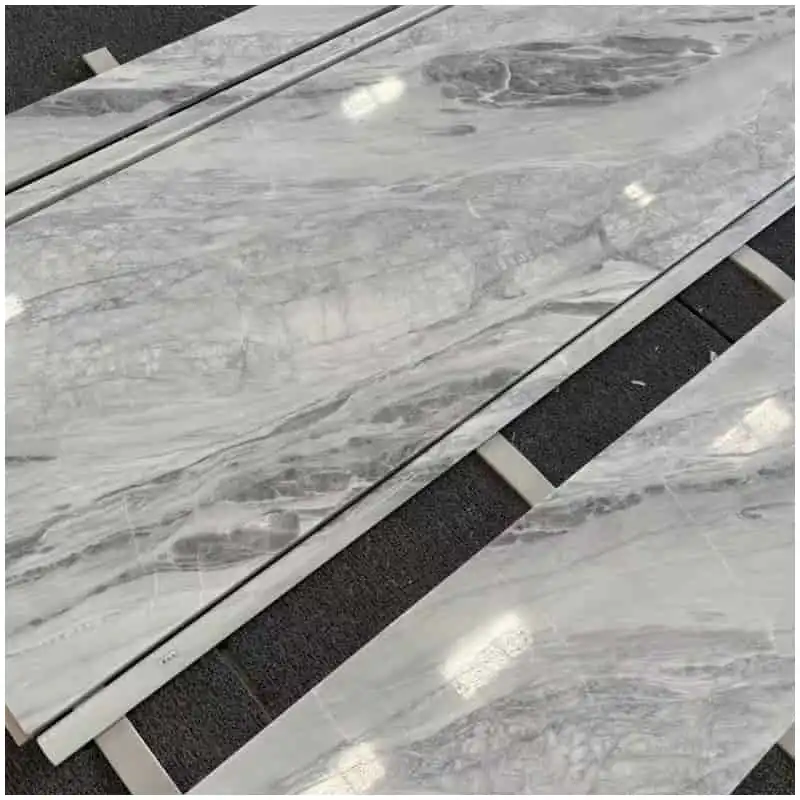
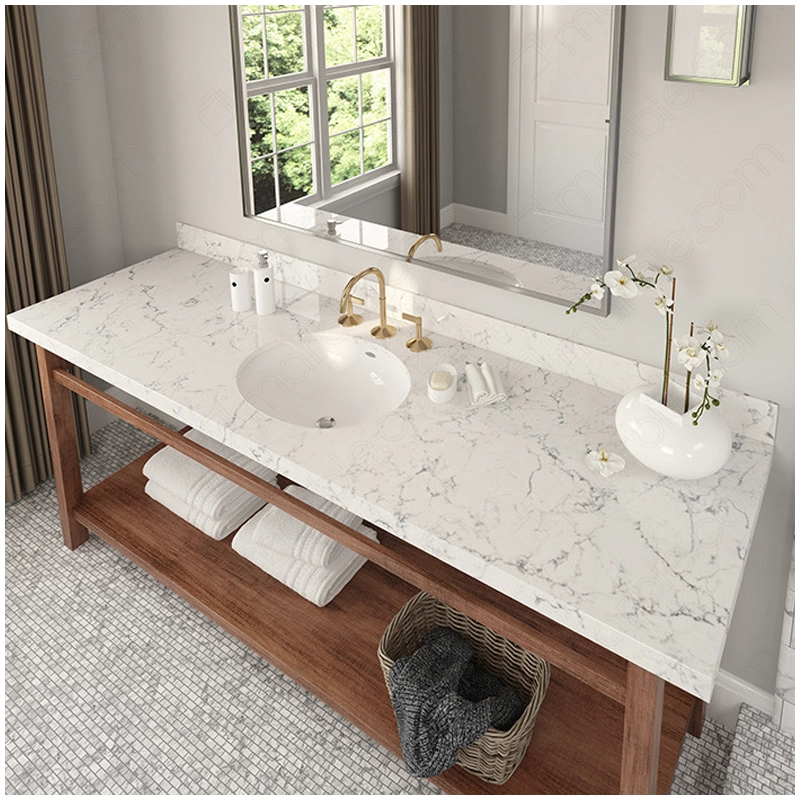
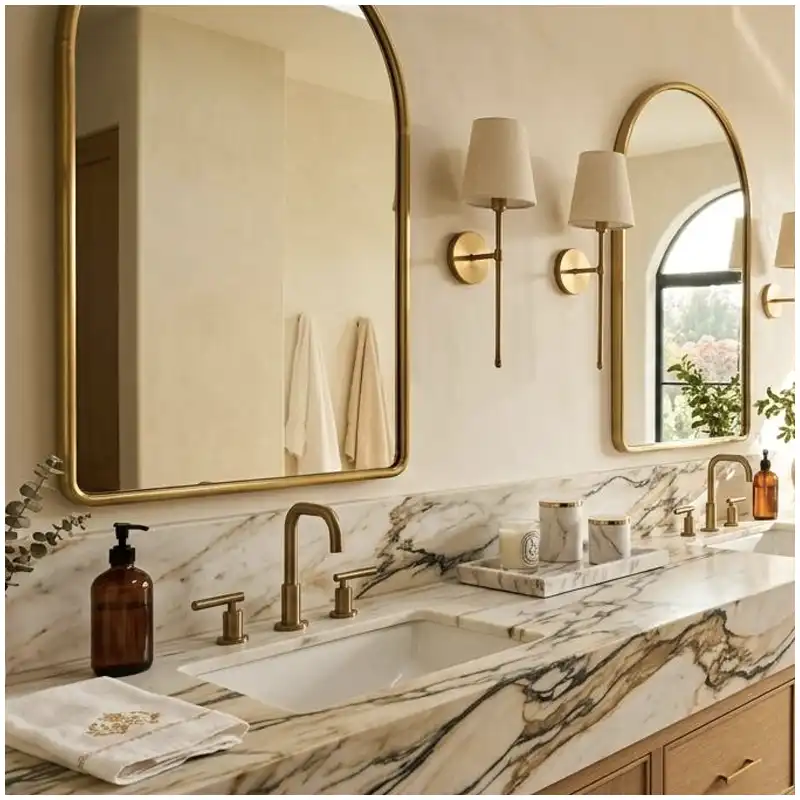
Calacatta Gold generally carries grey movement with warm gold, beige, or honey accents. The white field may be cool, neutral, or creamy depending on the block. Marble is a metamorphic carbonate rock, as the English reference for marble notes, but that family name never defines one project’s color range. A warm batch beside cool white sanitary ware can appear more yellow than it did in the warehouse.
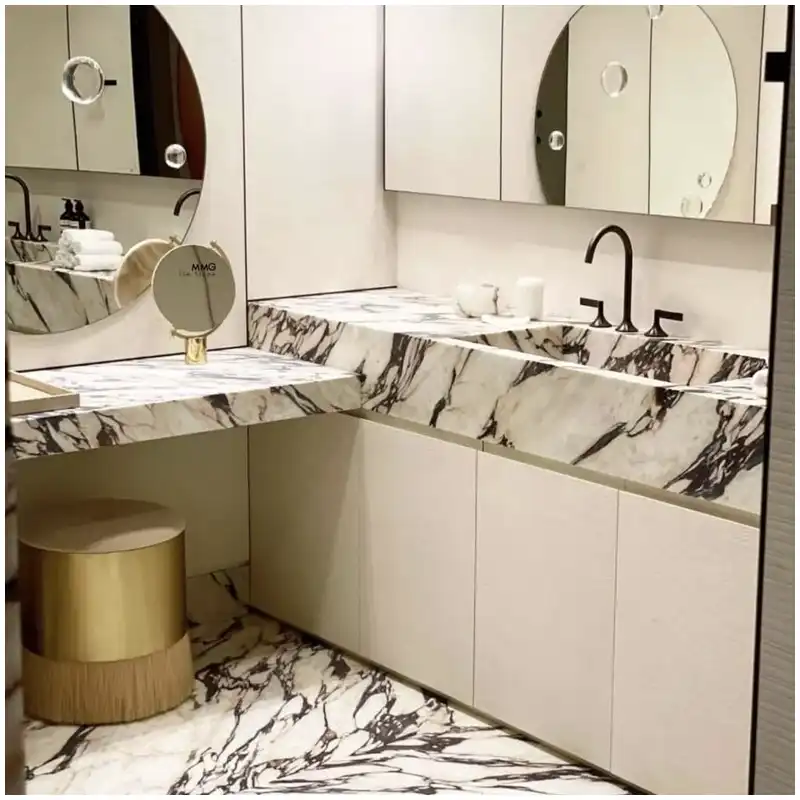
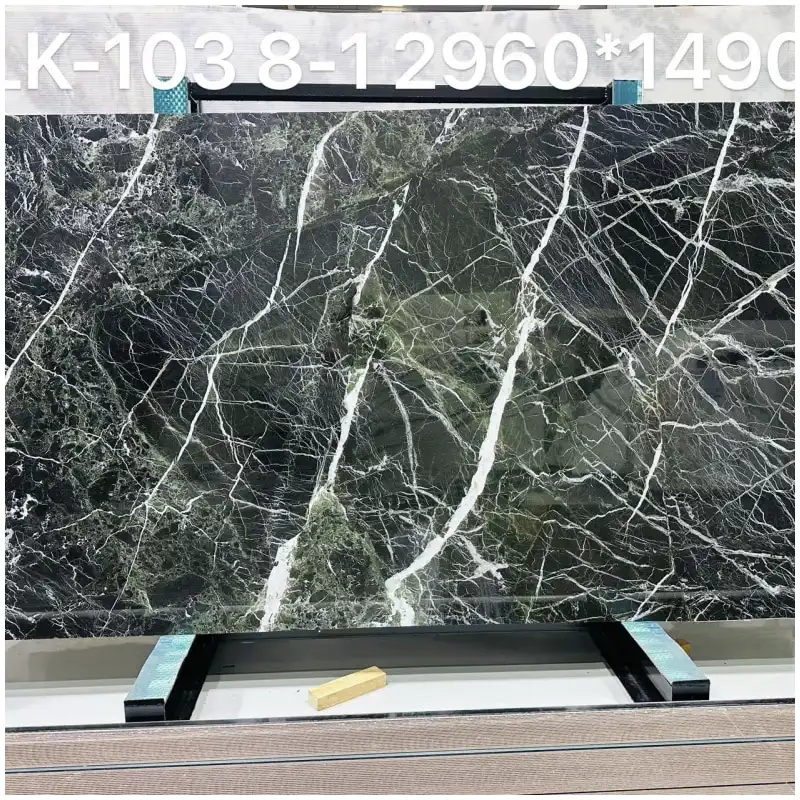
Calacatta Viola is usually more assertive. Its movement can include wine, plum, violet, brown-red, and charcoal around a pale field. Some slabs contain broad islands of color. Others have broken, branching lines. The strong areas are not defects, but they need room. A small vanity return can look crowded if the cut captures only a dense burgundy corner.
De white marble undertone must be judged against the fixed materials around it. I place the slab image beside the tile, paint, metal finish, sanitary ware, and lighting information. A white marble does not exist in isolation once it reaches a bathroom. The nearest white surface will expose whether the stone leans blue, cream, grey, or pink.
With Calacatta Gold vs Calacatta Viola, the question is therefore not which stone is more expensive or dramatic. The useful question is which movement the elevation can absorb. A quiet wall with simple fittings may support Viola. A room already carrying patterned tile, fluted timber, and decorative metal may need the calmer rhythm of Gold.
Vein scale changes after cutting
One broad Gold vein can become a calm diagonal across a vanity top, but the same vein can look interrupted if a large sink removes its center. Viola presents a different risk: cutting may isolate a dark patch from the white field that gave it balance. I overlay the cutout drawing on the slab photograph before anyone marks the stone.
De Calacatta Marble Slabs approval guide covers range and project control across the wider family. This comparison goes narrower. It asks how the two visual languages behave when the same bathroom drawing is placed over them.
What 3000K and 4000K Light Reveal
Lighting lies when the approval light and the installed light are different. A 3000K source usually warms the white field and can strengthen gold or beige notes. A 4000K source often reads more neutral and may make grey veining feel sharper. The result also depends on color rendering, fixture position, daylight, adjacent finishes, and reflected color from walls or timber.
I do not promise that every slab shifts by one fixed amount. Stone is not a paint chip, and two lamps with the same nominal color temperature can render color differently. I ask for photographs under at least the project temperature and a neutral comparison light, with exposure and white balance kept consistent. Better still, inspect a representative face in person.
In Calacatta Gold vs Calacatta Viola, warm light may make Gold feel cohesive, but it can also push an already creamy field too far. The same light can deepen Viola’s burgundy areas and soften the boundary between red and brown. Under cooler light, Viola may reveal more violet and charcoal, while Gold may lose some of its warmth.
| Warehouse check | Calacatta goud | Calacatta Viola | Susan’s pass condition |
|---|---|---|---|
| 3000K light | Check whether cream and gold remain controlled beside fixtures | Check whether burgundy reads rich or turns muddy beside warm finishes | Approve only with actual surrounding samples |
| 4000K light | Check grey-vein contrast and field neutrality | Check violet, charcoal, and white-field separation | Record exposure and camera settings consistently |
| Raking light | Look for resin, surface repair, and polish variation | Check repairs inside dense colored movement | Reject unexplained finish differences across adjacent pieces |
| Back view and edge | Confirm reinforcement and hidden fissure treatment | Trace strong veins through the thickness | Match fabrication risk to the cut drawing |
The Hard-Won Lesson: Approve marble in the light that will judge it
A familiar dispute starts with a warehouse image made under cool high-bay lighting. The marble appears crisp and neutral. Installation places the same pieces under warm mirror lights beside cream wall tile, and the field reads noticeably warmer. Nothing changed inside the stone. The approval failed because the team approved a photograph without checking the installed light and adjacent white materials.
The Lesson: Put the actual light and neighboring finish beside the slab before cutting starts.
Which Marble Fits the Wall, Vanity, or Floor
Vanity tops need a cutout plan, not a beauty vote
A vanity top concentrates risk around sink cutouts, faucet holes, narrow front rails, and wall returns. In a Calacatta Gold vs Calacatta Viola layout, I prefer a slab area where the vein supports the composition without forcing a dense repair through a weak strip. The Calacatta Gold marble slab for bathroom work gives the design team a specific face to judge.
For Viola, the cutout must preserve enough pale field around the colored movement. A Calacatta Viola marble slab can make a vanity memorable, but the strongest vein should not be left as a thin unsupported bridge beside the basin. Fabricator input matters before the visual layout receives final approval.
Wall panels reward scale
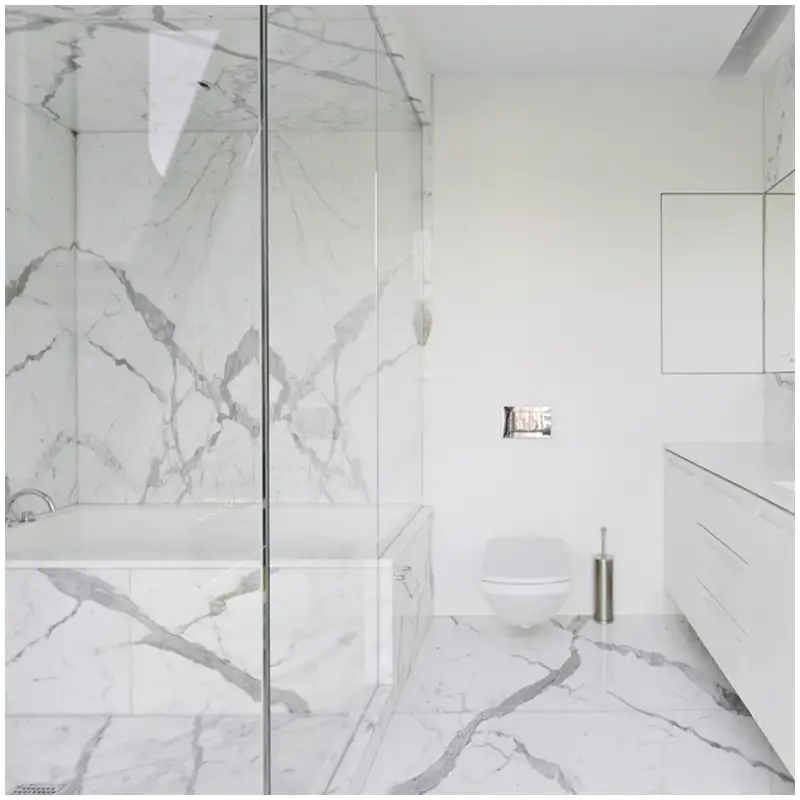
Walls give Viola enough area to show the relationship between white field and colored movement. Bookmatching can produce a deliberate composition, but not every slab pair mirrors cleanly. Gold can create a calmer continuous field, particularly when the room already includes patterned surfaces. For both stones, elevation drawings need joint positions, vein direction, visible edges, and panel numbers.
The decision in Calacatta Gold vs Calacatta Viola becomes stricter when the wall meets a mirror or a strong vertical line. A vein that appears balanced on an isolated slab can look tilted after the mirror cuts the composition in half. Dry-lay the visible elevation or prepare a scaled digital layout from verified slab images.
Bathroom floors need finish and maintenance discipline
Polished marble can show color depth, but wet-floor traction and maintenance requirements must come from the project specification and applicable local rules. Honing reduces mirror-like reflection and changes how veins read. It does not make calcium-carbonate stone immune to acidic liquids, abrasive soil, moisture-related staining, or poor installation practice.
Voor Calacatta Gold vs Calacatta Viola floor layouts, the field of a Calacatta Gold marble floor tile may read more continuously across repeated pieces. A Calacatta Viola marble tile needs deliberate distribution of strong color. Open several cartons or dry-lay the batch before installation.
Full-Slab Approval and Batch Control
A Calacatta marble slab approval should show the entire face, a readable ID, dimensions, thickness, finish, and any visible repair or reinforcement. I ask for one straight-on image and closer views of unusual areas. The camera must not crop away the corners that later become returns, nosings, or spare pieces.
Batch control does not mean pretending natural marble is uniform. It means defining the accepted range and distributing variation intentionally. For Calacatta Gold vs Calacatta Viola, use separate range boards. Do not approve both with one generic “Calacatta white” sample because their undertone and movement are too different.
I also check finish on the actual batch. Polishing can deepen color and make Viola’s dark movement stronger. Honing can soften contrast and lighten the field, but it may reveal resin or repair differently. The signed sample should identify material, finish, approval date, and project area. A loose offcut without those details becomes an argument later.
Dry-lay has a job. It reveals abrupt transitions, repeated dark patches, isolated warm pieces, and joints that cut important veins. The layout must carry piece numbers that continue onto drawings, labels, and packing records. A beautiful dry-lay photograph without those numbers cannot guide the installer.
De White Marble Slab Supplier guide explains the broader supplier and range-control questions. Here I keep the decision narrow: which of these two Calacatta families can hold the intended room composition after the slab is divided into real pieces.
Where This Comparison Usually Fails
The team compares names instead of faces
Commercial names help organize material, but two blocks under the same name can differ. Compare the offered slabs, not the best image found online. Record the accepted limits for field tone, vein color, vein width, repairs, and usable area.
The strongest vein is treated as waste
A bold vein can be the reason for choosing the stone. It becomes a problem only when the drawing places it across a vulnerable cut, hides half of it behind a mirror, or separates it from the white field that gives it context. Layout before cutting. Do not ask the saw operator to make a design decision from memory.
All bathroom areas receive the same finish
A vanity face, wall panel, dry floor, and shower area do not share identical exposure or maintenance. Confirm finish, slip requirements, waterproofing interfaces, sealant joints, cleaning products, and expected water contact by area. If the assembly and maintenance plan cannot support the stone, move it to a drier location.
The site complaint arrives without identifiers
If the installed color appears wrong, photograph the full area and close detail under the normal project light. Record piece IDs, location, light temperature, adjacent finishes, and whether the stone is wet or dry. Stop work in the affected area, then compare the evidence with approved slab images and the dry-lay record before deciding whether the cause is material range, lighting, installation moisture, residue, or a different issue.
Quick-Reference Checklist for Calacatta Approval
- Compare full slab faces before comparing prices or commercial names.
- Place project whites, metals, and tiles beside the stone under 3000K and 4000K light.
- Overlay sink, faucet, joint, mirror, and return positions on the slab image.
- Approve a representative range rather than one quiet sample.
- Number every dry-laid piece and carry the same ID onto drawings and packing records.
- Separate material variation from residue, moisture, lighting, and installation conditions during escalation.
Frequently Asked Questions
1. What is the main visual difference in Calacatta Gold vs Calacatta Viola?
Calacatta Gold generally combines a white field with grey movement and warm gold, beige, or honey accents. Calacatta Viola usually carries stronger burgundy, violet, brown-red, and charcoal movement. Actual blocks vary, so compare the offered full slabs and accepted range rather than relying on the names alone.
2. Which one works better in a small bathroom?
Gold often feels easier in a small room because its movement may be quieter, but a well-placed Viola cut can also work. Judge the actual slab, mirror size, wall breaks, vanity dimensions, and available pale field. A dense colored section cropped into a small surface can overwhelm the composition.
3. Does 3000K light make white marble look yellow?
Warm light can strengthen cream, beige, gold, and brown notes, but the result depends on the slab, lamp quality, adjacent materials, daylight, and camera settings. Test representative marble with the specified fixture and surrounding finishes. Do not approve color from a warehouse photograph taken under a different light.
4. Can Calacatta Gold and Calacatta Viola be mixed in one project?
They can serve different areas if the design deliberately separates them, but an unplanned mix can look like a batch error. Give each material its own schedule, range approval, slab IDs, drawings, labels, and installation zones. Avoid placing them side by side unless the contrast has been tested at full scale.
5. What should I do first if installed Calacatta looks different from approval?
Photograph the full area and close details under the normal installed light. Stop work in the affected zone. Record piece IDs, location, light temperature, wet or dry condition, and adjacent finishes, then compare those images with the approved slab faces, finish sample, dry-lay, and packing records before assigning a cause.
Final Conclusion
Calacatta Gold vs Calacatta Viola becomes a manageable decision when the project stops judging two small samples. Compare actual full faces, undertone under project light, vein scale against drawings, finish on representative material, and distribution across the installed area. Gold often supports a warmer and calmer composition. Viola asks for more space and more deliberate cutting.
I would rather reject one incomplete approval photograph than explain a room full of marble that changes character under the mirror lights. That is how Esta Stone keeps the selected slab, the approved range, and the finished bathroom accountable to the same visual record.
References
- Standard Specification for Marmer Dimension Stone, ASTM C503/C503M, ASTM International.
- Standard Test Methods for Absorption and Bulk Specific Gravity of Dimension Stone, ASTM C97/C97M, ASTM International.
- Standard Test Method for Flexural Strength of Dimension Stone, ASTM C880/C880M, ASTM International.
- Dimension Stone Design Manual, Marble Chapter, Natural Stone Institute.
- Dimension Stone Design Manual, Wet Areas Chapter, Natural Stone Institute.
- Natural Stone Care and Maintenance Guidance, Natural Stone Institute.
- Bathroom Planning Guidelines, National Kitchen and Bath Association.
- Technical Guidance for Natural Stone Finishes and Installation, Stone Federation Great Britain.