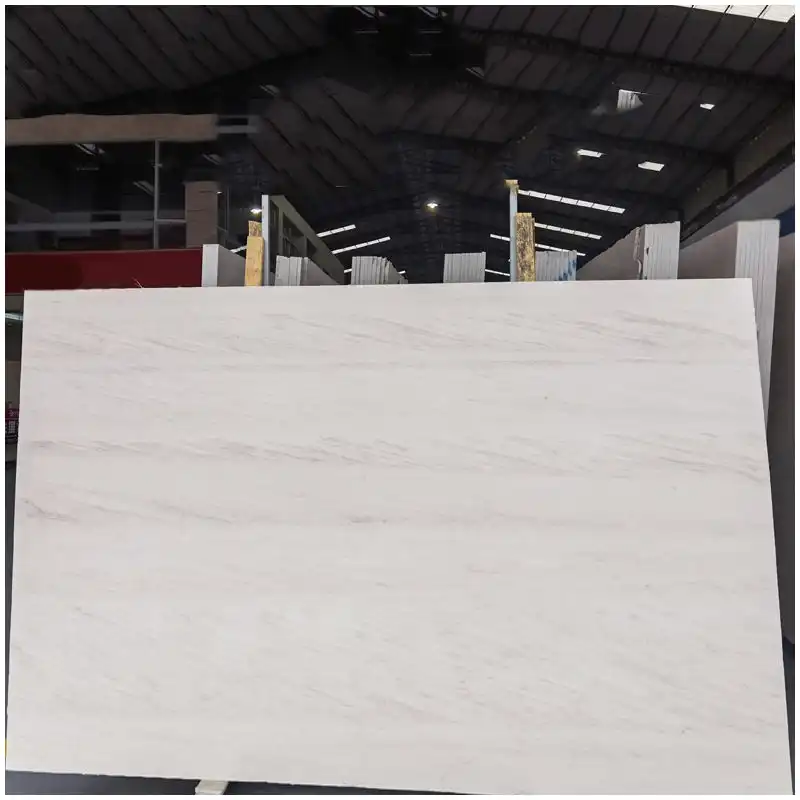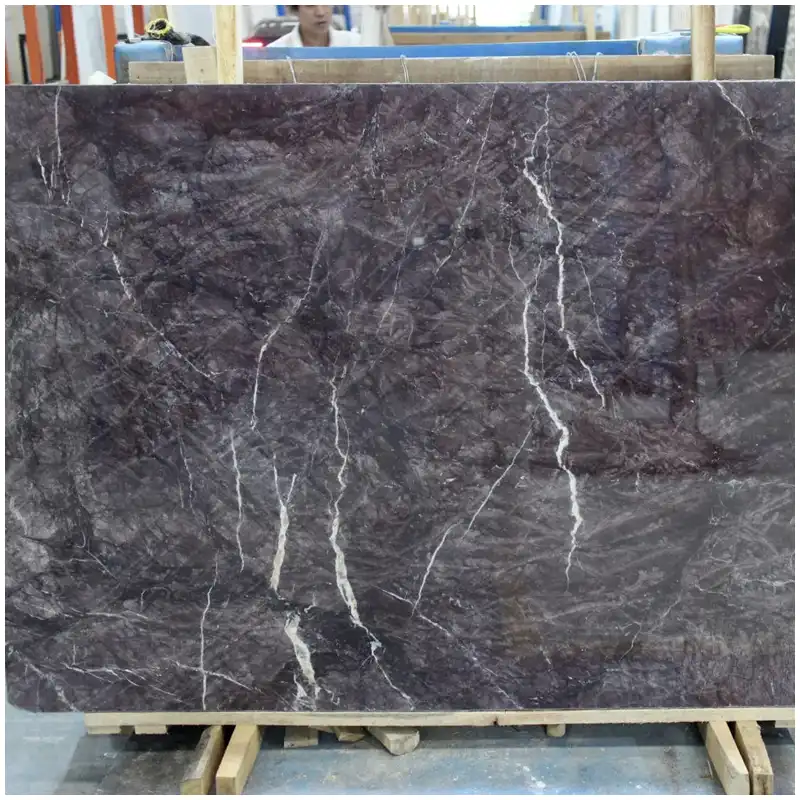
A Design Meeting That Explains the Appeal of Taj Mahal Quartzite
“Are we sure this is quartzite?” the homeowner asked, running her hand across the creamy stone sample on the table. “It looks as soft and elegant as marble.”
The designer smiled. “That’s exactly why people fall in love with it. It gives you the warmth of marble, but with the durability needed for real living.”
The contractor leaned in, studying the surface under the showroom lights. “If this is going in the kitchen, bathroom, and feature wall, it needs to perform, not just photograph well.”
“That,” the designer replied, “is why Taj Mahal Quartzite keeps showing up in the best projects.”
That short exchange captures the real reason Taj Mahal Kwartsiet has become one of the most discussed natural stones in luxury interiors. It is not just beautiful. It solves a design problem that many architects, homeowners, and developers face every day: how do you achieve the refined softness of marble without sacrificing the practical strength needed for kitchens, bathrooms, commercial spaces, and long-term daily use?
Before buyers commit to a premium stone for large-scale residential or hospitality projects, many start by reviewing the background of a trusted natural stone manufacturer to understand sourcing experience, slab selection standards, and project support. That is one reason whitemarblegranite continues to attract attention from buyers who want more than a pretty slab—they want dependable material expertise.
When a project involves multiple surfaces, different finishes, and matching stone applications across several rooms, early communication matters. Designers and contractors often choose to contact whitemarblegranite before final material approval so they can confirm tone consistency, fabrication suitability, and installation requirements before the first shipment ever leaves the yard.

Why Taj Mahal Quartzite Has Become a 2026 Design Favorite
There are many light-toned stones on the market, but very few have achieved the market position of Taj Mahal Quartzite. The reason is simple: it fits today’s design priorities almost perfectly.
Modern interiors increasingly favor warm neutrals, layered textures, natural materials, and understated luxury. At the same time, clients want surfaces that can survive real use. Taj Mahal Quartzite sits in that sweet spot. It offers a creamy beige-to-soft-ivory base, subtle linear movement, and a calm surface character that works in both modern and classic interiors.
In kitchen-centered homes, large-format Taj Mahal Quartzite island designs have become especially popular because they create a sophisticated centerpiece without feeling cold or overdesigned. Designers often use them to anchor open-plan spaces where the island must function as a prep zone, dining hub, and visual statement all at once.
Unlike louder stones with dramatic contrast, Taj Mahal Quartzite creates luxury through restraint. It does not shout. It persuades.
A Stone That Solves the “Beauty vs. Durability” Dilemma
One of the biggest headaches in premium design is the conflict between visual softness and daily performance. Marble wins hearts. Daily life often wins the argument.
That is where Taj Mahal Quartzite stands out. It is widely appreciated for combining elegant aesthetics with stronger resistance to scratching and etching than many marbles commonly used in kitchens and wet areas. For homeowners who want a luxurious look without living in fear of every coffee cup, makeup spill, or dropped utensil, that balance matters.
This is also why designers frequently extend the material beyond countertops into flooring and wall cladding. Properly selected Taj Mahal Quartzite tiles can help create seamless visual flow from kitchen to bathroom to entryway, especially in projects where the goal is calm continuity rather than abrupt material changes.
From a design psychology perspective, softer natural tones are often associated with comfort, openness, and long-term visual acceptance. In practice, that means Taj Mahal Quartzite tends to age well stylistically. It does not trap a project inside one short-lived trend cycle.

Why It Works So Well in Bathrooms and Wellness Spaces
Bathrooms are no longer treated as purely functional rooms. In high-end homes, boutique hotels, and wellness-inspired interiors, they are now designed as quiet retreat zones. Material selection therefore becomes both aesthetic and emotional.
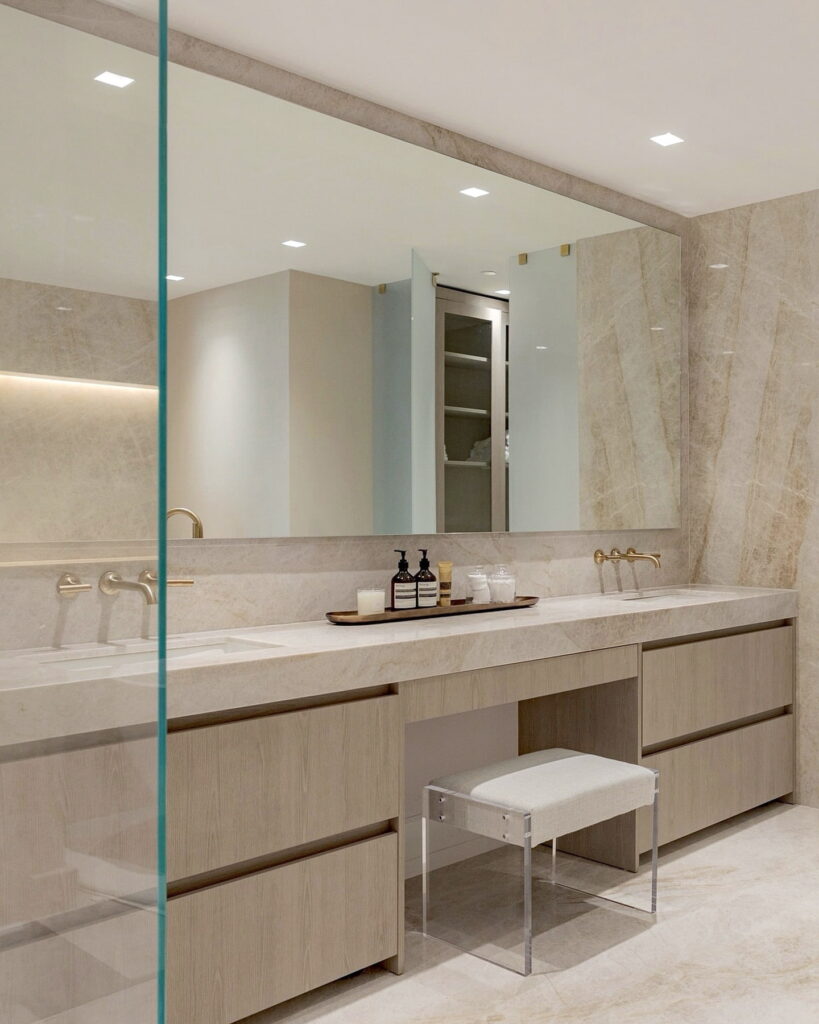
Taj Mahal Quartzite performs well here because it carries warmth without heaviness. Its gentle veining looks refined under soft artificial light and natural daylight alike. It also pairs effortlessly with brushed brass, matte black, wood cabinetry, and warm white walls.
That is why more designers now specify Taj Mahal Quartzite vanity tops in bathrooms where the goal is to create a spa-like atmosphere with real stone character. Unlike overly busy materials, it gives vanities a premium look without making compact bathrooms feel visually crowded.
In case studies shared across the industry, lighter warm-toned quartzites are repeatedly chosen for master baths and luxury guest suites because they photograph well, stay relevant longer, and create a feeling of tailored calm. In other words, they do the one thing cheap surfaces almost never do: they make quiet luxury believable.
Comparing Taj Mahal Quartzite with Similar Premium Stones
A smart buyer never evaluates a stone in isolation. The real question is not “Is it beautiful?” but “Is it the right beautiful?”
This is where comparison becomes useful. Some clients who love warm neutral quartzite also explore Champagne Quartzite countertops because they want something in a similar design family with a slightly different tone, movement, or mood. Comparing stones this way helps designers refine the visual story of a project instead of simply selecting whatever looks expensive under showroom lighting.
Taj Mahal Quartzite usually wins when the brief calls for:
-
warm elegance instead of icy brightness
-
subtle movement instead of dramatic veining
-
versatility across kitchen, bath, flooring, and wall applications
-
a luxury feel that does not dominate the room
In design terms, it is one of the rare materials that can support both statement-making rooms and quietly refined backdrops. That versatility is not just nice to have. It can reduce design friction across multi-room projects where consistency matters.
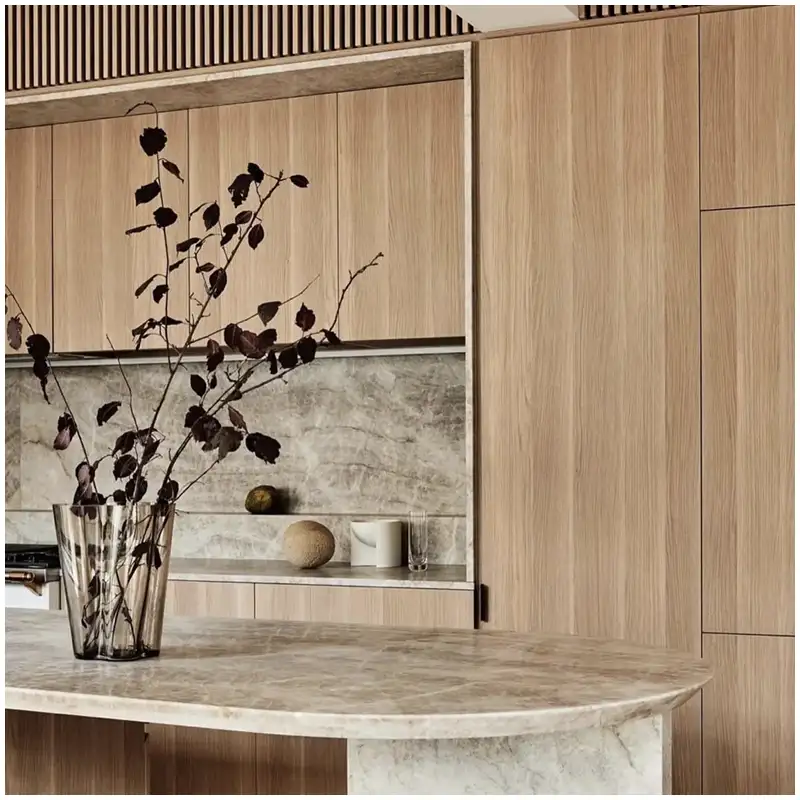
Why Slab Selection Changes the Final Result
Not all premium results come from premium stone names alone. Slab selection quality is often the invisible detail that separates a polished final project from a “something feels off” result.
This is especially true with Taj Mahal Quartzite, where subtle background tone, linear movement, finish quality, and block consistency all affect how refined the finished installation feels. In large kitchens or bookmatched wall applications, even small differences between slabs can become visually obvious.
That is why carefully chosen Taj Mahal Quartzite polished slabs matter so much. A polished finish enhances the stone’s natural softness and allows its layered mineral structure to catch light with understated elegance. In expansive interiors, this finish can make the surface feel richer and more dimensional without becoming flashy.
Experienced fabricators often note that the best results come when designers approve slabs not just by color, but by directionality, movement density, and how adjacent pieces will read once installed. Fancy name, sloppy selection—classic expensive mistake.
The Questions Buyers Keep Asking
The popularity of Taj Mahal Quartzite has naturally led to a wave of repeated buyer concerns. Is it really quartzite? How does it handle kitchens? Does it suit modern interiors? Can it work in bathrooms? Is it hard to maintain?
Those are not trivial questions. They are exactly the practical concerns that serious buyers should ask before approving a material for high-visibility areas. That is why guides like the Top 15 FAQ’s over Taj Mahal Quartzite are useful reference points for architects, homeowners, and contractors trying to make confident material decisions.
A stone becomes commercially powerful when it does three things well:
-
It photographs beautifully.
-
It performs in real use.
-
It survives scrutiny from experienced buyers.
Taj Mahal Quartzite keeps gaining momentum because it passes all three tests more consistently than many fashionable alternatives.
Why Designers Keep Specifying It for Interior Projects
Material choice is never only about durability. It is also about spatial harmony. Designers want stones that can work across several design languages without forcing the rest of the room to submit to them.
That is one reason so many specifiers continue to choose Taj Mahal Quartzite for interior deco projects. It fits minimalist homes, transitional interiors, warm modern kitchens, boutique hospitality environments, and even more classical layouts when paired with detailed cabinetry or metal accents.
Its strongest design qualities include:
-
a warm neutral palette that supports layered materials
-
enough movement to feel natural, but not chaotic
-
a timeless look that avoids trend fatigue
-
strong application flexibility across islands, counters, tiles, and vanity tops
Designers also appreciate that it plays well with other materials. Oak, walnut, plaster, linen textures, brass, bronze, matte black fixtures, and soft lighting all work beautifully with Taj Mahal Quartzite. That is not accidental. It comes from the stone’s unusually balanced visual temperature.
Taj Mahal Quartzite in 2026 Interior Design Trends
If 2024 and 2025 brought the return of warm minimalism, 2026 is clearly pushing that direction further. The dominant look is no longer sterile white-on-white luxury. It is textured, tactile, warm, and more emotionally livable.
This is why Taj Mahal Quartzite for 2026 interior designs continues to appear in trend discussions. Designers are increasingly moving toward materials that feel natural, calming, and premium without appearing overworked.
The strongest 2026 use cases include:
-
oversized waterfall islands
-
full-height backsplash installations
-
spa-style bathroom vanities
-
warm luxury flooring and wall accents
-
soft-toned hospitality interiors
What makes Taj Mahal Quartzite especially trend-resilient is that it does not rely on novelty. It aligns with deeper shifts in design preference: less visual noise, more tactile realism, and materials that feel collected rather than manufactured.
|
|
|
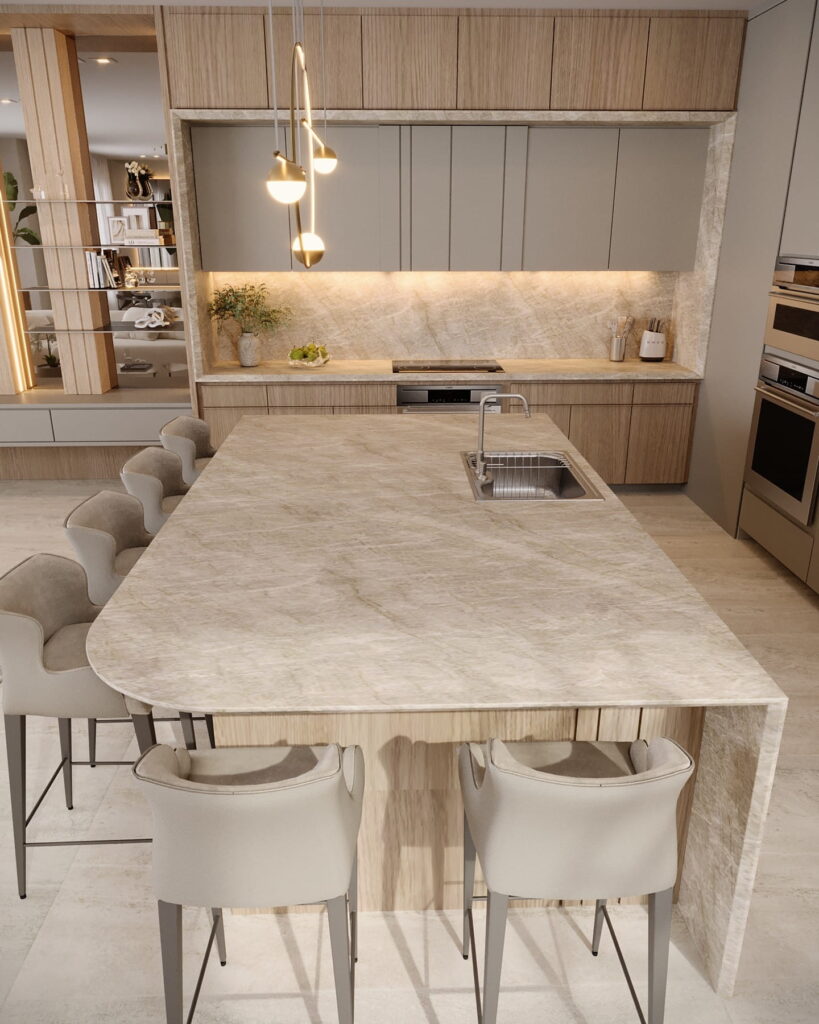
When Stone Becomes More Than Surface
The best natural stones do not just fill space. They shape atmosphere. They tell the user how the room is meant to feel.
That is why many high-end projects increasingly treat the material as part of a broader design narrative. In this sense, the luxury stone art of Taj Mahal Quartzite is not only about slabs and finishes. It is about how a stone can create emotional tone—calm, exclusivity, confidence, restraint, permanence.
Case studies from luxury kitchens, designer bathrooms, and branded hospitality spaces all point to the same conclusion: Taj Mahal Quartzite succeeds because it performs architecturally and emotionally. It makes rooms feel intentional.
And that, frankly, is the part many buyers underestimate. People do not remember stones by Mohs hardness alone. They remember how a room made them feel.
Common Pain Points Taj Mahal Quartzite Helps Solve
For all its elegance, the commercial success of this material is tied to practical problem-solving. Buyers choose it because it helps reduce several recurring project frustrations:
Visual overload
Many dramatic stones look impressive at first glance but become tiring in full-room applications. Taj Mahal Quartzite offers movement without chaos.
Cold luxury syndrome
Some luxury interiors feel too sterile to live in. Taj Mahal brings warmth to premium spaces.
Material mismatch across rooms
Because it works well in islands, tiles, vanity tops, and feature applications, it supports whole-home continuity.
Fear of fragile beauty
Clients who love marble-like refinement but worry about everyday use often see quartzite as a more reassuring option.
When a material solves both design and lifestyle problems, it stops being a trend and starts becoming a standard.
Frequently Asked Questions
1. Is Taj Mahal Quartzite good for kitchen countertops?
Yes. Taj Mahal Quartzite is a popular choice for kitchen countertops because it combines a refined marble-like appearance with stronger everyday durability, making it well suited for luxury kitchens that need both beauty and performance.
2. What color is Taj Mahal Quartzite?
Taj Mahal Quartzite typically features a warm palette of soft beige, ivory, cream, and light taupe tones with subtle flowing veining. Its neutral warmth makes it highly versatile across different interior styles.
3. Can Taj Mahal Quartzite be used in bathrooms?
Absolutely. It is widely used for vanity tops, wall applications, and even floor designs in bathrooms because it creates a calm, spa-like atmosphere while maintaining a high-end natural stone look.
4. Is Taj Mahal Quartzite still in style in 2026?
Yes. Taj Mahal Quartzite remains highly relevant in 2026 because current interior trends continue to favor warm neutrals, natural textures, and timeless luxury over colder, more sterile design palettes.
5. Why do designers choose Taj Mahal Quartzite over other premium stones?
Designers choose it because it offers a rare combination of elegance, subtle movement, warm color, and practical versatility. It works beautifully in kitchens, bathrooms, islands, and hospitality spaces without overpowering the design.
Why Taj Mahal Quartzite Feels Right in Premium Spaces
Back in that first meeting, the homeowner thought she was choosing a beautiful stone. What she was really choosing was a design solution.
That is the real story of Taj Mahal Kwartsiet. It is not just another fashionable surface. It is a material that helps designers, builders, and homeowners resolve a very modern challenge: how to create interiors that feel soft, luxurious, warm, and timeless while still meeting the practical expectations of daily life.
From islands and tiles to vanity tops, polished slabs, and full-scale luxury interiors, Taj Mahal Quartzite continues to prove why it belongs in the best projects of 2026 and beyond. When selected carefully and sourced through experienced partners like whitemarblegranite, it becomes more than a stone surface.
Referenties en blogs over Braziliaanse exotische Taj Mahal-kwartsiet | Esta Stone
- Why Taj Mahal Quartzite is the High-Yield Architectural Asset of 2026: A Strategic Analysis
- Taj Mahal Quartzite for Luxury Interiors in 2026
- Het Quartzietrapport 2026: Waarom Taj Mahal Ultra-Luxe Vastgoed Herdefinieert
- 2026 Why Taj Mahal Quartzite Dominates Luxury Middle East Projects
- Top 15 FAQs of Taj Mahal Quartzite You Should Know
- Waarom Taj Mahal Quartziet kiezen voor interieurdecoratieprojecten
- Taj Mahal-kwartsiet voor de beste interieurontwerpen van 2026
- Luxe steenkunst van Taj Mahal kwartsiet
- How to Source Premium Taj Mahal Quartzite Slabs: A Wholesaler’s Inspection Checklist
- De Ultieme Gids voor Taj Mahal Quartziet: Prijzen, Duurzaamheid en Ontwerp 2026
It becomes the reason a room feels finished.