


Quick Summary
Green Lapponia Quartzite is a Norwegian dark green quartzite from the Masi / Kautokeino area, recognized for fuchsite-rich green color, folded white-grey bands, and directional mineral layering. Also traded as Verde Lapponia Quartzite, Lapponia Verde Quartzite, Masi Quartzite, and Norwegian Green Quartzite, it is supplied in slabs for countertops, feature walls, floors, stairs, bathroom surfaces, façades, and custom architectural work. Polished finish brings out the depth of the green field and mineral folds, while honed finish gives the stone a softer, lower-reflection appearance.
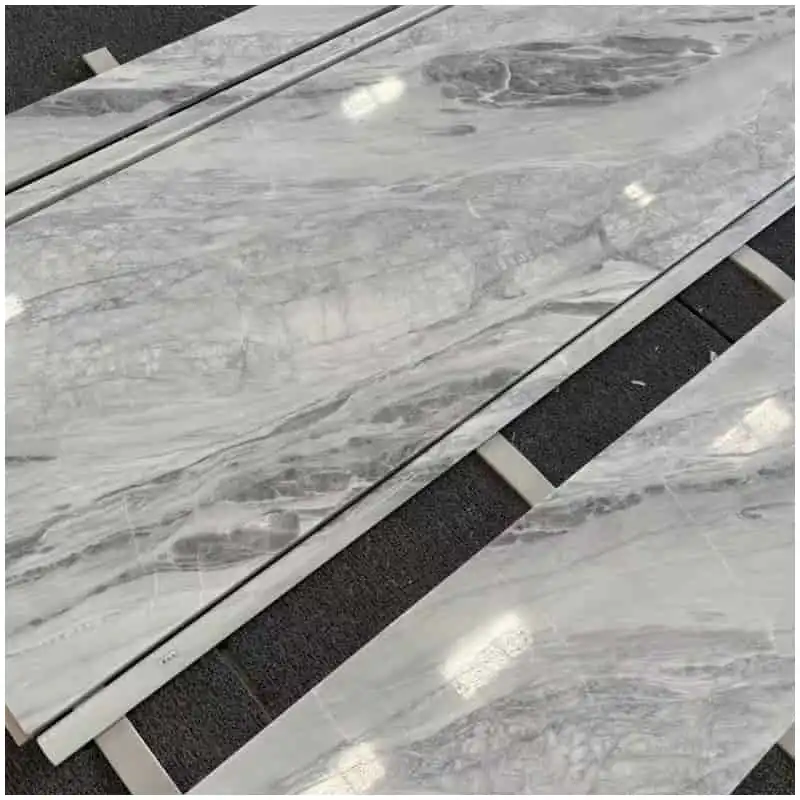
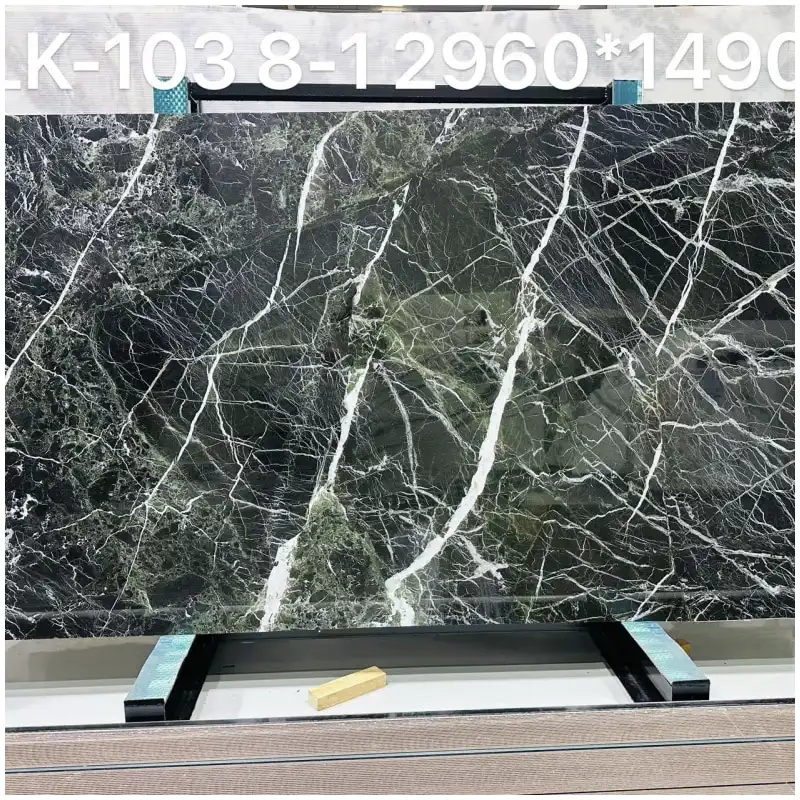
Full-slab view showing the dark green field, pale folded bands, and directional mineral structure that define the material.
Norwegian Dark Green Quartzite Slabs For Tiles, Countertops, and Tables
Green Lapponia is associated with the Masi quartzite formation of northern Norway. The green coloration comes from fuchsite-bearing zones within the quartzite, while recrystallized quartz and folded mineral layers create white, grey, and darker directional bands through the slab.
The result is different from a uniform green stone: some areas read as deep forest green, while others carry stronger pale folds or layered grey-green transitions. Supplied as green quartzite slabs and cut-to-size pieces, that directional structure is especially visible on long counters, stair runs, wall panels, and large-format floors.
Green Lapponia Quartzite Slab Views: Fold Direction, Green Tone, and Finish
|
Useful for comparing green intensity and the scale of the lighter folded bands across the slab face. |
Polished finish increases depth and contrast, making the green field and folded quartz structure easier to read. |
Key Specifications
| Product Name | Green Lapponia Quartzite |
| Material | Green Lapponia Quartzite / Verde Lapponia Quartzite / Masi Quartzite |
| Common Trade Names | Lapponia Verde Quartzite / Norwegian Green Quartzite / Arctic Green Quartzite / Fuchsite Quartzite |
| Origin | Norway — Masi / Kautokeino, Finnmark |
| Color Character | Dark forest green / grey-green with white, pale-grey, and darker folded mineral bands |
| Current Page Slab References | 1800+ × 600+ / 2400+ × 1200+ / 2800+ × 1500+ mm |
| Thickness | 15 / 18 / 20 / 25 / 30 mm page references |
| Finish | Polished / honed; other textures by approved sample and project review |
| Product Forms | Slabs / countertops / islands / wall panels / floor pieces / stairs / vanity tops / façade panels / custom cut-to-size |
Green Lapponia Quartzite Physical & Mechanical Properties
| Property | Test Standard | Result | Unit |
| Apparent Density | UNI EN 1936 | 2920 | kg/m³ |
| Compressive Strength | UNI EN 1926 | 212 | MPa |
| Flexural Strength | UNI EN 12372 / UNI EN 13161 | 22.9 | MPa |
| Water Absorption | UNI EN 13755 | 0.09 | % |
| Abrasion Resistance | UNI EN 14157 | 19 | mm |
Application Decision Guide
| Application | Visual / Functional Fit | Project Check |
| Green Quartzite Countertops / Islands | Dark green color and directional folds create a strong continuous worktop surface. | Seams, cutouts, edge profile, support, waterfall direction, and visible band placement. |
| Feature Walls | Large panels show the folded white-grey structure at architectural scale. | Slab sequence, fold direction, centerline, joints, openings, and bookmatch potential. |
| Floors / Stairs | Directional green-grey layering can continue through circulation areas. | Finish, slip requirement, tread direction, riser matching, dry-lay grouping, and spare pieces. |
| Bathrooms / Vanities | Dark green slabs work as vanity, wall, shower-panel, and floor accents. | Waterproofing, finish, cutouts, edge detail, joints, and wet-area slip requirement. |
| Exterior / Façades | The material is used for exterior cladding and other architectural stonework. | Fixing, panel engineering, drainage, finish, climate exposure, and project-specific performance requirements. |
Selection Guide: Follow the Fold Direction, Not Just the Green Color
Green Lapponia has a strongly directional metamorphic structure. Two slabs can share a similar dark green tone but behave very differently in a finished layout if the white-grey folds run at different angles or concentrate in different areas.
For long countertops and islands, orient the folds deliberately across seams and waterfall returns. On stairs, keep the directional structure consistent between treads, risers, and landings. For feature walls, sequential slabs can create a more coherent composition than individually selected panels.
The strongest green areas and the broadest pale folds should be assigned according to the finished surface rather than cut into unrelated pieces.
Green Lapponia Quartzite Villa Feature Wall Application

At room scale, the broad green and pale folded bands read differently from a close-up slab image. Wall elevations can use the material as a continuous directional surface, especially when panel joints and the dominant mineral folds are coordinated across the composition.
Fabrication, QC, and Acceptance
- Confirm slab-to-piece mapping for long counters, islands, feature walls, floors, stairs, vanities, and façade packages.
- Check finished dimensions, thickness, seam position, mitres, edge profiles, sink / cooktop openings, faucet holes, outlets, niches, and exposed returns against approved drawings.
- Use dry-lay or photo review where adjacent fold direction and green tone affect the finished composition.
- Inspect polished or honed finish consistency, corners, edges, cutouts, visible natural features, and piece numbering before packing.
- Keep installation-zone labels and sequence consistent through inspection and export packing.
Care and Risk Notes
Use a pH-neutral cleaner suitable for natural stone and avoid abrasive powders or unnecessarily aggressive chemicals. Sealer selection and maintenance frequency depend on the selected slab, finish, fabrication treatment, and exposure. Protect polished faces, mitred edges, stair nosings, cutouts, and panel corners during installation. Wet floors and exterior walking areas require a finish selected for the project’s slip and drainage conditions.
FAQs About Green Lapponia Quartzite
What is Green Lapponia Quartzite?
Green Lapponia Quartzite is a Norwegian natural quartzite from the Masi / Kautokeino area of Finnmark. Its characteristic green tone is associated with fuchsite-bearing quartzite, while white to grey folded bands and directional mineral layering create the material’s distinctive slab pattern.
Are Verde Lapponia Quartzite, Lapponia Verde Quartzite, and Norwegian Green Quartzite the same sourcing direction?
Yes. Verde Lapponia Quartzite, Lapponia Verde Quartzite, Norwegian Green Quartzite, Masi Quartzite, and Arctic Green Quartzite are established commercial names used for this Norwegian green quartzite direction. Actual slabs should still be matched by batch, color, vein structure, and finish.
What slab sizes and thicknesses are listed for Green Lapponia Quartzite Slabs?
The current Esta Stone page lists slab references of about 1800+ × 600+ mm, 2400+ × 1200+ mm, and 2800+ × 1500+ mm. Thickness references include 15 mm, 18 mm, 20 mm, 25 mm, and 30 mm, with final slab dimensions depending on the selected block and batch.
Is Green Lapponia Quartzite suitable for kitchen countertops and islands?
Yes. Green Quartzite Countertops and islands can use this material when the directional bands, seam position, sink and cooktop openings, edge profile, support, and any waterfall return are coordinated with the selected slab layout.
Which finishes are used on Green Lapponia Quartzite?
Polished and honed are the principal finishes retained on this page. Polished finish deepens the dark green field and makes the folded mineral structure more pronounced, while honed finish produces a lower-reflection architectural surface.
Can Green Lapponia Quartzite be used for floors, stairs, bathrooms, or exterior work?
It can be specified for floors, stairs, bathroom surfaces, wall cladding, façades, and selected exterior applications. Finish, slip requirement, waterproofing, drainage, fixing system, climate exposure, and current-batch technical requirements should be reviewed for the specific project.
Related Green Quartzite Guide
For kitchen and bathroom specification context, read Green Quartzite for Kitchen Countertops and Bathroom Renovations.
Recommended Green Quartzite Products

Maestro Quartzite Slabs
Compare a more expressive green quartzite direction for feature walls, countertops, islands, and statement interiors.
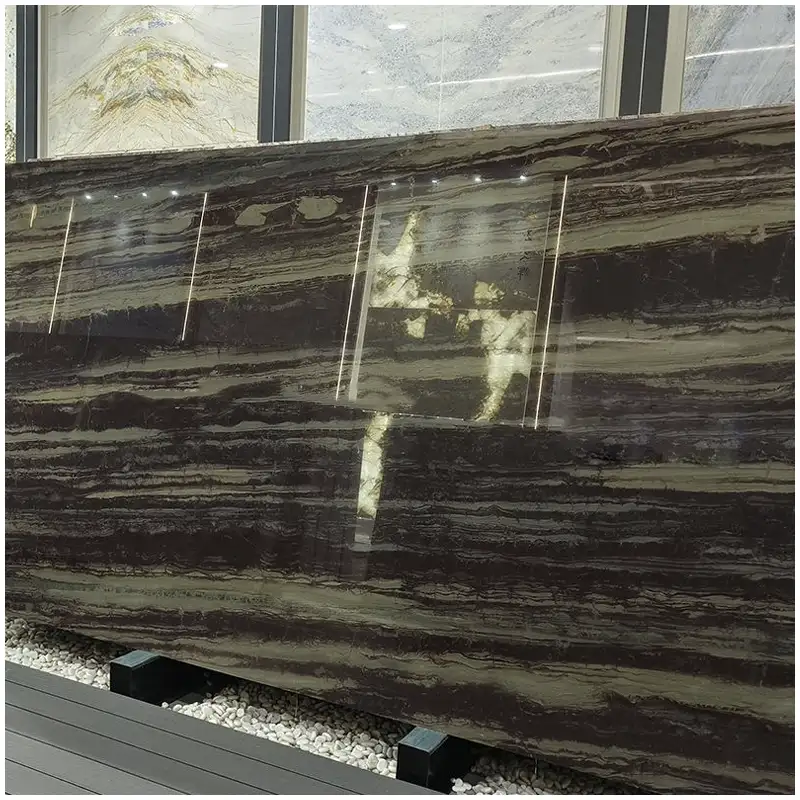
Bamboo Green Quartzite
Compare a calmer bamboo-green material with more linear movement for counters, walls, vanities, and furniture surfaces.
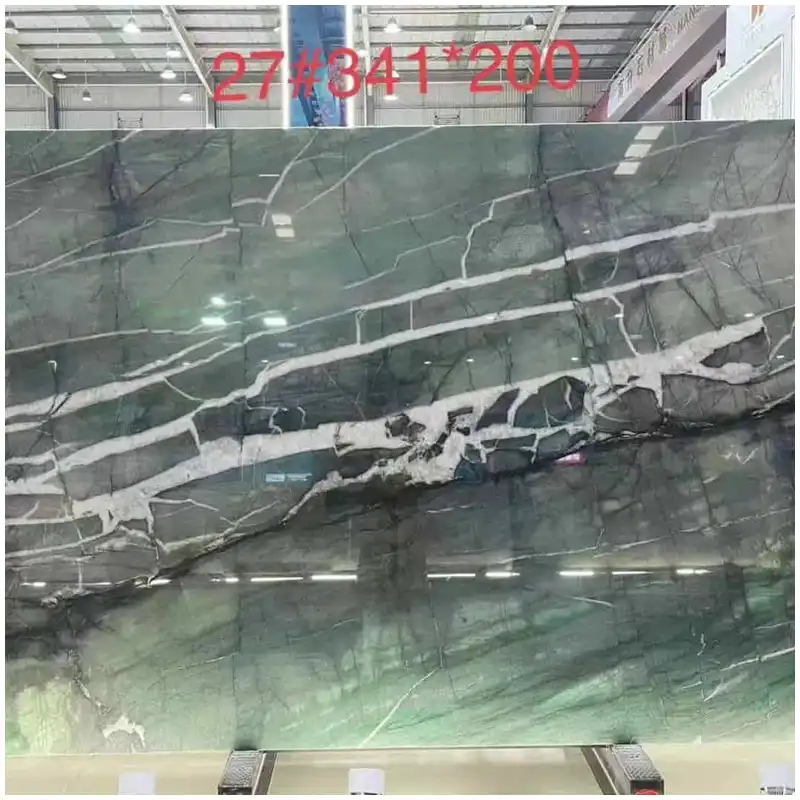
Royal Emerald Green Quartzite
Compare a saturated emerald-green quartzite with broader white quartz movement for focal walls and islands.

Palladium Green Quartzite
Compare a darker green slab direction with bluish mineral movement for interior and selected exterior projects.
Request Green Lapponia Quartzite Slab Photos, Layout Review, and Project Quotation
Send the project information needed to match the slab package to the finished application.
- Application, required quantity, preferred slab or finished-piece dimensions, and project schedule
- Thickness, polished / honed finish, and preferred dark-green to pale-band balance
- Countertop drawings, wall elevations, floor plans, stair schedules, cutouts, seams, mitres, and fixing details
- Need for sequential slabs, dry-lay review, current-batch testing, piece numbering, inspection photos, packing sequence, and destination
| Request Green Lapponia Quartzite Quote | View Quartzite Stone Collection |