
Calacatta Marble Slabs: Full-Slab Approval and Batch Control
I rejected six slabs for a villa bathroom package after the designer had already approved the sample. The sample was cool white with one soft gray line. The delivered group included two warmer faces and one heavy diagonal vein that would cross a bathtub wall like a crack. The sales team said the stone name matched. I said, “That slab doesn’t belong next to your bathtub.”

We moved the three calmest faces into the primary bathroom, reserved two compatible slabs for the vanity and returns, and replaced the outliers before cutting. Don’t just look at samples. A sample can be honest and still tell only five percent of the story. Lighting lies too, especially when warehouse daylight, 4000K inspection lamps, and a 3000K bathroom are treated as the same condition.
Approve Calacatta Marble Slabs as Complete Numbered Faces
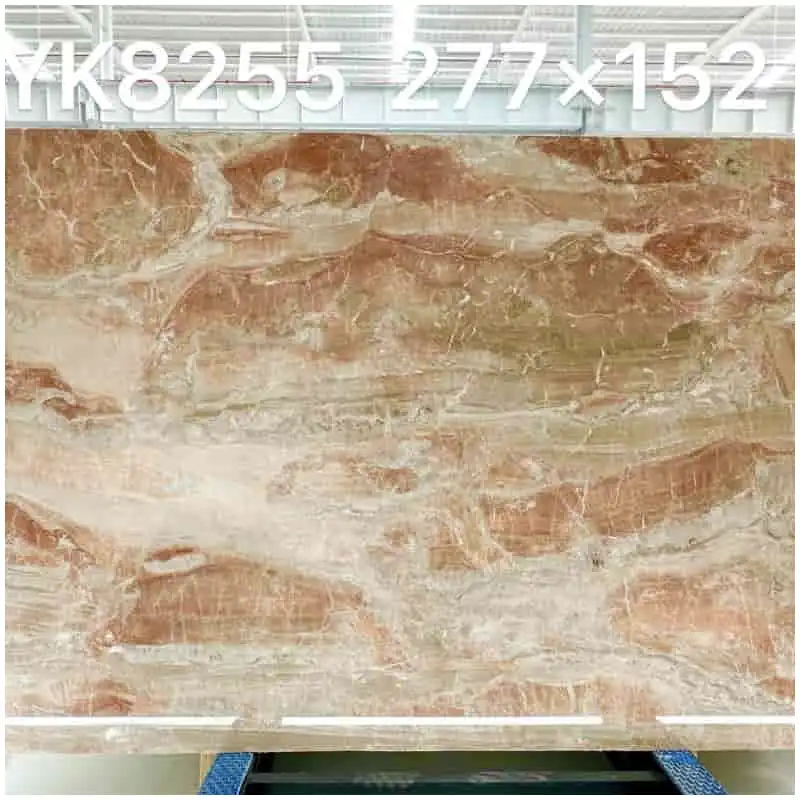
Calacatta marble slabs need straight-on full-face photographs with slab numbers, dimensions, and a neutral reference. I want consistent camera distance and no dramatic filter. Cropped images make heavy veins disappear outside the frame and hide warmer corners.
The Calacatta marble slab selection provides a real starting range. I still separate faces by background temperature, vein color, movement scale, open-field percentage, natural features, and usable dimensions. A category name does not approve a project batch.
I stand several meters back first. That is where the slab reads as architecture. Then I move close for fissures, filled areas, mesh or resin observations, edge conditions, and marks that may affect cutting. “Lighting lies” is not a joke; I repeat the review under the light closest to the intended room.
Set a White Marble Batch Control Range Before Cutting
White marble batch control needs written boundaries. “Similar” is not a boundary. I record whether the project accepts cool-to-neutral background, how much cream movement can appear, the acceptable vein density, and where dramatic faces may be allocated.
For a large order, I sort slabs into visual groups. Group A may serve the lobby axis. Group B may suit secondary walls. Group C may be rejected or used only after written approval. I photograph each group together where practical, because isolated images make range differences harder to judge.
The Placă de marmură Calacatta albă may look clean on a monitor, but the actual reserved faces control the job. Don’t just look at samples, and do not approve a batch through filenames such as “white-1” and “white-2.”
Read Calacatta Vein Matching Before Layout
Calacatta vein matching is not about forcing every joint to continue perfectly. It is about controlling rhythm. A strong line can lead across two wall panels, stop intentionally at a corner, or be kept away from a sink cutout. Random accidental breaks are what look wrong.
I print the elevation and place slab thumbnails beside it. The largest visible surfaces get first allocation. Narrow trims and hidden returns come later. If a vein lands through a faucet hole or weakens a narrow bridge, the cutting plan moves.
For more dramatic material such as Calacatta Oro Vagli marble slabs, the open white areas and bold gold-gray movement need deliberate spacing. That slab doesn’t belong next to your bathtub when the strongest line makes the bathing wall look divided in half. I am blunt because cutting makes the decision permanent.
Use Dry-Lay to Control Adjacent Pieces
A factory dry-lay brings related cut pieces together before packing. I check sequence, vein direction, background shift, joint transitions, finished sizes, and piece codes. For wall packages, the view should match the installed orientation rather than the easiest way to place pieces on the floor.
Lighting lies again during dry-lay if one half sits under a skylight and the other under a cool lamp. I move the pieces or add controlled light before judging color. The approval image records the condition and includes readable codes.
The published Calacatta Marble Slabs Mistakes in Project Orders is useful when the team needs a practical warning list. I use the dry-lay to close those risks with evidence rather than hope.
I also use White Marble Slab Supplier: Calacatta, Carrara, Statuario and Sivec to keep the Calacatta range separate from other white-marble families before the batch is approved.
Reserve Replacement Material Without Creating a Second Batch
I reserve replacement material while the approved group is still standing in front of me. A later slab with the same trade name may be cooler, warmer, quieter, or much more heavily veined. The reserve receives a number, full-face photograph, dimensions, finish note, and intended area.

For repeated hotel bathrooms, I do not hide every spare in one remote group. I compare the likely replacement against the room type it may serve. A calm vanity front may need a calm reserve, while a feature wall needs movement that can sit beside the original work without looking unrelated.
Storage condition also matters. The record tells the facilities team where the piece is, which face is visible, and whether the orientation matters. A spare that loses its identity becomes another expensive sample.
Connect Wet-Zone Approval to Finish and Maintenance
White marble in a bathroom needs honest expectations. Calcite-based marble can etch when exposed to acids, and sealing does not prevent etching. The selected finish, installation, drainage, cleaning products, ventilation, and maintenance plan all influence how the room ages.
I ask the project team to test the specified cleaner on a representative piece. I also compare dry and damp appearance under the intended light. A polished surface may show reflected spots differently from a honed one. Neither finish removes the need for sensible use.
When a designer asks whether one face belongs beside a tub, I look beyond color. I check the vein placement, likely wet line, joints, access for cleaning, and whether the owner accepts natural patina. That slab doesn’t belong next to your bathtub when the project expects it to remain a laboratory-white photograph forever.
The Calacatta white marble tiles used in adjacent fields need the same batch and lighting conversation. Tile modules create many more joints, so range should be spread deliberately rather than discovered box by box.
I photograph the first approved tile spread beside the slab group. That comparison helps the team decide whether the field supports the feature pieces or makes their undertone look isolated. The approval states which range may mix and which faces stay reserved.
I keep that reference with the approved batch file.
Full slab approval begins with numbered faces, fixed lighting notes, and an agreed visual range. I refuse to accept a cropped beauty shot as evidence.
I close full slab approval only after the cutting allocation and adjacent-piece relationships are visible. That record protects the approved batch from quiet substitutions.
Warehouse Log for Full-Slab and Batch Approval
| Check | Pass record | Hold condition | Warehouse action |
|---|---|---|---|
| Full face | Number, size, straight image | Crop, filter, missing corner | Photograph again |
| Background | Inside approved cool-neutral range | Visible cream outlier | Regroup or replace |
| Vein movement | Allocated to elevation | Dominant line crosses critical cut | Move layout |
| Dry-lay | Codes, orientation, even light | Mismatched transition | Reallocate before packing |
The Hard-Won Lesson: The Sample Was Right, but the Batch Was Wrong
A villa approved a cool white sample with a fine gray vein. Six reserved slabs arrived for warehouse release. Two shifted visibly warm under 3000K light, and one carried a diagonal vein almost 280 millimeters wide across the intended tub wall. The stone name and finish matched the sample, but the architectural effect did not. We regrouped the calm faces, replaced the outliers, and approved the new range before any panel was cut.
The Lesson: Approve the numbered full-slab range under project lighting before one saw line removes your options.
Understanding Calacatta Batch Control in Today’s White Marble Market
Why can two genuine slabs look unrelated?
Natural marble records changing mineral conditions and deformation. Background tone, vein minerals, spacing, and direction vary within the same commercial family. I do not treat that variation as a defect, but I do control where it appears.
How do options change after cutting?
Before fabrication, I can rotate, regroup, or replace a face. After cutting, usable alternatives shrink and cutouts fix important relationships. That is why the marked slab layout belongs in the approval record.
What should happen if the site sees an unexpected batch shift?
Photograph the entire installed or unpacked area, then the close difference under the actual room light. Stop further installation. Send the supplier the images with original full-slab approvals, lighting notes, dry-lay record, and piece codes for comparison.
The discipline returns to The Complete Project Guide to Premium White Marble Selection and Quality Control. I want every white-marble decision traceable from sample through slab, layout, dry-lay, and room light.
Întrebări frecvente
1. How many images are needed to approve Calacatta marble slabs?
Use at least one clear straight-on full-face image for every numbered slab, plus close views of relevant natural features and a group comparison where range matters. Add project-light images when color temperature affects the decision.
2. Can a small Calacatta sample approve the full batch?
No. It can approve finish and a limited color reference, but it cannot show full-scale vein movement, open white space, corner tone, usable dimensions, or slab-to-slab range. Don’t just look at samples.
3. Should every Calacatta vein continue across a joint?
No. Decide which joints need continuity and where an intentional break is acceptable. The goal is controlled rhythm, not fake repetition. Mark important relationships on elevations and slab layouts before cutting.
4. Why should white marble be checked under 3000K and 4000K light?
Warm and neutral-white light can change how cream, gray, gold, and cool undertones read. Lighting lies when the approval condition differs from the room, so compare the reserved material under relevant conditions.
5. What should I do first if installed panels show an unexpected color shift?
Photograph the overall wall and close shift under the room lighting, stop further installation, and contact the supplier with full-slab approvals, dry-lay images, piece codes, and original inspection records.
Quick-Reference Checklist for Calacatta Batch Approval
- Photograph every complete numbered face without filters.
- Compare the reserved group under relevant light temperatures.
- Write acceptable background and vein-range limits.
- Overlay major elevations and cutouts before cutting.
- Dry-lay adjacent pieces with readable orientation codes.
- Reserve compatible material for likely replacements.
Final Conclusion
Full-slab approval is where white marble stops being a name and becomes a project decision. I want the background range, vein rhythm, lighting behavior, layout, dry-lay, and replacement material understood before cutting.
Calacatta marble slabs reward careful selection because their variation is the material, not noise around it. Don’t just look at samples; lighting lies, and that slab doesn’t belong next to your bathtub when its strongest movement fights the room. At Esta Stone, I would rather reject one face in the warehouse than defend one wrong wall after installation.

References
- Dimension Stone Design Manual, Natural Stone Institute.
- Natural Stone Care and Cleaning Guidance, Natural Stone Institute.
- ASTM C503 Standard Specification for Marble Dimension Stone, ASTM International.
- ASTM C97 Standard Test Methods for Absorption and Bulk Specific Gravity of Dimension Stone, ASTM International.
- Natural Stone Technical Guidance, Stone Federation Great Britain.
- The Lighting Handbook, Illuminating Engineering Society.
- Bathroom Planning Guidelines, National Kitchen and Bath Association.
- ASTM C1242 Standard Guide for Selection, Design, and Installation of Dimension Stone Attachment Systems, ASTM International.