

Calacatta Macchia Vecchia vs Calacatta Gold: Let the Full Slab Decide
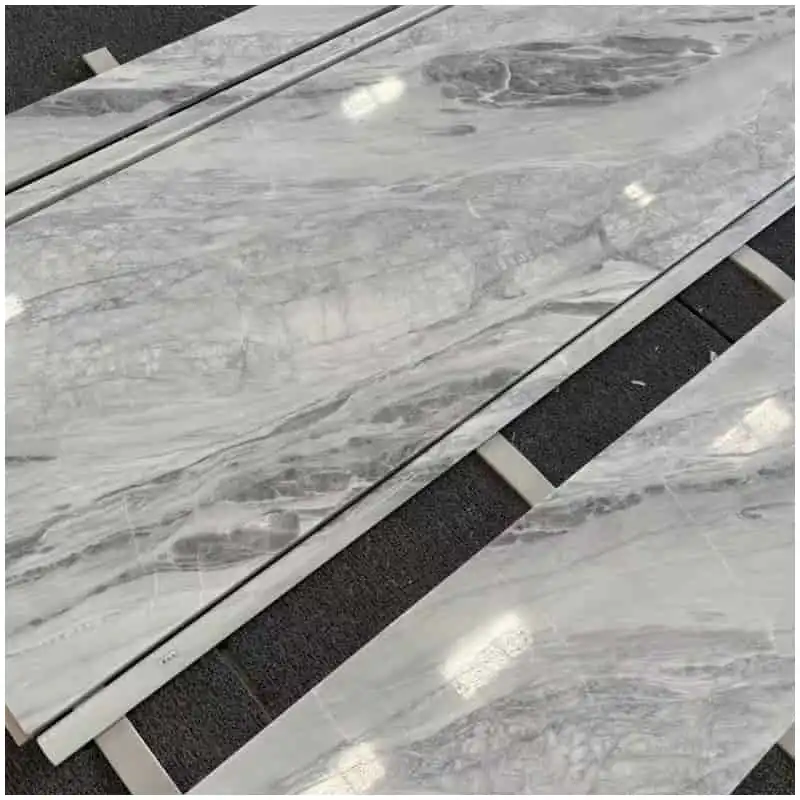
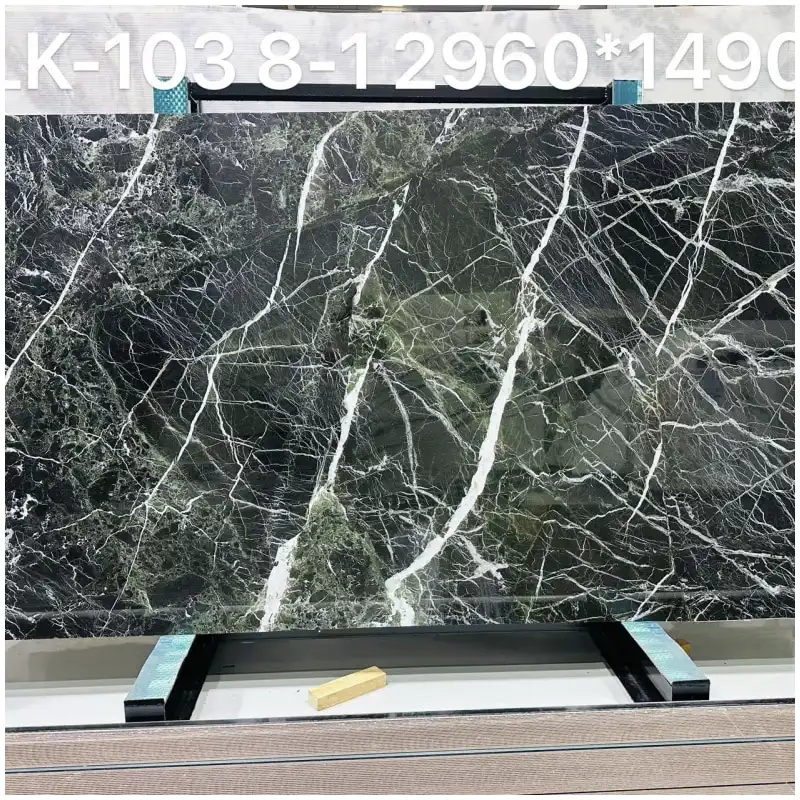
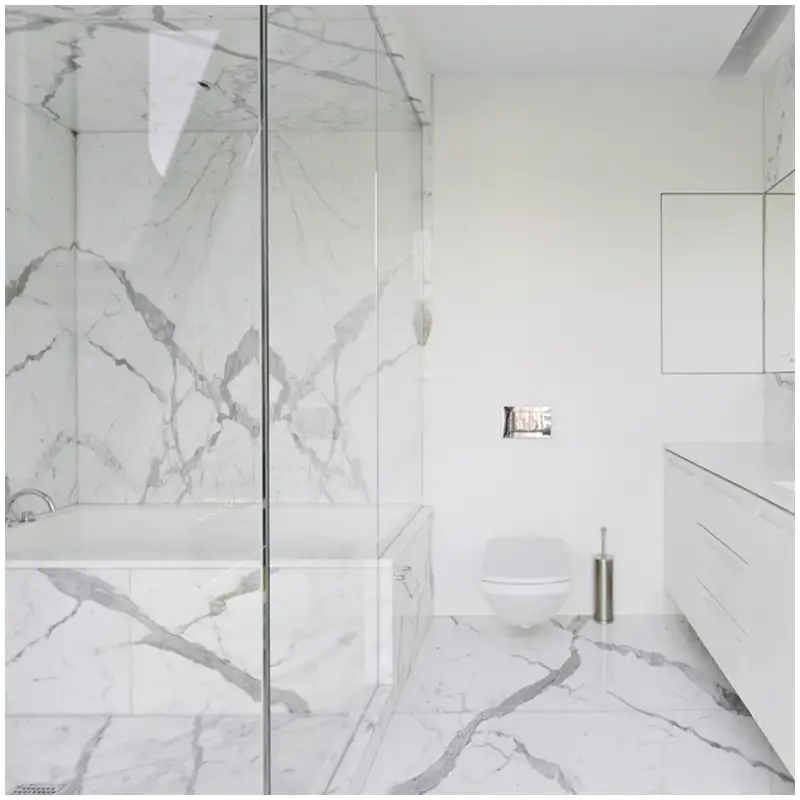
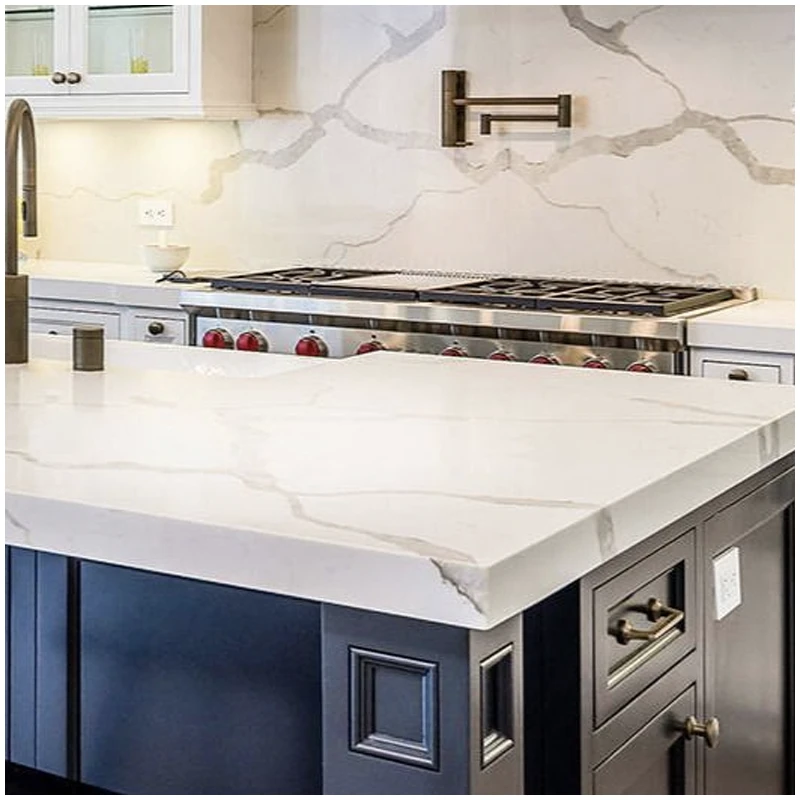
I reject the comparison as soon as the photographs crop out the slab edges. The Macchia Vecchia image shows one warm fold. The Gold image shows one thin gold line. Neither image tells me how much white field remains, whether the strongest movement crosses the sink, or whether five rooms can share the same visual range.
That is the first problem in Calacatta Macchia Vecchia vs Calacatta Gold. The names sound close because both may carry warm mineral color through a pale marble field. At full scale, however, Macchia Vecchia can look layered, aged, and restless. Gold is often easier to organize into a quieter bathroom package, although the actual slabs can still vary sharply.
My direct answer is not that one is better. Choose Macchia Vecchia when the room can carry broad, irregular mineral movement. Choose Gold when the design needs warmer white marble with more controlled veining. Then prove the choice under the project light and on the actual cut map. Don’t just look at samples.
Reading Calacatta Macchia Vecchia vs Calacatta Gold at Full Scale
Marble is a metamorphic stone dominated by recrystallized carbonate minerals. Heat, pressure, fluids, and mineral impurities help create the veining and color shifts that appear across a slab. The general process is summarized in the English reference on marble, but the name on an invoice never replaces inspection of current material.

Macchia Vecchia rarely behaves like a quiet background
A full Calacatta Macchia Vecchia marble face may carry cream, grey, ochre, brown, and rust-toned structures through the white. Some lines fold into broad islands. Others break and reconnect. The visual weight can shift from one end of the slab to the other.
That irregularity can make a reception wall or vanity front memorable. It can also make a small bathroom look crowded when the strongest passage lands beside a mirror, outlet, or niche. I want the room elevation placed over the slab image before anyone says the material is suitable.
Within Calacatta Macchia Vecchia vs Calacatta Gold, Macchia Vecchia also asks for a wider approval range. One slab may hold long ochre folds, while the next carries broken grey islands and much less white field. I group slabs by visual density before assigning them, because random allocation can make adjacent rooms feel as though they received different materials.
Calacatta Gold can be calmer without being uniform
A Calacatta Gold marble slab for bathroom use often shows a cleaner pale field with grey lines warmed by beige or gold. That description is a direction, not a guarantee. One lot may be open and quiet. Another may carry broad grey movement with warm clouds.
The cleaner field can make it easier to repeat across vanity tops, shower walls, or lobby panels. Still, I will not approve it from a label. Lighting lies, and a warm photograph can hide a cream field that becomes obvious beside cool porcelain or painted joinery.
| Warehouse check | Macchia Vecchia tendency | Calacatta Gold tendency | Approval record |
|---|---|---|---|
| White field | Often broken by layered warm structures | Often broader and easier to read | Neutral full-slab photographs |
| Warm color | Ochre, rust, brown, cream, grey | Gold, beige, warm grey | 3000K and 4000K comparison |
| Vein scale | Broad, irregular, layered movement | More controlled lines with variable clouds | Cut overlay at room scale |
| Repeat rooms | Needs deliberate allocation by visual weight | May allow a tighter repeated range | Numbered batch range board |
| Cutout risk | Strong folds can be lost or fragmented | Key veins may cross bowls or outlets | Approved slab-to-drawing map |
Put Both Slabs under the Same Light
At 3000K, warm mineral color grows stronger
Warm bathroom light can pull cream and ochre forward. Macchia Vecchia may become richer and darker, especially where rust-colored structures cross grey. Gold may look softer, but an already warm background can turn noticeably creamy beside a cool white basin or wall finish.
I place a neutral white reference beside the stone. Without it, the eye adapts to the room and accepts a shift that becomes obvious only when another material arrives. A phone screen is not a reliable reference because display settings and automatic white balance change the photograph.
The 3000K review of Calacatta Macchia Vecchia vs Calacatta Gold needs the actual metal and paint palette. Warm brass beside Macchia Vecchia may reinforce its ochre structure. The same brass beside a creamy Gold field may reduce contrast. I judge the complete combination, not a slab isolated against a warehouse wall.
At 4000K, grey structure becomes clearer
Neutral light often separates grey from gold more clearly. The white field may appear cooler, while Macchia Vecchia’s brown or rust passages become more distinct. Side light also makes polished waviness, resin, scratches, and filled areas easier to see.
Pentru Calacatta Macchia Vecchia vs Calacatta Gold, I want one photograph set under diffuse neutral light and another under the intended room condition. The camera position stays fixed. The slab ID and white reference remain visible. Otherwise, the comparison is only a mood board.
Finish changes apparent depth
Polish deepens contrast and reflects fixtures, windows, and mirror lights. Honing reduces reflection and can make warm areas look flatter. The finish sample must come from the current slab range. A polished catalog image cannot approve a honed production order.
Match the Marble to the Room’s Visual Capacity
Vanity tops need quiet space around openings
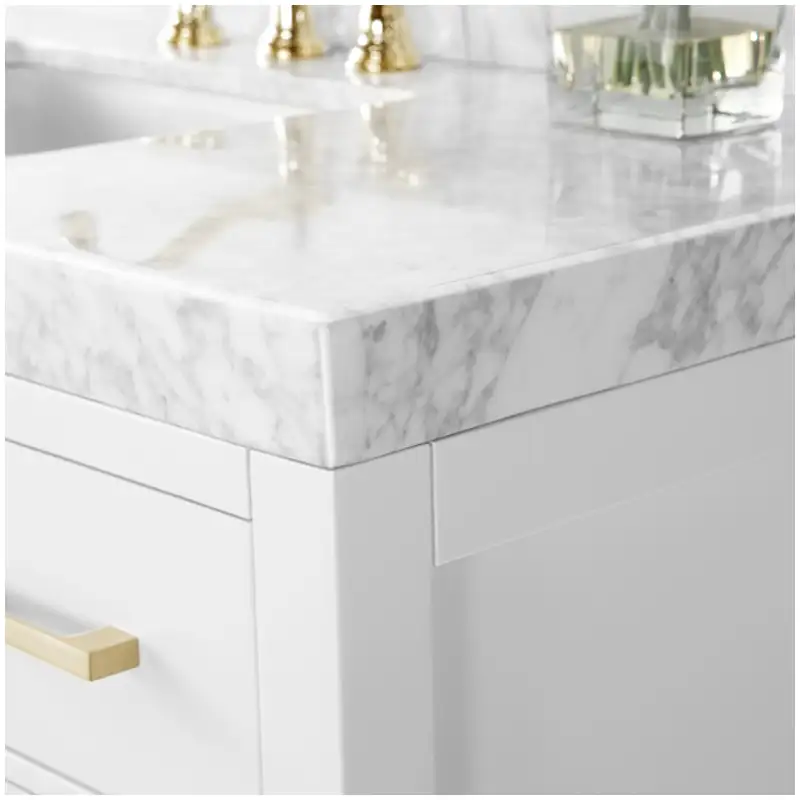
A vanity top loses material to the basin, faucet holes, and sometimes an upstand. Strong movement can become chopped into unrelated fragments. I position the cutout over a digital slab image and check the front strip, rear strip, side returns, and backsplash separately.
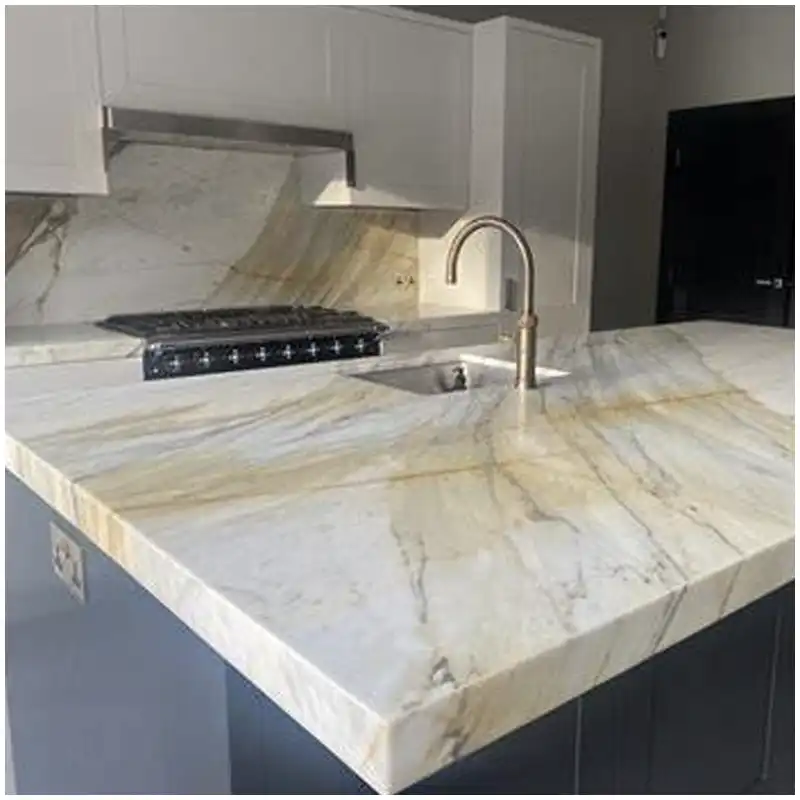
A Calacatta Gold marble vanity top can support a repeated bathroom schedule when the lot provides enough compatible pieces. Macchia Vecchia can work as a focal vanity, but each top may read as an individual composition. That difference affects approval and room allocation.
For vanity packages, Calacatta Macchia Vecchia vs Calacatta Gold also changes how replacement stock is planned. A spare Gold top may be selected from a controlled warm range. A spare Macchia Vecchia top may need its own slab image and room assignment so a later replacement does not introduce an entirely different mineral composition.
Feature walls can use the strongest movement
Macchia Vecchia often belongs where the full face remains visible. A broad wall behind a reception desk or bathtub can carry its layered movement better than a narrow return. Joints and openings should follow the composition rather than divide the best passage at random.
Calacatta Gold can also form a feature wall, particularly when the design wants white space around a controlled vein. The choice is not dramatic versus boring. It is whether the room needs irregular mineral density or a more legible white-and-gold balance.
Floors need a range, not hero slabs
Flooring breaks slabs into repeated modules and exposes them to a wide field of light. One beautiful slab cannot establish the batch. I look at the entire tile or cut-to-size range, then arrange light, warm, busy, and quiet pieces so one zone does not become a color island.
On floors, maintenance and finish matter as much as color. Polished marble can etch and scratch in use. Wet-area traction requires the responsible project team to select and verify the appropriate surface and installation system. Stone name alone does not answer those requirements.
Approve the Slab, the Cut, and the Batch as Separate Decisions
The live Calacatta Marble Slabs Guide sets the wider selection discipline. For this comparison, I add three records: a full-slab range, a lighting comparison, and a cut map. None can replace the others.
First, reject misleading crops
Every approval image should show the full slab, readable ID, orientation, dimensions, and a consistent background. Close images support the record but do not replace the full face. I also ask for the back where mesh, resin, fissures, or reinforcement affect fabrication.
A useful photograph set for Calacatta Macchia Vecchia vs Calacatta Gold includes the weakest acceptable slab as well as the hero slab. If the buyer sees only the best face, the approved standard becomes impossible to apply. The range must show what can actually enter production across the required quantity.
Second, assign slabs before cutting
The cut drawing belongs over the chosen slab image. This catches a strong vein through a sink opening, a dark fold at a narrow edge, or a warm patch beside a joint. When several pieces share one slab, the map also shows how their movement relates.
Third, dry-lay the visible relationships
A dry-lay is not required for every small piece, but it earns its time on feature walls, matched vanity fronts, large floors, and rooms where adjacent pieces must share a tone. The photograph should include piece numbers and the project lighting note.
The Hard-Won Lesson: A warm vein can become a dark stripe after cutting
A slab photograph shows a broad ochre fold crossing an open white field. On the cut map, a narrow wall return takes only the darkest center of that fold. The installed strip no longer reads as part of a layered composition. It reads as one brown vertical line beside a pale wall. The slab was approved, but the extracted piece was not.
The Lesson: Approve every visually important cut inside the full slab image before the saw removes its context.
The Selection Is Finished Only When the Room Still Makes Sense
Use names to start, not finish
Commercial names help teams communicate, but quarries and suppliers may use them with different boundaries. The approved slab IDs, range photographs, and finish sample are the project truth. If replacement material is needed later, compare it to those records rather than ordering from the name alone.
The final record for Calacatta Macchia Vecchia vs Calacatta Gold should state why the chosen material fits the room. “Approved white marble” is too weak. Note the accepted warmth, movement scale, finish, lighting condition, and allocation rule. Those details give the warehouse a reason to hold a slab that carries the right name but the wrong character.
I keep one final composite image with the approved slab, room elevation, light reference, and adjacent finishes. It is not glamorous, but it settles more questions than a folder of unrelated close-ups. The warehouse, cutting team, installer, and designer can all see the same decision without reconstructing it from old messages.
Keep wet-zone expectations realistic
Both stones are marble. Acidic products can etch calcite-rich surfaces. Water can reveal darker moisture paths until the stone dries. Sealers can reduce absorption of some contaminants but do not make marble acid-proof. Maintenance instructions should match the finish and room use.
Escalate before site alteration
If a delivered piece appears too warm, too dark, or incorrectly cut, photograph it under the room light with its label and adjacent material. Do not grind, trim, seal, or install it while the issue is open. Send the supplier the site images, slab approval, cut map, finish sample code, and dry-lay record for comparison.
Quick-Reference Checklist for Calacatta Selection
- Compare complete slab faces rather than selected detail photographs.
- Photograph both stones under neutral and intended room lighting.
- Place a stable white reference inside every lighting comparison.
- Overlay sinks, outlets, niches, joints, and returns before cutting.
- Assign strong and quiet slabs by room and viewing distance.
- Approve finish, repair visibility, edge treatment, and wet-zone care.
Întrebări frecvente
1. Which marble usually looks warmer?
Both can read warm. Macchia Vecchia often carries ochre, rust, brown, cream, and grey in larger irregular structures. Calacatta Gold often places gold or beige movement within a cleaner pale field. Actual undertone must be checked on current slabs under the project lighting.
2. Is Macchia Vecchia too busy for a bathroom?
Not automatically. It suits a bathroom that gives the stone enough uninterrupted area and keeps competing patterns restrained. A small room with many niches, joints, fixtures, and cutouts may fragment the movement. Use a scaled elevation before approving it.
3. Is Calacatta Gold easier to match across many rooms?
It may offer a more controlled visual range, but no natural batch is automatically consistent. Review all available slabs, group them by white field and vein strength, and assign room types before cutting. Replacement stock should come from the approved range where possible.
4. How should Calacatta Macchia Vecchia vs Calacatta Gold be photographed?
Use complete slab images with readable IDs, fixed camera position, consistent exposure, neutral background, and a white reference. Add separate sets under diffuse neutral light and the intended room condition. Include close details only after the full faces are documented.
5. What should I do if installed pieces look warmer than the approval?
Document the room light, fixture color temperature, adjacent finishes, stone labels, and the affected area. Stop further installation. Compare those images with the approved slab and dry-lay records before deciding whether the cause is lighting, moisture, batch range, sealer, or incorrect allocation.
Final Conclusion
Calacatta Macchia Vecchia vs Calacatta Gold is a choice between two different kinds of warmth, scale, and control. Macchia Vecchia needs room for layered mineral movement. Gold often offers a clearer white field, but it still demands real slab, light, finish, and batch approval. I trust the full face, the cut overlay, and the dry-lay more than any sample name, because Esta Stone cannot protect a project from what the team refused to look at.
References
- Dimension Stone Design Manual, Natural Stone Institute.
- Care and Cleaning of Natural Stone, Natural Stone Institute.
- ASTM C503 Standard Specification for Marmură Dimension Stone, ASTM International.
- ASTM C97 Standard Test Methods for Absorption and Bulk Specific Gravity of Dimension Stone, ASTM International.
- ASTM C880 Standard Test Method for Flexural Strength of Dimension Stone, ASTM International.
- Natural Stone Slab Selection and Installation Guidance, Stone Federation Great Britain.
- Bathroom Planning Guidelines, National Kitchen and Bath Association.
- Search Essentials and Helpful Content Guidance, Google Search Central.