



Scurtă prezentare
Marmură Caribbean Green is a natural decorative stone sold in green, white and grey slab selections with variable mineral movement. Esta Stone supplies Caribbean Green Marble Slabs for villa kitchen islands, custom countertops, bathroom vanities and interior wall panels. The product range includes featured 18mm polished slabs, while other sizes and thicknesses depend on the selected lot. Because the Caribbean Green trade name is used for materials from different origins, quarry identification and technical properties require confirmation before project approval. Full-slab selection, vein orientation, finished component support and surface maintenance are central considerations for kitchen and architectural fabrication.
Caribbean Green Marble Slabs for Villa Kitchen Islands and Interior Wall Panels
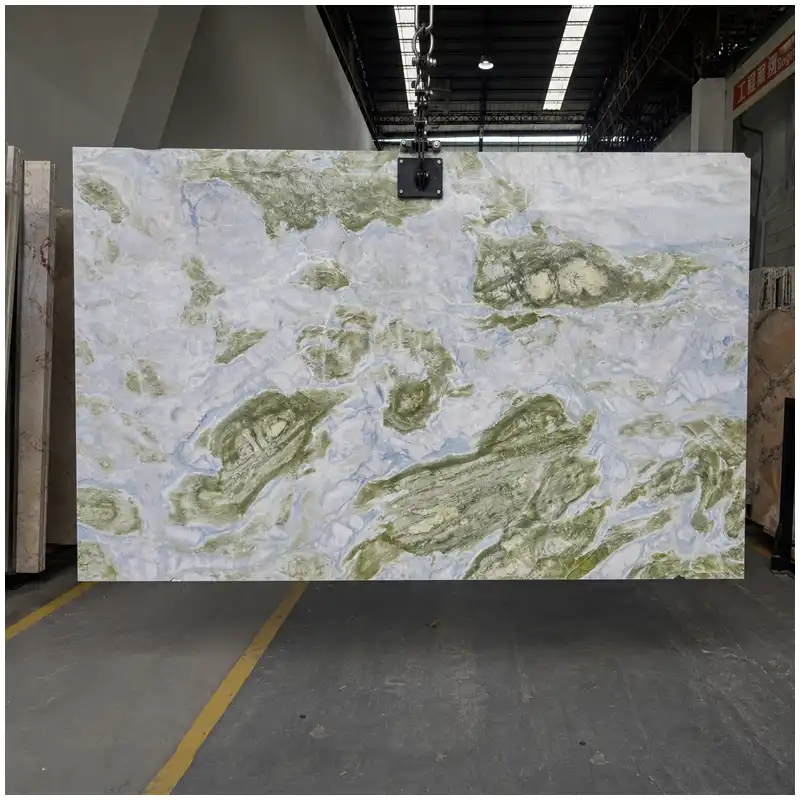
Caribbean Green Marble Slabs are selected for interior stonework where green mineral formations become a prominent part of the architectural design. The material is commercially recognized for variations of green combined with white and grey areas rather than one completely uniform background color.
In a residential kitchen, a large slab can be cut into a central island top or several countertop components. The selected mineral pattern determines where the strongest green areas appear after fabrication. A broad white formation may be positioned toward the preparation area, while a more concentrated green section can become the visual center of the island.
The same stone can be used for interior wall panels, although a vertical surface has different support and installation requirements from a countertop. A panel schedule should consider the usable slab dimensions, the orientation of the mineral movement and the location of doors or architectural openings.
Caribbean Green is a commercial stone name used by different suppliers. A project requiring a particular quarry, geological material or physical performance must therefore be approved against identified slabs. The color description alone is not sufficient evidence of the stone’s source or engineering properties.
Caribbean Green Marble Stone Selection: Controlling Green and White Mineral Distribution
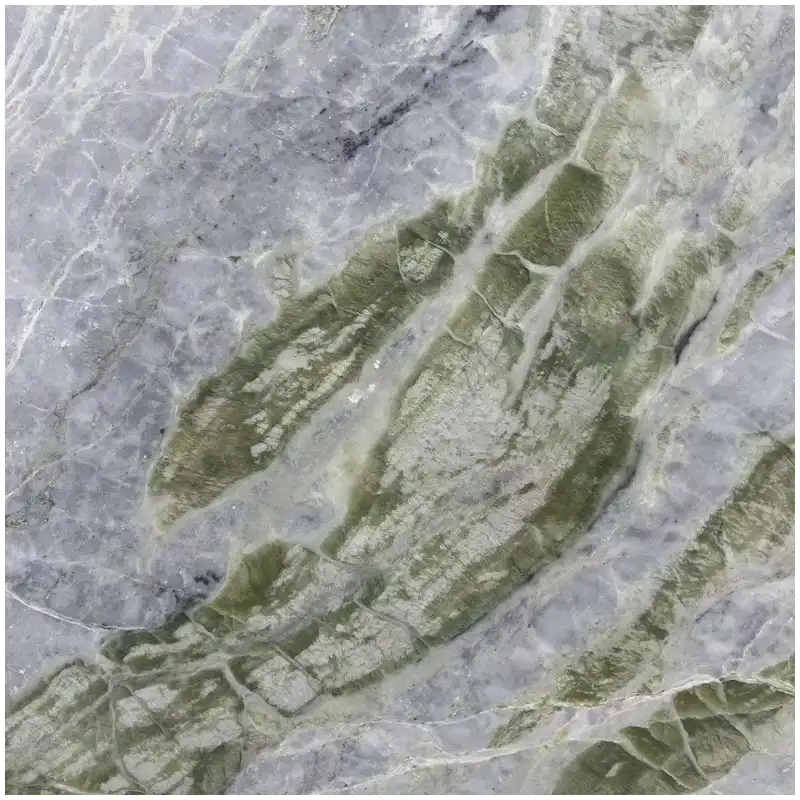
The appearance of Caribbean Green Marble can vary across a single slab. Green mineral areas may form broader patches, directional bands or irregular transitions into pale stone. The visual balance changes when the material is divided into smaller pieces.
For a kitchen island, it is useful to identify the portion of the slab that will remain visible after sink openings, edge trimming and the final cutting arrangement. A striking mineral formation near the original slab edge may be lost if the required countertop geometry is not reviewed in advance.
When several pieces are intended for one room, the green background and the concentration of white areas should be considered separately. Adjacent tops can appear inconsistent if one contains mostly green mineral material and another is predominantly white, even when both are sold under the same product name.
Natural fissures, filled veins and changes in mineral structure should also be evaluated for their position within the proposed cutting plan. These features are not interchangeable with manufacturing defects; their acceptability depends on the actual condition of the slab and the specified finished component.
Caribbean Green Marble Full Slabs and Polished Surface Selection
The following photographs show two aspects of the product: the full-slab composition and the appearance of the polished surface. Both are relevant to buyers selecting material for countertops and connected architectural panels.
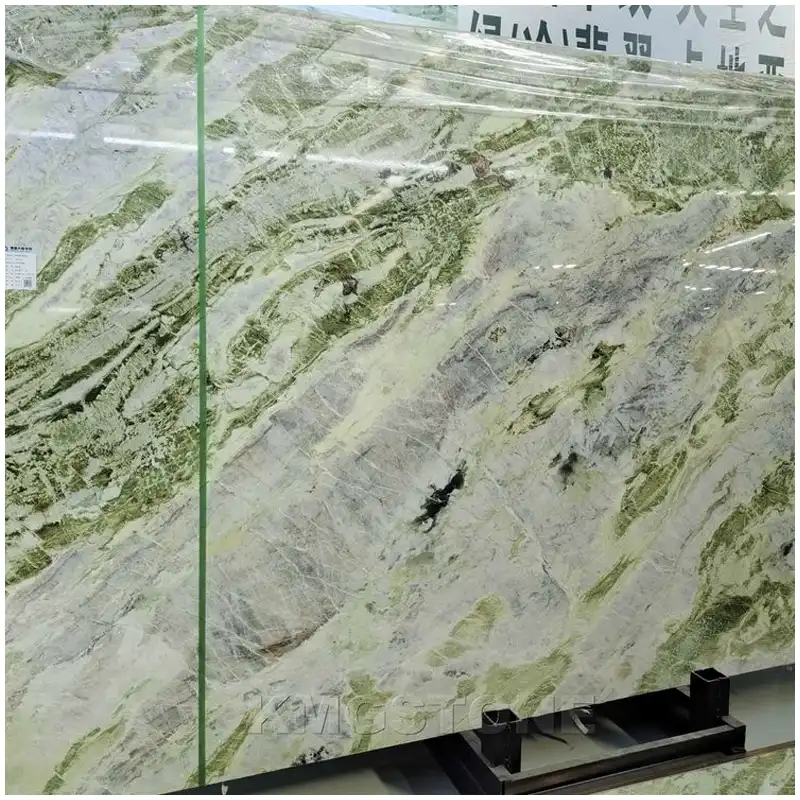
Full-slab selection for usable cutting area and mineral arrangement.
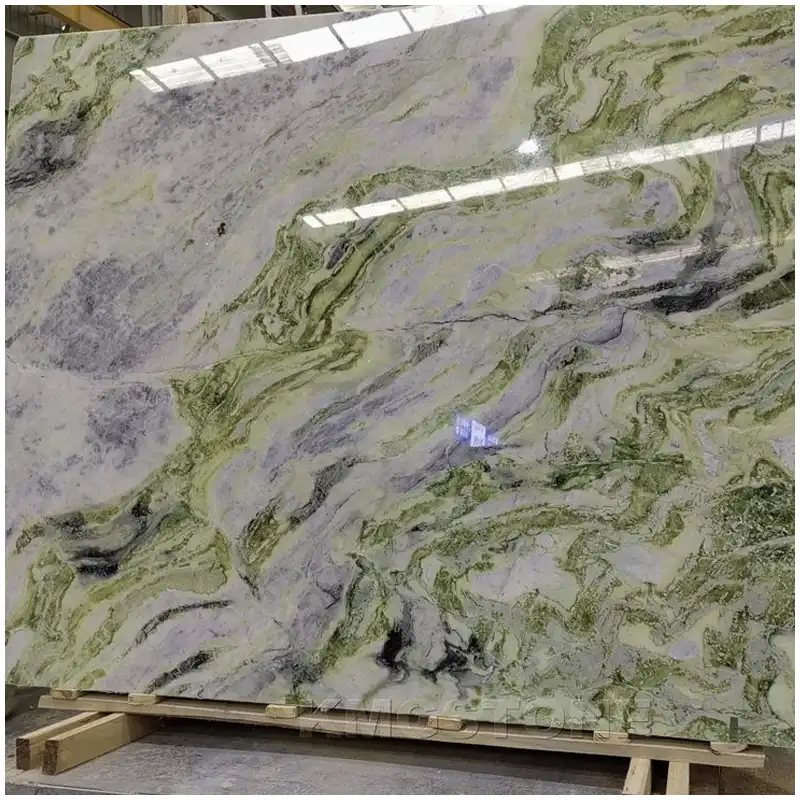
Polished slab surface showing the contrast between different mineral areas.
Polishing can make the transition between green and pale mineral regions more noticeable under direct lighting. However, it may also reveal natural or filled seams, while reflective areas can appear different under showroom lighting and installed kitchen lighting. Approval should therefore include the actual surface finish and the intended viewing conditions, not only a small unprocessed sample.
18mm Caribbean Green Marble Slabs and Finished Component Support
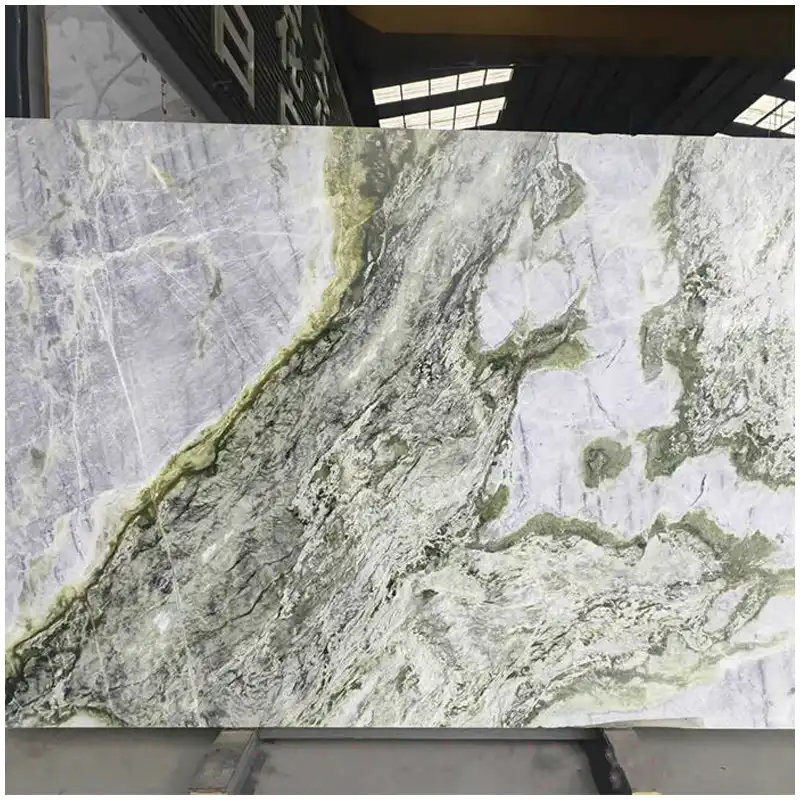
The featured 18mm Caribbean Green Marble Slabs provide a thinner format for selected architectural and furniture applications. Their suitability depends on the exact material, dimensions, support and installation conditions.
For interior wall panels, nominal thickness influences weight, handling and edge detailing. Wide panels may require engineered fixing or a suitable supported construction. The presence of backing mesh, where applicable, cannot be treated as independent proof of structural capacity.
For a kitchen worktop, openings and overhangs are more significant than the nominal slab thickness alone. An unsupported breakfast-bar extension, a long span between cabinets or a narrow strip around a sink can require additional design measures or a thicker slab selection.
The actual slab condition and petrographic classification should be reviewed before selecting 18mm for a demanding component. Where 20mm or 30mm material is proposed, the finished geometry still needs proper support and fabrication detailing rather than relying on thickness as a universal guarantee of strength.
Caribbean Green Marble Slab Sizes, Thicknesses and Custom Fabrication Specifications
Caribbean Green Marble is offered in full slabs and cut-to-size formats. The dimensions below are catalogue references taken from the product range, not a confirmed inventory schedule. Available sizes, thicknesses and usable cutting areas must be checked against the actual selected material.
| Denumirea produsului | Caribbean Green Marble Slabs |
| Commercial Material | Natural Green Marble; exact geological classification subject to lot identification |
| Origine | To be verified from selected quarry or source documentation |
| Culoare | Green / White / Grey; natural distribution varies |
| Slab Size References | 1800mm+ × 600mm+ / 2400mm+ × 1200mm+ / 2800mm+ × 1500mm+ |
| Featured Slab Thickness | 18mm Polished Slabs |
| Other Thickness References | 15mm / 20mm / 25mm / 30mm; availability by selection |
| Square Tile References | 305 × 305mm / 400 × 400mm / 457 × 457mm / 600 × 600mm / 800 × 800mm |
| Rectangular Tile References | 300 × 600mm / 600 × 150mm / Custom |
| Surface Finishes | Polished / Honed; additional finishes subject to technical assessment |
| Countertop Reference Formats | 96″ × 26″ / 98″ × 26″ / 108″ × 26″ / 76″ × 36″; fabrication references only |
| Custom Processing | Countertop Cutting / Sink Openings / Edge Profiles / Wall Panels / Vanity Components |
| Primary Applications | Villa Kitchens / Supported Island Tops / Bathroom Vanities / Interior Feature Walls |
Caribbean Green Marble Villa Kitchen Countertops and Island Surface Design
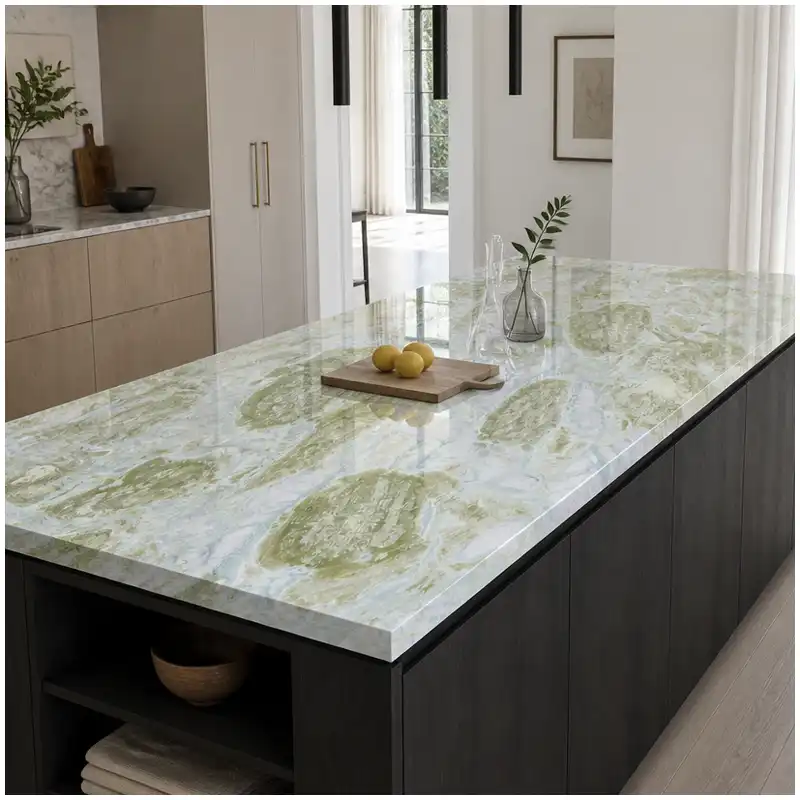
The villa kitchen image illustrates how Caribbean Green Marble can be incorporated into a countertop scheme. Its varied green and white areas create a distinct surface against kitchen cabinetry and surrounding architectural finishes.
A large island top allows the natural mineral pattern to remain relatively uninterrupted. The cutting position determines whether a major green band occupies the center of the worktop or continues toward an exposed edge. This decision should be made from the full slab and the kitchen drawing together.
Countertop depth and finished length must coordinate with the cabinet structure, while sink and cooktop positions affect the remaining stone around openings. A visually continuous slab does not establish how its finished components will behave when subjected to unsupported spans or concentrated loads.
A matching backsplash or waterfall side may be possible when sufficient compatible stone is available. However, the apparent continuation of mineral bands around a mitered corner depends on the cutting geometry and the exact slab arrangement. It must be approved before fabrication.
The image represents an interior design application, not a material performance certificate. A kitchen requiring intensive exposure to food acids, hot cookware and abrasive utensils should be evaluated carefully before natural marble is selected as the working surface.
Countertop Cutouts, Edge Profiles and Joint Planning for Caribbean Green Marble
Fabricating a Caribbean Green Marble countertop requires separate decisions about the main surface, exposed edges and openings. These details affect the finished stone’s appearance and its ability to remain properly supported during handling and use.
An undermount sink opening requires accurate cutting, a suitable edge finish and adequate support for both the sink and the surrounding stone. Narrow marble strips near the front and back of the opening should be assessed for natural seams, filled areas and the actual component thickness.
For a kitchen corner or multiple countertop runs, seams should be located with reference to cabinet support and the stone’s mineral pattern. A joint placed through a conspicuous white area may be more noticeable than one positioned within a visually quieter section, though the structural and fabrication requirements take priority.
Eased, beveled and rounded edges expose different amounts of the natural stone cross-section. A mitered buildup can produce a deeper visual profile, but its construction is different from a solid full-thickness slab. Adhesive compatibility, edge reinforcement where required and visible mineral continuity need to be established in the drawing.
Where kitchen islands have seating overhangs, the project must define how the countertop is supported beyond the cabinets. Support brackets, frames or other approved structural measures depend on the actual dimensions and material rather than a generic maximum overhang for all green marble.
Caribbean Green Marble Interior Wall Panels and Coordinated Stone Features
Beyond kitchen countertops, Caribbean Green Marble can be cut into interior feature wall panels and selected vanity or furniture components. A vertical installation displays the green mineral areas differently because lighting, viewing direction and panel joints change the perceived pattern.
For a residential wall, panel dimensions should be coordinated with doors, concealed access panels, shelving and architectural corners. A large uninterrupted surface may preserve the stone’s natural movement, while a divided arrangement allows the available slabs to be allocated around structural features.
Where clients request mirrored veining, suitable consecutive slabs and matching faces are necessary. Two green slabs with comparable backgrounds do not automatically form a bookmatched pair. If matched material is unavailable, a directional layout or an intentionally varied arrangement can be reviewed instead.
The wall installation must have an appropriate fixing and substrate design. Stone weight, nominal thickness, panel size, natural fissures and moisture conditions affect the choice of installation system. Decorative marble is not a structural wall element or a waterproofing membrane.
Caribbean Green Marble Origin, Geological Identity and Material Approval
Caribbean Green Marble is a trade name, not a unique geological classification or a guaranteed country of origin. Different stone catalogues use the name for products identified with different sources, and visually related green stones are sometimes marketed under marble or quartzite terminology.
For an import order, the country of origin should be established from the actual selected material and supporting commercial documentation. A stone shipped from a Chinese processing facility is not necessarily quarried in China. Likewise, the word Caribbean in a product name does not establish that the quarry is located in the Caribbean region.
The geological classification matters for kitchen use. Calcite-rich marble can be susceptible to acid etching, while silicate-rich metamorphic stones may behave differently. It would be inaccurate to assign quartzite hardness or chemical resistance to an unidentified green commercial marble merely because the slabs look similar.
When a project specification requires a particular performance, the supplier should provide material identification and relevant laboratory evidence associated with the actual batch. Marketing descriptions and independent technical records for other stones are not substitutes for that documentation.
Caribbean Green Marble Physical Properties and Project Testing Requirements
Publicly available technical listings under the Caribbean Green name do not establish one consistently identified quarry specimen with fully traceable laboratory methods. For this reason, numerical strength and absorption claims from unrelated commercial entries are not presented as certified properties of the featured slabs.
| Technical Item | Why It Matters | Verification Status |
| Petrographic Classification | Determines the actual rock identity and helps assess mineral-related surface behavior. | Requires an identified stone sample or petrographic record. |
| Densitatea volumică | Relevant to component weight, lifting and panel support calculations. | Current-batch value not independently verified. |
| Absorbția apei | Relevant to moisture exposure, surface treatment and installation compatibility. | Batch-related testing required where specified. |
| Flexural Strength | An input to engineered support assessments for panels and countertops. | No verified test value for the featured slabs. |
| Compressive Strength | Provides material-property information but does not establish safe countertop spans. | Requires a traceable laboratory record for engineering use. |
| Finish and Slip Performance | Relevant only where the selected stone is proposed for walking surfaces. | Must be assessed for the actual finished tile and use condition. |
Technical qualification: No numerical physical-property figures on this page should be interpreted as a laboratory certificate for the current Caribbean Green Marble selection. Formal project approval requires test information corresponding to the identified material, finish and applicable engineering specification.
Polished and Honed Caribbean Green Marble: Finish Choice and Kitchen Maintenance
A polished surface strengthens reflections from the green and white mineral areas and can make the stone more visually prominent on a kitchen island or decorative wall. A honed surface reduces direct glare and may change the perceived balance between pale and dark regions.
The material’s response to acidic foods, cleaning chemicals and abrasive wear depends on its actual mineral composition and factory treatment. Until the selected stone has been positively identified, it is prudent to follow natural-marble care precautions rather than promise the resistance associated with a different rock type.
For kitchen use, wipe spills promptly, use cutting boards and heat-resistant trivets, and avoid abrasive pads. A pH-neutral cleaning product compatible with the actual stone is a suitable starting point. Acidic cleaners should not be used without verified material compatibility.
A compatible impregnating treatment may reduce certain staining risks, but it does not make the stone structurally stronger or necessarily resistant to acid etching. Any sealer should be tested on the approved finish before being applied across finished countertops or panels.
Packing, Shipping & Inspection Workflow
| Before Production | Confirm the selected Caribbean Green stone identity, slab photographs, green-to-white color balance, usable dimensions, thickness, finish and cutting orientation. Review countertop drawings and project-specific technical requirements where applicable. |
| Before Packing | Inspect completed dimensions, slab thickness, polished or honed surface, visible natural seams, filled areas, sink openings, exposed edges and panel alignment. Check finished parts against the approved fabrication schedule. |
| Before Shipment | Verify stone surface protection, slab bundle or component crate condition, package identification, packing-list quantities, finished-piece photographs, shipment weight and agreed destination details. |
Five Caribbean Green Marble Specification Mistakes to Avoid
- Assuming the name Caribbean Green proves a quarry origin: The name appears in different international stone catalogues. Origin and geological identity should be documented for the selected material.
- Approving a kitchen island from a small sample: Green and white mineral areas may occupy very different proportions of a full slab. The actual cutting area must be reviewed before the visible pattern is approved.
- Using 18mm stone without checking support: Sink openings, long spans, waterfall edges and seating overhangs require component-specific structural and fabrication assessment.
- Confusing decorative marble with a verified quartzite: Similar green stone appearances do not establish the same hardness, chemical resistance or mechanical properties. Material testing must match the actual product.
- Assuming polished stone is maintenance-free: Mineral-dependent etching, staining, scratches and surface repairs must be considered before selecting the material for intensive kitchen use.
Frequently Asked Questions About Caribbean Green Marble
What is Caribbean Green Marble?
Caribbean Green Marble is a commercial name for natural decorative stone with green, white and grey mineral patterns. The precise geological classification should be verified for the selected slab lot because similar names are used for different stones.
Where does Caribbean Green Marble come from?
Caribbean Green is used for stone selections with different declared origins in international catalogues. The country of origin and quarry should be confirmed from the actual material and its supporting documents rather than assumed from the trade name.
What thicknesses are available for Caribbean Green Marble Slabs?
A featured 18mm slab selection is shown on this page. Other catalogue references include 15mm, 20mm, 25mm and 30mm, with actual thickness availability dependent on the selected stone lot.
Can Caribbean Green Marble be used for kitchen countertops?
Caribbean Green Marble can be considered for custom kitchen countertops when the actual stone composition, thickness, cutout layout, support and maintenance requirements are suitable. Natural marble may be sensitive to acids and abrasive wear.
Can Caribbean Green Marble slabs be bookmatched?
Bookmatching may be possible if suitable consecutive slabs and corresponding visible faces are available. Similar green and white patterns on separate slabs do not guarantee a mirrored arrangement.
Can 18mm Caribbean Green Marble be used for a kitchen island?
An 18mm slab may be considered for a suitably supported island component, but it is not automatically suitable for long unsupported spans, large overhangs or areas containing significant cutouts. The finished structure requires review.
What technical properties should be checked before ordering Caribbean Green Marble?
Important checks include petrographic classification, density, water absorption and flexural strength where relevant to the project. Test reports should identify the actual stone and should not be substituted with data for a similarly named marble or quartzite.
How should polished Caribbean Green Marble countertops be cleaned?
Use a pH-neutral cleaning product suitable for the identified natural stone and non-abrasive equipment. Remove spills promptly, avoid unverified acidic cleaners and check the compatibility of any sealer with the approved finish.
Caribbean Green Marble Compared with Four Decorative Marble Slab Options
Caribbean Green is presented here as a green-and-white decorative slab selection. The recommended products below have different dominant colors, vein arrangements and material identities. Their suitability for countertops or wall panels must be evaluated individually.
| Marmură | Visual Character | Selection and Application Difference |
| Marmură Caribbean Green | Green and white mineral areas with grey movement | Green slab selection for supported kitchen islands and interior panels; origin confirmation needed |
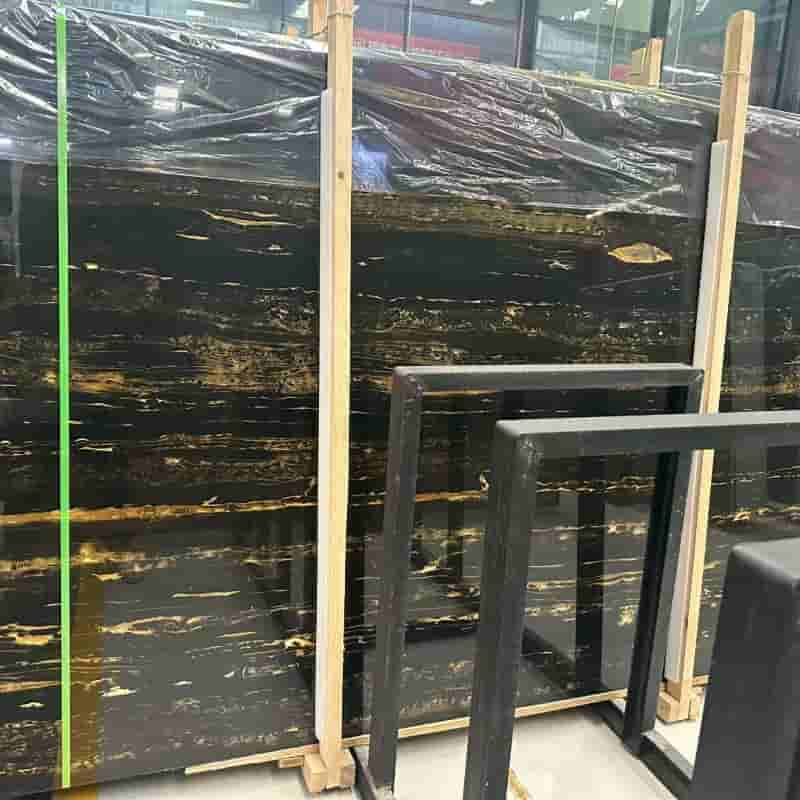
| Italy Portoro Gold Marble | Black Italian stone with naturally occurring golden veins | Black-and-gold dining furniture and architectural wall panels |
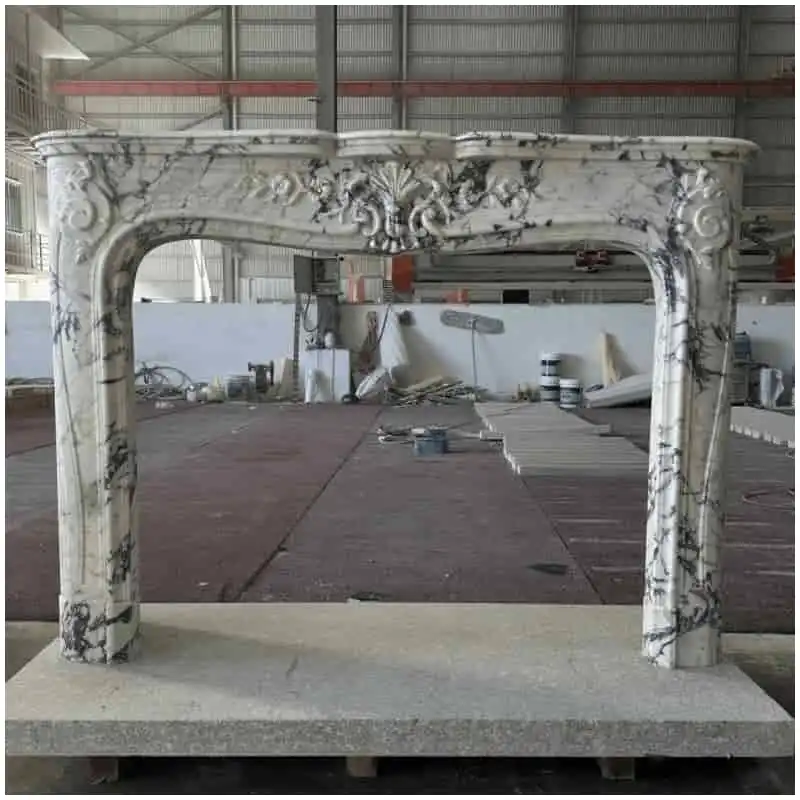
| Marmura roșie Rojo Alicante | Burgundy-red Spanish stone with white calcite veins | Warm red hotel wall cladding and decorative interior stonework |
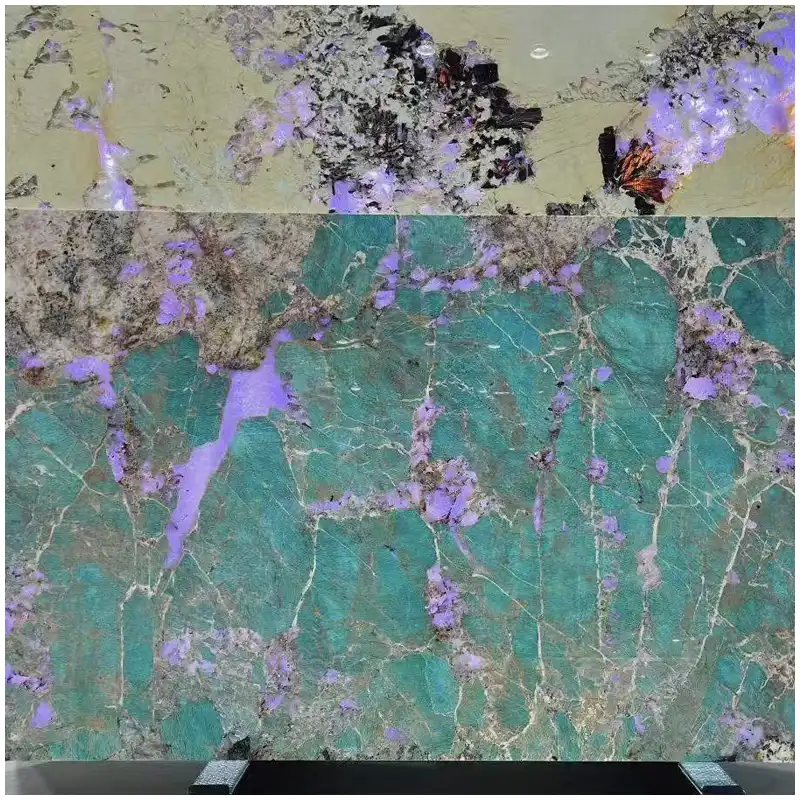
| Cold Emerald Marble | Green, white and charcoal mineral formations with strong contrast | Multicolored feature walls and custom stone furniture with pronounced mineral variation |
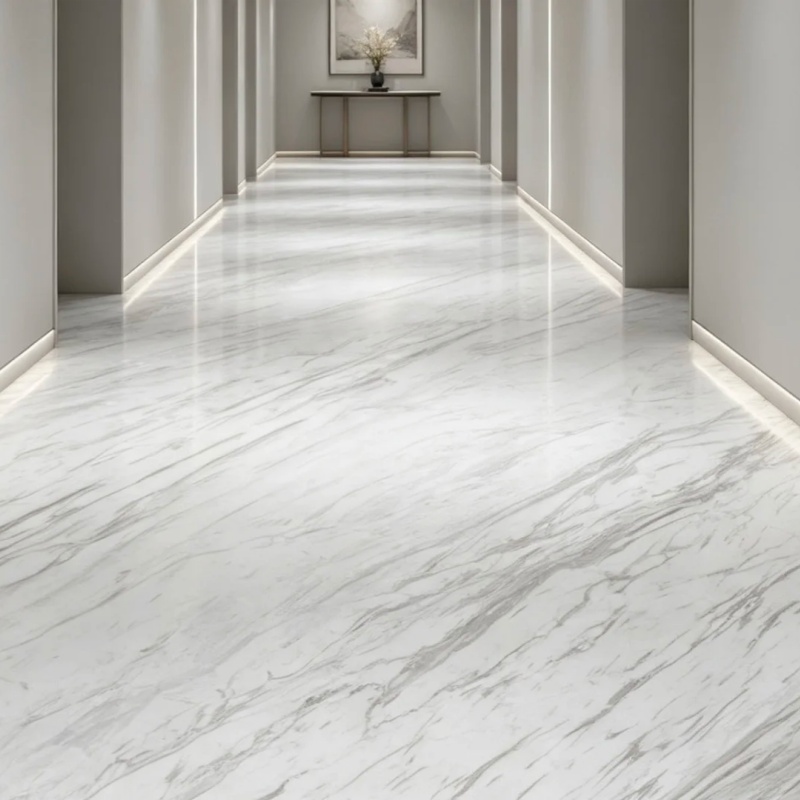
| Marmură albă Arabescato | White background with broad grey arabesque-style veining | Light-colored interior panels and vanity or countertop components |
Recommended Black, Red, Green and White Marble Slabs
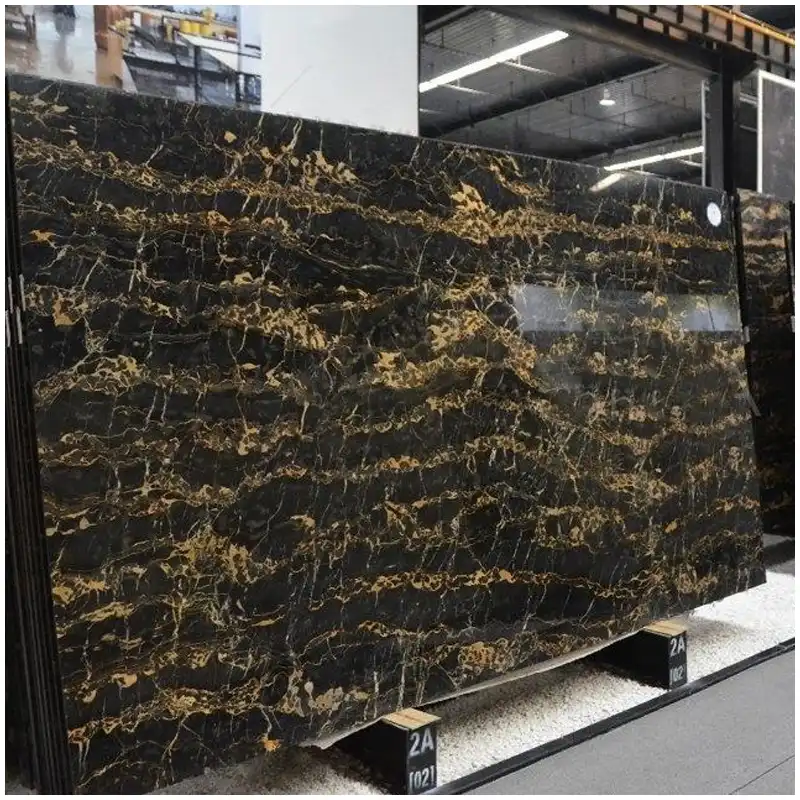
Italy Portoro Gold Marble
Black Italian Portoro with gold mineral lines for decorative interiors.
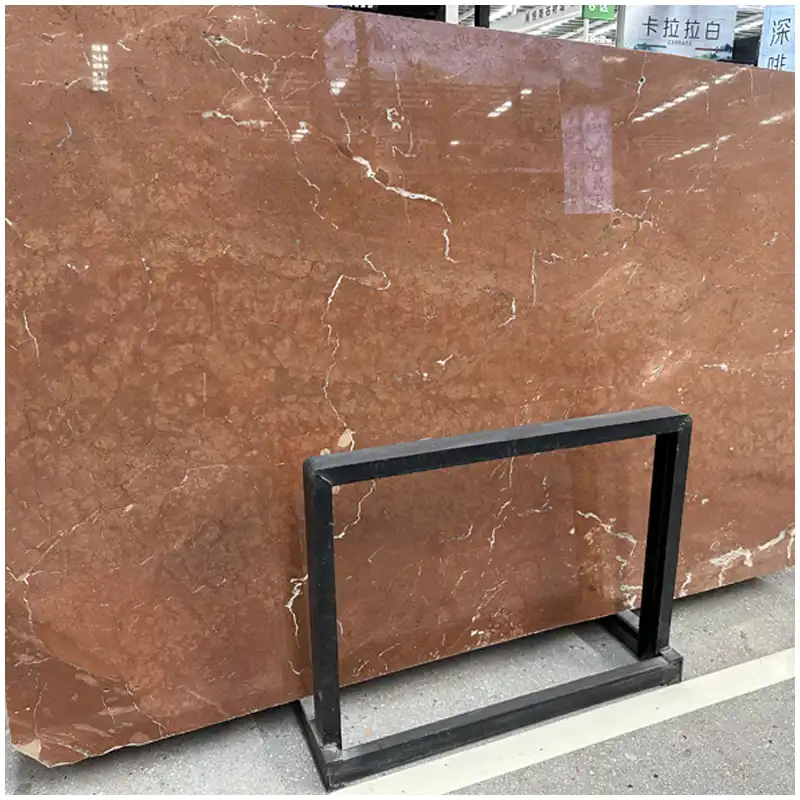
Marmura roșie Rojo Alicante
Spanish burgundy-red stone for architectural cladding and custom pieces.
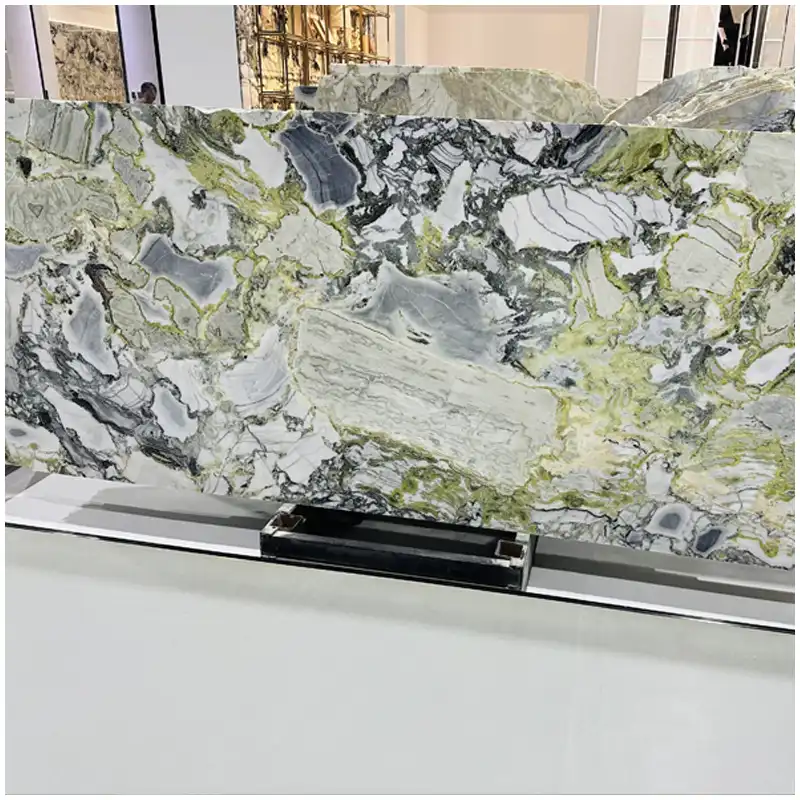
Cold Emerald Marble
Green-and-white marble with charcoal contrast for feature panels.

Marmură albă Arabescato
White marble with grey arabesque-style veining for interior panels.
Caribbean Green Marble Slab Selection for Villa Countertops and Interior Panels
Caribbean Green Marble orders require approval of the actual stone before fabrication. For villa kitchen countertops, the relevant information includes the selected slab photographs, finished dimensions, sink and appliance openings, edge profiles and structural support. Interior panel packages require separate visible-face layouts, joint locations and fixing details. When origin or technical performance forms part of the contract, suitable documentation should identify the selected quarry material. These details allow Esta Stone to review the cutting arrangement and prepare a quotation based on the intended finished components.
| Cereți un citat | View Marble Slabs |