

Rýchly prehľad
Mramorové dosky Earl White are Greek natural stone slabs with a white to warm-white background crossed by flowing grey and beige veins. Commercially associated with Ajax Marble, this material is used for office reception feature walls, large interior panels, floors, stairs and bathroom surfaces. Esta Stone supplies polished slabs and cut-to-size pieces, with 18mm, 20mm and 30mm thickness references. For office feature walls, the main considerations are slab background grading, directional vein placement, cutting yield, panel joint positions and suitable installation support. Actual slab dimensions and technical documentation should be checked against the selected material before production.
Earl White Marble Slabs for Office Reception Feature Walls
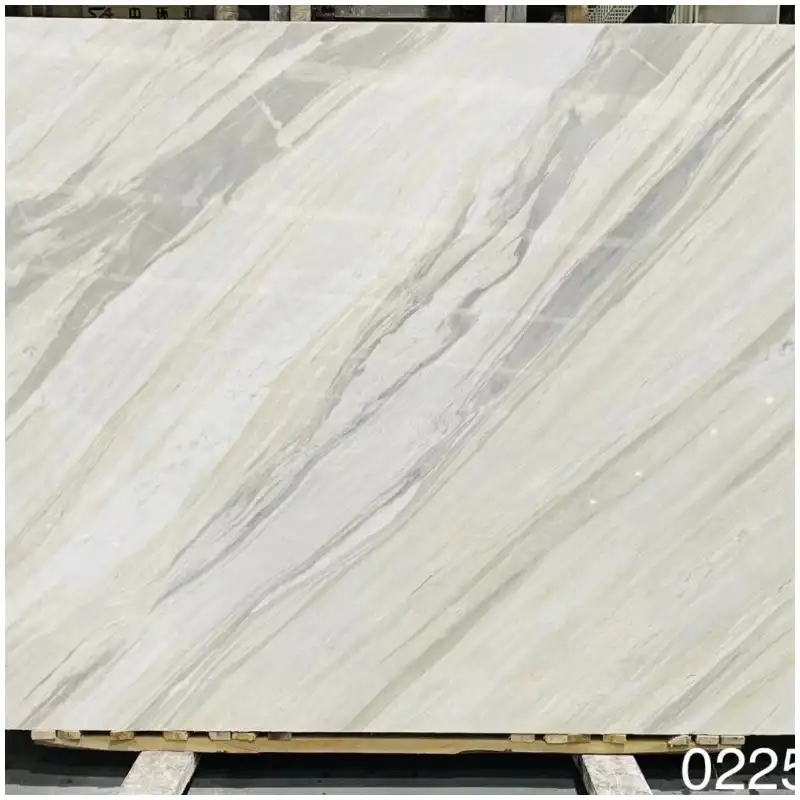
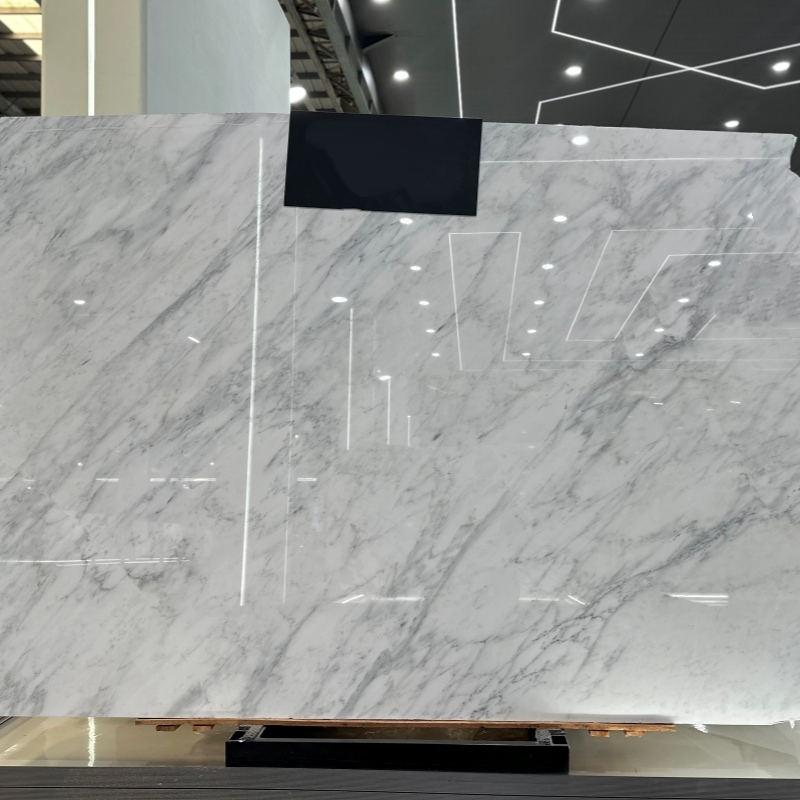
Greek Earl White marble slab showing the movement of grey and warm beige veins across a predominantly white background.
Mramor Earl White is selected for architectural interiors where the design calls for a bright natural stone surface with visible movement, but without the heavy contrast associated with some dramatic black-and-white marbles. Its background ranges from clear white to slightly warm white, crossed by soft grey and beige mineral formations.
The characteristic veins are often directional rather than evenly scattered. On a large office feature wall, these lines can draw the eye horizontally or diagonally across several panels. Their orientation becomes part of the wall composition, especially behind a reception desk where the stone occupies a broad uninterrupted surface.
Greek Earl White Marble is commercially linked with the Ajax Marble family. The actual quarry selection and slab appearance should still be identified before approval, as individual grades vary in whiteness, mineral movement and the concentration of warmer tones.
Esta Stone can supply the material as full slabs for local fabrication or as finished wall panels cut from an approved slab group. For a reception wall, the finished-panel route allows the main veins and joint positions to be planned before cutting begins.
Selecting Earl White Marble Slabs by White Tone and Vein Movement
A small white marble sample may accurately represent the general color but still conceal the most important difference between full slabs: how the grey and beige veins travel across the stone. When several slabs are used together, their pattern relationship affects the finished architectural surface.
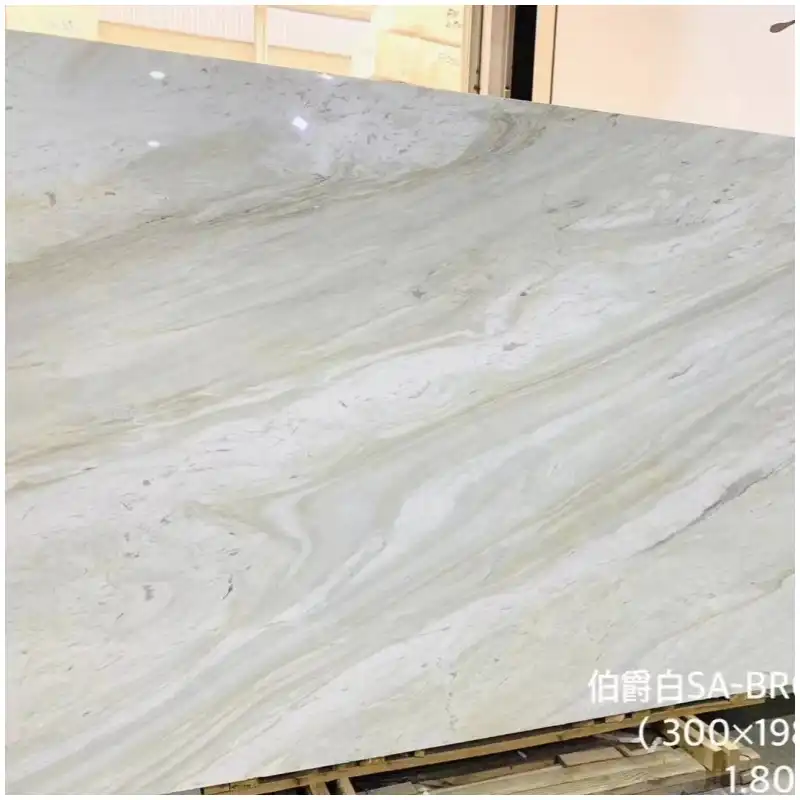
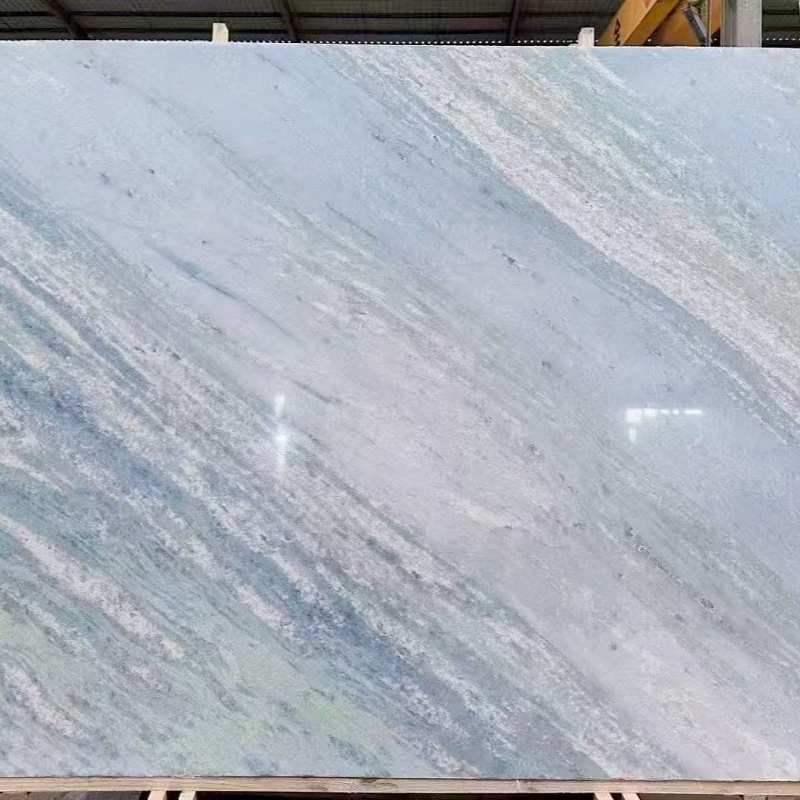
Full-slab appearance for evaluating background whiteness, vein direction and visible mineral concentrations.
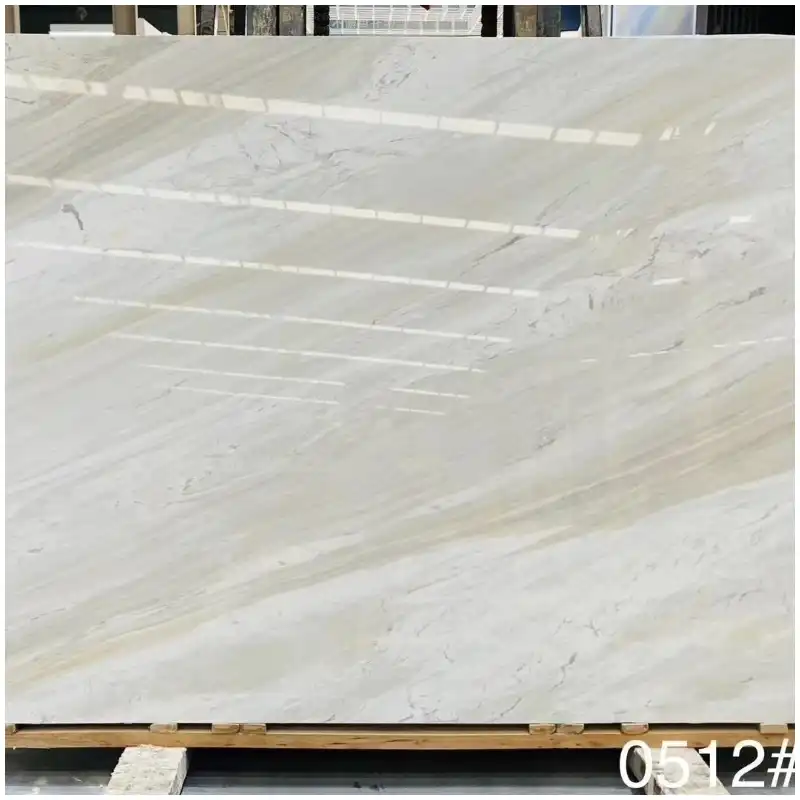
Additional slab reference for comparing natural variation between pieces intended for adjoining panels.
Background grading: The first review should establish the acceptable white range. A cooler white slab may appear noticeably different beside a creamier selection, particularly under consistent ceiling lighting. This difference is not necessarily a defect, but it must be considered when allocating stone to one large wall.
Vein distribution: Some Earl White Marble slabs have long, lightly colored linear formations. Others contain more concentrated grey or beige movement. A balanced feature wall may place the most active areas near the center, while quieter pieces are assigned to returns or peripheral panels.
Directional matching: A coordinated vein-flow layout uses the orientation of the natural lines to connect neighboring panels visually. It does not require the two sides to be mirror images. True bookmatching depends on suitable consecutive slab faces, and availability must be established before a mirrored design is promised.
Lighting should be considered during approval. Polished white marble can reflect bright ceiling fixtures, while directional illumination emphasizes certain veins. The final appearance should be assessed using full-slab photographs and, where possible, a finish sample viewed under conditions similar to the intended interior.
Earl White Marble 18mm Slabs for Cut-to-Size Interior Panels
An 18mm Earl White Marble slab can be considered for interior cladding and selected fabricated products, provided the final dimensions, support system and design loads are suitable. This thickness is relevant to projects where the stone must be cut into repeated wall components rather than installed as an unprocessed full slab.
The finished panel geometry matters more than nominal thickness alone. A narrow vertical return behaves differently from a large wall panel, particularly where openings, edge cutouts or concealed fixing points are involved. Shop drawings should identify these features before slab allocation.
For a reception feature wall, the cutting list normally begins with the largest uninterrupted panels. Smaller side pieces, returns and decorative trims can then be positioned in the remaining usable slab areas. This sequence protects the intended main-panel dimensions and reduces unnecessary interruption of prominent veins.
Surface treatment also needs to be stated. A polished 18mm slab is not automatically a finished installation component; edge treatment, calibration, reinforcement where required and identification marks may still form part of the fabrication order.
Where the design requires heavier pieces or a different fixing arrangement, 20mm or 30mm thicknesses may be reviewed. Final selection depends on engineering requirements, actual stone properties and the approved installation system.
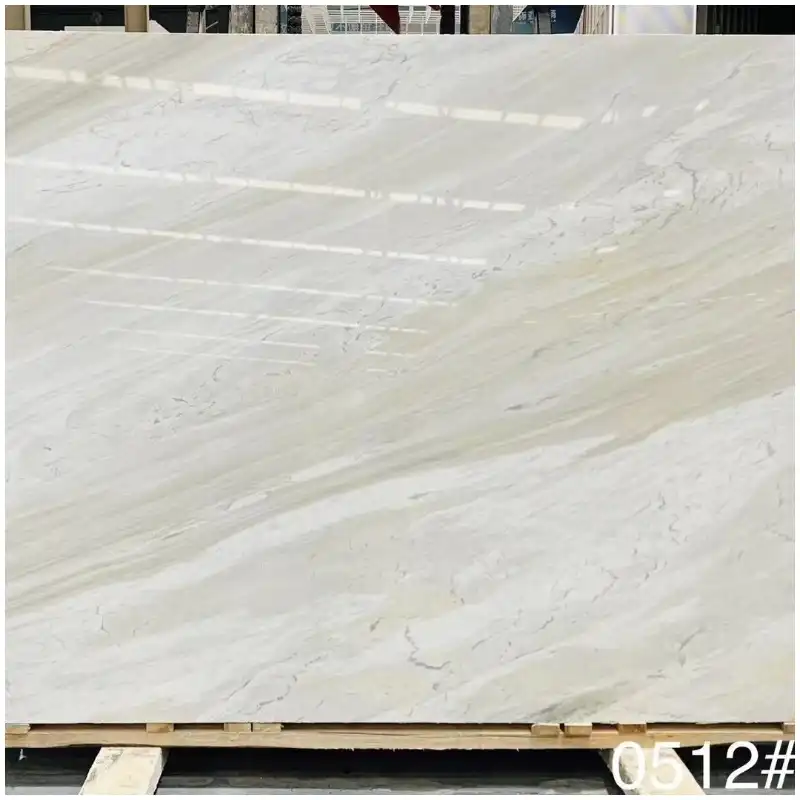
18mm Earl White marble slab reference for reviewing panel fabrication, selected thickness and usable cutting area.
Earl White Marble Slab Sizes, Thicknesses and Finished Components
The following figures are catalogue and fabrication references for Earl White Marble. They do not represent a verified real-time inventory list. Actual slab dimensions, thickness combinations and cuttable areas depend on the selected material.
| Názov produktu | Mramorové dosky Earl White |
| Materiál | Natural Greek Marble |
| Related Commercial Name | Ajax Marble / White Earl Marble |
| Referencia pôvodu | Nikisiani, Greece; quarry lot by confirmation |
| [PRIRODENÝ VZHĽAD][/PRIRODENÝ VZHĽAD] | White / Warm White / Grey / Beige / Occasional Brown Veins |
| Referencia na malú dosku | 1800mm+ × 600mm+ |
| Referencia na veľkú dosku | 2400mm+ × 1200mm+ |
| Selected Larger Formats | 2800mm+ × 1500mm+; subject to actual slab selection |
| [Hlavné referencie hrúbky][/Hlavné referencie hrúbky] | 18mm / 20mm / 30mm |
| Ďalšie odkazy na hrúbku | 15mm / 25mm; subject to product form and batch |
| Surface Finishes | Polished / Honed; other finishes subject to sample approval |
| Odkazy na štvorcové dlaždice | 305×305 / 400×400 / 457×457 / 600×600 / 800×800mm |
| Rectangular Pieces | 300×600 / 600×150mm / Custom Sizes |
| Wall Components | Reception Panels / Feature Walls / Corner Returns / Cladding Trims |
| Other Fabricated Pieces | Floor Tiles / Stair Treads / Risers / Vanity Tops / Skirting |
Office Building Feature Walls: Panel Layout and Installation Coordination
The supplied office-building application image illustrates the type of architectural feature wall for which Earl White Marble may be specified. In a corporate reception space, the main challenges involve panel scale, joint position, directional veining and integration with the building’s lighting and wall-support system.
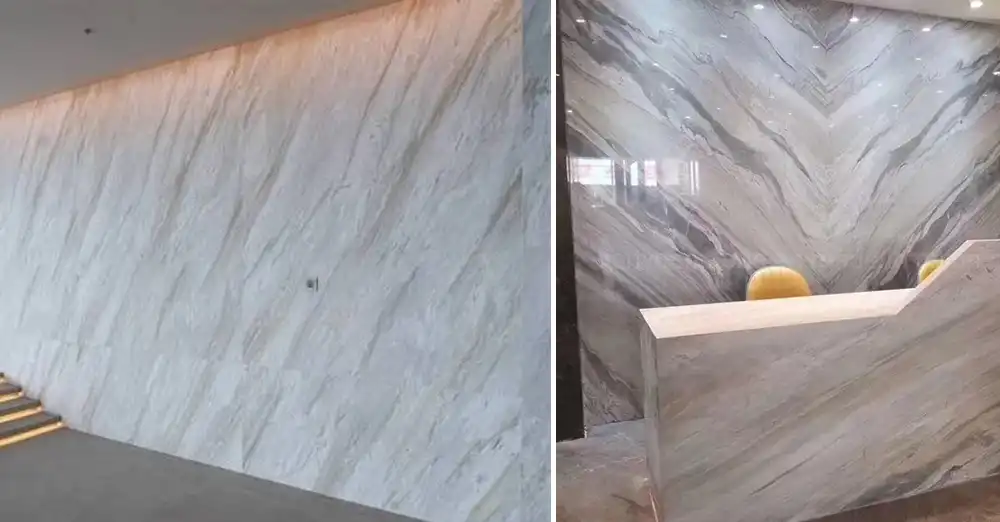
Reception backdrop: Panel joints should relate to the reception counter, wall centerline and any integrated signage. A layout that looks balanced on the shop drawing can become visually uneven if an active grey vein ends abruptly beside a prominent logo or vertical light strip.
Continuous wall areas: Repeated panels can be grouped by background grade and planned vein direction. Where the stone wraps around a corner, the return-piece width and visible edge treatment should be established before the main slabs are cut.
Lighting and fixing: Grazing lights can reveal surface differences and joint alignment. The fixing method, substrate, movement accommodation and panel support must be designed for the actual stone weight and project conditions, not selected from appearance alone.
This image is an application reference, not evidence of a documented completed installation or a certified fixing system. Final detailing belongs to the approved architectural and structural drawings.
Cutting Greek Earl White Marble into Flooring, Stairs and Vanity Components
Although the main emphasis of this listing is wall cladding, Earl White Marble slabs can also be cut into floor tiles, staircase components and bathroom vanity surfaces. Each use requires a different cutting schedule and finished-edge specification.
Interior floors: Large-format tiles retain more of the marble’s flowing veins, while smaller formats divide that movement into a more regular grid. Tile size should be coordinated with the room dimensions and joint arrangement. For an office corridor, the layout also needs to account for door thresholds, perimeter cuts and changes to adjoining flooring.
Schodiská: Treads and risers may be allocated from compatible slab groups. Finished tread depth, nosing profile, riser height and edge appearance should be recorded separately. The selected walking surface must meet the applicable slip-resistance requirements rather than relying on the fact that the material is marble.
Bathroom vanities: A white marble vanity may require a sink opening, tap holes, a backsplash and a specified front-edge treatment. The cutting layout should consider where the main grey veins remain after the openings are removed. Narrow stone sections around sinks require careful assessment and suitable support.
These finished products can be produced from the same commercial stone family, but their acceptance criteria differ. A slab that is visually suitable for a decorative wall is not automatically appropriate for every floor or heavily loaded countertop application.
Earl White Marble Technical Properties: Greek Material Reference
The following measurements come from one published Greek Ajax/Earl White marble material reference. The dry and wet results are retained as a single dataset rather than combined with values from unrelated Greek white marbles. They describe the tested reference material, not the current Esta Stone supply batch.
| Physical Property | Publikovaná referenčná hodnota |
| Objemová hustota | 2,830 kg/m³ |
| Absorpcia vody | 0.17% |
| Flexural Strength — Dry | 11.5 MPa |
| Flexural Strength — Wet | 11.6 MPa |
| Compressive Strength — Dry | 174 MPa |
| Compressive Strength — Wet | 169 MPa |
Data qualification: These are published reference-sample results, not batch-specific certification for Esta Stone’s current Earl White Marble slabs. Any formal material declaration should identify the selected quarry lot, relevant test methods and testing conditions.
For large wall panels, flexural strength is especially relevant to panel dimensions, support spacing and fixing design. However, a published material strength value cannot independently establish the safety of a particular wall installation. Panel thickness, anchor capacity, substrate conditions and applicable design criteria must be evaluated together.
For flooring, additional consideration may be needed for abrasion resistance and slip performance. Neither polished nor honed finish provides an automatic compliance rating. The finished stone should be assessed for the project-specific conditions.
Polished or Honed Earl White Marble: Choosing the Surface Finish
Polished Earl White Marble reflects more light and emphasizes the grey-beige movement beneath the surface. It is frequently considered for decorative walls, reception backdrops, fireplace surrounds and selected vanity areas where light reflection is part of the interior design.
A honed surface produces less reflection and a more subdued reading of the marble. This finish may be preferable for interiors that use broad diffuse lighting or require reduced visual glare. The final tone can appear slightly different from a polished sample, so the approved finish must match the specified material.
For floor applications, surface selection should account for pedestrian traffic, tracked-in grit, moisture and cleaning procedures. A honed finish is not a substitute for confirming the required traction performance, and a polished surface should not be assumed suitable for wet entrance conditions.
Both finishes require appropriate care. Marble contains carbonate minerals that can be attacked by acidic substances; surface sealing may reduce some staining risks but does not prevent chemical etching.
Earl White Marble Compared with Ariston White Marble
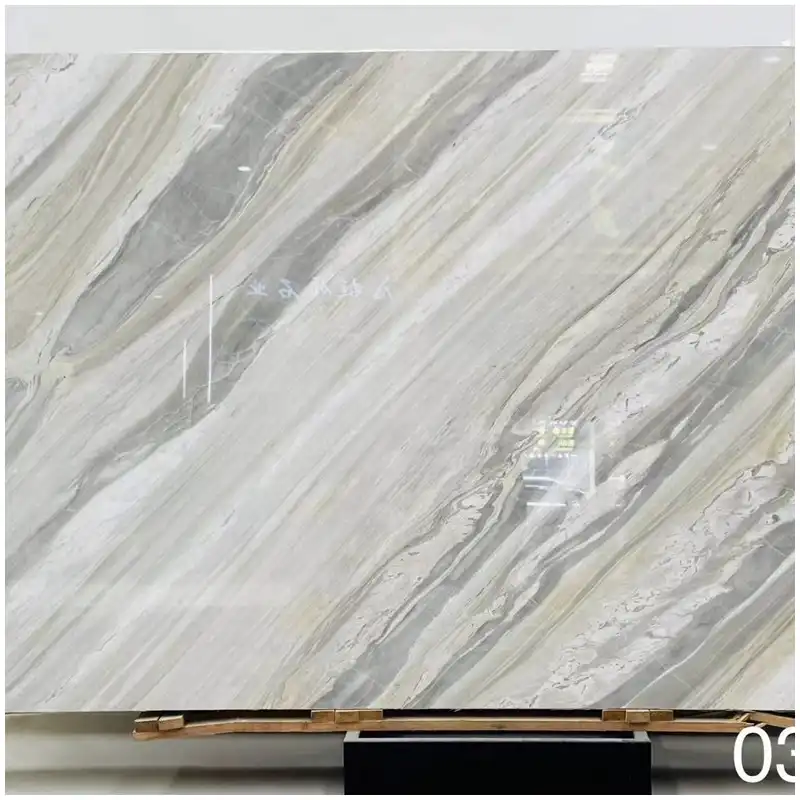
Ariston White Marble reference image. Ariston is a separate Greek marble selection and is not presented as Earl White.
Both Earl White Marble and Ariston White Marble belong to the commercial Greek white marble market, but they should not be treated as interchangeable products.
Earl White is commonly associated with Ajax-type material and can show flowing grey, beige and occasional brown formations across the white background. Its directional movement makes full-slab composition particularly important for wide feature walls.
Ariston White is generally recognized for a bright white background and comparatively delicate grey veining, although the appearance varies by selection. It may be considered where the design calls for a quieter, more uniform white field.
Neither stone should be selected by name alone. The required background grade, vein movement, usable slab size and finish should be compared using actual material photographs.
For another Greek white marble option, see Esta Stone’s Ariston Biely mramor collection.
Greek Earl White, Ajax Marble and Commercial Stone Identification
The name Earl White Marble is used in the international stone trade for Greek white marble associated with the Ajax family. Ajax Marble and White Earl Marble may appear as related names in catalogues, but a matching trade label does not prove that two shipments originate from the same block, quarry selection or production lot.
The Nikisiani district in Greece is a documented origin reference for Ajax-related marble. White marble from Thassos, Drama and other Greek quarry districts may share a similar appearance, but they are not automatically the same commercial selection.
For an architectural specification, a material record should identify the selected stone, its commercial name, origin declaration where available, finish, thickness and approved slab photographs. This is more useful than relying on broad terms such as Greek White Marble alone.
Esta Stone also lists Biely mramor Ajax separately. Buyers comparing the two listings should confirm the actual slab group before assuming identical appearance or engineering properties.
Dry-Lay Planning and Panel Numbering for Earl White Marble Walls
A full-height white marble wall often contains several large panels, with the mineral movement crossing joints at different angles. Dry-lay planning allows the project team to inspect the proposed arrangement before the finished pieces are installed.
The layout should show each panel in its intended orientation. Rotating a panel can change the apparent movement of a long grey vein even when the finished dimensions remain correct. This becomes more noticeable when the marble is placed beside straight architectural features such as door frames, timber battens or concealed lighting channels.
Panel numbers should correspond to the approved elevation drawing. Return pieces, corner panels and smaller components can then be packed by wall zone rather than mixed without installation references.
Where the installation requires exact mirrored patterns, suitable corresponding slab faces must be confirmed before fabrication. A digital mirror of one slab photograph does not establish the availability of a physical bookmatched pair.
Cleaning and Maintaining Earl White Marble in Office Interiors
Office reception walls generally experience less direct abrasion than floors, but bright marble surfaces can reveal dust, fingerprints and cleaning residue under directional lighting. Soft cloths and pH-neutral cleaners suitable for natural marble are preferable to aggressive general-purpose chemicals.
For marble flooring, remove loose grit before damp cleaning. Repeated movement of abrasive particles beneath shoes or cleaning equipment can affect the surface finish, especially near entrance doors and circulation routes.
Avoid vinegar, acidic descalers and unsuitable bathroom chemicals. Even a sealed marble surface can experience etching when carbonate minerals react with acids. Impregnating sealers should be selected according to the actual stone and finish, not treated as permanent protection against every spill.
Maintenance teams should record whether the installed material is polished or honed so that cleaning and periodic surface treatment remain compatible with the original finish.
Earl White Marble Slab Inspection and Export Packing
| Selected Slab Review | Record slab identification, actual dimensions, thickness, white background grade, grey and beige vein movement, visible repairs and usable cutting areas. |
| Finished Panel Inspection | Compare cut-to-size pieces against approved elevations and cutting lists. Check dimensions, thickness calibration, edge profiles, corners, surface quality, orientation and panel numbering. |
| Packing and Shipment | Protect polished marble faces and exposed edges. Separate finished components using suitable materials, identify each installation zone and compare crate labels and packing quantities against the final component schedule. |
Five Mistakes When Ordering Earl White Marble Slabs
- Specifying all Greek white marbles as the same material: Earl White, Ajax, Ariston and other white marble selections may overlap commercially but differ in appearance and tested properties.
- Approving only a small white sample: A sample cannot reveal the full direction, concentration and color of the mineral veins across large architectural panels.
- Cutting the wall panels without an approved elevation: The resulting joints can interrupt a major vein or place mismatched background shades directly beside each other.
- Choosing panel thickness without checking the fixing system: Published material data and nominal slab thickness do not replace project-specific wall-cladding engineering.
- Sending finished panels without installation identification: Missing orientation marks and panel numbers can disrupt the agreed vein sequence during site installation.
Frequently Asked Questions About Earl White Marble Slabs
What is Earl White Marble?
Earl White Marble is a Greek natural marble with a white to warm-white background and flowing grey, beige and occasional brown veins. It is supplied as slabs and can be fabricated into feature wall panels, floor tiles, stairs and interior stone components.
Where does Earl White Marble come from?
Earl White Marble is commercially associated with the Nikisiani marble district in Greece. The specific quarry lot and selected slab batch should be confirmed for each project.
Are Earl White Marble and Ajax White Marble the same?
Earl White Marble is commercially associated with the Ajax Marble family, and the names may overlap in stone catalogues. Actual slabs should still be compared for origin, white background, vein movement and technical documentation before they are treated as equivalent.
What sizes and thicknesses are available for Earl White Marble slabs?
Catalogue references include large slabs from 2400mm × 1200mm and selected larger formats from 2800mm × 1500mm, with 18mm, 20mm and 30mm thickness options. Actual dimensions depend on the selected slabs and production requirements.
Can Earl White Marble be used for office reception feature walls?
Yes. Earl White Marble can be cut into office reception feature wall panels. Full-slab selection, background grading, vein direction, joint placement and a suitable installation system should be confirmed before fabrication.
Can Earl White Marble slabs be bookmatched?
Bookmatching is possible when suitable corresponding slab faces are available. Otherwise, directional vein-flow matching can be used to coordinate adjacent wall panels without creating an exact mirrored pattern.
What are the reference physical properties of Earl White Marble?
One published Greek Ajax/Earl White marble reference reports density of 2,830 kg/m³, water absorption of 0.17%, dry and wet flexural strengths of 11.5 MPa and 11.6 MPa, and dry and wet compressive strengths of 174 MPa and 169 MPa. These are not current-batch certified results.
Should Earl White Marble be polished or honed?
Polished Earl White Marble has stronger reflection and clearer vein contrast, while honed material has a lower-gloss surface. The choice depends on lighting, application and maintenance needs. Floor finishes also require project-specific slip assessment.
How should Earl White Marble be maintained?
Clean Earl White Marble with pH-neutral products suitable for natural stone and non-abrasive tools. Avoid acidic cleaners, remove grit from floors and select sealing and maintenance procedures according to the installed finish.
Earl White Marble Compared with Four Decorative Marble Slabs
The main difference between these marble selections is the combination of background color, pattern scale and visual contrast. The comparison helps buyers distinguish Earl White’s flowing warm-grey movement from white marbles with different vein structures and more colorful decorative stones.
| Stone Selection | [PRIRODENÝ VZHĽAD][/PRIRODENÝ VZHĽAD] | Selection Difference |
| Mramor Earl White | White to warm-white background with directional grey-beige veins | Office reception feature walls and coordinated architectural panels |
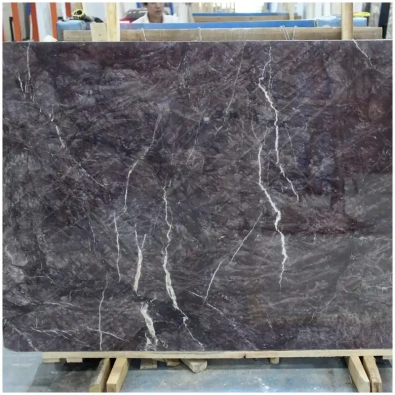
| Tea Rose Marble | Rose-pink to reddish background with light mineral movement | Warm decorative columns, residential walls and vanity areas |
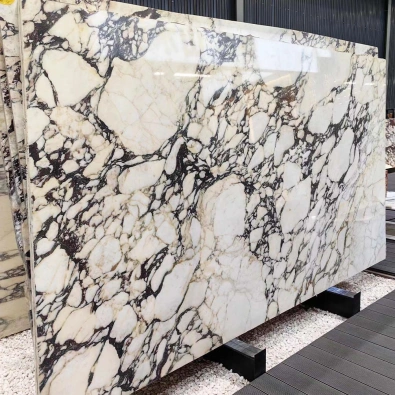
| Biely mramor Calacatta | White background with bold, irregular grey veins | More pronounced contrast for floors and large feature panels |
| Ariston Biely mramor | Bright white background with comparatively restrained grey movement | Quieter white surfaces for walls, bathrooms and clean interior compositions |
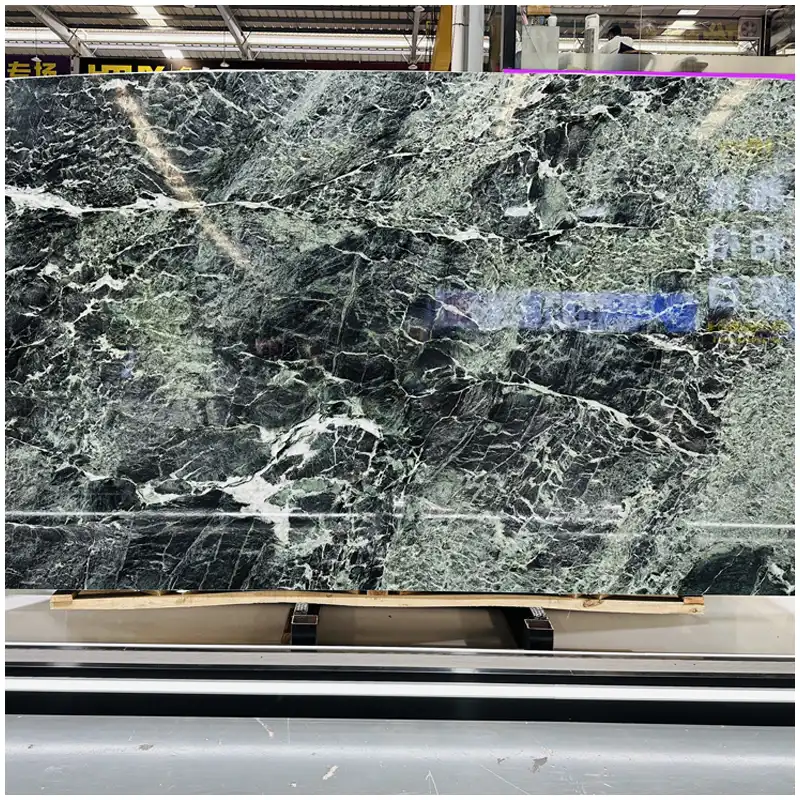
| Mramor Prada Green | Dark green background with contrasting pale veins | Darker accent panels, furniture and contrasting decorative interiors |
Recommended White and Decorative Marble Slabs
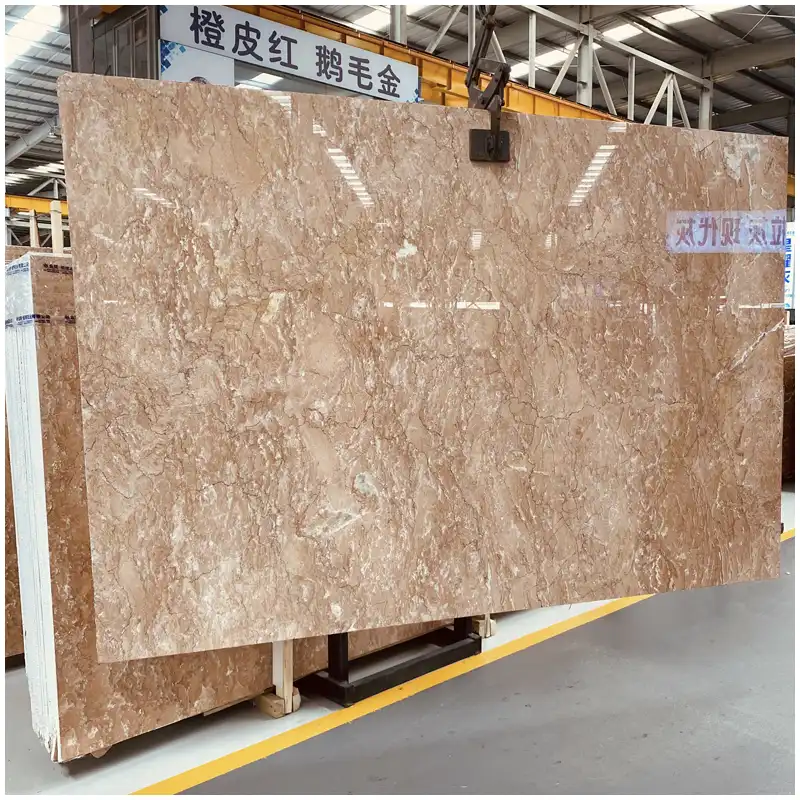
Tea Rose Marble
Rose-toned marble for warm decorative walls, columns and bathroom interiors.
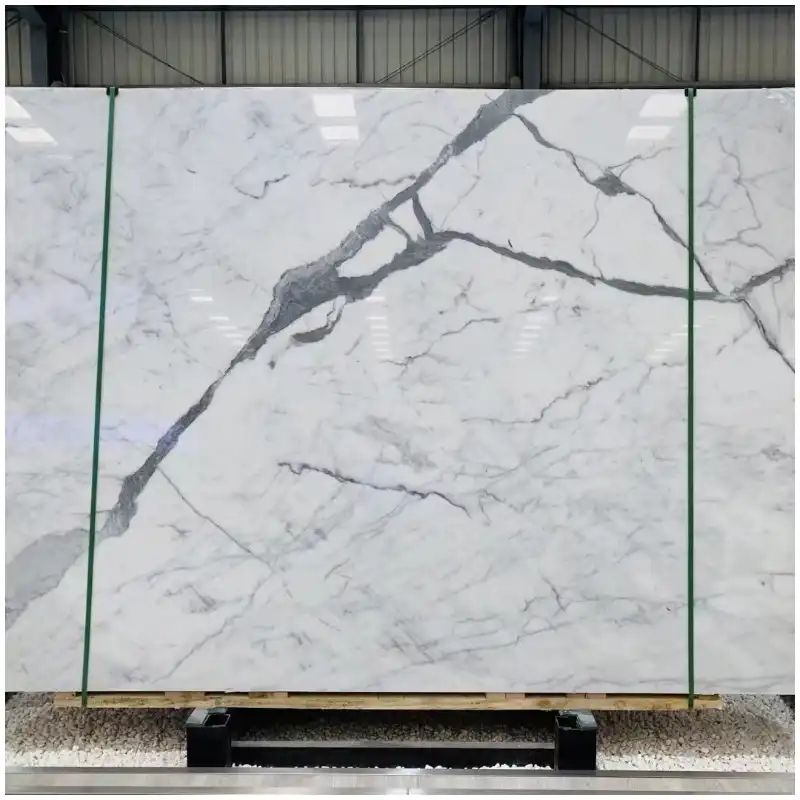
Biely mramor Calacatta
Italian white marble with broad grey veins for floors and feature walls.
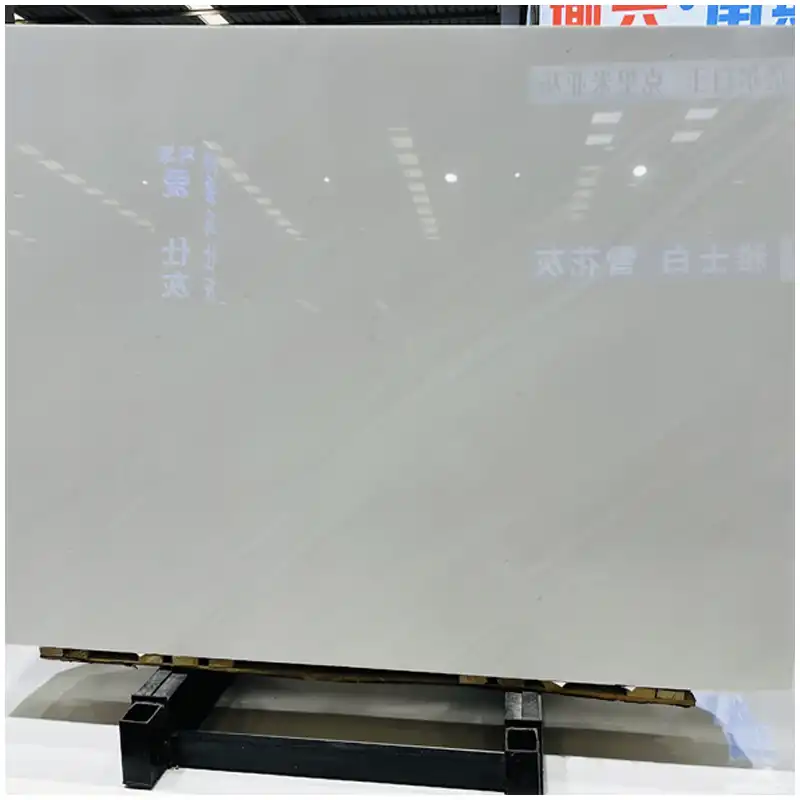
Ariston Biely mramor
Bright Greek white marble with restrained veins for contemporary interiors.

Premium Quality Earl White Marble for Office Wall Panel Fabrication
For an Earl White Marble project, send Esta Stone the architectural wall elevations, finished panel dimensions, thickness and surface finish requirements, together with the quantity and destination. Identify the areas where background whiteness, grey-beige vein direction or adjoining panel relationships are particularly important. The selected slabs can then be reviewed for usable cutting area, principal panel allocation and any matching returns. Include fixing details and engineering documentation requirements where the marble is intended for large-format wall cladding.
| Požiadajte o cenovú ponuku | Zobraziť mramorové platne |