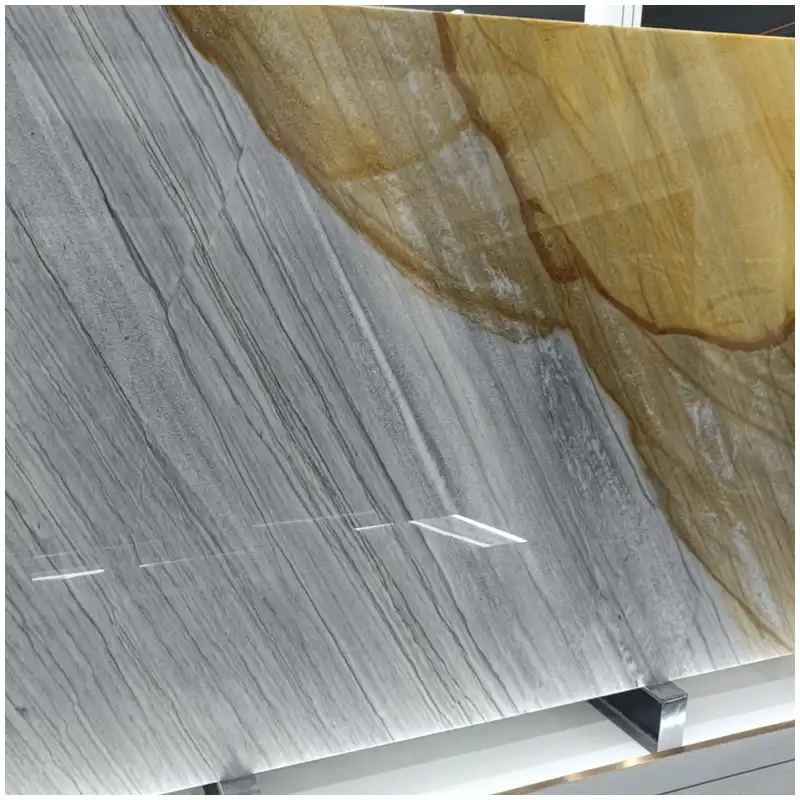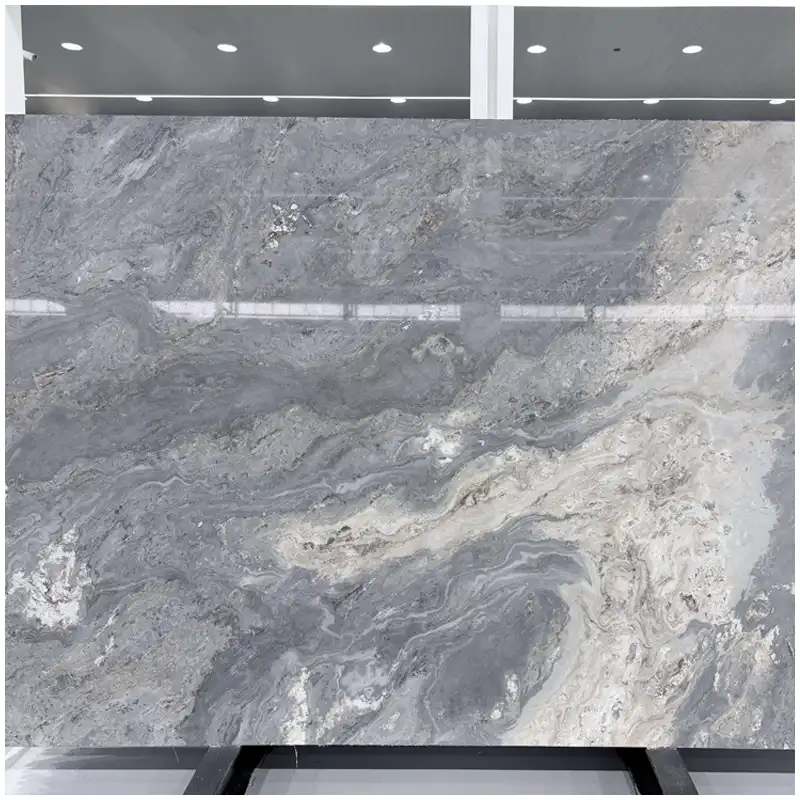


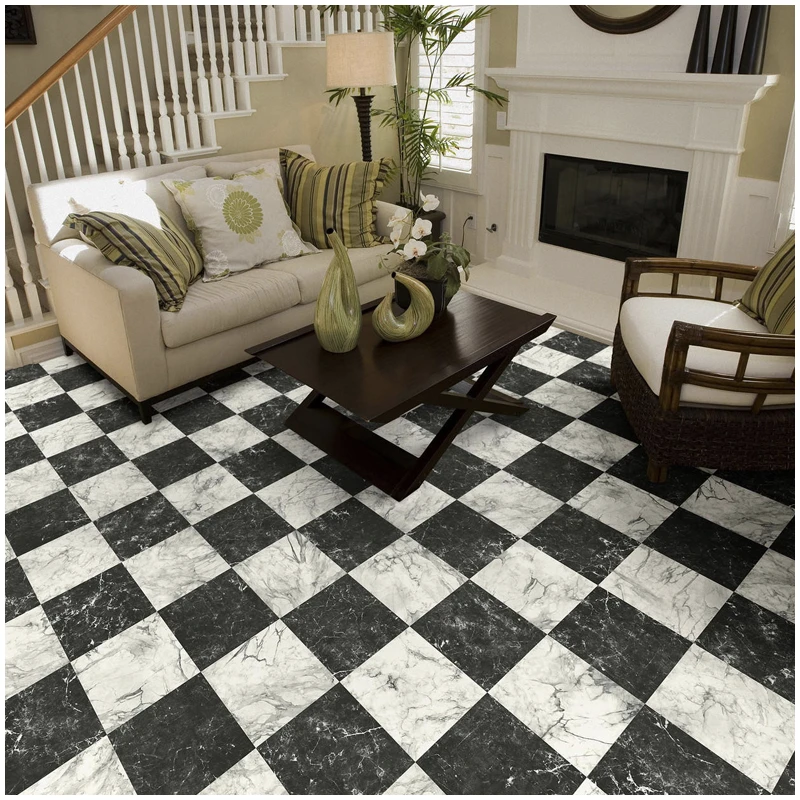


White Marble Slab Thickness: 18 mm, 20 mm, and 30 mm for Walls, Vanities, and Furniture
Put three pale slabs against the warehouse rack and the thickest one often looks more convincing. That impression can be wrong. A thicker face can add weight the support never allowed for, while a thinner slab can expose repairs or edge weakness near a cutout. I judge white marble slab thickness against the finished piece, not against a number printed on a tag.
The short answer is application first. Wall panels usually value manageable weight and a suitable fixing design. Vanity tops need cutout, edge, cabinet, and handling coordination. Furniture tops need proportion, base support, transport, and edge comfort. The fabricator and responsible technical parties still decide the final assembly.
Measure White Marble Slab Thickness across the Actual Face
I check more than one point. Natural stone processing can leave small variations, and resin, mesh, local grinding, or repaired areas can change how the slab behaves during fabrication. The project tolerance belongs in its specification and inspection method.

The broader White Marble Slabs: Complete Guide to Types, Selection, Price, Bathrooms, Lighting, and Batch Control should carry the material family, visual range, lighting, and batch-control decision. Thickness sits below that choice and needs its own measured record.
The English overview of dimension stone provides useful format context, but it cannot select a build-up for one wall or vanity. I need the actual slab, shop drawings, support, fixing method, and fabricator assessment.
Do not confuse nominal stock with finished size
An 18 mm marble slab may be sold or described by a nominal figure, while the finished piece can change after calibration or surface work. I record the accepted measuring points and the finished requirement rather than assuming the stock label settles it.
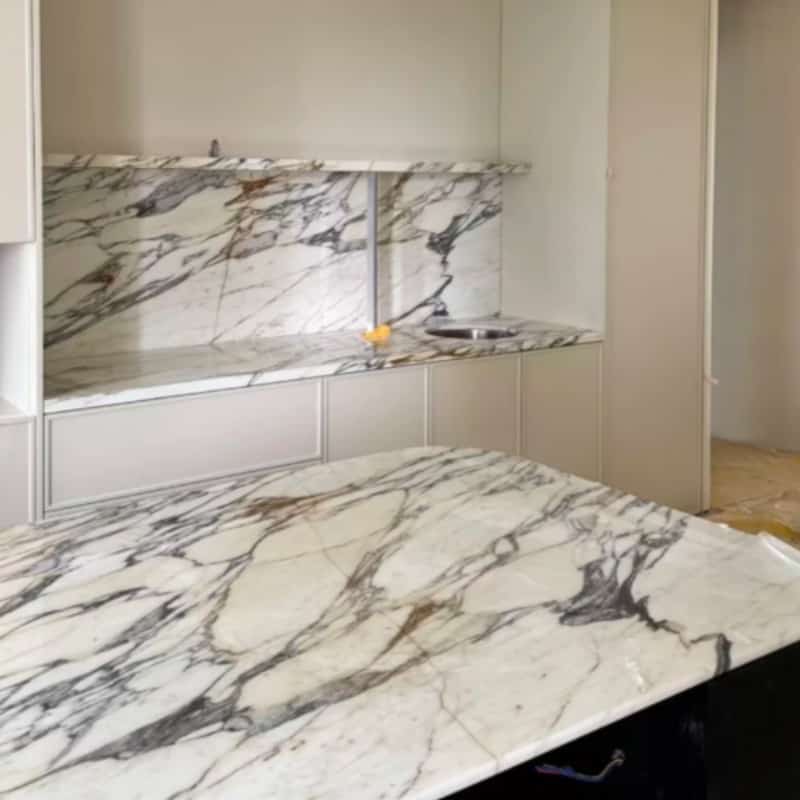
A Mramorová doska Calacatta with broad movement needs layout review before thinning, backing, or cutting. A strong vein close to a long edge or sink opening matters more than one average thickness measurement.
Read Resin, Mesh, Veins, and Repairs before Selecting the Section
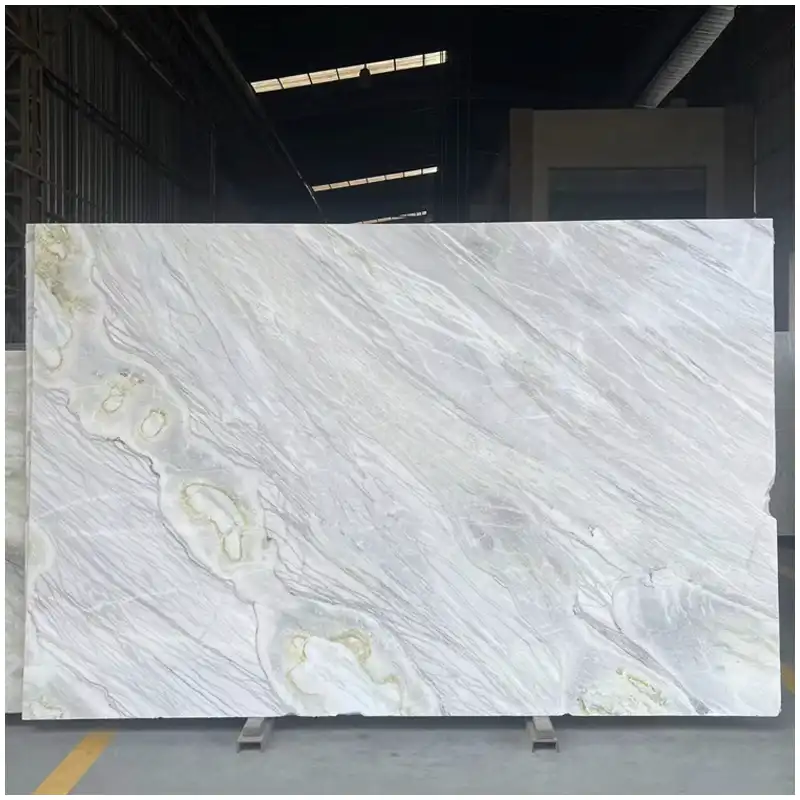
Don’t just look at samples. A small piece hides whether the full face carries fissures, resin-treated zones, mesh backing, or repairs that intersect the final crop. I photograph those features and place the cutting overlay on the real slab.
Stránka White Marble Slab Supplier: Calacatta, Carrara, Statuario, and Sivec helps separate Calacatta, Carrara, Statuario, and Sivec selections. Here I ask a narrower question: does the proposed section leave enough sound material around the finished geometry and chosen edge?
| Aplikácia | Thickness question | Warehouse evidence | Fabrication or site decision |
|---|---|---|---|
| Interior wall panel | Weight, panel size, fixing, bow, edge exposure | Measured map, reverse treatment, full-face photo | Responsible fixing design and handling method |
| Vanity top | Sink cutout, faucet holes, front rail, backsplash, edge | Cut overlay, repaired-zone map, full-thickness sample | Cabinet support and cutout fabrication detail |
| Furniture top | Span, base contact, overhang, edge comfort, movement | Slab orientation, section sample, underside record | Base and connection assessment |
| Mitered build-up | Visual depth versus actual structural section | Face-to-return trial under project light | Lamination, reinforcement, and handling procedure |
| Wet-zone piece | Penetrations, joints, treatment, maintenance | Finish and treatment trial on representative area | Assembly, drainage, and care approval |
| Replacement stock | Match to installed thickness and finish | Coded retained piece from approved batch | Storage and future fabrication record |
The sink overlay matters more than the thickness label
Place the final basin cutout, faucet holes, front edge, backsplash, and cabinet rail over the numbered slab photograph. Then inspect the same zones on the physical face and reverse. If a repaired line or strong vein crosses the narrow material beside the bowl, moving the crop may be wiser than simply choosing a thicker slab. Thickness cannot rescue a poor layout.
Approve the cut position and the section together; never let one number stand in for the full slab review.
Use 18 mm Stone Only with a Complete Wall or Panel Design
An 18 mm marble slab can suit selected wall applications when the panel size, backing, fixing, joints, movement, substrate, and handling method are designed for it. I will not call it suitable from thickness alone.
A thinner pale panel may reveal resin zones or backing effects differently under grazing light. Lighting lies. I view the trial vertically under the planned wall-washer direction because the warehouse rack and a horizontal sample table do not produce the same reflection.
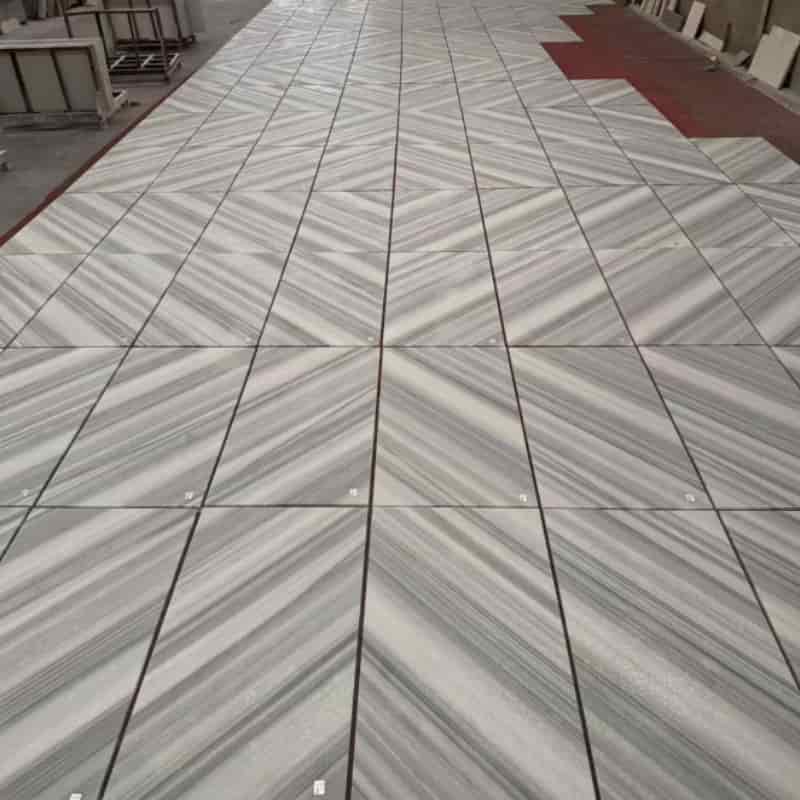
A Carrara biela mramorová doska can have fine movement that looks calm across a wall. Panel joints and thickness variation still need control, especially when several pieces meet one continuous light source.
Coordinate 20 mm Vanity Tops with Cutouts and Cabinet Support
A 20 mm marble vanity top often gives a restrained edge, but the finished result depends on the bowl, remaining front and rear strips, faucet holes, overhang, backsplash, and cabinet rails. I request a section through the weakest area.
Stránka Marble Vanity Countertop Approval: Sink Cutouts, Veins, Light, and Batch Tone keeps vein placement and cutouts connected. A quiet sample can become chaotic when the strongest line is split around a basin or interrupted by three faucet holes.
I also inspect the underside. Mesh, resin, local patches, support strips, or a laminated apron can change the assembly. The quotation should state what is included instead of presenting the visible edge as if it were the complete section.
A thick-looking edge may be a build-up
The visible front can be deeper than the slab itself. That is a design and fabrication choice, not proof that the whole top is thicker. I approve a full-scale corner where the vein, polish, glue line, and lower edge can be seen under 3000K and 4000K light.

That slab doesn’t belong next to your bathtub if the project cannot explain its treatment, edge, support, and cleaning method. The warning applies to every thickness.
Scale 30 mm Furniture Tops to the Base and Handling Route
A 30 mm marble furniture top can give a strong edge and useful visual mass. It also increases weight and changes the relationship with the base. I ask how the top is lifted, where it bears, how it is restrained, and whether the building route can handle the finished object.
A Sivec White Marble top may read as a calm plane from above. Its pale edge can expose small resin or finish differences under side light. I inspect the full thickness, corners, underside transition, and base contact before acceptance.
Stránka white marble slab thickness decision should never be used as an unsupported shortcut for span or overhang. The responsible fabricator or engineer assesses the actual material, dimensions, base, connections, and use.
When the Delivered Thickness Does Not Match
First, photograph the complete piece, label, measuring location, tool, and reading. Second, stop cutting or installation of the affected group. Third, compare the measurements with the approved slab record, drawing, calibration requirement, sample, and inspection file through the supplier.
A different reading may affect edge alignment, joint level, fixing, weight, cutouts, or visual continuity. I do not grind, laminate, or reassign the piece until the project understands which acceptance requirement has changed.
Release White Marble Slab Thickness by Finished Piece
The quotation does not close the white marble slab thickness decision. I carry the measured range into the cutting drawing so every edge, hole, and support refers to the stone that actually arrived.
For walls, white marble slab thickness appears beside panel size, fixing, backing, substrate, and joint design. I reject any schedule that treats weight as somebody else’s later calculation.
For vanities, white marble slab thickness must remain compatible with the sink cutout and cabinet rails. A nominal dimension cannot protect a narrow strip beside a bowl.
For furniture, white marble slab thickness affects the edge shadow and the base load at the same time. I inspect both before approving a deeper-looking profile.
A 20 mm marble vanity top trial should include the actual cutout and faucet holes. I want to see the weakest remaining sections, not an untouched rectangular offcut.
A 30 mm marble furniture top may look calmer at the edge but carry more weight into the base. The support drawing and handling plan must acknowledge that change.
Frequently Asked Questions
1. Is 20 mm white marble thick enough for a vanity top?
It can be suitable for a defined vanity design, but thickness alone is not approval. Review the actual slab, sink cutout, faucet holes, remaining strips, edge, overhang, cabinet rails, support, reinforcement, handling, and installation method.
2. Can 18 mm white marble be used for wall panels?
It can be used in selected assemblies when panel size, weight, fixing, backing, substrate, joints, movement, handling, and applicable requirements are designed together. Do not approve it from a stock label alone.
3. Does 30 mm marble always need less support?
No. A thicker top is heavier, and support still depends on span, overhang, cutouts, base contact, connections, material condition, and use. Obtain project-specific fabrication or engineering assessment.
4. How should white marble slab thickness be measured?
Use the project method and suitable calibrated equipment at agreed locations. Record the slab or piece code, measuring points, tool, readings, finish state, and permitted tolerance instead of relying on one unmarked photograph.
5. What should happen first if finished pieces have inconsistent thickness?
Photograph and measure each affected piece with codes and locations visible, stop related fabrication or installation, and compare the readings with the approved drawings, slab records, calibration requirement, and inspection evidence.
Quick-Reference Thickness Approval Checklist
- Record nominal and measured thickness at agreed locations on every representative slab.
- Overlay cutouts, holes, edges, veins, repairs, and reverse treatment before cutting.
- Review wall fixing, cabinet support, furniture base, handling, and access separately.
- Approve a full-thickness edge or miter trial under both project and inspection light.
- State finished thickness, tolerance, calibration, reinforcement, and build-up on drawings.
- Retain a coded sample or piece that represents the approved section and finish.
Final Conclusion
White marble slab thickness is one part of a complete piece decision. Measure the real slab, map its veins and treatments, draw the edge and cutouts, verify support, and inspect the finished section under the light that will expose it.
At Esta Stone, I would rather reject a vague thickness note in the warehouse than watch it become a mismatched edge on site.

References
- Dimension Stone Design Manual, Natural Stone Institute.
- Natural Stone Institute Technical Bulletins for Marble, Natural Stone Institute.
- ASTM C503 Standard Specification for Marble Dimension Stone, ASTM International.
- ASTM C97 Standard Test Methods for Absorption and Bulk Specific Gravity of Dimension Stone, ASTM International.
- ASTM C880 Standard Test Method for Flexural Strength of Dimension Stone, ASTM International.
- Bathroom Planning Guidelines, National Kitchen and Bath Association.
- Search Essentials: Creating Helpful, Reliable, People-First Content, Google Search Central.