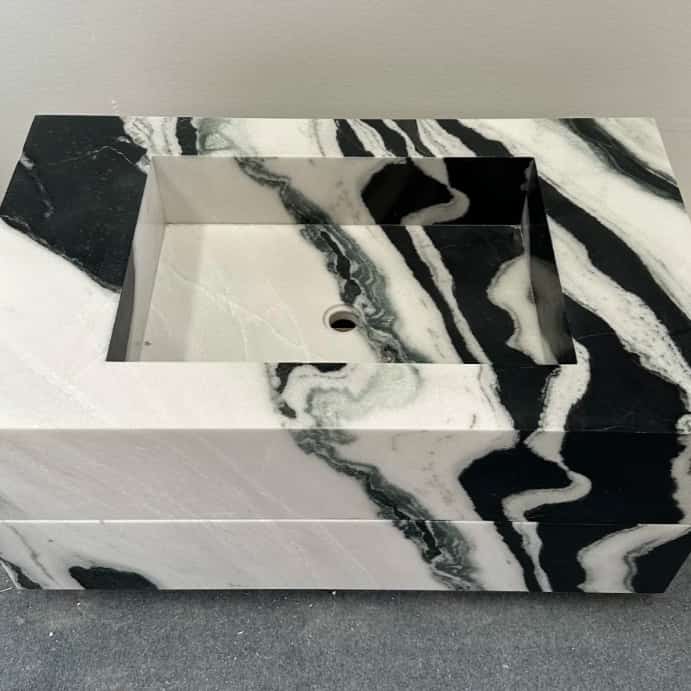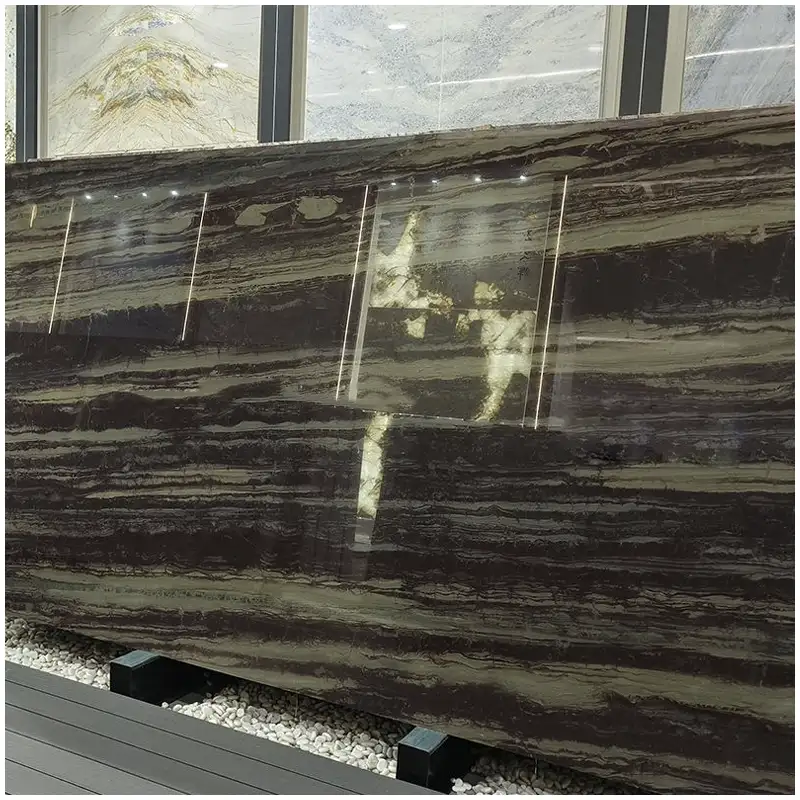
Calacatta Marble Batch Matching for Hotel Bathrooms: Stop Patchwork Before Cutting
Last winter, I lined up twelve Calacatta slabs for a bathroom package and could tell the argument was coming before the architect arrived. Four had a milky field, five were colder, and three carried a soft gold cast under 3000K. The original sample came from the first group. The site had already installed the second. Don’t just look at samples. Lighting lies.

Calacatta marble batch matching is what stops a corridor of bathrooms from becoming a collection of unrelated whites. It starts with an honest range, not a promise that every slab will look copied from the sample. That slab doesn’t belong next to your bathtub when its warm ground sits beside a cool one with the same nominal name.
Set the permitted range before you call it a batch
I divide the inspected slabs by background, dominant vein, and movement scale. Then I photograph them under 4000K warehouse light and under the planned room light if the fittings are available. The range is written down: cool white with grey veining, warm white with soft gold, or a separate feature selection. Vague phrases such as “natural variation accepted” do not protect a project.
A clear Calacatta beyaz mermer approval also needs a rule for where stronger slabs may go. A large lobby wall can take movement that would overpower a compact vanity surround. We do not mix them simply because the cartons share a name.
| Batch control point | Warehouse decision | Site consequence if ignored |
|---|---|---|
| Background tone | Separate cool, neutral, and warm groups | Bathrooms read patchy under identical lamps. |
| Vein scale | Reserve large movement for feature positions | Small pieces appear noisy and unplanned. |
| Dry-lay sequence | Number transitions before cutting | Bookmatch logic disappears at corners. |
| Replacement reserve | Hold matching pieces before packing | Later repairs introduce a different white. |
The Hard-Won Lesson: A replacement slab is not a replacement if the block changed
A hotel lost two vanity pieces during installation. The team ordered replacements four months later, using the same Calacatta name. The new pieces were clean and technically sound, but 4000K photographs showed a blue-white ground beside the installed creamy batch. The client replaced an entire group of vanities rather than accept two obvious strangers.
The Lesson: Reserve replacement pieces from the approved block before the first crate closes.
Calacatta marble batch matching needs a dry-lay, not wishful thinking
Dry-lay exposes things photos soften: a vein that loses its line at a door return, a slab that goes yellow under the edge of a mirror light, or two pieces that look alike until their polish catches the same reflection. I make the team stand back at least three metres. That is the distance a guest will see first.
For a quieter secondary area, Carrara beyaz mermer levhaları may be placed as a deliberately separate material zone rather than forced into a Calacatta batch. Clear contrast is less troublesome than an accidental near-match. Don’t just look at samples.
Divide the project by visual zones before production starts
A hotel does not need every bathroom to look copied from the same slab. It does need each public sequence to feel controlled. I may place one approved background range in standard rooms, reserve bolder movement for suites, and keep a third selection for a reception feature. The client then sees an intentional material hierarchy rather than random differences created by the cutting list.
Do not allocate material by crate order. Allocate it by room schedule and view. A warmer slab can sit comfortably in a warmer-lit suite, while the same slab may look wrong beside a cooler corridor opening. We mark those positions while the slabs are still standing upright. Once a random piece is cut into four vanity parts, the opportunity is gone.

At the dry-lay, I also look at polish and edge finish. Two slabs can share a background but reflect differently after different polishing pressure or a changed abrasive sequence. A phone photograph is weak evidence for that. Stand there, move your head, and let the light travel across the faces. Lighting lies. A flat image lies even more.
Make the cut list follow the approved material map
Once the batch is split, the cutting team needs more than piece sizes. They need a material map. I want every visible vanity, jamb, wall return, and threshold assigned to a numbered slab before the saw starts. The map should identify the view direction and the face that will sit beside the next piece. A correct dimension cut from the wrong portion of the slab is still a wrong piece.
Offcuts have value when they are managed. A small quiet offcut may be exactly right for a repair, an access panel, or a niche return. A dramatic offcut can be an excellent feature insert but a terrible substitute for a calm standard-room top. We label these pieces while the block information is still clear. Later, when a room count changes, the team knows what it can use without breaking the approved visual range.
Do not send the stone to cutting in the order it happened to be photographed. The project order should follow room priorities. Suites, public visible areas, and repeated rooms need their own allocation logic. When that logic is written, a late design change becomes a controlled decision. When it is not, someone takes the nearest slab and calls it natural variation.
Watch the transition between rooms
In a hotel, the door opens and the guest sees the floor, vanity, mirror, and wall in one quick view. That is why two rooms with acceptable internal variation can still look wrong if adjacent doors reveal radically different whites. I walk the room sequence, not only individual bathrooms. A project can accept a warmer suite group, for example, but it should not alternate warm and cool across a corridor without intention.
Take photographs from the corridor and from inside the bath under finished light. Keep the camera settings consistent, but do not mistake the record for the judgment. We still stand there and look. Don’t just look at samples; do not just look at screens either.
Protect the approval when people change
Long projects lose information when the original architect, site manager, or factory coordinator changes. The approved range, numbered slab plan, dry-lay images, and spare-piece list should sit in one handover file. I have watched a new team member reject correct material because nobody gave them the first approval. That was not a marble problem. It was a record problem.
For each shipment or room release, compare the crate list to the material map before it leaves. You do not need a grand process. You need a person willing to ask whether the named pieces are the pieces the drawing promised. Lighting lies, but a numbered record gives the next person a fair chance to see the truth.
Finally, do not mix a replacement decision with a schedule panic. If a piece does not sit inside the accepted range, isolate it, photograph it beside the approved reference, and decide where it can honestly belong. Forcing it into the first open room only moves the dispute from the warehouse to the finished floor. That slab doesn’t belong next to your bathtub just because the installer is waiting.
When the team accepts a deliberate alternate zone, name it on the room schedule. A clear decision can be defended. An accidental substitution cannot. That is the difference between natural variation and a patchwork result.
I also ask the team to keep the original sample beside the approved range rather than treating it as the whole standard. The sample is useful as a reference for finish and general character. It cannot overrule the documented full-slab selection. Don’t just look at samples; use them in their proper place.
Understanding batch control in today’s white marble market
Why a named material is not a colour code
Natural marble is not factory paint. Block conditions, mineral content, and cutting direction change the field and movement. The Complete Project Guide to Premium White Marble Selection and Quality Control is built around that fact: define what the project accepts before the cut list turns variation into a dispute.
What to do when site material does not match
Photograph the affected pieces under the installed lighting. Stop fitting the related area. Then compare the site images with numbered dry-lay photos and the original approval record. Lighting lies, but records do not need to.
Frequently asked questions
1. Can Calacatta marble from different blocks be used in one hotel?
Yes, but treat them as separate approved zones unless full-slab review proves the tone and movement sit together naturally.
2. How many slabs should be held as replacement stock?
It depends on the scope and cutting yield, but the reserve must come from the approved material rather than an assumed future match.
3. Does Calacatta marble batch matching matter for small vanity tops?
It often matters more because small surfaces sit close together under direct mirror lighting, making undertone changes easy to spot.
4. Why use both 3000K and 4000K during approval?
The two conditions expose warmth, blue cast, and reflection changes that can remain hidden in a single warehouse setting.
5. What should happen if a batch mismatch appears after delivery?
Document the pieces, pause the affected installation, and compare them against the signed slab and dry-lay records with the supplier.
Final Conclusion
I cannot make two blocks become identical, and I will not pretend a sample can do that job. Divide the range, dry-lay the visible areas, hold a real reserve, and document the approved light. That is how you keep a hotel from becoming patchwork, and Esta Stone would rather separate two honest batches than disguise a mismatch until installation.

Kaynaklar
Dimension Stone Design Manual, Natural Stone Institute.
Marble Dimension Stone, ASTM International.
Natural Stone Care and Maintenance, Natural Stone Institute.
Technical Guidance on Natural Stone, Stone Federation Great Britain.
Bathroom Planning Guidelines, National Kitchen and Bath Association.
Handbook for Ceramic, Glass, and Stone Tile Installation, Tile Council of North America.