A full slab and a box of tiles can carry the same marble name yet create completely different walls. Susan Zheng explains how joint count, vein scale, batch range, cut yield, handling, substrate, wet-zone details, replacement, and lighting change the decision. The comparison is built around real approval evidence: full faces, tile range boards, room elevations, dry-lay records, cut maps, and installed light. It helps project teams choose the format that suits the design and site instead of treating slab and tile as interchangeable packaging.
A white marble name is not a color guarantee. Susan Zheng follows the stone from sample and full-slab photographs through lighting tests, layout, cutting, dry-lay, wet-zone review, and batch release. The guide separates Calacatta, Carrara, Statuario, and Sivec by the behavior project teams can actually see and control. It also explains price drivers, finish choices, bathroom risks, supplier evidence, and what to record before a saw removes the option to regroup the material across hotels, villas, and commercial interiors worldwide.
Calacatta Viola carries bold burgundy, violet, gray, and warm mineral movement that can dominate a wall, vanity, or feature panel. Susan Zheng maps the actual elevation onto numbered slabs, protects structural bridges around openings, chooses intentional vein breaks, and dry-lays adjacent pieces before packing. The method gives design and fabrication teams a shared visual record, reducing the chance that a dramatic vein disappears into a sink cutout or breaks awkwardly at a joint. A compatible reserve remains identified for future repair.
White marble does not change color when a lamp changes, but the viewer’s perception certainly does. Susan Zheng compares Calacatta Gold under warm 3000K and neutral-white 4000K conditions, then connects undertone, vein color, polish, wall reflection, mirror lighting, and full-slab photography. The warehouse method gives designers and project teams a repeatable way to approve the material in a light that resembles the finished bathroom, hotel, villa, or commercial interior. The same framing keeps every comparison honest and traceable at handover.
El örneği, cilayı ve genel rengi gösterebilir; ancak bir Calacatta levhasının ölçeğini, aralıklarını, yönünü veya kesintilerini ortaya çıkaramaz. Susan Zheng, tam yüzeyler, parti aralığı, aydınlatma koşulları, damar ilişkileri, kesme üst örtüleri, kuru döşeme kanıtları ve yedek malzeme için depo onay yöntemini belirler. Bu kontroller, mimarların, iç mekan tasarımcılarının, otel ekiplerinin, müteahhitlerin ve taş ithalatçılarının, görsel sırayı yeniden düzenlemek imkânını ortadan kaldırmadan önce hangi parçaların birlikte kullanılacağını kararlaştırmalarına yardımcı olur. Her ayrılan yüzey, numaralandırılmış bir onay kaydı tutar.
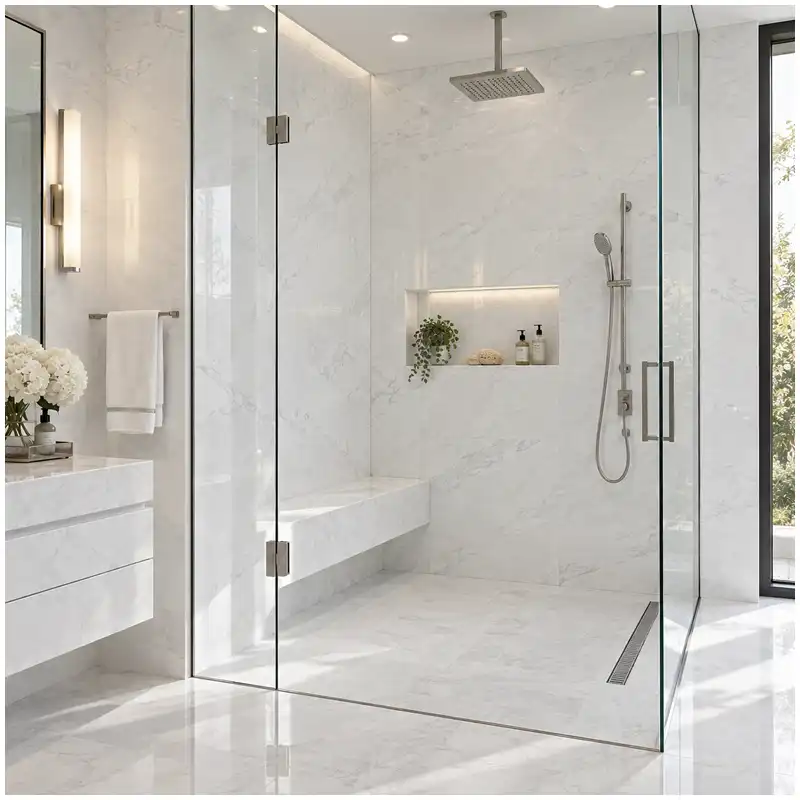
A white marble sample that looks calm under warehouse LEDs can turn cream, grey, greenish, or painfully bright inside a glassy shower with changing daylight. Susan Zheng sets a strict approval routine: inspect full slabs dry and damp, compare them under daylight and the specified artificial lighting, test finish and glare, map veins around niches and fittings, verify batch range, and approve a complete wet-zone mockup before cutting. The stone must survive the room's real light, not one flattering photograph.
A bathroom vanity top supplier needs more than one neat sample when white marble repeats across hotel rooms or villa bathrooms. Shade range, sink-hole position, backsplash strips, finish choice, edge polish, and wet-zone behavior all need to be documented before cutting. A mock-up room helps set the target, but later batches still need full photos and batch notes so the second shipment does not look colder than the first. Repetition makes weak approval records very expensive for the whole project.
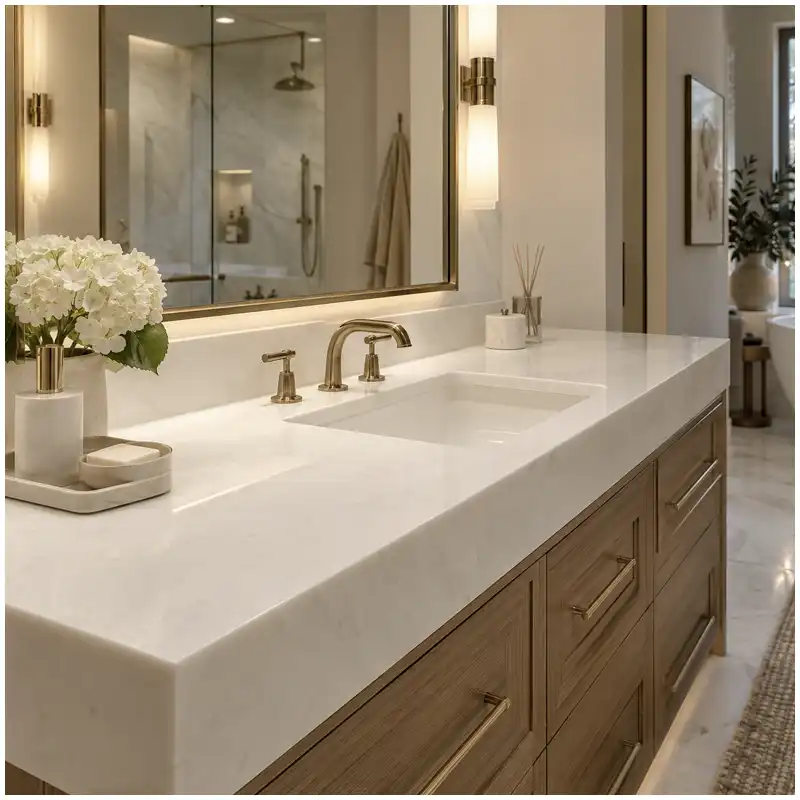
A marble vanity countertop has to survive sink cutouts, faucet holes, water marks, mirror light, and daily cleaning. The prettiest slab corner may become a problem if a strong vein crosses both basins or a cloudy patch lands at face height. Approval should include full slab photos, cutout marking, edge notes, backsplash planning, batch tone, and a realistic wet-zone maintenance record before the saw starts. The vanity area rewards blunt checks more than polite samples, especially in repeated bathrooms later.
Bir beyaz mermer levha tedarikçisi yalnızca isimlerle Calacatta, Carrara, Statuario ve Sivec’i seçemez. Her malzeme farklı bir arka plan tonu, damar ritmi, parti aralığı ve banyo ışığı toleransına sahiptir. Tam levha fotoğrafları, renk kayıtları, bitiş notları ve yerleşim eskizleri, sıcak bir levhanın soğuk birinin yanına düşmesini önlemeye yardımcı olur. Küçük örnekler faydalı kalmaya devam eder; ancak birkaç oda veya parça gerçek aydınlatma altında ve kesim başlamadan önceki tekrarlı denetimler sırasında eşleşmek zorunda kaldığında tüm kararı taşıyamazlar.
Sivec white marble needs full slab approval before any bathroom project relies on a small sample. Carrara comparisons, batch warmth, grey undertones, finish behavior, and mirror lighting can all change how the stone reads beside a vanity or bath wall. The safest approval file includes upright photos, close views, selected slab numbers, rejected options, and placement notes for wet areas, backsplashes, and repeated rooms. Clear records keep the final room from looking colder or busier than expected after installation later.
Statuario marble can look clean in a small sample and turn cold, busy, or uneven when the full slab meets bathroom lighting. Warehouse approval should check full slab photos, grey vein placement, batch range, finish choice, and wet-zone use before cutting. Upright photos, color-temperature comparison, and clear placement notes matter when sink holes, backsplashes, and wall panels come from the same batch. A stricter record reduces arguments after the stone reaches the room and gives the installer a clearer target.