

White Marble Slabs: Complete Guide to Types, Selection, Price, Bathrooms, Lighting, and Batch Control
I rejected six slabs for a hotel bathroom package after the designer had already approved the sample. Under our warehouse inspection light, the sample looked clean and neutral. Under the project’s 3000K lamp beside a warm wall tile, the full faces turned creamy and one slab carried a grey-green cast through the center. The material was genuine. It was simply wrong for that approved room. Don’t just look at samples.

The argument lasted until we placed the sample on each full face and switched between a consistent inspection light and the warm fixture selected for the bathroom. Lighting lies, especially when people compare photographs taken on different days. The team finally approved a tighter group and used the warmer pieces in another zone. That slab doesn’t belong next to your bathtub if its wet and warm-light behavior already bothers you in the warehouse.
How White Marble Slabs Differ Beyond the Name
Commercial names help us begin, but they do not lock natural marble to one printed color. The full face records changing mineral conditions, fracture filling, deformation, and cutting direction. I care about what the project will see: background tone, vein color, vein scale, direction, cloudy areas, repaired lines, open fissures, translucency at thin edges, and finish response.
I use White Marble Slab Supplier: Calacatta, Carrara, Statuario, and Sivec when the team needs to separate a material-family decision from the later batch approval. A supplier name or quarry story does not replace photographs of the actual available faces.
Calacatta: bold movement needs space
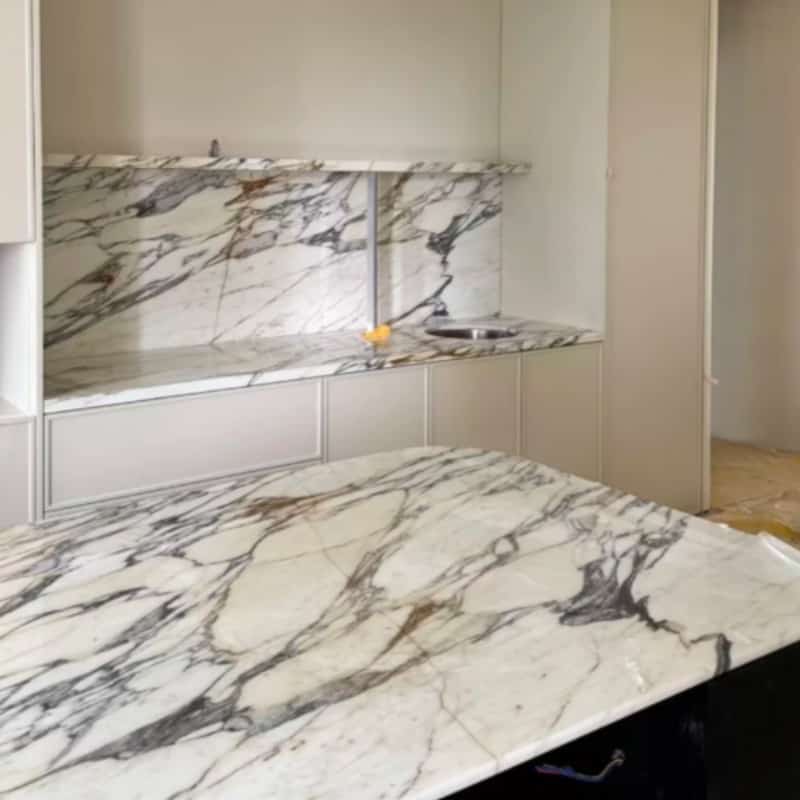
Calacatta often carries a brighter field with stronger, less frequent veins than many Carrara selections, though the range is broad. I map the strongest movement before sink openings, joints, or corners decide it for me. A vein that looks elegant on a 100-millimeter sample can cut through a full vanity like a lightning strike.
The available Calacatta slab selection still needs face-by-face approval. I mark orientation and intended area on the image. If a designer wants one expressive wall, I reserve the connected faces before smaller pieces consume the best movement.
Carrara: quieter does not mean identical
Carrara can offer a softer grey field and finer movement, but I do not sell the word “quiet” as a guarantee. One batch may read cool and misty. Another may carry warmer clouds or stronger diagonal lines. Across two hundred square meters, those differences become a floor pattern whether the designer planned one or not.
I compare actual Carrara slab faces in groups, then note which rooms can accept a wider range. Don’t just look at samples. A small chip often misses the cloudy transition that controls the full panel.
The Carrara Marble Supplier for White Marble Project Orders check keeps that grouping connected to quantity, batch evidence, finish, and room allocation.
Statuario and Sivec: pale fields expose small mistakes
Statuario commonly attracts projects that want a bright field with decisive grey movement. That contrast makes layout errors loud. The Statuario Marble Slab Approval: Photos, Lighting, and Bathroom Planning process keeps the vein away from a sink opening that would break its visual path.
Sivec is often selected for a pale, crystalline background and controlled grey markings. Under warm light it can read softer; beside very cool surfaces it may reveal a faint warmth the sample board hid. I review Sivec marble under both the project light and a consistent comparison light before assigning it across rooms.
I use Sivec White Marble for Hotels, Villas, and Commercial Interiors when the same pale field must remain controlled across several public and private areas.
Samples, Full-Face Photos, and Supplier Evidence
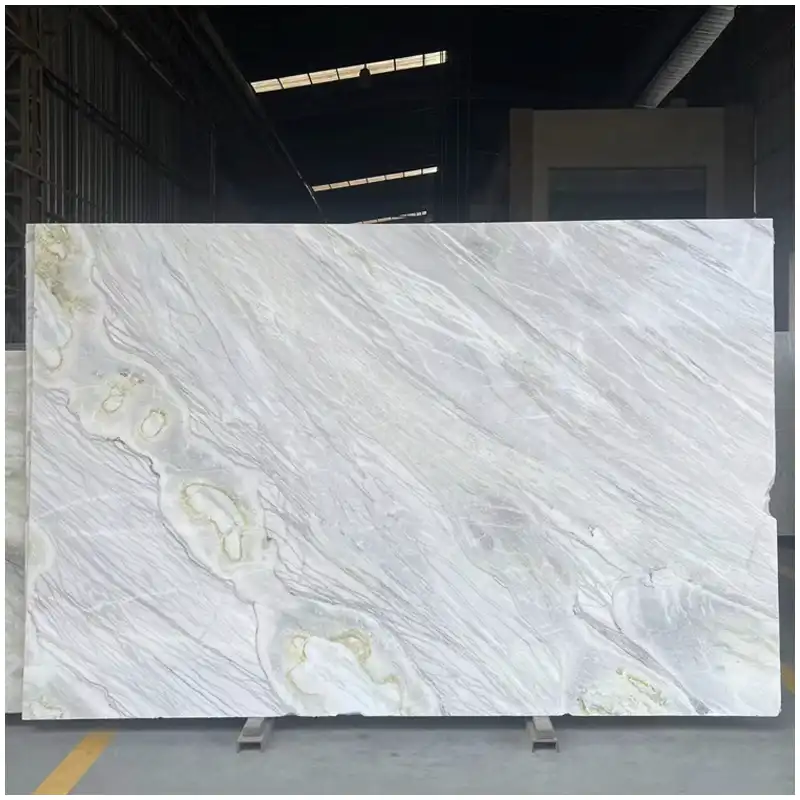
A sample answers limited questions: general material, finish, touch, and approximate tone. It cannot approve vein distribution, large cloudy areas, repaired zones, or the relationship between several faces. I request straight full-face images with labels and dimensions, plus closer photographs of features that need discussion.
A capable white marble slab supplier should keep the slab identifier visible in every photograph and carry it into the cutting map. I ask whether images were corrected for color, which light was used, whether the face was wet, and whether the slab shown is reserved. A beautiful unreserved photograph is not an approval option.

I also ask for the finish actually specified. Polished surfaces reflect the room and can sharpen contrast. Honed surfaces scatter light and may soften movement, but they can show touch, water, and maintenance differently. Comparing a polished photograph with a honed order is asking for a later argument.
Lighting and Undertone Approval
I use a controlled comparison condition to group material, then a representative project condition to predict the room. A 4000K lamp often helps people see cooler grey differences more clearly. A 3000K lamp can warm the field and surrounding beige surfaces can push that effect further. I do not claim one universal color shift because lamp spectrum, color rendering, wall finish, and reflection all matter.
Lighting lies when the camera makes two conditions look the same. I place the same reference card and approved sample in each frame, keep exposure consistent, and name the lamp condition in the file. Phone auto-white-balance is useful for casual pictures and dangerous for final color approval.
The strongest check is physical. Put the face near the cabinet-free room finishes: wall tile, metal, paint, mirror, and grout. View it from the expected distance. Then wet a controlled test area if the application is a bathroom. The temporary darkening may reveal features that will appear during real use.
| Warehouse check | Pass evidence | Reject or regroup trigger |
|---|---|---|
| Background tone | Approved sample shown on every full face under named light | One face reads outside the accepted warm or cool range |
| Vein direction | Marked arrows agree with elevation and cut map | Strong movement terminates at an unplanned joint or cutout |
| Finish | Production finish viewed in side light and normal room light | Uneven sheen, visible scratches, or unacceptable repair reflection |
| Wet-zone behavior | Controlled wet test dries back to the accepted appearance | Project team rejects temporary darkening or maintenance demand |
| Batch grouping | Faces grouped by room or elevation with traceable codes | Patchwork range appears inside one continuous visible area |
Bathrooms, Showers, Vanity Tops, Walls, and Floors
White marble can work in bathrooms when the project accepts natural stone behavior and maintains it properly. Acidic cleaners can etch calcite-based marble. Water and oils can temporarily deepen color. Grout, adhesives, waterproofing, drainage, sealers, and cleaning routines affect the finished result. I do not promise that sealing makes marble stain-proof or etch-proof.
For vanity tops, I place the slab photograph under the cutout drawing. The strongest vein may look powerful until the sink removes its center and leaves two disconnected fragments. Faucet holes also need distance from veins, edges, and repaired zones. That slab doesn’t belong next to your bathtub if the team refuses the maintenance and wet appearance it will require.
The Marble Vanity Countertops: Sink Cutouts, Veins, Light, and Batch Tone review fixes those visible conflicts before the bowl removes the only usable part of an approved face.
Shower walls need drainage, movement joints, compatible setting materials, and realistic cleaning. Floors add slip, wear, and traffic questions. A polished sample that looks bright in a boardroom may be wrong for a wet floor. I separate visual approval from technical suitability and require both.
Batch Matching, Cut Layout, and Dry-Lay
White marble batch matching does not mean making natural stone identical. It means defining an accepted range and placing variation intentionally. I group faces by background tone, vein scale, direction, and visual weight. Then I assign those groups to rooms or elevations before cutting reduces my options.
The Calacatta Marble Slabs: Mistakes to Avoid in Project Orders warning applies to every high-contrast selection: approve the face and the cut map together. A full slab can be accepted while one proposed cut still ruins the movement.
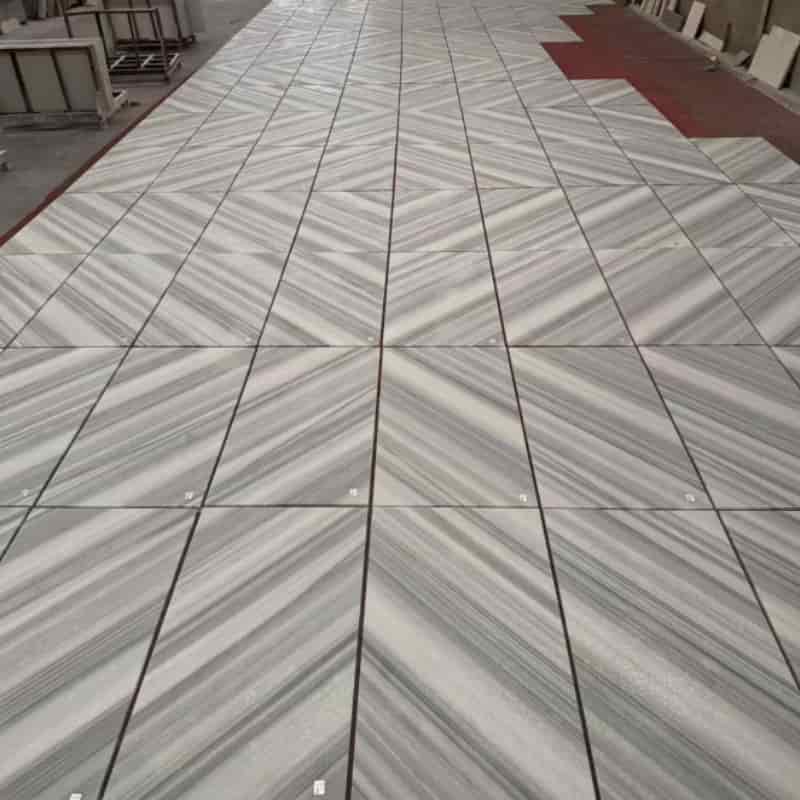
During white marble dry lay, I check sequence, joint transitions, orientation, background range, repeated room balance, edge finish, code visibility, and cutout placement. I photograph the entire arrangement straight on, then close joints and any exception. The dry-lay file must match the labels that reach packing.
The Hard-Won Lesson: Approve the Vein After the Cutout Is Drawn
A villa client reserved a Statuario face because one diagonal vein gave the slab its character. The sink drawing arrived later. Its bowl removed the center of that vein and left two dark ends pointing at the cutout. The replacement layout delayed cutting by four days, but it saved a vanity the client would have disliked every morning.
The Lesson: Never approve a feature slab without placing every cutout and joint on the actual face.
Price Drivers Without False Precision
Price changes with variety, quarry and block availability, slab dimensions, thickness, finish, selected range, usable yield, repairs, bookmatch potential, fabrication, packing, and quantity. A tighter background range can cost more because fewer available faces qualify. Large connected panels can increase waste when movement must continue across joints.
I separate material price from project cost. Full-face selection, dry-lay, marked cutting plans, edge work, sink cutouts, reinforcement, sealer trials, packing, and replacement allowance all add work. A lower slab price can become an expensive installed result when yield is poor or the batch needs repeated regrouping.
Ask for a quotation tied to actual scope. The supplier needs area, dimensions, thickness, finish, quantity, accepted range, layout requirement, cutouts, destination, inspection level, and packing expectation. If those items remain unknown, the number is an assumption, not a finished project price.
How to Approve the Order Before Cutting
I keep one approval folder with the sample reference, full-face photographs, labels, dimensions, lighting notes, accepted range, cut map, drawing revision, finish sample, dry-lay requirement, wet-zone notes, and sign-off. Each decision has a date and responsible person. An unlabelled screenshot does not enter the folder.
My white marble batch matching record also shows which faces can exchange rooms and which cannot. That matters when cutting discovers a hidden fissure or the site changes one opening. A controlled substitute should come from an already accepted visual group, not from whichever slab happens to be closest to the saw.
Don’t just look at samples. Compare the whole visual field, then check the detail that fabrication will disturb. Lighting lies, so record the project lamp condition. If the finish, batch, or layout changes, reopen the affected approval rather than assuming the old sign-off still applies.
I file the white marble dry lay photographs beside the final piece schedule, not in a separate chat thread. The whole view, close joints, piece codes, orientation, and approved exceptions need to remain together when the material moves from warehouse floor to crate and then to the room.
Understanding White Marble Slabs in Today’s White Marble Market
Why natural variation needs control, not denial
Variation is part of marble, but a project can define where it is acceptable. Full-face evidence and planned grouping let natural character remain visible without turning a continuous room into an accidental patchwork.
How options narrow during production
Before cutting, I can rotate a face, exchange its room, move a joint, or choose another slab. After fabrication, cutouts and finished edges fix relationships. That is why the strongest visual decisions belong before the saw starts.
What to do when the site sees a mismatch
First, photograph the full installed or unpacked area and the close difference under the actual light. Second, stop further installation. Third, send the supplier the images with full-face approvals, lighting notes, dry-lay record, piece codes, and packing information for comparison.
Frequently Asked Questions
1. Are white marble slabs all the same color within one variety?
No. Genuine material can vary in background warmth, clouding, vein color, scale, and direction. Approve an accepted range with full-face evidence, then group the material by room or continuous elevation before cutting.
2. Which is better for bathrooms: Calacatta, Carrara, Statuario, or Sivec?
The answer depends on the visual range, finish, wet-zone design, maintenance expectations, available slab dimensions, and layout. I choose actual faces for the room instead of declaring one commercial name universally better.
3. Does sealing stop white marble from etching?
No. A suitable impregnating sealer may reduce absorption risk, but it does not prevent acid from reacting with calcite. Test the specified finish and sealer, use compatible cleaners, and make sure the project accepts normal patina and maintenance.
4. How should a project approve white marble under different lighting?
Use one consistent inspection condition to compare faces and a representative project condition to predict the room. Keep exposure, reference sample, lamp information, and surrounding finishes visible in the approval record.
5. What should I do first if installed marble shows an unexpected batch shift?
Photograph the entire area and the close difference under the actual room light, stop further installation, and send the supplier the images with full-face approvals, lighting notes, dry-lay record, piece codes, and packing information.
Quick-Reference Checklist for White Marble Approval
- Compare every full face with the approved sample under a named inspection light.
- View the selected group under the actual 3000K or 4000K project condition.
- Place cutouts, joints, and vein arrows on the slab image before cutting.
- Group background tone and movement by room or continuous elevation.
- Inspect the production finish in front light and side light.
- Photograph the complete dry-lay with readable piece codes.
- Keep wet-zone tests, sealer notes, and maintenance expectations in the approval file.
Final Conclusion
White marble slabs need a record that respects natural variation without using it as an excuse for careless approval. Name the variety, inspect the actual faces, test the light, map the cutouts, group the batch, verify the finish, and photograph the dry-lay before the project loses its choices.
That slab doesn’t belong next to your bathtub when the team dislikes its wet or warm-light behavior before installation. Don’t just look at samples; I would rather reject one wrong face in the warehouse than help an Esta Stone project explain a finished-room return.

References
- Dimension Stone Design Manual, Natural Stone Institute.
- Natural Stone Institute Technical Bulletins on Marble Care and Maintenance, Natural Stone Institute.
- C503 Standard Specification for Marble Dimension Stone, ASTM International.
- C97 Standard Test Methods for Absorption and Bulk Specific Gravity of Dimension Stone, ASTM International.
- C880 Standard Test Method for Flexural Strength of Dimension Stone, ASTM International.
- Bathroom Planning Guidelines, National Kitchen and Bath Association.
- Technical Guidance for Natural Stone, Stone Federation Great Britain.
- Search Essentials and Helpful Content Guidance, Google Search Central.