Why Taj Mahal Quartzite Remains the Ultimate Luxury Standard for 2026: A Strategic Material Analysis
In the 2026 luxury design landscape, the full product range of Taj Mahal Quartzite at Esta Stone Factory has moved beyond a trend to become the definitive “Global Standard” for high-net-worth architectural projects. While the industry sees a flux of fleeting aesthetic fads, this Brazilian Quartzite remains unrivaled due to its unique “crystalline hardness” (7.0 Mohs) and its ethereal, light-refracting creamy palette that anchors the “warm minimalism” movement.

Our objective is to dissect the enduring supremacy of Taj Mahal Quartzite through a tripartite lens: its rare geological stability, its alignment with the “Quiet Luxury” financial movement, and its superior performance metrics against both natural rivals and premium synthetics. This report establishes why Taj Mahal is not merely a surface choice, but a primary architectural asset for the next decade of high-end development.
1. The 2026 Paradigm Shift: From “Display” to “Legacy.”
In the global luxury landscape of 2026, the definition of opulence has undergone a profound structural change. We are witnessing the rise of “Generational Wealth Investment” in interior design—a movement where ultra-high-net-worth individuals (UHNWIs) prioritize materials that appreciate in aesthetic and financial value over decades, not seasons.
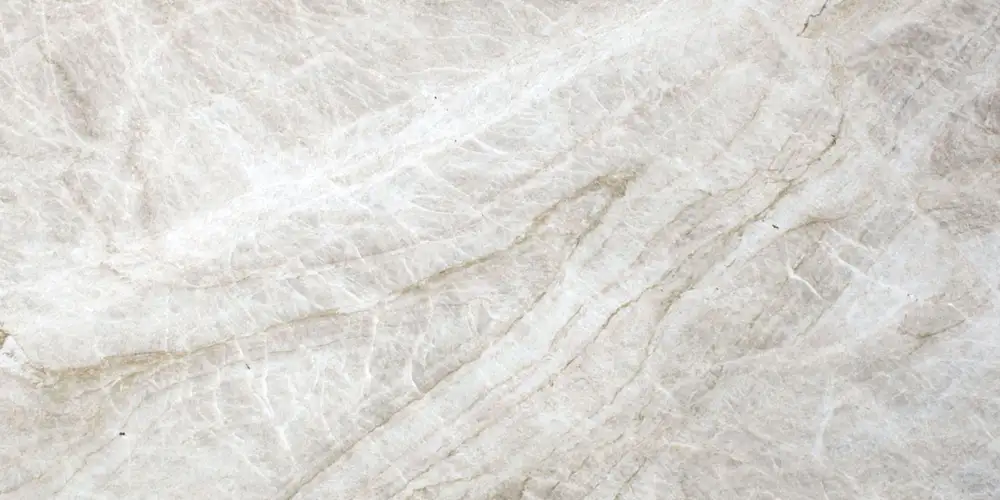
Taj Mahal Quartzite has emerged as the sovereign of this Earth-Centric Design movement. It is no longer viewed as a mere countertop; it is a “Geological Anchor.” As digital fatigue drives a craving for authentic, tactile environments, Taj Mahal’s crystalline depth provides a biophilic connection that synthetic alternatives—and even many volatile marbles—cannot offer. In 2026, the ultimate luxury is permanence, and Luxury Quartzite Taj Mahal is its most resilient ambassador.
2. The Geological Foundation: Understanding the “Genuine” Quartzite
The story of Brazilian Quartzite begins millions of years ago as sandstone. Under extreme heat and pressure, the stone undergoes metamorphosis, transforming into a dense, interlocked crystalline structure. This process gives Taj Mahal Quartzite Slabs their exceptional hardness—ranking 7 on the Mohs scale, compared to marble at 3 and granite at approximately 6.

This hardness translates directly into real-world performance. Unlike marble, which can etch when exposed to acidic substances, Taj Mahal Quartzite Countertops remain stable and resistant, making them ideal for high-traffic environments. The material’s durability ensures that it retains both its structure and its polished finish over time.
3. The “Luminous Depth” Factor: Beyond Surface Aesthetics
A critical differentiator for Taj Mahal Quartzite Slabs in 2026 is their unique interaction with modern circadian lighting systems. Unlike the flat, printed surfaces of porcelain or the opaque density of granite, Taj Mahal possesses a micro-crystalline structure that allows for Sub-Surface Scattering.
This means light doesn’t just hit the surface; it enters the stone, refracts, and glows from within. In high-end wellness-focused residential design, this “Internal Radiance” is used by architects to create environments that change mood throughout the day—from a crisp, energizing white in the morning sun to a warm, candle-lit amber in the evening. This is the Haptic Intelligence that synthetic materials simply cannot decode.
4. The Sovereign Choice: Taj Mahal vs. The “Prestige Tier” Icons
To justify why Taj Mahal Quartzite remains the definitive 2026 standard, we must analyze its performance against its only true rivals in the ultra-luxury sector: Calacatta Paonazzo, Patagonia Quartzite, and Sodalite Blue.
| Strategic Attribute | Taj Mahal Quartzite | Calacatta Paonazzo Marble | Patagonia Exotic Stone |
|---|---|---|---|
| Structural Density (Mohs) | 7.0 (Extreme Resilience) | 3.0 (Prone to Etching) | 6.0-6.5 (Highly Fragmented) |
| Visual Longevity | Timeless “Living Neutral” | Iconic but High-Trend Risk | Dramatic / High Visual Fatigue |
| Investment Utility | Universal ROI (Low Risk) | Specific (Collector Niche) | High (Specialist Designs Only) |
While Patagonia Quartzite offers theatrical drama and Calacatta Paonazzo provides classical prestige, they both carry significant “maintenance debt” or design limitations. Taj Mahal wins the 2026 standard because it is the only material that offers High-Fidelity Aesthetics without the fragility.
5. Strategic Applications: The Architecture of Wellness
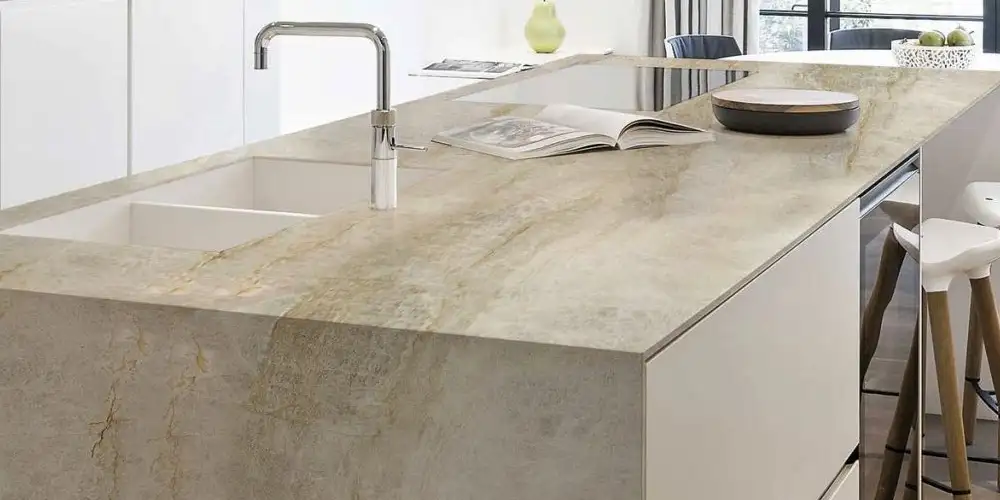
In 2026, Taj Mahal Quartzite Floor Tiles and wall panels are being integrated into wellness-certified buildings. Its VOC-free mineral composition ensures superior indoor air quality, while its cool-to-the-touch surface supports thermal comfort.
Beyond the iconic Taj Mahal Quartzite Kitchen Countertops, we see this stone used for monolithic fireplaces, integrated spa vanities, and expansive Taj Mahal Quartzite Vanity Tops that create a spa-like serenity. For more inspiration on these high-end layouts, review 2026 design inspirations.
6. The Preservation Protocol: Sustainable Longevity
Maintaining the “Ultimate Luxury Standard” requires a focus on sustainable care. Periodic sealing with high-purity impregnating sealers ensures that Taj Mahal Quartzite Tiles remain pristine for decades. This longevity is the core of its sustainability story—one natural surface can outlast three cycles of synthetic replacements. For detailed care insights, refer to our expert care guide.

7. The Investment Logic: ROI in High-End Real Estate
Appraisers in the $5M+ residential market consistently differentiate between “natural stone” and “engineered surfaces.” Properties featuring Luxury Quartzite are often classified as premium assets, while synthetic imitations may be categorized as depreciating finishes. Over a 30-year period, Taj Mahal offers lower lifecycle costs and significantly higher resale value.
8. 2026 Trending FAQs: High-Stakes Q&A
Q: Why do appraisers value Taj Mahal Quartzite higher than Statuario Marble in 2026?
A: Market data shows that Statuario and Calacatta, while prestigious, are increasingly seen as “high-maintenance liabilities” in professional-grade home kitchens. Taj Mahal Quartzite is classified as a “Permanent Architectural Improvement” because it does not degrade, etch, or require frequent restoration, leading to a 12-15% higher retention of property value.
Q: Is it true that Taj Mahal Quartzite can improve the “Wellness Rating” of a building?
A: In 2026, biophilic design standards (like WELL Certification) prioritize natural mineral surfaces over resin-bonded ones. As a 100% natural, VOC-free material, Taj Mahal supports indoor air quality and provides a grounding, organic tactile experience that supports psychological well-being.

Q: How does Taj Mahal handle the 2026 “Outdoor-Indoor” flow trend?
A: Unlike many luxury stones that fade under UV exposure, Taj Mahal Quartzite Floor Tiles are UV-stable and extremely dense. This allows architects to use the same material for a luxury living room and an adjoining terrace, creating a seamless visual infinity.
Q: How does Taj Mahal Quartzite handle high-heat professional kitchens?
A: Unlike engineered quartz which contains resin binders, 100% natural quartzite is thermally stable. It can withstand direct contact with hot cookware far beyond the limits of synthetic surfaces, making it the preferred choice for celebrity chef kitchens.
Q: Can Taj Mahal be backlit like Onyx?
A: While not as transparent as Onyx, certain high-purity bundles exhibit significant translucency. When sliced at 20mm and paired with high-output LED arrays, it produces a sophisticated “internal glow” that is far more understated and elegant than Onyx backlighting.
Q: Does the price of Taj Mahal Quartzite vary significantly between “Commercial” and “Premium” grades?
A: Yes. Premium-grade Taj Mahal Quartzite Slabs feature a translucent, high-clarity background with minimal “rust” spots or black mineral clusters. Investing in First-Choice Slabs from a reputable Taj Mahal Quartzite Factory ensures visual purity, which is the key driver of property resale value.
Q: How does Taj Mahal Quartzite handle high-heat professional kitchens?
A: Unlike engineered quartz which contains up to 10% resin, 100% natural Taj Mahal Quartzite is thermally stable. It can withstand direct contact with hot cookware far beyond the limits of synthetic surfaces, making it the preferred choice for celebrity chef kitchens and luxury residential culinary hubs.
9. Conclusion: The Future is Authentic
The rise of Esta Stone 18mm Thickness Taj Mahal Quartzite signals a broader return to authenticity in luxury design. It bridges the gap between ancient geological processes and modern architectural innovation. For those seeking materials that offer both beauty and financial substance, this Luxury Quartzite represents the ultimate choice.

References blogs about Brazilian Exotic Taj Mahal Quartzite | Esta Stone
- Why Taj Mahal Quartzite is the Definitive Choice Over Synthetic Counterparts in 2026
- Taj Mahal Quartzite for Luxury Interiors in 2026
- The 2026 Quartzite Report: Why Taj Mahal is Redefining Ultra-Luxury Real Estate
- 2026 Why Taj Mahal Quartzite Dominates Luxury Middle East Projects
- Top 15 FAQs of Taj Mahal Quartzite You Should Know
- Why Choose Taj Mahal Quartzite For Interior Deco Projects
- Taj Mahal Quartzite For 2026 Best Interior Designs
- Luxury Stone Art of Taj Mahal Quartzite
- How to Source Premium Taj Mahal Quartzite Slabs: A Wholesaler’s Inspection Checklist
Taj Mahal Quartzite represents a decisive evolution in luxury material selection. It outperforms synthetic surfaces across tactile experience, visual depth, and sustainability. For architects and developers aiming to create timeless, high-performance spaces, specifying natural quartzite is not just a design choice—it is a strategic investment in authenticity and longevity.