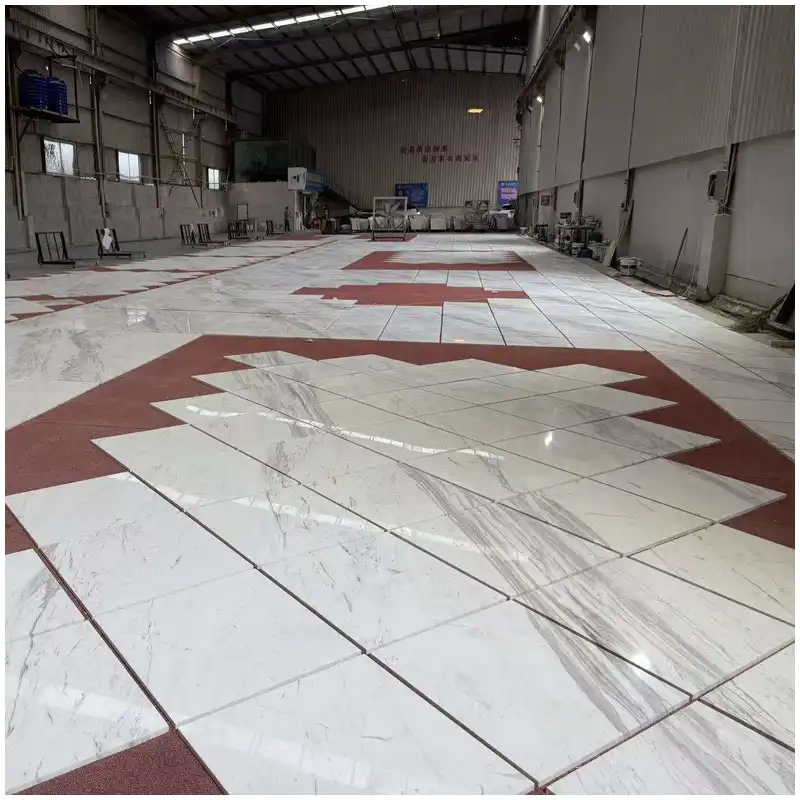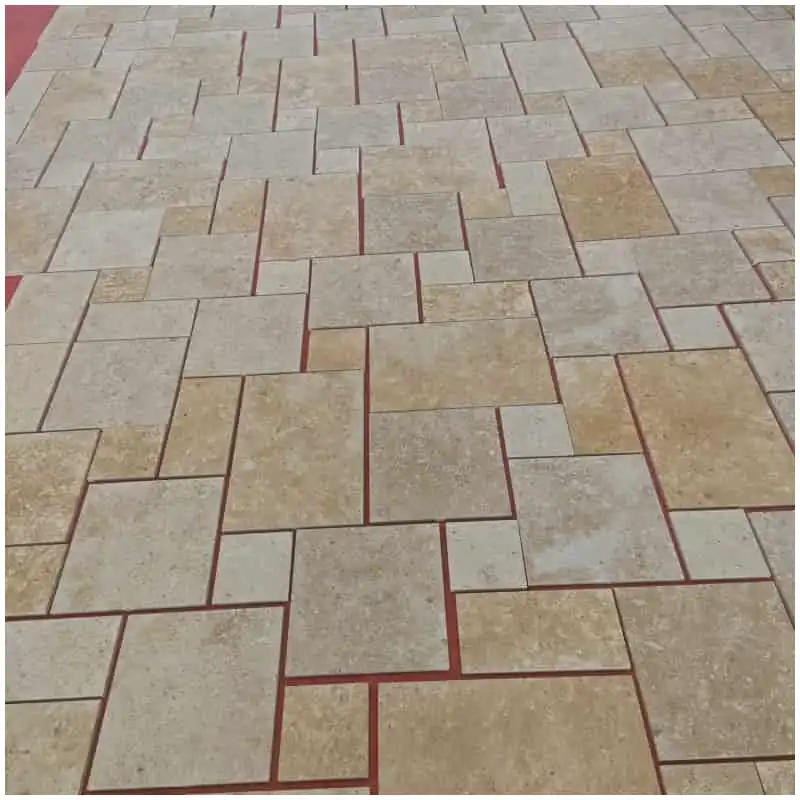
Statuario Marble Tiles: Proven Factory Checks 2026
Buyers usually open with a price question and a delivery date. What decides whether the order lays flat and matches sits in between: block source, batch count, factory tolerance, and packing.
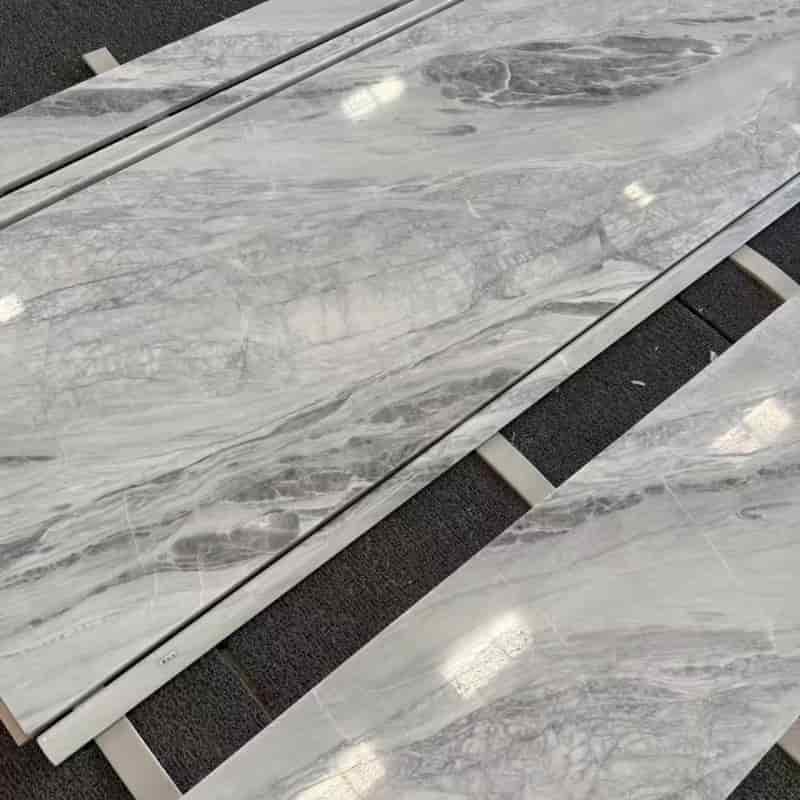
Statuario is a white marble from the Apuan Alps district around Carrara, an origin documented in the Carrara marble reference below. Trade descriptions give it a white ground with grey veining that reads cooler than Calacatta, though every block differs. Factories in China cut statuario marble tiles from imported Italian blocks; the trade name also attaches to domestic whites, so the origin line on the quotation and the packing list carries the real weight.

Table of Contents
- Tiles or Slab-Cut Pieces: Match the Form to the Job
- Batch Consistency: Statuario Marble Tiles Follow the Block
- Tolerance and Face Checks on Statuario Marble Tiles
- Factory Checks before a Project Purchase Order Moves
- Packing, Loading, and the Arrival Check
- When a Tile Batch Does Not Match the Approved Standard
- Frequently Asked Questions
- Related Project Guides
- Final Conclusion
- References
Tiles or Slab-Cut Pieces: Match the Form to the Job
On paper, a quotation for statuario marble tiles looks simple: material name, format, thickness, finish, square meters, price. The differences between suppliers sit off that list: block source, calibrated or nominal thickness, face sorting, batch-marking, and who inspects before loading. Each of those points belongs in writing before a purchase order moves.
Much of what search results call statuario marble tiles is porcelain imitating the stone. If the contract says natural marble, the material code on the quotation, packing list, and cartons has to say marble from the agreed source.
The format decision comes first, because tiles and slab-cut pieces fail in different places. Formats vary by factory; commonly exported sizes include 300 x 600, 600 x 600, and 600 x 1200 mm modular statuario marble tiles, which suit regular grids with grout joints and the uses listed in our marble tiles range.
Factory-made joints interrupt a continuous pattern, so a flowing bookmatch is normally slab-cut work. Tiles can still carry an approximate repeat across a grid, but the design has to accept the interruption at each joint. When the drawing wants veins flowing across a wall or floor, the answer is slab-cut panels, quoted from selected blocks such as the Statuario Bianco slab range, with the formats a match needs in the marble slabs category.

A slab order releases through a finish approval on the full slab, with the slab number in the photograph. A tile order has no full slab to approve, so that discipline moves to the faces in each carton, even when both forms come from one block.

A villa hall with mirror-image veining is a slab job with numbered pieces and a cutting sequence. Gridded rooms and corridors are where statuario marble tiles carry the job.
Between stock tiles and full slabs sits cut-to-size work: stair treads, risers, skirting, and thresholds, cut to a drawing from selected slabs, with checks on vein direction and edge finish per piece. Order spare treads and risers from the same batch; a stair cannot wait on a re-cut.

| Product form | Typical project use | Where the QC risk sits |
|---|---|---|
| Modular tiles: exported sizes often run 300 x 600 and 600 x 600 mm, 10 or 12 mm thick | Bathroom, kitchen, apartment, and corridor floors and walls | Batch tone across cartons; thickness spread at joints |
| Large-format tiles: exported sizes from 600 x 1200 mm up, commonly 12 to 20 mm | Villa floors, low-joint walls | Flatness and squareness; breakage |
| Mosaic, sheet-mounted | Accents, curved walls, shower details | Chip tone in a sheet; sheet flatness |
| Cut-to-size treads, risers, skirting, tops | Stairs, vanities, thresholds | Vein direction, edge profile per piece |
| Bookmatched slab panels | Feature walls, reception floors | Continuity, numbering, cutting sequence |
Thicknesses and formats differ by factory, so the written format list is the working contract.
Batch Consistency: Statuario Marble Tiles Follow the Block
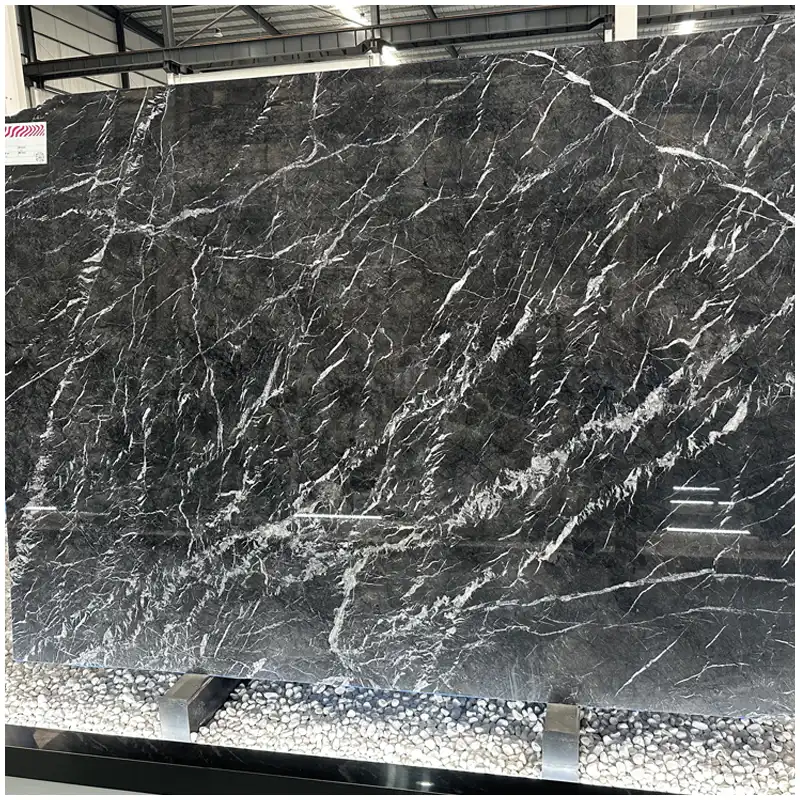
Two blocks can both be called Statuario and still read differently: one ground sits warmer, another cooler; veins run dense in one block and loose in the next. A statuario marble tile order lives or dies on batch discipline, not on a single sample.
Relying on one sample is the most common mistake on white stone. Ask which blocks the order cuts from, ask for photos of the blocks before cutting and of the first polished faces, then ask for batch numbers once production starts. A sample shows grade and finish; the block photos show the range.
For an apartment floor or a hotel corridor laid over many rooms, every carton of statuario marble tiles should sit in one tonal family. Ask how many blocks the area splits across and whether the factory can hold one block group while the approval is pending.

A feature wall is the opposite case: one composition from a small number of panels. Order spares from the same production, not later. Write the spare quantity for cuts and repairs into the contract before production starts; white marble replacement stock explains why hotels plan the same reserve.

Photo discipline helps at every step. Keep the slab-work rule: fixed light, a front view and a detail shot, date and block ID on each image, so the cartons can be checked against the photos on arrival.
Tolerance and Face Checks on Statuario Marble Tiles
Marble tiles leave the line cut to a nominal size, and thickness calibration keeps the spread small on export orders. A wide spread, or warped or out-of-square tiles, shows as lippage, and white marble reveals every height difference because each edge catches side light.
Calibrated Thickness Keeps the Joints Flat
Measure with a caliper at four points on random statuario marble tiles taken from several cartons, and compare the spread with the tolerance sheet the factory signed rather than a figure from memory. Calibrated product holds a tighter range than nominal cutting, but the enforceable number is the one in writing. If the contract cites ASTM C503, the QC sheet should match that standard.
Length, Width and Squareness
A tape across the sides and both diagonals shows whether the format is true: sides inside the stated tolerance, diagonals close enough that no wedge opens into the joint runs.
Flatness and the Dry-Lay
Dry-lay tiles face up on a true flat surface and rock each corner, then run a straightedge across the face. Corner lift that can be felt is flatness, not thickness, and it will not disappear under the trowel. The same dry-lay reads Calacatta and Statuario alike; calacatta marble floor tile dry-lay records how to interpret the results before any tile is set.
Faces: Tone, Vein Direction, and Edges
Run the face checks in order: pits and dark resin fills on the white ground, blotches, hairline cracks crossing the face, patchy polish, and edge foxing or chips. Open cartons from several batch codes, because the top layer of a carton can hide what sits below. Where the layout is directional, veins must run the same way on every face, and straight-grain material such as our straight-grain white marble tiles belongs first in the conversation.
Lighting lies, so give each face two looks: under even daylight or a neutral lamp, then with a warm spot at a low, grazing angle. Grazing light exposes what straight-on light hides: polish patches, ridges, and repaired pits.

When lippage shows after fixing, the tile is only one suspect: floor build-up, setting method, and joint plan all contribute. Separate the factory calibration checks from the site checks before arguing with a supplier about a floor that was not set on its line.
Factory Checks before a Project Purchase Order Moves
Importers, contractors, and tile distributors rarely stand at the cutting line when their statuario marble tiles are running. The same checks turn into a paper trail with hold points, the sequence from the Marble Slabs Procurement Guide 2026 applied to a carton of tiles. Use the same written checklist for the first order and for every order after it:
- Material and source statement. Marble name and region (the Apuan Alps district for Statuario), imported blocks or a domestic white under a similar name; it belongs on the quotation and the packing list.
- Block selection and batch plan. How many blocks the order cuts from, block photos before cutting, production dates, and the batch codes that mark the cartons.
- Tolerance sheet. Written figures for thickness calibration, length and width, squareness, and flatness, signed rather than promised.
- Sample policy. Hand piece from reserve stock or a full-format tile from the actual run, and how many samples the approval covers. A hand sample fixes the intent of the tone; a full-format tile from the run comes closer to what will load.
- Face sorting and finish standard. Polish level, accepted limit for pits and resin repairs on a white ground, and one retained master tile from the approved run.
- Pre-production sample. Full format, from the actual run, photographed with date and block ID, approved by sample number rather than memory.
- Inspection hold points. A random pre-shipment inspection by an agent or a third party, sampling method written down, payment milestone tied to sign-off.
- Document set. Packing list per batch code, invoice, loading photos, and origin paperwork where the customs route needs it.
- Schedule in writing. Cut, packing, and container dates, plus the re-run procedure, including a repeat approval before new faces load.
A villa order often mixes forms: tile floors with cut-to-size treads and vanity tops, each running through a different line. Confirm that the factory handles the mix and photographs each part before loading.

If a visit is possible, walk the block yard before the office: how blocks are stored, numbered, and kept apart shows how seriously the factory takes batch identity. Without a visit, ask for three photos: the selected blocks, the marked cartons, and the closed container.

One principle carries across white marble work: approve the faces the order will actually receive, under the light they will be seen in, before the container closes. Where offers sit far apart on price, the gap usually traces to grade, yield, and selection range, the factors white marble price drivers names.
Packing, Loading, and the Arrival Check
A shipment of statuario marble tiles survives a sea crossing when the packing assumes the container will be dropped and bumped. A packing spec worth writing into the order covers: face-to-face tiles with paper or foam between the faces, cartons strong enough for the stack, corner protection, batch codes on every carton, and pallets or crates for large formats.
On arrival, inside the claim window:
- Count cartons against the packing list and note damage on the receipt before signing.
- Open cartons from every batch code and compare the faces with the approval photos under similar light.
- Spot-check thickness and corners with a caliper.
- Photograph moisture stains or crushed corners and notify the forwarder inside the claim period.
Keep the carton batch codes visible until fixing is done, so a later repair pulls from the correct batch.
When a Tile Batch Does Not Match the Approved Standard
Sometimes the production photos, the inspection report, or the arrival check find a condition that changes the order. A fixed three-step route keeps the evidence clean and the decision reversible later.
- Document the condition on the tile. Photograph the affected tile with its carton batch code visible, under the approval light, from straight and grazing angles. Note whether it affects one tile, one carton, or the batch.
- Isolate the affected pieces before touching the stone. Open neighbors from the same batch code to confirm the spread, and test any remedy on a non-visible piece first; a polish trial on a visible face can turn a recordable condition into a claim.
- Escalate with the file and hold the loading. Send the photos and notes to the supplier with a clear question and keep the affected cartons on hold until the release is written. A verbal fix is not a release; only the written release lets the cartons load.
Frequently Asked Questions
1. What sizes of statuario marble tiles can I order from a factory?
Formats vary by factory; commonly exported sizes include 300 x 600, 600 x 600, and 600 x 1200 mm tiles, with mosaics for details. Thickness ranges differ too, so ask for the written format list before comparing offers.
2. Why does the tone change between batches?
Each block is natural stone: the ground can shift warmer or cooler and veins can run denser or looser, so tiles from different blocks will not be identical. Order the full area plus spares from one production and keep the batch codes.
3. What is the difference between statuario marble tiles and statuario marble slabs?
Tiles are modular pieces cut to stock formats and set with grout joints; slabs are full panels cut for continuous veining. Because factory-made joints interrupt the pattern, a flowing bookmatch across a wall is normally slab work, while gridded floors and walls suit statuario marble tiles.
4. What tolerance should I check on a statuario marble tile order?
Thickness calibration, length and width, squareness, and flatness are the four checks. Measure random statuario marble tiles from several cartons with a caliper, dry-lay a row on a flat surface, and ask the factory for its tolerance sheet in writing before ordering.
5. What should I check when the tiles arrive?
Count cartons against the packing list and record damage on the delivery receipt before signing. Open cartons from every batch code, compare faces with the approval photos, and notify the forwarder inside the claim window.
Final Conclusion
A tile order is finished only when the block photos, the signed tolerance sheet, the batch codes, and the arrival record sit in one file, and every carton traces to its batch. Collect those records before production starts and check them again before the container closes; the statuario marble tiles that load are the ones the file approves.
References
- Mármol de Carrara, Wikipedia.
- Natural Stone Institute, Dimension Stone Design Manual (selection, fabrication, and installation guidance for natural stone)
- ASTM C503/C503M, Standard Specification for Marble Dimension Stone
- ASTM C97/C97M, Standard Test Methods for Absorption and Bulk Specific Gravity of Dimension Stone
- ASTM C99/C99M, Standard Test Method for Modulus of Rupture of Dimension Stone
- ASTM C170/C170M, Standard Test Method for Compressive Strength of Dimension Stone
- ASTM C880/C880M, Standard Test Method for Flexural Strength of Dimension Stone
- ASTM C1528/C1528M, Standard Guide for Selection of Dimension Stone