
Statuario Marble Slabs for Bathroom Projects
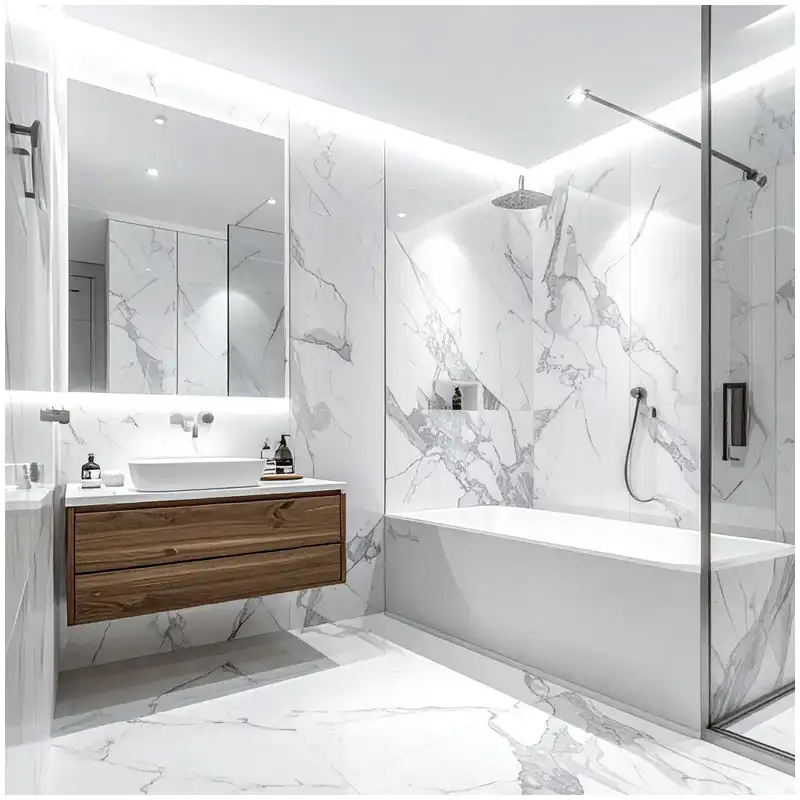
A clean hand sample cannot show the scale of a Statuario vein, the warmth hidden in the background, or the cloudy area that lands beside a bathtub after cutting. Susan Zheng builds the approval around actual slabs, marked use zones, 3000K and 4000K light, finish, repairs, batch limits, wet-area exposure, dry-lay, and replacement pieces. The result is a white marble specification a warehouse and project team can inspect in the same way.
Calacatta Marble Staircase Layout for Treads, Risers, Landings, and Vein Direction
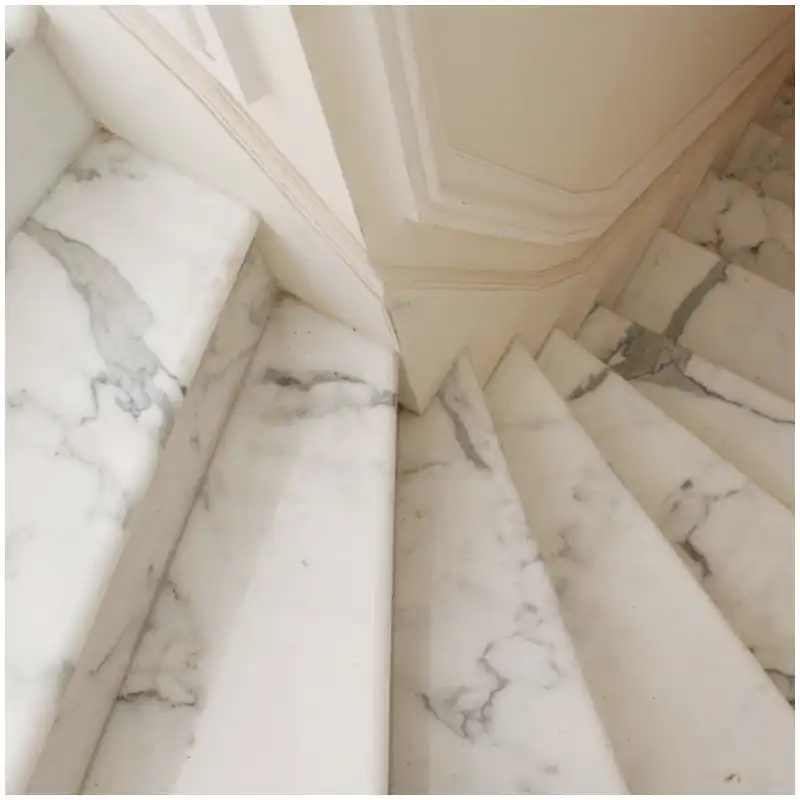
A staircase turns horizontal and vertical pieces into one moving composition. Calacatta that looks balanced as separate treads can break into dark stripes, isolated vein fragments, and mismatched landings after installation. Susan Zheng sets out how to approve the full slab range, map every tread and riser, inspect nosings and repairs, compare lighting at each level, dry-fit representative flights, preserve revisions, and allocate compatible replacement pieces.
Calacatta Marble Floor Tile Dry-Lay before Cutting Borders and Doorways
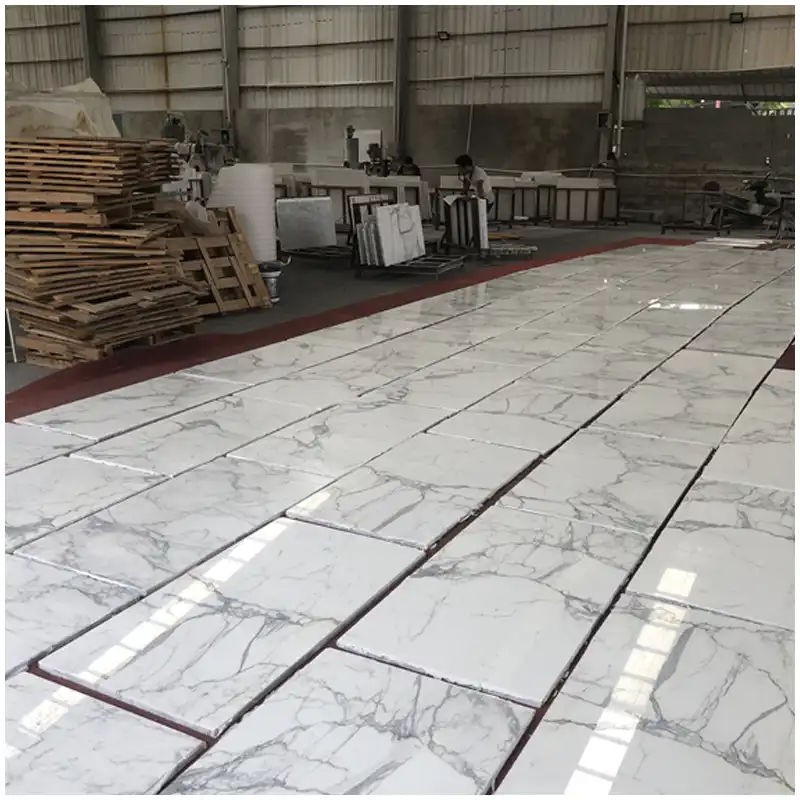
Calacatta floor tiles can all fall inside an approved slab range and still create a distracting stripe, dark doorway, or broken border when laid together. Susan Zheng treats the factory layout as a controlled floor plan, not a photo opportunity. She explains how to group tone, orient veins, mark borders and thresholds, verify dimensions and plane, manage revisions, inspect under useful light, and pack the final sequence without losing approved relationships.
Calacatta Marble Vanity Top Vein Placement around Sinks and Faucet Holes

A dramatic Calacatta vein can look controlled on a full slab and become awkward when a sink removes its center or a faucet hole lands on a filled fissure. Susan Zheng treats vanity-top layout as a full-slab approval task. She sets out how to overlay cutouts, protect strong features, inspect repair zones, coordinate edges and backsplashes, compare 3000K and 4000K light, and preserve the approved layout through fabrication and dry-fit inspection.
Calacatta Marble Corner Matching for Shower Walls, Feature Walls, and Vanity Returns

A flat dry-lay can look controlled until two Calacatta panels turn ninety degrees and meet under different light. Susan Zheng treats the corner as a visible architectural detail, not the leftover edge of two wall pieces. The decision covers when to continue a vein, when to let it stop, how mitered and returned corners change the cut map, what edge and thickness records are needed, and how packing protects the approved transition.
Calacatta Gold Shower Walls for Hotel, Villa, and Premium Bathroom Projects
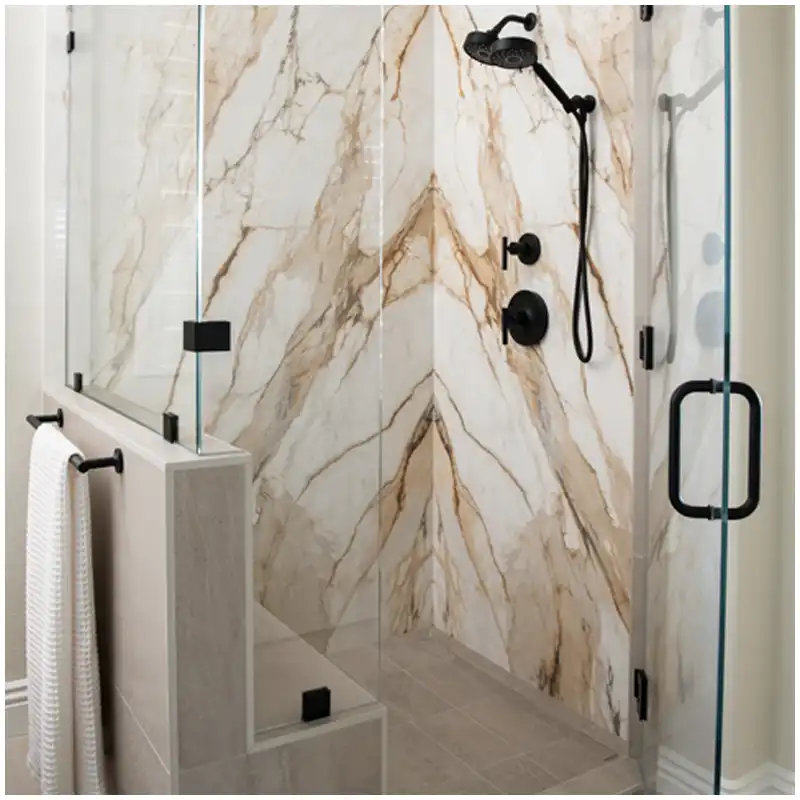
Quick Summary: Calacatta Gold shower walls need approval as complete elevations, because a handsome full slab can lose its balance when corners, niches, valves, benches, joints, and ceiling cuts divide the movement. Map every visible piece on identified slabs, test the finish under the bathroom’s 3000K and 4000K light, dry-lay critical transitions, and coordinate […]
Calacatta Statuario or Calacatta Gold under Bathroom Lighting

Statuario and Calacatta Gold can both look bright in a supplier photograph, yet the same bathroom light can push them in opposite directions. Statuario often depends on a crisp field and controlled grey definition. Gold accepts more warmth but can turn cream beside cool fixtures. Susan Zheng builds the decision from fixed lighting photographs, full-slab range, finish samples, cut maps, wet-zone expectations, and room allocation rather than a polished hand sample.
Calacatta Macchia Vecchia or Calacatta Gold for White Marble Projects

Macchia Vecchia and Calacatta Gold may both be described as warm white marble, but a full slab quickly separates them. Macchia Vecchia often carries layered ochre, rust, grey, and irregular movement. Calacatta Gold usually offers a cleaner field with more controlled gold-grey veining. Susan Zheng compares the two under warehouse and bathroom lighting, then follows the choice through slab range, cutouts, dry-lay, finish, wet areas, and batch allocation.
Calacatta Gold vs Calacatta Viola for White Marble Projects
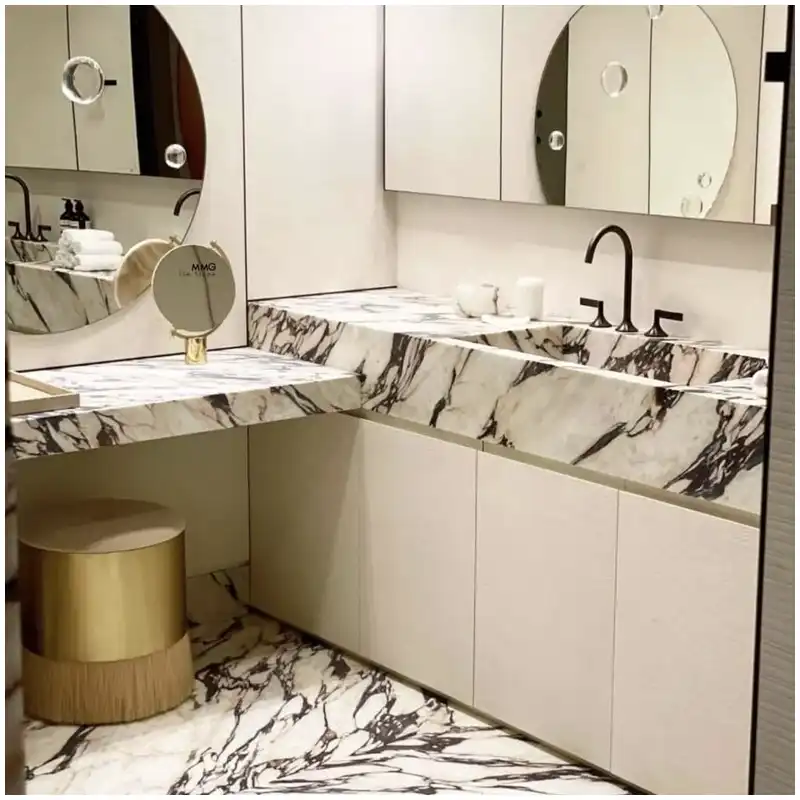
Calacatta Gold and Calacatta Viola can both begin with a white field, yet they behave very differently once a full slab reaches the warehouse light. Susan Zheng compares warm gold-grey movement with Viola’s burgundy and violet structure, then follows the decision into 3000K and 4000K lighting, wet-zone placement, vein layout, batch range, dry-lay, and final inspection. The purpose is not to declare one marble better. It is to keep designers, contractors, and importers from approving a small sample that cannot represent the scale or undertone of the installed work.
How to Clean White Marble Bathrooms without Turning a Stain into Etching
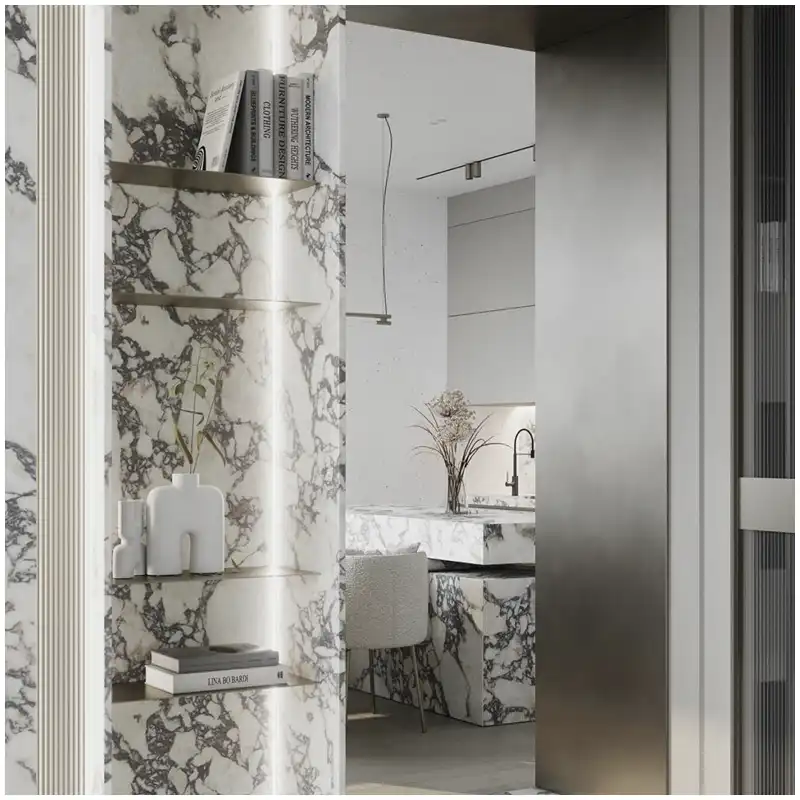
White marble bathrooms do not need a cupboard full of aggressive chemicals. They need a clean-water routine, suitable tools, controlled product use and a firm stop rule when a mark behaves like etching, moisture or a deeper stain. Susan Zheng separates daily cleaning from diagnosis so hotel, villa and residential teams know what they can handle safely and when the stone supplier or restoration specialist needs to see the evidence.
When White Marble Needs Refinishing Instead of More Cleaning
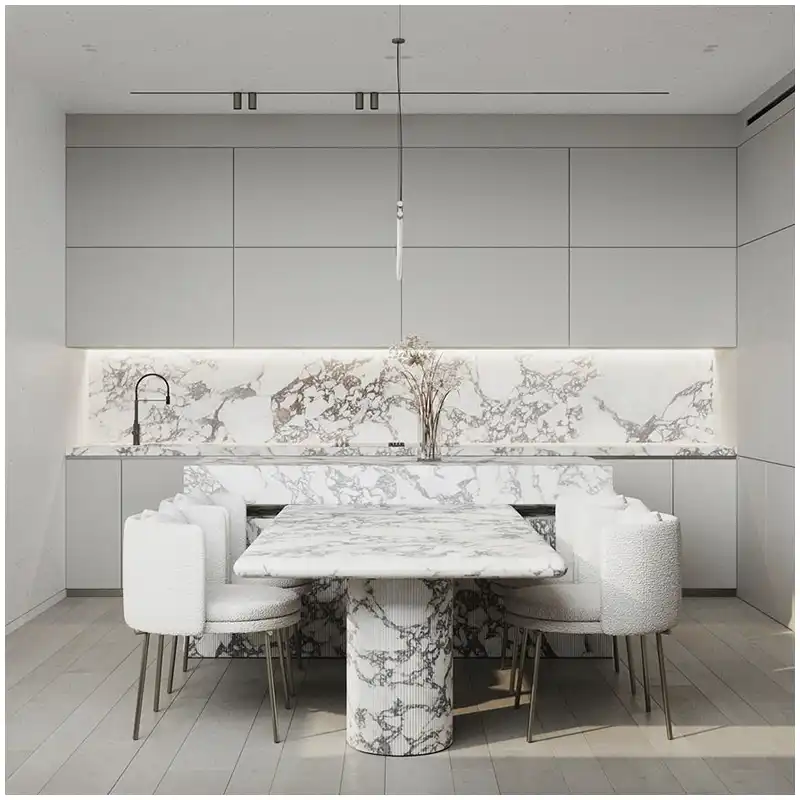
A white marble surface can look dirty even when no removable dirt remains. Acid etching, worn traffic lanes, fine scratches, uneven polishing and old cleaner residue produce different symptoms, and treating them as one problem often makes the finish less consistent. Susan Zheng sets out a strict inspection sequence for deciding when cleaning should stop, when a controlled test is justified and when a qualified stone-restoration specialist needs to refinish the affected area.
White Marble Poultice Testing before Full Stain Treatment

A dark mark on white marble may come from oil, metal, organic material, moisture, adhesive, sealant, or residue, and those causes do not accept one universal treatment. Susan Zheng sets a strict test-patch workflow built around full-area photographs, stain history, dry observation, representative offcuts or a discreet location, product instructions, controlled application, complete drying, 3000K and 4000K inspection, and a written stop condition. The goal is to prove whether the mark responds without bleaching, etching, opening repairs, changing sheen, or spreading damage across an approved marble batch.