

White Marble for Daylight Shower Rooms: Undertone, Glare, Finish, and Wet-Zone Approval
I rejected six white slabs for a villa shower after the designer had already approved them from a PDF. Under our 4000K warehouse lamps, the group looked clean and related. We rolled the first two beside the open loading door at noon, and one turned noticeably creamy while the other held a cooler grey cast. The PDF had flattened both into the same white.

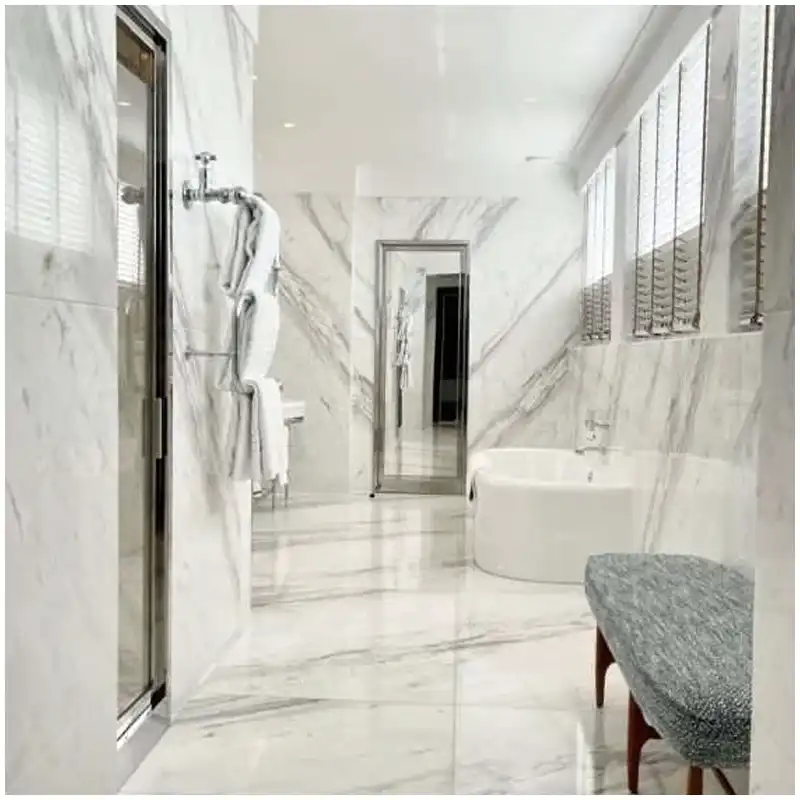
White marble for daylight shower rooms cannot be approved from one lighting condition. Don’t just look at samples. Morning sun, overcast daylight, warm evening light, mirror lighting, wet faces, glass reflections, and metal fixtures all change the comparison. Lighting lies, especially when a phone camera tries to make every slab look balanced.
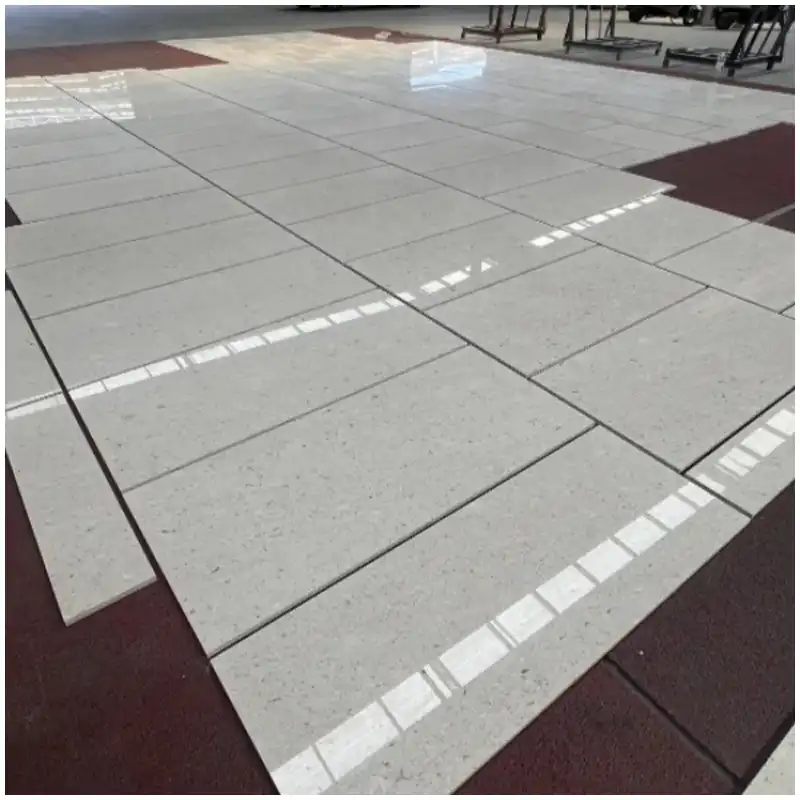
I begin with full faces such as Sivec Valkoinen marmori, then test the actual available batch rather than trusting the name. A named variety gives us a starting family. It does not guarantee that every slab carries the same undertone, vein density, repair pattern, or response to light.
Approve white marble for daylight shower rooms under changing light
The current “conservatory shower” trend puts more glazing, daylight, planting views, and visual openness around the wet zone. Fine. But daylight moves. A north-facing room, a bright western exposure, and a roof-lit shower do not reveal white marble the same way.
I ask for the room orientation, glazing type, artificial-light schedule, colour temperatures, fixture positions, dimming scenes, glass tint, adjacent paint, grout, metal finish, and viewing hours. Then we reproduce the key conditions as closely as the warehouse and mockup allow.
First inspect the slab upright in neutral, even light. Next move it toward controlled daylight without direct glare. Then compare it under the specified 3000K and 4000K sources. Finally, damp a representative test area using the approved method. The goal is not to manufacture one fixed colour. It is to understand the range the room will reveal.
That slab doesn’t belong next to your bathtub if the project only likes it under one carefully chosen lamp. I say the same thing about showers. A hotel guest sees the wall at seven in the morning and again under warm light at midnight.
Watch the background before the veins
People fall in love with the vein first. I look behind it. Is the field cool, warm, milky, blue-grey, yellow, or slightly green beside the approved grout and metal? Does one slab shift more than the others? Will a corner put two different backgrounds edge to edge?
A Statuario valkoinen marmori allocation may carry strong, elegant movement, but a dramatic vein cannot rescue an unrelated background tone. Don’t just look at samples. Put complete wall candidates together at the actual orientation.
| Warehouse light check | What I record | Reject or reallocate when |
|---|---|---|
| Even front light | Full background, vein density, repairs, finish, edges, and slab identity | The slab falls outside the approved visual family |
| Controlled daylight | Warm or cool shift, local translucency, glare, contrast, and relation to adjacent slabs | A hidden undertone becomes dominant in the intended room |
| 3000K artificial light | Evening warmth, shadow at joints, metal reflection, and vein softness | The wall becomes muddy or mismatched beside approved finishes |
| 4000K task light | Coolness, repair visibility, polish variation, and stronger vein contrast | Repairs or batch differences become distracting at normal viewing distance |
| Representative damp test | Temporary darkening, finish response, edge behaviour, residue, and drying record | The selected area creates an unacceptable wet-face difference |
The Hard-Won Lesson: The roof light exposed the warm slab at noon
A spa mockup used four white slabs that passed a night inspection under 3000K lamps. The next day, direct roof light crossed the dry-lay for about forty minutes. Panel three turned visibly warmer than the pair beside it, and its resin-treated area read as a pale amber patch near the shower niche. The designer had approved cropped evening photographs. We moved that slab to a separate vanity area and rebuilt the wall range before cutting.
The Lesson: Inspect every daylight-facing wall batch during the hours when the room receives its strongest natural light.
Choose finish by wet-face behaviour, not a mood board
Polished marble reflects light sharply. Honed or other specified finishes scatter it differently and may change the apparent depth of the background. Neither label tells the entire wet-zone story. Test the actual finished stone with the planned lighting, cleaning method, slip requirements where relevant, and maintenance expectations.
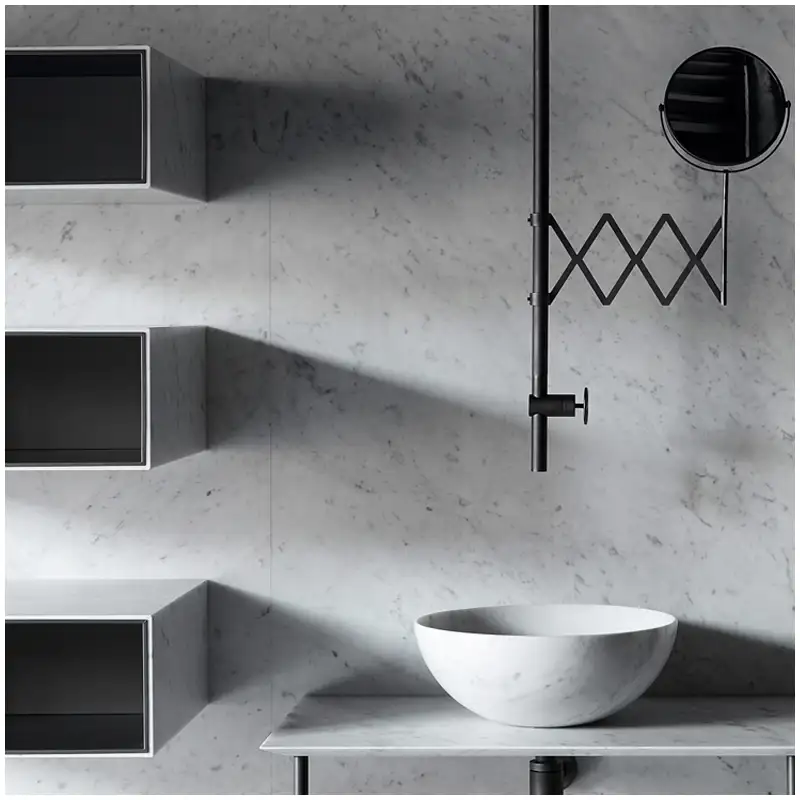
On a wall, glare can turn a beautiful vein into a bright stripe when sunlight hits glass and polished stone together. On a bench or threshold, the project has additional safety and wear requirements. The responsible designer and technical team choose the finish for each surface; I make sure the approved sample represents production.
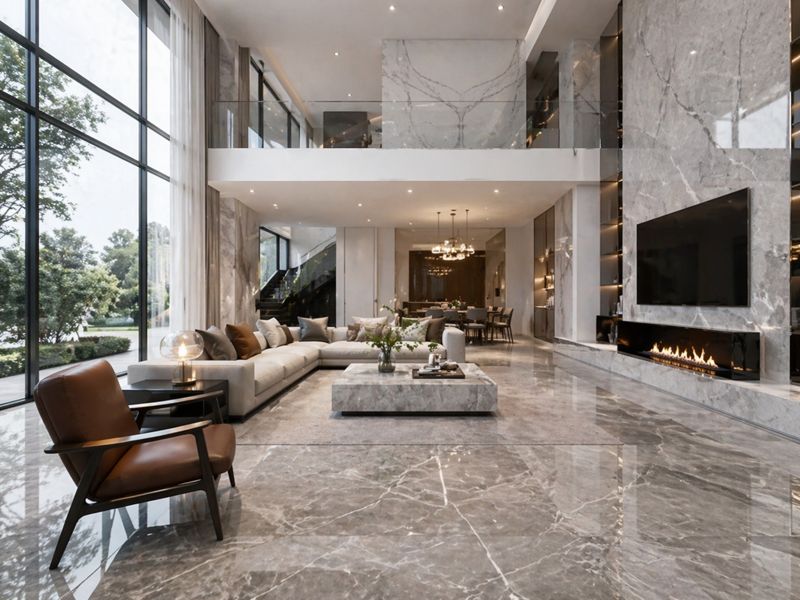
A Calacatta Gold Marble slab for a bathroom may look warm and deliberate beside brushed brass. Put the same face beside cool chrome and blue daylight, and the field can read differently. Lighting lies. The material has not changed, but the room relationship has.
Test water, cleaners, sealer, grout, and sealant together
White marble in a wet zone needs an approved installation and maintenance system. Use representative offcuts to test the proposed sealer or treatment, grout, sealant, cleaner, and construction-protection method. Record product, batch where available, application, cure condition, and result.
I do not promise that a sealer makes marble immune to etching, staining, moisture, or poor maintenance. It does not. The project must understand the material and follow the product manufacturers’ instructions. If the wet-zone expectation is zero change under every chemical, that slab doesn’t belong next to your bathtub.
That slab doesn’t belong next to your bathtub when the maintenance team has not accepted the finish, treatment limits, and real cleaning routine.
Check the back and edges too. Mesh, resin, reinforcement, or repair work may affect fabrication or appearance. The installer needs the slab treatment history before choosing adhesives or preparing the substrate.

Map veins around niches, fittings, corners, and glass
A large shower wall is not a blank rectangle. It contains mixers, rails, niches, benches, shower heads, glass channels, drains, access panels, and corners. Put the measured elevation over the numbered slabs before cutting. A beautiful vein can become a broken fragment when a niche removes its centre.
I mark the main viewing position and the first view through the bathroom door. Then we plan the wall centre, corner transitions, joint lines, and vein direction. The strongest movement should not collide accidentally with hardware or end as a thin strip beside the glass.
Statuario Marble Slab Approval: Photos, Lighting, and Bathroom Use supports the full-face comparison. For daylight showers, I add wet-face and moving-light checks before the elevation is signed.
Large panels need safe handling and a buildable fixing system. The project engineer and installer define panel size, substrate, movement joints, support, access, and local requirements. I will not approve a prettier layout that cannot reach the shower or be installed safely.
Control batch range across hotel and villa bathrooms
One shower can be adjusted slab by slab. Forty guest bathrooms need a range rule. We sort full faces, group related backgrounds, map expressive veins, and assign each room before production. Do not cut everything into anonymous white panels and sort later.
The Complete Project Guide to Premium White Marble Selection and Quality Control carries the main discipline: full-slab approval, batch boundaries, dry-lay, lighting control, piece codes, and inspection records. A daylight shower is one demanding application of that system.
I build a reference room under the specified lighting. It includes glass, grout, metal, ceiling colour, and representative wet testing. That room defines the accepted range without pretending natural stone will become identical. The room schedule then links panel codes, slab origins, and dry-lay photographs.
Don’t just look at samples when replacement pieces are planned. Keep mapped spares from the approved batch, with face photographs, dimensions, finish, treatment, and room relationship. A random white offcut will not rescue a highly visible corner years later.
Understanding daylight shower marble in today’s white marble market
Why natural light makes approval harder
Natural light reveals undertones and surface behaviour that one fixed artificial lamp can hide. It also changes through the day and season. The answer is not to avoid daylight. It is to approve the real range under representative conditions.
How to keep a bright shower from becoming harsh
Coordinate finish, slab background, vein scale, glass, grout, metals, wall paint, and artificial lighting. A calm result comes from relationships. “White” alone is not a specification.
What to do when an installed panel looks different
First photograph the full wall, panel code, close detail, wet and dry condition, time of day, artificial-light setting, glass, and adjacent finishes. Second stop installing repeated panels. Third contact the supplier with the original slab faces, dry-lay, lighting tests, batch map, and inspection record. Do not apply cleaner or sealer to chase a colour difference before the cause is understood.
Frequently asked questions
1. How should white marble for daylight shower rooms be approved?
Approve numbered full slabs under even front light, representative daylight, specified 3000K and 4000K scenes, and a controlled damp test, then confirm the complete wall dry-lay.
2. Why does white marble look warmer at some times of day?
Daylight direction, sky condition, glazing, artificial lamps, surrounding colours, glass, finish, and camera exposure can change how the stone’s existing undertone is perceived.
3. Is polished or honed marble better for shower walls?
Test the actual finish against the project’s appearance, glare, maintenance, wet-zone system, cleaning, and technical requirements. Do not choose from the finish name alone.
4. Can a small sample represent a shower wall?
No. A sample hides full background range, vein scale, repairs, transitions, and panel relationships. Use full slabs and a measured elevation.
5. What should I do if a slab looks different under site daylight?
Photograph it under documented conditions, pause repeated cutting or installation, and compare the site view with original full-slab, lighting, damp-test, dry-lay, and batch records.
Quick-Reference Daylight Shower Approval Checklist
- Record room orientation, glazing, artificial-light scenes, glass, metals, grout, and adjacent colours.
- Compare numbered full slabs under even light, daylight, 3000K, and 4000K conditions.
- Test the actual finish, wet-face response, treatment, grout, sealant, and approved cleaner.
- Overlay niches, fittings, corners, glass channels, and joints on the complete slab faces.
- Build one representative shower dry-lay or mockup before batch cutting.
- Map replacement pieces to the approved slabs, finish, treatment, and room codes.
Final Conclusion
White marble for daylight shower rooms needs full-slab judgment under moving daylight, specified artificial light, representative damp conditions, and the complete room palette. Map the veins, test the finish, control the batch, and approve one real wall before cutting repeated panels. Lighting lies, and Esta Stone would rather reject one flattering PDF today than explain one mismatched shower wall after the glass is fixed.

References
7 Shower Trends Defining Bathrooms for 2026, Livingetc.
2026 Bath Trends Report Press Release, National Kitchen & Bath Association.
Dimension Stone Design Manual, Natural Stone Institute.
Natural Stone Care and Maintenance, Natural Stone Institute.
Technical Guidance on Natural Stone in Wet Areas, Stone Federation Great Britain.
TCNA Handbook for Ceramic, Glass, and Stone Tile Installation, Tile Council of North America.
Standard Terminology Relating to Dimension Stone, ASTM International.