

Honed vs Polished White Marble in Bathrooms: Light, Water, Etching, Traction, and Full-Slab Approval
Example: a polished approval sample looks crisp and cool beneath a 4000K warehouse lamp. The project orders honed pieces, then installs them under 3000K bathroom lighting. The field turns creamier, the gray veins soften, and several resin-filled areas become easier to notice. Nobody received the wrong stone. The team approved the wrong viewing condition. That is why honed vs polished white marble must be decided on the actual finish, not added as one word after the slab is selected.
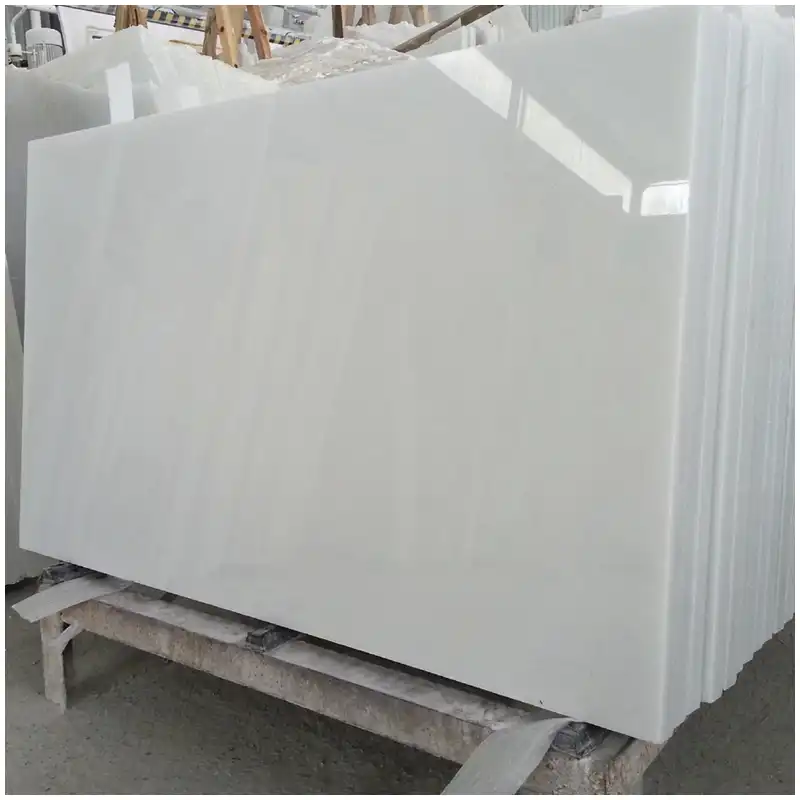
My answer is direct. Polish suits vertical areas and some vanity tops when the project wants sharper reflection and accepts visible etching. Honing can reduce glare and make small surface changes less obvious, but it does not make marble acid-proof or automatically safe on a wet floor. Floor traction, cleaning method, sealer, drainage, and the complete installation still need their own evidence.
The Finish Changes the White You Approve
White marble does not have one fixed appearance. A polished face reflects the lamp, ceiling, window, and dark objects around it. That reflection can make the field look brighter while increasing contrast around gray, gold, or taupe veins. A honed face scatters more light. It often reads softer, flatter, and slightly less saturated.
Lighting lies. Under a warm 3000K source, cream and gold undertones can become more apparent. Under a cooler 4000K source, gray veins may look sharper and the field may read cleaner. Neither lamp tells the whole truth. I want the stone seen under both conditions and, where possible, under the specified project fixture.
The parent reference, White Marble Slabs: Complete Guide to Types, Selection, Price, Bathrooms, Lighting, and Batch Control, separates type, batch, lighting, and project control. Finish approval belongs inside that process. It cannot repair a batch mismatch, but it can amplify or soften one.
A lastra di marmo Calacatta may carry broad veins that remain dominant after honing. Fine background movement can recede. A Carrara white marble slab often has denser gray movement, so polish and side light can make the surface busier than the same stone under diffuse light.
Judge Honed vs Polished White Marble by Surface, Not by Room Name
A bathroom contains several different exposure zones. The wall behind a dry vanity does not behave like a shower floor. A vanity top meets cosmetics, citrus cleaners, soap, standing water, metal containers, and hot tools. A general floor meets shoes and cleaning machines. A shower floor adds continuous wetting, drainage, joints, and barefoot traction.
I approve each location separately. “Honed throughout” may create consistency on paper while ignoring what each surface needs. “Polished throughout” can produce glare on floors and make every acid mark obvious on the top. One room can use more than one finish without looking disconnected if tone and edge transitions are controlled.
White marble bathroom finish decisions start with exposure, viewing distance, light direction, maintenance capacity, and safety requirements. The material name comes before the finish, but it cannot answer for the finish.
| Bathroom location | Polished face | Honed face | Approval evidence |
|---|---|---|---|
| Vanity wall or dry feature wall | Sharper reflection and vein contrast; side light may expose waviness | Quieter reflection and softer movement | Full-slab image plus finish sample under project light |
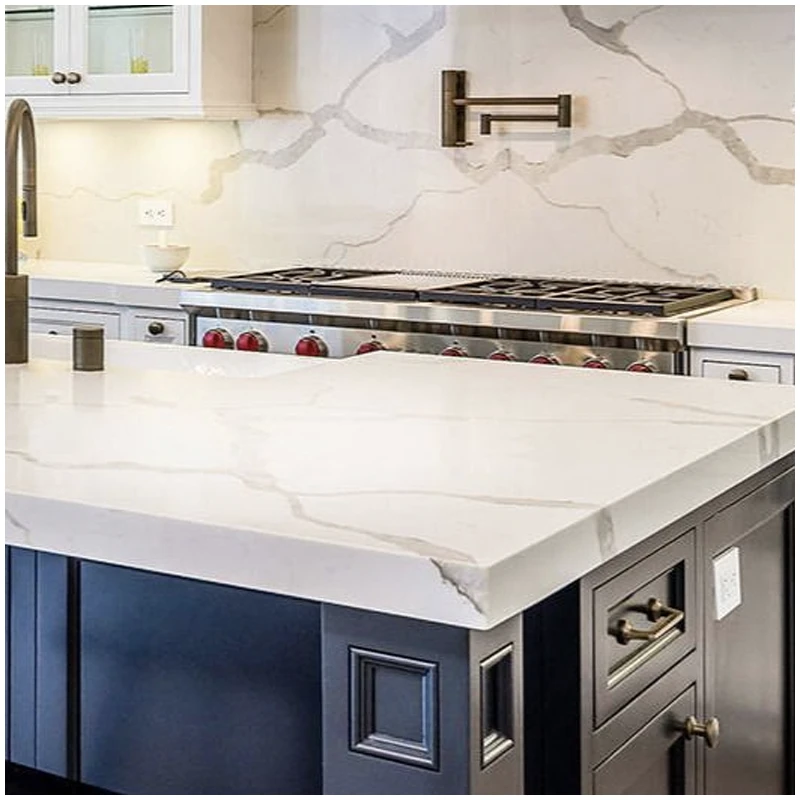
| Piano di lavoro | Spills and etches can look abrupt against gloss | Etches may blend more, while oils and water marks can remain visible | Stain, cleaner, edge, and sink mock-up on actual finish |
| General bathroom floor | Glare and wet traction require project-specific review | Lower glare, but not automatic slip compliance | Applicable traction test and installed assembly review |
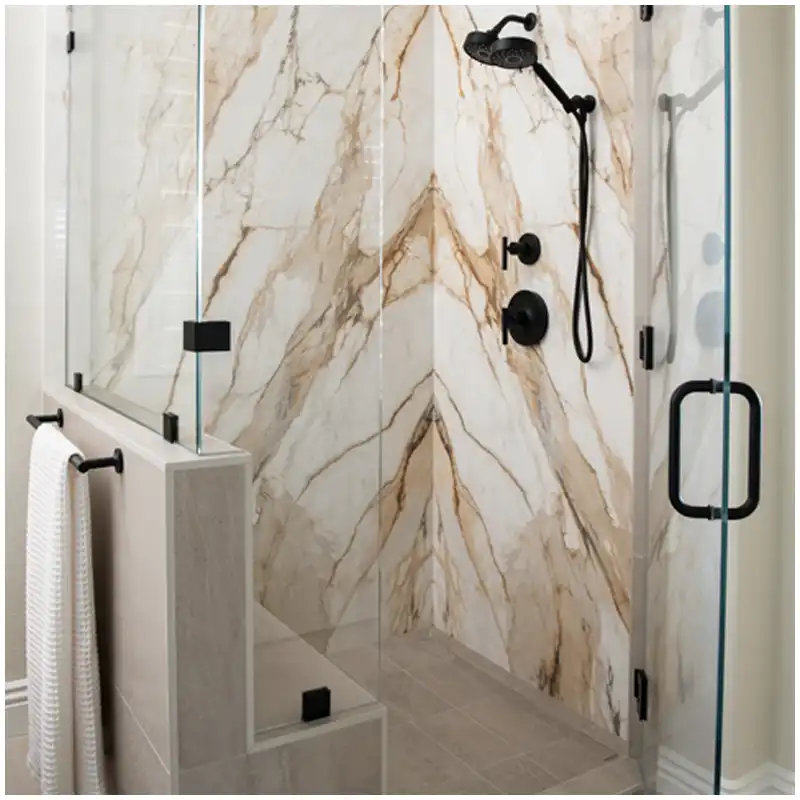
| Shower wall | Water film and deposits can interrupt reflection | Diffuse appearance can hide light spotting, not mineral buildup | Water, cleaner, joint, and maintenance mock-up |
| Shower floor | Usually a high-risk place to rely on appearance alone | Texture may help, but slope, joints, drainage, and testing still control | Specified wet-use test for the complete selected system |
| Batch approval | Can make tone gaps and repairs more visible | Can compress contrast and shift the accepted range | Same batch reviewed in both finish and lighting conditions |
Etching, Water Marks, and Stains Are Different Problems
White marble commonly contains calcite or dolomite. Acid can react with carbonate minerals and dull the surface. On a polished top, the damaged spot interrupts a glossy reflection, so it can look dramatic. On a honed top, a small etch may blend better. The chemical change still happened.
Polished marble etching is not prevented by ordinary penetrating sealer. Sealer can reduce the rate at which some liquids enter the pores, depending on the product and application. It does not stop an acid from reacting with the mineral surface. Anyone promising otherwise is selling comfort, not chemistry.
Water marks can mean several things: temporary darkening, mineral deposits, soap film, cleaner residue, or moisture moving through joints and backing. Do not diagnose every pale ring as an etch or every dark patch as a stain. Photograph it in reflected and diffuse light, note whether it changes as the stone dries, and review the cleaning products used.
A white marble surface does not belong next to the bathtub when the owner expects it to remain untouched while using acidic cosmetics, colored oils, and aggressive cleaners. The honest choice may still be marble, but the maintenance expectation must match the material.
A Honed Floor Still Needs Traction Evidence
Honing changes surface texture, but the word “honed” is not a slip rating. Abrasive sequence, final texture, sealer, cleaning residue, grout joints, drainage, slope, footwear, and bare feet all affect use. The selected stone and finish must meet the project’s applicable test and code requirements.

A honed marble floor can reduce mirror-like glare and feel calmer in a large bathroom. It can also develop traffic polish where repeated footfall gradually changes the surface. That is a maintenance issue to discuss before a hotel corridor or bathroom floor is approved.
Small shower pieces create more grout joints, which may help the walking surface and follow slope more easily. Large pieces reduce joints but demand very careful drainage geometry and traction review. I do not approve either format from a brochure photograph.
The published Sivec White Marble for Hotels, Villas, and Commercial Interiors shows why application matters. A calm Sivec field can look disciplined across repeated areas, yet the final finish, module, lighting, and batch range still control the result.
Do Not Approve the Finish From a Small Sample
Don’t just look at samples. A small piece may contain no strong vein, no resin fill, and no tone transition. On a full slab, the same finish can reveal broad movement, cloudy zones, pinholes, repaired fissures, or a color shift across the face. The sample proves the finish process. It does not prove the complete slab composition.
I request straight-on full-slab images with stable exposure, close views of veins and repairs, edge views, slab labels, dimensions, and a finish reference. Then I compare a polished and honed test on the same or truly comparable material. If the order uses both finishes, the team needs to see how they meet.
A Statuario white marble face may have a strong vein that crosses a sink cutout or changes direction across a wall joint. The Statuario Marble Slab Approval Photos, Lighting, and Bathroom Placement review helps place those events before fabrication. Finish approval comes after the face and cut map are understood.
Dry-lay the pieces in the final finish
Dry-lay is not only for vein matching. It reveals tone, finish consistency, repair visibility, edge behavior, and how adjacent pieces respond to the same lamp. I want piece IDs readable and the viewing direction fixed. If half the pieces are photographed under open daylight and half under warehouse light, the comparison is weak.
For repeated bathrooms, define an approved range rather than one perfect sample. Group pieces by room or visual area. Keep strong tone changes out of one small enclosure unless the design intends them. The published White Marble Slab Supplier: Calacatta, Carrara, Statuario, and Sivec helps separate material families before the finish narrows the appearance again.
Specify the Final Standard for a Multi-Room Project
The approval record should identify stone name, quarry or source information when available, batch, slab IDs, finish process, reference sample, acceptable tone range, vein direction, repairs, edge finish, cleaning trial, sealer if specified, and lighting conditions. “Honed white marble” is not a production standard.
I also record the viewing side. A wall-wash light can expose finish variation that front light hides. A polished vanity edge may look darker than the top because it reflects another part of the room. A honed edge can absorb light differently from the face if the abrasive work is inconsistent.
White Marble Slabs: Complete Guide to Types, Selection, Price, Bathrooms, Lighting, and Batch Control should connect these records to slab selection and batch control. Once pieces are cut, changing finish may alter dimensions, edge transitions, and the approved visual range. Decide before the final cut map is released.
If a finish dispute appears on site, photograph the area under the installed light and a neutral portable light. Stop installation of the affected batch. Send the supplier the images with slab IDs, dry-lay records, approved finish sample, and cleaning history. Do not start polishing or honing isolated pieces until the full cause is understood.
White Marble Finish Approval
- Compare the same material in polished and honed finishes.
- View samples under 3000K, 4000K, and the specified project light.
- Assign finishes separately to walls, tops, dry floors, and wet floors.
- Test the intended cleaner and sealer on the approved finish sample.
- Dry-lay production pieces in final finish with readable piece IDs.
- Record batch range, repairs, vein direction, and edge finish before cutting.
- Require applicable traction evidence for every walking surface.
Frequently Asked Questions
1. Does honed vs polished white marble change the stone’s actual color?
The mineral color does not become a different material, but the finish changes how light reflects and scatters. Polish can increase brightness, reflection, and vein contrast. Honing often softens glare and apparent saturation. Warm and cool lamps then shift the judgment again, so approve the actual finish under project lighting.
2. Is honed marble better for a bathroom floor?
It may reduce glare and provide a different texture, but the word honed does not prove wet traction. The selected stone, abrasive finish, sealer, cleaning condition, module, joints, slope, and drainage all affect performance. Require the applicable project test and code review for the exact walking surface.
3. Does sealer prevent white marble from etching?
No. A penetrating sealer may help limit absorption of certain liquids when correctly selected and applied. It does not prevent acid from reacting with calcite or dolomite. Test cleaners, cosmetics, and likely spills on the approved finish, then give operations a realistic care method.
4. Why can a polished sample and honed slab look like different batches?
Finish changes reflection, contrast, and how undertones appear. Lighting and camera exposure can widen that difference. Compare both finishes on the same or genuinely comparable material, keep exposure stable, and check full slabs. A tiny polished sample cannot set the visual standard for a honed production batch.
5. What should the site do first if the finish looks wrong?
Photograph the affected pieces under installed light and neutral reference light, including labels and adjacent material. Stop installation of that group. Send the supplier those images with the approved sample, slab IDs, dry-lay record, finish specification, and cleaning history before anyone refinishes the surface.
Final Conclusion
The honed vs polished white marble decision must follow the actual surface, exposure, lighting, maintenance plan, and batch evidence. Polish sharpens reflection and often exposes etching. Honing lowers glare but does not guarantee traction or stop chemical damage. Approve full slabs and dry-laid pieces in the final finish before cutting. At Esta Stone, I would reject one vague finish note before letting it become a hundred different interpretations on site.

References
- Dimension Stone Design Manual, Natural Stone Institute.
- Natural Stone Institute Technical Bulletin: Care and Cleaning of Natural Stone.
- ASTM C1528, Standard Guide for Selection of Dimension Stone, ASTM International.
- ANSI A326.3, Test Method for Measuring Dynamic Coefficient of Friction of Hard Surface Flooring Materials, Tile Council of North America.
- TCNA Handbook for Ceramic, Glass, and Stone Tile Installation, Tile Council of North America.
- Natural Stone Flooring Guidance, Stone Federation Great Britain.
- Bathroom Trends Study, Houzz.