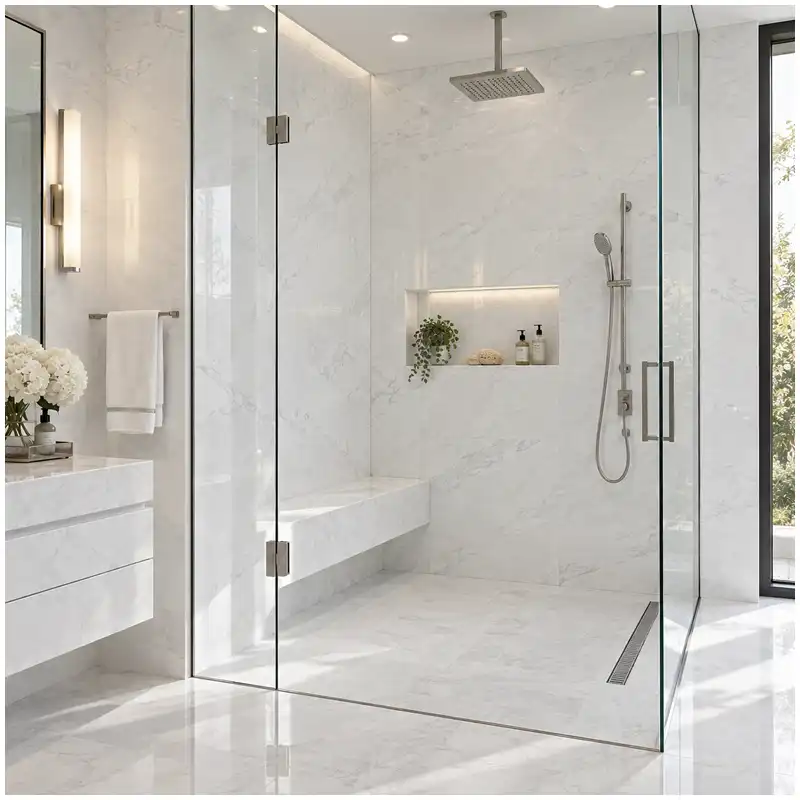
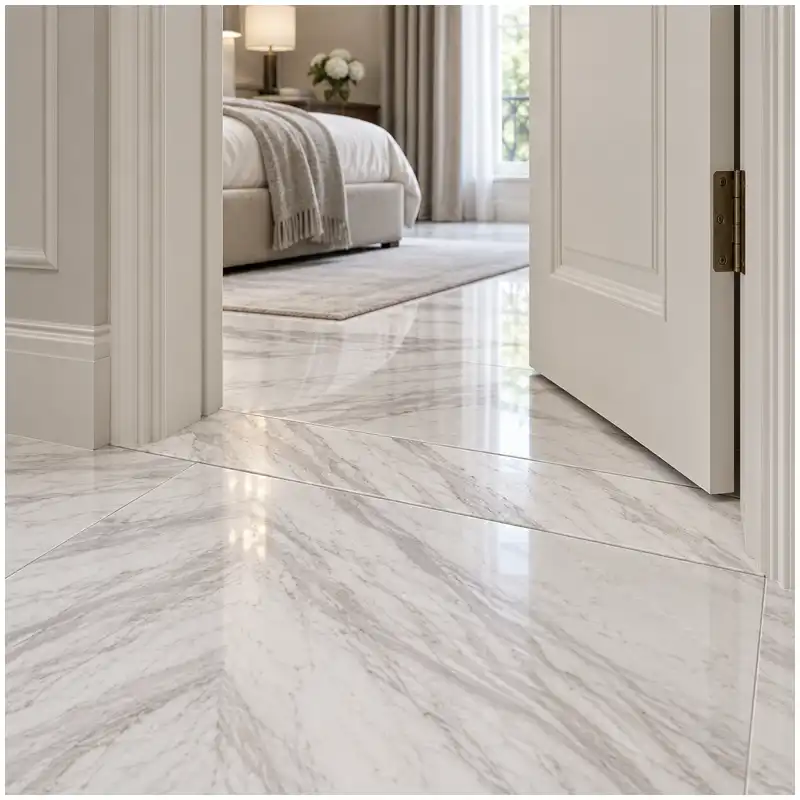
White marble floor tiles can match in color and still form an uneven surface when thickness, warpage, substrate plane, joint width, vein layout, or installer method drifts. Strong side light makes every raised edge easier to see, while polishing after installation can change the finish and joint appearance. This Esta Stone inspection route separates factory calibration from site flatness. It defines the measurements, dry-lay records, mock-up checks, acceptance decisions, and escalation evidence needed before a repeated lobby or bathroom floor proceeds.
White marble can leave the warehouse looking even and arrive on site only to develop dark patches, warm shadows, or visible trowel lines after installation. The slab may be innocent. Adhesive color, coverage, moisture, substrate variation, and curing conditions can change how a pale stone reads. This Esta Stone inspection method compares the actual stone, backing, adhesive system, grout, waterproofing, lighting, and test panel before repeated bathroom installation begins, so project teams approve the finished assembly rather than one attractive sample.
모서리 마이터 처리는 20mm 두께의 판재를 훨씬 더 깊어 보이게 만들 수 있지만, 반대쪽 모서리가 잘못된 시각 영역에서 오거나, 무늬결이 모서리에서 끝나고, 접착선이 빛에 의해 따뜻하게 비쳐 보이거나, 또는 연마된 면들이 서로 다르게 반사될 경우 이러한 착시 효과는 사라집니다. 이 Esta Stone 리뷰에서는 전체 판재 배치부터 스트립 절단, 건식 조립, 적층, 성형 및 최종 검사에 이르기까지 모서리 작업 과정을 따라갑니다. 이를 통해 백색 대리석 프로젝트에서 가까운 거리에서 시각적·촉각적으로 확인되는 모서리 부분에 대한 실용적인 품질 기준을 제시합니다.
Thickness is easy to treat as one line on a quotation. In the warehouse, it changes what can be cut, how the edge reads, which repairs become visible, how the slab is handled, and what the wall, cabinet, or furniture base must carry. This Esta Stone review separates nominal thickness from measured slab condition and compares 18 mm, 20 mm, and 30 mm options by application. It keeps full-slab tone, vein position, resin, mesh, support, and final lighting inside the same approval decision.
Resin treatment and fiberglass mesh can stabilize a white marble slab, but they also change what the fabricator and installer need to know. A polished face may hide filled fissures while the back reveals reinforcement, heavy resin, or local repairs. Susan Zheng explains how to photograph both faces, map cutouts, test adhesive compatibility, agree on acceptable treatment, and keep unsupported claims out of the approval record before a batch is cut for bathrooms, walls, or vanity tops.
A grout strip occupies little area, yet it can change how an entire white-marble wall or floor reads. Bright white can look synthetic beside warm stone. Gray can make every joint louder. Cream can pull a cool batch toward yellow under bathroom lighting. Susan Zheng sets out a strict approval process using actual offcuts, real joint widths, cured grout, sealer, and both 3000K and 4000K light. The decision is recorded by room type so installers do not improvise a color after the selected slabs and tiles have already reached site.
Calacatta is not one white background with a fashionable gray vein. Each selection carries its own field tone, vein scale, mineral color, repair visibility, usable yield, and relationship with the room light. Susan Zheng sets out a strict full-slab approval method for Calacatta Gold, Viola, Oro, and related varieties, then connects batch matching, cutting overlays, dry-lay, finish, wet-zone care, and replacement planning. The aim is simple: approve the stone that will actually be cut and installed, not the attractive sample that started the conversation.
The same white marble can look cooler, warmer, quieter, or more heavily veined after the finish changes. That shift affects walls, vanity tops, bathroom floors, cleaning, wet traction, and how a multi-room batch must be approved. Susan Zheng separates what polish reveals from what honing hides, explains how 3000K and 4000K lighting change the judgment, and gives project teams a full-slab approval method that goes beyond one attractive sample. The method also records dry-lay tone, edge finish, cleaner response, and site escalation evidence.
Two slabs with the same commercial marble name can carry different project value. Susan Zheng explains how source, current batch, slab dimensions, usable face, repairs, vein composition, finish, thickness, testing, selection range, cut yield, fabrication, dry-lay, packing, and replacement affect price. The goal is not to publish a fake universal rate. It is to help project teams compare quotations against the actual material and finished scope, then see whether a lower number removes selection, evidence, yield, or quality controls they still need.