



Quick Summary
블루 바히아 화강암 조리대 are fabricated from Brazilian Azul Bahia Granite, a cobalt-blue natural stone with white, grey, black, and crystalline mineral movement. The material is used for kitchen worktops, statement islands, waterfall ends, vanity tops, bars, reception desks, backsplashes, and other focal interior surfaces.
The current Esta Stone page lists common countertop references such as 96 × 26, 108 × 26, 96 × 36, and 72 × 36 inches, with 20 and 30 mm as the principal countertop thicknesses. The most important procurement step is full-slab review because blue intensity, pale crystal clusters, and darker mineral zones vary substantially between slabs.
Kitchen countertop reference showing how Azul Bahia reads as a focal blue surface rather than a neutral background stone.
Blue Bahia Granite Countertops for Kitchens, Islands, Bars, and Vanity Tops
Azul Bahia Granite is quarried in Bahia, Brazil and is commercially sold as one of the best-known blue granites. Petrographic references also describe it as a sodalite-rich foidolite or related feldspathoid-bearing hard stone. For buyers, the more important distinction is visual: intense cobalt and navy-blue areas are mixed with white crystalline clusters, grey mineral zones, black areas, and occasional warmer streaks.
The material is most effective when the blue structure remains visible at scale. Kitchen islands, waterfall ends, bar counters, reception desks, vanity tops, full-height backsplashes, and selected wall panels can all use the same slab family, but the focal areas should be assigned before cutting.
- Brazilian Azul Bahia Granite with strong cobalt-blue crystalline character.
- Suitable for custom kitchen countertops, islands, vanities, bars, reception desks, and feature surfaces.
- Full-slab photos are essential because color intensity and crystal distribution do not repeat uniformly.
Azul Bahia Granite Slab Selection: Blue Intensity, Crystal Clusters, and Usable Cutting Area
Blue Bahia can range from vivid cobalt-blue to darker navy areas with larger white crystal clusters, black mineral patches, grey zones, or warmer veins. A small sample cannot represent a complete island or long counter. For custom fabrication, slab approval should identify the usable cutting area, the strongest blue zones, areas reserved for sink or hob openings, and any natural or resin-treated features that need to be kept away from narrow rails or exposed edges.
Azul Bahia Granite Countertop Specification and Fabrication References
| 제품 이름 | 블루 바히아 화강암 조리대 |
| 재질 | 아줄 바이아 화강암 |
| 원산지 | Bahia, Brazil |
| Related Trade Names | Blue Bahia Granite / Bahia Blue Granite / Azul de Bahia Granite |
| Color Character | Cobalt blue to navy blue with white crystalline clusters, grey, black, and occasional warmer mineral movement |
| Current Page Countertop References | 96 × 26 / 108 × 26 / 96 × 36 / 72 × 36 in |
| US Detailed References | 25 × 96 / 26 × 108 in; island references 72 × 36 / 72 × 39 / 98 × 39 in |
| UK / Ireland References | 2500 × 620 × 30 / 2400 × 610 × 30 mm; island references 2500 or 2400 × 1220 × 30 mm |
| Vanity Top References | 25 / 31 / 37 / 43 / 49 / 61 in lengths with 19 or 22 in depth references on the current page |
| Principal Countertop Thickness | 20 / 30 mm; confirm any other thickness from the current production drawing |
| 완료 | Polished; honed / leathered / brushed and other textures by project review |
| Edge Options | Eased / full bullnose / demi bullnose / ogee / mitred build-up and other drawing-specific profiles |
| 주요 적용 분야 | Kitchen countertops, waterfall islands, vanity tops, bar counters, backsplashes, reception desks, benches, and feature surfaces |
Published EN Test Reference for Azul Bahia Granite
A published Azul Bahia technical sheet provides exact-material test values under named EN methods. These figures differ from other widely circulated Azul Bahia datasets, which commonly report lower density and absorption but higher compressive strength. The EN-tested dataset below is therefore presented as one documented material reference rather than a universal value for every Azul Bahia quarry block or commercial batch.
| 속성 | 시험 방법 | Published Result | Reference Note |
| Apparent Density | EN 1936 | 2700 kg/m³ | Published Azul Bahia technical data; other exact-material sources commonly report about 2545–2553 kg/m³ |
| Open Porosity | EN 1936 | 0.3% | Exact-material EN result |
| Water Absorption at Atmospheric Pressure | EN 13755 | 0.1% | Other published Azul Bahia datasets report approximately 0.04–0.22% |
| 압축 강도 | EN 1926 | 105 MPa | Other published exact-material sources report approximately 166–174 MPa, showing meaningful source or quarry variation |
| Freeze-Thaw Performance Reference | EN 12371 | 138 MPa reported compressive value after frost-related testing | Use current-batch verification for exterior engineering approval |
| Flexural Strength | EN 13161 | 14.7 MPa | Close to other exact-material Azul Bahia references around 16.6 MPa |
| Abrasion Resistance | EN 14157 | 2.2 mm | Exact-material EN result |
| 충격 저항성 | EN 14158 | 0.45 m minimum fall height | Exact-material EN result |
| Thermal Expansion Coefficient | EN 14581, Method A | 3.3 × 10⁻⁶ /°C | Published Azul Bahia technical data |
Reference basis: published Azul Bahia technical data from Rocha Verde, cross-checked against other exact Azul Bahia references from StoneContact, MGS StoneScape, and German natural-stone technical catalogues.
Final values can be confirmed by current-batch test report when required for project approval.
Kitchen Countertops: Sink Cutouts, Hob Openings, Seams, and Edge Profiles
A Blue Bahia Granite Kitchen Countertop should be laid out from the selected slab before fabrication. Sink and hob openings can remove some of the strongest blue or crystal areas if they are positioned from dimensions alone. Seam location, overhang, appliance gaps, faucet holes, backsplash pieces, support, and edge geometry should be coordinated at the same time.
For long runs or L-shaped kitchens, seam placement should avoid narrow or visually awkward fragments and should respect the direction of the major blue and white mineral movement. Eased, bullnose, demi-bullnose, ogee, and mitred built-up edges can all be considered according to the drawing and the strength of the selected section.
Waterfall Islands: Mitred Returns and Pattern Continuity
Blue Bahia is especially effective on waterfall islands because the top and vertical return can show the same blue crystalline structure as one composition. The strongest white crystal cluster or cobalt zone can be centered on the island or carried toward the mitred edge depending on the design.
The top, side return, mitre, cabinet support, floor clearance, appliance openings, seating overhang, and seam position should be resolved together. A waterfall return should not be cut as an independent panel after the top has already been fabricated.
Bars, Benches, Reception Desks, and Vanity Tops
Blue Bahia also works well on bar tops, bench counters, reception desks, vanity tops, and other high-visibility horizontal surfaces. These applications can use stronger mineral zones selectively because the finished pieces are often smaller than a full kitchen island.
For vanity tops, the current Esta Stone page lists common 25, 31, 37, 43, 49, and 61 inch length references with 19 or 22 inch depths. Sink model, faucet holes, backsplash, edge profile, seam position, and wall condition should still be confirmed from the project drawing.
Lighting affects the stone strongly: cool daylight emphasizes cobalt and white crystal areas, while warmer artificial light can make grey, black, or warmer mineral zones more visible.
Polished, Honed, Leathered, and Brushed Finish Selection
Polished Azul Bahia produces the strongest blue saturation and crystalline reflection and is the main choice for statement kitchens, islands, bars, vanities, and reception surfaces. Honed finish reduces glare and gives the stone a flatter, more architectural appearance.
Leathered and brushed finishes can add tactile character and soften reflection, but they also change how sodalite-rich blue areas and pale crystal clusters read. Finish approval should use representative material from the selected batch rather than a generic blue granite sample.
Slab Mapping, Dry-Lay, and Fabrication Planning
Azul Bahia is visually expensive because of its blue mineral concentration, which makes cutting strategy important. Every major countertop and island piece should be assigned from a full-slab photograph before the saw program is finalized.

- Map islands, waterfall returns, long counters, bars, reception fronts, and vanity tops against selected slab photographs.
- Position sink, hob, outlet, faucet, seam, mitre, and backsplash pieces after the strongest blue and crystal zones are identified.
- Keep narrow rails and high-stress cutout areas away from unsuitable natural or resin-treated features.
- Review dry-lay or digital slab maps before final cutting when several pieces must read as one composition.
- Carry piece numbers, visible-face marks, and orientation through inspection, packing, and site installation.
Factory Support, Inspection, and Export Packing
A custom Blue Bahia countertop package may combine islands, perimeter counters, backsplashes, vanity tops, bars, reception pieces, and wall panels. Factory control should keep slab selection, drawing review, edge work, cutouts, and installation sequence aligned through one fabrication package.
- Inspect blue intensity, white crystal distribution, darker mineral zones, finish, visible repairs, and usable cutting area.
- Check finished dimensions, thickness, edges, mitres, sink and hob openings, faucet holes, backsplash pieces, and visible faces against drawings.
- Photograph completed pieces before packing where pattern continuity or finish is critical.
- Label pieces by kitchen run, island side, vanity, bar, reception desk, or installation zone.
- Use reinforced export crates with face separation and protection at polished edges, corners, mitres, and narrow rails.
Common Specification Mistakes with Blue Bahia Granite Countertops
- Approving a small sample instead of the actual Azul Bahia slab for a large island or waterfall design.
- Cutting sink or hob openings before the strongest blue and white crystal zones are mapped.
- Using one published technical dataset as a universal current-batch certificate despite meaningful Azul Bahia source variation.
- Assuming every slab accepts the same cleaner or sealer without reviewing resin treatment, finish, and mineral composition.
- Treating the material as visually uniform and expecting exact blue matching between unrelated slabs or batches.
- Designing waterfall returns independently from the countertop top and mitred joint.
Care and Maintenance for Azul Bahia Granite Countertops
Use a soft cloth and a pH-neutral cleaner suitable for natural stone. Avoid abrasive powders and strong acidic or alkaline cleaners, particularly where the slab contains resin-treated areas or sodalite-rich mineral zones. Wipe spills promptly and use trivets or protective pads around very hot cookware and heavy metal objects.
Sealing requirements depend on the actual slab, finish, fabrication, resin treatment, and installer recommendation. During construction, protect polished surfaces from metal dust, adhesive contamination, grout residue, dragged grit, and edge impact.
FAQs About Blue Bahia Granite Countertops
What are Blue Bahia Granite Countertops?
Blue Bahia Granite Countertops are fabricated from Brazilian Azul Bahia Granite, a cobalt-blue natural stone with white, grey, black, and crystalline mineral movement. They are used for kitchen counters, islands, waterfall ends, vanity tops, bars, reception desks, backsplashes, and other focal surfaces.
Is Blue Bahia Granite the same as Azul Bahia Granite?
Yes. Blue Bahia Granite and Azul Bahia Granite are common English and Portuguese trade names for the same Brazilian blue stone family quarried in Bahia. Bahia Blue Granite and Azul de Bahia also appear in the international market.
What countertop sizes are listed on the current Esta Stone page?
The current Esta Stone page lists countertop references including 96 × 26, 108 × 26, 96 × 36, and 72 × 36 inches. It also lists US, UK, and Ireland countertop and island formats in the detailed specification section, with custom fabrication available from project drawings.
What thickness is used for Blue Bahia Granite Countertops?
The current page lists 20 mm and 30 mm as the principal countertop thicknesses. Its older detailed specification also contains additional thickness references, so the final thickness should be confirmed from the project drawing, edge profile, support, and fabrication method.
Can Azul Bahia Granite be used for waterfall kitchen islands?
Yes. Waterfall islands are one of the strongest applications for Azul Bahia because the large top and vertical return preserve the blue crystalline movement. The top, mitred edge, side return, sink or hob cutouts, seams, and support should be mapped from the selected slab before fabrication.
Which finishes are used on Blue Bahia Granite?
Polished finish is the main countertop surface on the current product page. Honed, leathered, brushed, and other textured finishes can also be reviewed for specific projects. A representative sample is useful because texturing changes the apparent blue depth and mineral contrast.
What published test data is available for Azul Bahia Granite?
One published Azul Bahia technical sheet reports 2700 kg/m³ apparent density under EN 1936, 0.3% open porosity under EN 1936, 0.1% water absorption under EN 13755, 105 MPa compressive strength under EN 1926, 14.7 MPa flexural strength under EN 13161, 2.2 mm abrasion resistance under EN 14157, and 0.45 m impact resistance under EN 14158. Other published Azul Bahia sources report different values, so current-batch testing should be used where engineering approval depends on numerical performance.
How should Blue Bahia Granite Countertops be cleaned?
Use a soft cloth and a pH-neutral cleaner suitable for natural stone. Avoid abrasive powders and strong acidic or alkaline cleaners, especially where the slab contains resin-treated or sodalite-rich zones. Sealing and care frequency should follow the actual slab, finish, fabrication, and installer recommendation.
Recommended Granite Countertops from Esta Stone

화이트 로즈 화강암 조리대
Light granite countertops with rose, grey, and mineral movement for kitchens, islands, vanity tops, bars, and softer-toned interior schemes.

Black Galaxy Granite Countertop
Dark granite countertop with fine gold mineral flecks for kitchens, vanity tops, islands, bars, commercial counters, and black-stone interior schemes.
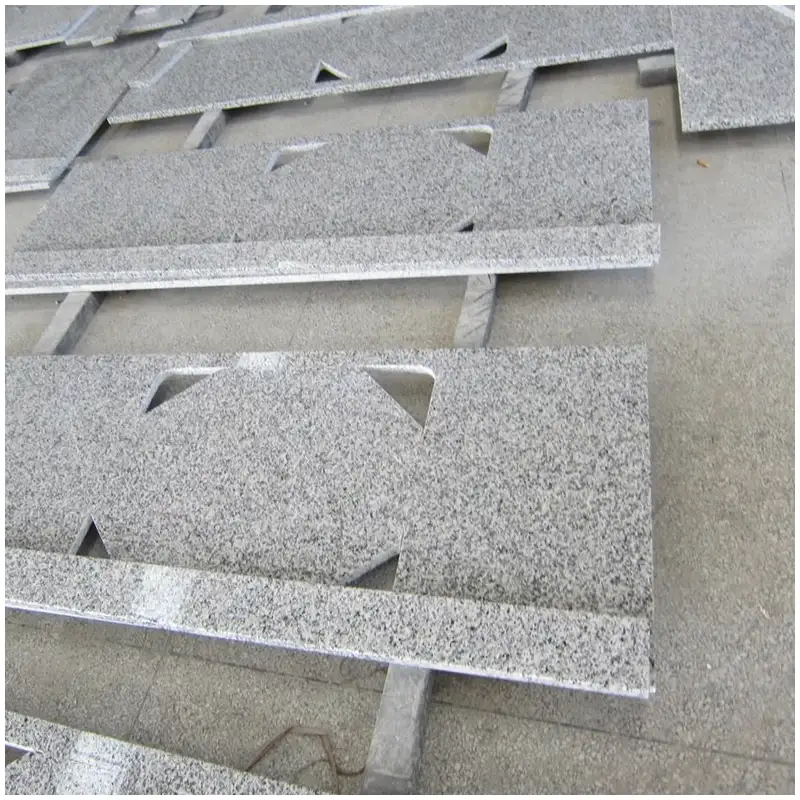
세서미 그레이 그래니트
Fine-grained grey granite for practical kitchen countertops, vanity tops, commercial counters, stairs, floors, and neutral architectural projects.
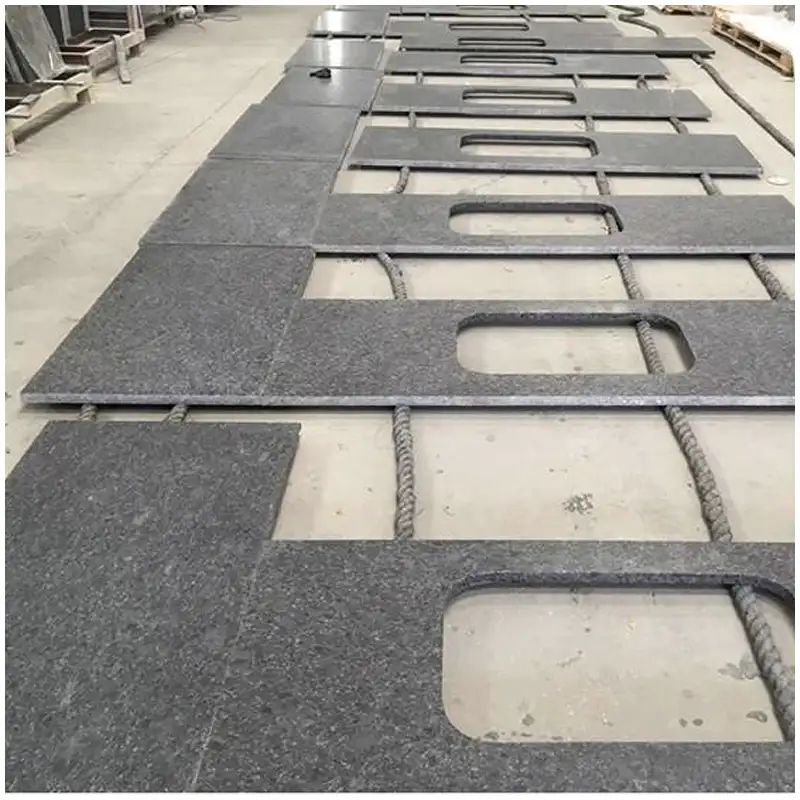
스틸 그레이 화강암 조리대 주방 상판
Dark grey granite with dense crystalline grain for kitchens, islands, vanity tops, commercial counters, bars, and durable neutral interiors.
Request Blue Bahia Granite Countertop Photos, Drawings, and Project Quotation
Send the information that defines the finished Blue Bahia package so slab selection, pattern placement, fabrication, and quotation can match the actual kitchen counter, island, waterfall return, vanity, bar, reception desk, backsplash, or custom bench.
- Countertop, island, vanity, bar, reception, or bench drawings with finished dimensions
- 20 / 30 mm thickness, polished / honed / leathered / brushed finish, and preferred blue-to-white crystal balance
- Sink model, hob opening, faucet holes, backsplash dimensions, seams, overhang, support, edge profile, and waterfall returns
- Slab-photo approval, pattern direction, digital slab mapping, dry-lay review, and current-batch testing requirements
- Inspection photos, piece labels, crate sequence, destination, unloading condition, and project schedule
| Request Blue Bahia Granite Countertops Quote | View Kitchen Countertops Collection |