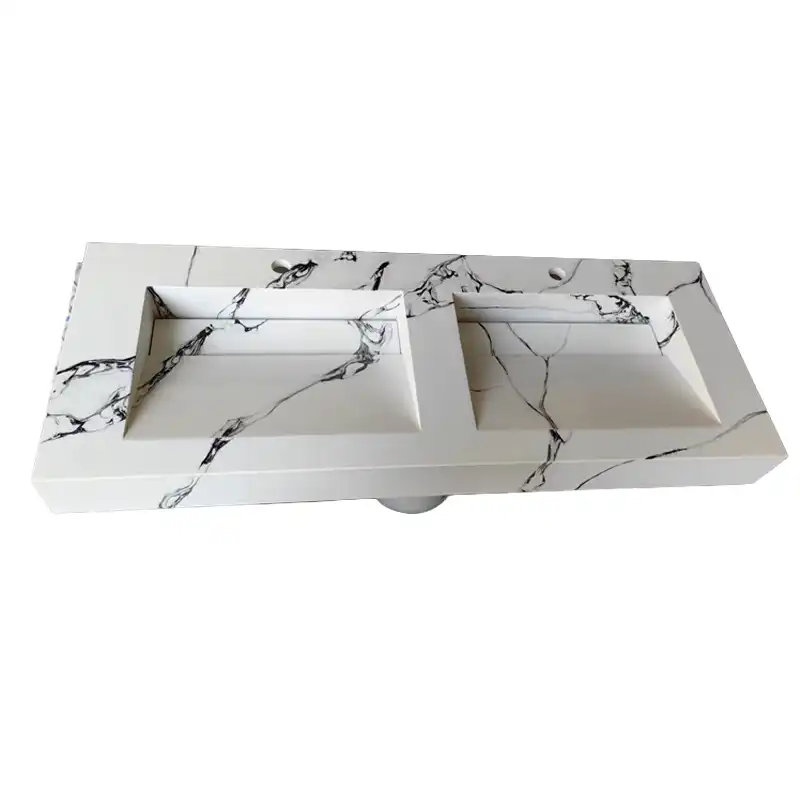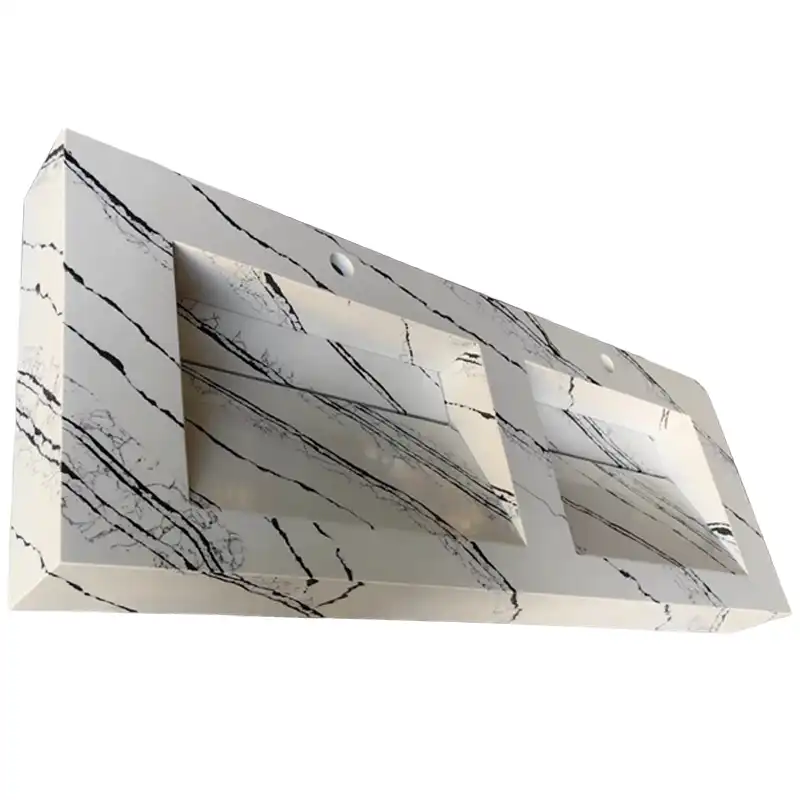



Quick Summary
Brazil Pandora Quartzite Slab is a Brazilian exotic stone selection combining pale crystalline areas with dark mineral formations and warm beige-gold movement. The featured slabs measure 340×200cm, 312×198cm and 323×198cm, providing large cutting faces for mansion feature walls and custom kitchen islands. Selected crystal-rich sections may transmit light, while other areas remain substantially opaque. Backlit applications therefore require slab-specific light testing, careful positioning of structural supports and approval of the complete lighting assembly. The final layout should identify visible joints, crystal zones and cutting positions before stone fabrication begins.
Brazil Pandora Quartzite Slab for Illuminated Villas and Mansions Interior Projects
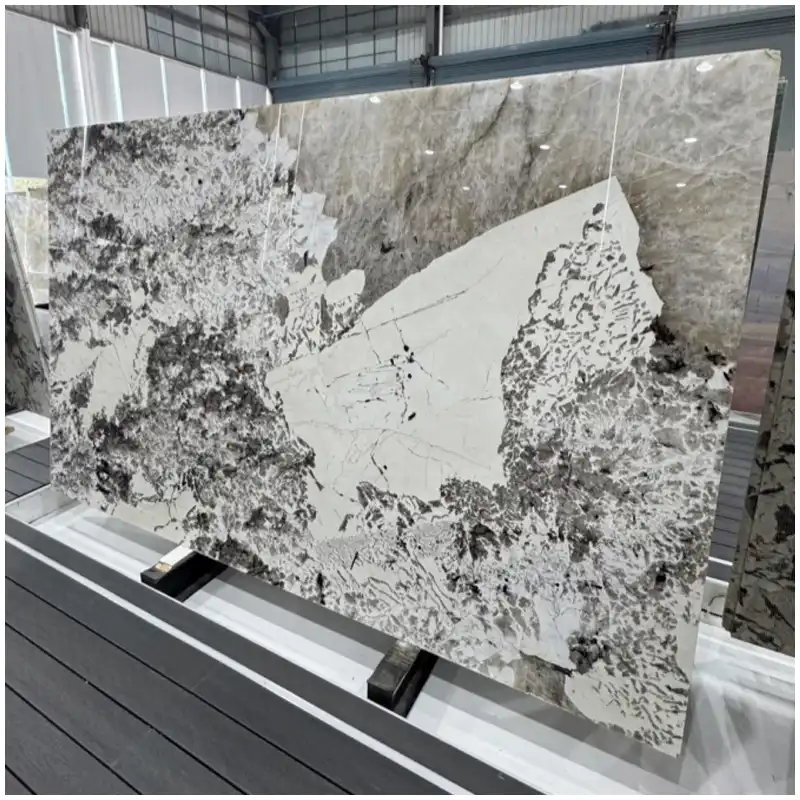
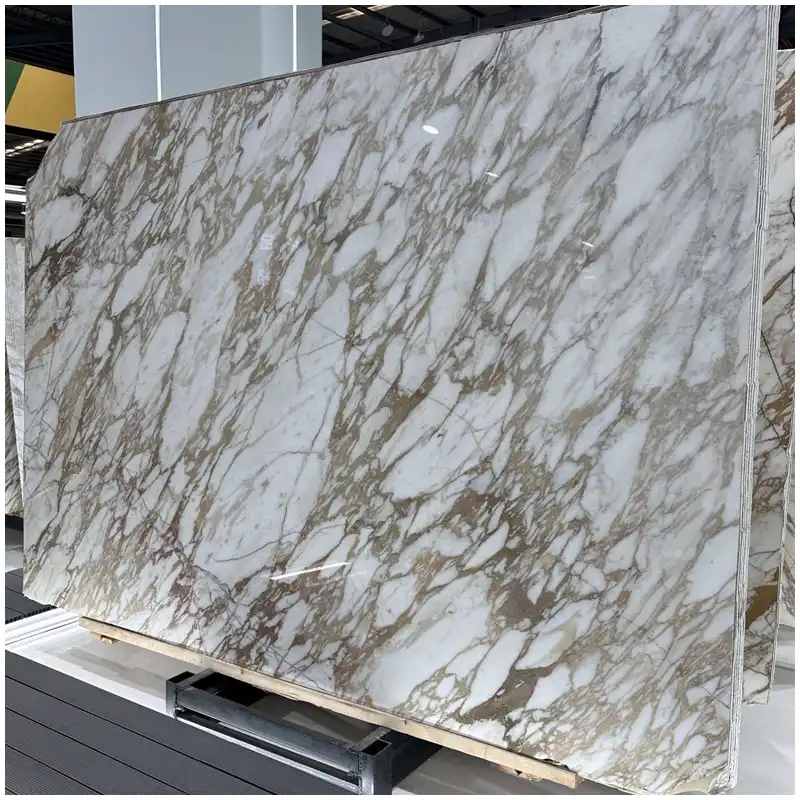
A Pandora slab is rarely a uniform field of color. Pale crystalline sections sit beside darker mineral masses, with changes in texture, direction and transparency across the same face. The challenge for a fabricated interior is deciding which sections of that natural composition should remain visible after cutting.
A backlit island may use an illuminated vertical front beneath a conventional polished working surface. A feature wall, by contrast, places the illuminated stone directly in the main viewing plane. These are different fabrication problems, even when the same stone selection is specified.
For an island, opaque mineral formations may form part of the intended pattern rather than defects. Crystal-rich areas can carry the light, while the darker portions remain visible in silhouette. Trying to make every section equally bright would remove much of the material’s natural contrast.
The stone is commonly sold under the Pandora quartzite name and may appear in the wider Brazilian Patagonia sourcing category. Such names describe a commercial stone direction; they do not guarantee identical geological composition, translucency or physical properties across every slab.
Three different large slab formats are listed for this product. The longest is 340cm, with two additional references of 312cm and 323cm. Their useful value depends on the position of crystalline formations relative to the proposed finished panels.
The purchasing decision should begin with the final elevations and the actual slab photographs. Once the illuminated zones, main viewing direction and required finished dimensions are established, the cutting schedule can be prepared without sacrificing the most important crystal areas to unnecessary trimming or hidden construction.
Pandora Exotic Quartzite Slab Sizes and Fabrication Specifications
The listed slabs are substantially wider than many standard countertop strips. They can be considered for larger uninterrupted wall pieces and coordinated island components, subject to the actual stone condition and approved fabrication details.
| Nome do produto | Brazil Pandora Quartzite Slab |
| Material Comercial | Pandora Exotic Quartzite / Pandora Crystal Quartzite |
| Referência de Origem | Brazil; Confirm Documentation for the Selected Lot |
| Color and Structure | Cream-White Crystals / Light Grey / Black / Beige-Gold Mineral Areas |
| [TAMANHO DA LAJOTA A] | 340×200cm / 3400×2000mm |
| [TAMANHO DA LAJOTA B] | 312×198cm / 3120×1980mm |
| [TAMANHO DA LAJOTA C] | 323×198cm / 3230×1980mm |
| Espessura | 18mm Reference in Product Imagery; Actual Lot to Be Confirmed |
| Acabamento | Polished Featured; Other Finishes by Material Approval |
| Iluminação de fundo | Selected Translucent Zones Subject to Lighting Mock-Up |
| Stone Forms | Full Slabs / Cut-to-Size Wall Panels / Island Tops / Island Fronts / Returns |
| Pattern Approval | Actual Slab Mapping / Crystal-Zone Selection / Numbered Cutting Layout |
| Aplicações em Projetos | Mansion Kitchen Islands / Illuminated Feature Walls / Architectural Interior Panels |
The supplied dimensions are nominal full-slab references. Net fabrication yield depends on trimming, saw kerf, crystal boundaries, natural defects and the direction in which each finished component is cut. Thickness and any back reinforcement must be checked for the selected slabs.
Identifying Crystal Zones Before Cutting Pandora Quartzite
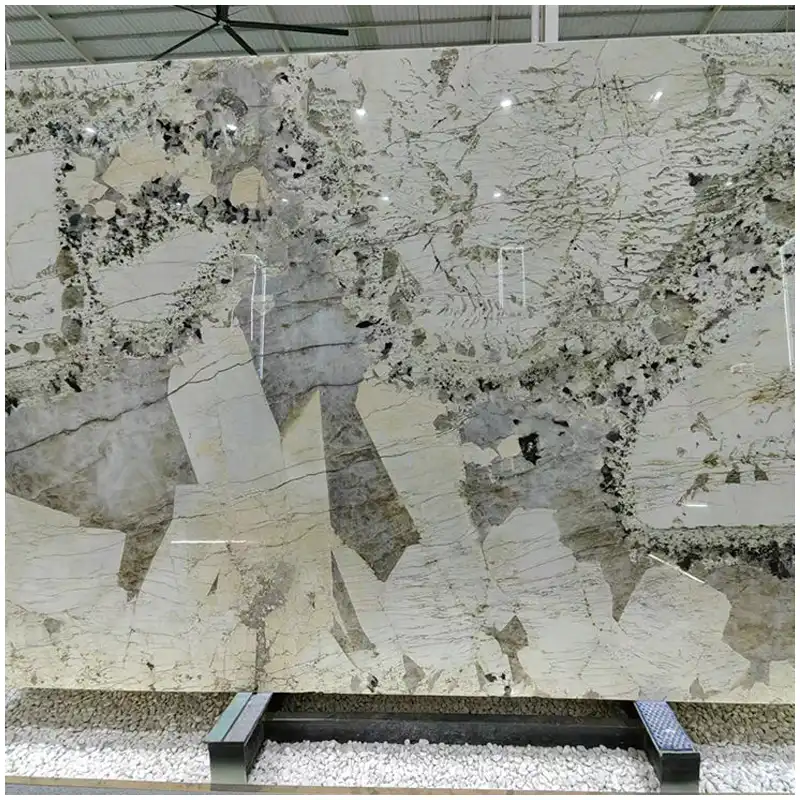
A front-lit photograph can reveal the broad mineral arrangement, but it does not establish which areas will transmit light. The proposed backlit composition should be reviewed with a transmitted-light test of the actual stone.
Three visual zones are useful when preparing the cutting map: pale crystal-rich areas with potential translucency, mixed transition zones, and dark or dense areas that may remain substantially opaque.
The pale areas do not all transmit the same amount of light. Mineral thickness, internal fractures, localized resin treatments and the direction of the crystals can affect the result. Similarly, a dark section may contain small light-transmitting pockets that are not obvious when the slab is viewed from the front.
For a mansion island, the cutting diagram can position an approved translucent area on the vertical fascia. A dense section may be better allocated to a non-illuminated return, provided it is suitable for the intended edge and support details.
For a large feature wall, crystal placement is more dependent on the overall elevation. The designer may want an illuminated formation near the center, or several smaller luminous areas distributed around a darker field.
The final arrangement should not be determined from color alone. The actual stone face needs to be mapped with the intended illumination system before cutting releases the panels into individual components.
Allocating the 340cm, 312cm and 323cm Slabs to Finished Panels
The three dimensions can be compared by gross surface area, but their cutting usefulness depends on the shape of the finished components. A wider sheet is valuable only when its usable crystal distribution and structural condition fit the project drawing.
| Referência de Laje | Gross Area | Potential Allocation | Main Approval |
|---|---|---|---|
| 340×200cm | 6.80m² | Long island sections or a larger uninterrupted wall composition | Usable length, prominent crystal placement and handling |
| 312×198cm | 6.18m² | Island panels, wall components and combined front/return pieces | Joint locations, panel orientation and mineral boundaries |
| 323×198cm | 6.40m² | Coordinated wall elevations or large countertop and fascia components | Finished component width, crystal visibility and cutouts |
These areas are calculated from the nominal dimensions, not from a completed cutting schedule. An island with a sink, hob or other opening can lose important crystal sections even when the top itself fits within the slab.
For a backlit project, maximizing square-meter yield is not always the best outcome. Keeping a translucent formation intact may create a more useful finished panel than dividing the same area into several smaller pieces that cannot be illuminated effectively.
The cutting plan should identify each intended visible face, the orientation of mineral movement and the location of the proposed lighting cavity. A separate piece-numbering plan should then connect the fabricated components to the final island or wall elevation.
18mm Pandora Quartzite Slab Reference: Thickness, Backing and Support
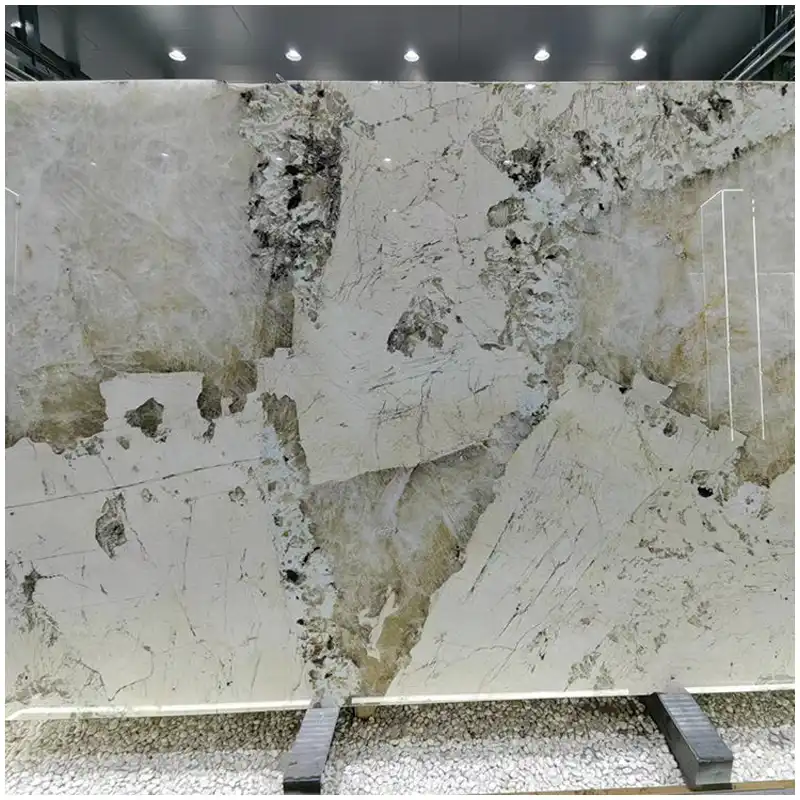
An 18mm slab appears in the supplied product photography. This is a useful reference for discussing illuminated panels, but the photographed designation must be checked against the physical slabs before the thickness is written into a fabrication order.
Thickness can affect both light transmission and structural behavior. Reducing the amount of stone between the light source and the finished face may change brightness, but it can also increase the importance of reinforcement and careful handling.
Back reinforcement introduces another complication. Mesh, resin, composite backing or a bonded support panel may change the illuminated appearance. Some materials can produce visible shadows; others may be incompatible with the intended light or heat exposure.
The surface should be tested with the proposed backing already installed. Testing bare quartzite and later adding an opaque supporting layer can invalidate the lighting approval.
Large wall panels require their own fixing design based on the actual stone and wall assembly. A cabinet-supported island front has a different load path from a vertical mechanically secured wall panel. Neither can be approved merely from a material thickness label.
The selected construction should also allow damaged or serviceable parts to be accessed without dismantling the entire stone feature where practical. This is best resolved during the shop-drawing stage, before the illuminated panels are cut and bonded.
Backlit Quartzite Slabs: Lighting Mock-Up and Acceptance Criteria
A backlit Pandora installation needs more than an LED strip positioned behind the stone. Light distribution, the distance to the diffuser, the selected backing material and the stone’s actual translucency determine the finished appearance.
A useful mock-up should be reviewed with the light switched both on and off. The illuminated result must also be assessed at normal viewing distance, not only through a close-up photograph.
| Mock-Up Item | What to Inspect | Acceptance Concern |
|---|---|---|
| Crystal Transmission | Brightness differences across selected pale formations | Avoid unsuitable panel sections and uncontrolled brightness |
| Opaque Mineral Areas | Dark areas that remain unlit or create strong silhouettes | Confirm intended contrast rather than assuming uniform illumination |
| Diffuser and Light Cavity | Visible LED points, hotspots and uneven light distribution | Establish an acceptable appearance from normal viewing positions |
| Backing and Adhesives | Mesh, resin, bonded layers and their shadows | Approve the completed panel assembly, not bare stone alone |
| Color Temperature | Changes in perceived cream, amber and grey tones | Maintain the intended stone appearance under project lighting |
| Support and Maintenance | Bracket shadows, cable routes, heat management and equipment access | Prevent lighting conflicts with structural and service requirements |
The electrical components, drivers and light sources must meet applicable project requirements. Heat exposure at the stone backing and adhesives also needs review. Low light-source power consumption does not eliminate the need to consider heat accumulation inside an enclosed island or wall cavity.
A satisfactory lighting test should record the sample orientation, stone thickness, backing, lighting arrangement and viewing conditions. This creates a repeatable approval standard for the finished installation.
Polished Pandora Quartzite: Crystal Boundaries and Finished Edge Layout
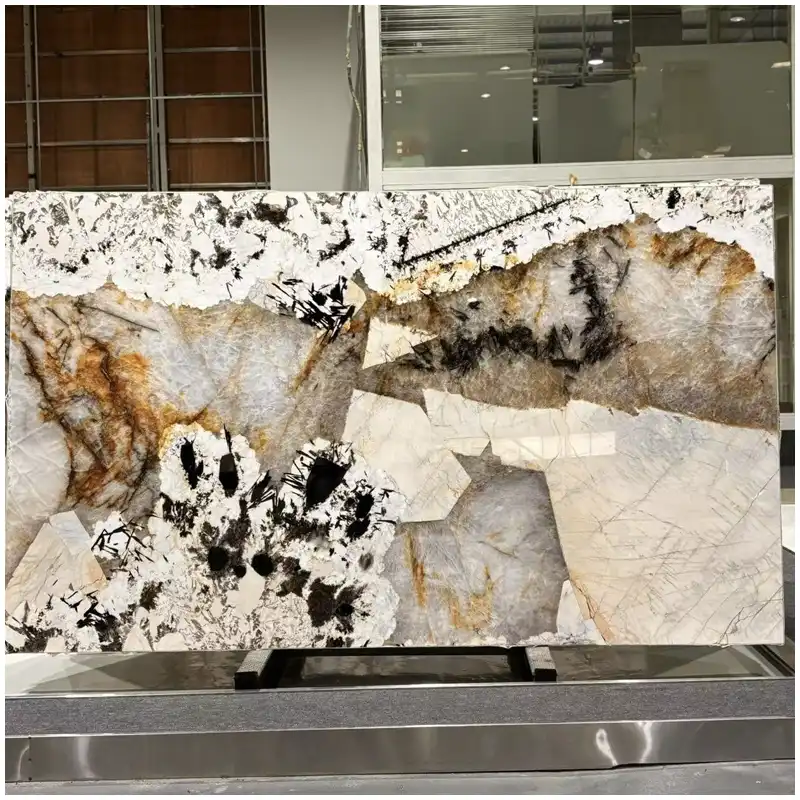
Polishing can increase the visual contrast between crystalline sections and darker mineral formations. It may also reveal natural boundaries, small fissures or filled areas that require closer examination before cutting.
A slab with several mineral types should not automatically be processed as though every section behaves identically. The fabricator needs to inspect transitions where dense dark material meets a lighter crystalline area, particularly around narrow countertop bridges and exposed corners.
For a waterfall island, the corner may be formed with mitered pieces to create a substantial apparent thickness. The final joint must be engineered and finished, while any attempt to carry a crystal formation across the corner requires a deliberate cutting arrangement.
Where a translucent section meets an opaque one, the edge may expose a different internal mineral structure from the large polished face. A close-up edge sample can therefore be helpful for assessing the intended visible corner treatment.
Large openings for sinks and cooking equipment must be reviewed against major mineral boundaries. The position of an opening can affect the remaining stone bridges, local reinforcement and the survival of a visually important crystal area.
Bookmatching is not inherent to the Pandora name. If a mirrored wall arrangement is required, the actual related slab faces must be available and reviewed as a pair. Without suitable matching faces, a coordinated but non-mirrored composition should be specified instead.
Brazilian Pandora and Patagonia Quartzite: Confirming Material Identity
Pandora and Patagonia are names that can overlap in the international decorative stone market. Some crystal-rich Brazilian selections are sold under both terms, while other products with Patagonia in their name have different mineral distributions and commercial identities.
For this reason, Brazilian Pandora Quartzite is the material identity used for the slab selection described here. Searches for Patagonia Quartzite Slabs or Brazilian Patagonia Quartzite may lead buyers toward related stones, but they are not automatically interchangeable with the selected Pandora faces.
The same limitation applies to the term Exotic Quartzite Slabs. It is a broad commercial category rather than a mineralogical classification. Certain decorative stones sold as quartzite contain complex crystalline or pegmatitic formations and should be identified by the actual supplied material when technical compliance matters.
Where a project requires a particular quarry origin, stone composition or performance standard, the selected lot should have supporting documentation. The proposed appearance can be evaluated from slab photographs, but geological identity cannot be established from color alone.
For a replacement or extension project, an existing sample and current slab-face photographs are more reliable than ordering only by the Pandora or Patagonia commercial name. Even related stones may have significantly different dark-to-crystal proportions.
Fabricating a Backlit Mansion Island Without Compromising the Working Surface
A backlit kitchen island should be divided into the worktop and the illuminated architectural elements during design. The horizontal top may need sink openings, a hob, overhang support and normal food-preparation clearances. The vertical fascia can be planned separately around crystal transmission and lighting.
This separation matters because an illuminated decorative panel and a load-bearing working surface are not interchangeable construction elements. The upper countertop must have suitable support, while the illuminated front needs an approved lighting cavity, diffuser and stone-panel fixing system.
If the island includes waterfall ends, the designer should decide which ends will be illuminated. Carrying light through a dark or heavily backed corner may not create the expected effect. It may be preferable to use an opaque return and reserve illumination for the front surface.
Cabinet doors, drawers, appliance ventilation and plumbing access may conflict with the lighting cavity. These should be shown on a combined island section rather than resolved after the stone has been cut.
The finishing details also matter. An exposed stone joint, a mitered corner and a small gap for thermal movement each have different visual consequences when the lights are switched on. A pre-approved construction sample can establish the intended treatment.
The result should be evaluated as a complete island assembly. The decorative backlighting may enhance selected crystal sections, but it does not replace structural support, countertop hygiene requirements or access for electrical servicing.
Brazil Pandora Quartzite Feature Wall Project Reference
The following image illustrates the use of Pandora-style mineral movement for an interior feature wall. It is a design reference rather than confirmation of a completed installation, tested fixing system or a specific slab allocation.
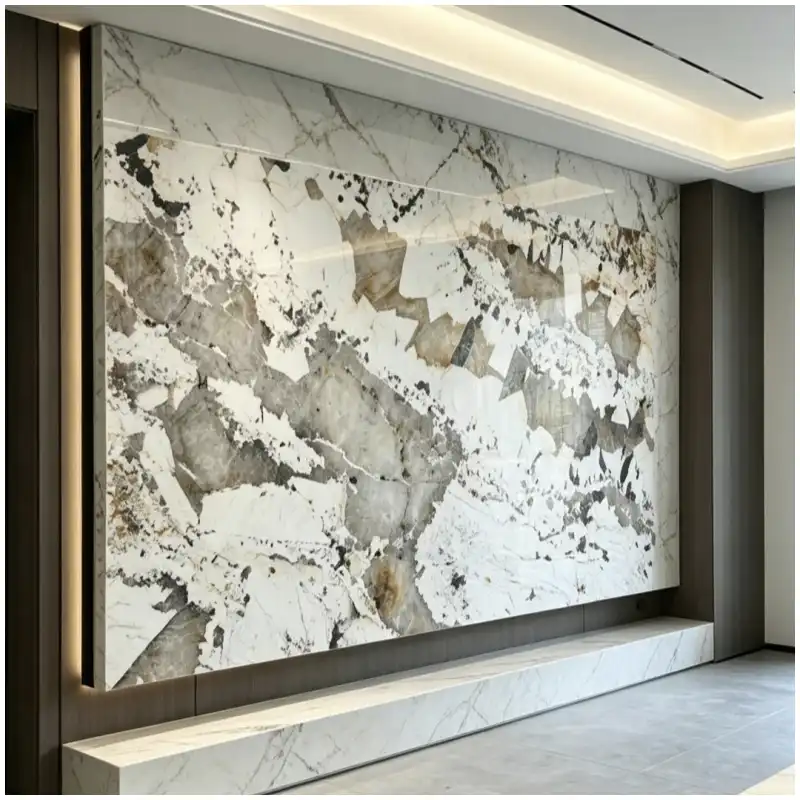
For a feature wall, the main viewing distance determines how the stone composition is perceived. Large dark mineral blocks and pale crystalline areas can create a strong visual arrangement across the elevation even where smaller details are not visible from the room entrance.
Panel joints should be positioned with the proposed stone pattern. A joint cutting through the center of an important crystal formation may be more noticeable than a joint placed near an existing dark mineral boundary, provided the resulting panel dimensions remain technically suitable.
Lighting can be used behind approved translucent sections or directed onto the polished face from the room. These approaches produce different appearances. A front-lit wall can use the mineral contrast without requiring the stone to transmit light.
The installation drawing should cover the wall substrate, panel support, movement joints, electrical services where needed and the intended stone sequence. The finished wall must be assessed for its own loading and fixing requirements.
Brazil Pandora Quartzite Backlit Island Countertop for Mansion Interiors
This image illustrates the use of a Pandora-style quartzite island with illuminated decorative areas. The image does not establish that every part of the stone transmits light or that the underlying cabinet, wiring and support system have been independently verified.
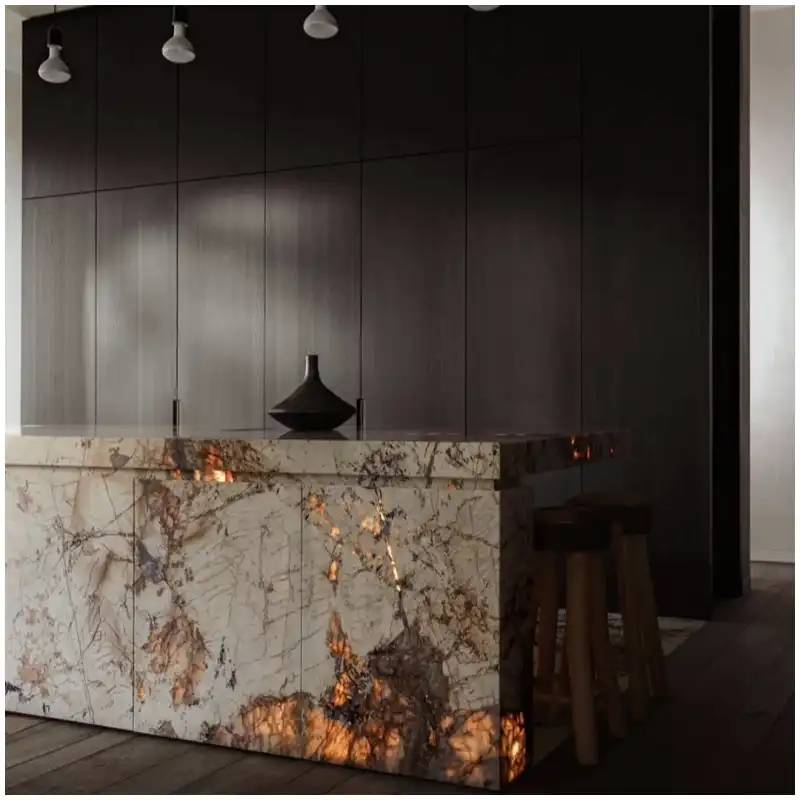
The most important part of an illuminated island may be the relationship between the glowing crystal-rich areas and the dark mineral formations that remain unlit. This contrast is a product of the stone selection and lighting arrangement, not a guaranteed characteristic of every cut piece.
The completed island should be viewed with room lighting at both daytime and evening levels. A decorative panel that looks balanced in a dark showroom may appear too bright or show individual light sources in a residential kitchen.
Service access is another practical issue. The lighting system should not be permanently trapped behind a heavy quartzite fascia without an agreed maintenance method. Accessible drivers and replaceable lighting components should be coordinated with the cabinet builder.
For mansion projects involving a large island top and illuminated lower panels, approve the worktop construction, stone layout and lighting mock-up as related but distinct parts of the installation. This reduces the risk of late changes that disturb the approved crystal pattern.
Technical Data Required for Pandora Quartzite Project Approval
The stone trade includes several mineral-rich selections sold under Pandora and Patagonia names. Their mechanical properties and suitability for fabrication may differ. Numerical strength, absorption or density values from a similarly named stone should not be assigned to this slab selection without a documented material match.
Where technical compliance is part of a project specification, the following tests and checks can be included in the material submittal:
| Test or Review | Relevant Method | Project Purpose |
|---|---|---|
| Bulk Density and Porosity | EN 1936 | Material characterization and panel-weight assessment |
| Water Absorption | EN 13755 | Performance assessment for specified moisture exposure |
| Flexural Strength | EN 12372 | Structural evaluation of slab and panel components |
| Resistência à compressão | EN 1926 | Material documentation where required by the specification |
| Identificação de Pedras | Applicable Petrographic Examination | Confirm the mineral assemblage and commercial-material identity |
| Lighting Assembly Test | Project-Approved Mock-Up Procedure | Check translucency, backing, diffuser and assembled lighting behavior |
This table identifies evaluation requirements, not completed test results for the current lot. A lighting mock-up does not establish structural performance, while a stone strength test does not establish the safety of the complete illuminated assembly.
Pandora Quartzite Cutting Release, Quality Checks and Export Preparation
For an illuminated island or coordinated feature wall, quality inspection needs to preserve the relationship between the actual slab faces and the finished project layout. A correct dimension is not sufficient if the crystal section was cut away or installed in the wrong orientation.
| Full-Slab Selection | Approve the actual mineral composition, crystal areas, fissures, repaired sections and usable dimensions of the chosen faces. |
| Light-Transmission Map | Identify the tested luminous zones and record the locations where backing or support materials affect transmission. |
| Cutting Schedule | Check the finished dimensions, cutting orientation, mitered edges, cutouts and part numbering against the approved layout. |
| Dry-Lay Review | Arrange adjoining wall or island components to inspect major mineral transitions, exposed corners and intended joints. |
| Finished Stone Inspection | Review dimensions, finish consistency, edge quality, visible repairs and any specified reinforcement. |
| Lighting Assembly Approval | Confirm the selected stone with its intended backing, light distribution and service-access details. |
| Packing and Identification | Protect polished faces and vulnerable edges; label fabricated pieces by the installation drawing and keep related panel groups identifiable. |
Large translucent decorative components can be vulnerable at narrow sections or mineral boundaries. The final transport and handling method should account for the actual panel shape, approved support and completed edge condition.
Cleaning and Maintaining Pandora Quartzite in Illuminated Interiors
Cleaning products should be approved for the selected stone and any resin or surface treatments. A mild, pH-neutral natural stone cleaner is a suitable starting point. Avoid aggressive acids, abrasive pads and prolonged chemical exposure unless a material-specific procedure establishes compatibility.
For a kitchen island, use cutting boards and heat protection. A decorative quartzite designation does not establish the heat resistance of every mineral section, repair, adhesive or illuminated component beneath the surface.
Backlit panels require additional maintenance planning. Lighting equipment should remain accessible where practical, and excessive heat or moisture should not be allowed to accumulate within enclosed cavities.
If a finished panel develops visible cracking, joint movement or changes around its backing, the stone and supporting assembly should be inspected before continued use. The cleaning and maintenance procedure should address both the stone and the completed installation.
Frequently Asked Questions About Brazil Pandora Quartzite Slabs
What sizes are available for the Brazil Pandora Quartzite Slab selection?
The supplied slab dimensions are 340×200cm, 312×198cm and 323×198cm. An 18mm slab reference appears in the product imagery. Actual thickness, usable cutting dimensions and stone condition must be confirmed from the selected slabs.
Can every Pandora Quartzite slab be backlit?
No. Light transmission varies between crystal-rich and dense mineral areas, and it can also be affected by thickness, resin and backing treatments. Test the selected stone with the intended lighting system before approving an illuminated wall or island panel.
Is Brazil Pandora Quartzite the same as Patagonia Quartzite?
Pandora and Patagonia are overlapping commercial names for some Brazilian exotic stone selections, but not every product sold under those names is identical. Confirm the actual material, slab faces and required documentation before treating them as substitutes.
Can Pandora Quartzite be used for backlit kitchen islands?
Selected translucent stone sections can be considered for illuminated island fronts or other decorative panels. The horizontal working surface, cabinet support, electrical equipment, heat management and service access need separate approval as part of the complete island design.
Can Pandora Quartzite Slabs be bookmatched for feature walls?
Bookmatching requires suitable related slab faces. If such faces are not available, a coordinated non-mirrored layout can be prepared using the actual slab photographs, mineral orientation and a numbered dry-lay arrangement.
What information is needed for a Pandora Quartzite project quotation?
Provide the required dimensions, thickness, finish, quantity, destination and project drawings. For backlit applications, include the intended illuminated areas, lighting arrangement, backing and fixing requirements, plus any requested slab selection or mock-up approval.
Final Note: Approving Pandora Quartzite for an Illuminated Project
The success of a backlit Pandora installation depends on the relationship between the selected crystal areas, the finished stone geometry and the lighting system. Large slabs provide substantial cutting freedom, but that freedom is useful only when important mineral formations remain within the planned visible panels. A purchase specification should therefore connect the approved slab faces to the cutting schedule, backing construction, lighting mock-up and installation drawings before the material is released for fabrication.
Brazil Pandora Quartzite Compared with Four Exotic Quartzite Slabs
The comparison below concerns visual character and project planning, not unsupported rankings of strength or translucency. Each material requires its own slab selection and fabrication review.
| Produto | Característica Visual | Forma do Produto | Buyer Decision |
|---|---|---|---|
| Brazil Pandora Quartzite Slab | Pale crystals with dark and beige-gold mineral formations | Large slabs for feature walls and island components | Crystal mapping, selective backlighting and cutting layout |
| Quartzito verde amazonita | Green and blue-green mineral areas with pale contrasting movement | Decorative slabs and custom interior panels | Color distribution, vein alignment and verified lighting behavior |
| Laje de Quartzo Azul Macaubas | Blue-grey and white directional bands | Large decorative quartzite slabs | Band direction and continuity through wall or countertop joints |
| Quartzito Perla Santana | Mixed neutral mineral movement in a decorative quartzite selection | Slabs for custom cut-to-size surfaces | Actual slab-face review and finished-component allocation |
| Lajes de Quartizito Maestro | Layered green, grey, pale and warm mineral movement | Decorative quartzite slabs and wall panels | Pattern direction, matching and selected translucent-area review |
Recommended Exotic Quartzite Slabs for Custom Interior Projects
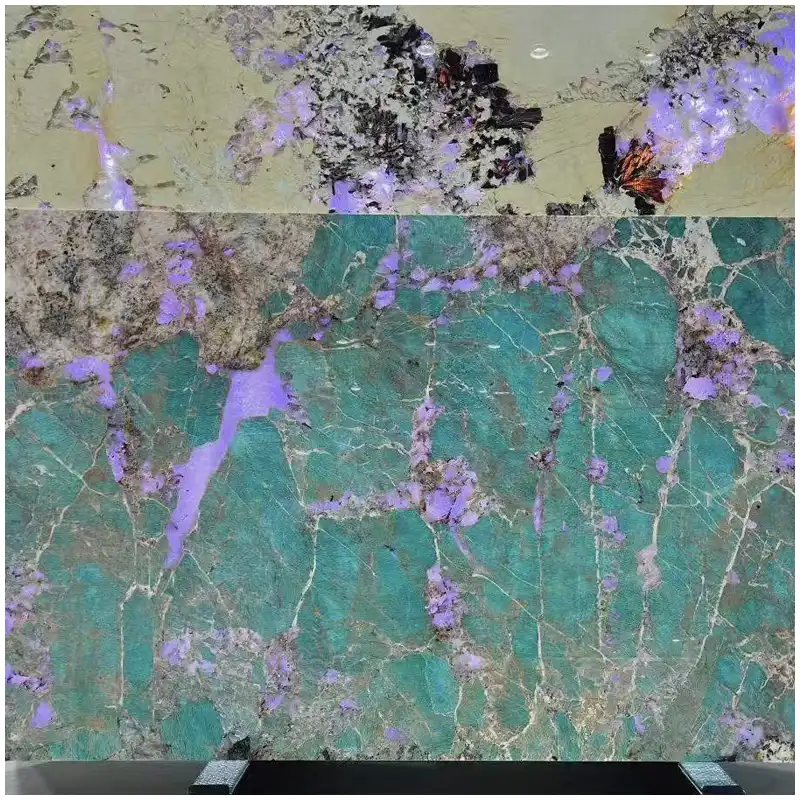
Quartzito verde amazonita
Green mineral-rich quartzite for feature panels where color grouping and lighting behavior matter.
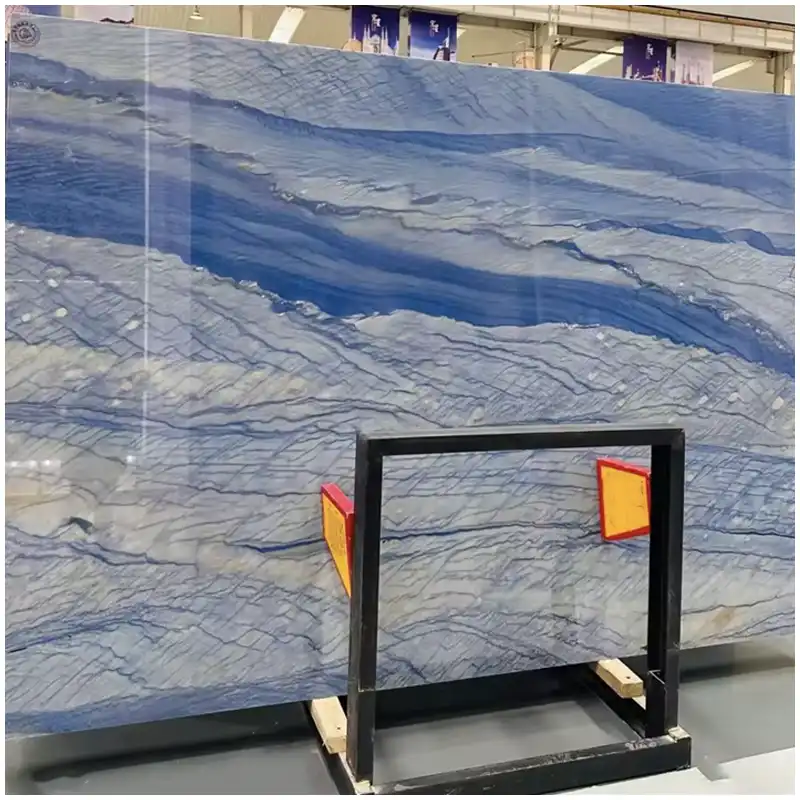
Laje de Quartzo Azul Macaubas
Blue-toned quartzite slabs for linear pattern layouts and coordinated interior surfaces.

Quartzito Perla Santana
Decorative quartzite selection for custom slabs and fabricated interior stone pieces.

Lajes de Quartizito Maestro
Green patterned quartzite for architectural walls with planned mineral orientation.
Request Brazil Pandora Quartzite Slab Photos and Project Quotation
Para Brazil Pandora Quartzite Slab selection, provide the required slab or finished-panel dimensions, thickness, finish, quantity and delivery destination. Mansion island projects should include the countertop layout, sink and appliance openings, front-panel elevations and supporting cabinet details. For illuminated feature walls, include the proposed lighting arrangement, panel joints, backing requirements and fixing system. State whether selected crystal-zone photographs, lighting mock-ups or a coordinated dry-lay arrangement are required for approval.