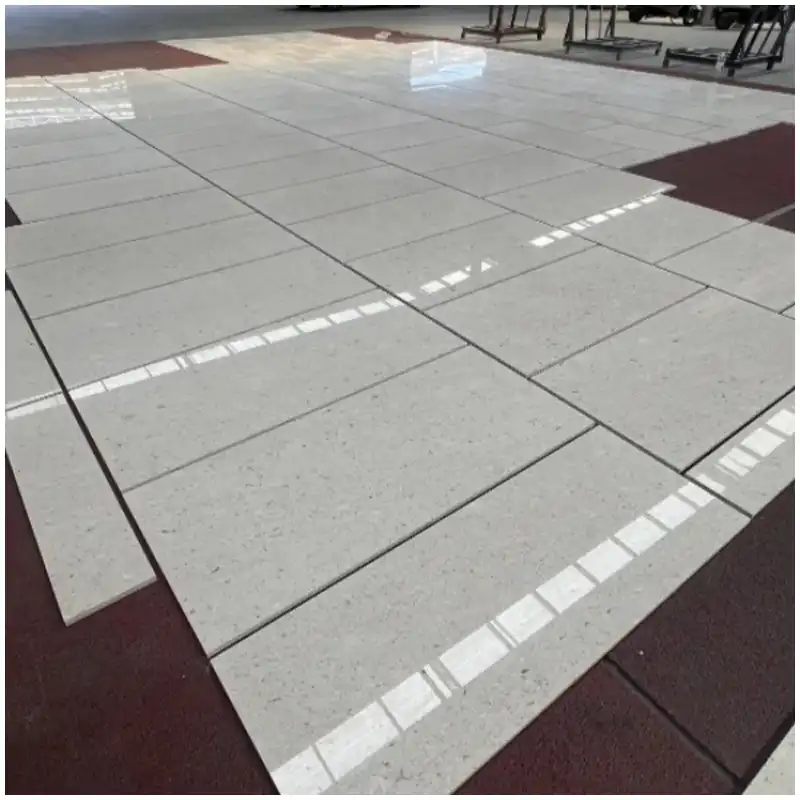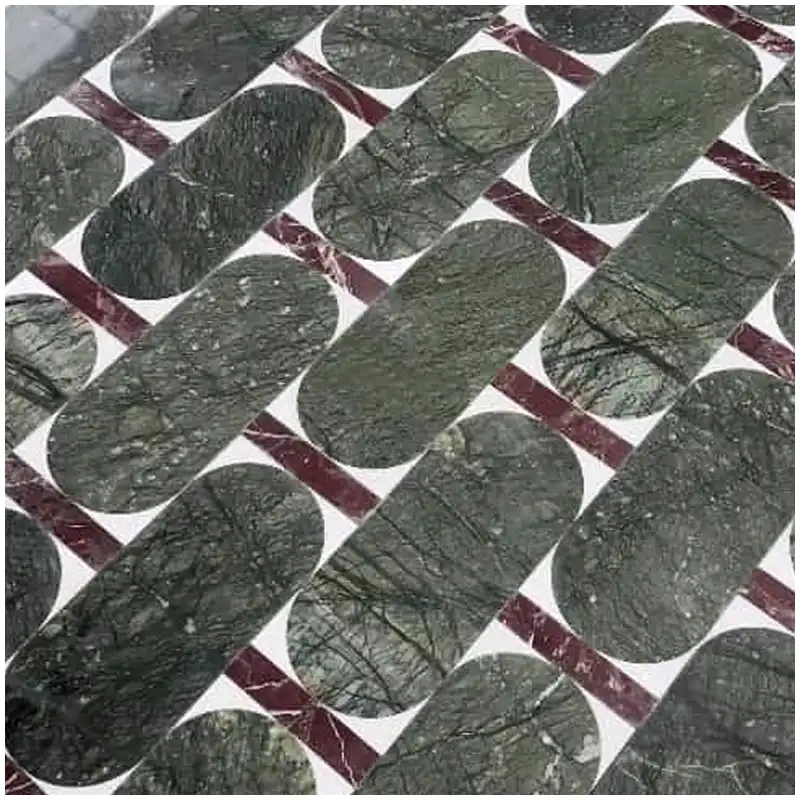
The 2026 Complete Guide to White Marble Sealing: Science, Best Practices & Maintenance Tips
White Marble is admired for its elegance, brightness, and architectural calm, but it is not an inert surface. It is porous, chemically sensitive, and highly responsive to maintenance decisions made by the owner, installer, and supplier. That is why sealing is not optional. It is part of preserving the material’s character, especially in kitchens, bathrooms, hotels, and luxury villas where daily use can quickly affect appearance.
In 2026, the conversation around White Marble is more technical than ever. Buyers are asking practical questions such as How often should I seal white marble?, Can you use vinegar on marble?, and Penetrating vs. topical sealers for stone. These are the right questions because sealing is not just a product choice. It is a system that depends on porosity, finish type, slab grade, installation method, and cleaning habits.
Esta STONE often frames sealing as an extension of selection. A stone that looks perfect in a showroom may still need different protection depending on whether it will become Volakas Marble Countertops, Volakas Marble Vanity Tops, Volakas Marble Flooring, or Volakas Marble Wall Cladding. For that reason, buyers should think about maintenance at the same time they think about sourcing. A white marble manufacturer or white marble factory should not only sell the slab. It should explain how the surface will be protected once it is installed.
1. The Geology of Porosity: Why White Marble Needs Protection
1.1 The crystalline structure and microscopic voids
White marble is formed from limestone that has been transformed by heat and pressure over long geological time. During this metamorphic process, the stone develops a crystalline calcium carbonate structure that gives it beauty, polishability, and softness. But it also creates microscopic voids and pathways where liquid can enter. These are not flaws in the aesthetic sense. They are part of the stone’s natural identity.
That is why even premium slabs from a white marble supplier need protection. Water, oils, coffee, wine, cosmetics, and acidic cleaners can travel into the body of the stone if the pores are open enough. When a buyer asks why sealing matters on a white stone that looks solid and polished, the answer is simple: the surface may look compact, but the microscopic structure remains open enough to absorb contaminants.
1.2 Capillary action and stain travel
Capillary action is the mechanism by which liquid moves through the stone. The stone’s internal pathways can draw moisture inward even when the spill is small. That is why a stain often appears to spread or deepen over time. It is not always sitting on the surface. It may be traveling inside the slab body.
This is especially important in wholesale white marble slabs destined for kitchens, bathrooms, and hospitality projects. The larger the project, the more important it becomes to educate the client about sealing frequency, daily cleaning, and early spill response. A responsible premium white marble supplier will discuss mineral density and absorption before the order is placed, not after the problem appears.
1.3 Why supplier education matters
The best suppliers do more than quote a slab. They explain how the stone will behave in use. This is particularly useful for buyers comparing Volakas Marble, White Volakas Marble, and other Greek stones in bathroom or kitchen settings. If the stone is going into a wet area, the buyer should know whether the finish is polished, honed, or leathered, and whether the slab should be pre-sealed.
That is why a knowledgeable white marble wholesaler can be more valuable than a generic trader. Education is part of the product.
2. Technical Specifications: The Science of Absorption
Sealing decisions should be based on measurable data rather than assumption. The table below compares key performance values for White Marble types commonly specified in 2026.
| Physical Property | Volakas Marble Value | Sivec Marble Value | Standard Requirement |
|---|---|---|---|
| Water Absorption Rate | 0.12% – 0.18% | 0.08% – 0.11% | ASTM C97 |
| Mohs Hardness | 3.5 – 4.0 | 3.5 | Scratch Resistance |
| Density | 2,820 – 2,850 kg/m³ | 2,840 kg/m³ | Structural Mass |
| Compressive Strength | 135 – 150 MPa | 140 MPa | Load Bearing |
| Porosity Level | Medium-Low | Low | Sealing Frequency |
| Mineral Type | Dolomitic Volakas Marble/calcium carbonate matrix | Calcitic marble | Surface protection required |
The table shows why even low-absorption stone still needs a factory-grade sealer. Volakas Marble has acceptable performance for many luxury interiors, but “acceptable” is not the same as “sealed forever.” Sealer performance depends on chemistry, application method, and use intensity. In practice, the better the sealing program, the longer the stone stays visually clean and easier to maintain.
Buyers comparing products such as Volakas Marble Slab or White Volakas Marble Slab should treat absorption rates as part of the purchase decision. The same is true for White Volakas Marble, which is often chosen precisely because it combines a calm appearance with a strong architectural profile.
3. Penetrating vs. Topical Sealers: The 2026 Technology Debate
3.1 Impregnating sealers
Penetrating sealers, also called impregnating sealers, work below the surface. They absorb into the pores and line the internal pathways without creating a visible film. This is usually the preferred system for White Marble because it preserves the natural look of the stone. It does not typically dramatically alter the color or sheen, which means the marble still looks like marble.
For high-end interiors, a white marble factory often recommends this type of sealer because it offers a practical balance of protection and authenticity. When a project uses Extra White Volakas Marble or White Volakas Marble in a luxury bath, preserving the visual purity is essential.
3.2 Topical coatings
Topical sealers create a layer on the surface. They can provide protection, but they are usually avoided for bulk white marble tiles in high-end homes because they can change the look, create maintenance complications, or wear unevenly. In a bathroom or hotel lobby, a topical film may make the surface feel less natural and more artificial over time.
That is one reason many installers prefer to source material from a direct stone exporter that understands how the finish will be protected before and after installation. The wrong sealer can undermine a premium slab faster than a stain can.
3.3 The rise of permanent nano-coatings
In 2026, “permanent” nano-coatings are increasingly discussed for commercial hospitality. They can reduce maintenance demand and improve resistance to staining, but buyers should still evaluate them carefully. No product should be treated as a magic solution. Even high-performance coatings require correct installation, correct cleaning, and realistic expectations.
In a project involving wholesale white marble slabs or bulk white marble tiles, the sealer should be chosen as part of the technical package rather than as an afterthought.
4. Pattern Classification and Surface Finish Impact
4.1 Polished finishes
Polished white marble is often more stain resistant in practice because the surface is closed and reflective, but it is also more likely to show etching. Acid can dull the shine even if it does not create an obvious stain. This is why many owners confuse etching with staining. They are different forms of damage, and polished marble makes both easier to see.
A polished slab of Volakas White Marble can look exceptional in a reception lobby or luxury bathroom, especially when installed as Volakas White Marble Slabs. But polished finishes still need routine protection and smart cleaning habits.
4.2 Honed and leathered finishes
Honed and leathered surfaces are softer in appearance, but they can expose pores more openly than polished surfaces. This does not make them wrong. It simply means they may require double-sealing or more frequent maintenance, especially in kitchens and wet rooms. A white marble manufacturer should explain this before the project begins so the owner knows what kind of care will be needed.
Designers often like honed finishes because they create a quieter, less reflective atmosphere. But the buyer must understand that a softer visual finish can mean a slightly higher maintenance commitment.
4.3 Vein patterns and visible imperfections
Vein structure also affects how the surface reads over time. Volakas Cloudy Marble can hide small marks better than a very plain white field, while Volakas Diagonal Vein Marble can draw attention to pattern continuity and seam placement. In some cases, a more expressive pattern can mask small surface changes, while a very clean white slab can reveal every imperfection.
This is why the right product selection matters. A project using Volakas White Marble Tiles may need a different sealing routine than a project using Volakas Marble Tiles in a commercial corridor.
5. The 2026 Sealing Protocol: A Step-by-Step Professional Guide
5.1. The deep clean
The first step is deep cleaning with a pH-neutral degreaser. The goal is to remove dust, fabrication residue, and invisible oils from the pores before sealing. If the stone is not fully clean, the sealer can lock in contamination rather than protect the surface.
For large-format installations, especially Large Format Volakas Marble Slabs, this step should be done methodically across the full surface so the final seal is even.
5.2. The moisture check
A damp stone should never be sealed. Moisture trapped inside the slab can cause “ghosting,” cloudiness, or uneven appearance after the sealer cures. The stone must be dry before application. A simple moisture check can prevent major visual problems later.
This is especially important in bathrooms and kitchens, where installation areas may still be retaining humidity. A competent volakas marble exporter or factory should advise the client on dry time before the slab is packed or installed.
5.3. Application technique
The standard method is “flood and wipe.” The sealer is applied generously enough to saturate the pores, then excess material is wiped away before it dries on the face. That technique is often preferred for custom marble fabrication because it helps protect edges, cutouts, and variable-density zones.
This process is also useful for Volakas White Marble Vanity Tops, where sink cutouts and splash zones are more vulnerable to staining.
5.4. Curing time
Modern high-performance sealers need proper curing time, often around 24 hours before the surface is fully ready for use. Rushing this step can reduce performance, especially in kitchens or hotel bathrooms. The sealer may feel dry quickly, but chemical cure is a separate process.
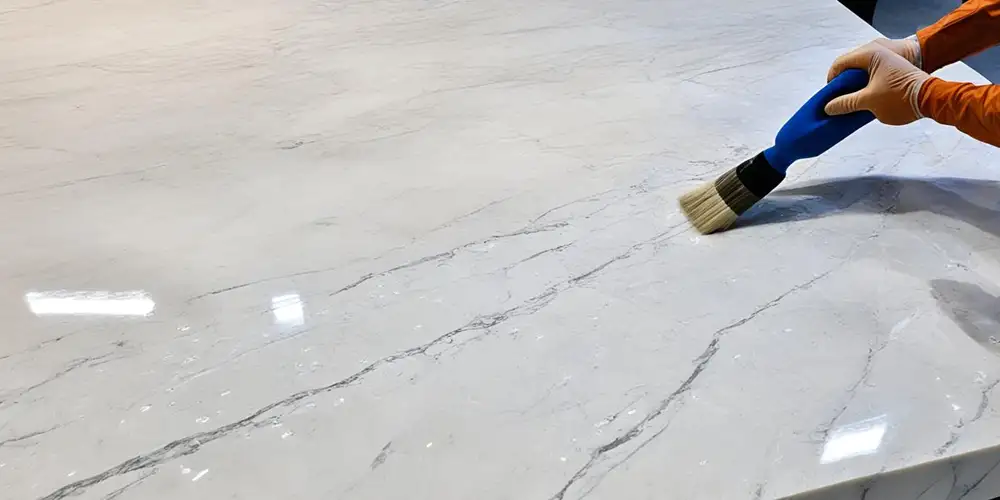
For builders handling Volakas Marble for Hotels or Volakas Marble for Luxury Villas, scheduling this curing time into the handover plan is critical.
6. Comparative Analysis: White Marble vs. Quartzite Maintenance
6.1 Chemical sensitivity
Marble is calcium carbonate, which means acids can etch it. Quartzite is generally much more resistant to acid attack. This is one reason why buyers searching for durable kitchen surfaces often compare marble with quartzite before finalizing a specification. The difference is not subtle: marble can mark from lemon juice or vinegar, while quartzite is much less likely to show the same reaction.
For deeper comparison, buyers often review the Quartzite category alongside Natural Marble. That contrast helps clarify why marble requires more maintenance and why quartzite is often chosen for high-use kitchens.
6.2 Stain migration and frequency
Even a stone with a low absorption rate can still absorb enough liquid to require regular maintenance. That is why wholesale white marble slabs often need a higher sealing frequency than granite or quartzite. Marble is more beautiful in many settings, but it is less chemically forgiving.
A thoughtful white marble wholesaler should prioritize education over just sales because the buyer needs to understand the maintenance reality before installation begins.
6.3 Marble, quartzite, and buyer intent
If the project is a kitchen with daily cooking, quartzite may be the practical choice. If the project is a luxury bath, hotel lobby, or prestige interior, marble may be worth the maintenance trade-off. The difference is not about superiority. It is about context, tolerance, and design priority.
2026 Global Spec: Sealing for Specific Climates (Dubai, Singapore, USA)
White Volakas Marble behaves differently depending on its environment. At Esta Stone, we customize our sealing recommendations based on your project’s geography:
☀️ Middle East (UAE/Qatar)
Focus: UV Resistance & Heat Stability. In high-temperature zones like Dubai, we recommend solvent-based sealers that won’t degrade under intense heat or trap sand particles in the pores.
🌧️ Tropical (Singapore)
Focus: Anti-Oxidation & Moisture Barrier. In high-humidity markets, dual-layer sealing is critical to prevent the iron minerals in white marble from oxidizing (yellowing).
🏡 North America (USA/Canada)
Focus: Food-Safe Oleophobic Protection. For luxury kitchens, we prioritize “Oil-Repellent” sealers that exceed FDA standards for food contact surfaces.
7. Installation Sealing: Preventing Grout Release and Moisture Wick
7.1 Pre-sealing and the six-side seal
A proper sealing plan begins before installation. The six-side seal protects the front, back, and edges of the stone from moisture migration. This is especially important in bathrooms, steam-prone rooms, and flooring applications. Pre-sealing the slab can reduce the risk of moisture entering from the underside after installation.
That is why a good white marble factory may pre-treat slabs for large-scale projects before shipping. It improves consistency and reduces installation risk.
7.2 Managing adhesives
White thin-set is mandatory for many marble installations because dark adhesives can show through lighter stone or create shadowing at the edge. This is particularly important for bulk white marble tiles and 24×24 Volakas Marble Tiles, where color consistency matters across a larger installation field.
For a clean result, the adhesive system, grout choice, and sealing system should be treated as one connected process rather than separate tasks.
7.3 Factory pre-treatment
The role of the factory is often underestimated. A natural marble factory can help by applying a protective pre-seal, sorting slabs by density, and advising on edge protection before export. This is especially useful for large orders of Volakas Marble Slabs and White Volakas Marble Slabs for Tiles.
When the product is shipped as a coordinated package, the installation team can work more predictably. That reduces the chance of grout release, wicking, and early staining.
8. Daily Maintenance: The No-No List for 2026
8.1 The vinegar myth
The most important rule is simple: do not use vinegar on marble. Vinegar is acidic, and acid is the enemy of calcium carbonate. It can dull the polish and create visible etching, even when no stain seems present. This is one of the most common mistakes homeowners make when they rely on “natural” cleaners without checking stone compatibility.
The same warning applies to lemon juice, strong kitchen sprays, and other acidic household products. If the goal is to protect White Marble, the cleaner must be stone-safe and pH-neutral.
8.2 The microfiber standard
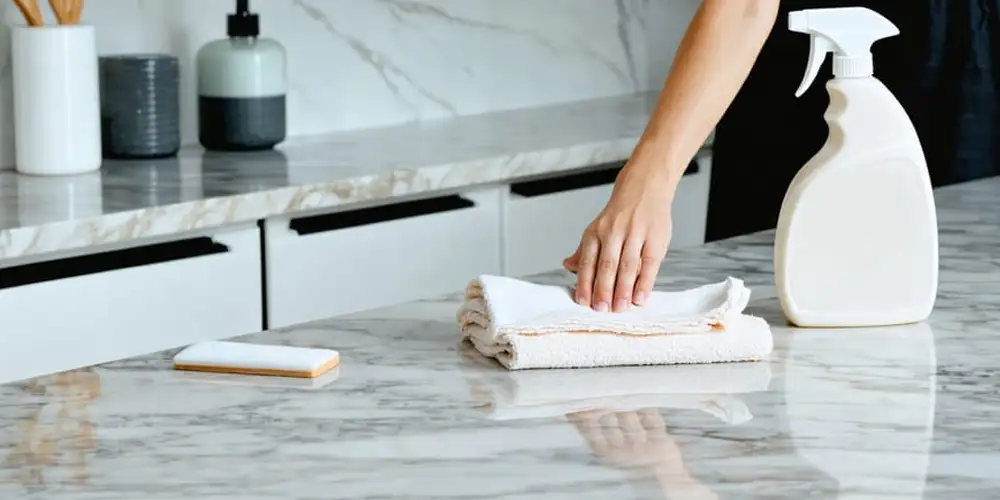
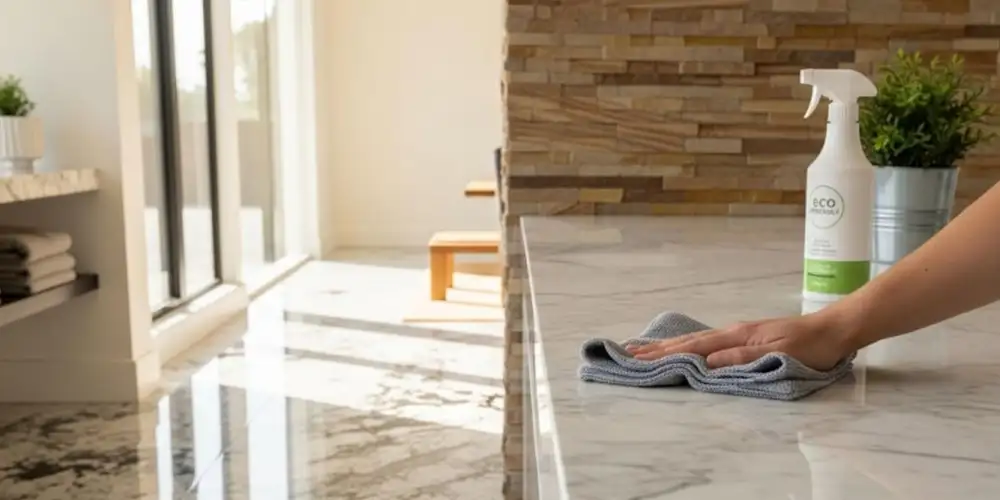
Abrasive pads can scratch the factory polish and make the surface appear dull over time. Microfiber cloths are safer because they lift residue without grinding the surface. In daily use, this makes a meaningful difference, especially for polished countertops and vanities.
This is relevant for White Volakas Marble Flooring Tiles as well, since foot traffic can quickly reveal dull spots if the surface is not cleaned correctly.
8.3 The big three: wine, lemon, and oil
Wine, lemon, and oil are the most common stain risks. The correct response is immediate blotting, not aggressive scrubbing. The longer the liquid sits, the more likely it is to penetrate or etch. For high-use surfaces, simple habit changes matter more than expensive products.
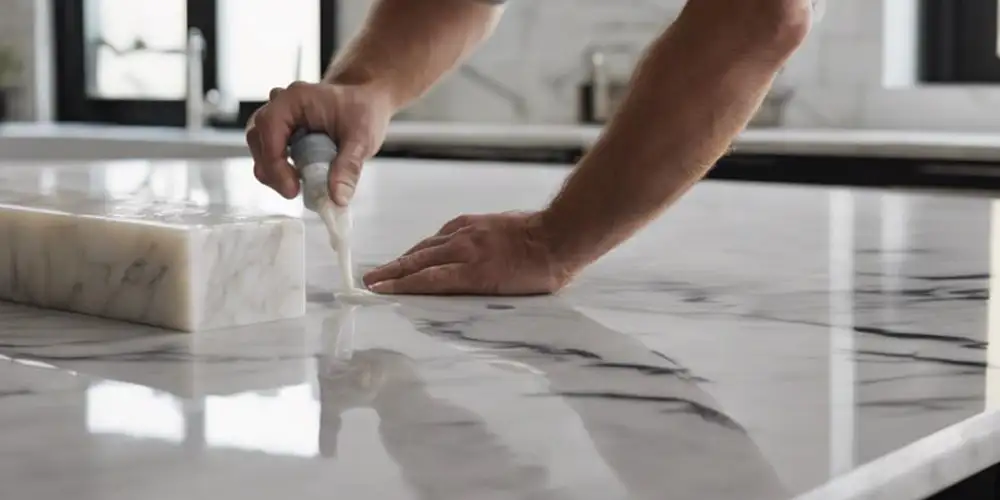
Buyers who use marble in kitchens should understand that preventing stains on white marble countertops is mostly about routine, not magic. Wipe spills quickly, use coasters and cutting boards, and reseal based on actual performance rather than assumption.
9. Pricing and Value: The ROI of Proper Sealing
9.1 The cost of restoration
A small bottle of sealer can prevent a much larger restoration cost later. A $50 bottle may save a $5,000 professional re-polishing bill if it helps avoid deep staining or widespread etching. That is the simplest argument for disciplined maintenance. The economics are obvious once the damage is visible.
9.2 Resale value and documentation
In 2026, property owners increasingly value maintenance logs and stone certification documents. If the home or hotel can show that sealing and care were performed correctly, the stone surface retains more visual credibility. That can support resale value, especially in luxury interiors where buyers notice finish quality immediately.
This is one reason a premium white marble supplier may offer care guidance alongside the stone. The product is not complete without the aftercare plan.
9.3 Bulk care purchasing
For large properties, buying care products through a supplier can reduce costs and simplify consistency. A white marble wholesaler may offer bulk discounts on sealers, cleaners, and maintenance kits. That is useful for hotels, villa developments, and multi-unit projects where repeated surfaces require the same maintenance chemistry.
10. Sustainability and Health Regulations
10.1 Low-VOC mandates
Many 2026 projects must comply with low-VOC standards. That means the sealer itself should be evaluated for emissions, indoor air quality, and suitability in occupied spaces. Kitchens and bathrooms especially require products that are effective but not overly harsh.
A competent white marble manufacturer should be able to explain which maintenance products are compatible with healthy indoor environments and which ones may create unwanted odor or emissions during curing.
10.2 Food-safe certification
In kitchen applications, buyers often ask whether the sealer is food-safe after cure. That question matters because countertops may touch food prep areas. The safest approach is to use products designed for stone and follow the full cure time before food contact. The coating should protect the surface without compromising safety.
10.3 Factory responsibility
A white marble factory contributes to a healthier indoor environment when it offers pre-treated slabs, low-VOC recommendations, and practical aftercare guidance. That is especially important for custom marble fabrication orders where the installed piece will be used daily and cleaned frequently.
Why Professional Importers Source Pre-Sealed Volakas from Esta Stone
For large-scale hotel projects and luxury multi-unit developments, on-site sealing can be inconsistent. Esta Stone’s “Total Protection” Protocol offers a strategic advantage:
- Automated Vacuum Sealing: We can apply high-performance sealers in a controlled factory environment to ensure 100% surface and edge coverage.
- Edge-Protection (6-Side Sealing): Critical for preventing moisture wicking from the mortar bed—a common cause of dark spotting in white marble floors.
- Project-Specific Testing: We provide batch-specific absorption testing reports for your QC compliance.
12. Conclusion: Protection as a Long-Term Investment
In the luxury stone market of 2026, the value of White Volakas Marble is defined not only by its initial visual impact but by its ability to age gracefully. For architects in Dubai, developers in Singapore, and homeowners in the USA, a disciplined approach to sealing is the bridge between a temporary surface and a lifelong architectural masterpiece.
By understanding the science of capillary action, selecting region-appropriate sealers, and adhering to professional maintenance schedules, you ensure that the luminous, airy elegance of Greek white marble remains untarnished. Whether you are specifying Volakas for a high-traffic hotel lobby or a private spa retreat, remember that the best maintenance is proactive, not reactive.

Ready to secure the future of your stone project? Contact the Esta Stone Technical Team for specific guidance on grading, fabrication, and climate-adapted sealing protocols for your next Volakas Marble installation.
For the selection side of the equation, read: Top 5 White Marbles for 2026 Interior Trends: From Minimalist Sivec to Classic Volakas.
Product Links in Context
Sealing and maintenance should always be considered together with the specific product format. For example, a bathroom project using Volakas White Marble Vanity Tops may need a different sealing schedule than a floor project using Volakas Marble Column Facade Cladding Tiles. Likewise, larger wall compositions built from Volakas White Marble Slabs should be pre-treated and documented differently from small tile packages.
Buyers comparing a slab to a tile system can also reference Volakas Marble Tile and Volakas Marble Tiles. If the project requires smaller-format continuity, the Volakas White Marble Tiles and White Volakas Marble Slabs for Tiles pages are useful for understanding the relationship between slab grading and tile selection.
For projects requiring broader inventory planning, buyers may want to compare the main stone family through Volakas White Marble and the slab-focused Volakas Marble Slab. These references help buyers connect sealing choices to actual product format, which is where maintenance usually succeeds or fails.
Related White Marble Blogs Reading
Volakas Marble Price Guide 2026: Cost per Square Meter & Key Pricing Factors
Useful for buyers comparing price drivers before sealing and maintenance planning.
Greek Volakas Marble: The 2026 Definitive Grading, Selection & Market Trends Guide
Helpful context for white marble grading and selection strategy.
Volakas vs. Carrara Marble 2026: Why Greek White Marble Is the Top Luxury Alternative for Modern Hotels
Strong companion reading for hospitality procurement teams.
Volakas Marble Cloudy vs. Diagonal Veins 2026: How to Choose the Right Pattern for Your Project
Useful for design teams balancing pattern and maintenance risk.
Volakas Marble Dry-Lay Inspection: How Esta Stone Ensures Pattern Continuity for Luxury Projects
Helpful for understanding slab-to-slab continuity and installation control.
White Volakas Marble 2026: The Ultimate Choice for Luxury Bathroom Vanity Tops & Feature Walls
Strong reference for vanity and wall applications.
A Professional Buyer’s Guide to Bianco Carrara Marble Grading
Useful for white-marble quality and grading comparisons.
How to Source Large-Scale Carrara Marble for High-End Commercial Projects
Practical sourcing checklist for commercial-scale projects.
Calacatta Marble vs. Carrara Marble: The Definitive 2026 Procurement Asset Strategy
Asset-strategy reading for premium white-marble buyers.
Why Carrara Marble Remains the Primary Investment for 2026 Architectural Interior Excellence
Useful context for marble ROI and market durability.
How to Care Carrara White Marble
Maintenance reading for classic white marble surfaces.
Carrara White Marble vs. Oriental White Marble
Helpful for comparing white-marble color families.
Why Sivec White Marble for 2026 High-End Architectural Interior Projects
Excellent companion content for premium white-marble buyers.
How to Make White Marble Tiles Work in Small Spaces Without Looking Cold
Useful for compact bathrooms and small-space design.
The Best Statuario White Marble Tiles Factory in China
Factory-level tile sourcing and quality context.
White Marble in Minimalist Design
Supports quiet-luxury and minimalist interior planning.
White Marble Tiles Respond to Policy, Design and Supply Chain Changes in 2025
Useful for market and logistics context.
The Top Advantages of White Marble Tiles
A broad overview of tile-format benefits.
Top 10 Best and Trendy Natural White Marble
Category-wide reference for white marble trends.
Why Choose Thassos White Marble?
Bright-white stone comparison for selection strategy.
Why Natural White Marble Tiles Perfect to Create Luxurious Interior Projects
Useful for luxury interior tile applications.
Volakas White Marble Tiles: Esteem and Elegance Your Interior Designs
Support content for Volakas tile applications.
What the Advantages of White Marble
General benefits of white marble in design and architecture.
Semantic Closure Content Block
Why does White Marble need sealing even when the absorption rate is low?
Because low absorption is not the same as no absorption. The pores in the calcium carbonate matrix still allow liquids to move inward through capillary action, especially when the stone is used daily in kitchens, baths, or hospitality spaces. Sealing does not eliminate the natural character of the stone. It slows liquid migration, reduces stain risk, and gives the owner more time to clean spills before they become permanent marks. In other words, sealing is a practical protection strategy, not a cosmetic one.
How should a buyer think about the relationship between Volakas Marble and care frequency?
The buyer should think in terms of finish, density, and use intensity. Volakas Marble can perform beautifully, but polished slabs in wet or food-heavy areas still need routine maintenance. Honed or leathered surfaces may need more careful sealing because the pore structure is more open. The right frequency depends less on the name of the stone and more on where it is installed, how it is cleaned, and how much exposure it receives.
Option: what should owners choose for a kitchen, marble or quartzite?
Quartzite is often better for highly active kitchens because it is harder and less sensitive to acids. Marble is still a better choice when the design goal is tactile elegance and luxury presence. The deciding factor is not which material is universally superior. It is whether the owner prioritizes low-maintenance performance or natural beauty with a richer visual character.
Consideration: what makes a trustworthy white marble manufacturer important?
A trustworthy manufacturer does more than cut slabs. It explains the stone’s porosity, finish behavior, sealing needs, and installation risk before the project starts. That is especially important when the order includes Wholesale Volakas Marble, Volakas Marble Tiles, or Volakas Marble Countertops, because each format may need a slightly different care plan. The supplier becomes part of the maintenance strategy, not just the sales chain.
How does proper sealing support long-term design value?
Proper sealing preserves the original finish, reduces visible staining, and helps the stone stay readable as a premium material. It also protects property value by reducing the chance that the stone will need expensive restoration. In luxury homes, hotels, and villas, that matters because the surface is part of the asset’s image. Esta STONE often treats sealing guidance as a final bridge between natural art and architectural use.
FAQ
1. How often should I seal white marble?
The right interval depends on finish, traffic, and exposure, but many white-marble installations benefit from resealing roughly every 6 to 12 months in active areas such as kitchens, baths, and hospitality spaces. High-use countertops may need more frequent checks, while walls and low-touch features may need less. The practical way to judge frequency is the water bead test: if water no longer beads strongly on the surface, the sealer may be weakening. A stone in a polished, low-traffic setting may last longer between treatments than a honed countertop that sees cooking oils and daily cleaning.
2. Can you use vinegar on marble?
No. Vinegar is acidic, and acid attacks calcium carbonate. Even if the surface looks clean afterward, vinegar can etch the polish, dull the sheen, and make the surface appear damaged. That is why acidic household cleaners are part of the “no-no” list for marble maintenance in 2026. The safest routine is to use a pH-neutral stone cleaner, a microfiber cloth, and immediate spill cleanup. If the goal is to preserve beauty, vinegar should never be used as a routine marble cleaner.
3. Penetrating vs. topical sealers for stone: which is better?
Penetrating sealers are usually better for natural white marble because they protect from within the pores without creating a visible film. They preserve the natural look and are less likely to wear unevenly in high-end interiors. Topical sealers create a layer on the surface, which can sometimes change appearance or become difficult to maintain over time. In commercial hospitality, topical systems may be considered in specific cases, but for most premium marble projects, a penetrating sealer is the more reliable and aesthetically stable choice.
4. Is Volakas marble hard to maintain?
Volakas Marble is not difficult in the sense of being fragile or unworkable, but it does require regular maintenance and intelligent care. Because it is a white marble, it shares the usual calcium carbonate sensitivity to acids and staining liquids. That means it should be sealed properly, cleaned with pH-neutral products, and protected from long dwell times on spills. For homeowners or hotel operators who follow the maintenance plan, it is very manageable. For those who want zero-care surfaces, quartzite or sintered stone may be a better fit.
5. Does sealing make white marble stain-proof?
No. Sealing makes white marble more stain resistant, not stain-proof. That distinction matters. A sealer slows liquid absorption and gives the owner more time to wipe spills, but it does not make the stone immune to acids, oils, or deep pigment stains. If a spill is left too long, even sealed marble can be marked. The best practice is to combine sealing with prompt cleanup, pH-neutral cleaning, and periodic resealing based on actual performance rather than assumption.
References
- ASTM International. ASTM C97/C97M Standard Test Methods for Absorption and Bulk Specific Gravity of Dimension Stone. ASTM International.
- ASTM International. ASTM C170/C170M Standard Test Method for Compressive Strength of Dimension Stone. ASTM International.
- Natural Stone Institute. Dimension Stone Design Manual. Natural Stone Institute.
- Natural Stone Institute. Stone Care and Cleaning Guidance. Natural Stone Institute.
- U.S. Geological Survey. Mineral Commodity Summaries: Stone (Dimension Stone). USGS.
- Stone Federation Great Britain. Natural Stone Maintenance and Specification Guidance. Stone Federation GB.
- Tile Council of North America. Installation and Care Guidance for Natural Stone Surfaces. TCNA.
- Stone World Editorial Team. Natural Stone Fabrication and Installation Resources. Stone World.